Thursday 13 March
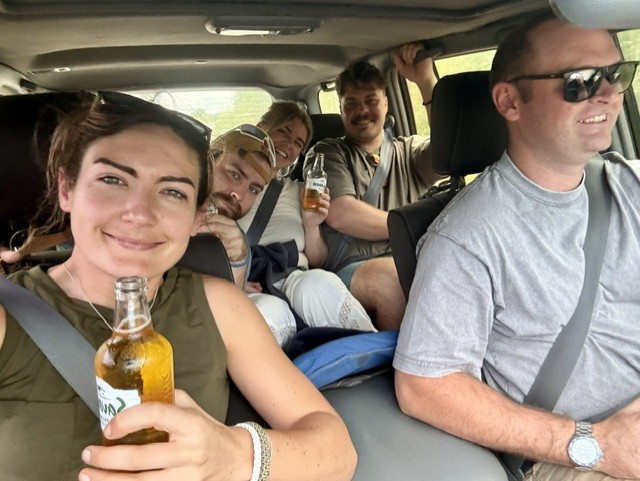
The house was bustling with bleary-eyed activity as we gathered our bags, gulped down coffee and bundled into cars for a 5am leave. I squeezed into one of the Land Cruisers with Ryan, Gus, Dan and Bryn. We left Harare in the dark in a three-car convoy behind Paul and Shelley. I was too excited to go back to sleep. We were en route to a four-day house boat escapade on Lake Kariba, the world’s largest artificial lake at over 140 miles long and 20 miles wide, which straddles Zimbabwe’s northwestern border with Zambia.
Journey through rural Zimbabwe: high to lowveld
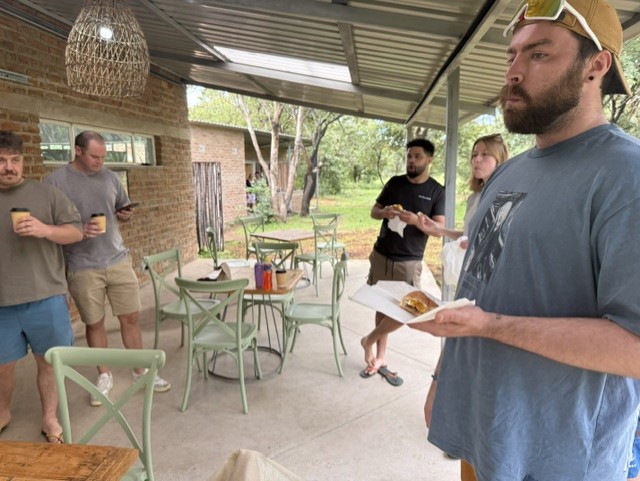
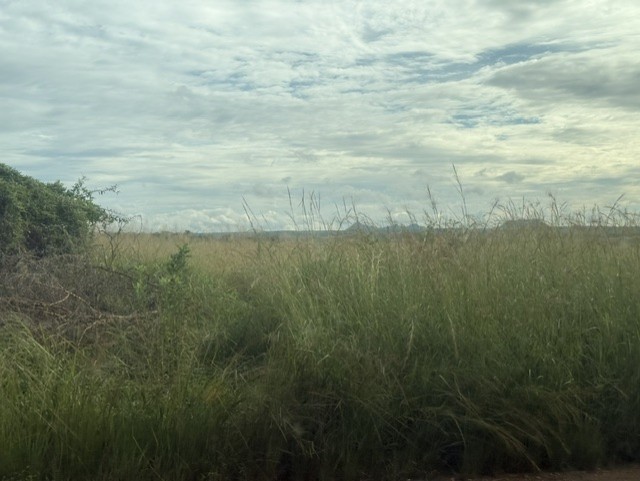
Daylight crept in gradually as we made our way northwest across open, gently rolling highveld countryside, past clustered cornfields and vast areas of scrub. We went through the first large town, Chinhoyi, at 6am, which had a wide, dusty main street and flat-faced buildings that gave it a wild-west-esque look. We stopped for a bacon bap at a café near Karoi after a long stretch across sparsely populated swathes of land, which was fairly uneventful other than a couple of lorry overtakes – wild by UK standards, but textbook in Zim – that had Bryn (our heroic driver) yelling “no – mom – nooo…” in alarm. The landscape was green and slightly undulating, with occasional, conical hills that rose abruptly from flat surrounds.
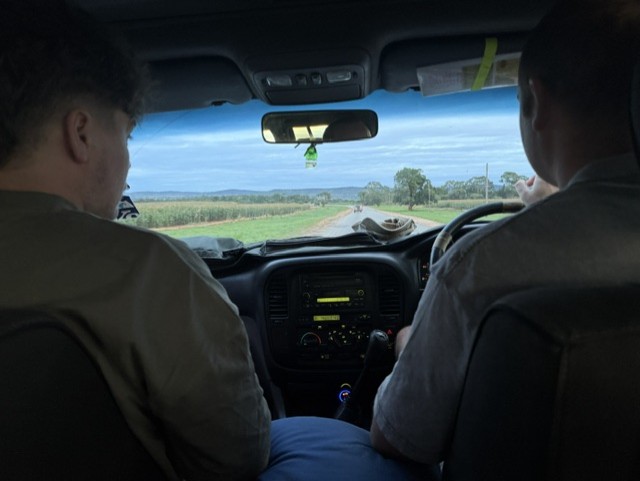
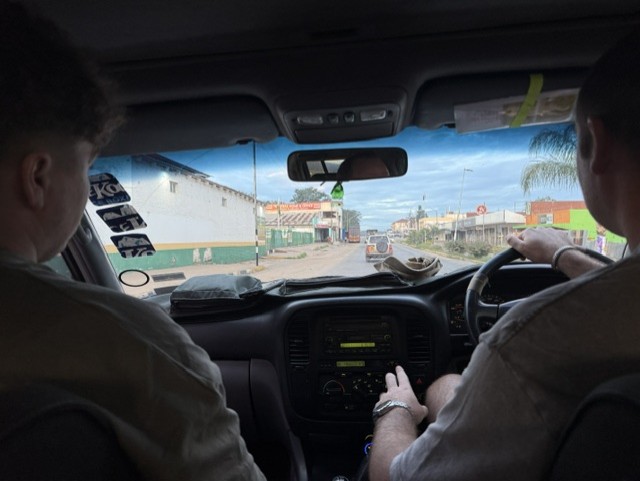
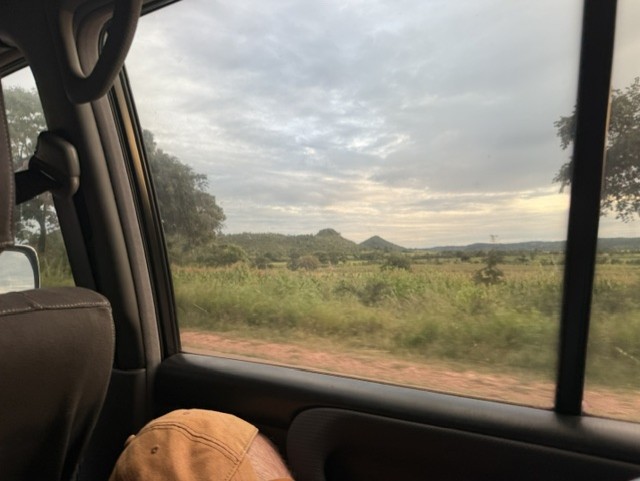
The journey became spicier shortly after Karoi. The tarmac narrowed and dropped away on either side to sheer-edged, dusty strips, and the prolific, wheel-munching potholes we’d been warned about began appearing. Bryn drove on whichever side was least treacherous until a vehicle came the other way. At one point we watched anxiously from behind as Paul got stuck, with two wheels on the road and two down the side-drop, and casually cruised – on the wrong side of the road, at some angle – past a truck coming the other way, until he could regain the tarmac and return to the left.
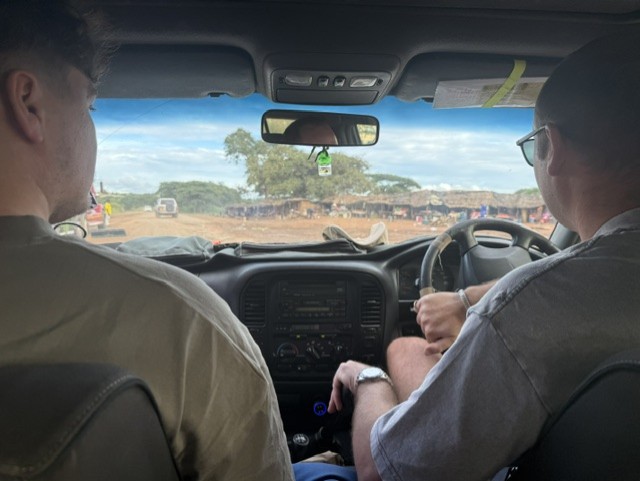
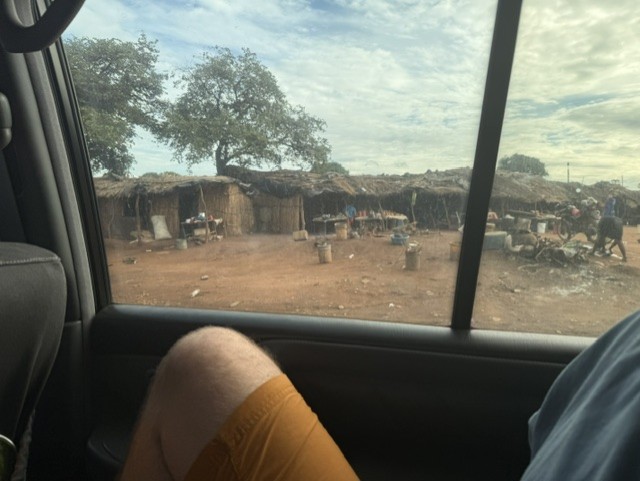
After miles of semi-agricultural, scrubby openness, we passed a ramshackle village lined by low, open-sided, grass-roofed huts. The landscape gradually transitioned into rolling, thickly-vegetated hills, and the previously straight road now twisted through jungle-like forest. Being at the back of the convoy, we got stuck first behind an incredibly wide, slow truck, then a lorry that failed to make a climb up a steep hill. We came across a military checkpoint, comprising a large khaki truck and several uniformed personnel, and Bryn warned us to keep phones down (photographing anything do to with the military is illegal). Thankfully they let us through with a quick glance and a curt nod.
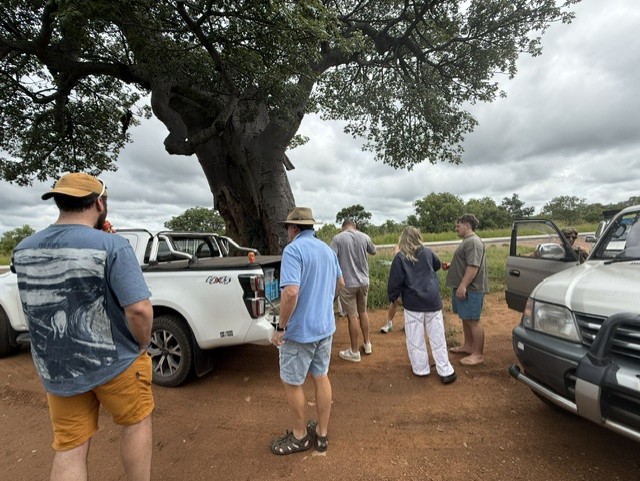
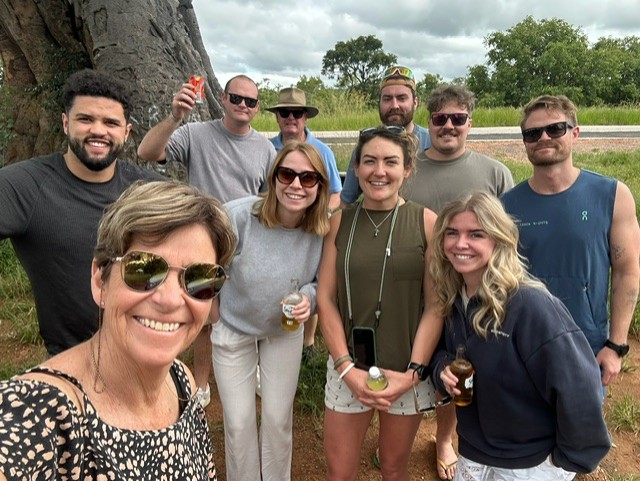
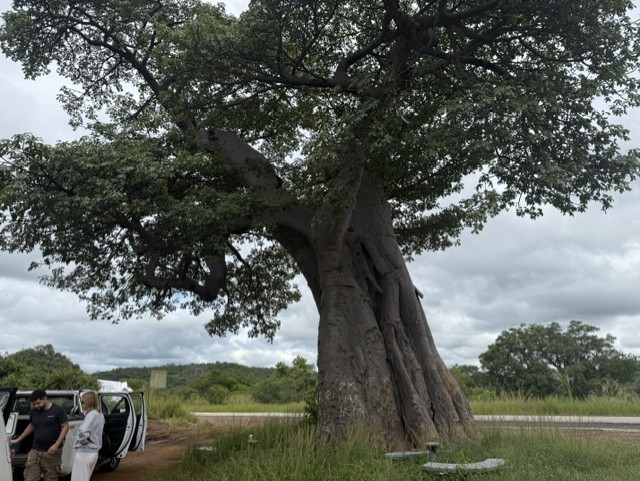
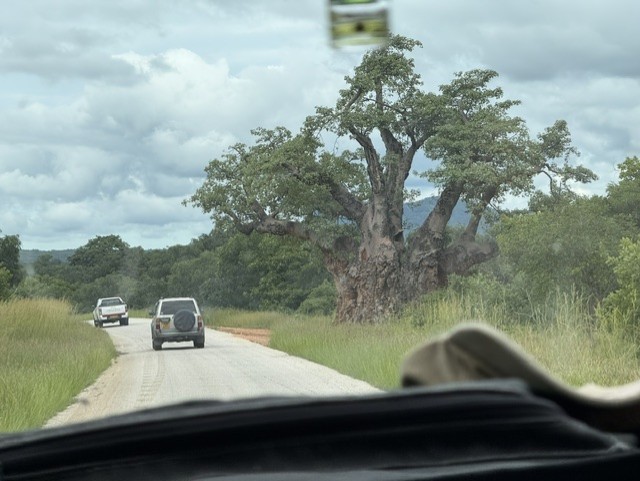
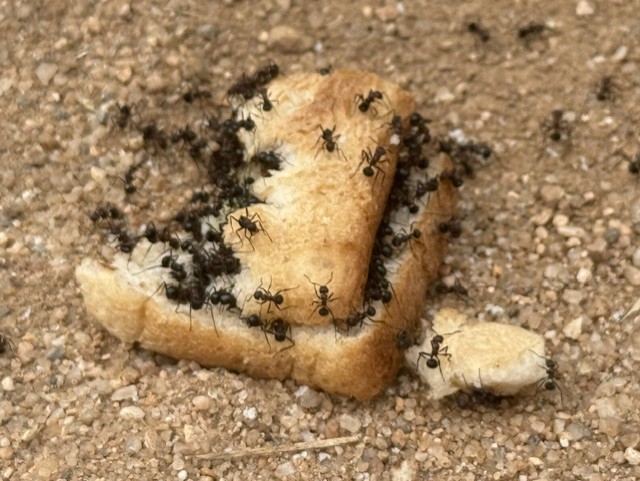
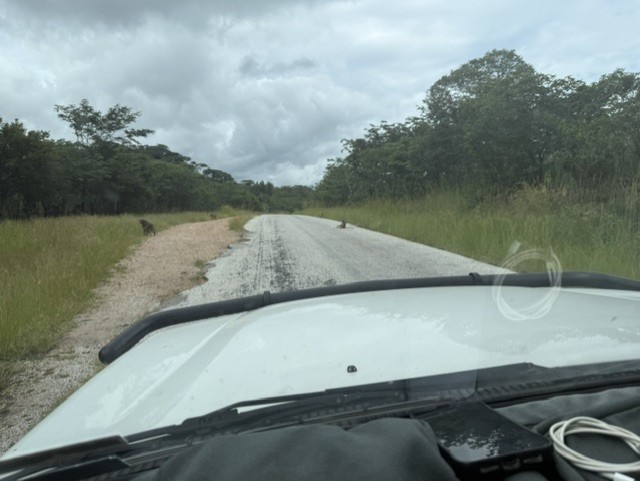
We met the other two cars at a pull-in by a broad-trunked baobab tree at 9am, where we celebrated the “smooth” journey with a drink, conscious that we were now in big cat territory. I was amazed by the baobabs, which seemed all trunk and few leaves, and by the huge, bitey-looking ants that appeared at our feet. We were in wild country now and once we left the baobab I watched eagerly for wildlife, naively convinced that if I looked hard enough I’d spot something big. I was overly optimistic, but still thrilled to see a family of baboons casually patrolling the road ahead.
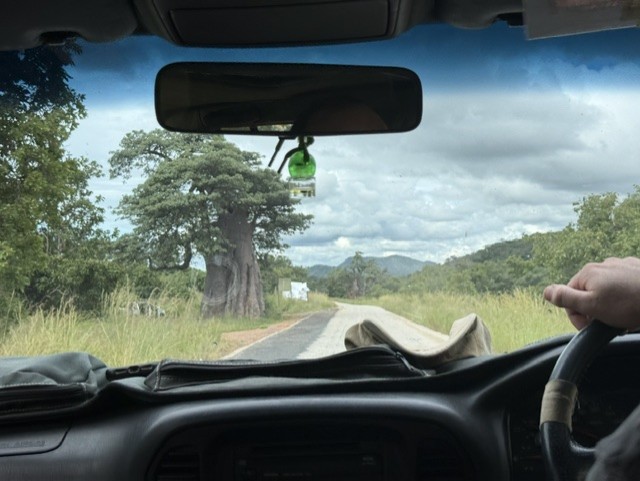
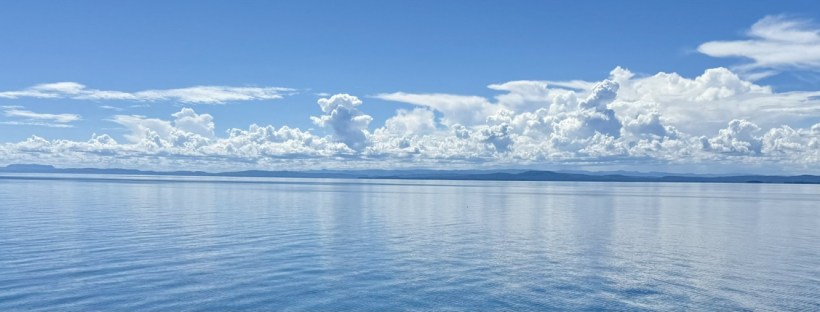
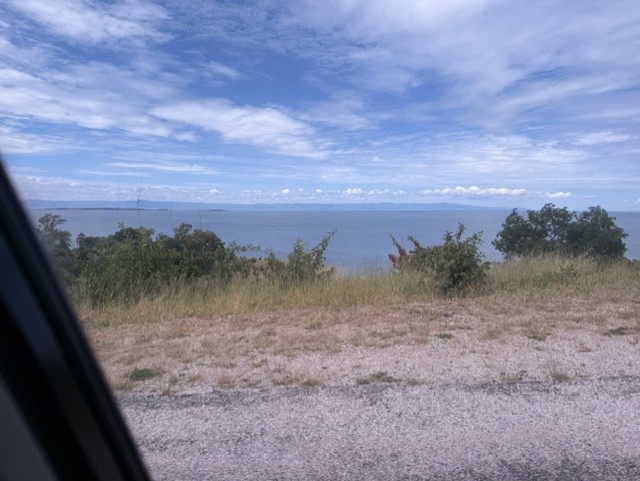
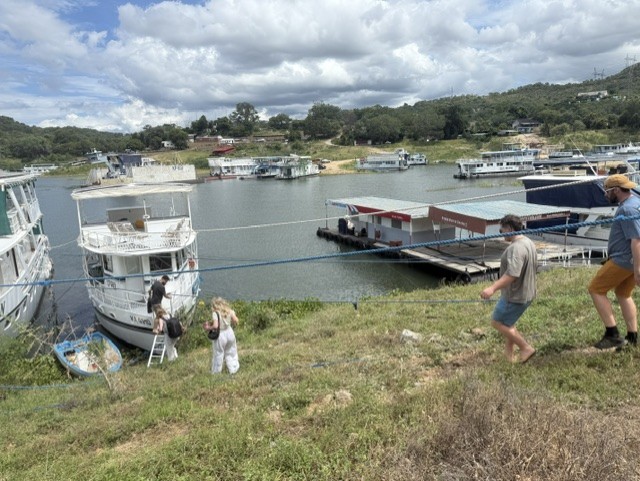
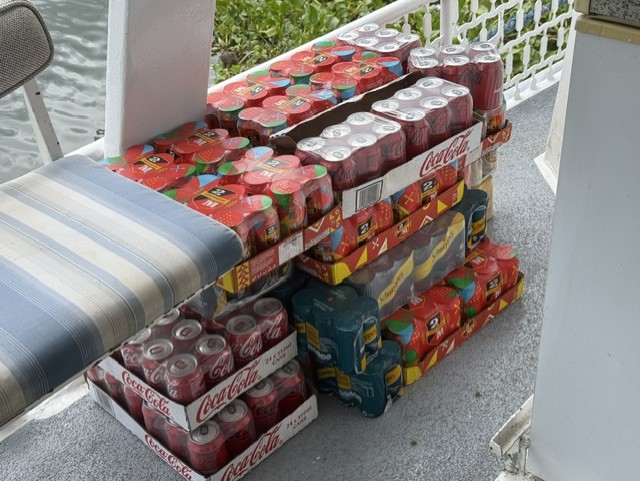
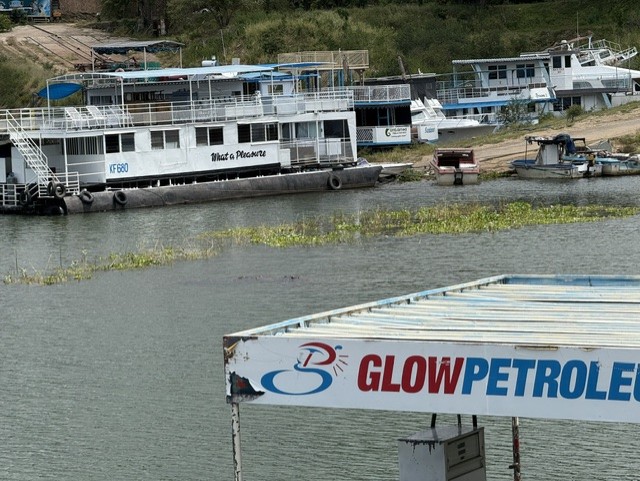
The road descended past Kariba town and Lake Kariba appeared, as vast as a sea inlet and backed by a hazy line of undulating mountains. We stopped briefly at a petrol station (I wouldn’t recommend the toilets), then continued through a lakeside village to the marina where the boat awaited us. We hauled our bags out of the car, clambered down a steep bank and boarded the boat, Chessa, where we were greeted with warm smiles from our crew, Captain Chum and First Mate André. Excitement ensued when someone spotted two pairs of goggly hippo eyes poking out from the surface of the water before we’d even left the marina, and the boat set off at 11am with several jubilant passengers and a heavy cargo of drinks.
Boat trip to Musango Safari Camp
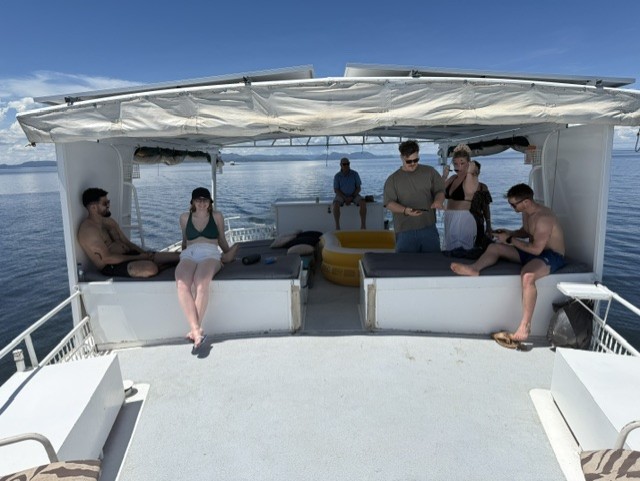
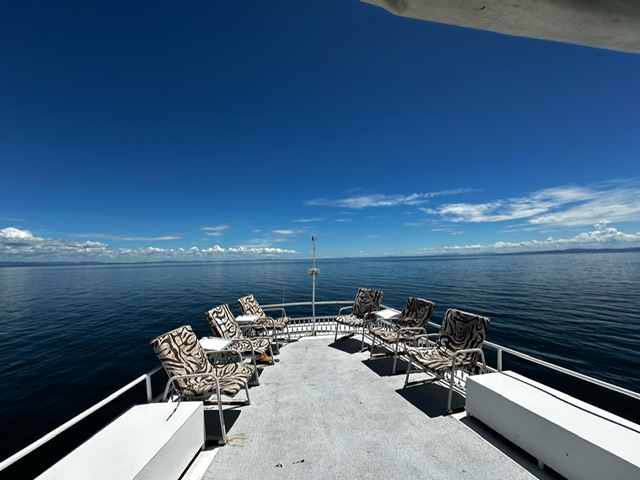
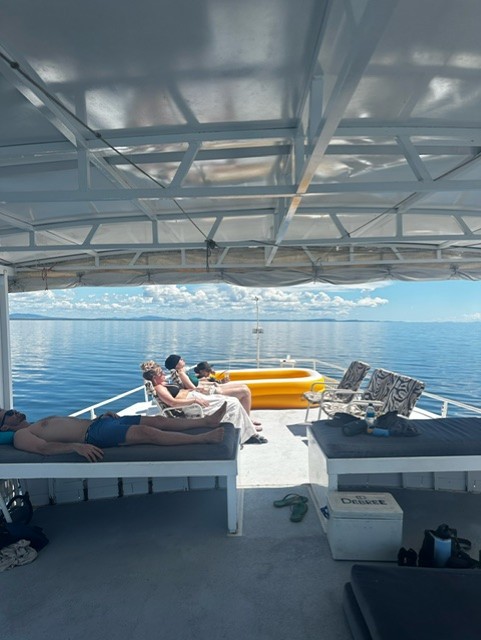
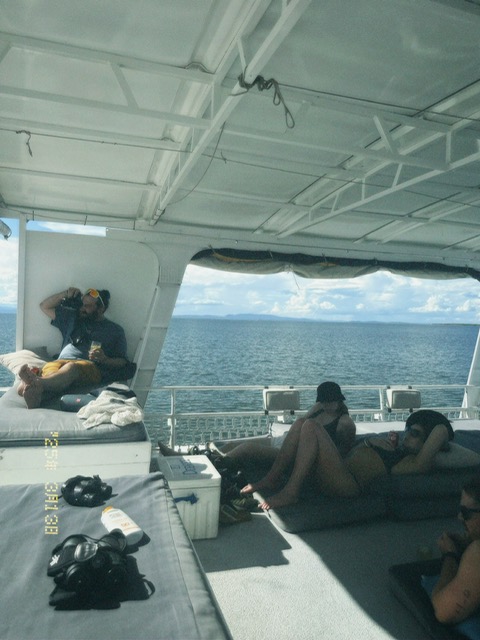
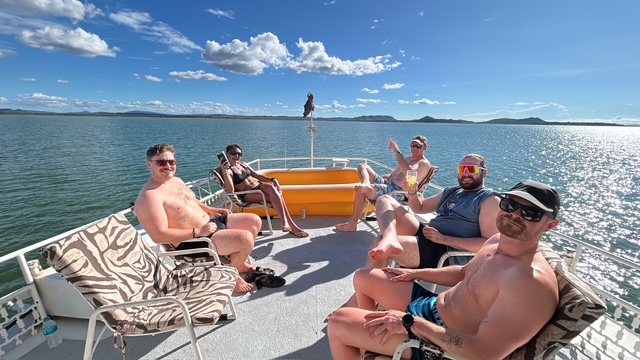
Chessa was wonderful. She had two cabin rooms where we stored our bags, one each for girls and boys, and two toilets below deck. The lower deck housed a small kitchen, “bar”, enclosed seating area, communal table and – importantly – a chest fridge full of cans and bottles. We would sleep on the upper deck, which was open plan, partly covered by a canopy, and gained by a set of steep metal stairs that – as Tilman would later discover – turned out to be treacherous. After a good poke around, we settled in chairs on the open end of the upper deck and mused over who would be the first in the big yellow paddling pool.
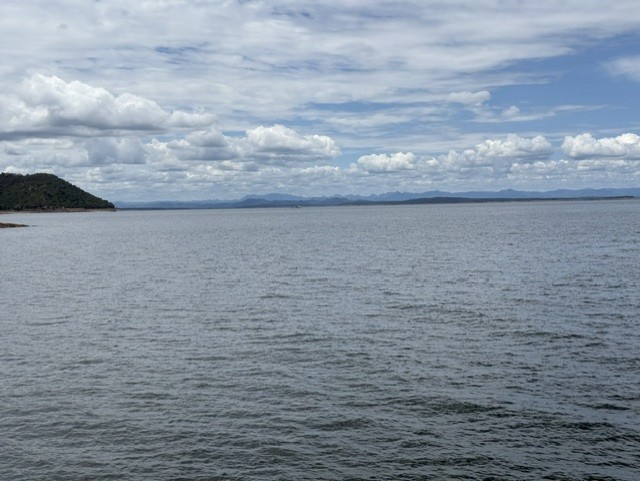
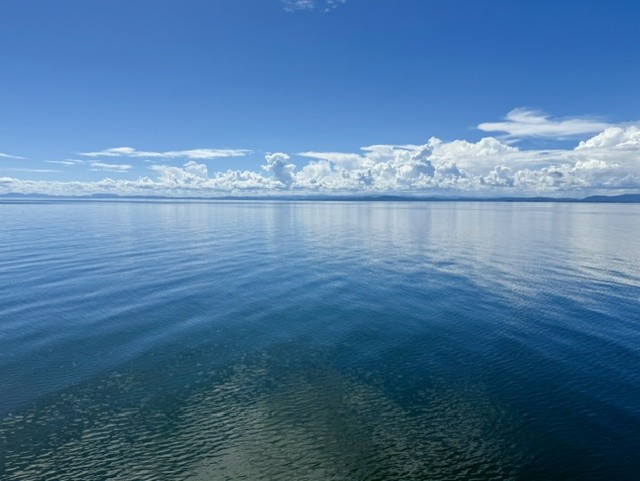
We chugged out of the marina, which opened between two thickly vegetated headlands onto the wide, smooth surface of Lake Kariba. Jagged mountains lined the horizon and as we moved further from land, it seemed as if the boat was shrinking – quite peacefully – into a vast expanse of open water. We relaxed on the upper deck for a couple of hours, elephant-spotting through binoculars (seen at the water’s edge, to our delight, but from a considerable distance) and drinking cider as the hot midday sun broke through fine clouds, until Shelley collected us for lunch.
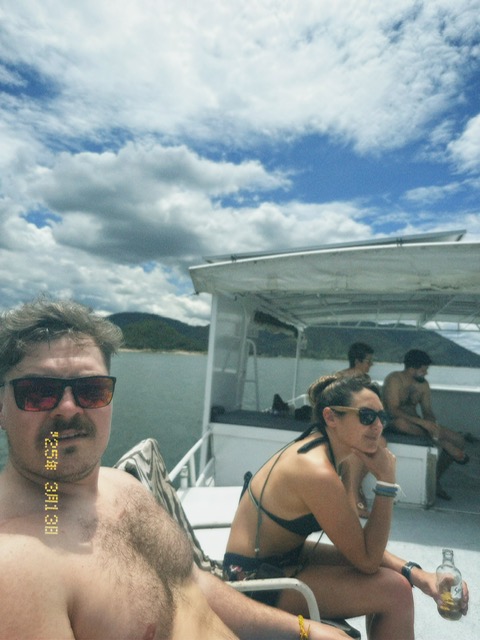
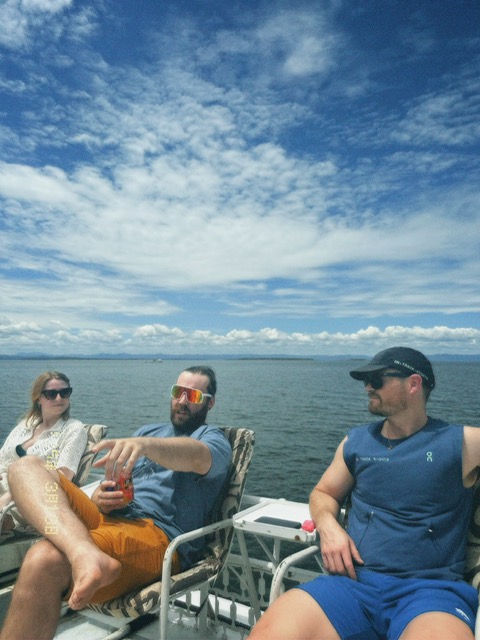
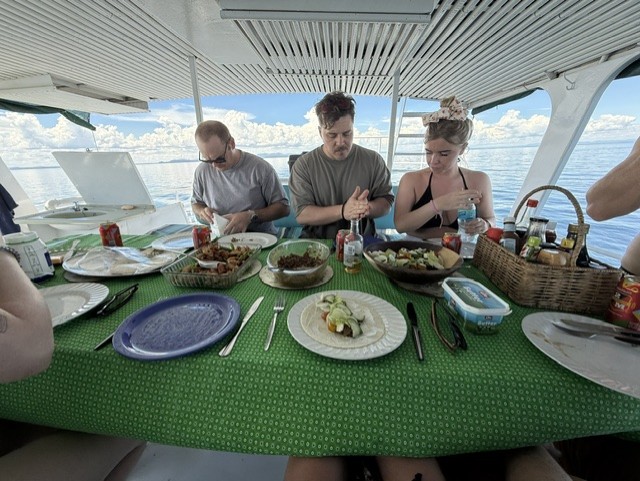
When we saw our first meal laid out on the table of the lower deck, we realised that we were going to be spoiled for food. We had tortilla wraps with chicken, peppers, beef mince and salad accompanied by a vast array of condiments, notably aromat, which made everything taste better. Once we’d eaten we returned to the upper deck, full of food and sleepy in the afternoon sun. We napped, lounged and gazed over the deep blue, mirror-flat water. It felt like a dream.
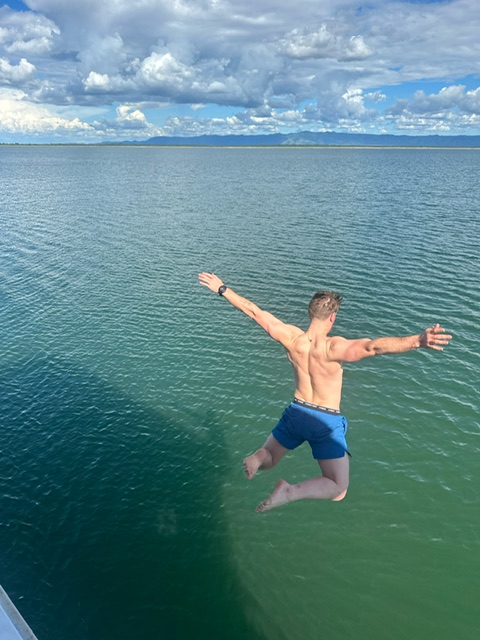
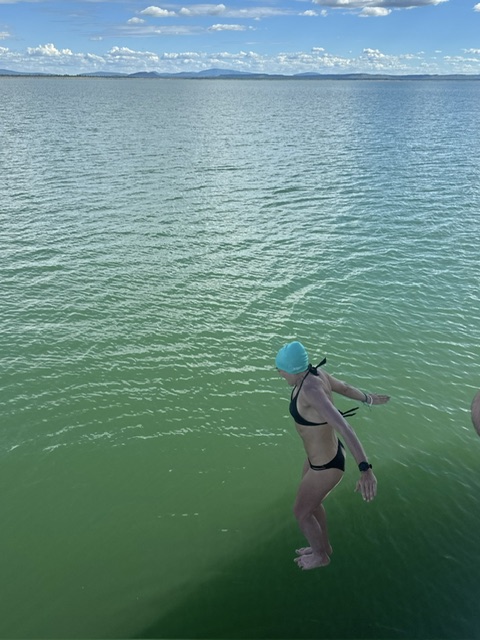
At some point André alerted Reece that we were at the middle of the lake. He cut the engine and the boys (and me) jumped in, one by one, from the top deck. The thrill came on entering the water – swimming in Kariba is generally a no-go due to crocodiles, but it’s doable in the middle due to the unlikelihood (but not impossibility) of crocs straying far from the banks. The water seemed very dark and once in, we each hastened to the back of the boat to clamber onto the rear deck.
At 5:30pm we reached our destination, Musango Safari Camp, located on the south bank of Lake Kariba in a sheltered inlet. It had taken Chessa six hours to travel about a quarter of the lake’s length. As we approached land we saw our guide, Graham – a school friend of Reece and Bryn’s – waiting for us on the bank with his massive, soppy rhodesian ridgeback, Bholli. Graham waved, reached into the grass at his feet, pulled out a writhing stripe-bellied snake (the only snake we actually saw in Zim), inspected it, pronounced it harmless and returned it to the scrub away from Bholli. This made for a great first impression.
Warm welcome at Musango
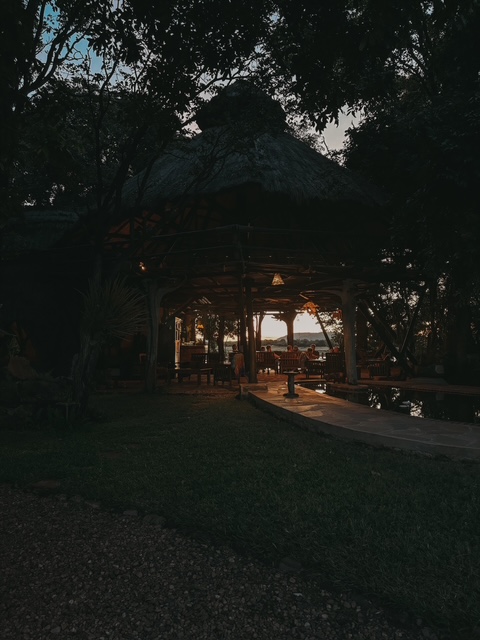
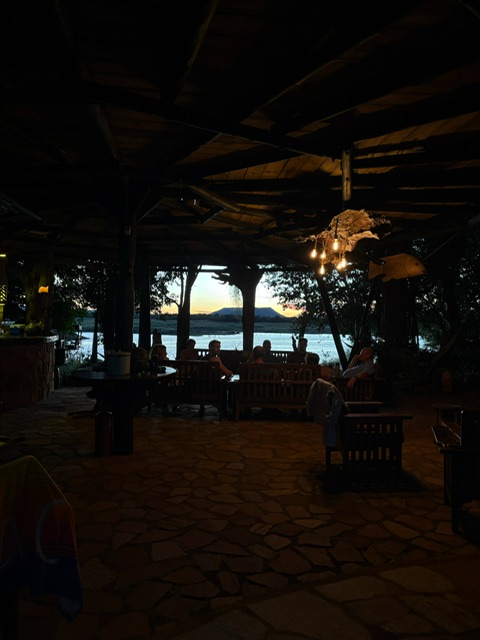
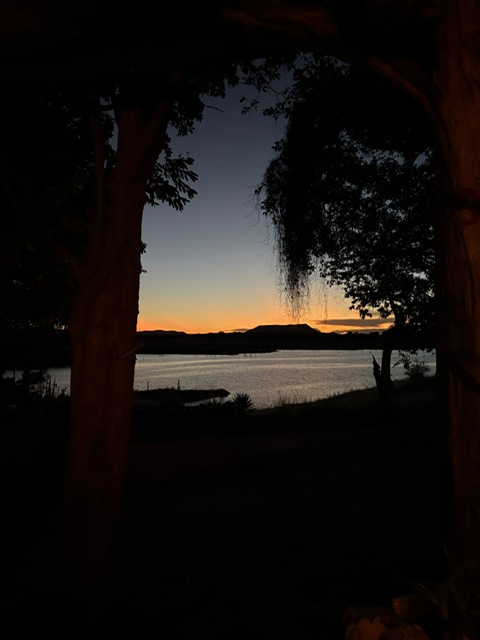
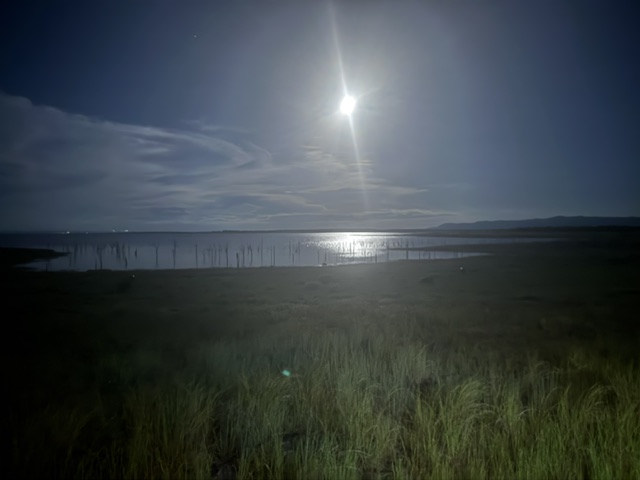
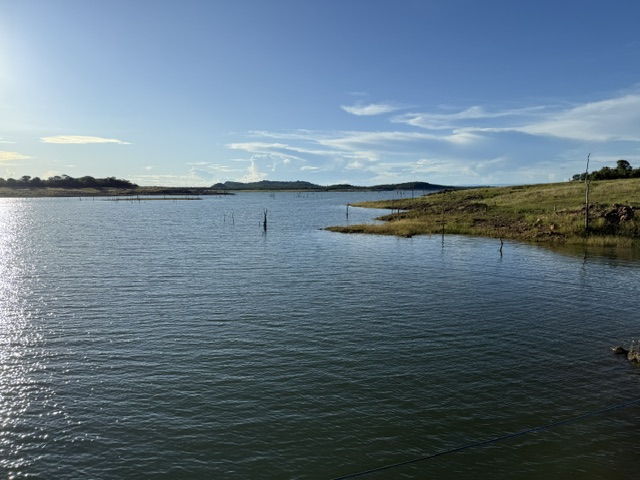
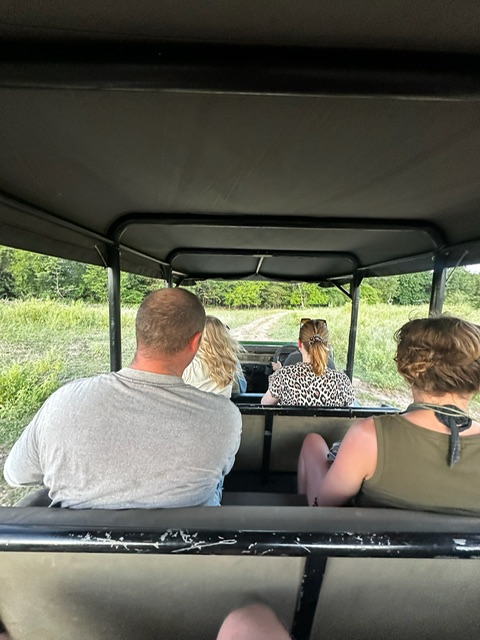
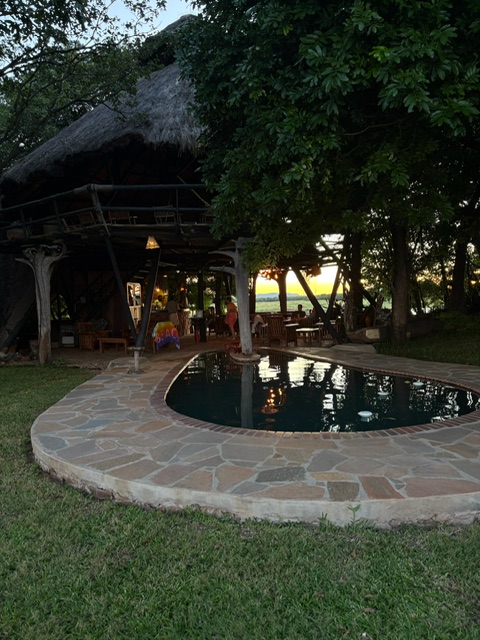
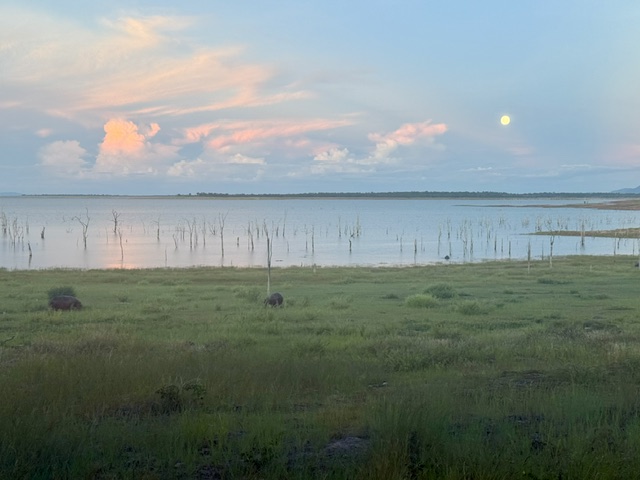
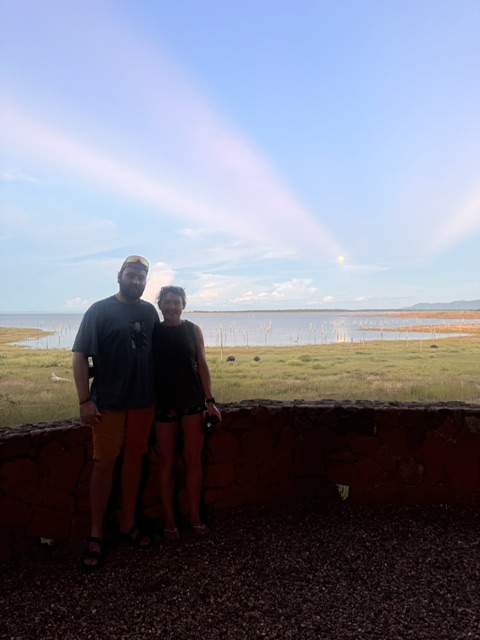
Once Chessa was moored, Graham drove us in an open-sided, canopy-roofed Landrover up the short slope to the camp, which we had to ourselves for the duration of the trip. It was a beautiful place: a huge, round, thatched roof covered a large bar area with lots of seating and a small pool. Situated on the brow of a narrow, jagged-edged peninsula, the camp was flanked by water and the view to the east, in particular, was spectacular: the glassy surface of a curved bay mirrored the pinkening sky beneath a bright full moon, which glowed above a hazy line of distant hills. The bay was filled with dozens of skeletal mopane trees, haunting remnants of the old forest flooded to create the lake, and several fat hippos grazed the sunken, grassy stretch between the water and the camp wall. To us, it felt like paradise.
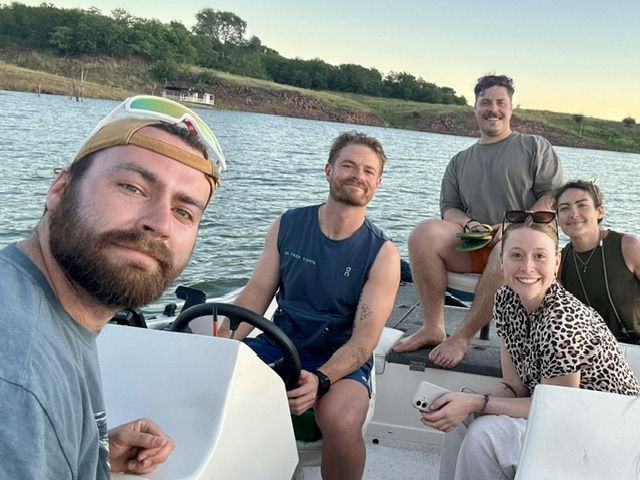
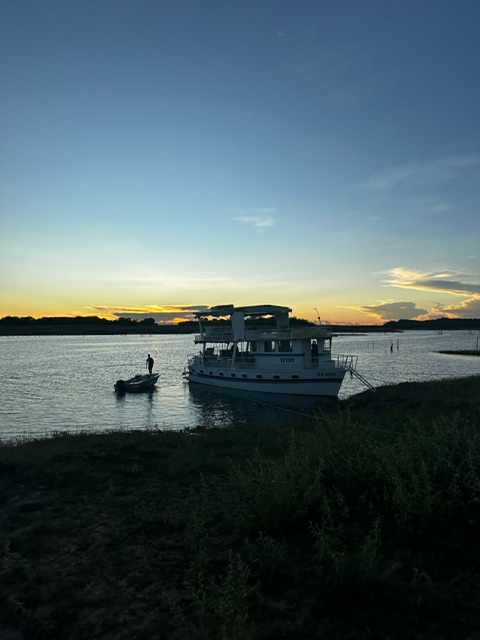
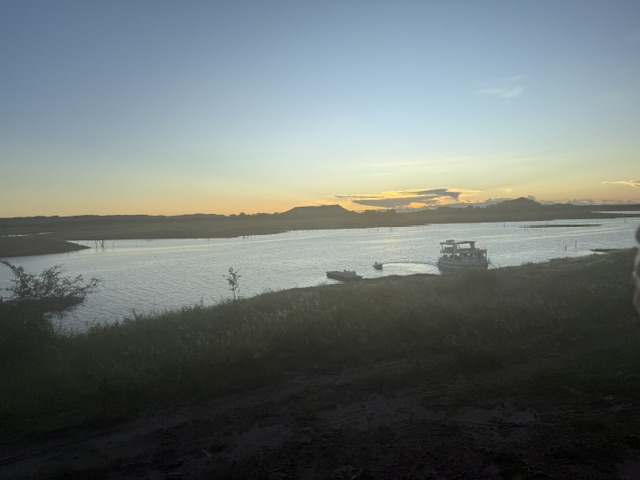
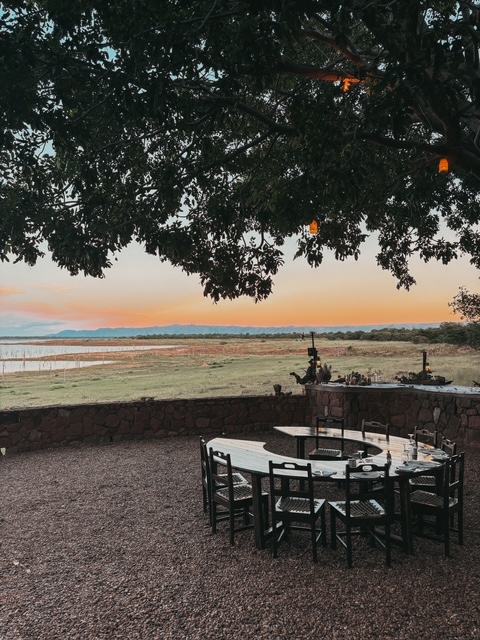
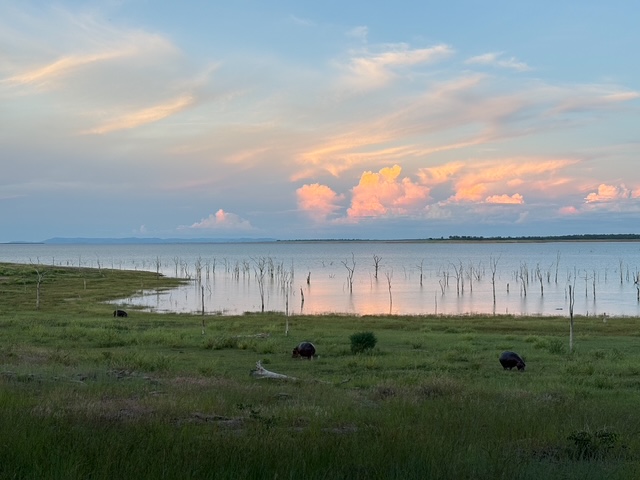
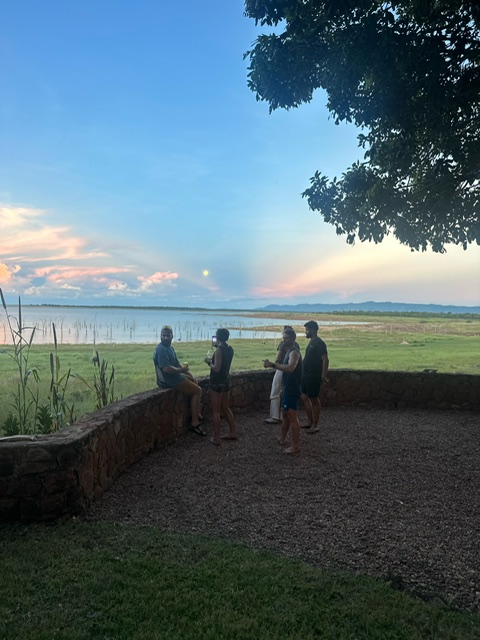
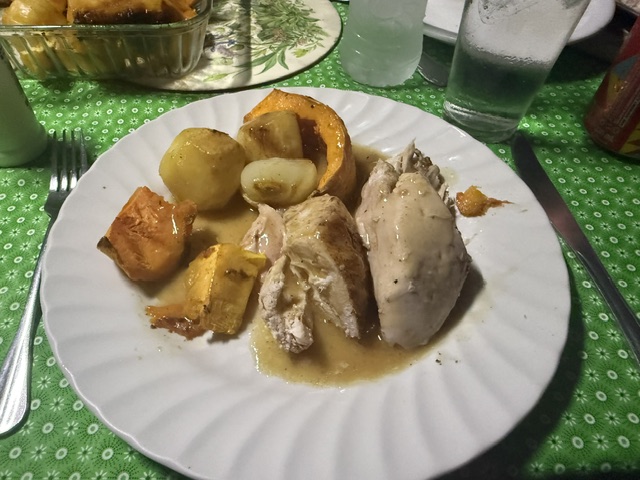
We lounged around at the bar for a couple of hours, drinking Savanna cider and Dois M beer and playing dix-mille, before hitching a lift back down the slope to Chessa. She was only about 200m away but given the nature of the wildlife and the utterly remote location of the camp, it seemed sensible not to wander around in the dark. Chum and André had rustled up a dinner of roast chicken and veg, which went down a treat, and we spent the rest of the evening playing games around the table before heading up to bed. Paul and Shelley were in one of the camp lodges, and we (the eight “kids”) all slept outdoors on the top deck of Chessa on soft mattresses separated by mosquito nets that hung from the roof. It felt like a wonderfully exotic school trip and – even though we’d just arrived – I wished it would never end.