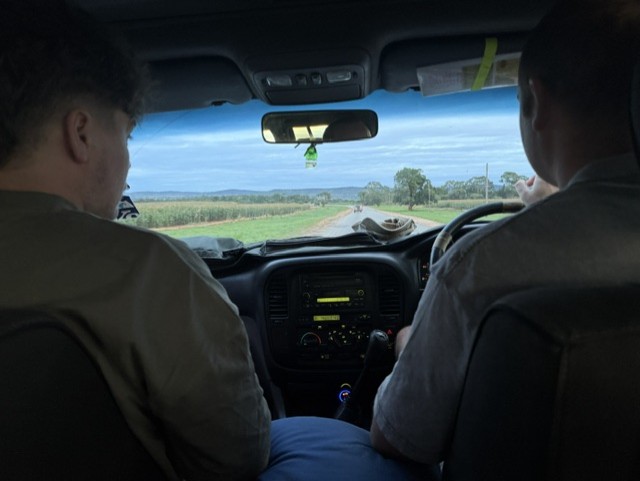
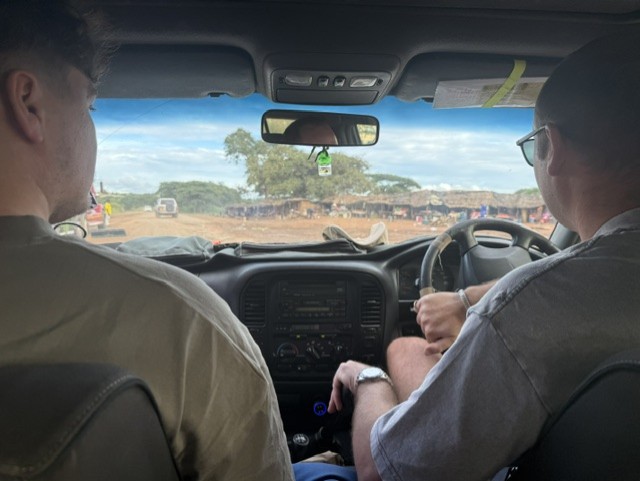
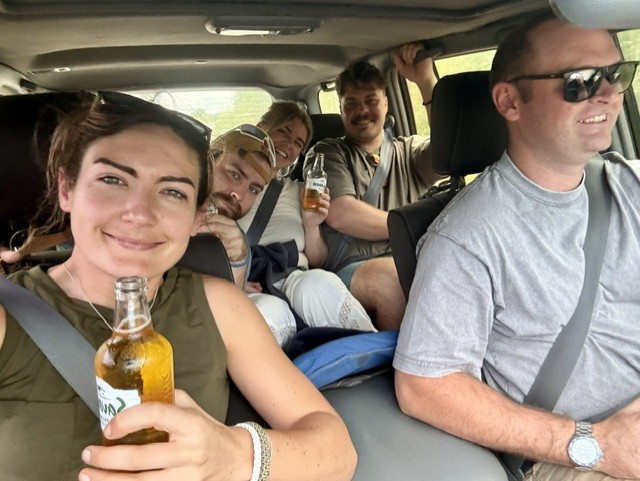
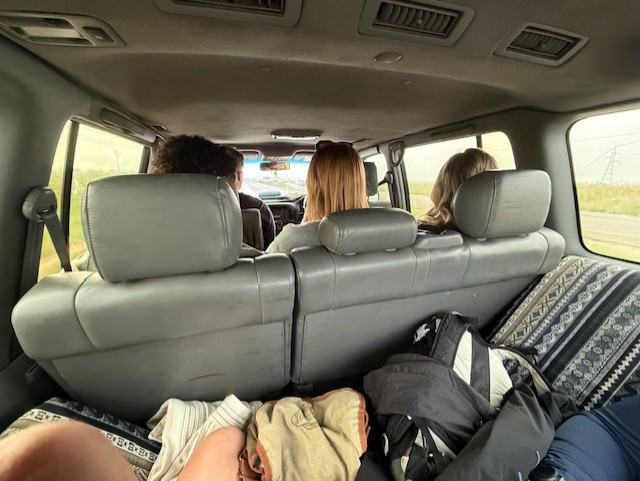
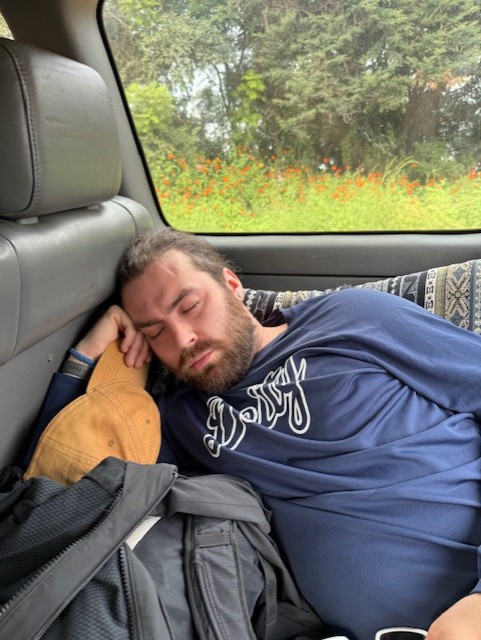
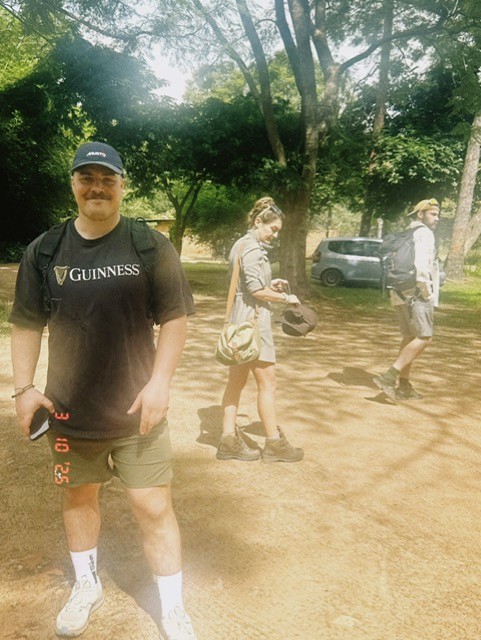
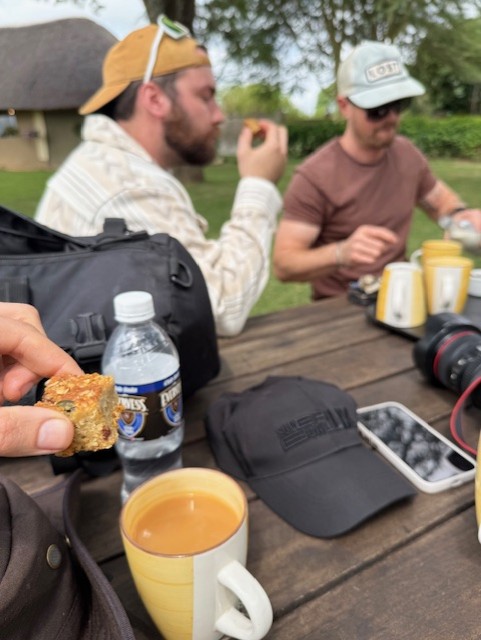
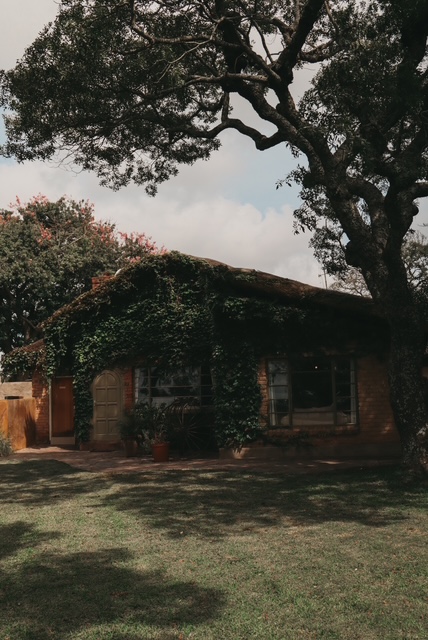
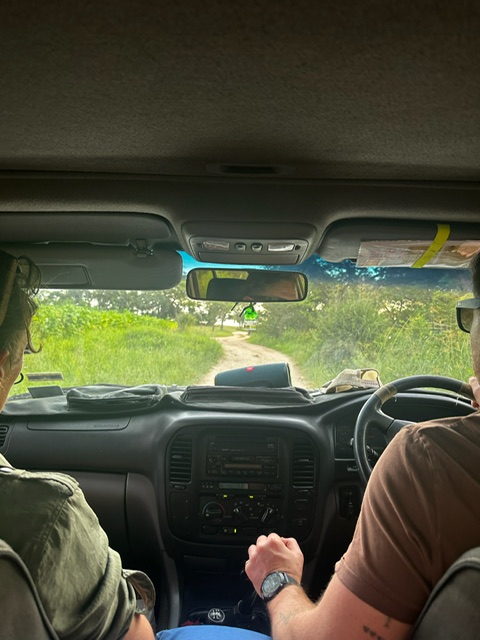
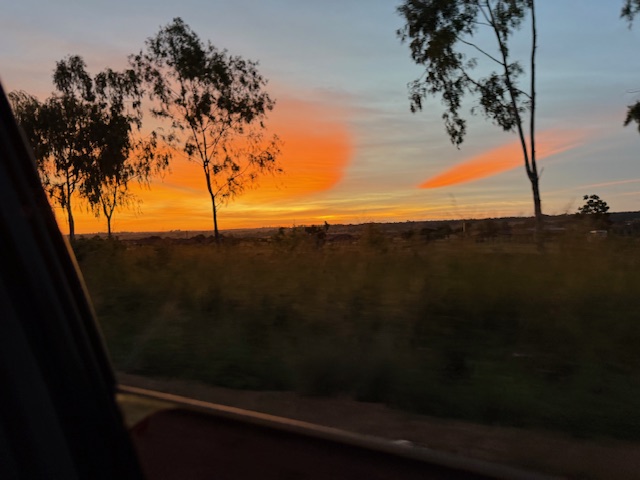
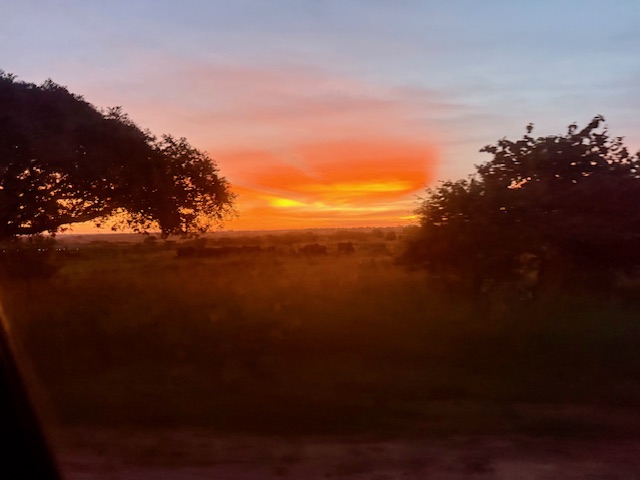
The house was bustling with bleary-eyed activity as we gathered our bags, gulped down coffee and bundled into cars for a 5am leave. I squeezed into one of the Land Cruisers with Ryan, Gus, Dan and Bryn. We left Harare in the dark in a three-car convoy behind Paul and Shelley. I was too excited to go back to sleep. We were en route to a four-day house boat escapade on Lake Kariba, the world’s largest artificial lake at over 140 miles long and 20 miles wide, which straddles Zimbabwe’s northwestern border with Zambia.
Journey through rural Zimbabwe: high to lowveld
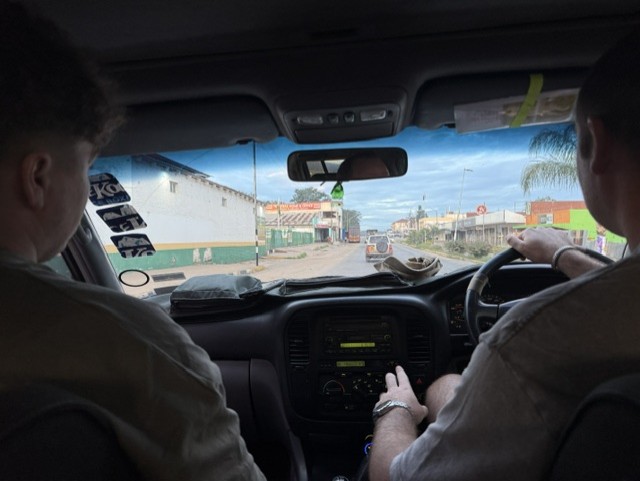
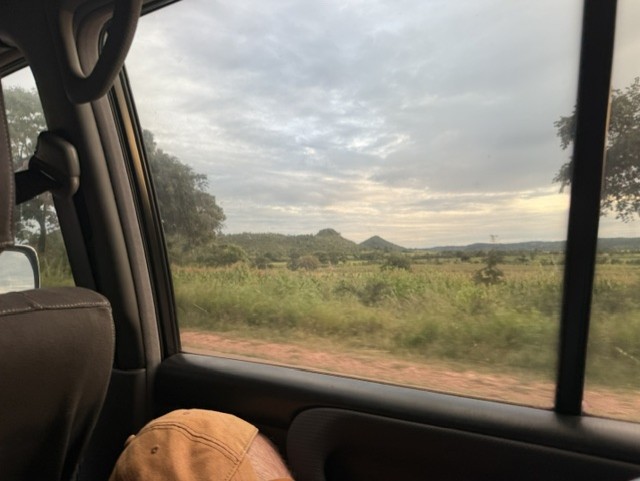
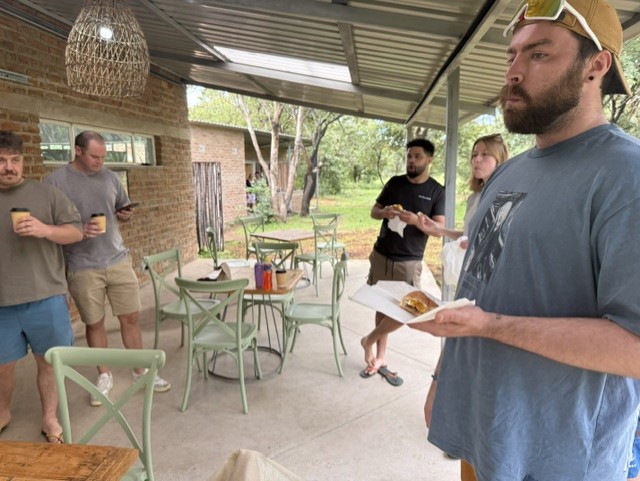
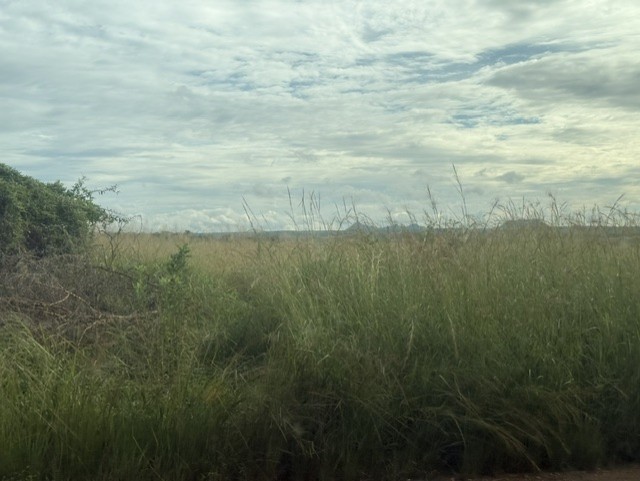
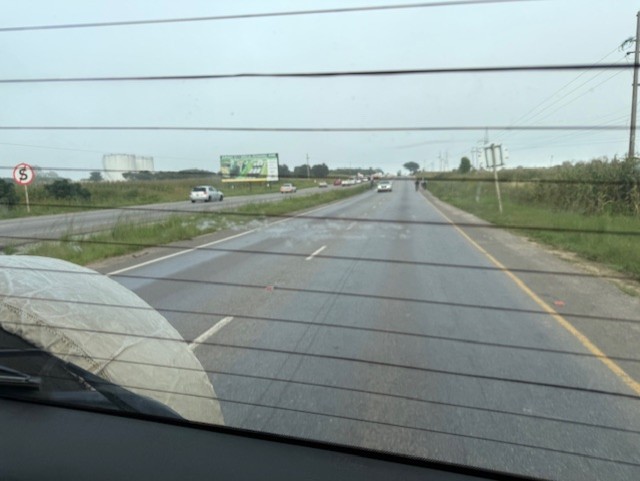
Daylight crept in gradually as we made our way northwest across open, gently rolling highveld countryside, past clustered cornfields and vast areas of scrub. We went through the first large town, Chinhoyi, at 6am, which had a wide, dusty main street and flat-faced buildings that gave it a wild-west-esque look. We stopped for a bacon bap at a café near Karoi after a long stretch across sparsely populated swathes of land, which was fairly uneventful other than a couple of lorry overtakes – wild by UK standards, but textbook in Zim – that had Bryn (our heroic driver) yelling “no – mom – nooo…” in alarm. The landscape was green and slightly undulating, with occasional, conical hills that rose abruptly from flat surrounds.
ChinhoyiKaroi
The journey became spicier shortly after Karoi. The tarmac narrowed and dropped away on either side to sheer-edged, dusty strips, and the prolific, wheel-munching potholes we’d been warned about began appearing. Bryn drove on whichever side was least treacherous until a vehicle came the other way. At one point we watched anxiously from behind as Paul got stuck, with two wheels on the road and two down the side-drop, and casually cruised – on the wrong side of the road, at some angle – past a truck coming the other way, until he could regain the tarmac and return to the left.
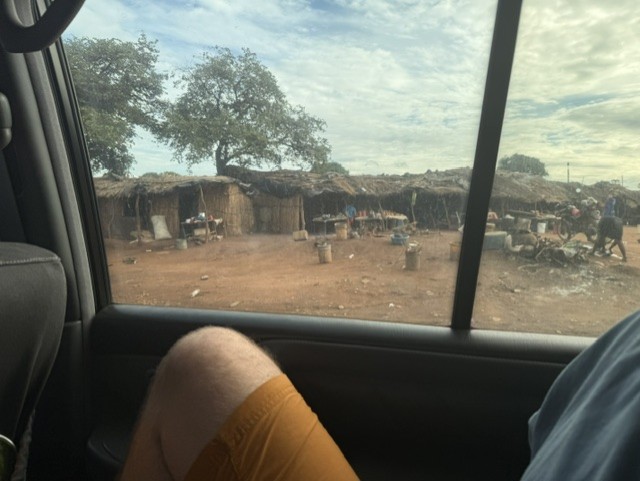
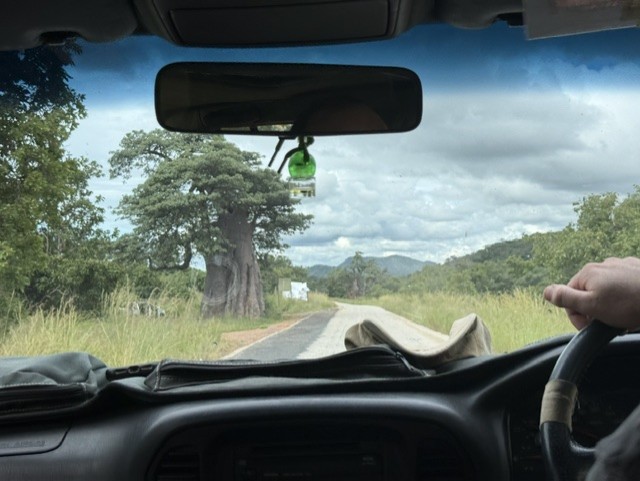
After miles of semi-agricultural, scrubby openness, we passed a ramshackle village lined by low, open-sided, grass-roofed huts. The landscape gradually transitioned into rolling, thickly-vegetated hills, and the previously straight road now twisted through jungle-like forest. Being at the back of the convoy, we got stuck first behind an incredibly wide, slow truck, then a lorry that failed to make a climb up a steep hill. We came across a military checkpoint, comprising a large khaki truck and several uniformed personnel, and Bryn warned us to keep phones down (photographing anything do to with the military is illegal). Thankfully they let us through with a quick glance and a curt nod.
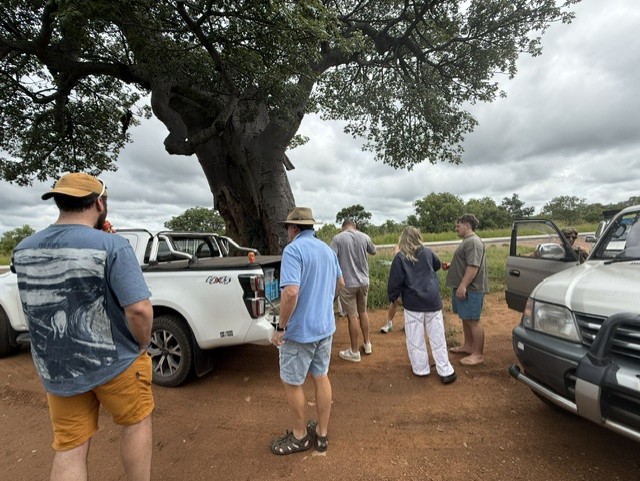
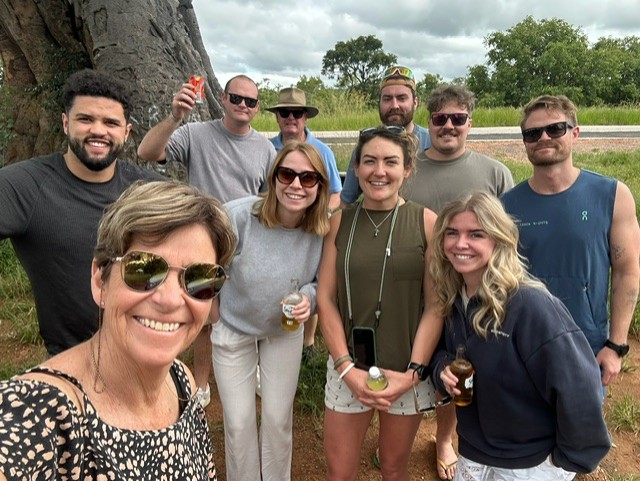
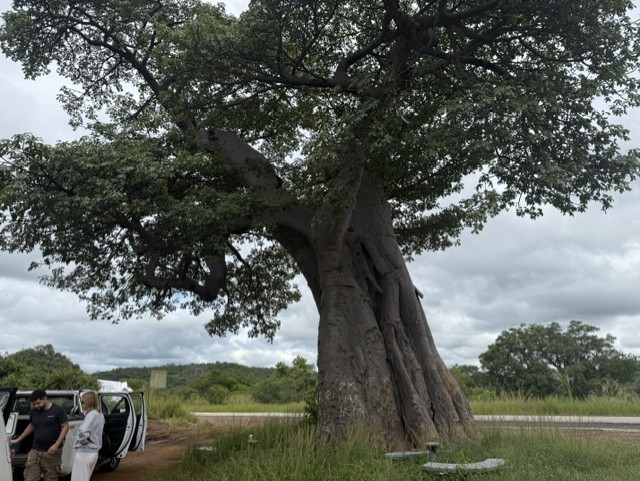
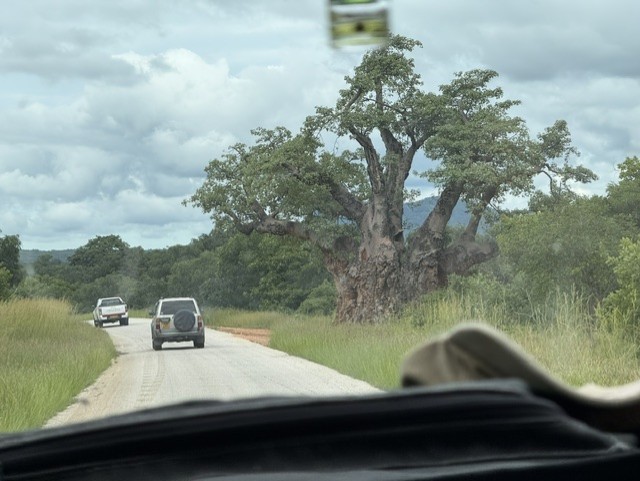
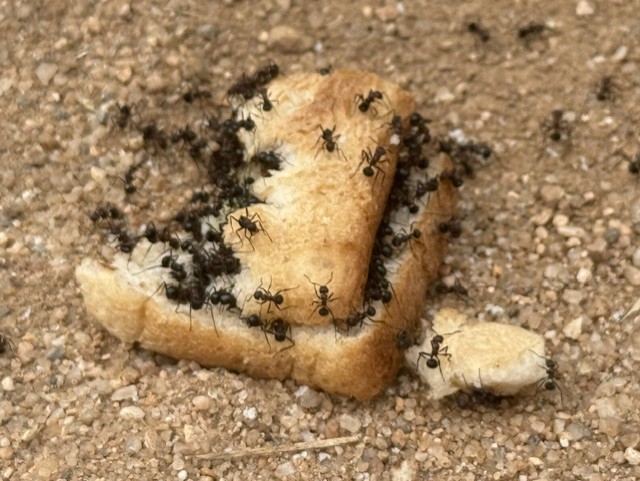
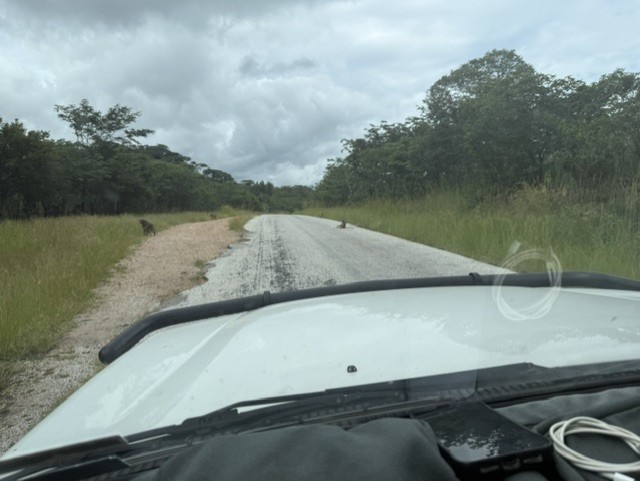
We met the other two cars at a pull-in by a broad-trunked baobab tree at 9am, where we celebrated the “smooth” journey with a drink, conscious that we were now in big cat territory. I was amazed by the baobabs, which seemed all trunk and few leaves, and by the huge, bitey-looking ants that appeared at our feet. We were in wild country now and once we left the baobab I watched eagerly for wildlife, naively convinced that if I looked hard enough I’d spot something big. I was overly optimistic, but still thrilled to see a family of baboons casually patrolling the road ahead.
At the meeting pointFirst baboon sighting
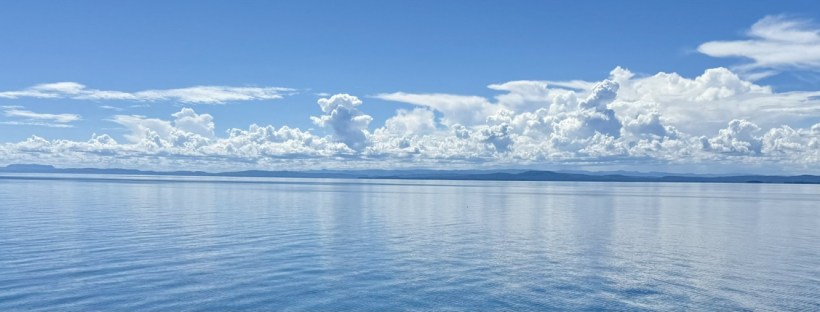
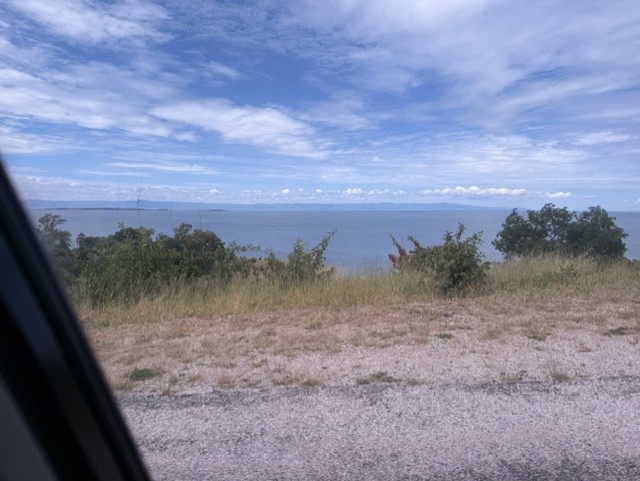
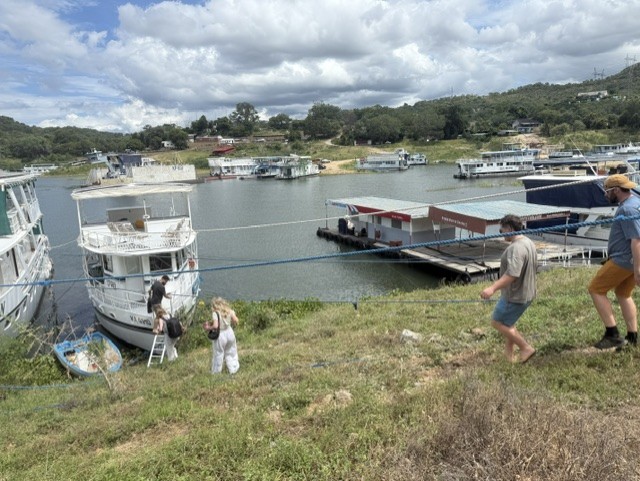
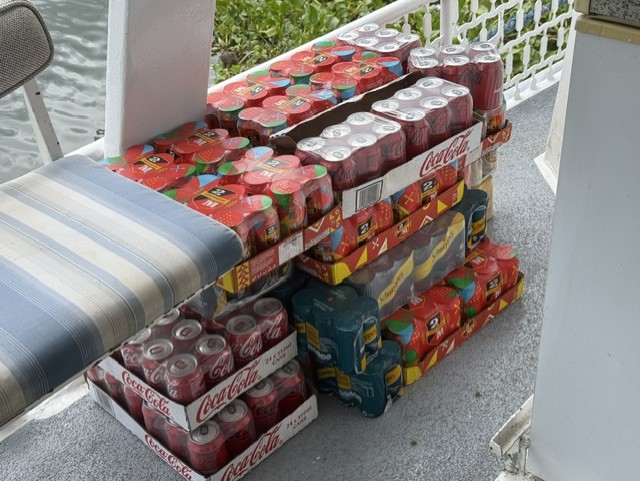
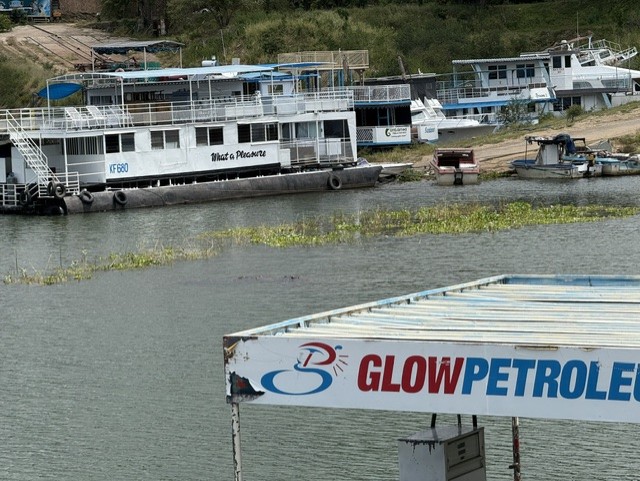
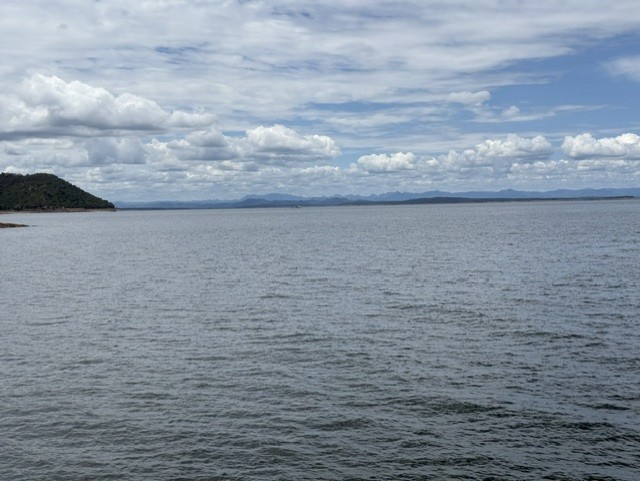
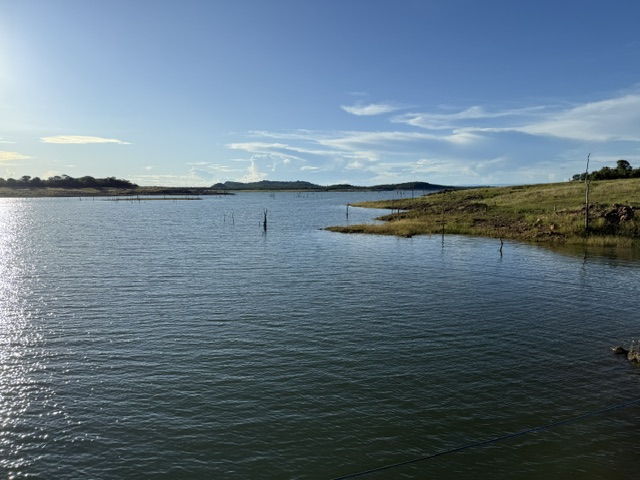
The road descended past Kariba town and Lake Kariba appeared, as vast as a sea inlet and backed by a hazy line of undulating mountains. We stopped briefly at a petrol station (I wouldn’t recommend the toilets), then continued through a lakeside village to the marina where the boat awaited us. We hauled our bags out of the car, clambered down a steep bank and boarded the boat, Chessa, where we were greeted with warm smiles from our crew, Captain Chum and First Mate André. Excitement ensued when someone spotted two pairs of goggly hippo eyes poking out from the surface of the water before we’d even left the marina, and the boat set off at 11am with several jubilant passengers and a heavy cargo of drinks.
First hippo sighting
Boat trip to Musango Safari Camp
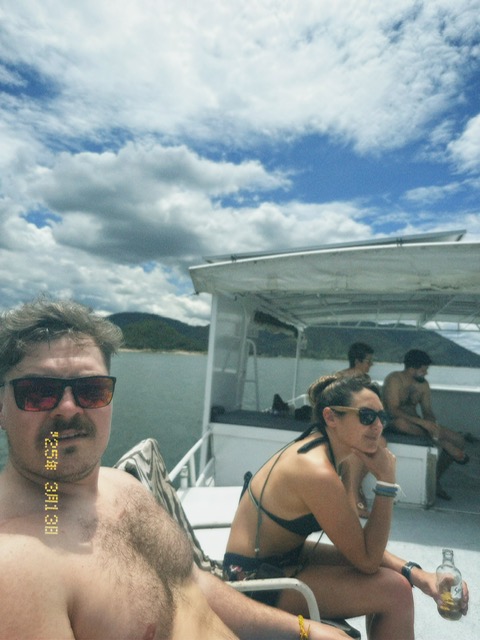
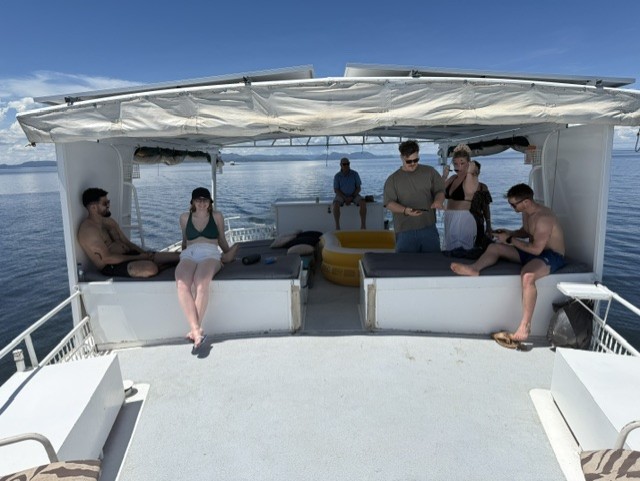
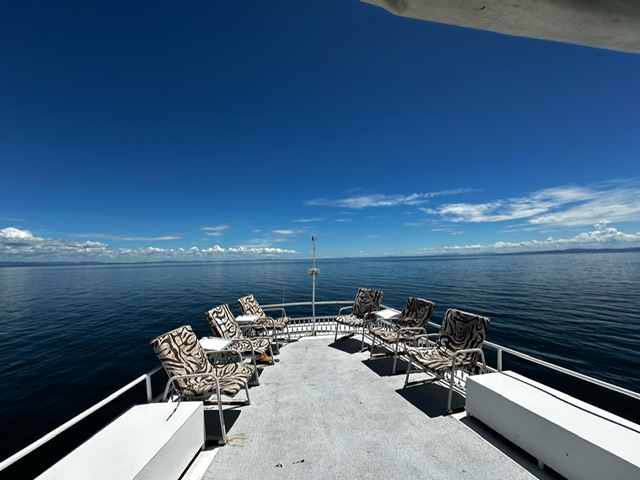
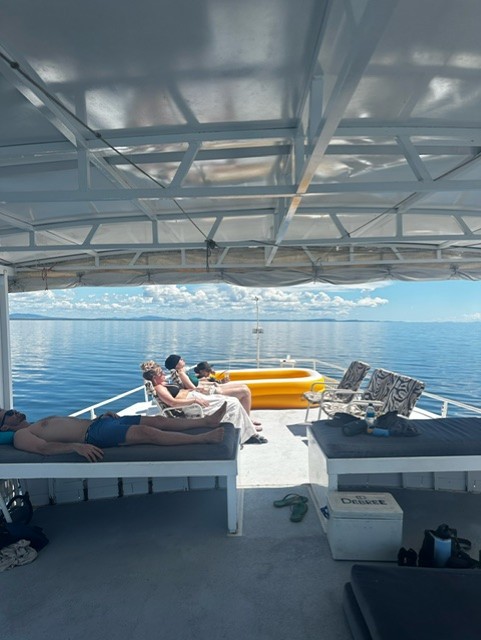
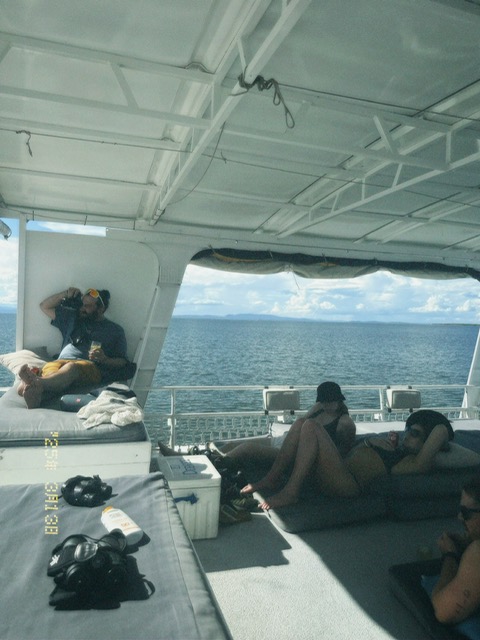
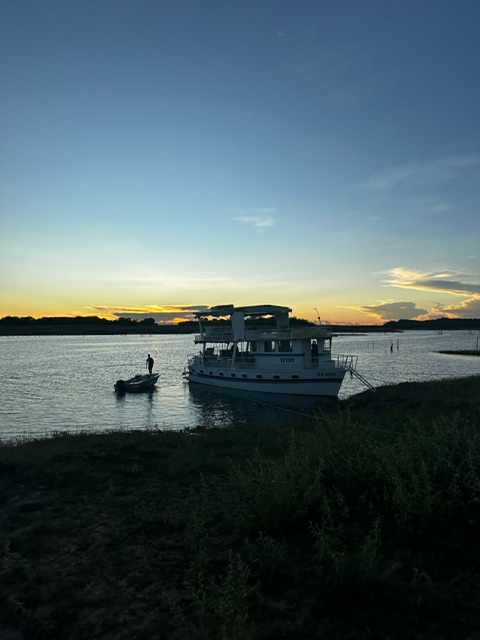
Chessa was wonderful. She had two cabin rooms where we stored our bags, one each for girls and boys, and two toilets below deck. The lower deck housed a small kitchen, “bar”, enclosed seating area, communal table and – importantly – a chest fridge full of cans and bottles. We would sleep on the upper deck, which was open plan, partly covered by a canopy, and gained by a set of steep metal stairs that – as Tilman would later discover – turned out to be treacherous. After a good poke around, we settled in chairs on the open end of the upper deck and mused over who would be the first in the big yellow paddling pool.
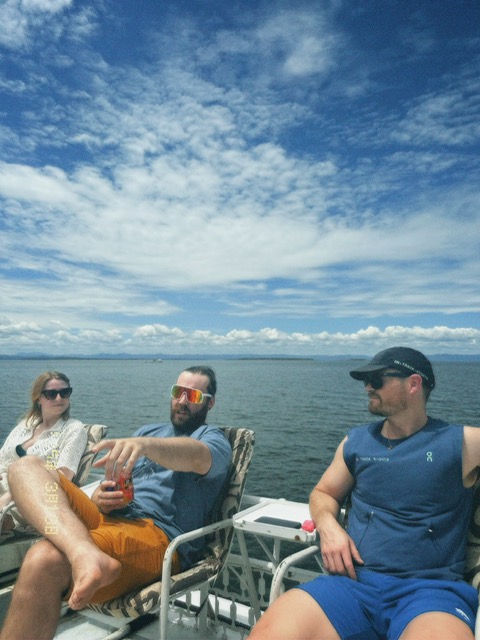
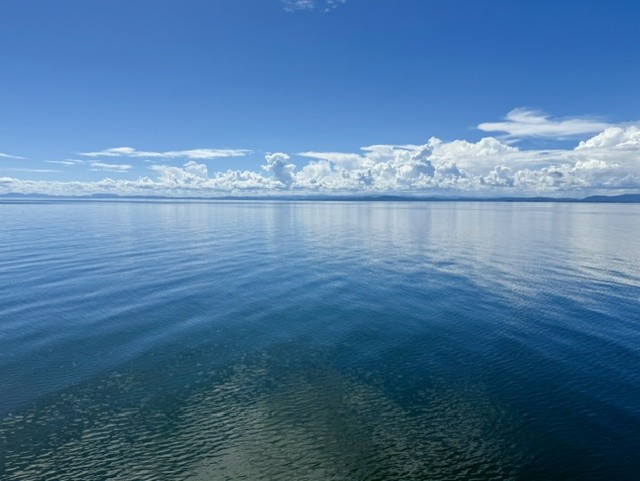
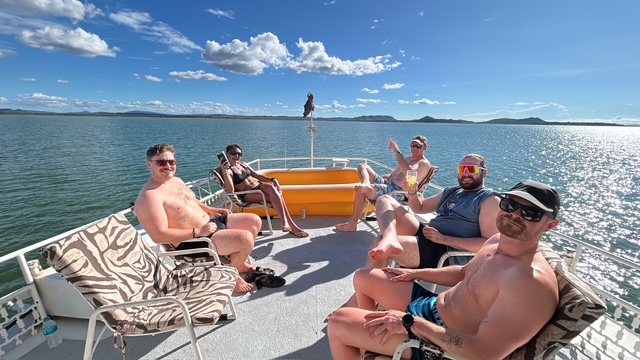
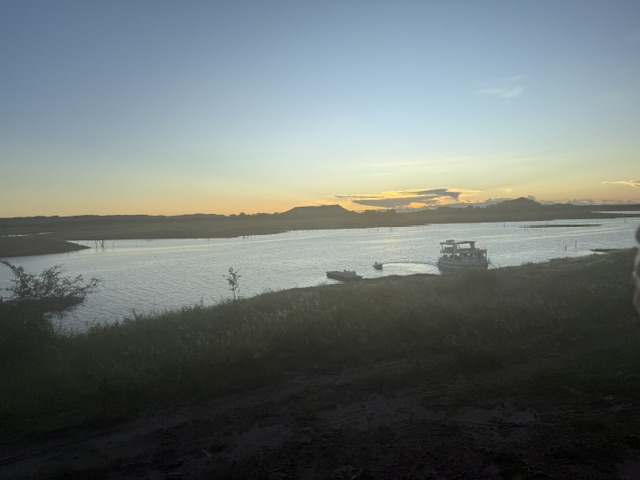
We chugged out of the marina, which opened between two thickly vegetated headlands onto the wide, smooth surface of Lake Kariba. Jagged mountains lined the horizon and as we moved further from land, it seemed as if the boat was shrinking – quite peacefully – into a vast expanse of open water. We relaxed on the upper deck for a couple of hours, elephant-spotting through binoculars (seen at the water’s edge, to our delight, but from a considerable distance) and drinking cider as the hot midday sun broke through fine clouds, until Shelley collected us for lunch.
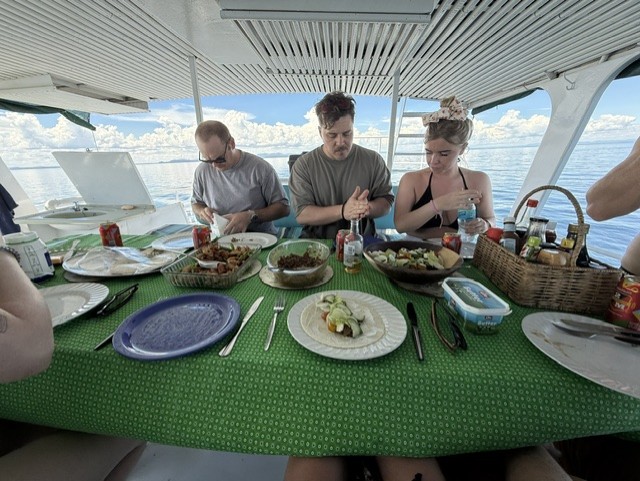
When we saw our first meal laid out on the table of the lower deck, we realised that we were going to be spoiled for food. We had tortilla wraps with chicken, peppers, beef mince and salad accompanied by a vast array of condiments, notably aromat, which made everything taste better. Once we’d eaten we returned to the upper deck, full of food and sleepy in the afternoon sun. We napped, lounged and gazed over the deep blue, mirror-flat water. It felt like a dream.
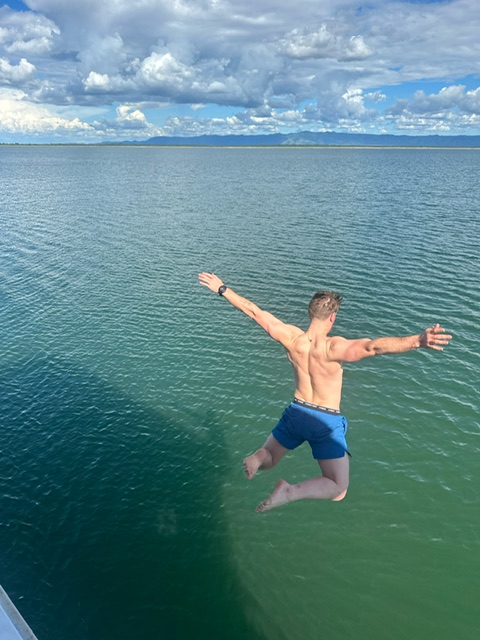
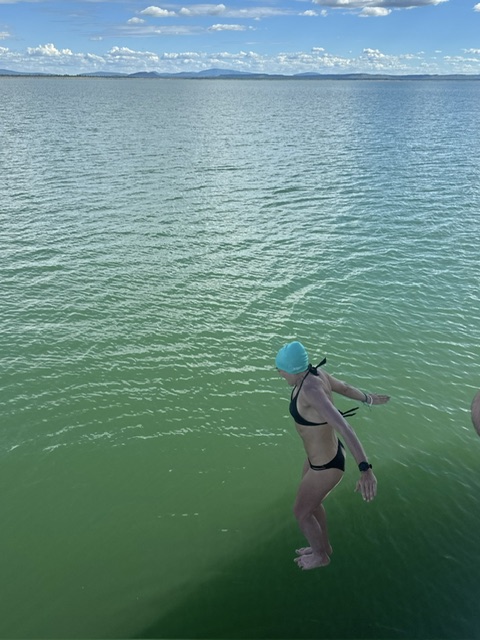
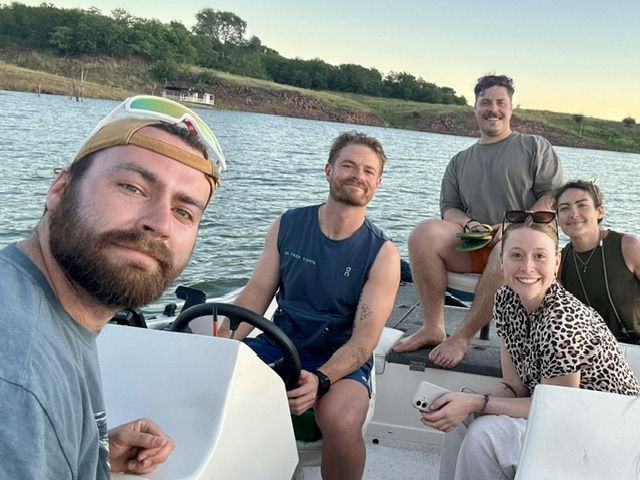
At some point André alerted Reece that we were at the middle of the lake. He cut the engine and the boys (and me) jumped in, one by one, from the top deck. The thrill came on entering the water – swimming in Kariba is generally a no-go due to crocodiles, but it’s doable in the middle due to the unlikelihood (but not impossibility) of crocs straying far from the banks. The water seemed very dark and once in, we each hastened to the back of the boat to clamber onto the rear deck.
At 5:30pm we reached our destination, Musango Safari Camp, located on the south bank of Lake Kariba in a sheltered inlet. It had taken Chessa six hours to travel about a quarter of the lake’s length. As we approached land we saw our guide, Graham – a school friend of Reece and Bryn’s – waiting for us on the bank with his massive, soppy rhodesian ridgeback, Bholli. Graham waved, reached into the grass at his feet, pulled out a writhing stripe-bellied snake (the only snake we actually saw in Zim), inspected it, pronounced it harmless and returned it to the scrub away from Bholli. This made for a great first impression.
Warm welcome at Musango
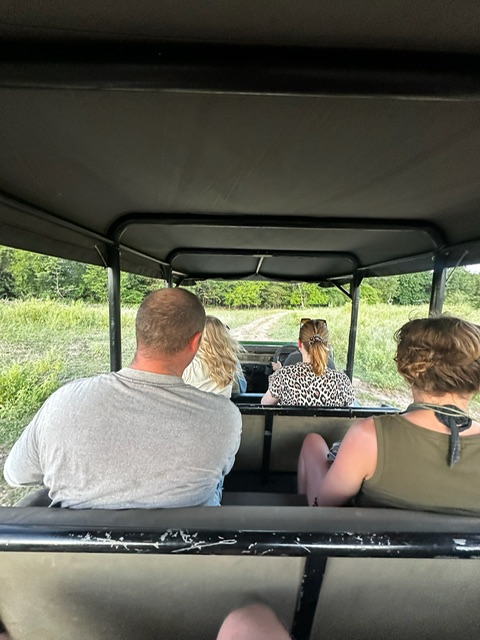
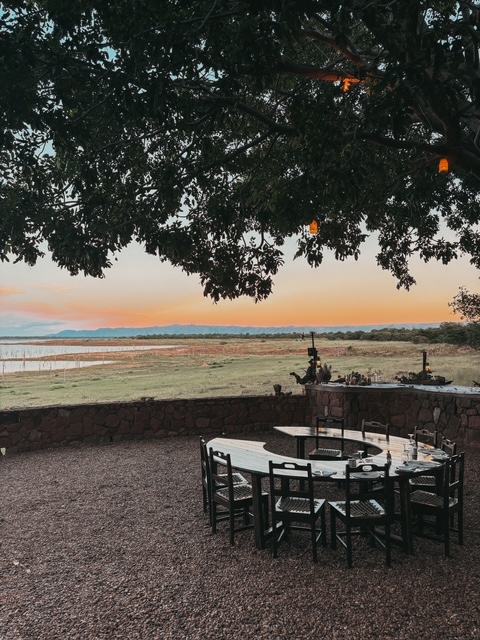
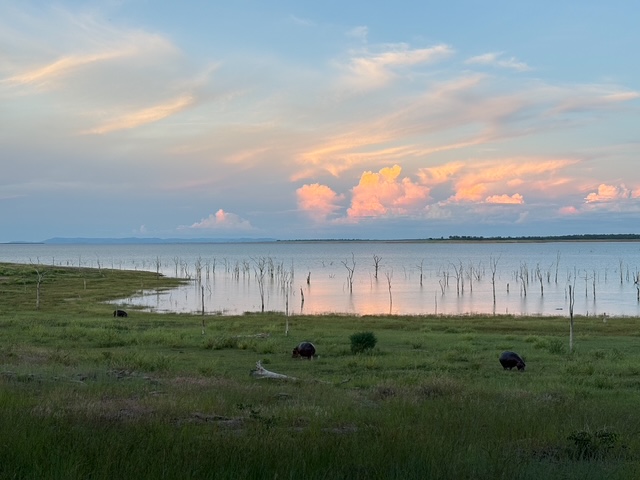
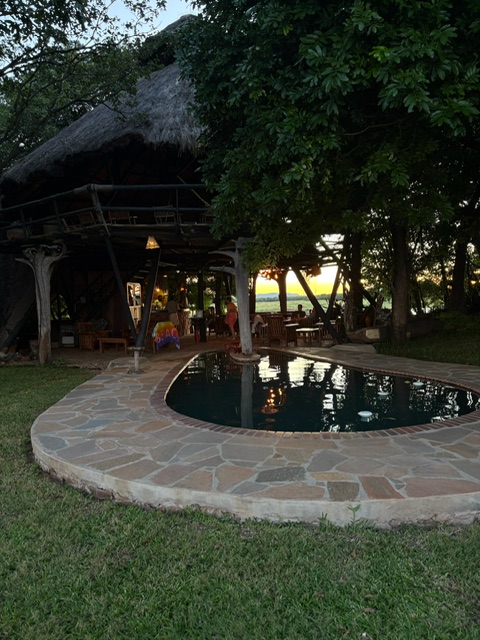
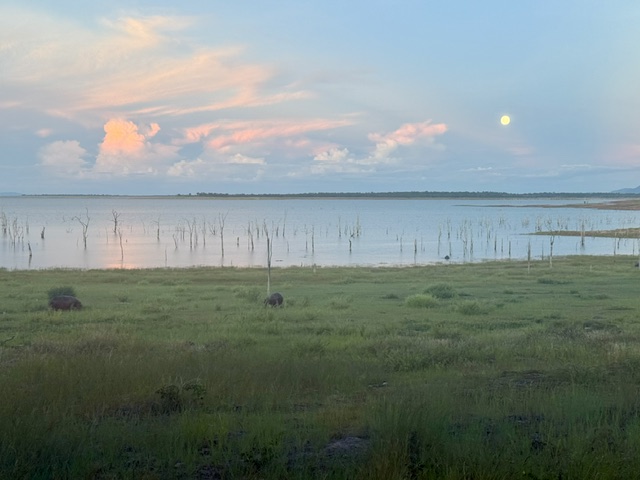
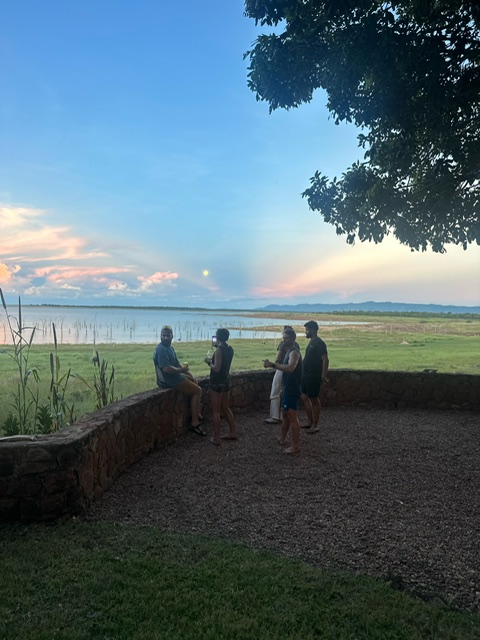
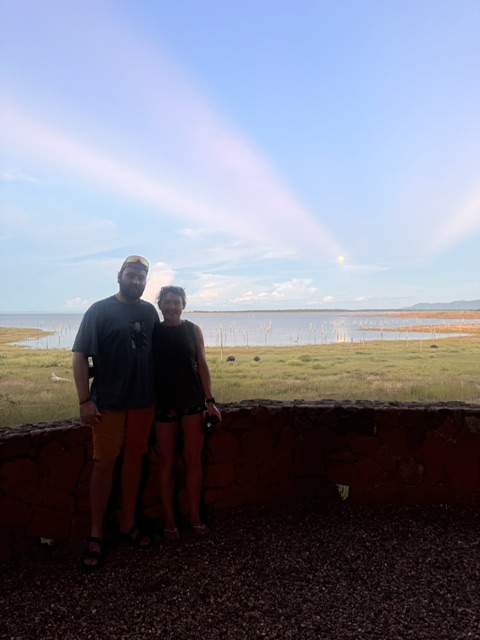
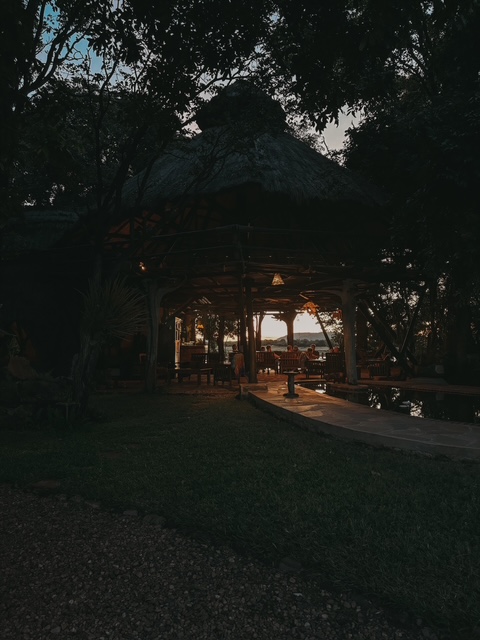
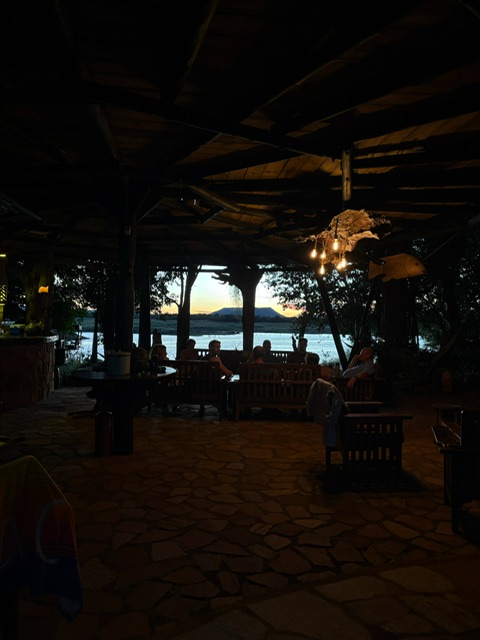
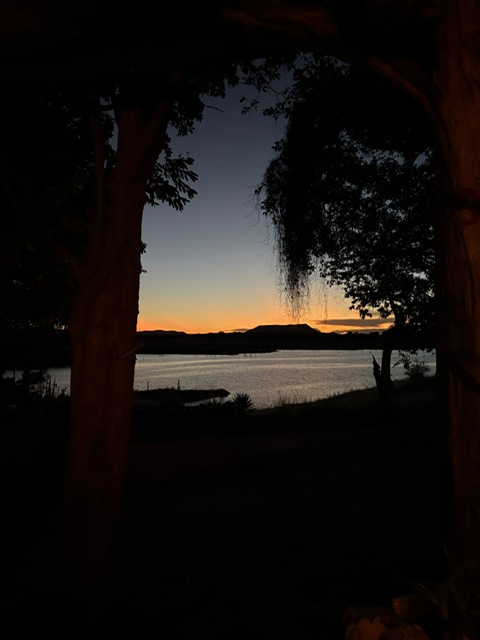
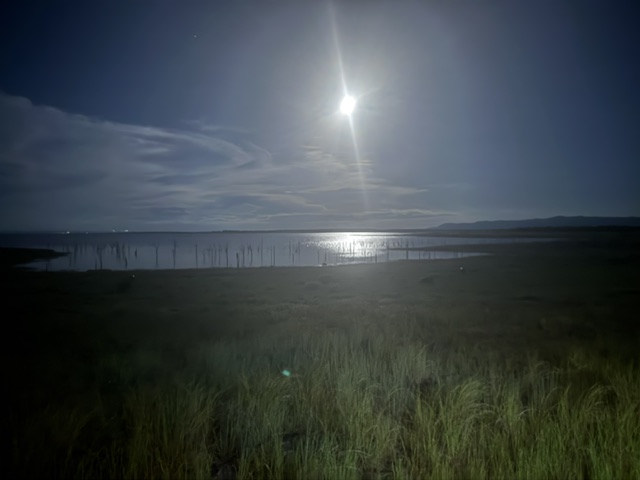
Once Chessa was moored, Graham drove us in an open-sided, canopy-roofed Landrover up the short slope to the camp, which we had to ourselves for the duration of the trip. It was a beautiful place: a huge, round, thatched roof covered a large bar area with lots of seating and a small pool. Situated on the brow of a narrow, jagged-edged peninsula, the camp was flanked by water and the view to the east, in particular, was spectacular: the glassy surface of a curved bay mirrored the pinkening sky beneath a bright full moon, which glowed above a hazy line of distant hills. The bay was filled with dozens of skeletal mopane trees, haunting remnants of the old forest flooded to create the lake, and several fat hippos grazed the sunken, grassy stretch between the water and the camp wall. To us, it felt like paradise.
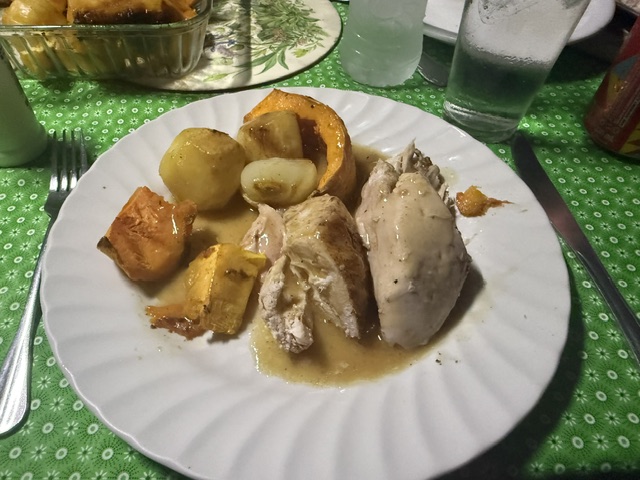
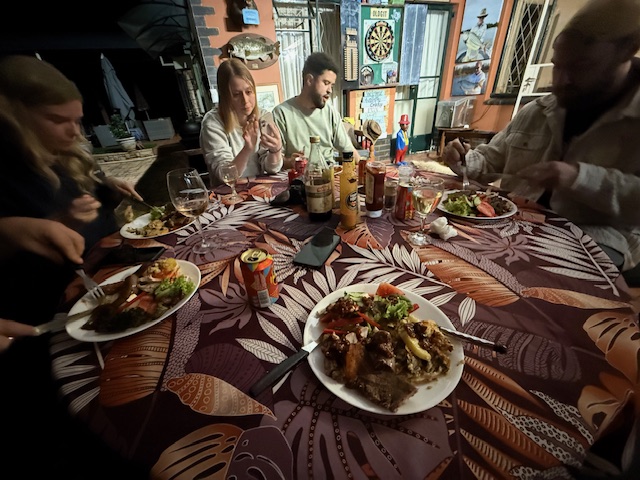
We lounged around at the bar for a couple of hours, drinking Savanna cider and Dois M beer and playing dix-mille, before hitching a lift back down the slope to Chessa. She was only about 200m away but given the nature of the wildlife and the utterly remote location of the camp, it seemed sensible not to wander around in the dark. Chum and André had rustled up a dinner of roast chicken and veg, which went down a treat, and we spent the rest of the evening playing games around the table before heading up to bed. Paul and Shelley were in one of the camp lodges, and we (the eight “kids”) all slept outdoors on the top deck of Chessa on soft mattresses separated by mosquito nets that hung from the roof. It felt like a wonderfully exotic school trip and – even though we’d just arrived – I wished it would never end.
The time had come, a day later than planned, to get tattoos. After a breakfast of ham and cheese croissants I headed out with Reece, Iz, Tilman and Ryan to the artist’s house in a leafy suburb of Harare. Several of Reece’s friends had recommended Kazz and we hoped that there would be time for each of us to get a small, simple piece as a permanent souvenir.
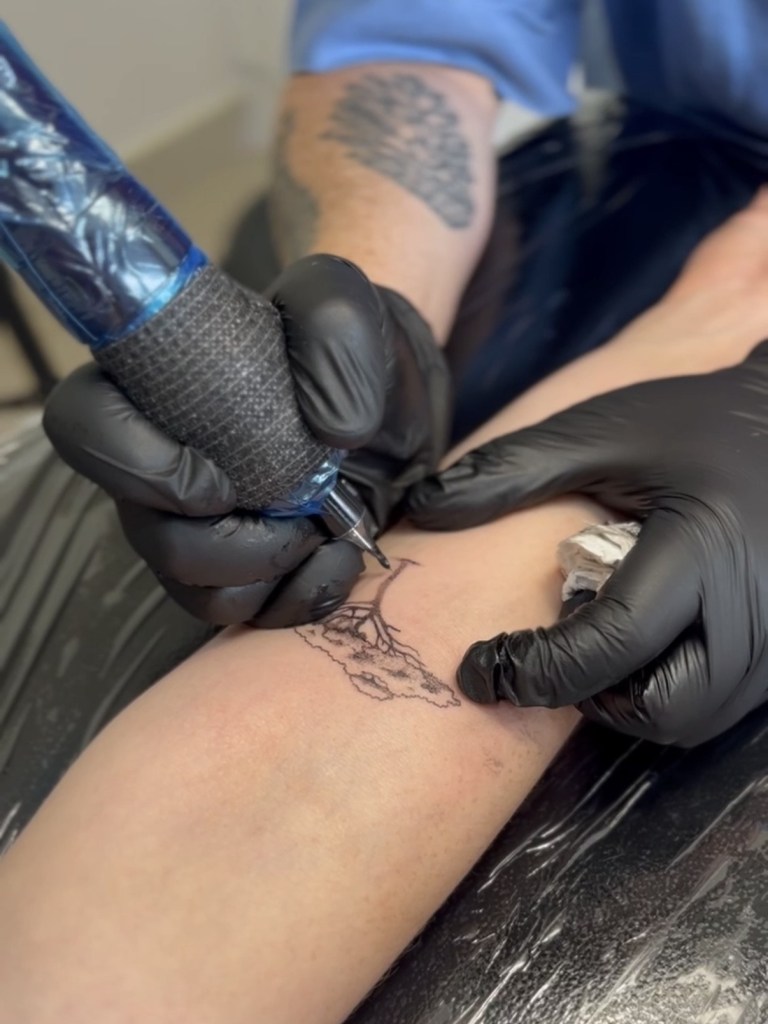
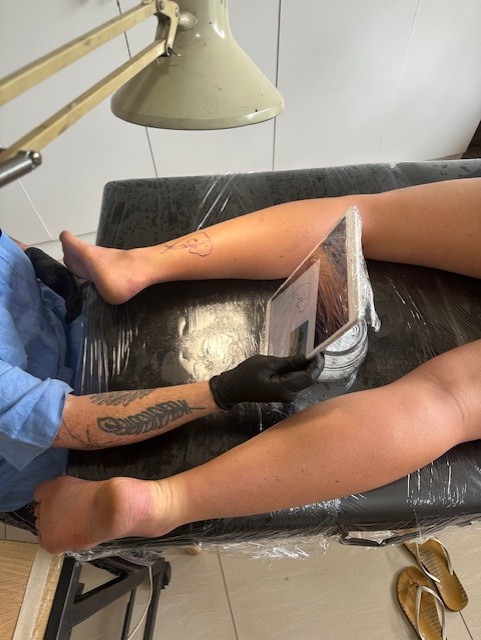
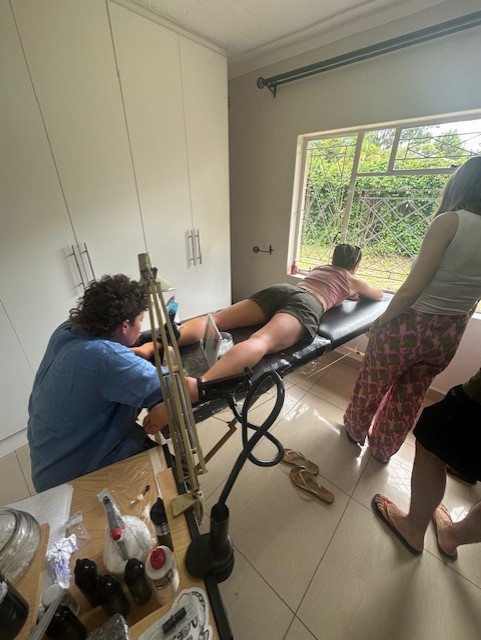
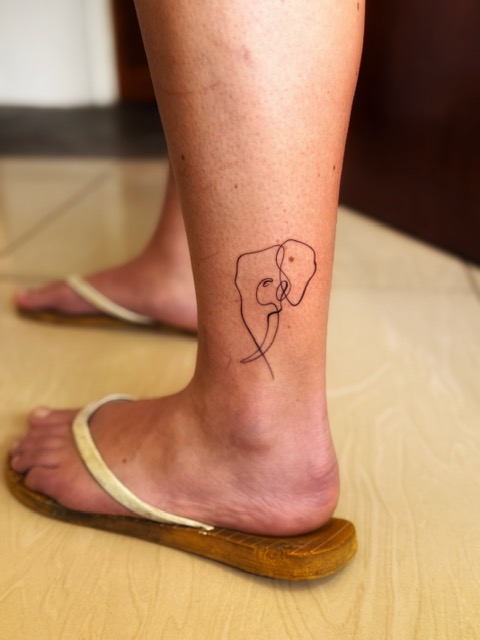
Kazz was tattooed, tousle-haired and very attentive. We talked through ideas and she came up with designs on an iPad while we hung around in her garden, eyeing the exotic-looking plants and huge boulders perched above a swampy green pool (she’d just moved in). She called us back into the studio room and tattooed four of us in turn while the others watched: Iz chose an acacia tree on her forearm, I had Mac the Imire elephant on my ankle, Tilman had an outline of Africa above his elbow and Reece had Nyami Nyami, the Zambezi river god, on his forearm. There wasn’t time for Ryan, but he didn’t mind.
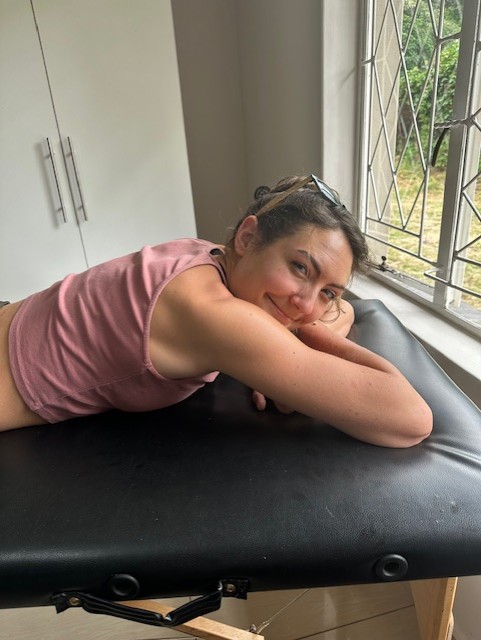
The process took about 3 1/2 hours and I was blown away by Kazz’s artwork. First I showed her my idea, a line drawing of the elephant’s face, which she used to trace over a photo that Iz had taken at Imire. We discussed the size and location, then she printed and cut out a stencil so I could test it. I decided against having it on my foot as planned as she advised that it’d fade quite quickly, so I settled on my outer ankle/calf and lay face-down on the bench, watching birds through the window. It hurt a little, but wasn’t unbearable – just a scratchy feeling, which dulled as I got used to it, and took about half an hour. I was delighted with the result, as were the others, and we left clingfilmed and very happy – I thought my first tattoo well worth $60.
Our joy didn’t last long. It was 2:45pm and we were booked onto a wildlife sanctuary tour on the edge of Harare at 3:30, but we couldn’t leave Kazz’s house in the car as her partner had taken the electric gate fob. She was very apologetic as we climbed over the high garden wall onto the street. After a frantic phone call to Shelley, she and Bryn arranged to come and pick us up with Gus and Dan in tow.
Wild is Life
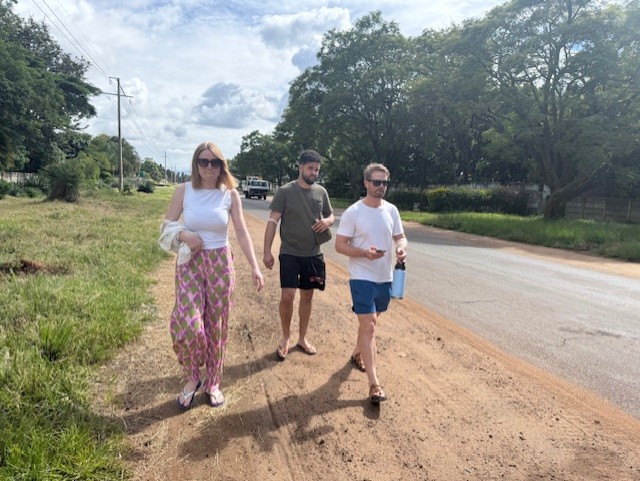
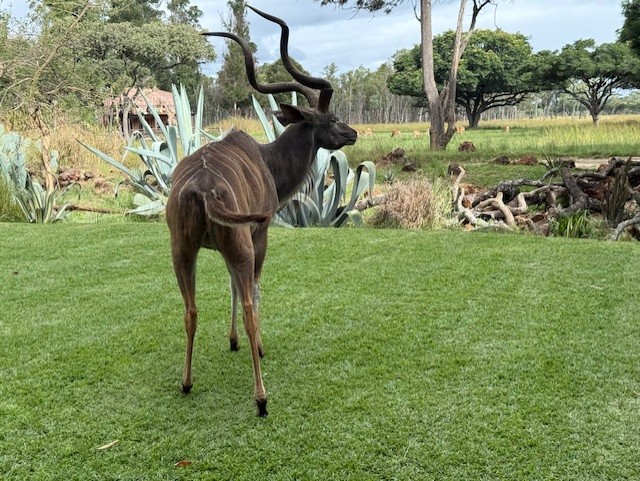
We traipsed along the road in the afternoon heat and were collected after a short walk. The drivers raced across Harare and we arrived at Wild is Life just a couple of minutes late. It was a much fancier setup than I’d expected, and I wondered if Shelley and Bryn had downplayed it so we had a nice surprise. If so, it worked: a path bordered by flowers and succulents led us to an open lawn dotted with trees, thatched buildings and – unexpectedly – an enormous , roaming kudu, which I gave a wide berth. It felt posh, a bit like Imire lodge. By the end of our tour, I understood why tickets cost $100pp.
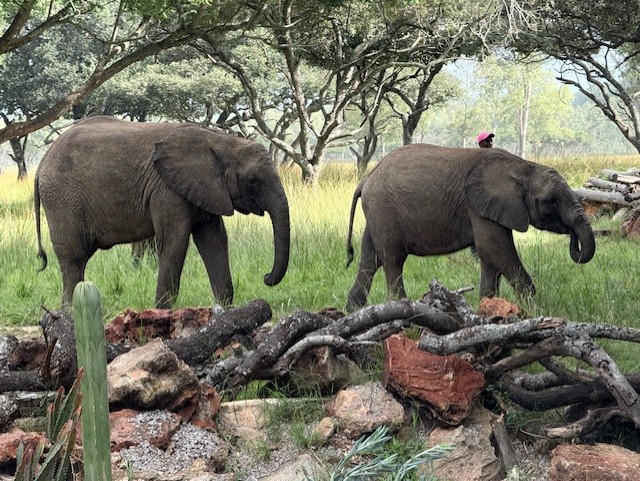
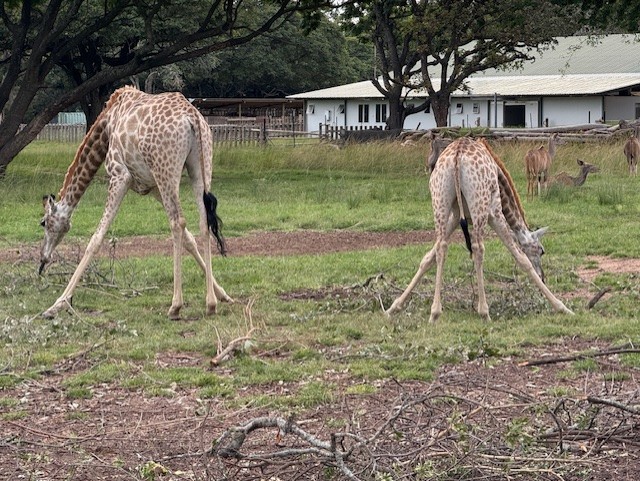
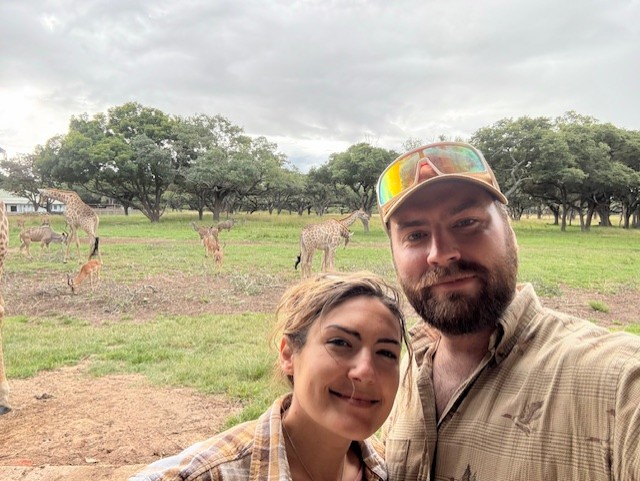
We crossed the lawn and joined a group gathered by a baby elephant, Nina, who was nuzzling her human carer like a needy child. She was captivating. Our guide (Sean) explained how the animals are all orphaned or rescued, and as he spoke I looked beyond Nina to a wide, grassy plain, where giraffes, kudu, wildebeest, deer and a few small elephants roamed and grazed harmoniously. It was a wonderful scene and seemed quite surreal, having just come from the busy streets of Zimbabwe’s capital city.
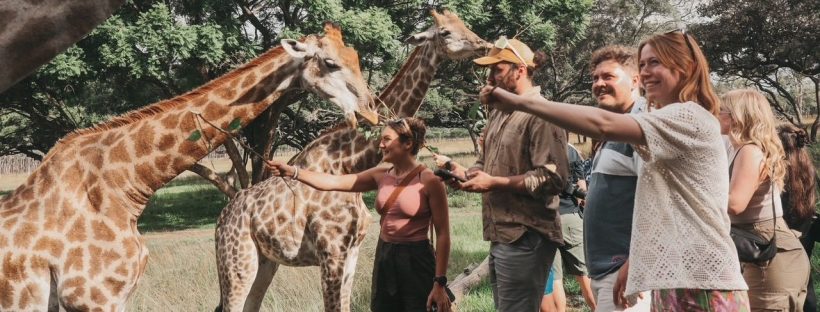
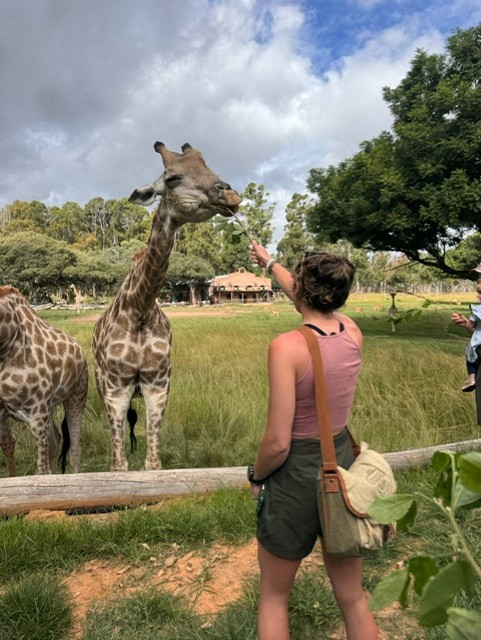
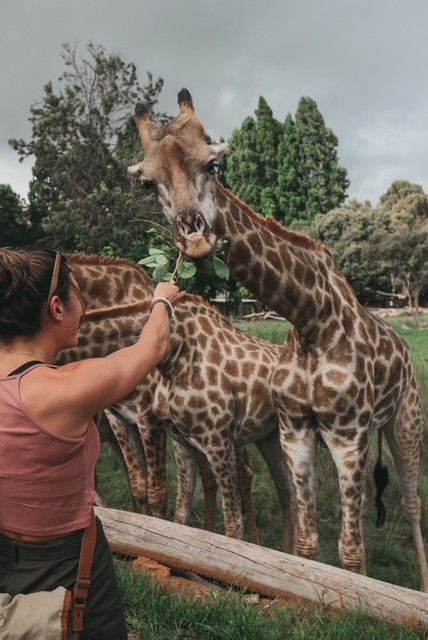
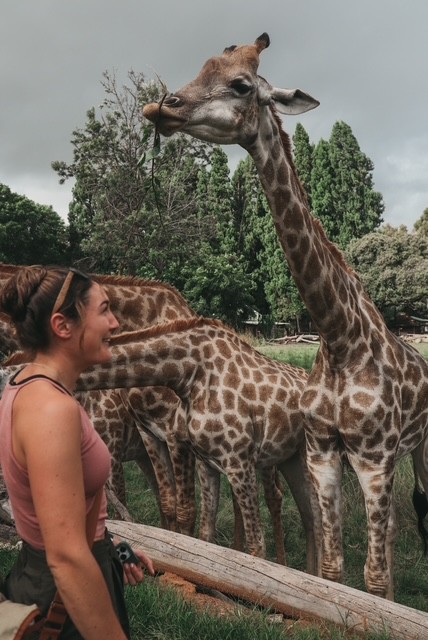
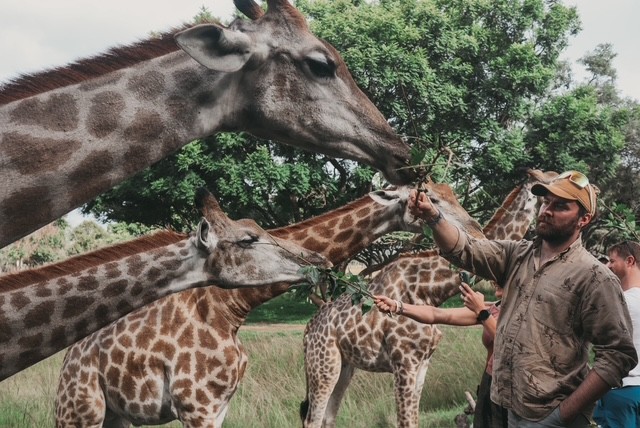
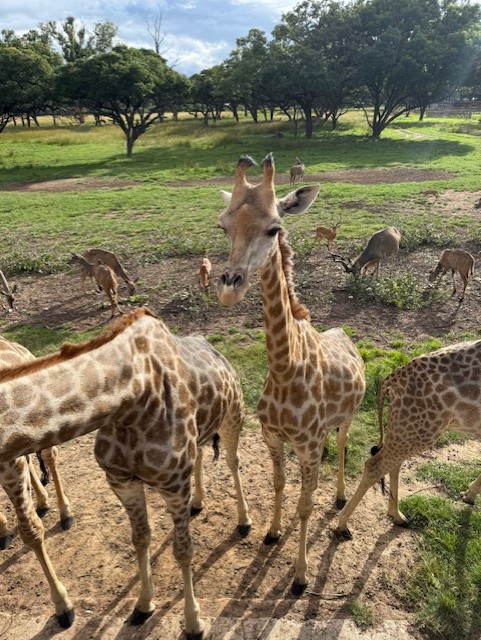
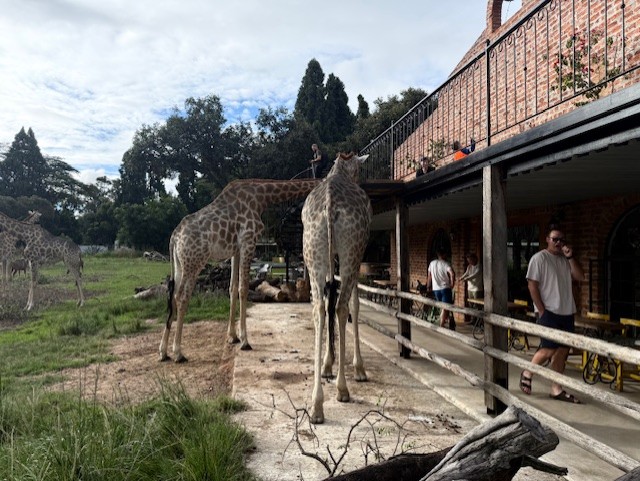
Nina was taken away, trailing behind her carer as she held his hand with her trunk, and we were led up to a raised platform and handed leafy sticks. The giraffes knew the drill and strolled over with their easy, rolling gait. They used their teeth, dextrous lips and long, black tongues to strip the leaves as we held them up, and I was amazed at the strength in their skinny necks – we watched, amused, as a parent quickly retrieved a child dangling from a stick. It was amazing to stand so close to – literally underneath – such strange, elegant, nonchalant creatures.
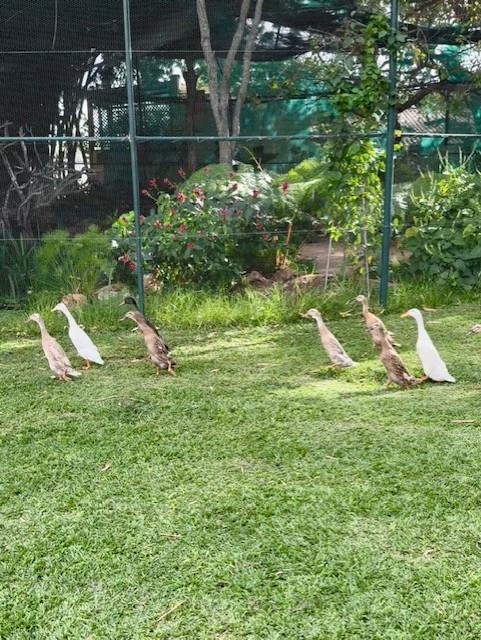
We returned to the lawn and watched the elephants get led away in a line, jostling each other and being reprimanded when they attempted to upend some of the boundary logs that separated the visitor area from the plain. A small flock of runner ducks appeared from nowhere and wheeled past us, to our surprise, and we were ushered on to the next part of the tour.
Afternoon tea
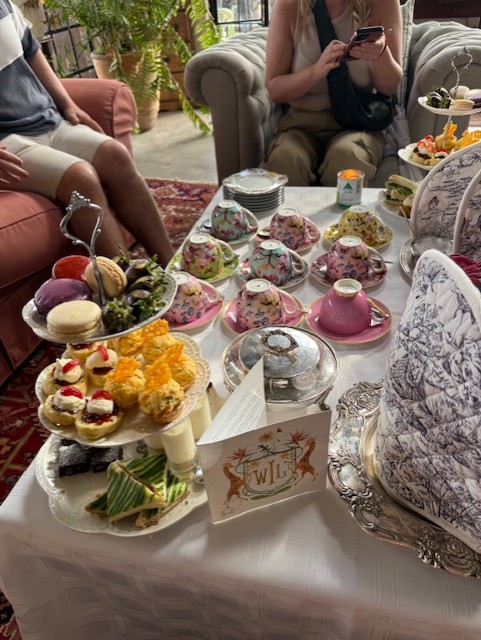
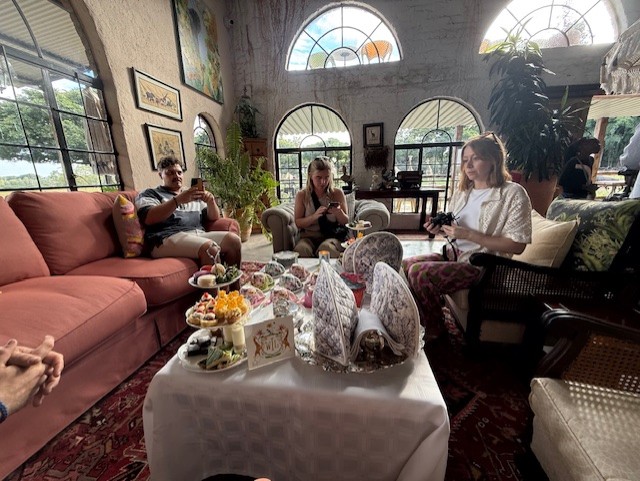
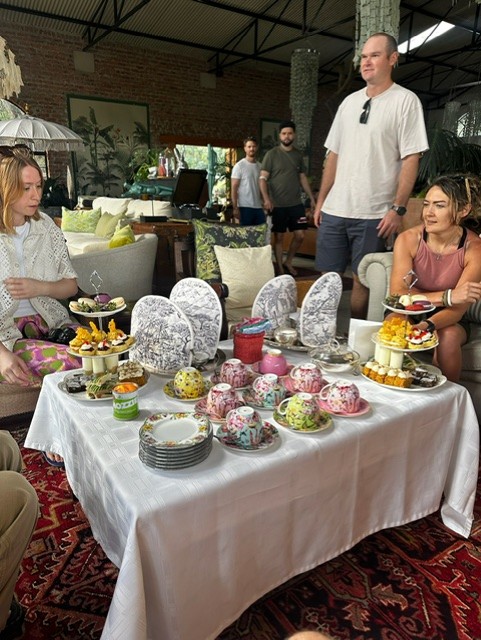
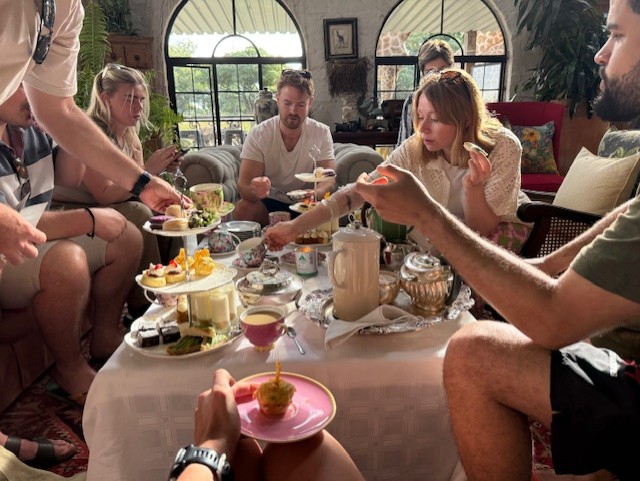
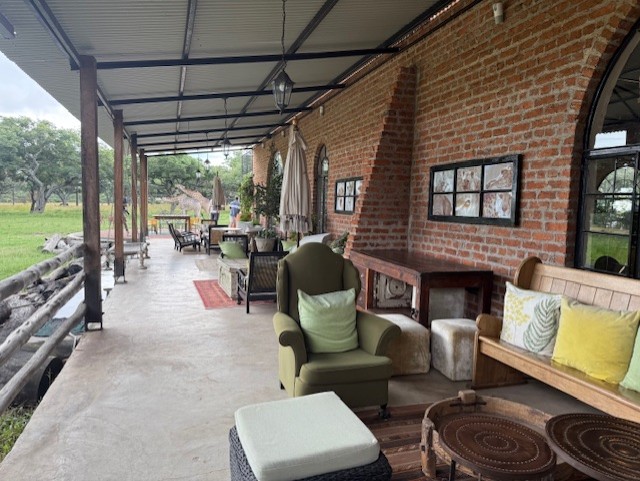
Having not eaten since breakfast, we were delighted to hear it was time for afternoon tea. We walked over to a large, high-ceilinged, warehouse-like building, which we found to be filled with sofas, plants, rugs and random furniture that gave it an eclectic, shabby-chic and oddly stylish feel. Scattered tables were laden with teacups and tiered plates of cakes, sandwiches and scones, and we gladly established our place in a corner to settle down for an indulgent snack.
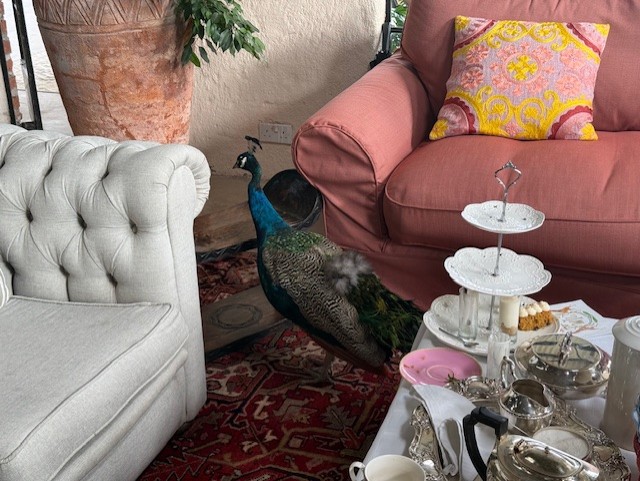
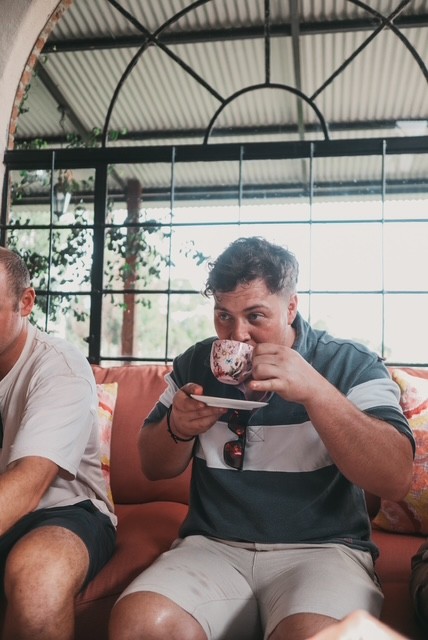
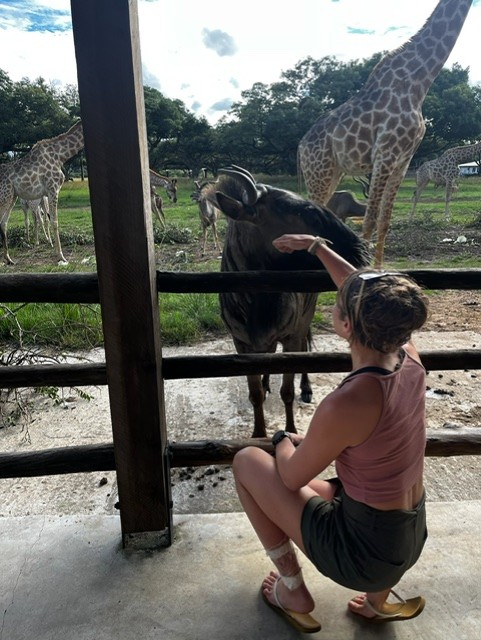
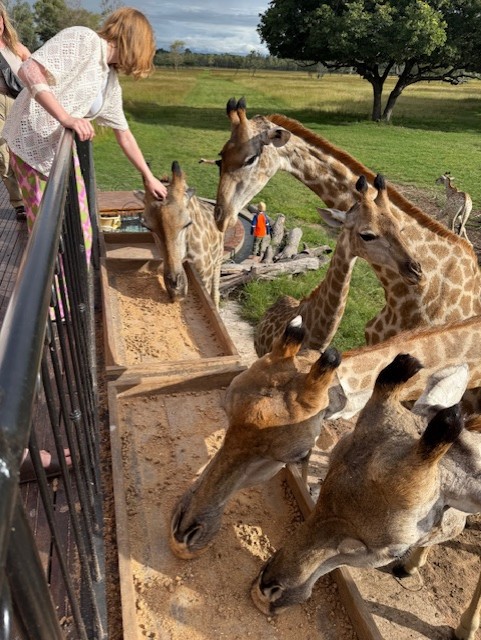
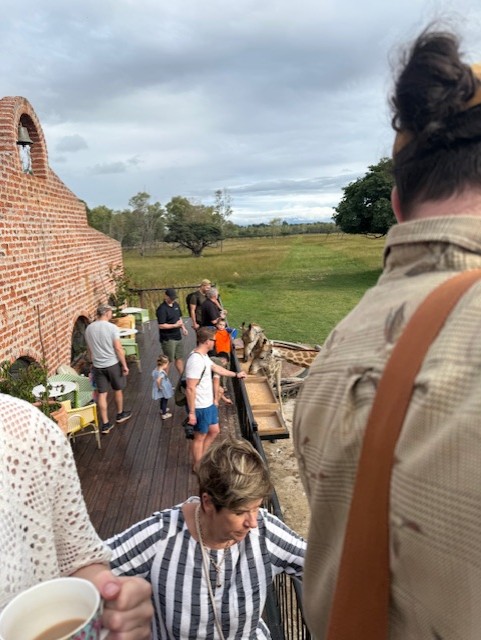
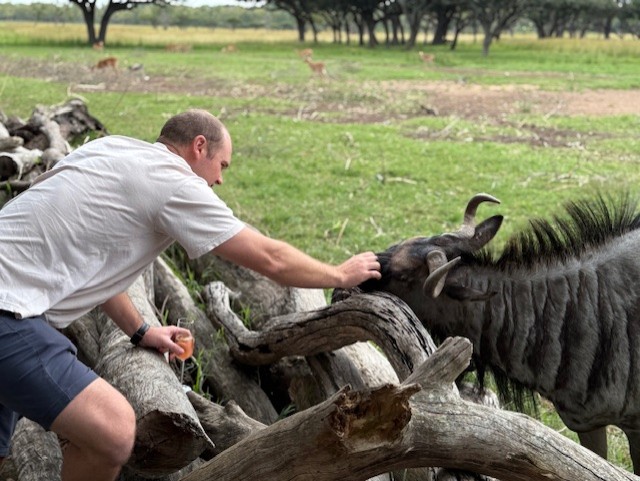
As we ate, a peacock strutted between the sofas, which seemed almost as bizarre as Gus sipping tea from a dainty little cup. We watched the herbivores through large, arched windows, then headed outside to see how close we could get. The grazing area came right up to the building and we leaned over a wooden fence to stroke Noodle, a friendly wildebeest, then climbed a spiral staircase to a balcony to feed handfuls of pellets to the giraffes; some took them more gently than others. Like at Imire, it struck me how several species of large mammal mingled together in one great, patchwork herd, content to share their space and utterly unfazed by their disparate neighbours.
Lions
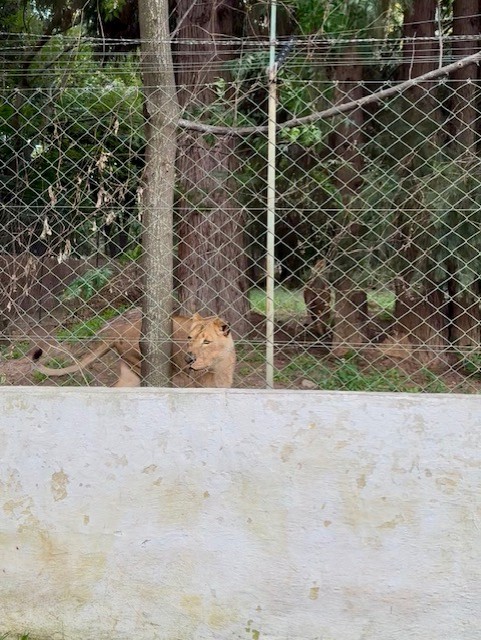
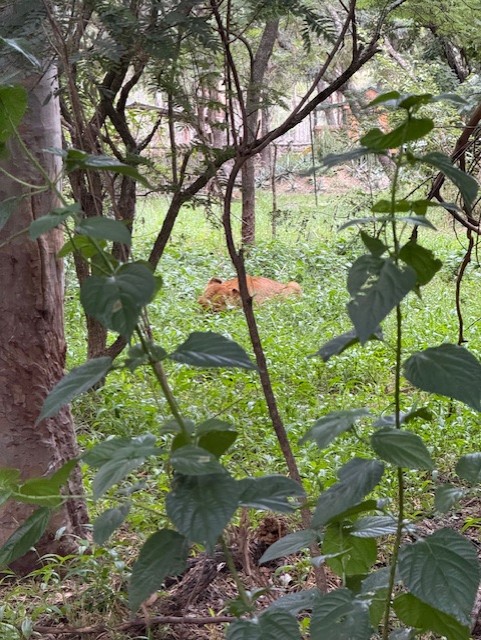
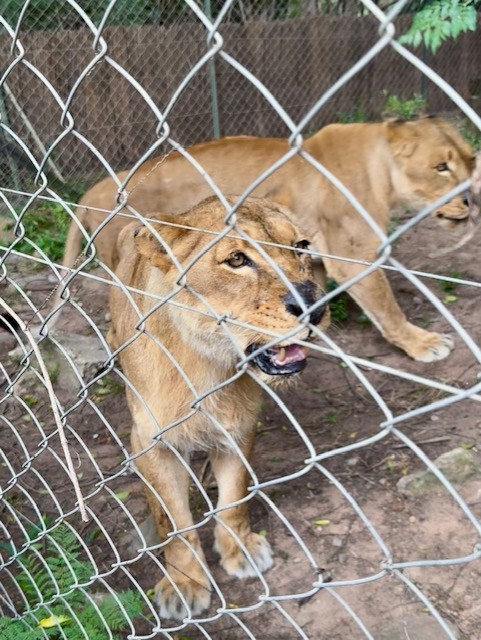
After tea we were led behind the building to a wooded area. A deep purr betrayed the next part of the tour before we arrived at the enclosure. It was a thrilling, chilling sound that I felt as much as heard – a resonating, bass rumble that penetrated the air as if it were surrounding us. Two female lions – Savannah and Lucy – greeted us expectantly, purring and prowling along a high wire fence just a few feet away, lean muscles rippling through their sand-coloured coats as they observed us with a cool, black-rimmed, golden gaze. The guide threw them a couple of slabs of horse meat, which they plucked up before withdrawing into the trees. It was the closest I’d seen lions and I was struck by their size and composure – they were equal parts graceful and powerful, and they made me feel quite puny.
Pangolin
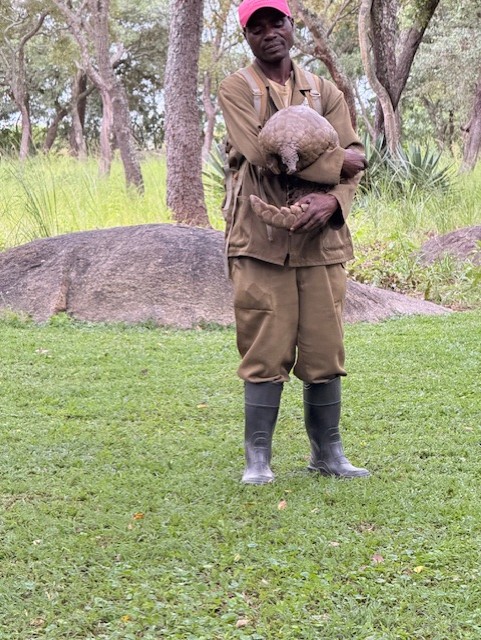
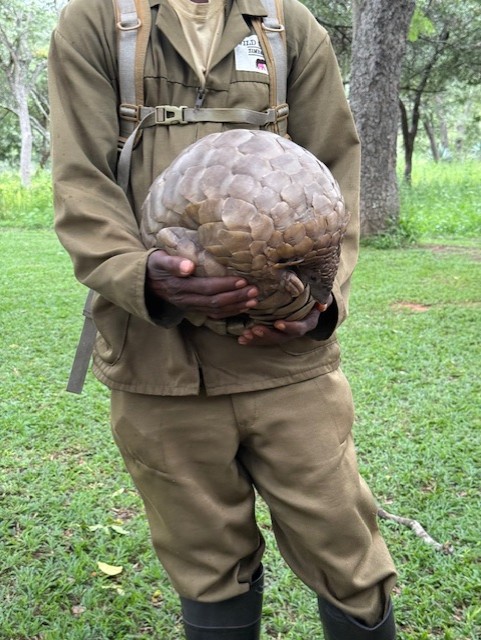
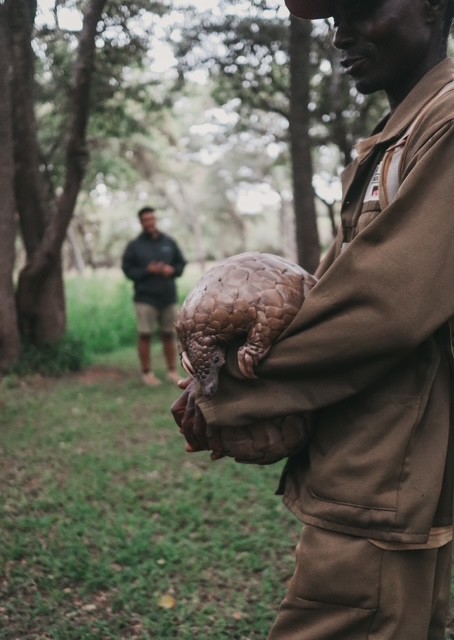
My disdain for the human race deepened during the next part of the tour. After a short walk from the lion enclosure, the group spread out along a large, semicircular bench in front of a man holding Marimba, aged 20, one of the world’s oldest known pangolins. Sean explained how this bizarre, armoured mammal is an elusive but highly sought-after target for poachers and traffickers, who profit from their meat and scales. These are made of the same keratin as our hair and nails but are believed in some cultures to have medicinal properties. Marimba is constantly accompanied during daylight hours by her carer, who cycles round with her in search of ants, and sleeps in a secret location unknown to almost all the staff. He might have the best job ever.
She was shown around the group at a distance, as pangolins are susceptible to human diseases, then released for a wander. She unballed herself and pottered along the ground on her two hind legs, leaning forward with her curved, blunt-clawed “hands” crossed in front of her, her long, heavy tail acting as a counter-weight. She was bigger than I’d expected, very cute, very slow, and – apart from her scales – heartbreakingly defenceless. We all fell in love with her immediately.
Hyenas
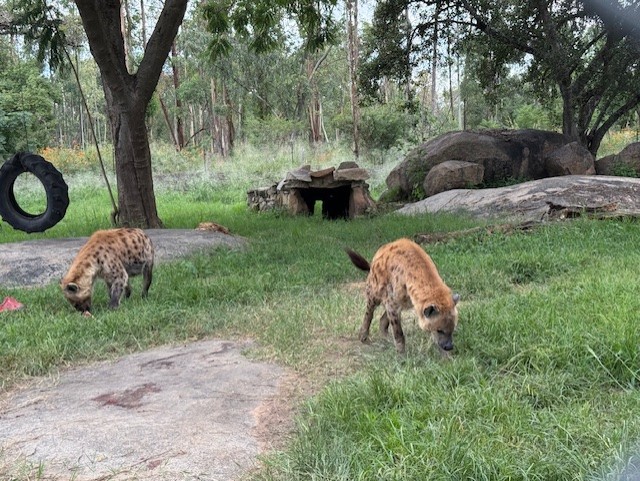
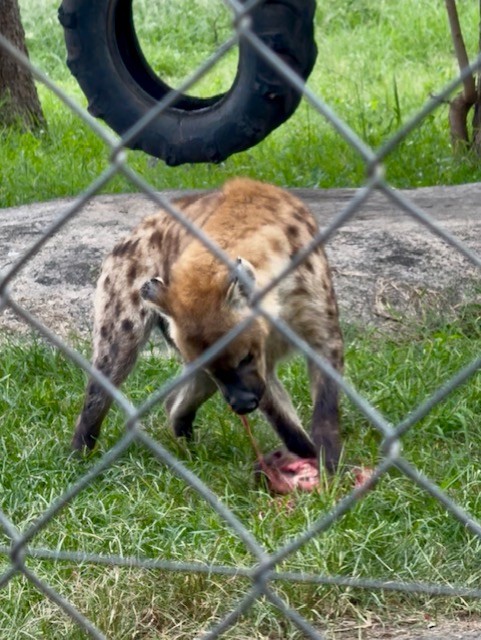
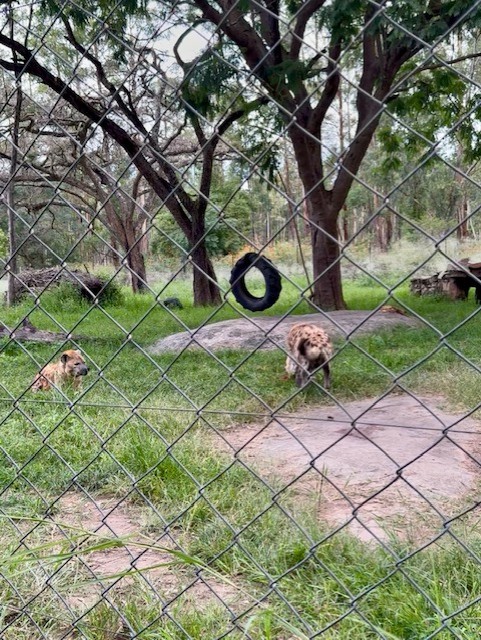
Next up, by way of contrast, were the spotted hyenas, which lurked in a wire enclosure just across from Marimba’s arena. Athena and Harry were each tearing into roughly hewn sections of meat, and we watched with grim fascination as their wide jaws – the most powerful in proportion to their size of any mammal – crunched effortlessly through bone and muscle. Harry rolled playfully around with his dinner while Athena dismembered a whole horse head, its toothed lower jaw dangling by a sinew.
Unlike the lions, I thought their beauty subjective: they looked like dogs that had been genetically modified, with huge, bear-like heads, close-set eyes, rounded ears, sloping backs and bow legs. Despite their appearance and their indiscriminate butchery, I found them oddly endearing – their tails wagged excitedly as they chomped and the guide explained that they’d been rescued as pups from a botched trafficking attempt at Harare airport.
More posh food
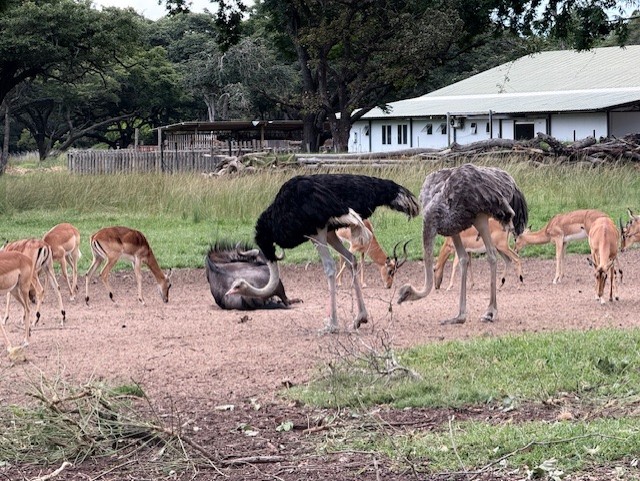
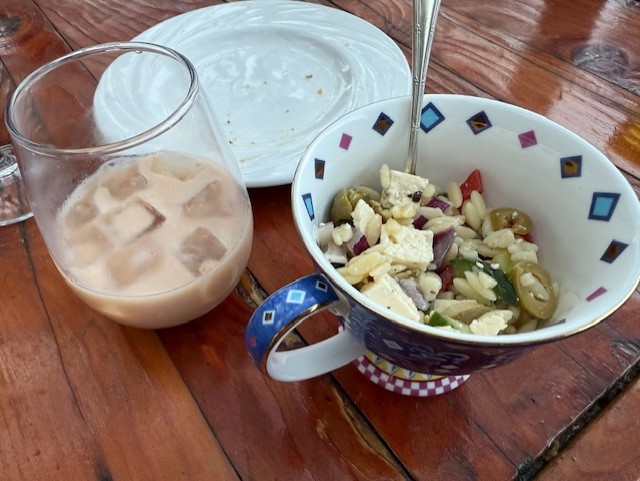
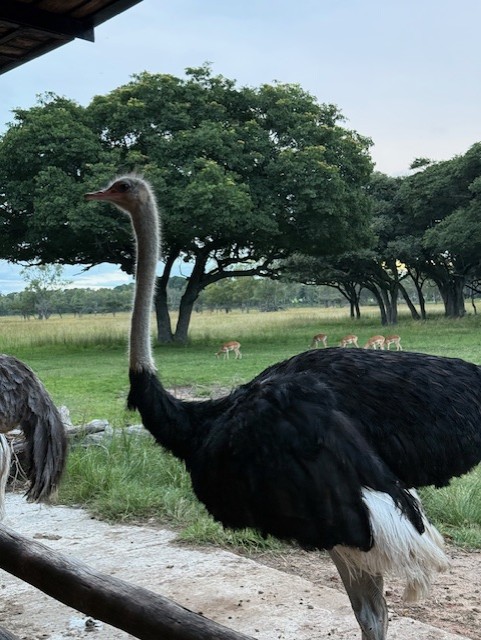
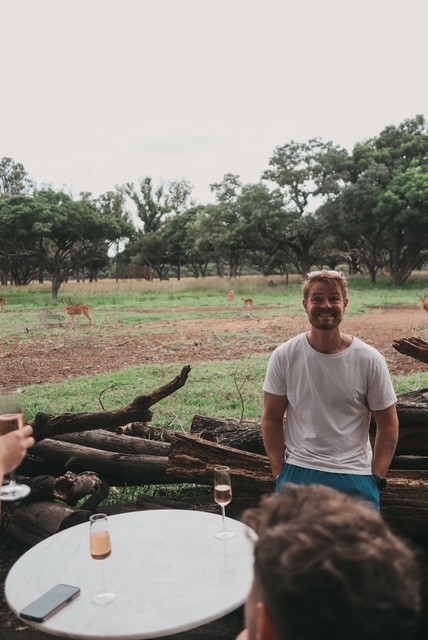
We made our way back to the big, central building, which was a relief as a throng of midges had descended on us as we watched the hyenas. We sat on a long table by an outdoor bar and made the most of that installation – I enjoyed a sparkling rose and discovered a love for baileys-like amarula in quite close succession. It was surreal to sit and relax so close to the herd of herbivores, which had been joined by a few ostriches, separated from us only by a boundary made of logs.
I wandered over to see an ostrich and was warned off getting too close by Sean, who explained that they’re powerful, spiteful animals that peck things for no good reason beyond being able to reach them. This was evidenced by a half-gouged tabletop, accessible to their beaks – which were slightly downturned at the corners, giving them a look of constant irritation – by virtue of long legs and necks. I eyed the bird warily and went off to stroke Noodle, who was much more accommodating.
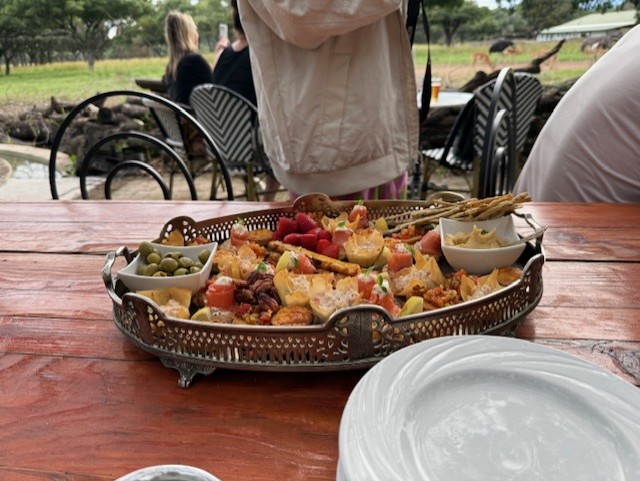
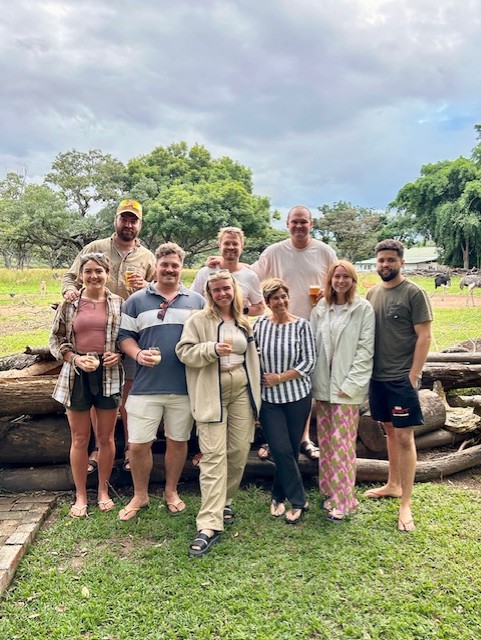
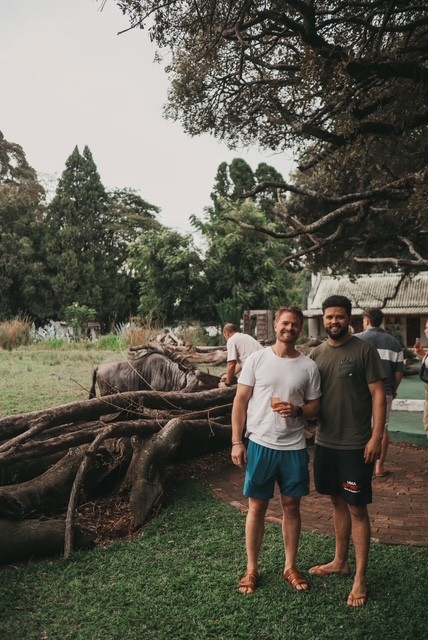
Back at the table, a waitress came over with a large tray of canapes. The nine of us enjoyed filo pastries, smoked salmon, olives, cheesesticks, little quiches and other bite-sized snacks I couldn’t name, accompanied by a constant supply of drinks. We sat and talked under the trees as we watched the herd grazing contentedly, and I wondered if my life had peaked.
Evening
We left around 7pm, reluctantly, and headed back to the house in preparation for an early start to drive to Lake Kariba, where we’d be staying on a houseboat for the next few days. Once packed, we spent the evening checking our tattoos and discussing the merits of each animal at Wild is Life – and so ended another memorable day in Zimbabwe.
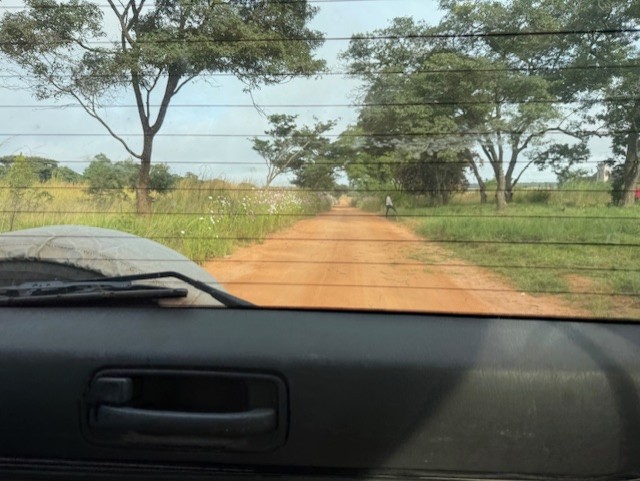
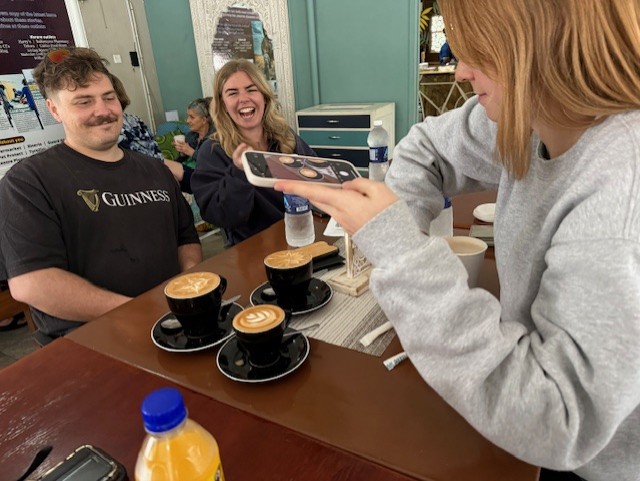
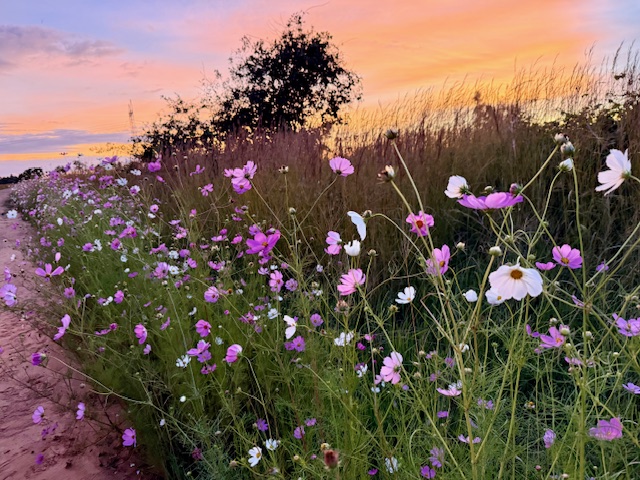
We were all up and in the Landcruiser at 7am, raring to see our first big animals at Imire game reserve. Ryan and I bundled onto foam cushions in the boot (which is perfectly acceptable in Zim, but heaven forbid you drive without radio tax) and Reece drove us to Living Waters Bistro at Marondera, an hour southeast of Harare, for an en-route coffee stop. The view from the road comprised sprawling fields, scrub, occasional villages and – thanks to one wrong turn – a dirt track flanked by tall thickets of grass and pink and white cosmos flowers.
The café had an indie vibe, served very good coffee and broke up the two-hour journey nicely. Shortly after clambering back into the car, we turned off the main road onto a wide, pothole-peppered dirt track through verdant scrubland. Being shaken around in the back was fun until the novelty wore off; after over half an hour of lurching and teeth-rattling, we were quite relieved to reach the gate to Imire.
Feeling quite uncomfortable…
Imire Game Reserve
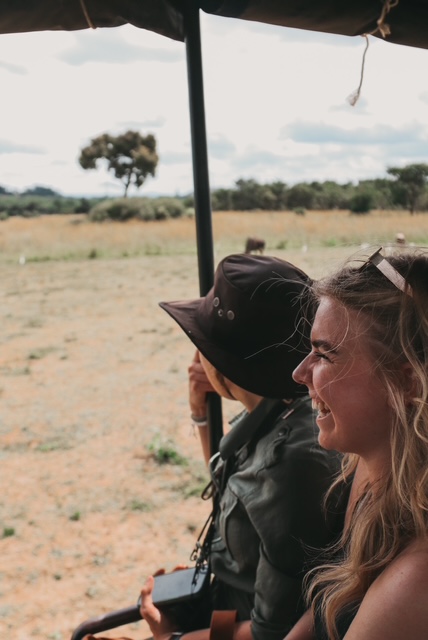
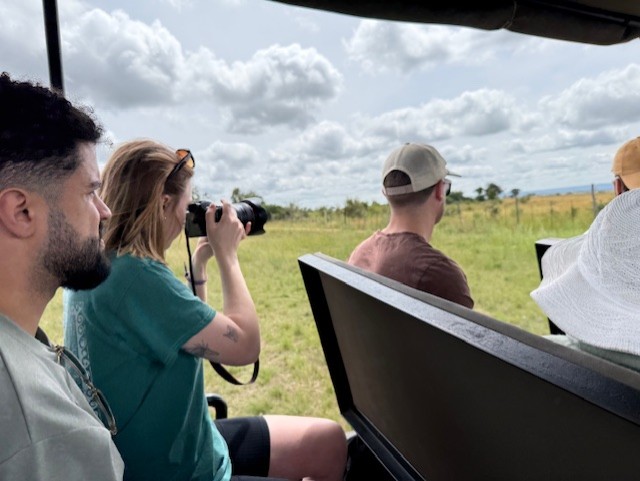
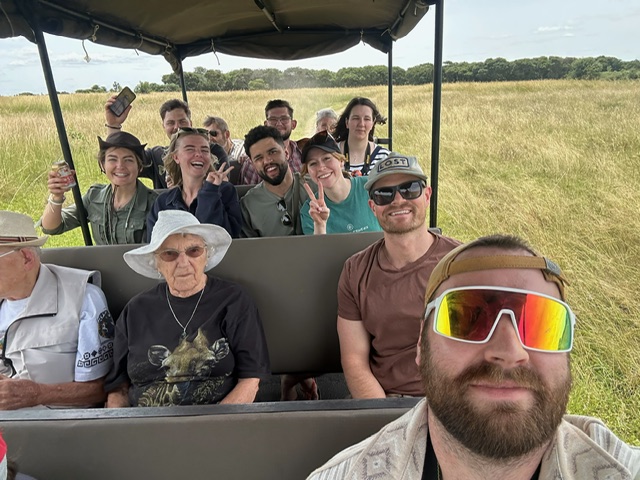
On arrival Reece was informed that we were booked in for the following day, but to our great relief they managed to squeeze us in. We parked under some tall trees and wandered over to a grassy area bordered by a handful of fancy-looking thatched lodges, where our friendly guide – Anyway – served us a quick cup of tea and flapjack. It all felt quite posh. We were soon ushered over to the safari truck, a small, raised flatbed with five rows of benches under a canvas top. The seven of us piled in with a small handful of other visitors (to their disappointment, I suspected) and we set off on the game drive at 10am.
One of the lodges
A motley herd: zebra, warthog, kudu, wildebeest, deer
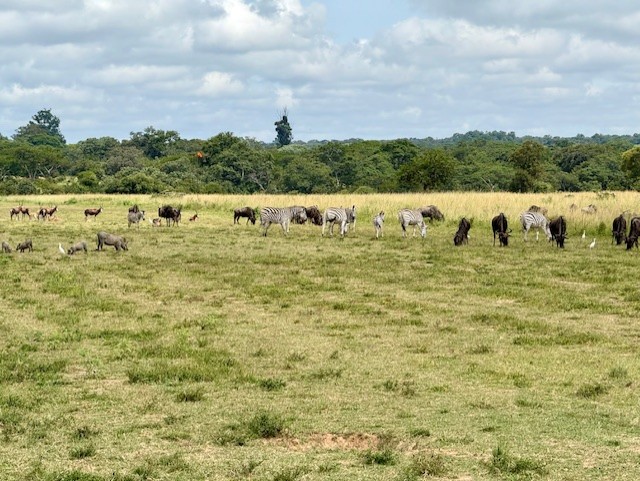
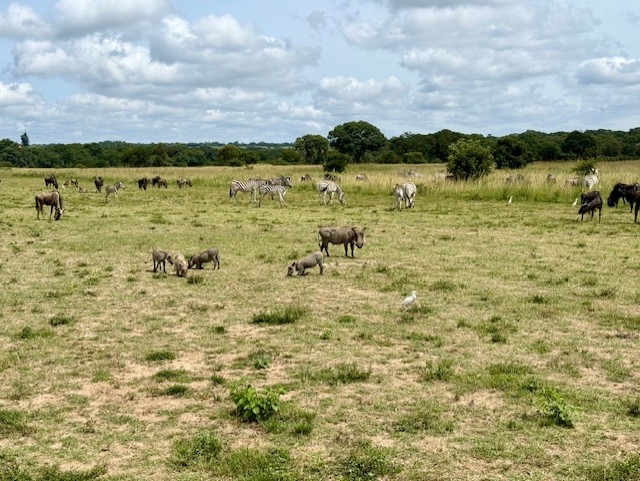
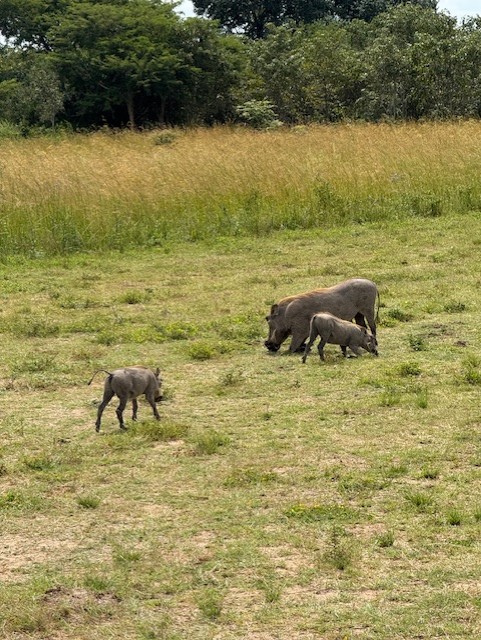
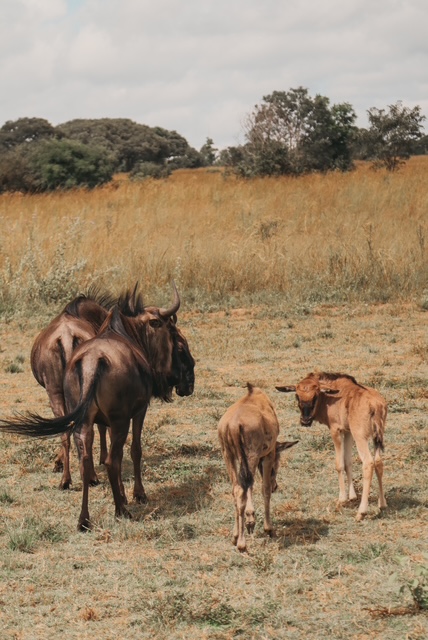
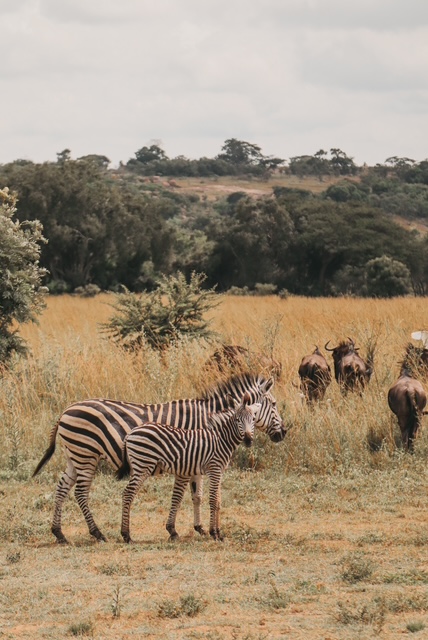
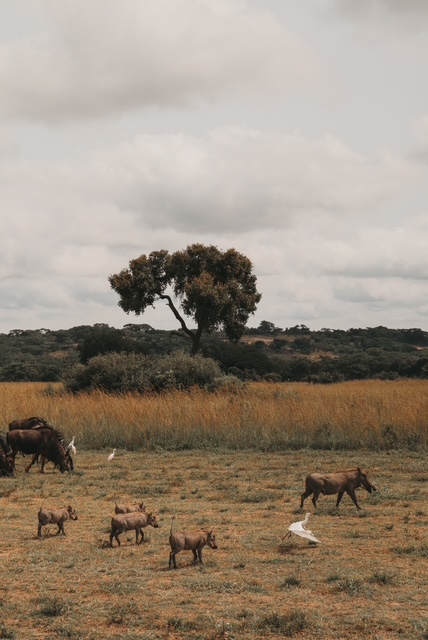
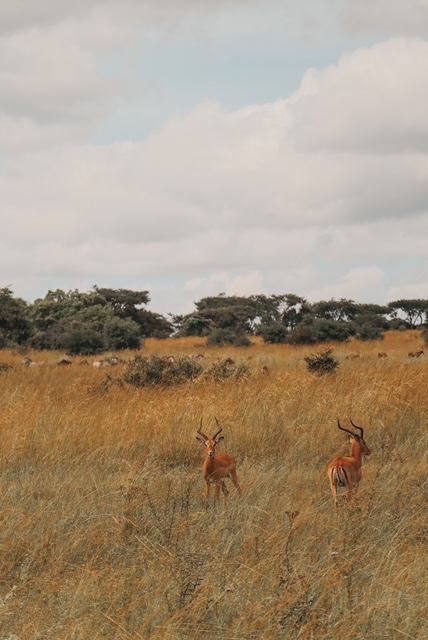
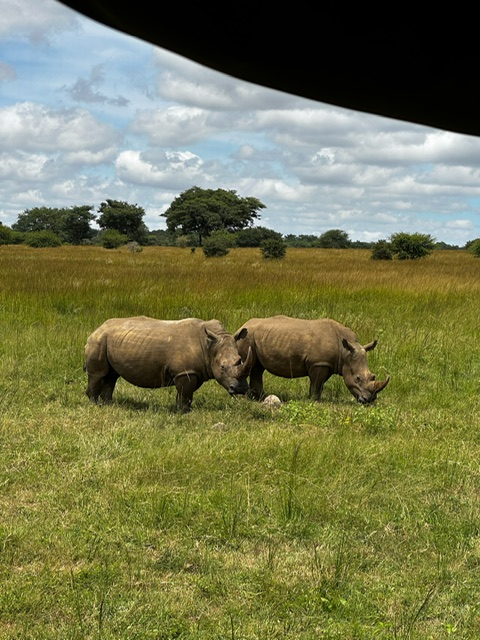
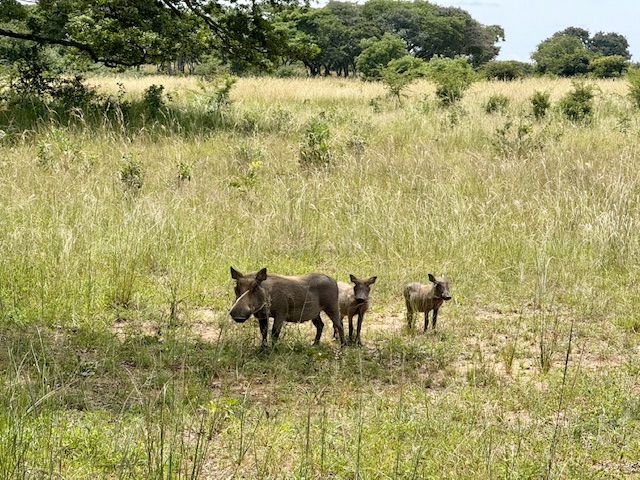
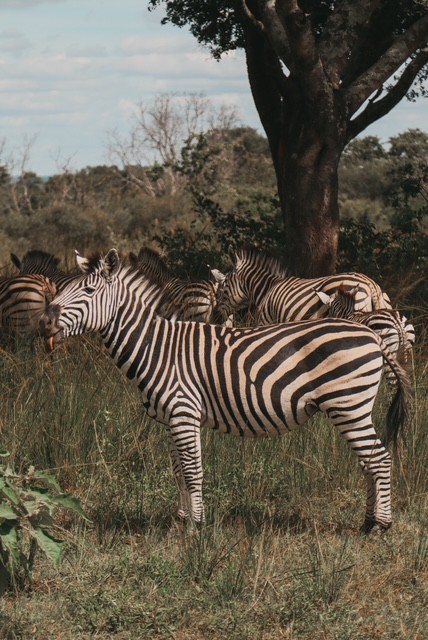
The truck passed through some heavy-duty gates and we immediately glimpsed – to our delight – a couple of huge white rhinos dissolving into the long grass. We continued along a bumpy track that carved between swathes of grass and bush and came to a green, open plain – a small air strip – teeming with animals. Zebra, warthogs, kudu, wildebeest, egrets and deer (I missed the species, to my continuing chagrin) grazed together in a strikingly harmonious herd, barely looking up as the truck stopped a short distance away, and we watched in awe. I think everyone liked the family of warthogs best, as the piglets trotted around erratically with their little tails raised. Anyway was very knowledgeable and very funny – we learnt that the stripiest side of a zebra is the “outside”, and that a kudu is so-called because its balls go kudu-kudu-kudu when it runs.
Dan had a WHALE of a time
Nzou the elephant & her herd of buffalo
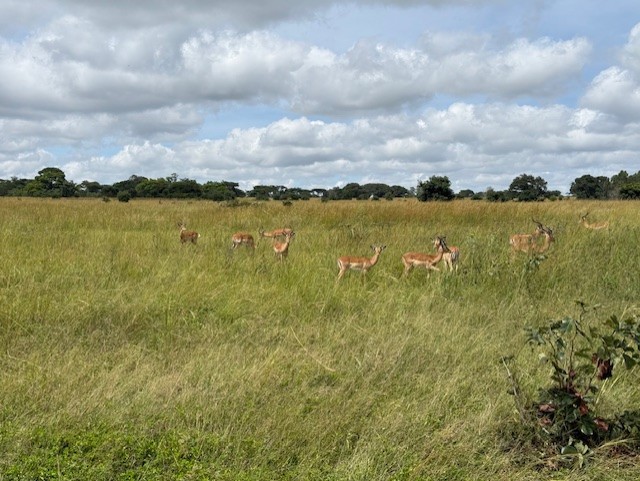
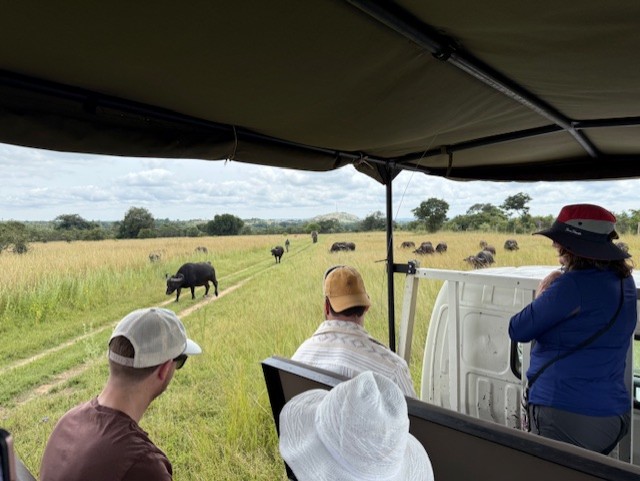
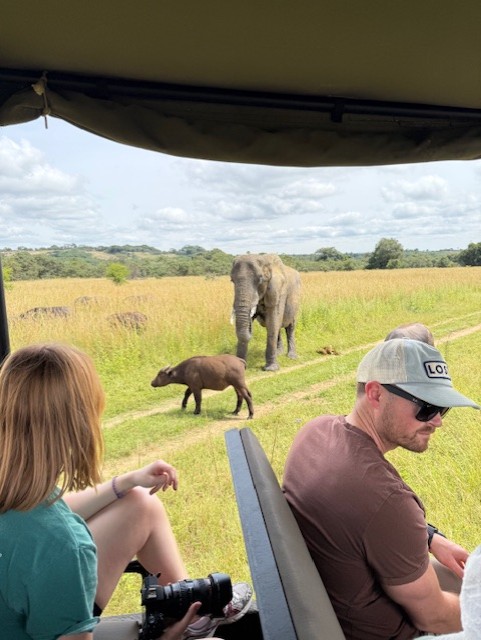
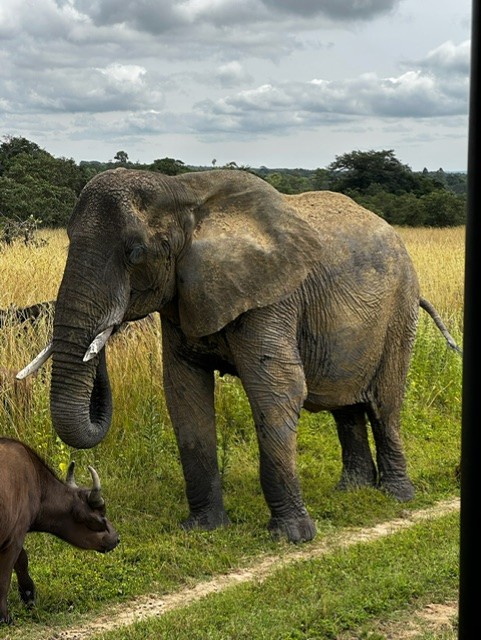
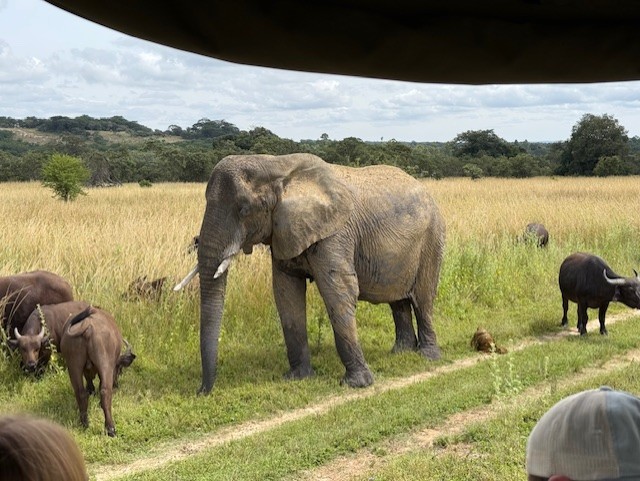
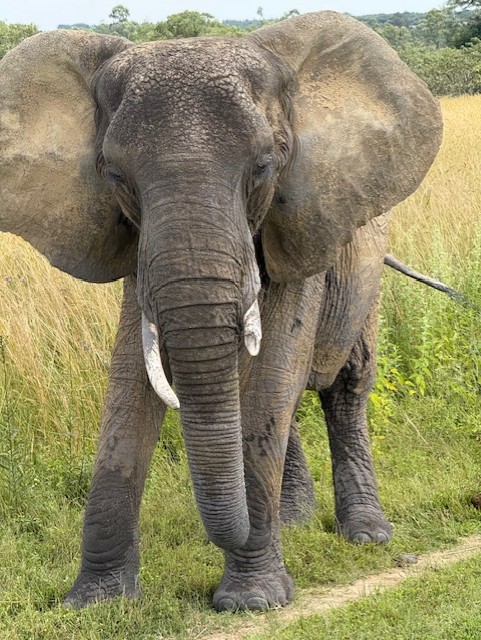
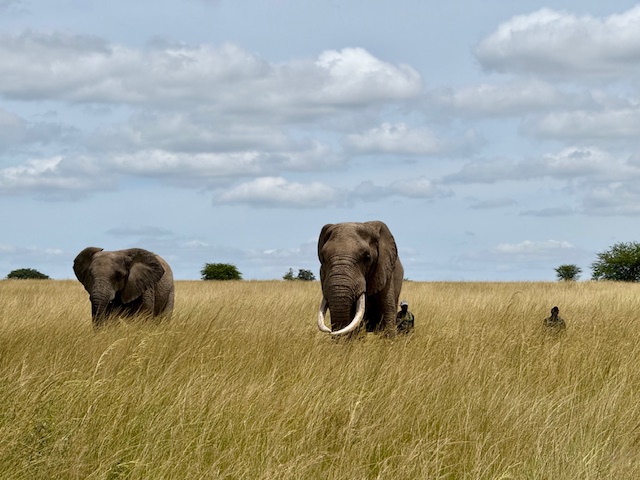
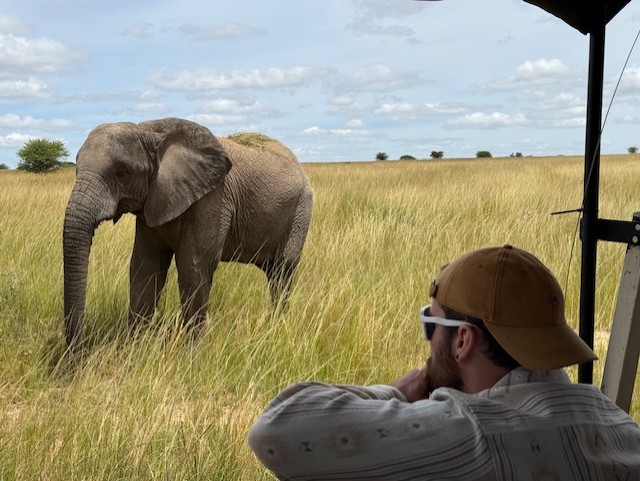
After a few minutes spent gawping at the four-legged assembly, we continued along a rough track that took us past a small herd of antelope and stopped in a wide area of open grassland. A throng of about 20 big, dark brown buffalo ambled towards us, followed by something I’d been so desperate and so excited to see: an African elephant. She approached with slow, easy grace, plodding softly behind the herd, chaperoned by a ranger who looked incredibly small and vulnerable but completely at ease. Nzou was orphaned at two years old and, at 53, is the oldest elephant at Imire. She thinks she’s a buffalo – she leads the herd and, if she feels that her authority is threatened by a bull, she simply squashes him.
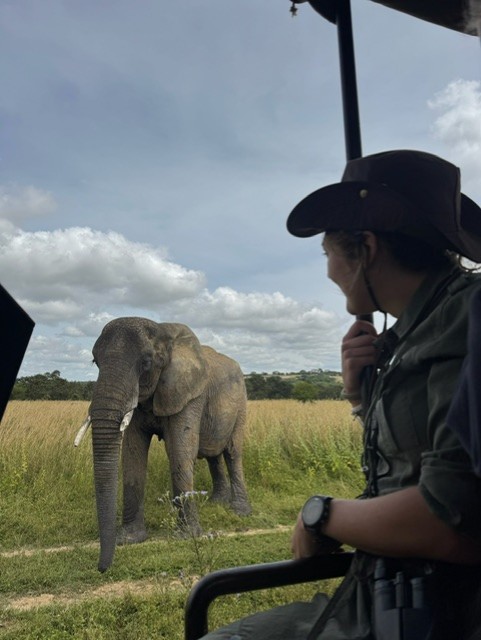
I did my best to listen to the guides’ commentary, but it was difficult to pay attention in the presence of such a magnificent distraction. Nzou came within a few metres of the truck and stood among her herd, idly chewing and twitching her enormous trunk, ears and tail. I couldn’t believe how big she was. She’d clearly been rolling around (I hoped no buffalo were involved) as her wrinkled, leathery skin was caked in dried mud, and as we ogled this incredible creature she deposited an enormous poo that landed with a dull thud. Meanwhile the buffalo grazed placidly in the long grass, never straying far from their matriarch.
Crispin the crocodile & a caterpillar clump
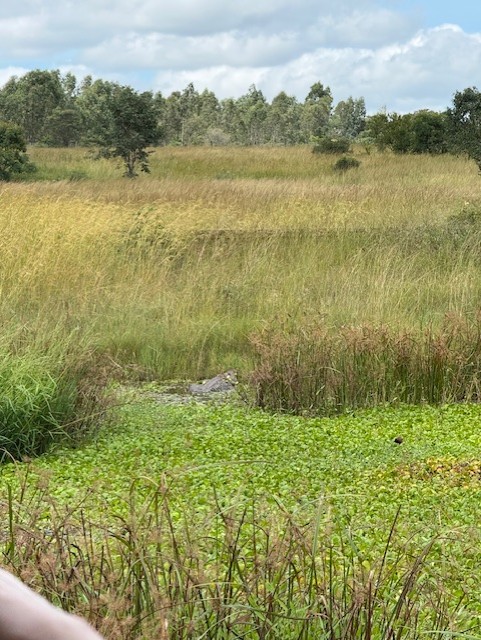
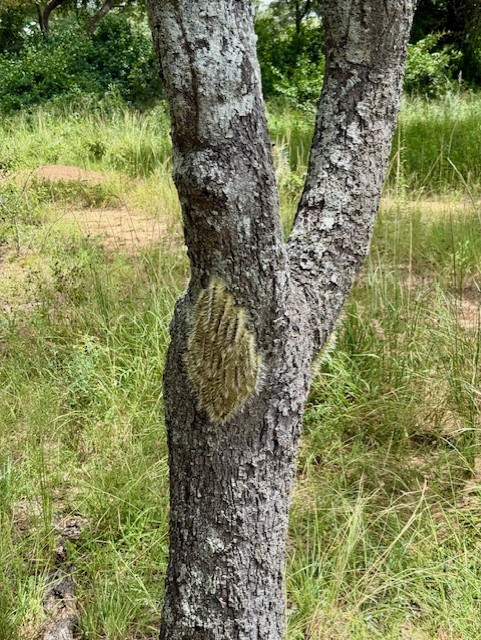
We moved off after about 10 minutes and passed another herd of antelope before coming to a large, thickly vegetated pond, where a fat-looking Nile crocodile basked lazily by the bank, as still as a log. Anyway explained that Crispin had been at Imire for over 40 years after being removed from a local village and he used to have a girlfriend, Margaret, but she left him (escaped) a few years ago. Crispin showed no sign of moving, so we continued up a small hill to look at a cluster of large, fluffy caterpillars attached to the trunk of a tree.
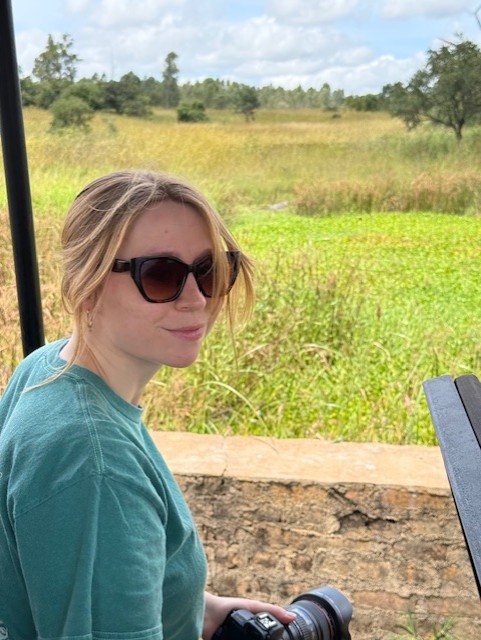
Iz taking the spotlight from Crispin
Running white rhinos
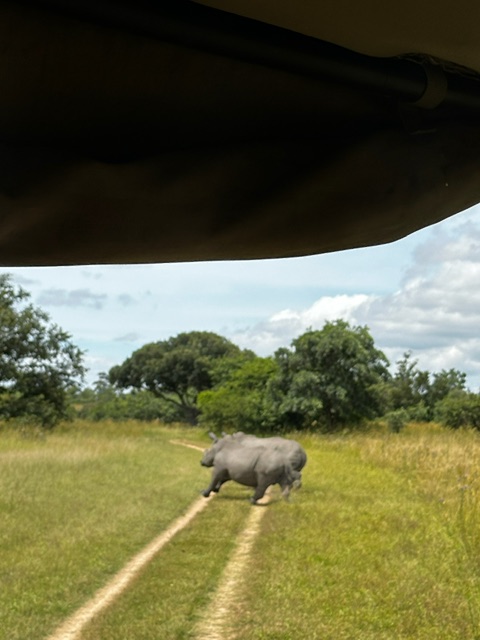
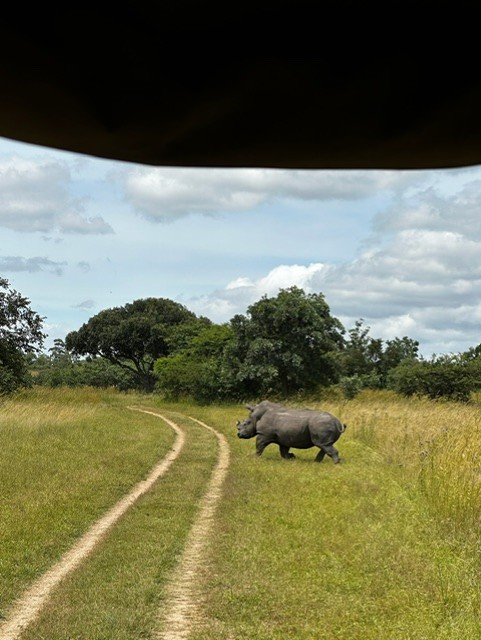
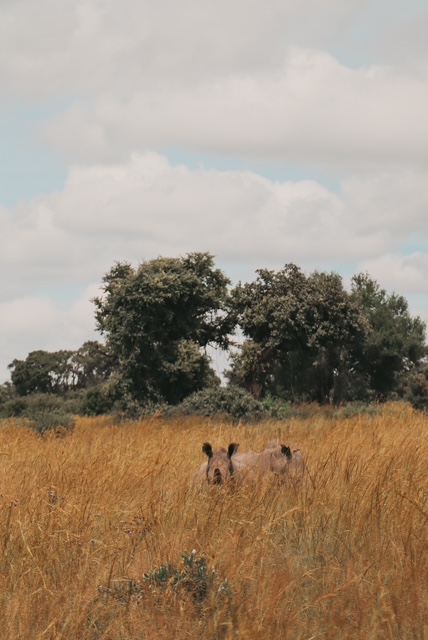
The truck backtracked past Crispin, who still hadn’t budged, and took us to another area of bush and long, yellow grass. We turned a corner and saw three white rhinos ahead, which emerged from the grass and trotted along the track in front of us. Their rear ends were muscular and astonishingly wide, but they moved with surprising finesse. They sped up as they turned off the track and, with their short legs hidden by the long grass, they could have been floating. We rounded another corner and spotted them again – three great, grey boulders with ears and horns, watching us cautiously from a golden sea. In an instant, and for no apparent reason, they started running; they emerged from the grass and crossed the track behind us with alarming speed, but it was clear that this was just a gallop. I’d love to see a full-throttle 30mph charge, from a sensible distance.
Giraffes
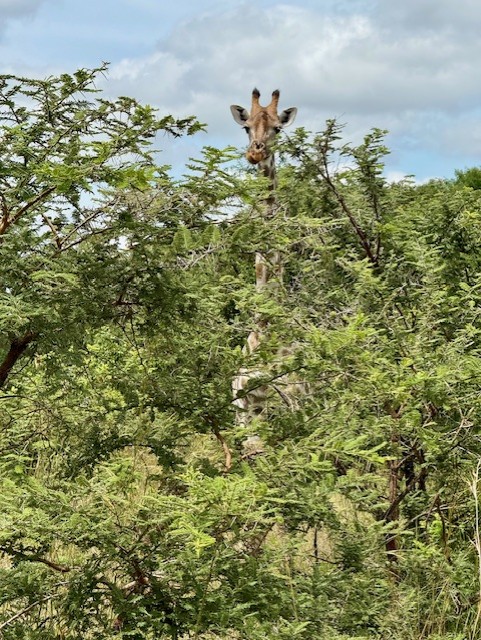
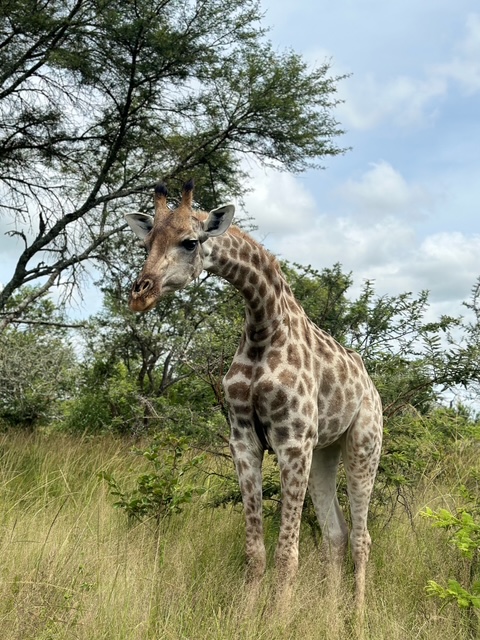
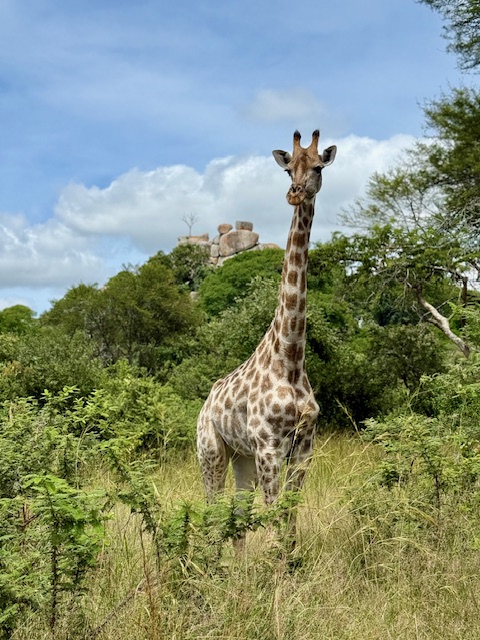
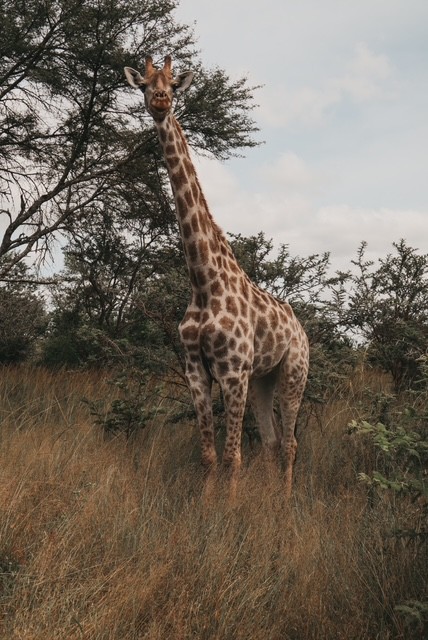
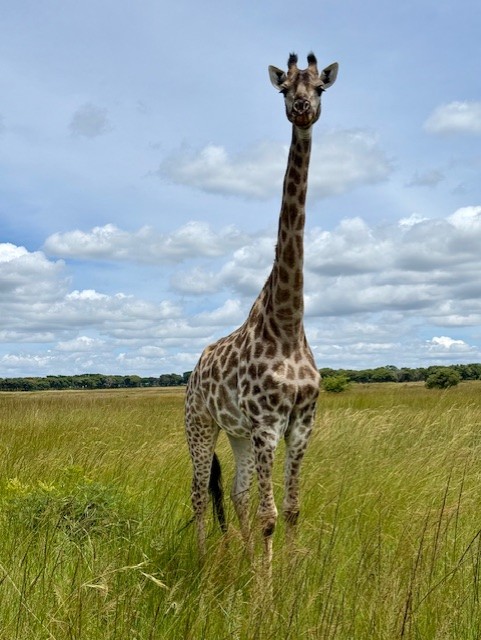
Once the rhinos disappeared we returned to the gate, crossed a road and entered the other half of the reserve. This side seemed more open, undulating and somewhat wilder. We drove towards a huge, granite outcrop which sat atop a thickly wooded hill, surrounded by a great sweep of bush-studded grassland, and were surprised to notice a large head peering at us from above some nearby treetops. The giraffe ambled inquisitively towards the truck and posed for some photos. Like the elephant and the rhinos, I was amazed by its size and – for such a big animal – its elegance. It looked too tall and slim to be able to stand upright, but did so with impeccable poise.
Lone white rhino
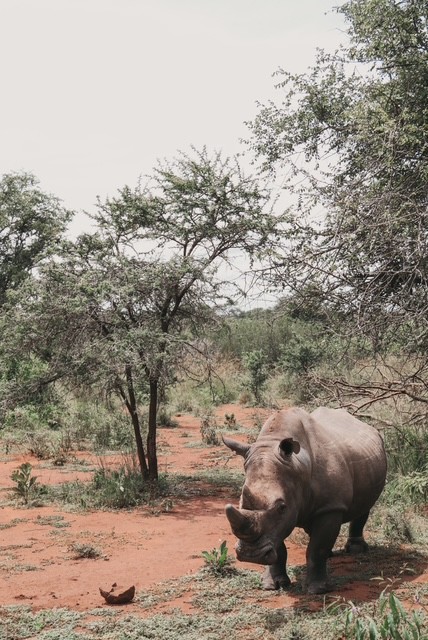
We passed a younger giraffe, then continued along the track to a dead-end section that took us to a single white rhino. We stopped just a few metres away, which felt quite bold given the sudden mini-stampede we’d just witnessed, but this one seemed perfectly content. Anyway explained that “white” rhino is a misnomer stemming from “wide”, which refers to the lips; by comparison to this broad-mouthed ground grazer, the black rhino has a small, hooked mouth for eating leaves. As we observed each other, I noted the long, horizontal marks along her leathery sides, presumably from scratching, and the deep skin folds at her shoulder (or elbow?). I wondered what she thought of us.
A wild landscape
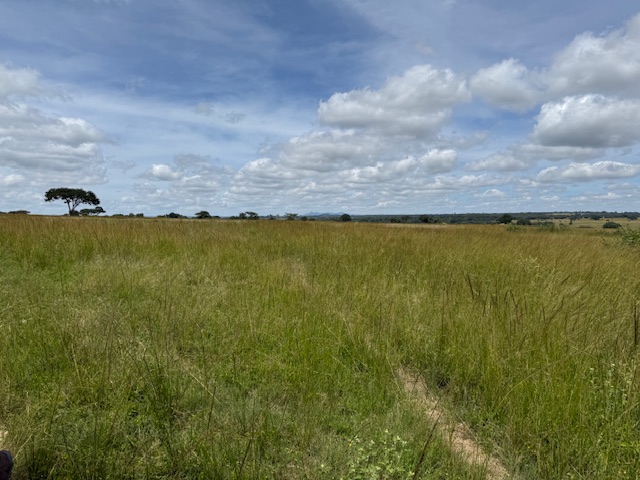
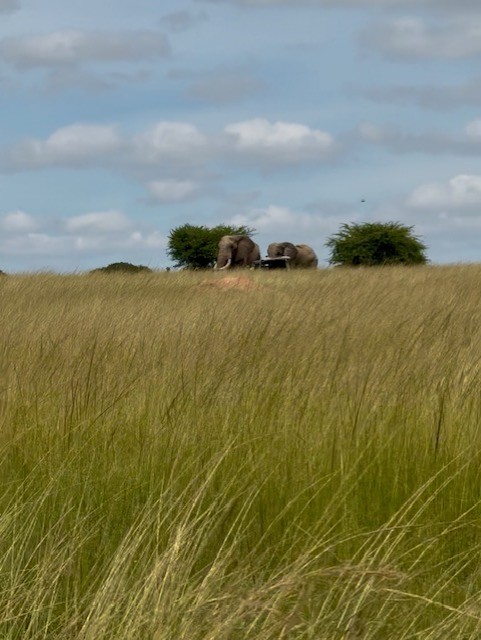
We returned to the main track and coasted through a vast, open expanse of grassland that afforded magnificent views of rippling plains dotted with deer, swathes of woodland and the singular, bulky silhouette of a distant mountain range. After 10 minutes we came to another pair of huge white rhinos grazing peacefully on a grassy hillside. Behind me I heard Gus say “are those elephants?”, and just as I was about to call him an idiot I saw two great boulders on the top of the hill ahead. I grabbed my binoculars and confirmed that they were indeed elephants, moving slowly towards another safari truck, but even then – stood next to a couple of large trees – they looked too big to be real.
Into the bush
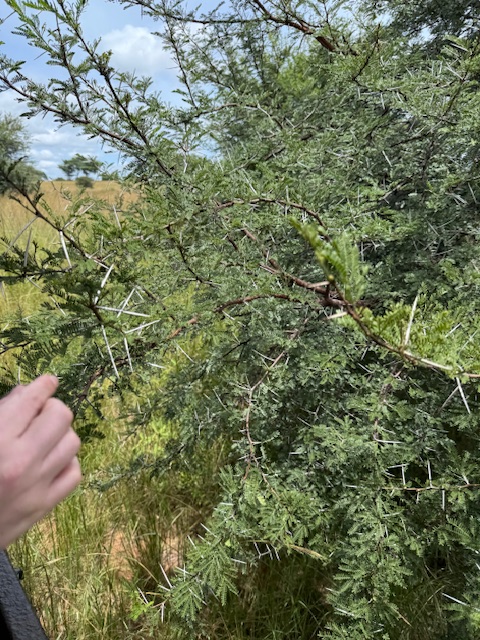
To our dismay, the truck turned away and headed across the hill towards a clump of trees. We were a little surprised when it left the dirt track and entered an impenetrable-looking thicket. The outermost passengers – including me – dodged whip-like branches and three-inch acacia thorns as they flung themselves towards us, while we tried to work out the purpose of this detour. Reece suggested that Anyway had hoped to call over the giraffes, but – for the sake of his truck and his clients – backtracked on seeing a handful of vervet monkeys. We left the bushes the same way we’d come in.
Why do I do this?
Elephants: Meeting Mac
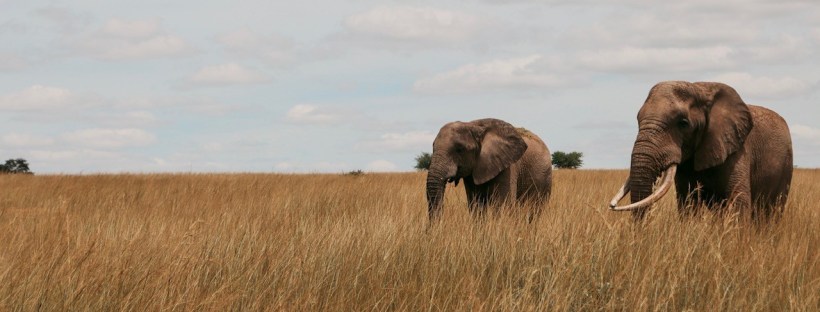
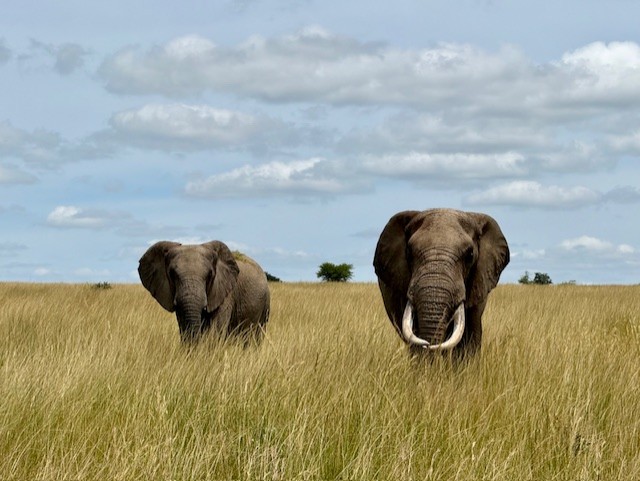
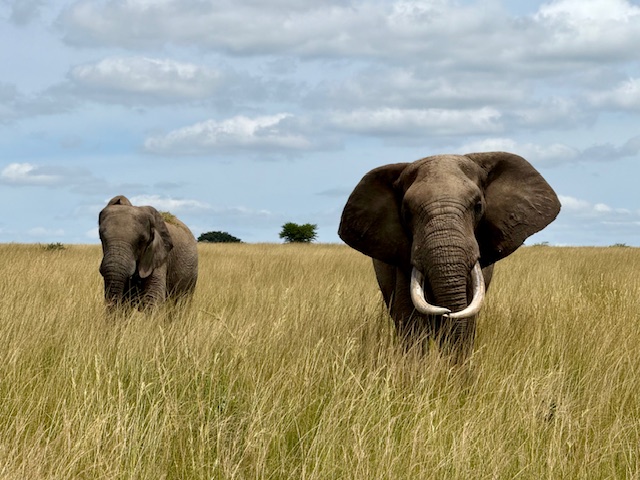
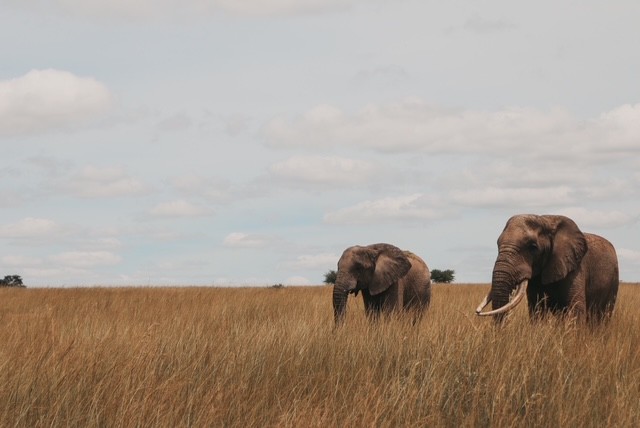
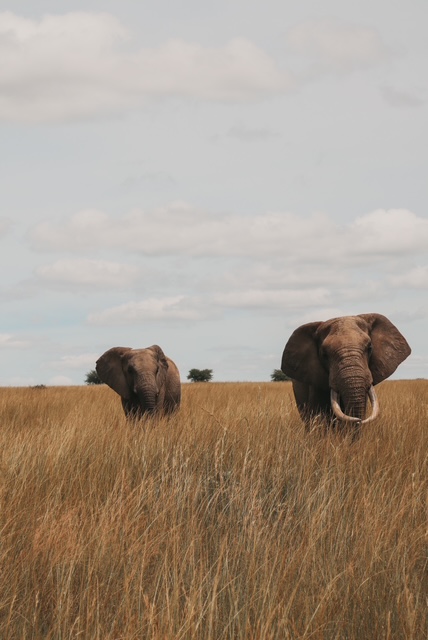
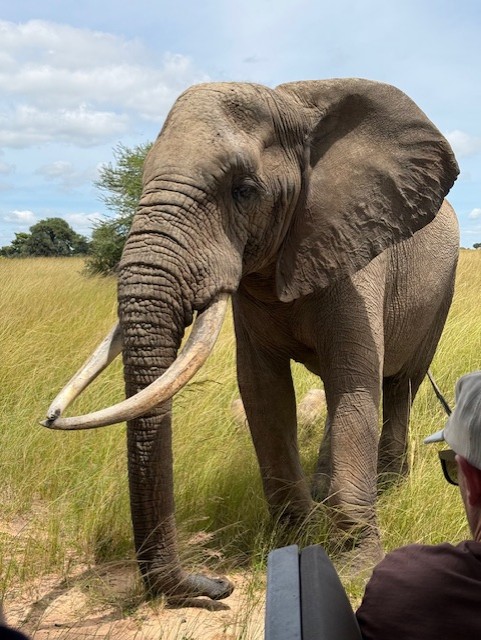
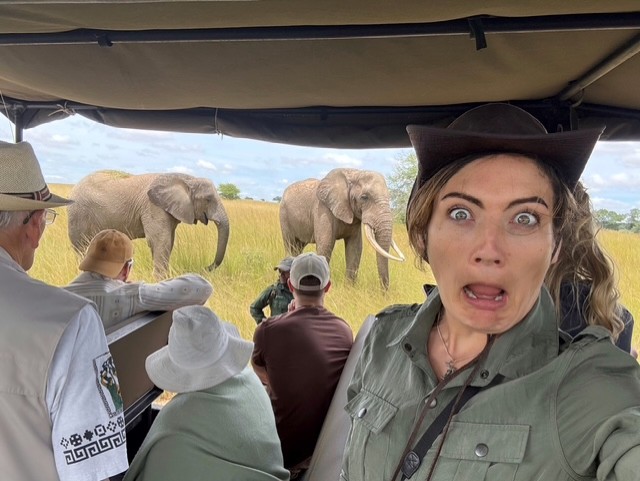
Back on the track, we headed up the hill and realised with sudden excitement what that might mean: that we hadn’t missed the elephants. We rounded some trees and saw them, two adult males heading slowly towards us through the long grass, which didn’t even reach their bellies but came up to the shoulders of their tiny human chaperone. They moved in slow motion, gently flapping their ears and munching grass pulled absent-mindedly into their mouths by their incredible trunks. It was one of the most magnificent things I’d ever seen.
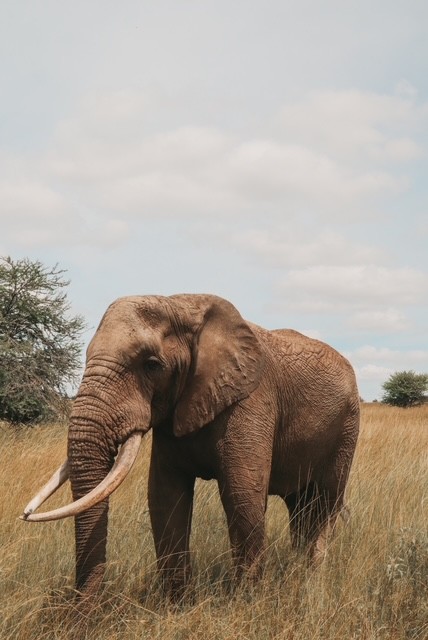
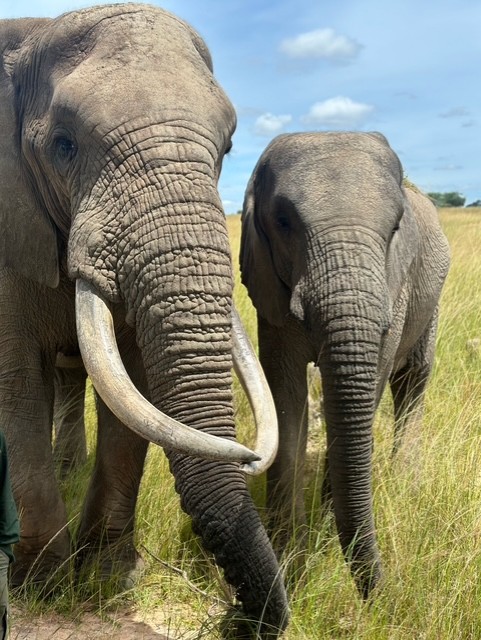
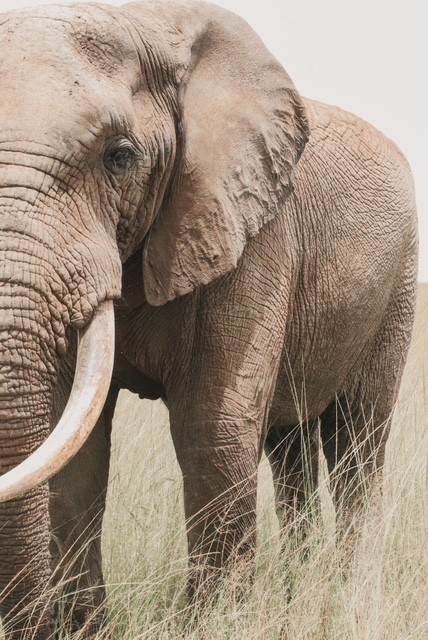
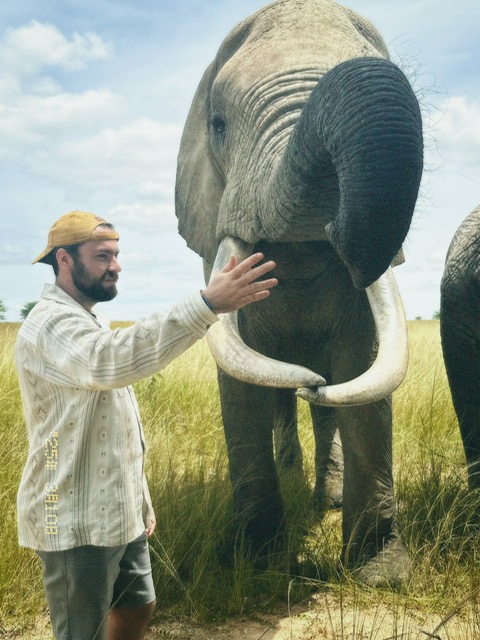
They came right over to the truck and stood contentedly as Anyway and another ranger told us all about them. It was hard to take in what they was saying in my awestruck state, but I gleaned that Mac – the larger of the pair, who is over 40 and has two enormous tusks that touch at the tip – was rescued as a baby and raised at Imire. We watched delightedly as they snuffled up pellet feed. This soon attracted a family of warthogs, the bold, cheeky scavengers of the bush, which appeared from nowhere whenever it was someone else’s feeding time. I was touched by how gently the elephants shooed them, with a slow, careful sweep of their trunks.
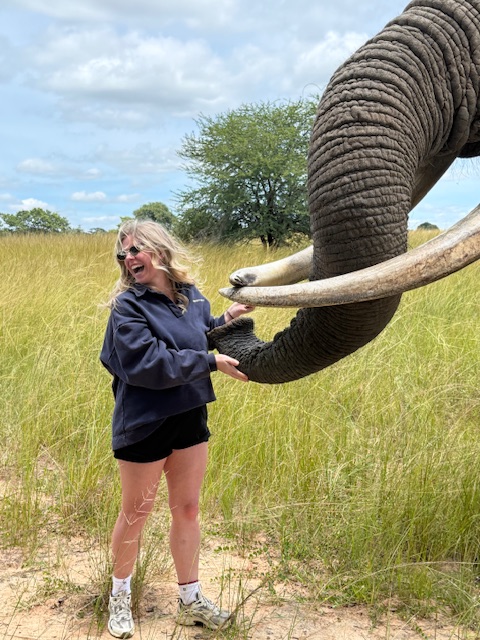
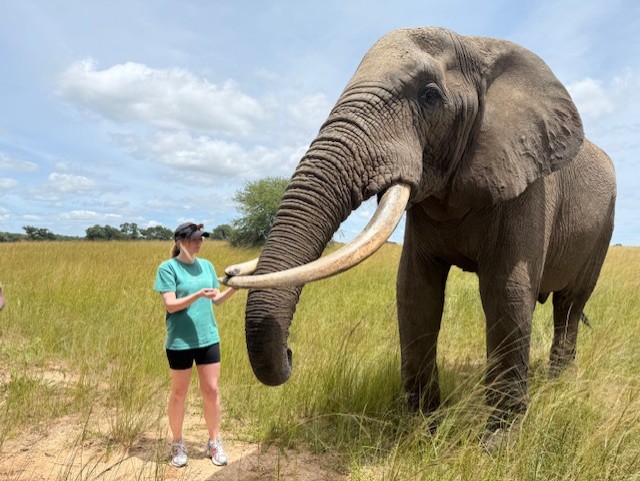
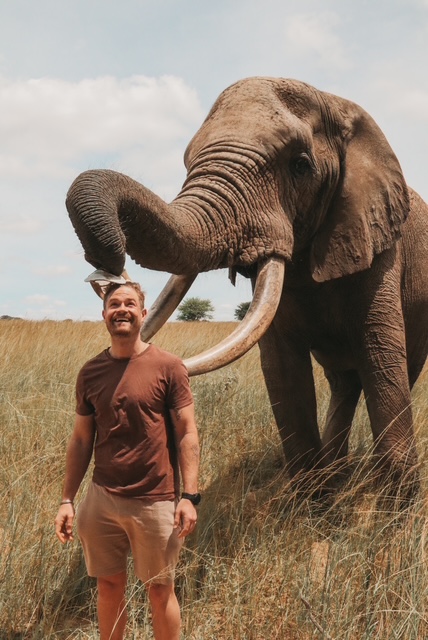
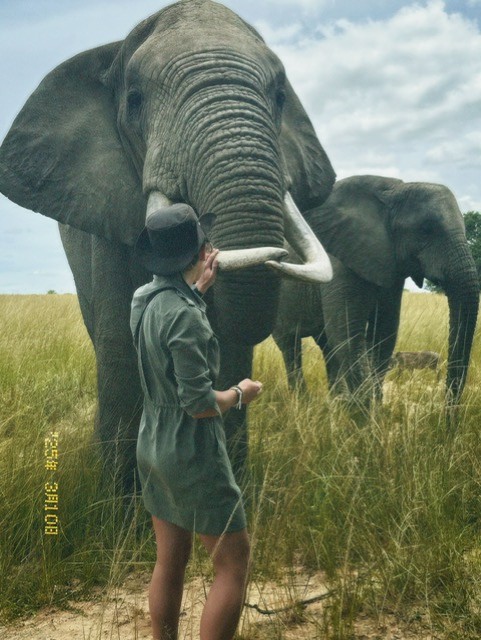
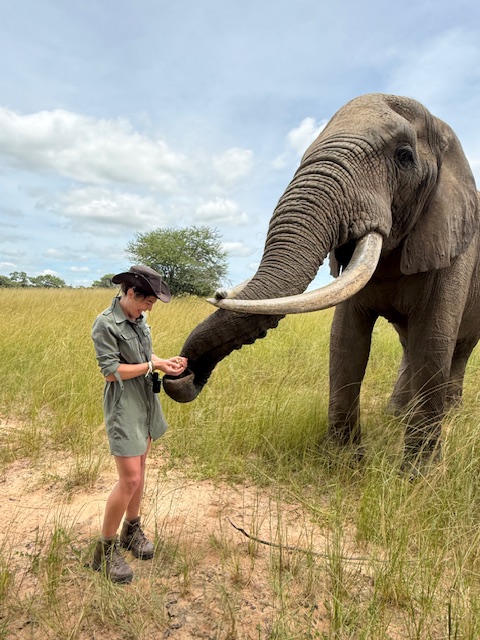
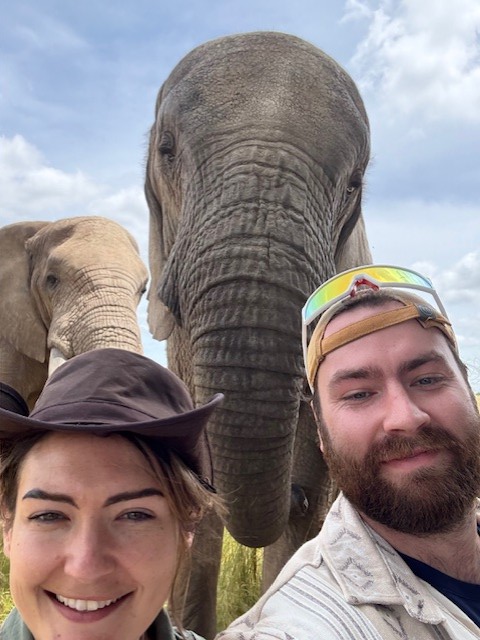
Reece, who could charm anyone into anything, had a word with the ranger and before we knew it, he was climbing out of the truck. He stood in front of Mac, who raised his enormous trunk, took the hat from Reece’s head and put it into his mouth. He returned it a moment later, slightly mucky. The ranger ushered the rest of us out of the truck (in my excitement I knocked over my cider) and we took it in turns to feed Mac some pellets. I couldn’t believe what was happening.
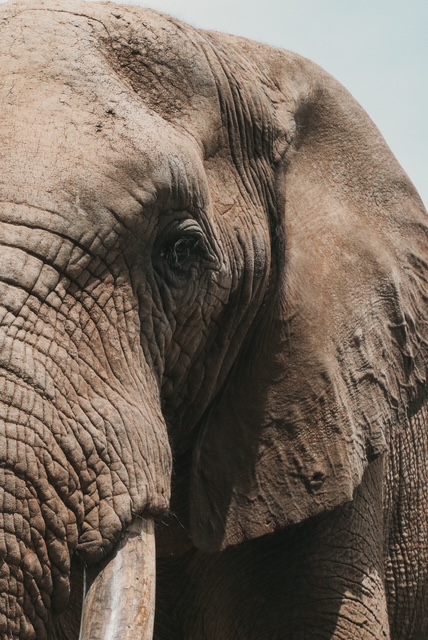
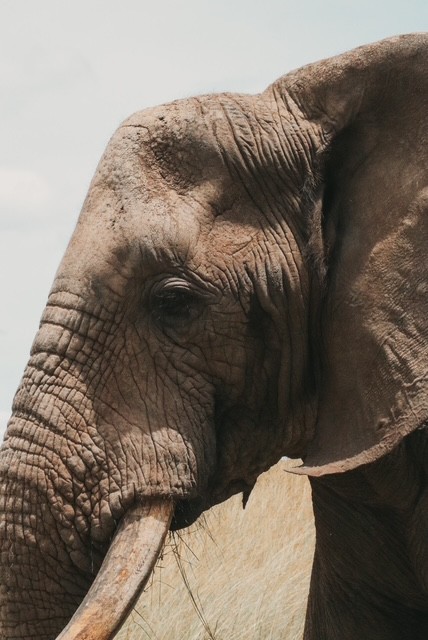
Standing next to an elephant is the only way to appreciate its sheer size; photos diminish them. I was eye-level with Mac’s chest and a fair bit shorter than his trunk, which – even when curled at the end – came down to the ground and was covered in thick, wire-like black hairs. He could have sent me flying without batting an eyelid but, towering over me, he took the pellets from my outstretched hand very gently, twisting his trunk so I could drop them in. I was amazed by the dextrousness of his “fingers”, which he used to shovel the feed into his mouth. His skin was leathery and wrinkled, which helps with moisture retention and temperature regulation, and there was an inexplicable wiseness in his long-lashed eyes, which observed us calmly from beneath a pronounced, bony brow. I could have stood there forever.
Mr Burns
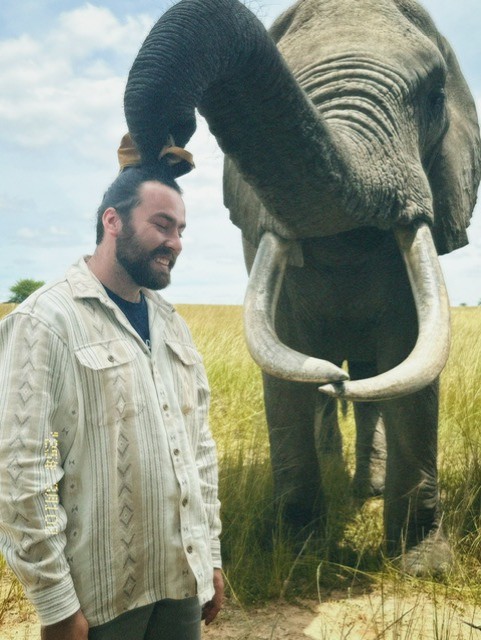
When my turn was up, Mac performed the hat trick on Ryan and held the cap in his mouth for so long that we thought he planned to keep it. He looked like he was smiling when he finally gave it back. Once everyone had fed him, we snapped a group photo and clambered back into the truck, not quite believing that we’d just met an elephant.
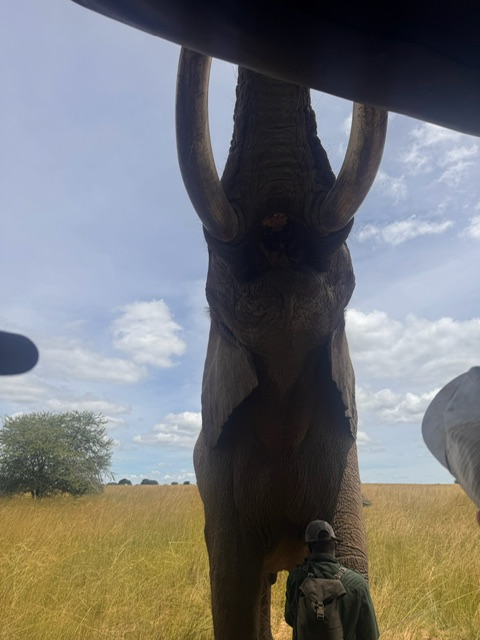
Just before we headed off, Mac took a fancy to the tree the truck was parked under and reached up, trunk outstretched, for a leafy snack. He seemed even more enormous from underneath his great, upturned head. This earned him a (rather bold) telling off from the ranger, as the branch above us was huge and would have squashed us if it came down on the canvas roof. It was bizarre to see such a big animal yield so readily to a sharp rebuke and a few whacks on the chest (which definitely wouldn’t have hurt) – he brought his trunk down like a dog that knew it’d been naughty. With that, the truck pulled away and set off across the grassy plain.
Black rhino
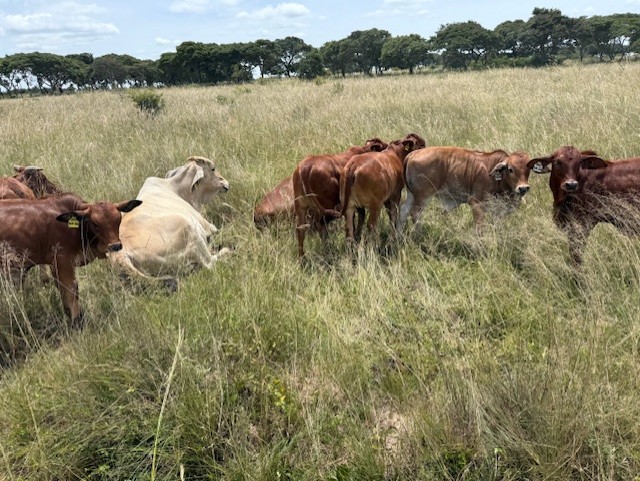
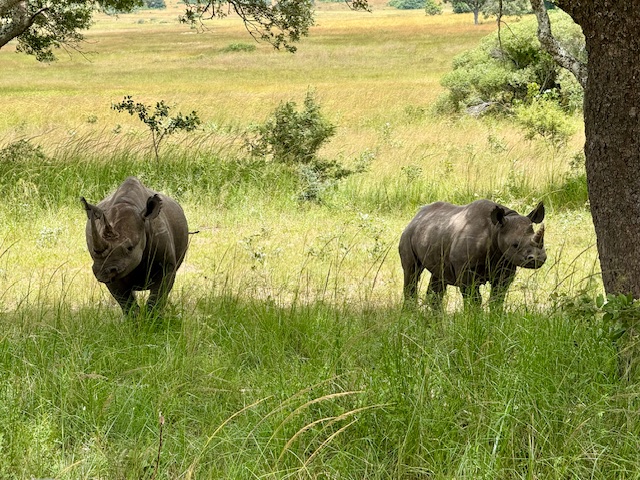
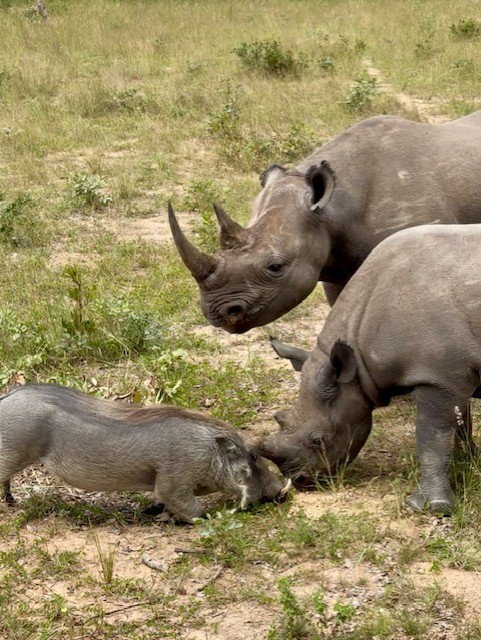
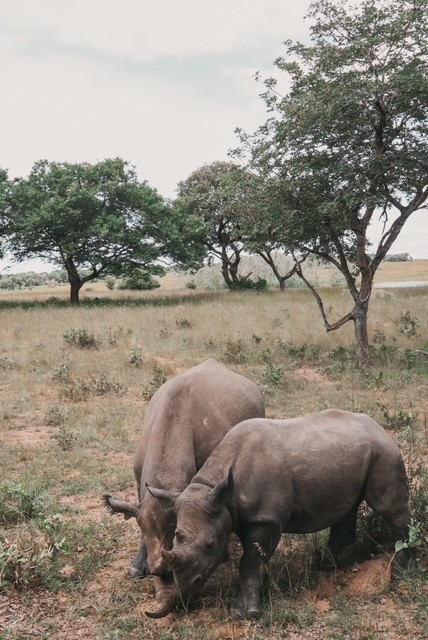
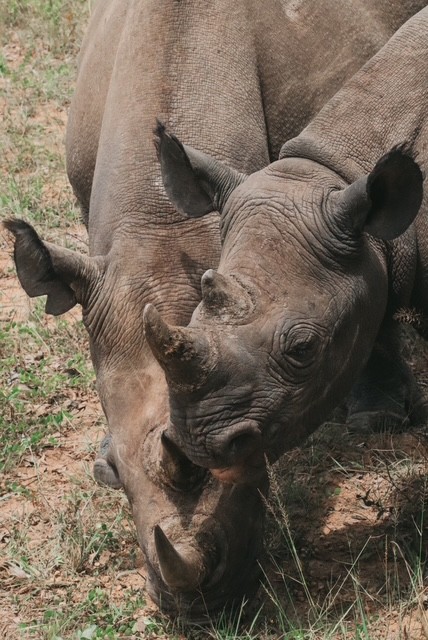
We passed a small herd of glossy cattle, then entered a wooded area and came to a pair of black rhinos – a mother and daughter. They were smaller than the white rhinos, with narrow, pointed lips and two sharp horns. We pulled up in a clearing and a ranger scattered some pellets on the ground, which brought the warthogs running, tails lifted in their funny way. They didn’t seem to bother each other much and the warthogs, although a little wary of getting too close, could almost have been little rhinos themselves. We watched them eating together, accompanied by an armed guard, and I stewed over how humans could have knowingly pushed such beautiful, gentle-looking animals to critically endangered status.
After a few minutes wondering at these quiet creatures, we continued through the trees. There were a lot of deer shading themselves in the wood, but so many species look so similar that I couldn’t say what they were. We left the canopy and bumped along a track towards an area of taller trees. A giraffe emerged and strode inquisitively over, accustomed to being fed, then stood and watched us amicably. We drove into the trees to look at several more giraffes, which – until they were in the open – blended seamlessly into their textured backdrop, then sped off for lunch. It was 1pm and we were very hungry.
A scenic (and delicious) lunch
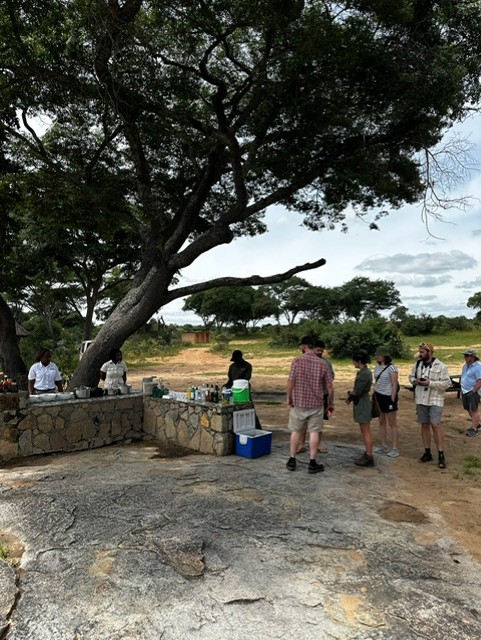
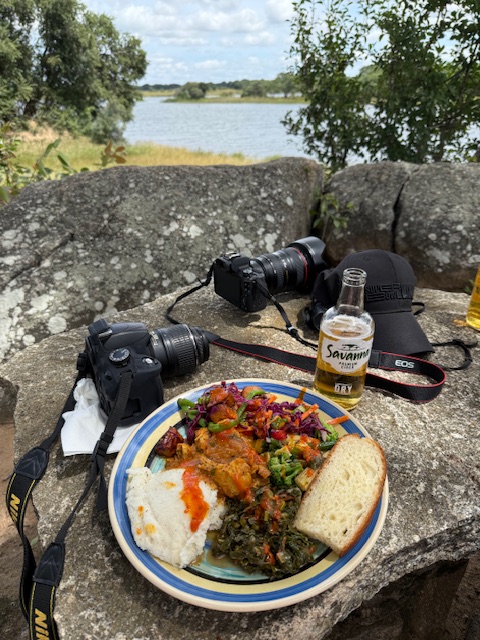
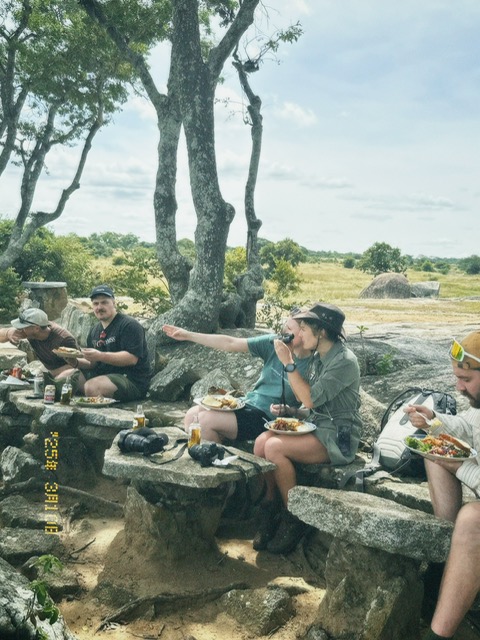
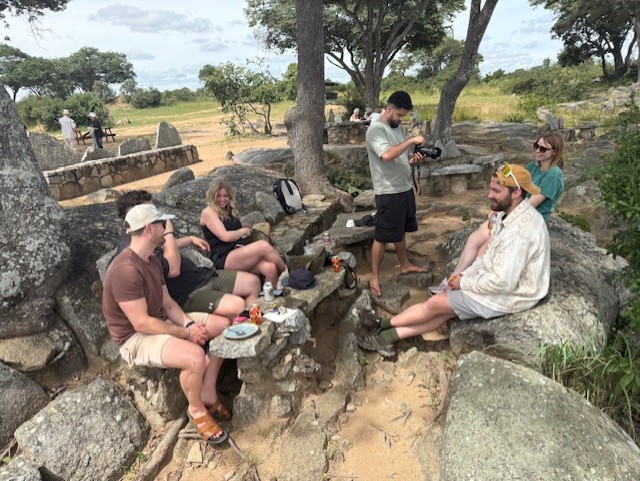
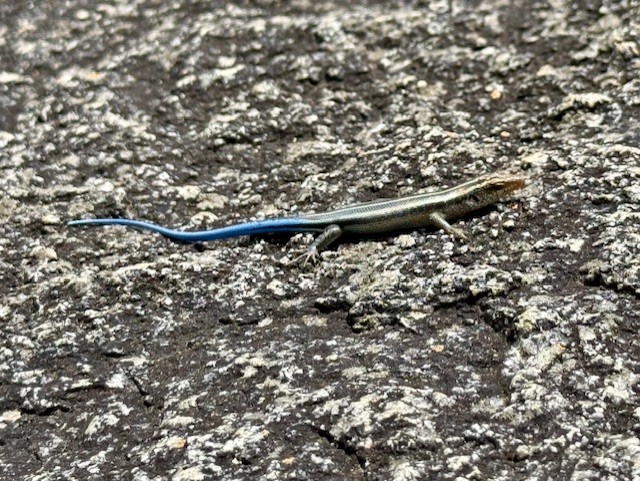
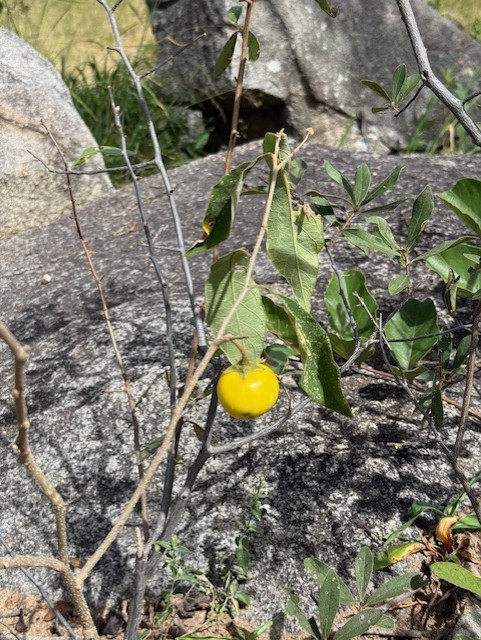
The lunch spot was set on a raised plateau overlooking a lake surrounded by verdant forest, with posh toilets, a permanent bar and a built-in stone seating area. The food was spectacular: chicken curry, crunchy veg, bread, kale-like rape greens and sadza, which is a thick, polenta-like porridge made from finely ground cornmeal, followed by sponge cake. We ate at a rustic stone table, looking out for animals around the lake. Once I’d finished I wandered off and found a few bluetail scrub lizards, a nightshade with a tomato-like fruit and a wobbly rubber fishing lure that I threw to Tilman, the group prankster, to revenge some earlier misdemeanor.
Cattle, zebra, monkeys & an ant
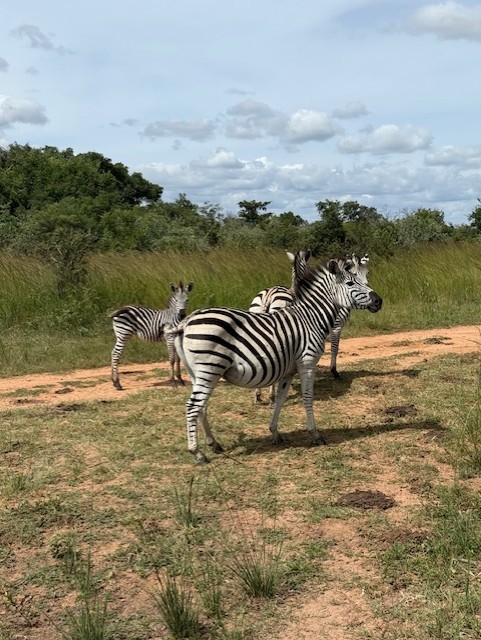
After a blissful hour spent eating, talking and watching the chefs chase off a small herd of hump-shouldered cattle, we returned to the truck. We went on a quick detour to watch a gathering of feisty zebra irritate each other under a cluster of trees, then returned to the lodge area via wild, grassy plains.
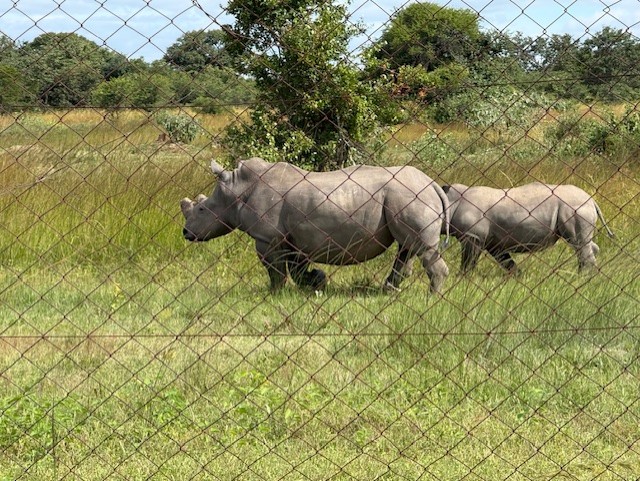
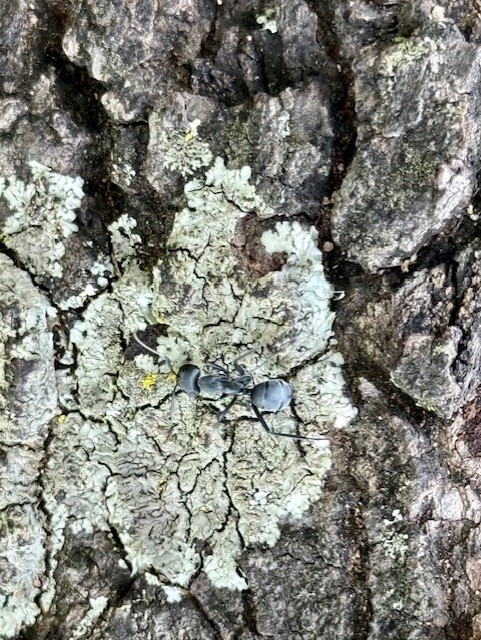
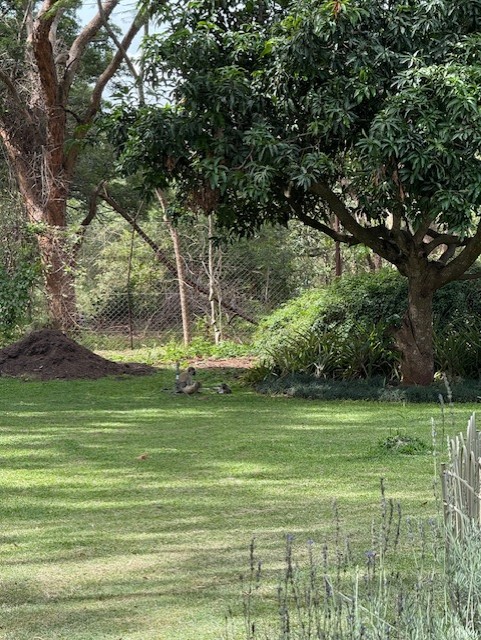
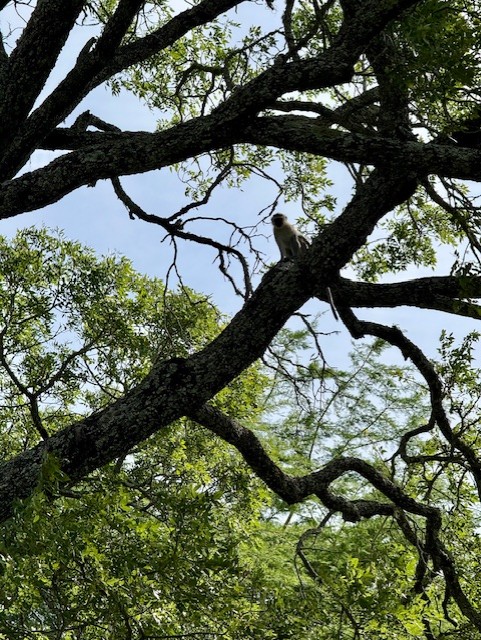
Back at the lodge, we wandered over to the central lawn and sat down for a drink. In a moment I was up again to watch a pair of white rhinos that appeared on the other side of a high but disconcertingly skinny wire fence that separated us from the game reserve. When they disappeared into the long grass, I turned my attention to a huge ant making its way up one of the big trees that shaded the lawn, then to a family of vervet monkeys playing boisterously by one of the thatched huts. After our drinks, we settled the bill with Anyway and returned to the car, all utterly overjoyed with our experience at Imire.
The crew (inc Reece’s new girlfriend)
Tobacco farm tour
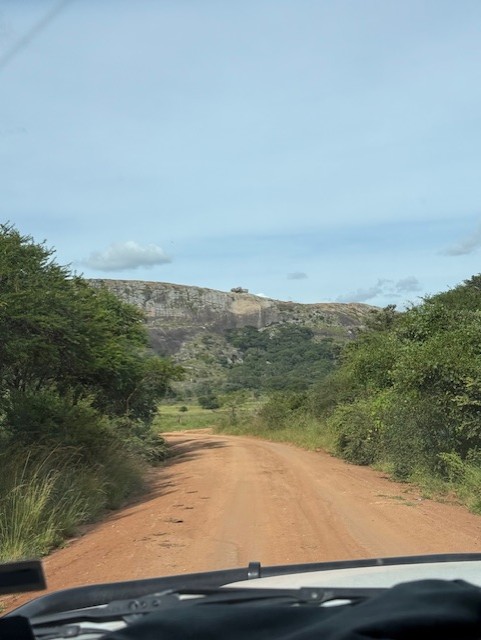
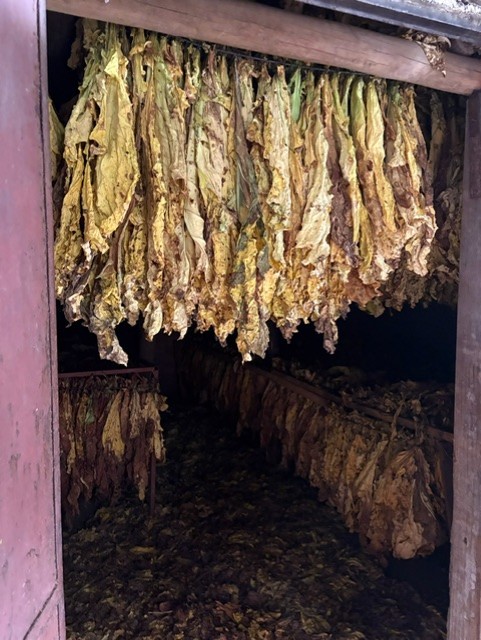
The fun wasn’t over: we left at 3pm and took a short drive to Reece’s friend’s tobacco farm for an exclusive tour. Mark lives down a long dirt road in a rural area overlooked by “baboon mountain”, a long, prominent granite hill. He gave us a warm welcome, as did his delighted alsatian, then took us to see how tobacco is made. First he showed us round a couple of tall, barn-like buildings situated on a large yard near the house and talked us through the drying and grading process:
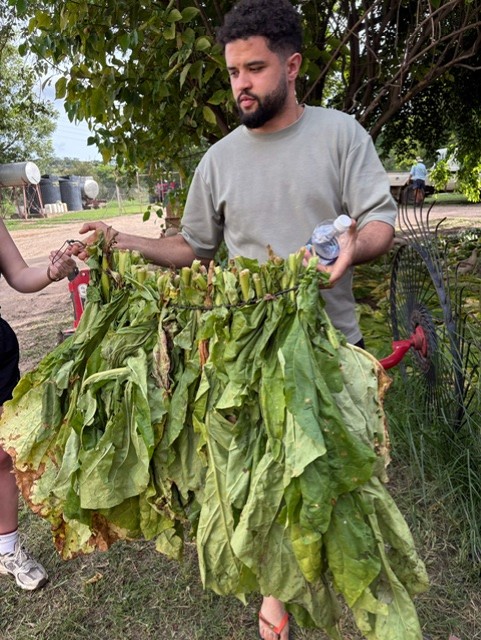
After harvesting, the large tobacco leaves are clamped tightly into long wire frames and laid out ready for drying.
The frames are hung on racks in big barns which are heated by a furnace to stifling temperatures.
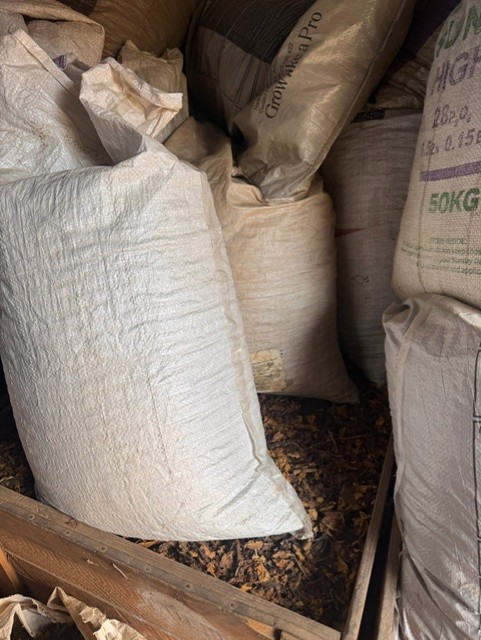
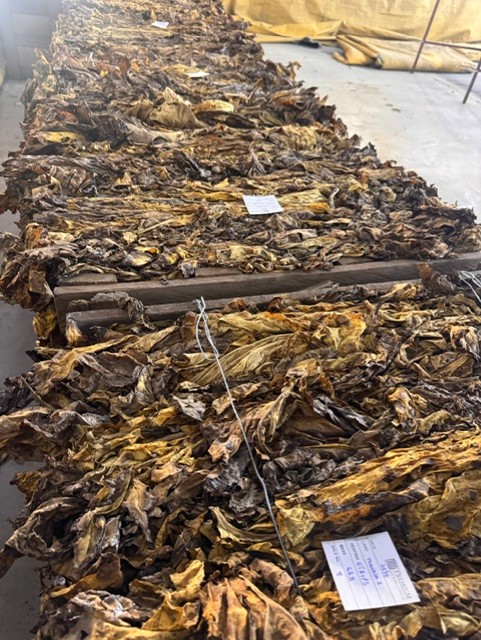
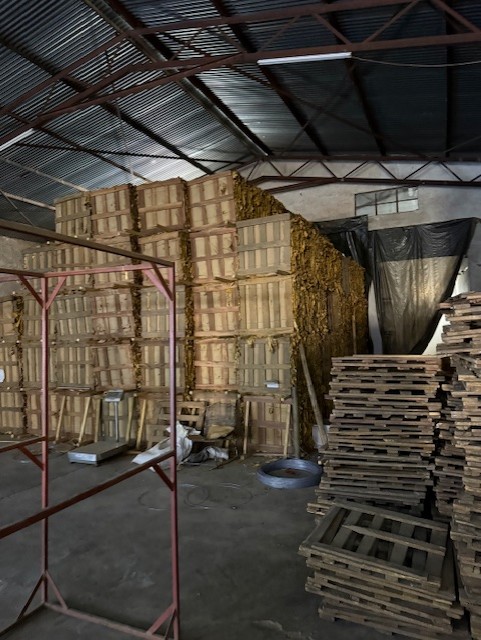
Once dried, the leaves are collected, sorted into grades, put into wooden crates and stored in huge stacks in a pungent (but not unpleasant-smelling) warehouse.
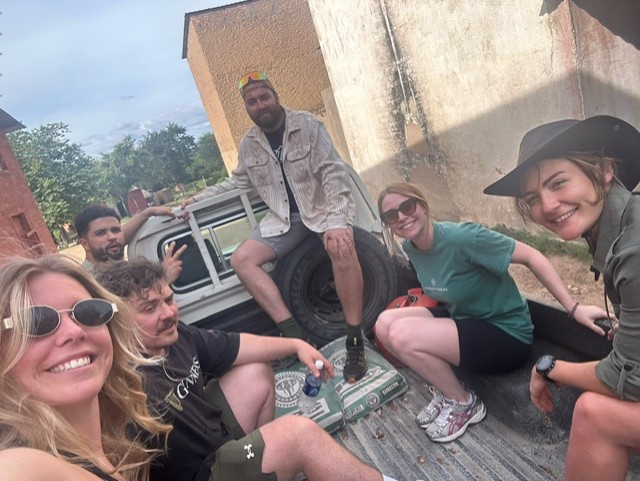
To my delight, and once Dan had finished chasing the chickens in the yard, we bundled into the open back of a pickup truck to go and see the tobacco fields. We sped along rough dirt tracks that wove through the wonderfully green, maize-filled landscape and I couldn’t stop grinning – I felt like a rogue, unsupervised child on the best school trip ever.
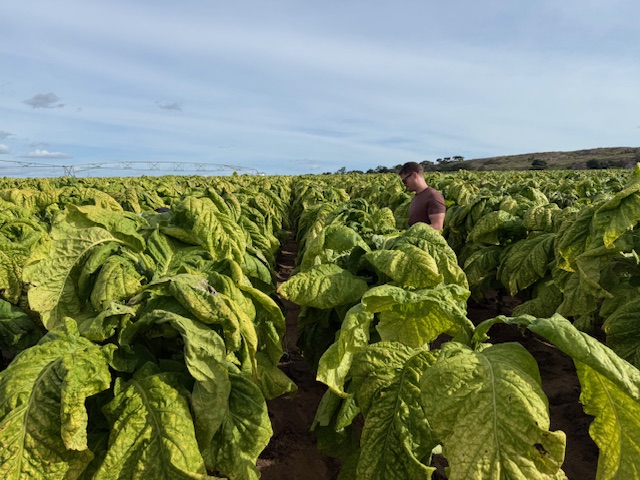
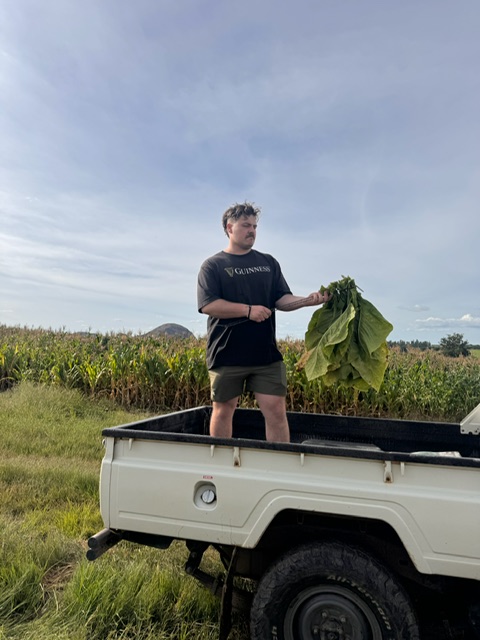
After ten minutes we arrived at an enormous field full of neat rows of tobacco, which grows shoulder-high with huge, floppy green leaves issuing from a single stem. Mark picked a few leaves, clamped them into a wire frame and passed it round – it was surprisingly heavy. He explained the growing process and casually warned us of puff adders, which are particularly venomous and occasionally appear between the orderly rows.
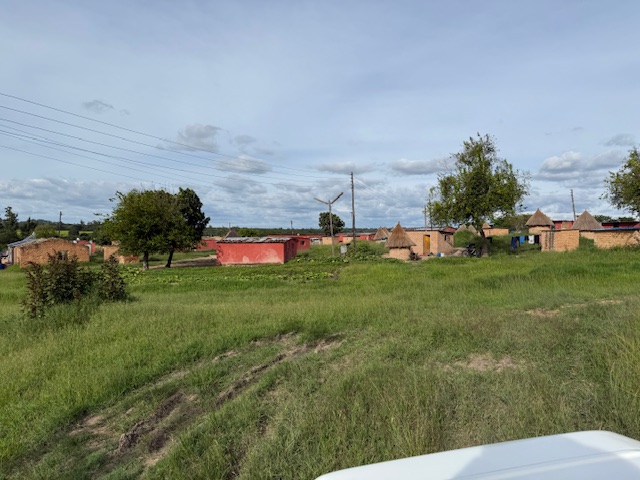
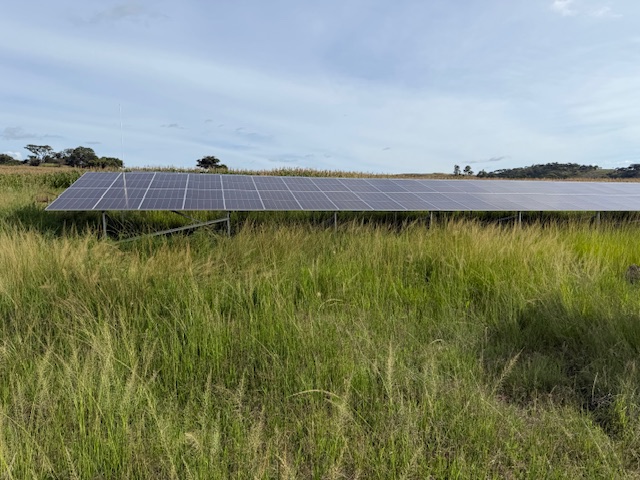
We hopped back into the truck and went to see the solar power system, which has transformed the farm by providing reliable, clean electricity. It was situated by a neat little settlement of squat brick and red-painted houses, where washing hung on lines and children stood smiling and waving at us. This was nice to see, as Zimbabwe has a serious unemployment problem and the farm has supported the rural community by creating around 200 jobs. Our tour concluded on that happy note, and we bumped back to Mark’s house perched precariously in the pickup.
Mark’s lovely mum greeted us and sat us all down in a homely, open-sided lounge room overlooking the domed end of baboon mountain, which hulked on the horizon above swathes of green fields and a clear blue garden pool. She brought pots of tea and a delicious, freshly made pistachio cake, and we sat talking with Mark and his parents for nearly an hour. Once again I was struck by the warm, unconditional hospitality of Zimbabweans and their willingness to welcome strangers into their home with nothing but kindness and generosity.
A whirlwind journey home
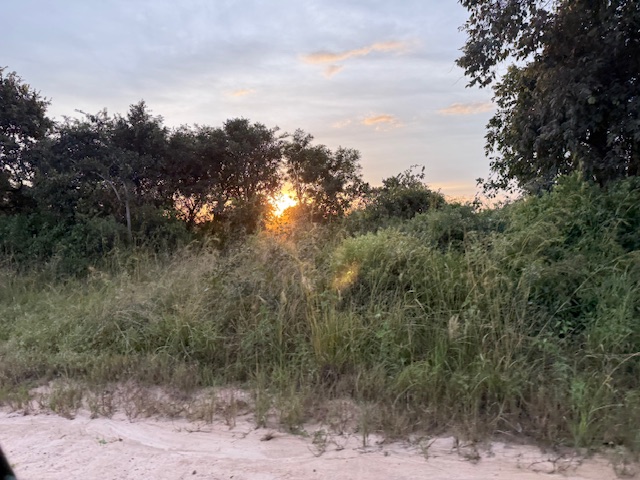
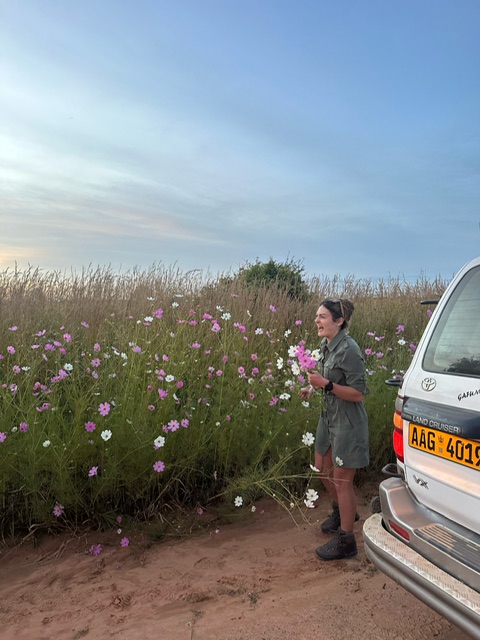
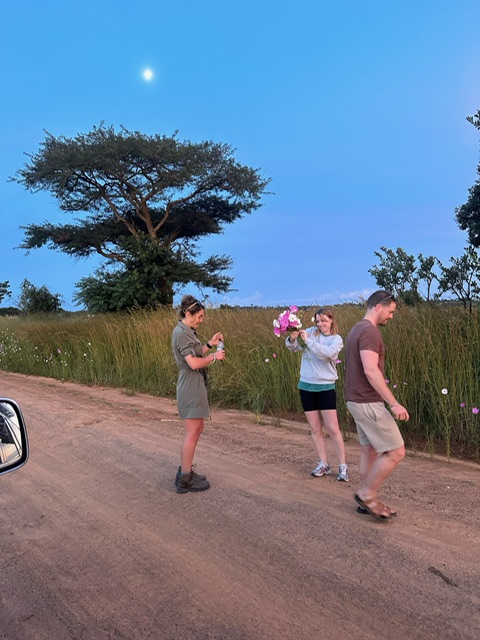
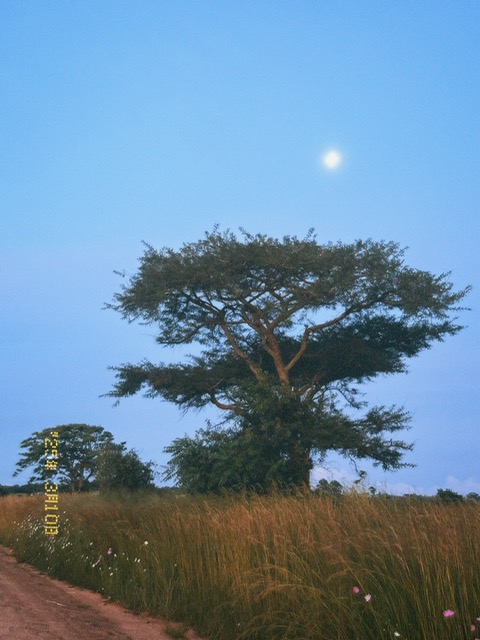
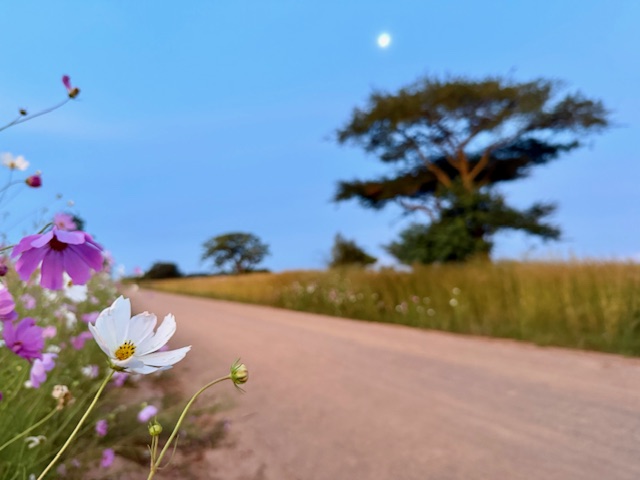
We said our goodbyes just after 5pm and began the two-hour journey back to Harare. For the first hour we remained on rough dirt roads, passing occasional pedestrians and cyclists travelling between invisible rural destinations. The atmosphere in the truck was muted compared with the babble that morning; I’d called shotgun and when I turned around, everyone was asleep except Gus, who – despite being really quite broad – was squeezed into the middle seat. The sun’s orange glow deepened as it set, bathing the verdant landscape in soft, warm light, and a clear moon appeared in the deep blue sky to the east. We stopped on a long, straight stretch and everyone bundled out to pick pink and white cosmos flowers for Shelley. This simple, spontaneous act felt strangely special, in a wild, quiet place between the rising moon and the setting sun.
Flower goblin
Eventually we hit a main tarmac road and Reece really had to concentrate as the dark crept in. I regretted sitting in the front as it meant I bore witness to several near misses: terrifying overtakes, sudden swerves, people milling frighteningly close to the edge of the road and unlit vehicles that appeared out of nowhere. On the outskirts of Harare, Gus emitted some kind of alarm call and it was only after Reece started braking that I saw the man running across the three-laned road. I’d have missed him if it weren’t for the white soles of his trainers.
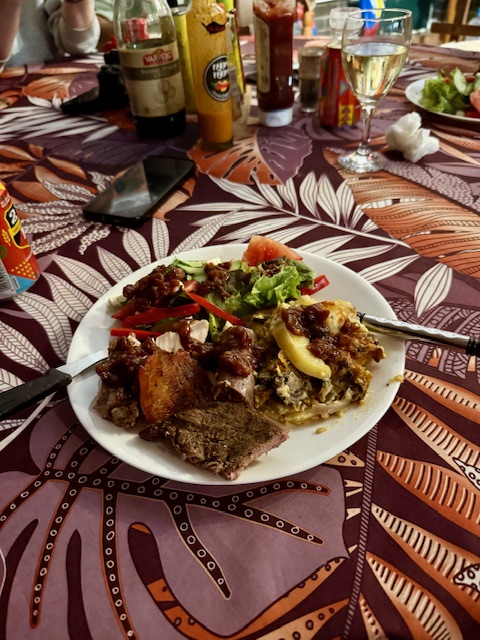
Thanks to Reece’s diligence, we arrived back at the house at 7:30pm without incident. Despite our lateness Paul cooked up an excellent braai (barbecue), which included lean, tasty impala steak and traditional boerewors (beef sausage). We spent the evening rabbiting on about how incredible Imire had been and were all in bed by 11pm, happily exhausted.
Bonding session
I know this is a long, rambling post but feel strangely humbled by that day. At Imire I was struck by the respect and acceptance that different species showed for each other as they grazed together, the unlikely gentleness of Mac towards pesky warthogs and fragile humans, and the way that wilderness (although managed) – if we let it – sustains a perfect kind of equilibrium between animals, plants and landscapes. That was the day I knew that Africa had got into my blood.
Photo credits – everyone but especially Isabelle, who is responsible for most of the best ones!
Endnote: on 28 April, less than two months after we visited, Gomo – Imire’s 22-year old male black rhino – was tragically killed by poachers. Imire are fundraising to help bolster their security systems and help protect their incredible animals against such horrific incidents. Please consider supporting their efforts by donating here.