Zimbabwe 2025 (2): Build-up to a Domboshava sunset

Friday 7 March

Morning run

Having just emerged from an English winter full of cold, dark mornings, it was blissful to wake up to warm air and bright sunshine. Reece and I set off on a run around the block at 8am, before the heat of the day set in. Harare sits on a plateau at an elevation of 1,500m above sea level and – as Reece had warned – 6km felt a lot harder than usual (particularly the long, steady hills) due to the lower air pressure and warm temperature.

I enjoyed the run regardless, which was mostly on the road except for the occasional dirt “pavement”. We passed lots of leafy, walled gardens filled with trees, people going about their mornings, a couple of schools and a few rickety-looking market stalls. At one point a lanky teenage boy started running after us and I gripped my phone a bit tighter until Reece turned, unperturbed, and complimented his pace. At this, he sprinted off ahead – his feet barely touching the ground – before returning to his friends. That was a bit weird.

Errands

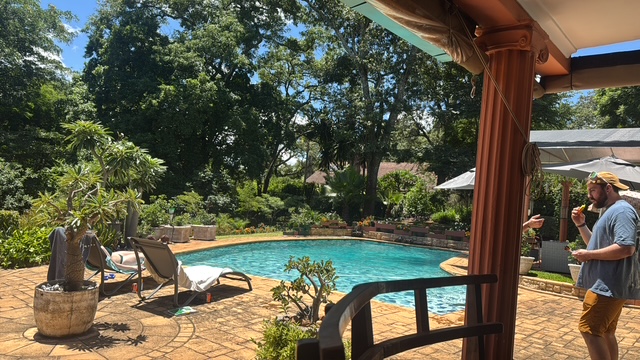
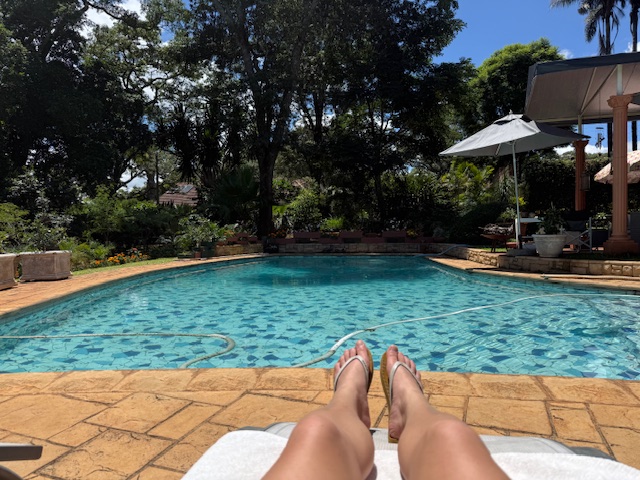
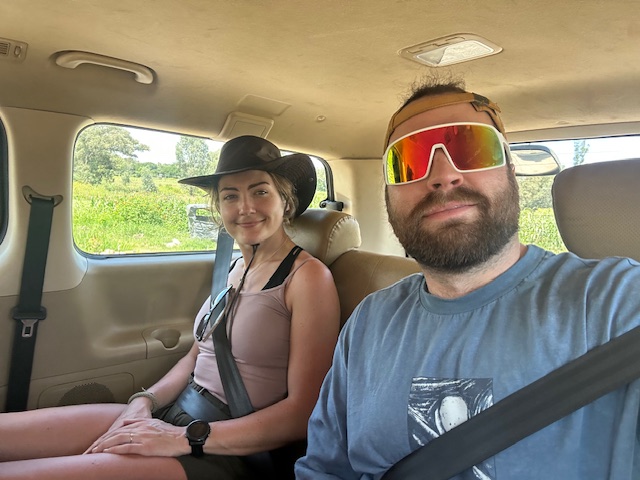
We returned to the house, puffing, and took brief respite in the pool. After a breakfast of croissants with ham and cheese, the six “kids” – Reece, Bryn, Ryan, Isabelle, Tilman and myself – drove 20 minutes to Kieran’s house, which is set in a fancy-looking golf estate with its own security guards, to collect his people carrier. We met Kieran’s lovely wife Trish, had a quick look around the garden – which backs onto the fairway and reportedly receives the occasional golf ball (and cobra in the pool) – and continued on errands.

We stopped at a petrol station (full service) to get fuel, then went to a pharmacy to consider a course of malaria tablets. Shelley had done the right thing and advised us to take them, with the caveat that if we didn’t then we could take antibiotics home just in case, and on learning that they’d set us back $60 each – and might make us feel rough – I decided against it. We bought coffee from a little cart instead.

After a quick detour to drop off a deposit for tattoos, we returned to the house and chilled for a couple of hours. I chatted to Iz by the pool while the boys wound each other up playing darts until lunchtime, when we all headed out to Tin Roof, the local bar/bistro that Reece used to manage.

Tin Roof

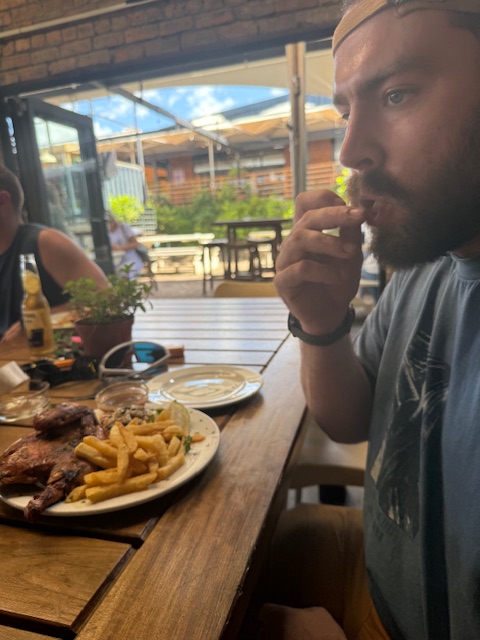
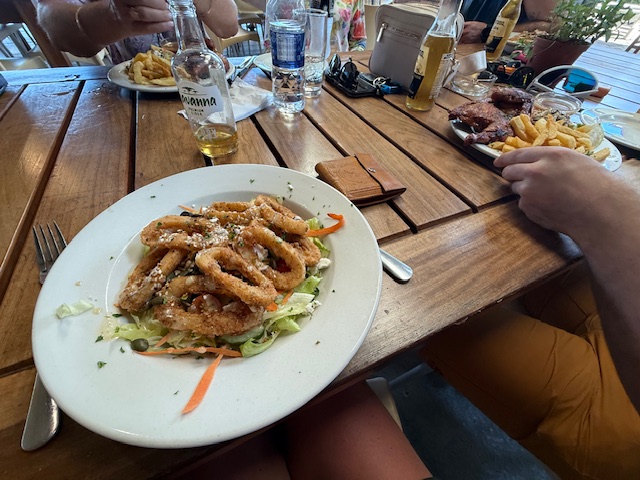
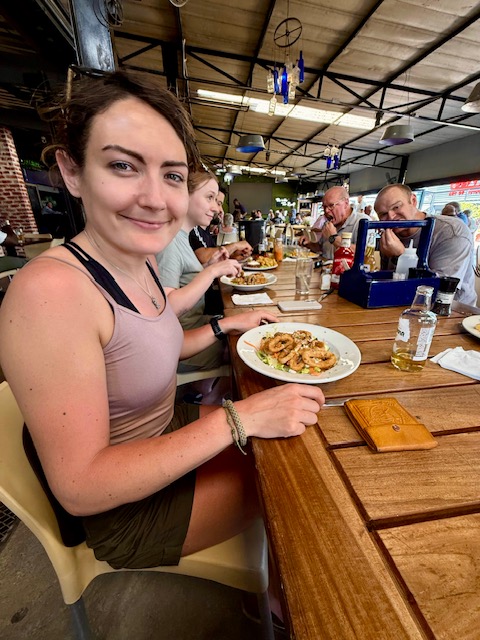
Set in a small shopping park, we found Tin Roof to be a lively place with an open-sided, indoor-outdoor feel, cheap drinks and a great menu. We sat at a long table and tried to keep up with the introductions – Reece’s family seemed to know just about everyone in there. Between us, Ryan and I had a calamari salad and a half chicken with chips, both of which were very good. An ice bucket of beers kept thirst at bay.
Venturing outside Harare

We got back to the house about 4pm to fill a coolbox, then headed straight out for an easy hike and “sundowners” – drinks and a sunset – at a place called Domboshava. Reece conducted the 40-minute drive, which took us north out of rush-hour Harare and provided our first experience of more rural Zimbabwe.

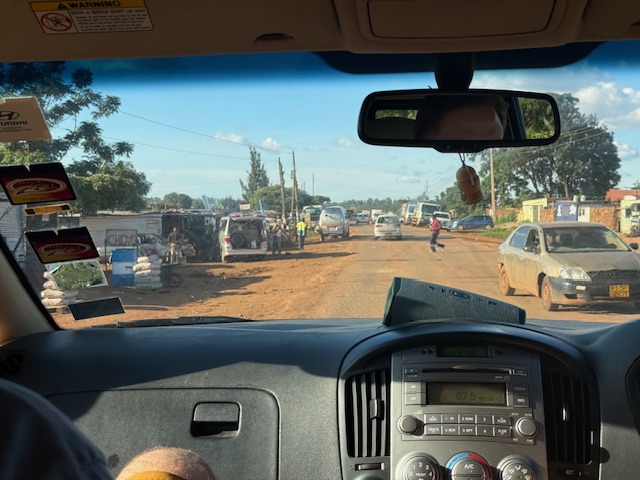
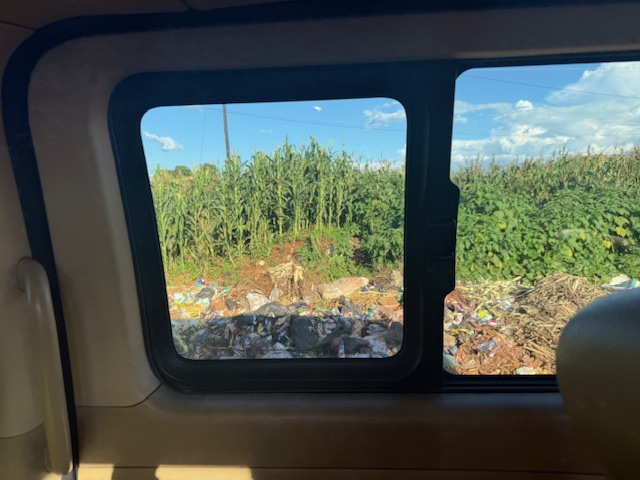
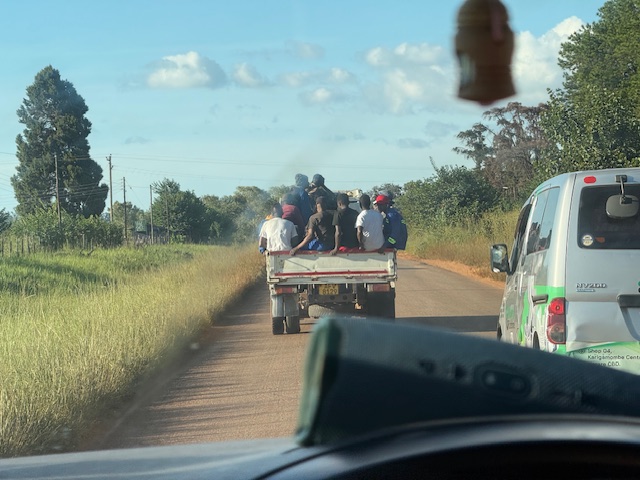
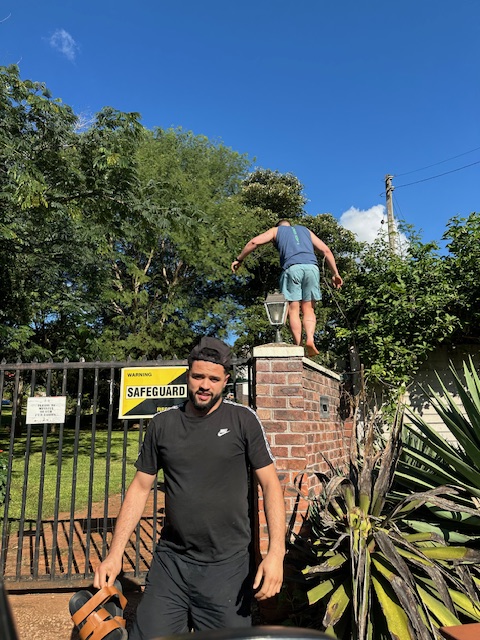
We passed a few farms and a lot of barren-looking scrubland, then came to a shabby-looking village where numerous huts made of just about every material under the sun – wood, chipboard, corrugated metal, tyres, cloth and cardboard – seemed to merge into one another. A boundary was formed between the potholed road and small maize fields by plonked cars, trucks and a ditch completely filled with black sacks and plastic rubbish – Reece explained that public bin services were non-existent. People milled around everywhere and we soon found ourselves behind a pickup truck rammed with a dozen haphazard-looking passengers.
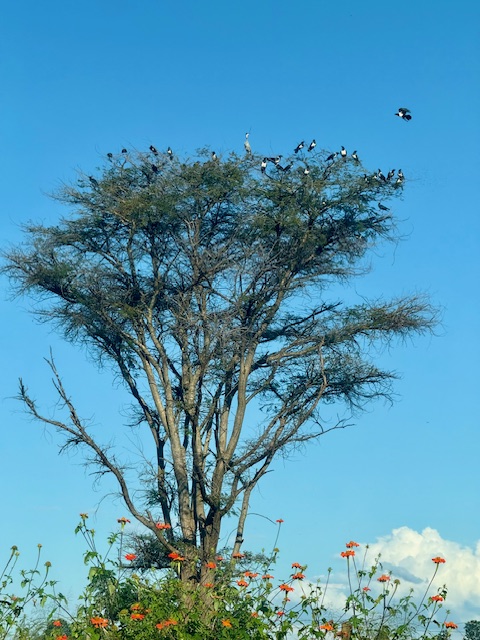
After more potholes, fields, assorted settlements, scrub and the occasional smart-looking bungalow, we turned onto an even bouncier dirt track and soon arrived at a small car park. We each paid the $10 tourist fee for entry to Domboshava and set off on our walk.

Domboshava hike and sunset

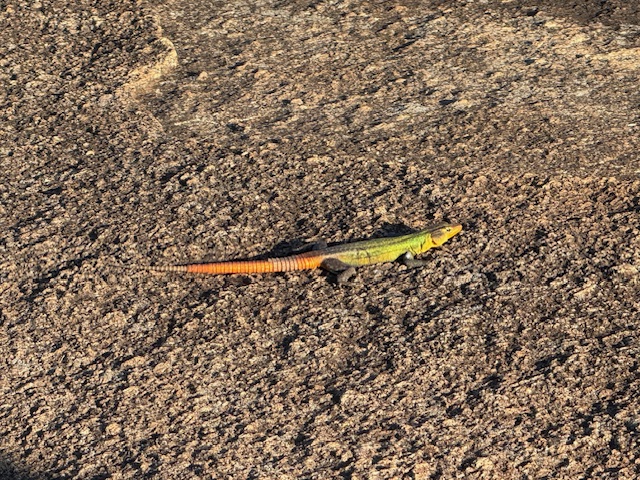
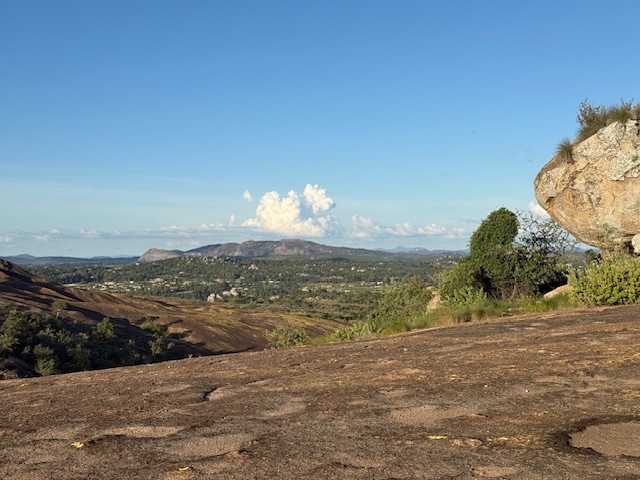
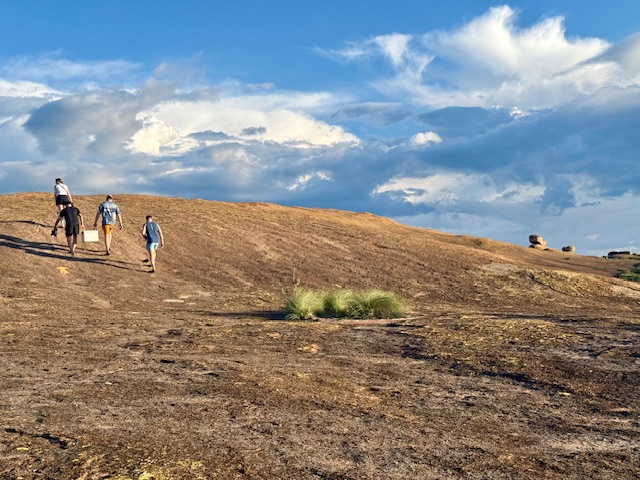
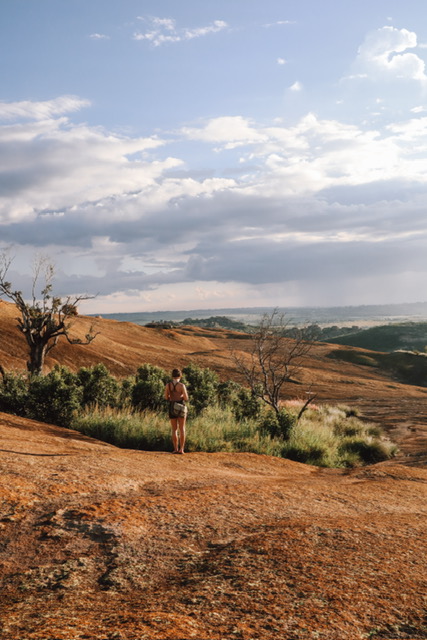
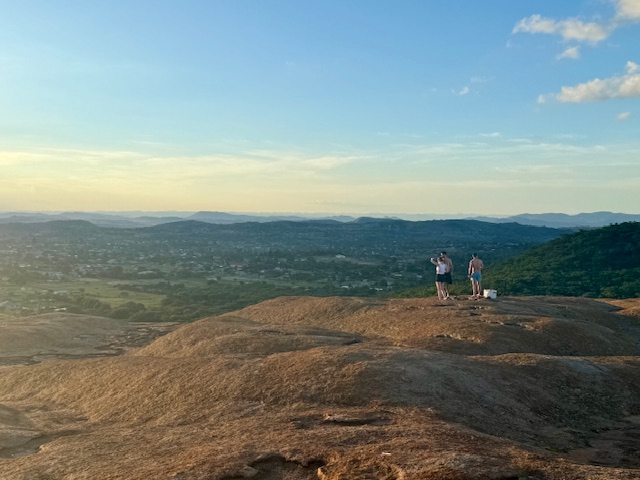
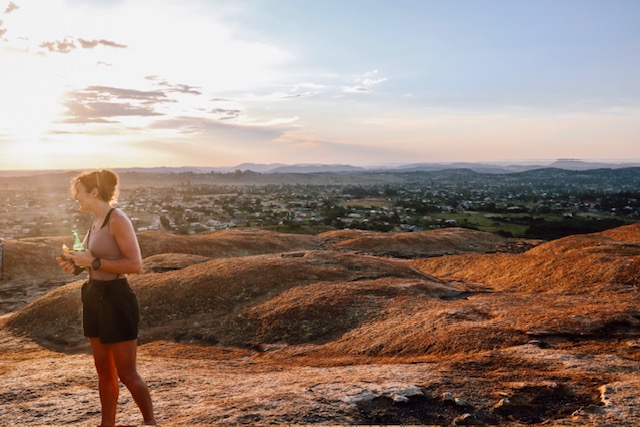
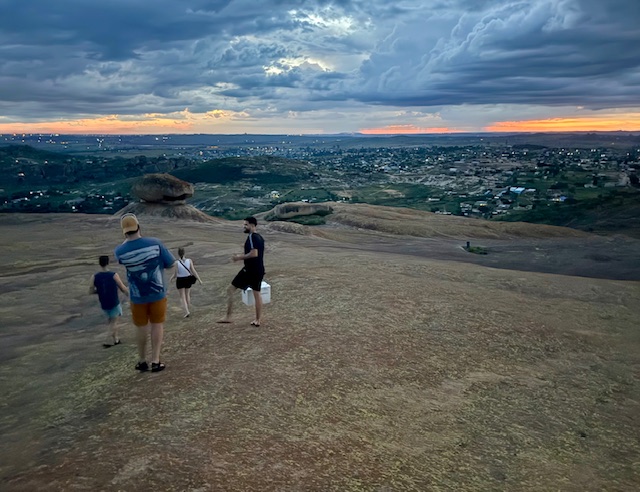
Domboshava is an area of granite hills that features caves, unusual rock formations and ancient paintings. The landscape was unlike any I’d seen before: a great, rolling mass of bare, grey-pink rock rose up ahead like the back of a great, sleeping beast, punctuated by occasional fine cracks, thin streams and inexplicable pockets of greenery. We followed painted arrows up the side of the hill, stopping to watch colourful lizards that basked in the sinking sun and darted away as we approached, their legs wheeling comically in a quick, circular motion.
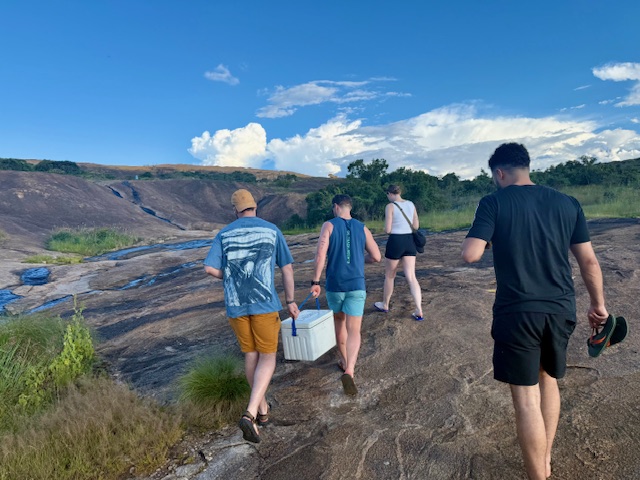
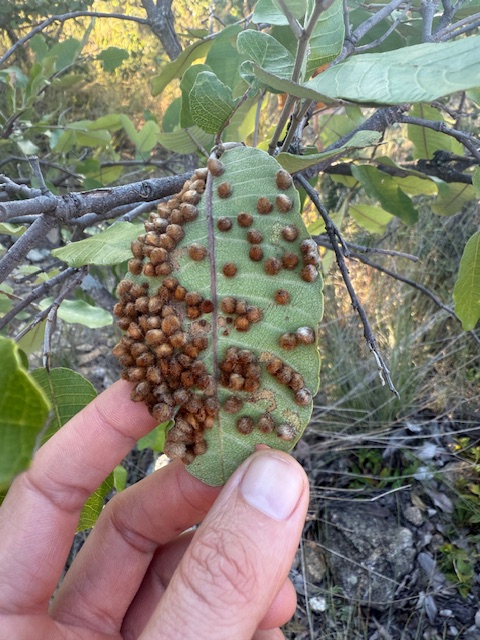
Barefoot and new to Zimbabwe, I remained conscious – to Reece’s amusement, I think – of the snakes I’d read about, whose venom can kill or maim in diverse and unpleasant ways. However, this fear was overridden by my fascination with the vegetation that somehow took hold in the seemingly soil-less granite, which ranged from patches of yellowish grass to thickets of shrub and swathes of verdant trees. In the “wild” for the first time, I was in my element.

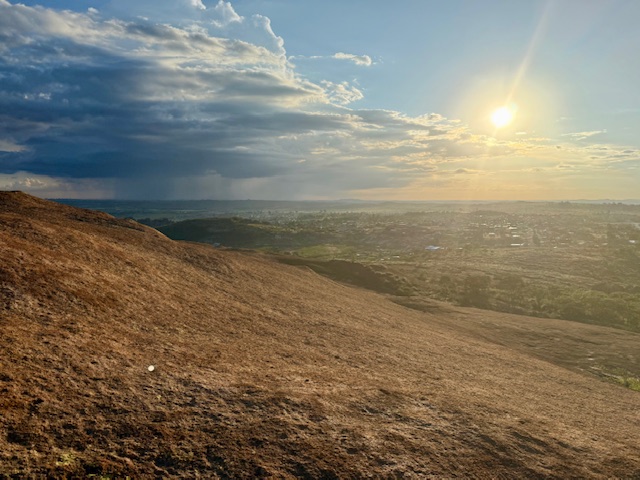
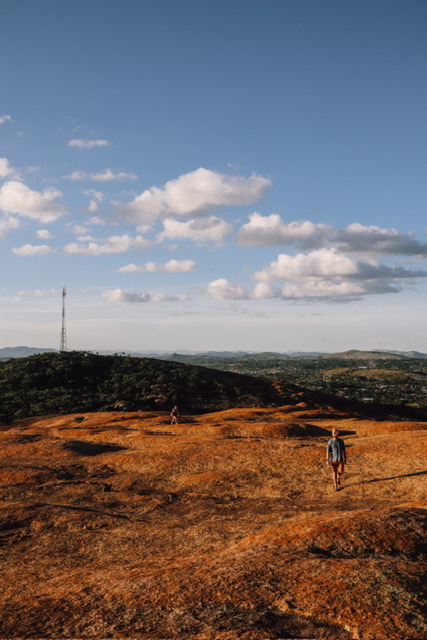
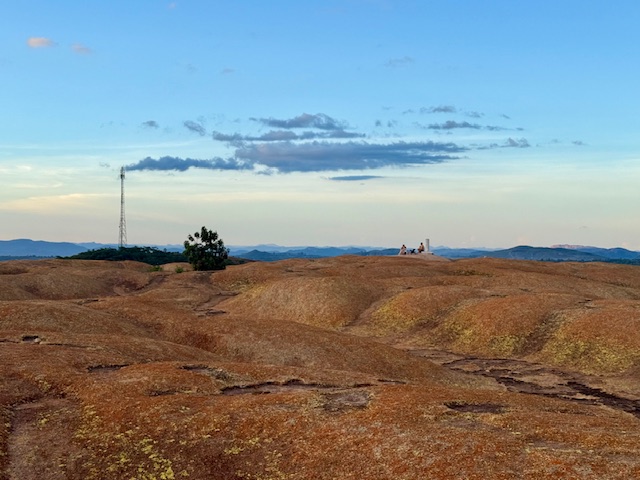
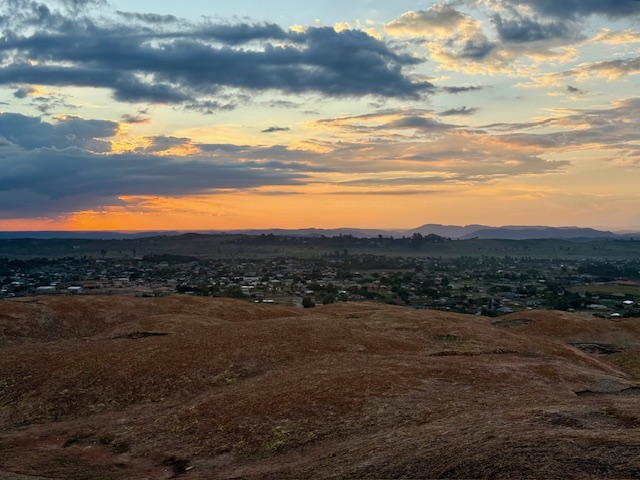
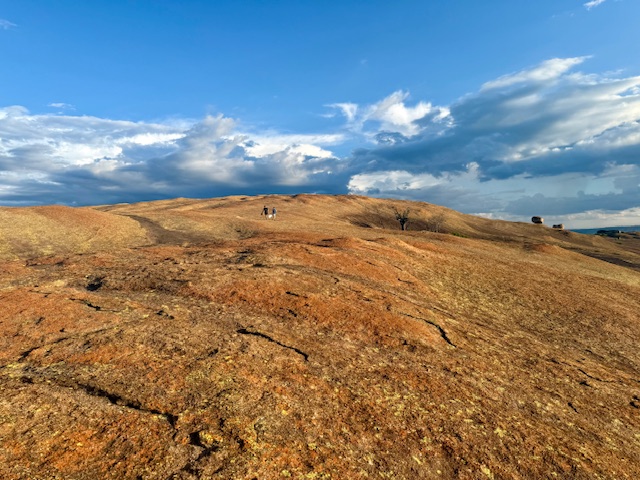
As we gained the rounded crest of the ridge, the greenery receded. A low sun cast exaggerated shadows across the rolling undulations ahead and illuminated the thin layer of yellow-orange lichen that covered the rock, such that the land appeared to glow copper-gold. This, combined with the ominous, blue-grey sky on the horizon, gave the other-worldly impression that the normal order of light – bright above, dark below – had inverted. We could have been walking on Mars.

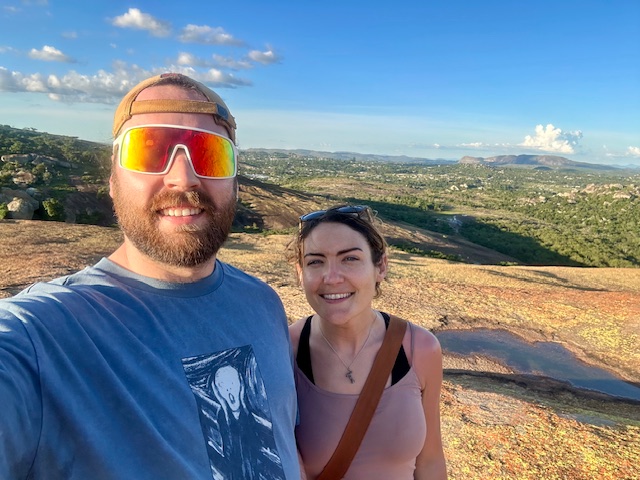
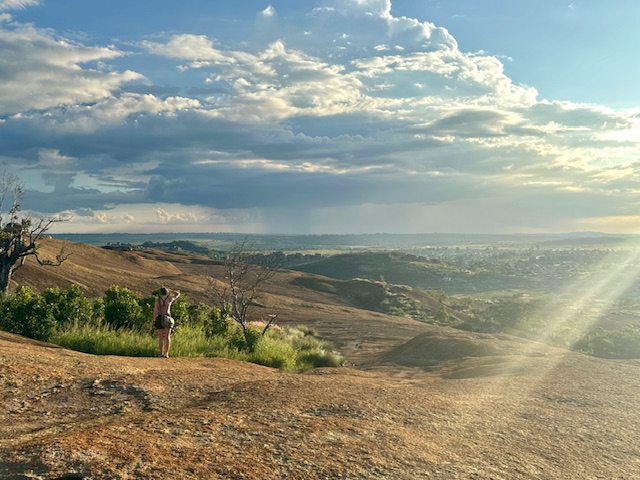
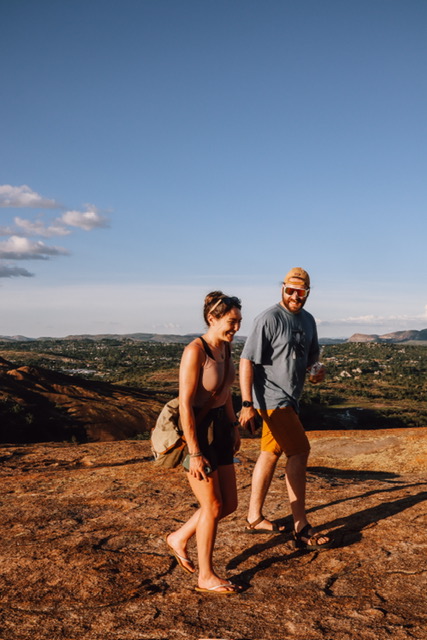
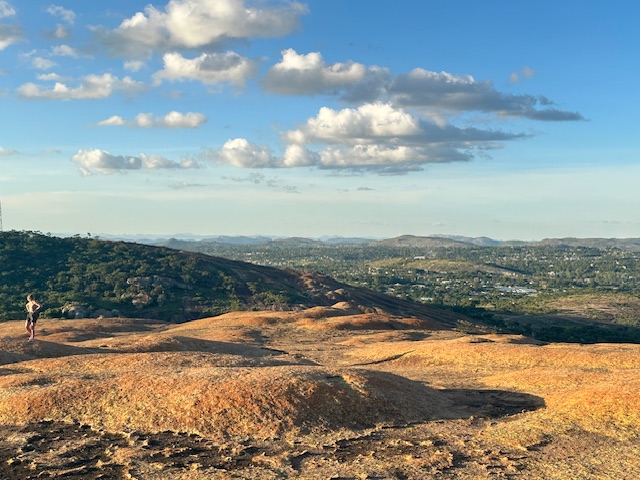
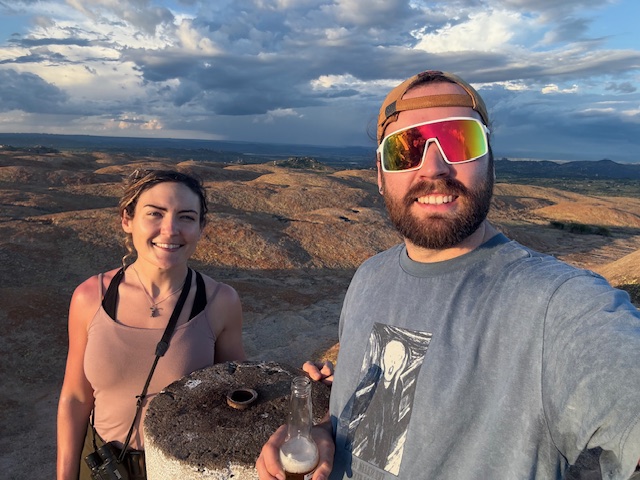
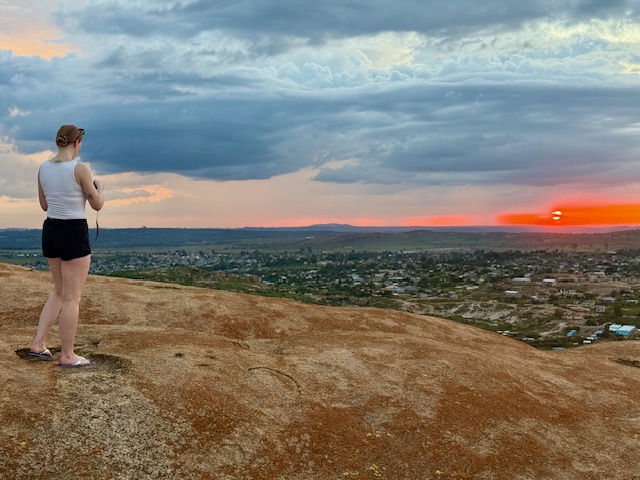
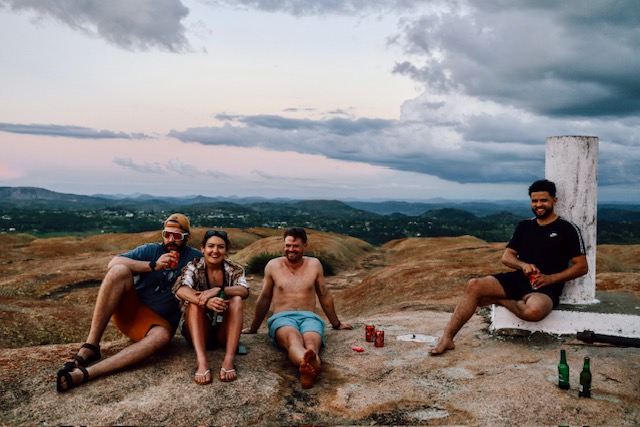
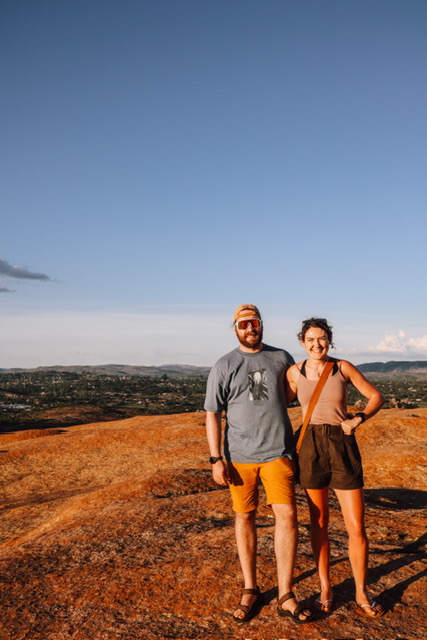
We followed the wide, humpy ridge all the way to the summit, which was marked by a round trig point. The view was spectacular: a 360 degree panorama of surrounding hills arranged in long, layered ridges, separated by wide, flat-bottomed valleys filled with fields, plains, forests and scattered villages. The sky above was clear and blue, with occasional fluffy white clouds drifting above the horizon, and we could hear some happy Friday evening clamour coming from indistinct parts of the basin below. We cracked the beers and I wandered alone across the strangely undulating plateau, drinking in every detail and looking for bugs, while the others sat and watched the sun as it fell towards the westerly hills.

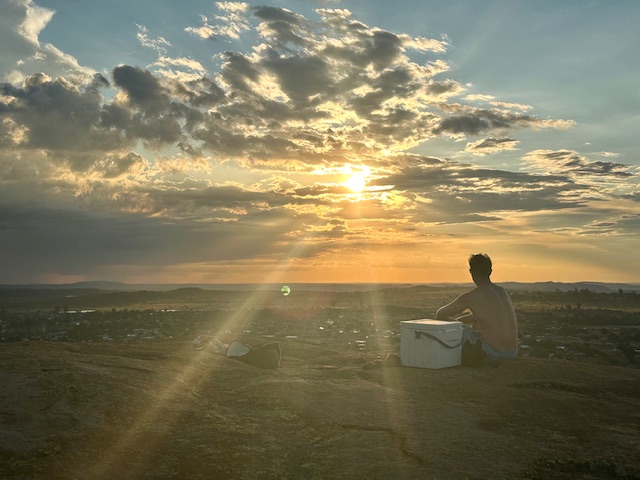
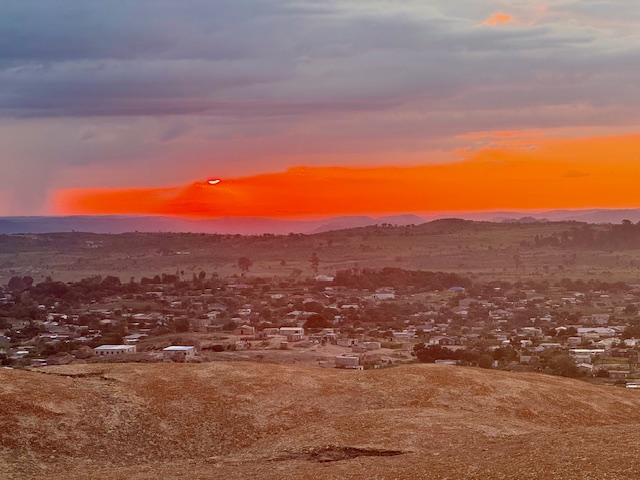
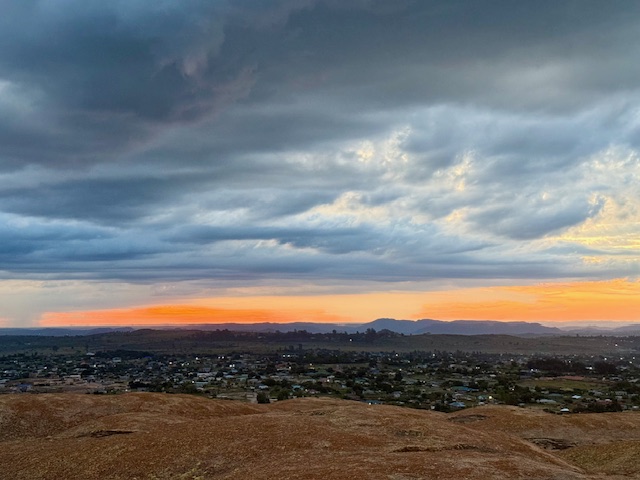
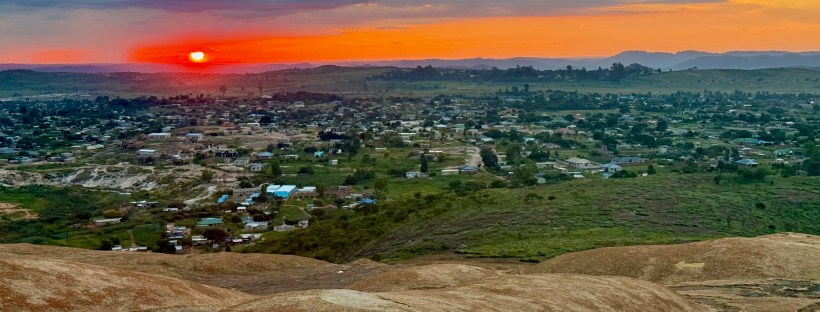
Dark clouds crept towards us from the south and east in long, thick fingers and I returned to the others just in time to see the sun setting beneath a foreboding, grey veil. It sunk behind the horizon through a clear, lava-red stretch of sky, which faded at the edges to a perfect watercolour of orange, pink and yellow that accentuated the hazy blue silhouettes of distant peaks. As the soft breeze picked up, we looked east to thick columns of localised rain and flashes of lightning and decided that it was time for tea.
We descended the side of the hill via a couple of huge boulders balanced extraordinarily on natural plinths, connected by a very small surface area. They looked like abstract, unlikely works of art, ready to topple at any minute. The light faded and we found our way back by more painted arrows. As we approached the trees at the bottom, the air became alive with the incessant buzz of cicadas and the distinctive trill of a nightjar. We returned to the car just as the darkness closed in, and on the journey back – in between being brain-rattled by the roads and wincing at a few close overtakes – I watched lightning explode inside clouds above the hills as if someone had put a light bulb inside a balloon.
Home

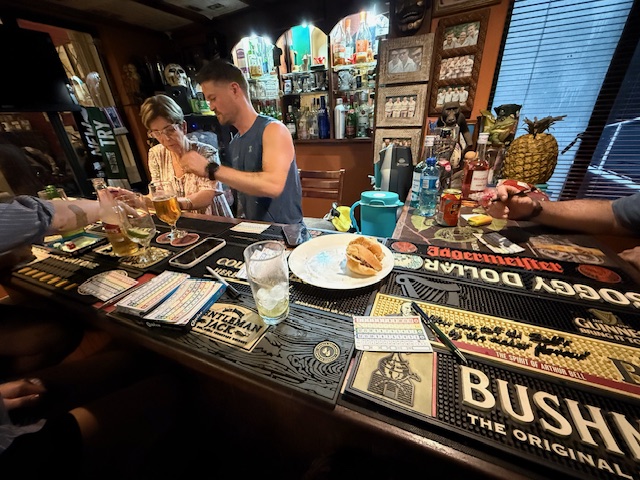
Back at the house we sat at the bar and played Iz and Tilman’s game “Quixx”, which was good fun despite my record-low score, and Shelley made us plates of ham and cheese rolls while the rains came again. We each negotiated our individual attendance on the morning run Reece had planned and – in light of the run and tomorrow’s upcoming party – went to bed around 11pm.
My main takeaway from day two? Sundowners are a winner.

Lake District, June 2022: 7 – Wasdale, Egremont & St Bees

Friday 17 June

The weather looked unreliable so we all decided to have a van-based day exploring the area. We had breakfast, piled in the van and headed off to Wasdale, Eskdale valley’s dead-end neighbour where Ryan and I had set off from to climb Napes Needle the previous day. We were keen for the others to experience the dramatic landscape of the drive along wild Wast Water and the remote quaintness of Wasdale Head hamlet.

Wasdale Head, St Olaf’s Church

Dad navigated the twisty roads and we arrived in the valley after a 20 minute drive. We stopped at a wide, grassy area of Wast Water’s western bank so Bosun could have a swim. He frolicked merrily, unconcerned by the chill of the dark, glassy water, while we hopped over rocks and took in the vastness of the rolling mountains all around us. The most iconic was Great Gable, stood majestically at the head of the valley, its triangular glory perfectly framed  by steep, symmetrical fells on either side.

Damp dog in tow (it’s impossible to effectively towel dry a thick-coated labrador) we got back in the van and continued along the narrow road to Wasdale Head. We parked up and walked along a path between delightfully bucolic stone-walled fields to England’s smallest parish church, St Olaf’s, which sits in a little wooded churchyard in the midst of the fields and fells. It’s charmingly tiny, with a low tiled roof, pebbledash walls and simple rectangular shape, and the inside is wooden beamed, whitewashed and extremely cosy, with rustic décor, rows of wooden pews, a little stained glass window and a small altar backed by deep red, velvety curtains. Mum in particular was very taken, and as we waited for her outside we read stone memorials to the mountaineers lost in the hills.

We left the church and walked a short distance between more little fields to Wasdale Head, the hamlet that seems to revolve around the iconic Wasdale Head Inn, a long, three-storied building painted cream with thick black windowframes set beneath the hulking backdrop of Yewbarrow fell. Ryan and I had been there a couple of years before to use the landline to inform Ryan’s dad of our safe return from a six-mountain hike (the valley has zero phone signal), and the place had a pleasant, familiar feel. We pottered around the little shop adjacent to the pub before going back to the van and driving back to the banks of Wast Water.

Paddleboarding on Wast Water

As is convention I was desperate to squeeze as many adventurous activities out of the trip as possible, so I inflated the paddleboard borrowed from Ryan’s brother Tom (on a seemingly long-term basis), portentously informed everyone that there was no need for me to change as I had no intention of getting wet, and – avoiding the dog at all costs – made my way out onto the water. Being alone on the lake was isolating and wonderfully liberating, and I felt like I may as well have been the only person on Earth. My world was reduced to a 7x3ft plastic board, a tiny speck set deep between the steep sides of rolling, rugged mountains, and looking over to the opposite bank I faced an insurmountable wall that formed the northern face of Ilgill Head, whose 609m summit was shrouded in thick white cloud. Grey scree seemed to flow down from the cloud, forming channels like rivers which widened to deltas and estuaries before depositing into the lake. Rough scrub, grass and heather peppered the hillside wherever it could take hold, and there were no signs of human interference – it was too steep for a path.

Fighting the wind as it tried to push me towards the southern end of the lake, I crossed half a kilometre of cold, dark water to this intimidatingly lofty wall of scree, clambered awkwardly onto slippery rocks, cut my toe and waved excitedly across the lake at the others – who weren’t even watching – as if I’d discovered uncharted land. I retrieved a stick for the dog, returned to my tethered board and just paddled around for a while, ignoring the rain, countering the wind and relishing every moment in the immense, lonely wilderness. My hiking trousers were wet from kneeling on the board and being rained on, but I didn’t mind – thighs dry. Eventually I was waved in for lunch, so I returned to the western bank, beached the board slightly more gracefully on the pebbled beach, packed up and joined the others in the van for mum’s delicious bacon sandwiches.

Egremont and St Bees

The rain didn’t subside so after lunch we left Wasdale, stopped at the nearby Sawmill farm shop (nice but pricey) and drove west out of the Lakes to the town of Egremont. I’m sure it’s a nice place but the weather didn’t do it any favours – to me it seemed decidedly grey. We bought supplies from co-op, dashed back to the van and moved on to St Bees, a nearby village on the coast. We stopped in a large car park overlooking the foggy sea and I tentatively suggested a walk on the beach, which motion was unanimously rejected. We sat in the van for a while pondering what to do; it was claggy, grey and wet, so we agreed that rather than get soggy and miserable, we’d return to the campsite and relax like normal people do on holiday – a notion that was totally alien to me.

Back in Eskdale

Dad drove us back and to my surprise the relaxing was actually quite nice. Ryan and I watched Ammonite on my phone, a lovely film about the life of Dorset fossil hunter Mary Anning, as rain drove down on the tent, mum cooked dinner and we all ate in the awning. The weather started to clear in the evening and at 9.30pm Angus, Ryan and I decided to walk the dog up the hill behind the campsite.

We went past the waterfall we’d found a couple of days before, climbed up a track and emerged onto an open, rolling moorland plateau looking out toward the high fells around Scafell Pike. The sun set over the mountains, casting a stunning red glow across a mackerel sky, and with some minor resistance we managed to prevent Bosun – who was otherwise very well-behaved – launching himself into the smooth water of Eel Tarn. We navigated around some rugged, rocky outcrop and returned back the way we came, extremely pleased to have squeezed an very pleasant, scenic sunset walk into an otherwise wet, poor visibility day.

Lakes Rampage 2020, day 4: Recovery

We’d hoped to finish the previous day’s epic hike in the Wasdale Head Inn, a classic climber/hiker’s pub at the end of Wasdale valley’s dead end road, but our late return thwarted this plan so it was first on Tuesday’s itinerary. We woke later than usual from our camping spot on the edge of Wast Water and enjoyed a pint in the lovely old pub, which is decorated with cool old mountainey pictures and maps. A sign states emphatically that there’s no wifi and that we should talk to each other instead, which I liked – although it would have been useful to let Ryan’s dad (who’d followed yesterday’s progress live until my phone died) know that we’re alive as there’s zero phone signal in the valley.

The most frog-like photo of me ever taken but it kind of shows the Wasdale Head Inn

We were suffering from mobility issues due to seized quadriceps and in Ryan’s case, potentially damaged knee ligaments/cartilage, so didn’t expect to do anything remarkable that day. We’d studied our climbing guidebooks in the pub at Wasdale and had decided to travel to the Borrowdale Valley to mess around at Raven crag and climb Corvus, a famous multipitch route graded Diff. The drive up the northwest side of the National Park felt a bit adminney in the middle of the day, but we’d planned well as in contrast to yesterday’s generally dry, clear weather, it was now wet and claggy.

Mountains, lakes and forests reappeared as we headed east through Buttermere, an area I’d never visited before. It was serene and beautiful, even under the grey sky. We went to Buttermere village for lunch and found the Bridge Hotel, a nice whitewashed, beamed, stone-floored bar, but it was eerily quiet and the whole facemasked waiter, disposable menu thing seemed a bit awkward. Ryan spotted a couple of big cherry trees out the window and we filled our pockets with juicy red snacky-snacks, then set off east to get closer to tomorrow’s climbing spot. The cherries didn’t make it to our next camping spot at Honister Pass.

Honister Pass is a winding road through a deep slate valley – the type you get on car adverts – which rises gradually as it runs parallel to a wide, shallow river, then steeply. After a brief stop to let the engine cool down (steep slopes set the overheating alarm off) we parked in a pull-in a couple of hundred metres down the road from Honister slate mine, high up at the head of the valley and overlooking the long road which snakes between its V-shaped sides. To my frustration we found a gash in the front passenger side tyre, probably caused by a sharp bit of slate. We changed the wheel and spent the evening admiring the sweeping, rock-strewn valley, drinking gin, cooking pasta, singing badly and looking down the picturesque road at a stunning, pink-orange sunset. Today had been quiet but we were happy knowing that tomorrow, we would climb.