Hiking the Black Forest’s highest mountain: The Feldberg

Thursday 12th September 2024

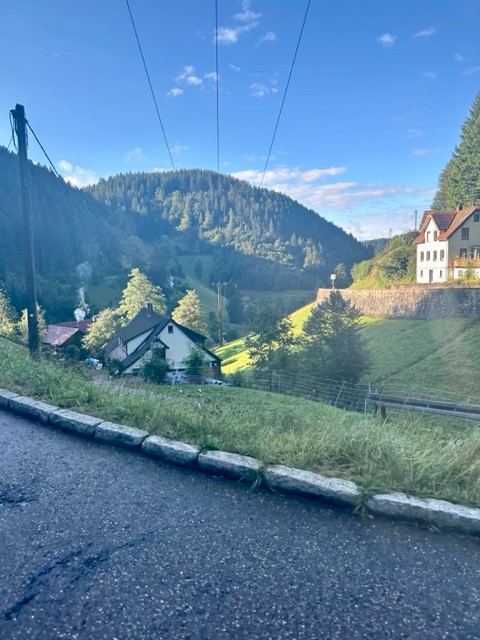
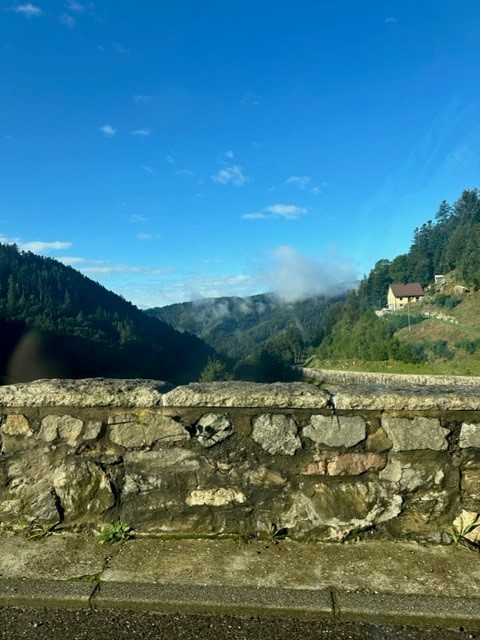
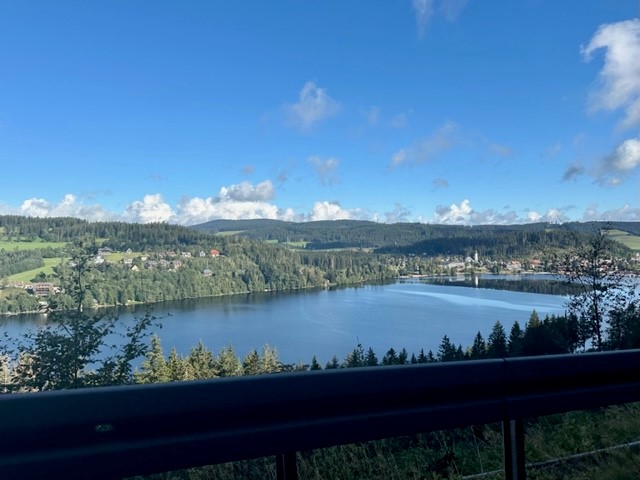
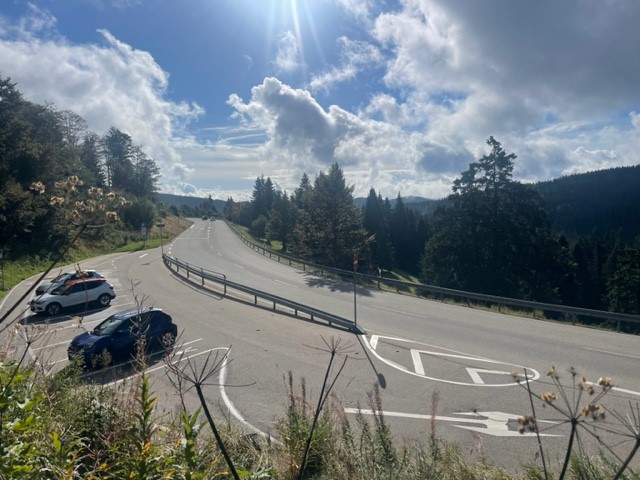
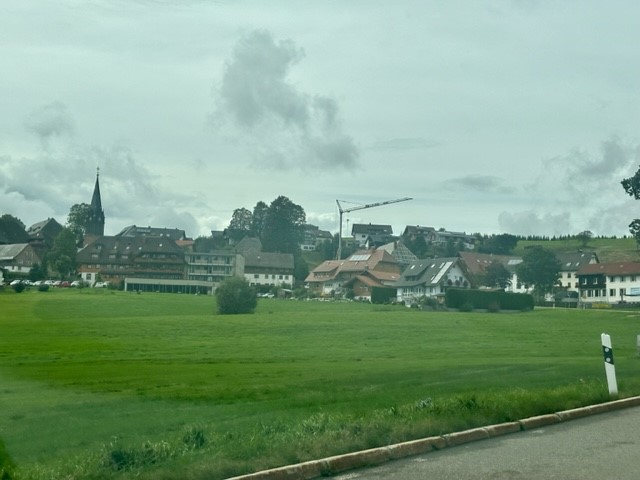
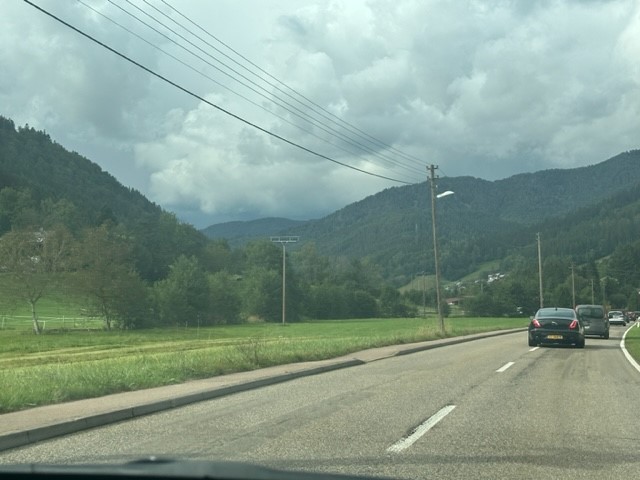
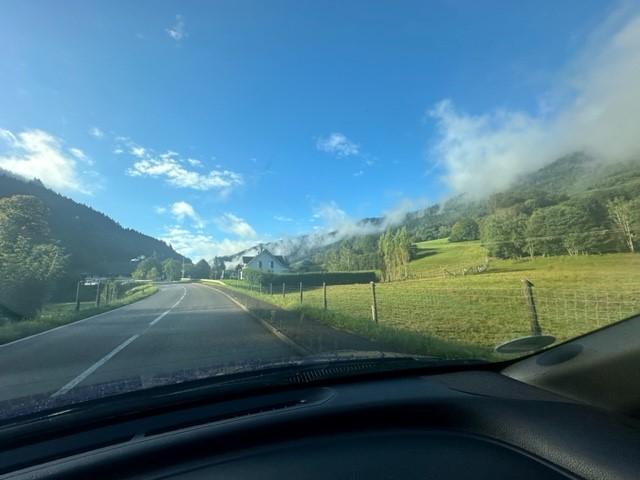
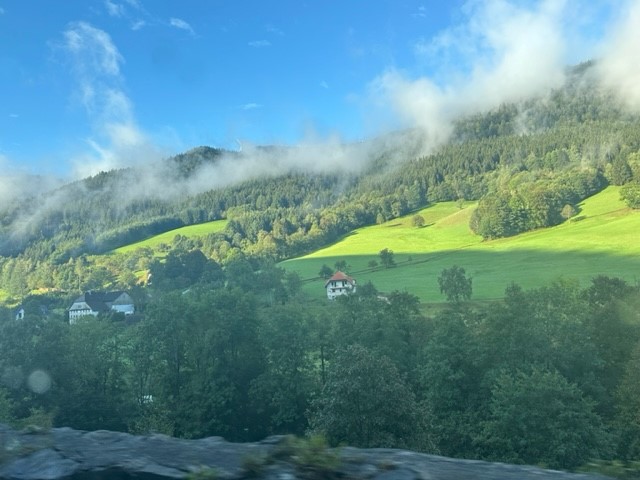
We’d kept a close eye on the forecast since arriving in Germany and today looked to be the first (and perhaps only) sunny day. Consequently we had reserved it for the main thing on our holiday to do list – a hike up Feldberg, the Black Forest’s highest mountain. We left the apartment at 8:30am and set off south in our little hire car, itching to explore the hills. Bright morning sunshine saturated the green fields that filled the valleys as we snaked through the vast landscape, lifting mist from dark, thickly forested hillsides in atmospheric veils. We navigated an unexpected road closure, passed high above the glassy surface of Lake Titisee and arrived in a small roadside car park at 10am.
The Feldbergsteig trail

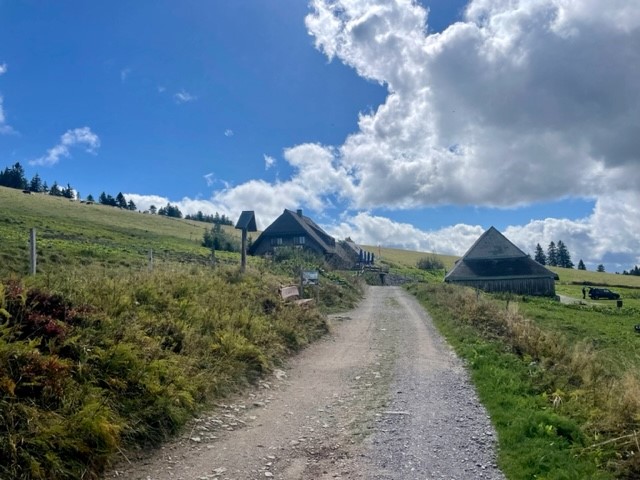
We set off uphill past a modern, sharp-angled church and found ourselves in an outdoorsey resort containing a large hotel, ski centre and cable car base. Eager to escape the tourist trap, we found an information board showing our intended route, the Feldbergsteig. We hadn’t appreciated that the trail starts at an elevation of 1,287m so it felt like cheating to say we were climbing a 1,493m peak, but nevertheless we were excited for a varied, circular hike in a new mountain range.

To the Bismarck memorial

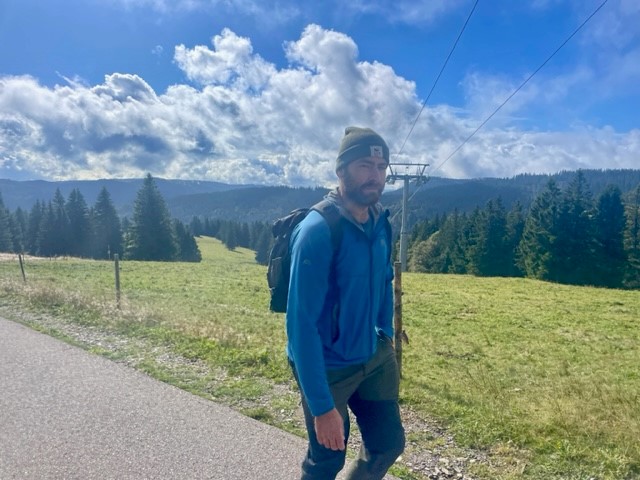
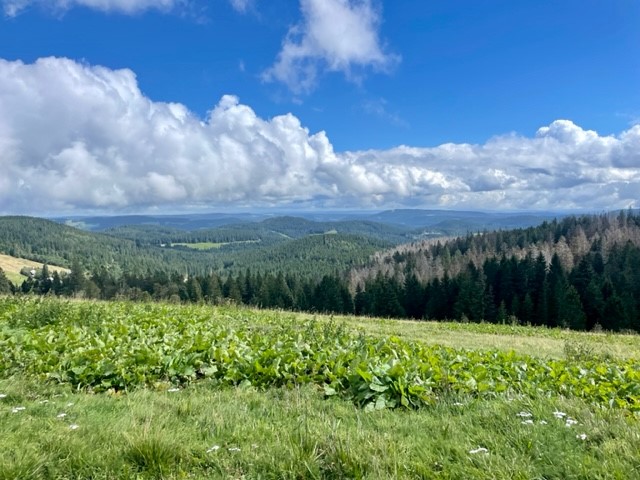
We headed northwest up a wide, gently inclining track that ran roughly parallel to the cable car line, passing several small groups who greeted us with a friendly “hallo”, and soon began soaking in the view. The surrounding yellow-green meadows melted into dark treelines formed by tall, deep green spruces, beyond which stretched endless forest spread thickly over distant, hazy blue ridges arranged in undulating layers. It was sunny, still and resoundingly quiet.

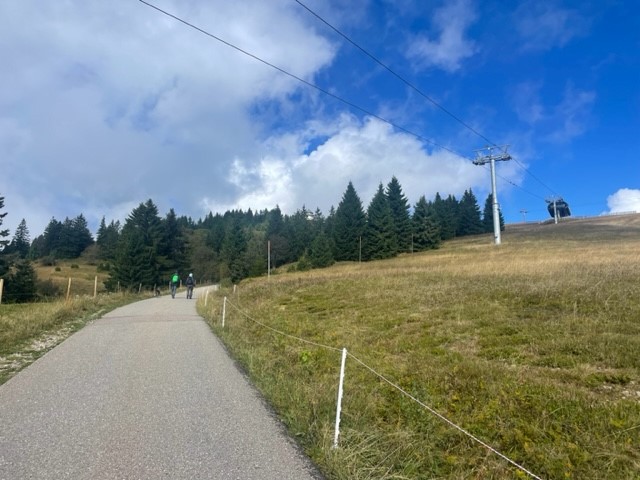
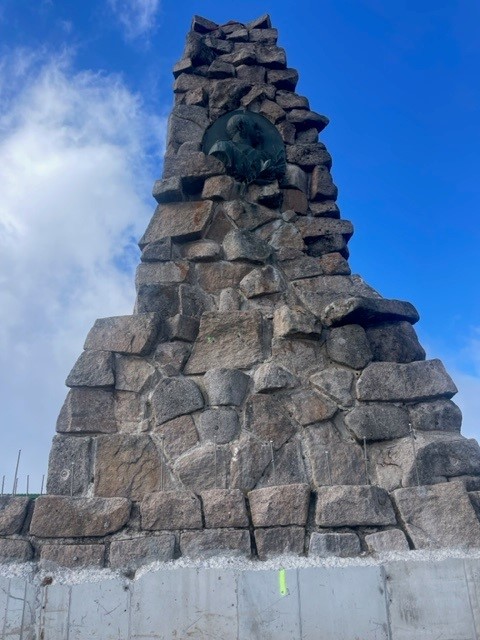
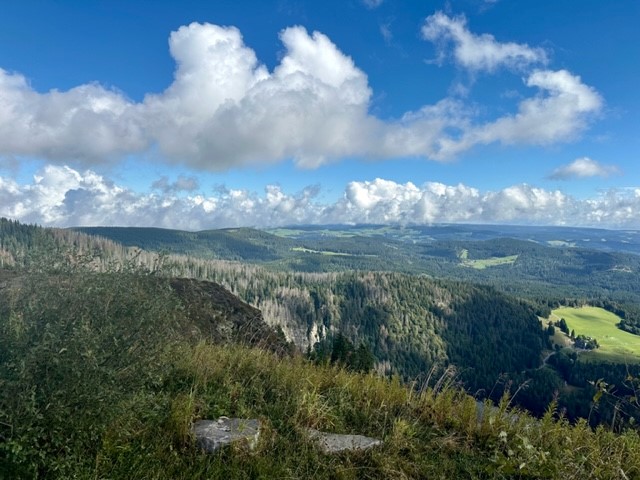
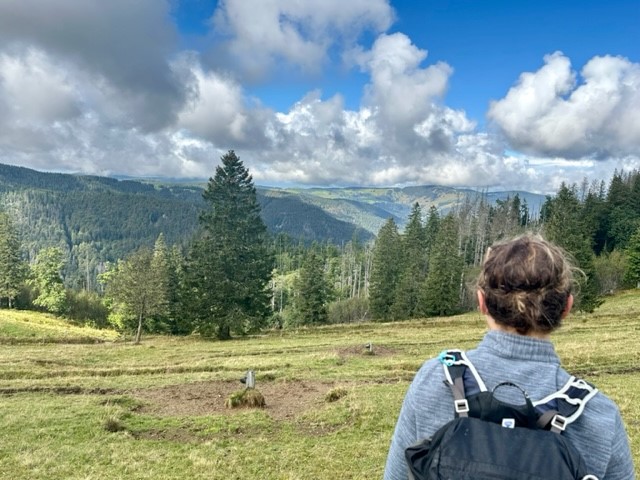
The track narrowed and took us into a verdant coppice, then continued through rugged meadows past a severe-looking concrete tower laden with satellite dishes. The first landmark we arrived at was the Bismarck memorial, a great stone pillar dedicated to the first Chancellor of the German empire. It was a wonderful viewpoint; a continuous swathe of forest covered the surrounding  hills and valleys like a dark green blanket stretching all the way to the distant horizon, broken only by occasional ragged-edged, grassy clearings.
Up Feldberg

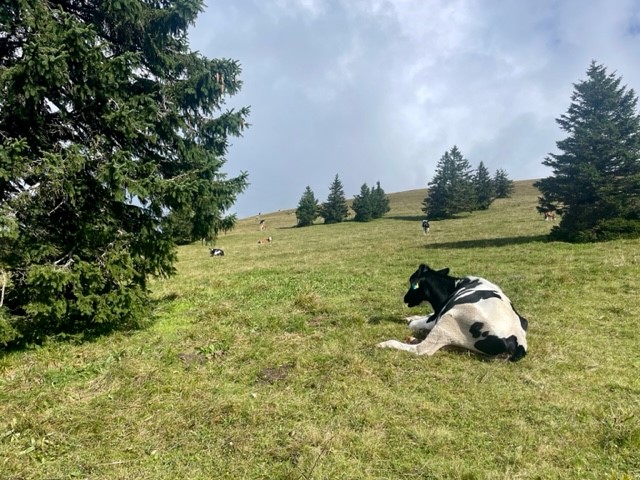
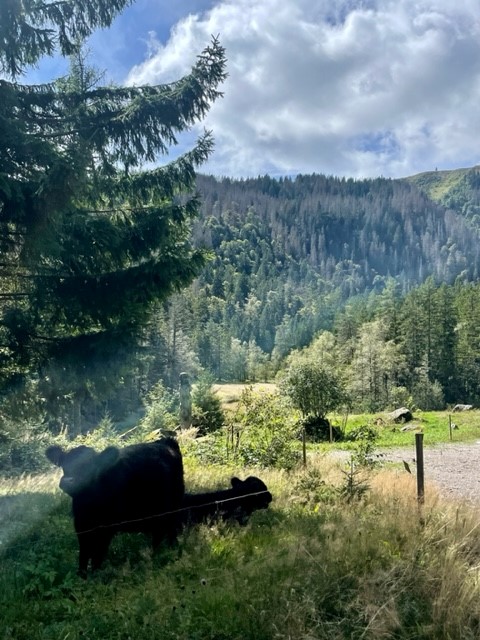
We left the memorial and headed down the side of the hill across open meadow. We went through a gate and followed a wide gravel path along the side of a ridge, which was covered in rough, yellowish grass and sloped gently downhill towards the endless forest. A strange, tinny sound tinkled across the valley and a thin curtain of fluffy cloud – which had drifted down the ridge and obscured the path ahead – cleared to reveal a small herd of Fresian cattle blocking the path. I’ve been averse to cows since getting charged by a bull a few years ago, so I gave them a wide berth and reached a gate with some relief.

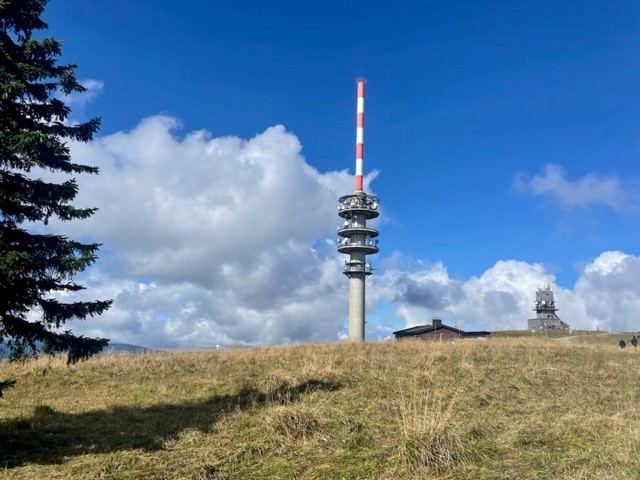
We gained the summit of Feldberg via a straight path up a gentle incline, the only drama being the loud and alarming receipt (on our phones) of Germany’s annual nationwide emergency alert test at 11am. It was a grassy and oddly subtle, unremarkable peak marked by a low, flattened mound topped with a trig point and a circle of benches, marred slightly by a tall communications tower and grim looking building a short distance away. We munched a sandwich with our backs to the tower and gazed across gently rolling, forest-carpeted hills, pondering on the ethics of saying we’d climbed a mountain.
Through field and forest

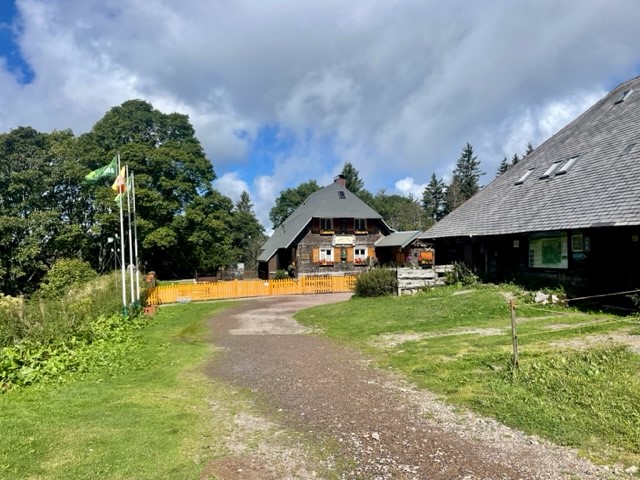
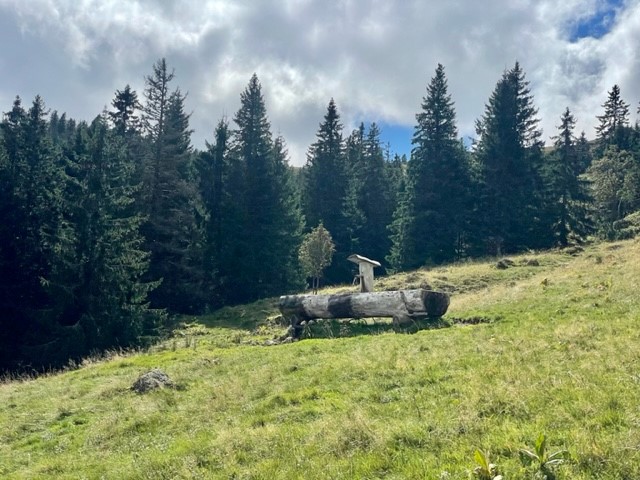
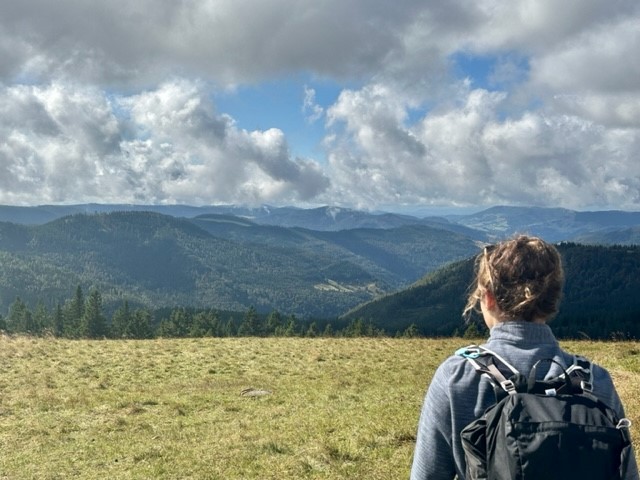
My doubts about the mountainous nature of the area were allayed once we left the summit and headed down a track that passed the ugly tower. The peaks ahead of us to the west were steeper, more undulating and completely forested compared to the gentler, grassier slopes to the east, and the horizon was formed by wide, hazy triangles of more mountain-shaped mountains. We headed downhill past a lush, green meadow dotted with fir trees and cattle, their cowbells tinkling whimsically in the breeze, and reached the first alpine hut along the route – a large, tiled, welcoming-looking building. Resisting the temptation to stop and grab a drink, we continued on the path, which flattened out and arced around Feldberg’s lower reaches in a smooth curve.
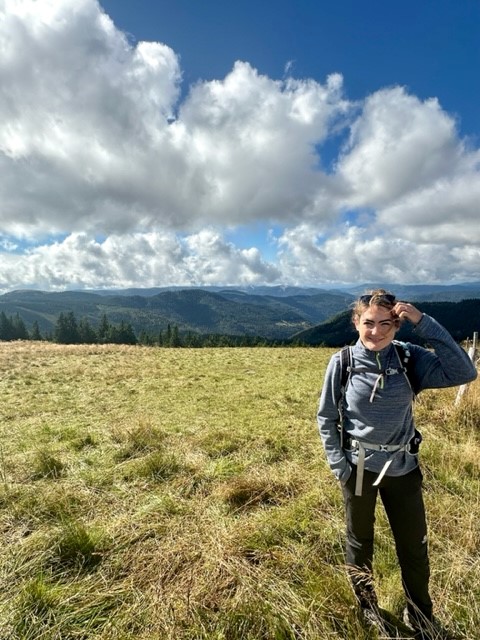
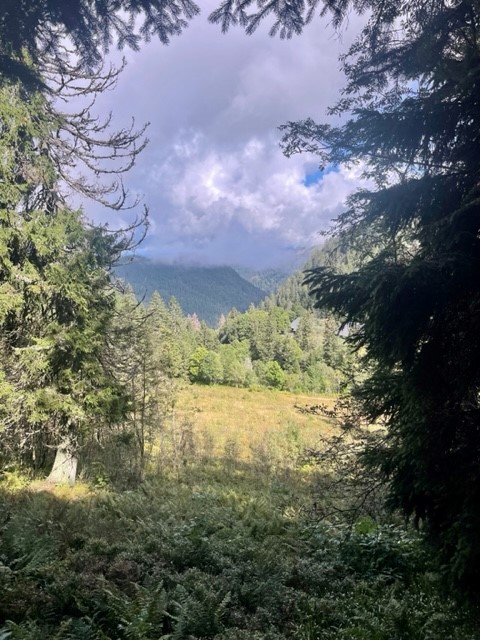
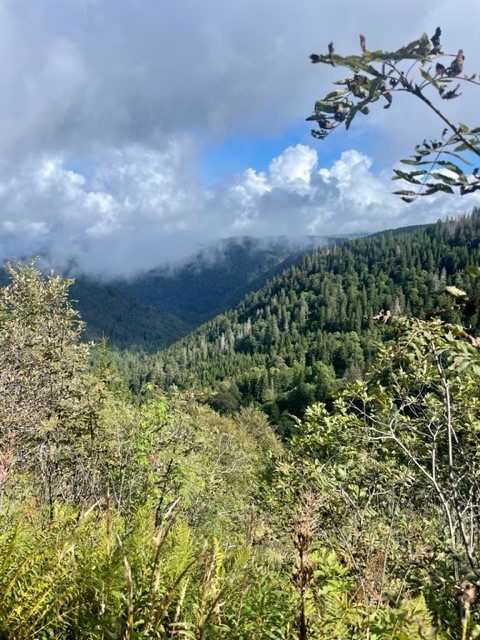
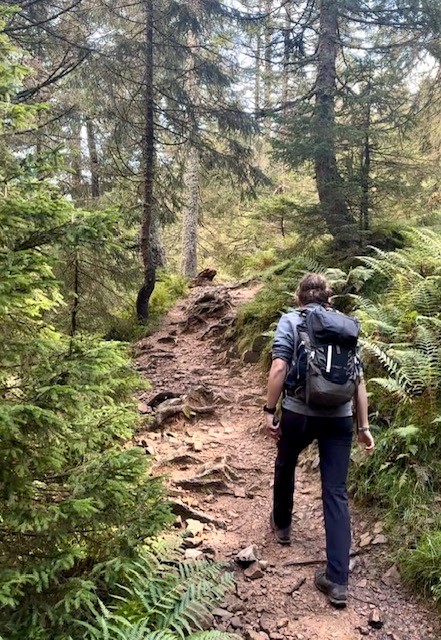
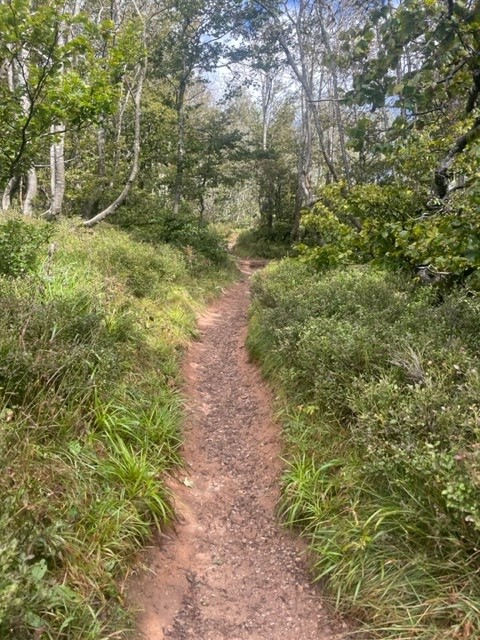
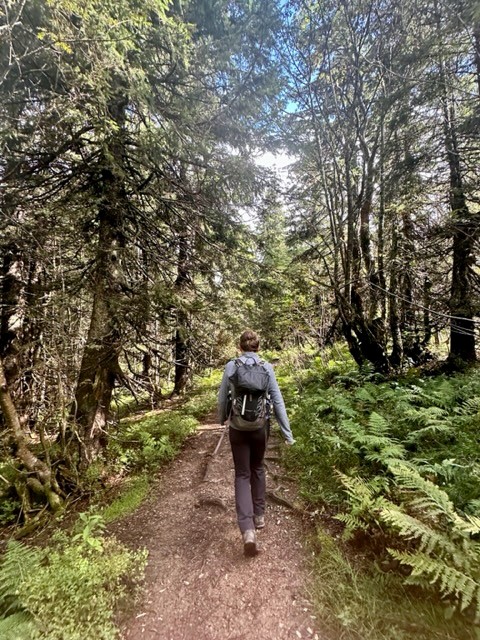
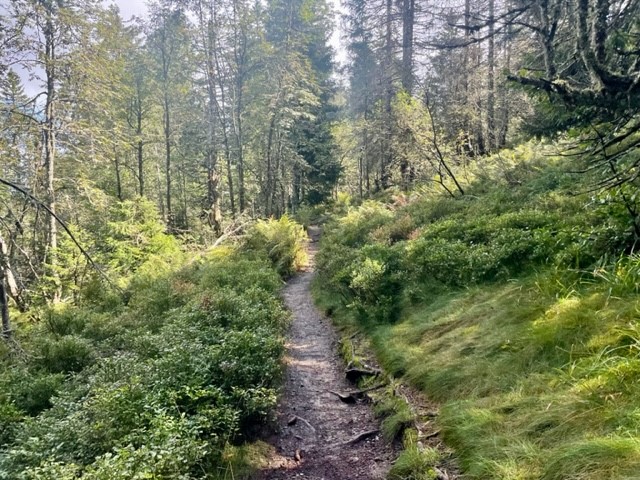
We tramped across charming, rugged meadows, then entered the thickly forested hillside to the north of Feldberg. A thousand shades of green emanated from ferns, shrubs, trees, grasses, mosses and lichens, which grew in Jurassic Park-like abundance on the steep slope. Shrubby clearings allowed us to gaze across a deep valley to opposite, equally living slopes, which were drenched in warm sunlight that slipped beneath thin clouds that drifted lackadaisically over the valley tops. It was incredibly tranquil, as if the rest of the world didn’t exist.
Past river and lake

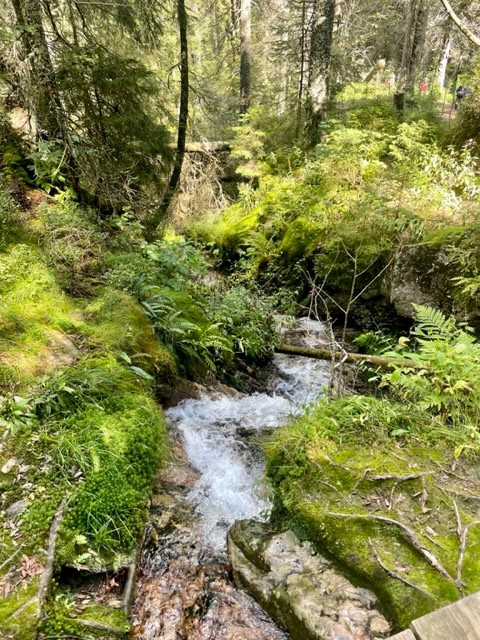
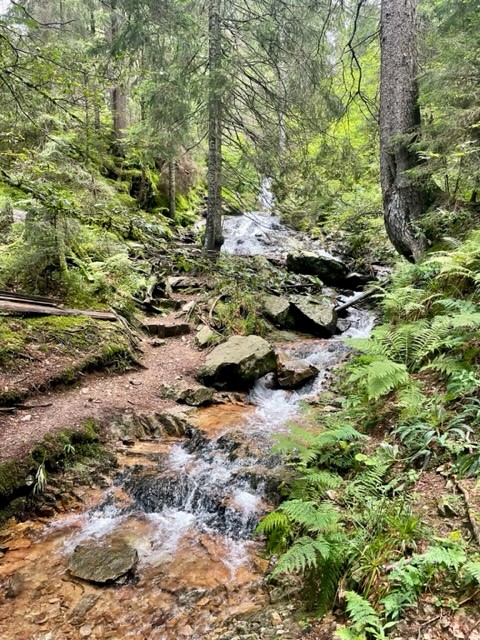
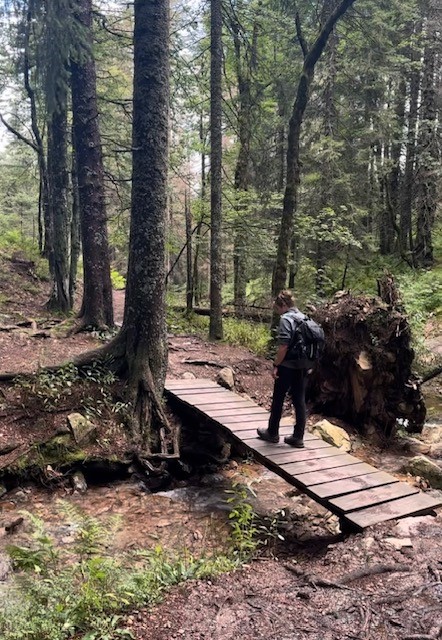
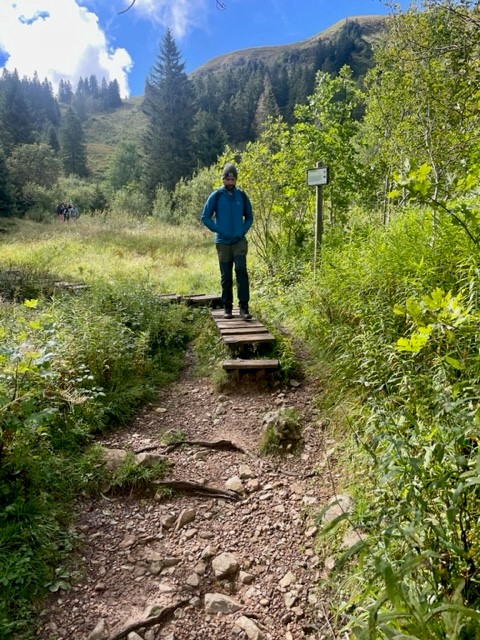
We followed the path diagonally down the hillside, crossed a marshy section via a boardwalk and found ourselves at another alpine hut. A steep climb through the forest took us up to another swathe of meadow on the east side of Feldberg’s neighbouring hill, which dropped gently down into more verdant forest. We crossed the narrow, crystal clear Sagenbach river and followed its wonderfully overgrown, mossy banks downstream, marvelling at several rocky waterfalls and – on seeing the many bridges made by fallen trunks – wondered what storm could possibly have touched this serene place.

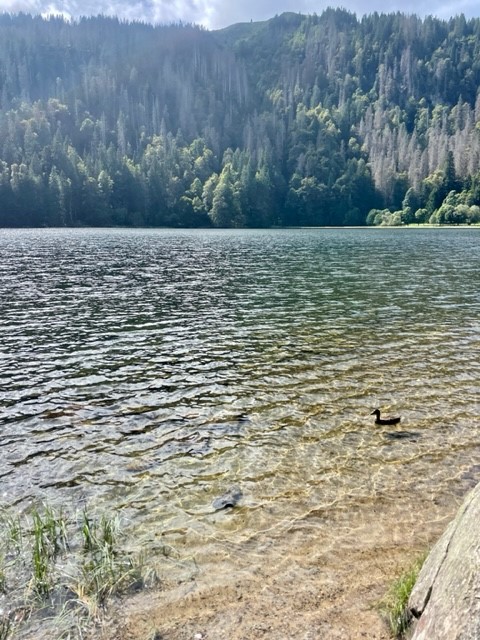
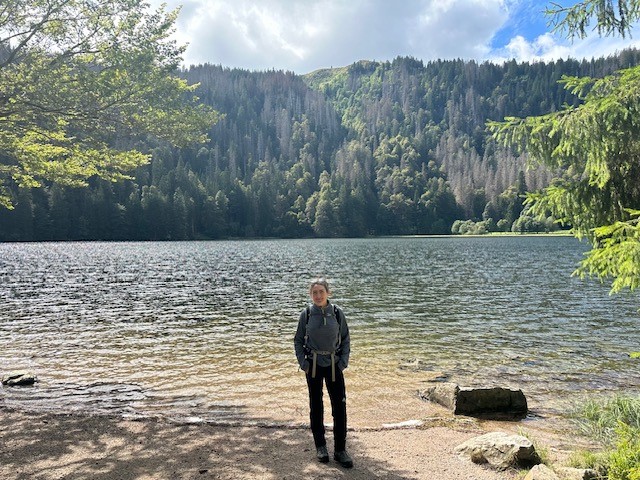
After winding down the river via bridges, steps and rocks, the route bore us east along a straight, flat track along the side of a hill between legions of tall pines. We stopped for another sandwich at a picnic table, then followed the arc of a spur to the edge of a valley clearing, where another large hut sat below us among cattle fields and meandering tributaries. We followed the treeline down into a peaceful wood, then came to the shores of the perfectly round, cwm-like Feldsee Lake. The clear, gently rippling water was surrounded on three sides by towering, green walls that looked too steep to accommodate the dense mass of huge trees that had somehow taken root. We stood on the “beach” for a moment, watching the ducks and listening to the silence, then set off on the final section of the route.

Last leg

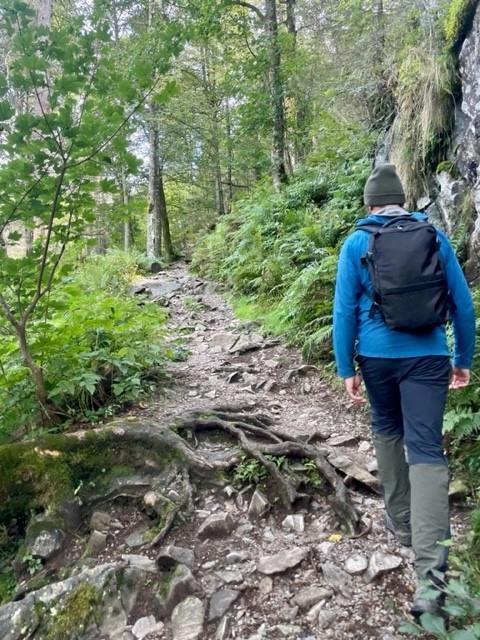
The path followed the east bank of the lake, then climbed steeply into the thicket of beech, sycamore, pine and spruce. We zigzagged up rocky sections until the ground levelled and we emerged from the trees quite suddenly at the cable car base. It felt slightly surreal to be back in the busy resort after the serenity of the hike, which had felt quite wild despite the clear, well-signposted trail. We headed straight back to the car and, after debating whether a trip to the city of Freiburg would be worth it at rush hour, left for home (via Lidl, of course).
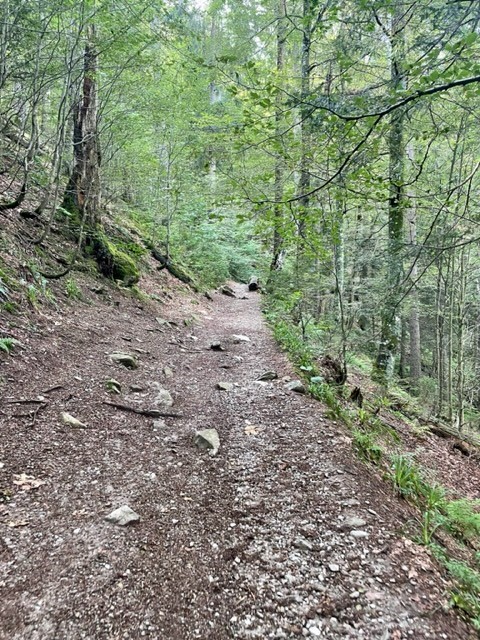
To summarise, it had been a lovely, varied hike with beautiful scenery that made us feel truly immersed in the Black Forest. The trail was very easy to follow (we barely used my guidebook map) and I just wish it had been longer than 8.5 miles. We came away feeling very refreshed, happy with a good day exploring a new mountain range.

Evening

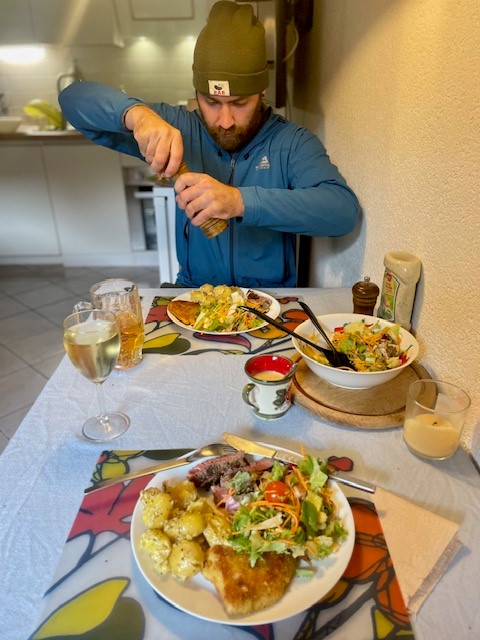
We got back at 4:30pm and spent the evening relaxing on the balcony, drinking wine/beer, watching Rings of Power on Netflix and playing with Kraut the cat. Ryan cooked a lovely dinner of homemade schnitzel with steak, salad and potatoes and I came up with a rough plan for another hike the next day, this time starting from our apartment. Three days in and we felt very at home in the Black Forest.

2021: My Highlights

Another year, another fluctuating labyrinth of lockdown restrictions and uncertainties. Like most of my projects I’m behind on the blog, although I did manage to do a bit of catching up earlier this year – who cares if I write about my January 2020 Alps trip 18 months later, with the wistful knowledge that – to my contemporaneous blissful ignorance, the reminiscence of which is bittersweet – the following 17 months would be spent in varying levels of lockdown?

It’s been a whirlwind: I’ve been rejected from a couple of jobs, spent a lot of money fixing the van, lost my beloved dog and a funny, kind uncle, missed family and friends, experienced the stress of buying a house in complicated circumstances and regularly questioned what I want to do with my life. But I’ve also qualified as a lawyer, got my first full-time permanent “proper” job, started the process of buying a house and juggled work with regular running, hiking, climbing, cycling and mountain biking, as well as a few art projects, an ongoing environmental project and this blog, and a bunch of other, less regular activities. Swings and roundabouts.

In keeping with the focus (or lack of) of this blog, here’s a summary of my year in adventure:

January/February

The deep, dark depths of winter lockdown. I saw no family or friends and my only solaces were the comforting buzz of activity at Hill HQ, running, cycling and walking (notably a 15-mile hike one grey January weekend) in and near the New Forest, a bit of snow towards the end of January and wildlife-watching.

March

Lockdown eased very slowly. Ryan’s powerkite gave me an unsolicited flying lesson one windy afternoon, we built and slept in a shelter in Godshill Wood (a very uncomfortable night but stubbornness prevailed), went coarse fishing locally, climbed at Hedbury on the Dorset coast, attempted and failed to surf and paddleboard at Christchurch and saw my parents for the first time all year. I became a fully fledged lawyer.

April

We managed a van weekend in the South Downs, which involved a good hike  and a trip to mum and dad’s. We celebrated Ryan’s grandad’s 80th birthday with a “day at the races” fancy dress party and went to the pub for a drink on the day it reopened. Ryan rescued a baby squirrel (Cyril) from a road at work and we released it into the wood. We visited Monkey World in Dorset, met my parents at a campsite in the New Forest and visited Bucklers Hard.

May

The first “proper” van trip – we climbed at the Devil’s Jump on Bodmin Moor and at Sennen cliffs, visited Porthcurno and Lands End and explored Padstow and Port Isaac. We started weekly indoor climbing sessions with our friend Luke, visited Shaftesbury, both fell off skateboards, had a Hill family fancy dress Eurovision party, saw more friends and family and celebrated our birthdays – Ryan’s with a climbing session followed by pub lunch, driving range and barbecue, and mine with a party and a visit to the local raptor and reptile centre.

June

A sunny weekend van trip to the Dorset coast saw us climbing at Winspit, snorkelling in the cold, clear water over a “coral reef”, exploring Corfe and visiting the naturist beach at Studland. We explored pretty Warwick and impressive Warwick Castle with Ryan’s family and saw more of my family. We spent a few days in the van in Cornwall again, this time climbing at Cheesewring Quarry on Bodmin Moor, surfing, beach exploring, drinking and “rave in a cave”ing at Perranporth, and visiting Newquay, Bodmin Jail and Tintagel Castle. Started a week-long holiday in Pembrokeshire with my parents and brother.

July

Pembrokeshire continued – we visited Castell Henllys Iron Age village, explored St David’s and Whitesands Bay, hiked across the Preseli Hills, had a barbecue on Newport Sands, tombstoned and swam in Blue Lagoon at Abereiddy, kayaked and paddleboarded at Llys y Fran, walked along Newgale Beach, visited Pembroke Castle, explored and powerkited at  Broadhaven beach, climbed at St Govan’s Head, visited Stackpole gardens, surfed (unsuccessfully)/bodyboarded in fierce waves at Freshwater West and came back via Cardiff National Museum. Back home we watched England lose the Euros final, went bouldering at St Aldhelm’s Head and swimming in Chapman’s Pool, visited Blue Pool near Wareham, swam in the river Hamble, trad climbed at Subliminal cliffs (including the Avernus blowhole) and took the van to the Forest of Dean/Wye Valley.

August

Forest of Dean/Wye Valley weekend continued – we looked for wild boar, mountain biked the red trail at Coleford, explored Clearwell Caves, walked into Wales without realising, spent a day canoeing along the Wye from Ross-on-Wye to Symonds Yat and walked up to Yat Rock. Locally we powerkited, swam and paddleboarded on Bournemouth beach (the day before a “large marine animal” was sighted in the water), went clubbing in Chichester and hiked, cycled and indoor climbed. We took the van to the Brecon Beacons, where we mountain biked the epic “Gap” route, did the Four Waterfalls walk at Ystradfellte and trad climbed at Llangattock escarpment. On the last bank holiday weekend we took our friend Gus to the Dorset coast, where we frequented the Square and Compass, paddleboarded from Winspit to Swanage, swam and climbed at Winspit, night-hiked back to the van from the Scott Arms and mountain biked at Puddletown Forest.

September

We put in an offer on a house and the seller promptly passed away (still buying, still awaiting probate). We mountain biked at Queen Elizabeth Country Park and the New Forest, celebrated Ryan’s dad’s 60th, went coasteering at Dancing Ledge, barbecued at Poole Harbour and went to Snowdonia for a week. Here we trad climbed up Little and Big Tryfan, took a road trip round Anglesey (including Beaumaris town, Baron Hill abandoned mansion, Din Lligwy ancient site, Parys Mountain copper mines, Holy Island and South Stack lighthouse),  explored Betws-y-Coed, mountain biked the Marin Trail, hiked/scrambled the Snowdon Horseshoe – Crib Goch, Garnedd Ugain, Snowdon and Y Lliwedd, sport climbed at Dinorwig Quarry, hiked/scrambled up Bristly Ridge, Glyder Fach and Glyder Fawr, mountain biked at Coed y Brenin and wild swam/dipped near Dolgellau.

October

We explored the aquariums, museums and pubs of Lyme Regis in west Dorset, climbed up Golden Cap hill, met my parents’ new puppy, I went on my friend’s stag do near Bath, which involved clay pigeon shooting, paintballing and drinking, we visited Gilbert White’s museum and the Oates exhibition (notably the Antarctic section) in Selborne village, fished unsuccessfully at Todber, walked around the New Forest and went to the local pub for a Halloween party.

November

I played rugby for the first time since before lockdown, visited the puppy as much as possible, went to a best friend’s beautiful wedding in the New Forest, spent a day exploring Bradford on Avon, took the pup to Meon beach and tried to keep up with a heavy workload. We spent a weekend in Brecon with some friends, which involved completing the Pen y Fan horseshoe hike (Fan y Big, Cribyn, Pen y Fan and Corn Du) in below freezing 70mph gusts and drinking enough to write off the next day.

December

Suddenly Christmas loomed. We walked the pup (and my parents) up the zig zag at Selborne, I went for a tough 32 mile mountain bike ride across the Forest in freezing winds and explored Bristol after a practically unheard of day in the office, we mountain biked the blue and red routes at Swinley Forest, bouldered and climbed at Portland with Ryan’s younger brother Adam, rode our bikes at Moors Valley with Gus, had a Christmas climbing social and have spent Christmas seeing a lot of family and getting (quite frankly) fat and drunk.

And so ends a turbulent year. I think I’m getting better at keeping my life in order – occasionally I tidy my room now and I’m sure I eat more spinach. Progress is progress. I’m never really sure which direction I’m going in, but wherever it is I just have as much fun as possible along the way, and although sometimes idiotic I try to be a good person. I’m not yet rich enough to travel the world or influential enough to stop climate change, but I’ll keep trying – maybe next year.

Endnote: I’ve kept it to one photo per month for the sake of my ebbing sanity, and that was tough enough… read my other posts for more pictures!

A quick(ish) reflection on 2020

Well that was a year I didn’t see coming. I thought global pandemics were far-fetched works of fiction and cinema, not real, inescapable beasts that tether our ankles and incarcerate us in lonely little microcosms.

I’ve been luckier than many in that I’ve been living for the most part in a house of eight lovely people, I’ve been able to see my family and a few friends a handful of times (but not nearly as much as I’d like), and I’ve been working from home since it all kicked off in March. I’ve been unlucky in that I moved work from Reading to Bristol (same organisation, different office) in February, which meant renting a little cottage in Warminster for a grand total of three weeks before the pandemic started and I moved in with (ie. was adopted by) Ryan’s family in the New Forest.

I’ve done less “gadding around” than usual this year, although I’ve still managed a few escapes…

January: week-long trip to the Alps in January, which I’m extremely happy to have squeezed in before anyone had heard of covid. Skiing, snowboarding, winter hiking etc… amazing

February: overnight stay in the South Downs before a social trip to Butlins; a trip to London to see Touching the Void in theatre, followed by a few days in the Peak District

March: last pre-lockdown night in the van on the Dorset coast

April: nothing really, thanks lockdown (although I did spend a lot of time in and around the New Forest)

May: tried coarse fishing for the first time, went cycling and kayaking for my birthday, stayed local

June: took a week’s leave but couldn’t go far – couple of days’ bikepacking, walking and mountain boarding in the New Forest, slept in a cave on the Dorset coast

July: VAN TRIP! Great week hiking, climbing, mountain biking and canoeing in the Lake District

August: was supposed to camp in Snowdonia with the Hillbillies but weather said no so we camped in the New Forest and explored Avebury stone circle instead

September: Made it to my favourite place… Scotland! An amazing week in the van exploring the Highlands, Cairngorms and Edinburgh. Climbing, hiking, scrambling, mountain biking etc

October: Four days in Cornwall with the other Hillbilly children, exploring around the Lizard. Climbing in Dartmoor en route home

November: Lockdown #2 stifled my dreams, incarcerated once again. Managed a day’s climbing in Dorset with Angus and an overnight fishing trip

December: Lovely, much-needed van weekend away to Exmoor. Christmas was supposed to be on the Isle of Wight but last-minute-Boris said no

I’ve spent much of my “free” time running, walking, cycling, doing the odd bit of art and generally trying to a) be productive, and b) not go crazy. My blog has been neglected because the vast majority of my non-working laptop time has been spent working hard on an environmental project that I hope to launch fairly soon, but as always the intention to write about all of my adventures listed above remains. Hopefully soon.

I have some good news – I was worried that keeping my beloved campervan Bjorn would be financially unviable because of the rust underneath, but a lovely local garage has given me a reasonable welding quote and booked him in for the end of Jan. I have everything crossed for our future together. In other good news, unless I mess something up I’ll qualify as a lawyer in March, which is kind of scary. I still plan to use this to save the bees, trees and seas from meddling humans.

If anyone reads this (and I don’t mind if nobody does – I write to keep a personal record of what I’ve been up to, unless anyone decides to sponsor me, in which case I’m available for negotiations) then I hope you have a happy, healthy, more certain 2021. I can’t wait for more freedom and more adventures.

Endnote: I would find some photos of highlights from this year, but quite frankly there are too many and I can’t be bothered right now (classic lockdown). Here are a couple of pictures taken on Christmas/Boxing day, just so you can put a face to these ramblings:

Coronavirus: Staying Indoors, by an Outdoor Person

If someone had described the situation we’re in a couple of months ago I’d have thought they were describing some piece of weird, dark and never-going-to-happen literature (probably Russian). Yet here we are, confined to our own little corners and forbidden from going about our normal lives.

In January I was in Dorset, Guernsey and the French, Italian and Swiss Alps, in February I visited Kent, London, Birmingham and the Peak District, and in March I moved house from Hampshire to Wiltshire. Three weeks ago I stepped over the threshold of Hill HQ (my boyfriends’ parents’ house) and I’ve remained within running/cycling distance ever since.

As a hyperactive outdoor person, this is practically Armageddon. I live to explore and discover (hence curious) so being stuck within the same four walls is a little maddening. However, I’m very fortunate to be here for several reasons:

  1. I’m in the wonderful and incredibly hospitable company of Ryan’s parents, dog, two brothers and their girlfriends, so with eight (nine, including dog) of us quarantined together it’s never too quiet.
  2. Unlike my little cottage, Hill HQ has a garden.
  3. The New Forest is right on the doorstep, making this little corner of the outdoors just about accessible.
  4. The Hills are also outdoor people, so there are plenty of books, bikes and bits of gym, climbing and outdoor gear to keep me occupied.

So I’m in the best place possible, but I’m missing the mountains, the sea and all the wild bits in between more than ever. I’m guilty of looking wistfully through old photos, which used to make me twitchy-restless even in the pre-corona days. But I’m trying to make the most of having free time to spend creatively and productively.

Alongside working from home full time, I’ve played board games, card games, drinking games, darts, done quizzes, learnt crevasse rescue in the garden, made silly videos, started learning to lasso, read books, slacklined, been on several bike rides, lit a fire with flint and steel, slept in a tent, had my hair cut, had my ears pierced, gardened, written blog posts, ran, walked the dog, seen lots of wildlife, cooked, built a bird table, watched films, brewed alcohol, practised French, painted a deer, had an easter egg hunt, started painting a fish, caught up with friends, used the garage gym, painted a fence, mowed a lawn and started an environmental e-learning course.

My plan is to continue being productive: learn new skills, improve old skills, make things, keep in touch with people and do everything I’ve been meaning to do for a long time. I hope that this will keep me sane, at least until I can get away to the mountains again.

I hope everyone has the sense to stay home and make the most of having more of the greatest universal asset – time.

2020

New Year, the Dorset coast

2020 is a satisfyingly round number so I like this year already. It started well – I spent New Year’s Eve making burgers, drinking cider and talking rubbish in the van on the Dorset coast. Our parking spot overlooked Weymouth Bay and the night was warm enough that we kept the side door open to watch the fireworks across the water and breathe in the sea air. I think going out for NYE is overrated – too busy, too expensive and always anticlimactic.

We had a chilled morning in the van on New Year’s Day, then walked around the deserted village of Tyneham. The village is situated on a military range and was cleared out for WW2 training purposes, so all that remains are empty cottages, a pretty church and a very cute school.

After a quick wander we took the donkey track down to Worbarrow Bay, a lovely self-contained curve of the Dorset coastline, which was picturesque but far too peopley. To make the walk circular we climbed the steep cliff and took the much less busy, much more scenic route back along the SW Coast path, and before we knew it we found ourselves in a Wareham pub.

Other news

I didn’t take any time off over Christmas as I’d rather save my leave for adventuring, so I don’t have anything particularly notable to share. So far this year I’ve ran around the rolling valleys of Wiltshire, got back in the bouldering centre, done some much-needed admin and caught up with some unforgivably neglected friends.

I would have done more but my usual style of living fast while trying not to die young were abated by a rugby-induced hospital visit in Guernsey on Saturday 4th Jan. Fortunately I hobbled away with just (annoyingly lingering) whiplash and fond but blurry memories of gas and air. Guernsey was cool, though – rocky, quirky and pretty similar to Jersey.

In other other news, I object to “new year’s resolutions” because I’m always unrealistic and inevitably disappoint myself, but the one thing I’ve thought about lately (the fact it just so happens to be the turn of the decade is coincidental) is how I’d like to write more on my blog. So I suppose writing about writing on my blog is a start – great success.

Upcoming excitement: The Alps

The real breaking news of January 2020 is that Ryan and I have booked flights to Geneva with the intention of exploring the Alps at the end of the month. We’ve even been organised enough to have booked four out of seven nights’ accommodation (near Chamonix) and a hire car. This might be more advance planning than I’ve ever done before, so smug is an understatement. (I only realised today that we’re off next Friday – I thought we still had about 3 weeks to wait – but that’s by-the-by).

Beyond that we don’t have a plan, which is cool. Activities on the cards are skiing, snowboarding, snowshoeing, hiking, rock climbing, ice climbing, summiting a summit or two and kayaking on Lake Geneva. We’ll think about it soon, but I’d love recommendations if anyone has been in or knows about the area, especially in winter. Would also accept charitable donations and/or winter kit, as it turns out the lifestyle I’d like is more expensive that the lifestyle I can afford.*


Thanks for reading this far, more to come soon as per my strictly non-new year’s resolution.

Love, a (very) Curious Gnome x


*Obviously tongue-in-cheek, the world is in turmoil so please redirect all charitable donations to the Australian bush fire effort or similar

The Old Man of Coniston (Lake District)

This was possibly the most heroic day of my life. It was an emotional rollercoaster that took me from 4am surrounded by wedding-drunk friends in a Blackpool kebab shop to three hours’ sleep in a hotel car park to 4pm alone at the top of a mountain.

Given the previous night’s antics, I never really expected to bag any summits that day. I left the wedding place around midday and headed to the Lakes, lonely and a little worse for wear. I had half-formed ideas about climbing the Old Man of Coniston and/or Great Gable before heading up to Scotland, so I found a quiet parking spot in Coniston and submitted to the pull of the mountain. Despite the dwindling day, hangover and rain, I couldn’t resist.

I chose a straightforward up-and-down route along the old miner’s track from Coniston, recommended by the internet. It started in an incredibly scenic valley; on my left was a hillside covered by a sea of bluebells which led steeply down to a stream flanked by bright, almost luminescent green oaks and birches. The water ran between rushing, white waterfalls and clear blue pools, and on another day I’d have jumped in like a graceful nymph gollum.

I crossed a bridge and continued along the valley, which opened up to form a wide U-shape backed by low, homely-looking ridges. An odd description but it fits – a few whitewashed miner’s cottages are nestled cosily in the low, flat plain in the middle, fronted by a wide, shallow, rocky river, and the peaks aren’t jagged or intimidating like some of the high fells. Because of this and its proximity to Coniston, this place feels wild without being isolated.

The track continued along the left bank of the valley, then got steeper, rockier and twistier as it curved around the side of a hill. Old machinery has been abandoned along the route, and the stone ruins of mining buildings remain overlooking the scrubby, heathery, rocky landscape in front of Coniston. It didn’t really feel like a proper mountain until I got to the tarn north of the summit, which the steep, long ridge loomed ominously over. From there the path got a bit more serious and it finally felt like I was climbing a mountain.

After a brief half-scramble I reached the plateau at the top and headed for a stone igloo-shaped thing. Then the Lake District repeated what it did when I summitted Helvellyn last year – caught me off guard and took my breath away. Layers of hazy blue mountains emerged from the horizon,  basking in the sultry glow coming from the moody, grey-gold sky. The view was panoramic, from the flat, glassy sea beyond wide salt plains to the west, through the rich, green pastures to the south to the mysterious, inviting mountains to the north east. The sheep were my only company and in that moment I was in heaven. The hangover was a distant memory.

After enjoying the lonely summit long enough to feel the cold, I defaulted to the Black Bull at Coniston. I flew back down the mountain, exhilarated to have defied the odds and made it up there, got the bed ready and wandered round the town before treating myself to a drink in the pub. I got funny looks from the locals but I’m used to that, and I set about planning the next day’s hike up Great Gable… Next post coming soon!

Endnote – I love all mountains but for some reason I particularly enjoyed this one. It could have been the fact that I had no expectations as I hadn’t expected to hike that day, the interesting and visible mining history, the variety of scenery, the fact I didn’t beast myself (for once) or the solitude, but I’d recommend this route to anyone and everyone – it’s beautiful, good fun and very do-able.

2 Mountains, 1 Day: Blencathra and Skiddaw (Lake District)

Sunday 5th May 2019

Woke up in the Lake District expecting to do one mountain, fell asleep after two and a pint (or two). *Borat voice* Great success!

Blencathra circuit via Sharp Edge

We parked at the White Horse Inn at Scales and set off up Blencathra. The start was quite steep and we had de-layered in a few minutes, laughing about our frailty. The gradient eased and we followed the curve of the hill round to Sharp Edge, a rocky arête that flanks the north side of the smooth, black Scales Tarn. The scramble was quite easy, apart from the odd bit of slippery rock, and we were soon on the “spine” of Blencathra which we followed round to the summit.

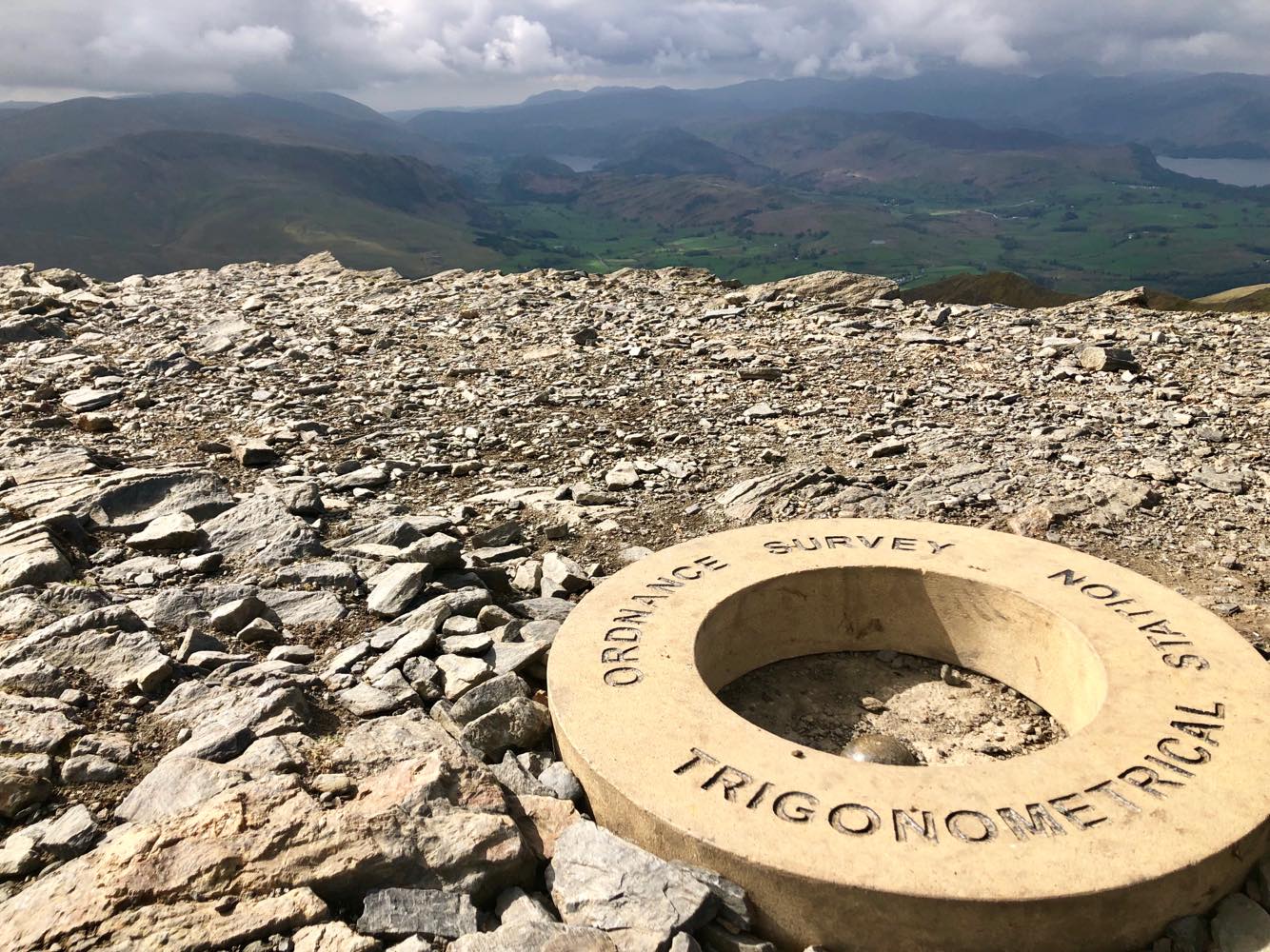
There’s an Ordnance Survey Trigonometrical Station at the top, a big concrete doughnut which – according to some fell runners – replaced the previous doughnut, which got stolen. Annoying but a solid beer trophy. The summit overlooks a lush, cultivated valley to the south and a sandy-yellow moor to the north. Rolling hills spread to the horizon in the east and layers of jagged, hazy blue mountains loom over Derwentwater to the west. It’s pretty.59885520_412628992908174_6610435511607623680_n

We walked along the saddleback and descended down the steep path to the flat farmland at the base of the ridge. The walk back was very tranquil; we stopped for a picnic on a rock, petted a couple of curious cows, scrambled over Blease Gill, Gate Gill, Doddick Gill and Scaley Beck and enjoyed the sound of nothing but running water, birds  and silence.

We popped into the White Horse for an early afternoon drink while I persuaded Bertie that we should do Skiddaw via Longside Edge/Ullock Pike, supposedly the “best” approach. Persuasion successful, we drove the short distance and parked by the Ravenstone Manor Hotel, near Bassenthwaite Lake.

Skiddaw via Longside Edge

The first half hour or so was a killer. A relentless, steep incline, first through woods then over heathery moor. It eased a little as we made our way along the long, undulating Longside Edge, covered in rocks and heather, and I could see why Wainwright recommended this way.

The landscape opened up ahead and on our right hand side, stretching from dark Bassenthwaite Lake and Derwentwater out over open, green fields to the great blue fells towering over each other on the horizon. On our left was Skiddaw, a great, grey lump that looked intimidatingly steep and distant as it loomed over the coarse, scrubby valley cradled by Longside Edge. Behind us the ridge sloped down to a flat, open expanse of farmland that stretched out to the calm shores of the north west coast, and it must have been the south west tip of Scotland that emerged invitingly through the sea haze.

We followed the curve of the Edge round and eventually reached Skiddaw. The climb was long, steep and loose, untouched by vegetation and surfaced by loose plates of slatey mudstone that made it feel like some desolate, alien planet. We pushed on up (Bert managed despite bad hips, knees, ankles etc, poor old thing), basked in the glorious air that surrounds every trig point, and half walked, half skidded down the steep slope and back the same way we came.

Unusually (but perhaps unsurprisingly, given the distance/altitude covered and hunger/thirst worked up) Longside Edge seemed longer on the way back. Fortunately it was still stunning. Eventually we made it back to the van, somehow without killing each other, peeled off the sweaty layers and made our desperate way to some unknown Keswick pub.

Pub

True to form, classy old me resorted to Wetherspoons for cheap, greasy food and cheap, alcoholey drink. It was so busy that we couldn’t get a table, so we stumbled into the cosy, unpretentious, also-busy Golden Lion on the high street and indulged in the tastiest average pizzas I’ve ever come across. I was drunk after half a cider but I had two anyway, so Bertie drove us across to the Yorkshire Dales in preparation for day two’s mountain – Ingleborough. More to follow…

Snowdonia, Feb ’19: Llangollen, Tryfan and the Glyders

Sat 2nd Feb – Llangollen56664564_2300276663626783_9008059420726263808_n

I woke in the snow-coated Shropshire Hills and slipped out of the van in time to catch a beautiful sunrise over Shrewsbury. We got to Go Outdoors for when it opened, spent way more money than intended and enjoyed a sunny drive across the Welsh border into Llangollen, where we met our friend Mike.

Llangollen didn’t look anything special as we approached it, but it grew on me after a walk around and a stop in a quirky little coffee shop. My favourite part was the [over-photographed] river Dee seen from Llangollen Bridge; the channel is wide and fast-flowing, and it took half a short conversation with Mike for me to add white water kayaking to my “priorities” list.

Then we went to Mike’s cottage, which is a country mile from phone signal and nestled deep in an ancient woodland whose silence is broken only by the rushing of the stream that runs past the front door. It’s even more idyllic than it sounds. We walked around the wood, which seemed suspended in time with its frost-covered moss, fern, hazel and oak, and breathed in the crisp air of the Llangollen Valley.

It was the first day of the Six Nations, so we reluctantly left Mike’s and not-so-reluctantly went to a Betwys-y-Coed pub in time to see England destroy Ireland. We practically reached across the Irish Sea and capsized the whole country. As a natural consequence I got drunk and friendly (Bertie drove), and by the time I was kicked out I’d befriended (to Bert’s eye-rolling exasperation/bemusement, and to the point of exchanging numbers) a pair of West Midlanders and a group of Bristolians.

Sun 3rd Feb – Tryfan, Glyder Fach, Glyder Fawr

I woke a little “dehydrated” in a car park by Llyn Ogwen. We set off bright and early, all kitted up and super keen to summit Tryfan before seeing the Mordor-like rocks at Glyder Fawr and Glyder Fach.

It was suspiciously clear and dry. We headed east towards Tryfan, and it was obvious from the beginning that the “footpath” was actually more of a “foot, hand, knee and elbow-path”. We hauled our cumbersome selves up the rocks, laden with rucksacks, layers, ice axes (thanks Mike) and cheap crampons.

The path was next to impossible to follow, so as the snow thickened we followed the crampon tracks in roughly the right direction (up). The scrambling got more extreme – we had to de-bag and take it in turns, pulling off some technical-ish climbing moves as we jammed and hauled ourselves up the rock. As the more confident (not necessarily competent) climber I ended up carrying two backpacks, and I pretty much forced Bertie onwards (upwards) when he threatened to turn around; he knew I’d have carried on anyway.

We finally got to Adam and Eve, the two rocks that stand at the summit. It was windy, foggy and sub-freezing by this point, and we indulged in a (butterless, stale, sad) jam sandwich before half scrambling, half sliding down the south side of the mountain towards the Glyders.

We argued about which way to go and ended up tramping grumpily down, along and up a snowy, wet valley. There were hikers dotted about for a while, then – as we got higher – there weren’t hikers. We followed the curving ridge up to the right as visibility worsened, until the gradient (eventually) became slightly less steep. Which was still quite steep.

As the ground levelled out a little more we knew we were on the right track – the Glyder ridge. That felt like possibly the longest stretch of my life, save for the ultramarathon and maybe Lochnagar. My trousers and boots were soaked through but luckily my top half only reached “damp” status thanks to my lovely [men’s] Mammut Kento waterproof.

This ridge took more mental strength than physical. It was a very lonely place; the wind whipped every inch of bare skin and made it impossible to talk, and all I could see for a long, long time was thick cloud, jagged rock and my own eyelashes as I squinted against the cold, hard sleet. I remember thinking about how people sometimes say “I don’t know how you can do things like that” [eg. scrambling/hiking for miles in horrible mountain conditions]. To answer – I throw myself into various silly/uncomfortable/dangerous situations, which is easy to do, then realise that my only choice is to push through and finish the job or curl up in a ball and die there. It’s literally that simple. I also remember thinking “why am I like this”, “do I even like doing this”, “is there something wrong with me”… etc.

Glyder Fawr and Glyder Fach were ominously, toweringly impressive as they loomed jaggedly out of the fog – I could have been in Mordor. Usually I’d get super excited about the cool rock formations, but I was busy thinking of pubs and warm fires; I’d love to go back in better weather.

Eventually we “completed” the ridge and headed down. Even with crampons on I managed to end up off my feet and accelerating down the mega steep, icy slope – imagine a seal on a waterslide – before somehow executing an ice axe arrest and coming to an undignified stop.

The next problem was the unpredictable terrain. One step would be on solid ice, the next into ankle-deep mud concealed by knee-deep snow. Wet, grumpy and tired (but secretly kind of exhilarated), we were relieved to see the curved sides and rugged terrain of the beautiful Ogwen valley emerge from under the cloud, and we lumbered eagerly down towards the still, black waters of Llyn Idwal.

56962118_439483810133032_7000035040159596544_n

The snow cleared, crampons came off and we were suddenly on the clear, slabby path along the east bank of Llyn Idwal. Wellie-wearing, handbag-clutching humans appeared, and the thought of turning round and heading back up the ridge crossed my mind. But I didn’t, and we made it back to the van after a long, squelchy plod. Most of the gear we took stayed at least damp for the rest of the trip, and it took a long time to thaw our saturated bodies. I still don’t think I’ve dried properly.

Anyone who knows me knows what happened next. Ty Gwyn just outside Betws-y-Coed is a lovely firelit, wood-beamed, wonky-floored pub. I was drunk as soon as I breathed in the air.

The Norfolk Broads for Adventure-Seekers: 10-point summary

This year’s family holiday took us to the Norfolk Broads for a week. I didn’t know what to expect  as I’ve never explored that part of England before; family holidays usually took us West to Wales or Devon/Cornwall, and I was a bit apprehensive at the lack of sea, hills and mountains.

Despite this we managed to fit in plenty of activities and do a fair bit of exploring. We travelled around on a boat and moored at a different place each night, so saw plenty of the National Park – I’ll write a brief journal in a separate post.

Here are some highlights and key observations from my Broads trip:

1. Flatness

It’s SO flat. I knew this before we left but didn’t appreciate just how un-flat everywhere else must be – previously I considered the New Forest the flattest place in the UK. It probably didn’t help that I was in the Lake District a few weeks ago.

The landscape and the skies are vast and open, which makes you feel really small in a similar-but-different way to hills and mountain ranges. The nights are dark (not much light pollution), quiet and still.

2. City, towns and villages

Norwich is great – it has a lively buzz, a cathedral, a castle, a nice bit of river, plenty of history and a good indoor climbing/bouldering place called Highball.

Wroxham is apparently seen as “the capital of the Broads” by some, but I wasn’t that impressed. Too many big shops, more zimmerframes and dentures than I’ve ever seen in one place before and a bit tired and scruffy.

Other towns and villages were okay but I wouldn’t say they were picture-postcard, although apparently Beccles in the South Broads is lovely. Ludham and Coltishall were probably the prettiest we stopped at.

The thing I didn’t expect was the “water streets” on the outskirts of towns and villages. Pretty houses of all shapes, sizes and styles were fronted by boats instead of cars, boathouses instead of garages and water instead of tarmac.

3. Wildlife

There are loads of birds – the more “exotic” (coming from a Hampshire girl) ones I saw include the great crested grebe, curlew and marsh harrier. Masses of reeds and foliage of every shade of green line the waterways, so it’s not surprising that it’s such a haven. I wish I’d looked out for more wildlife but I spent lots of time reading, painting and planning.

There are also lots of insects – dragonflies, damselflies, thunderbugs and funny little red things. Oh and midges and mosquitos, expect to be bitten – particularly around stagnant water. Luckily I don’t seem to taste as good as the rest of my family.

4. Wild swimming

90% of my research told me not to swim in the Broads because of a) toxic blue-green algae, b) human waste and c) 42lb pike (big teeth, bitey). I took heed of the other 10%.

Swimming probably won’t kill you, although I’d judge it on how the water looks. The blue-green algae can be irritant and toxic if ingested; it’s really thick in some places, particularly up creeks where the water is stagnant – there were parts of Barton Broad I definitely wouldn’t swim in. I wouldn’t worry about pike as it’s pretty unlikely you’ll get bitten, and re: human waste – avoid swimming where there are loads of boats and don’t swallow anything (particularly solids…). Around Salhouse Broad was a nice spot for a dip.

The thing you should be really aware of is boats, as it’s easy to miss swimmers. Bright colours, paying attention and avoiding busy areas should help you stay safe. A support boat is ideal.

5. Cycling

Don’t expect to go mountain biking – Rocky (my lovely old hardtail) had the gentlest ride of his life on the cycle path between Wroxham and Aylsham. The Broads offers easy, relaxing cycling which will give you a different perspective of the National Park.

6. Kayaking

As a National Park by virtue of its waterways, the Broads is perfect to explore by paddle. You can access creeks beyond the reach of boats, see loads of wildlife and get some exercise – see On Kayaking. I was surprised by how few other kayaks there were and couldn’t believe that I couldn’t hire a SUP anywhere!

I should probably say be careful of blue-green algae, which can be irritating to skin if flicked onto it by a paddle. However, I’ve been in contact with it several times and never suffered any ill-effects, so it’s your call.

7. On foot: running/walking

Plenty of footpaths allowed me to run or walk alongside the water when I got restless. I particularly enjoyed a 12k run between Stokesby and the edge of Great Yarmouth along the Weaver’s Way (and only passed one person), although it was a difficult surface to run on as it was soft, thick, dry grass. I also enjoyed a 5k at Norwich and Coltishall on more forgiving ground.

The terrain is so easy underfoot that it’s more gentle rambler’s territory than thrill seeker’s, and it doesn’t offer breathtaking views in the same way as hiking up mountains. However, I think it’s worth seeing for the novelty. The landscape is attractive, with pretty windmills dotted among swathes of reedbeds and golden fields. I enjoyed the bizarre sight of boat sails gliding across the fields, hulls just out of sight!

8. Fishing

I enjoy fishing but my catch rate is abysmal and wasn’t improved upon here. Apparently there’s plenty of freshwater species such as bream, perch, roach, tench, dace, rudd, trout and pike, but our maggots and sweetcorn failed to entice anything during the evenings. We saw other people haul in decent sized fish (annoyingly!).

You’ll need a rod licence to fish in the Broads (I paid £12 for an 8-day one, which covered two rods) and in a few areas you need extra permission.

9. History

The waterways were made by peat digging between the 12th and 14th centuries, until the ditches flooded and became used for commerce and communication. The landscape is dotted with pretty windmills, which were used to grind corn and drain excess water from the fields into the river system.

There are also lots of lovely churches, thatched rooves, the remote ruin of St Benet’s Abbey and a cute little museum at How Hill.

I could get geekier but basically the history is interesting, not least because this apparently natural landscape is actually man-made.

10. Pubs

Last but never, ever least, there are loads of pubs along the Broads. Most have free mooring and I found that (in comparison with Hampshire) drinks were cheap and portions were generous. Need I say more?

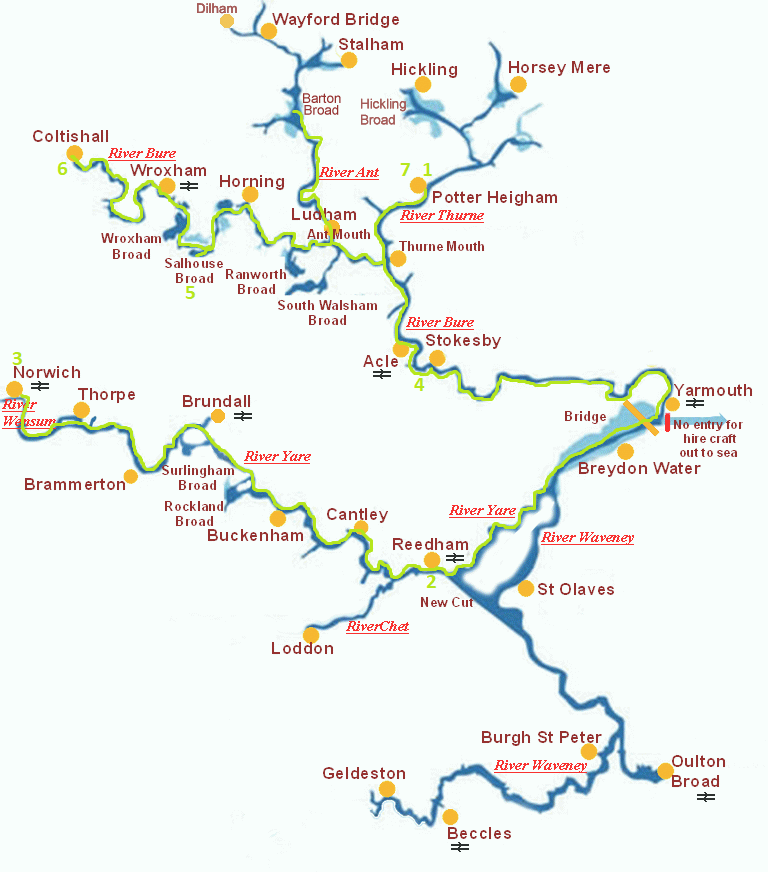
Norfolk Broads trip map

Green line shows our route, with each number corresponding to our overnight spots

On Climbing (and Falling)

I did a lot of falling last weekend. They say if you aren’t falling you aren’t trying hard enough, which I choose to believe because otherwise I’m just a terrible climber.


Scrapes and bruises aside, there’s no feeling like reaching a hold you thought was beyond your capability or getting past that nasty bit of rock that had previously defied your persistence. It’s a wonderful cocktail of frustration, elation and adrenaline; I’m new to climbing but I feel like a dog that’s tasted blood – not just addicted, but desperate for more.


The “climbing cocktail” is full of contradictions. One minute I was ecstatic at having made it past a tricky, technical section, the next I was slapping the flat, featureless wall with frustration. It’s super-cool and super-geeky at the same time – dangerous, exciting and hugely technical. I didn’t realise just how much there was to it until a friend told me about the hours he’s spent on Youtube looking at finger-jam techniques, or until I googled “climbing equipment” for birthday present ideas (30th May, just putting it out there) and was faced with a vast range of unfathomable objects.


Technically I know very little but I’m keen to learn. Stripped to the bare bones, there’s “sport” climbing and “trad” climbing. “Sport” involves clipping into metal bolts along pre-determined routes up the wall, and “trad” involves sticking your own lumps of metal into cracks in the wall in such a way that they’ll hold fast if you fall. It’s a total mind game.


It’s also an entirely different kettle of fish to indoor climbing. There’s something so wild, raw and real about the feel of the unforgivingly cold, hard rock under your fingers, and surrendering yourself to the mercy of the sun, wind and fog is oddly liberating. There’s been no human interference with the surface you’re clinging on to, beyond the route-setter who put the bolts in the wall. Nobody chose where to put the cracks, holds and features, and nobody will choose when or how the next bit of rock will crumble. It’s an exhilarating thought.


I’m fortunate enough to have climbing-savvy friends willing to lend me their patience and equipment, so all I own for now is a harness and a pair of shoes (plus a single quickdraw and wallnut that I was lucky enough to find at the bottom of a cliff). I’ve been down to the Dorset coast a couple of times and I love it.


I had planned to write about my (limited) climbing experiences rather than climbing in general, but I’ll do that another time. Time has run away and I’m off to the gym to make amends for the scones, cake and trifle I went to town on at my gran’s (pretty crazy, thanks for asking) 94th birthday tea yesterday.


So what was the biggest fall I took at the weekend? Not the repeated slips off the same, infuriating, polished bit of rock. Not the sideways, double-overhang, twelve-foot, back-first crash into the wall. I’m cringing as I write this disgustingly clichéd sentence, but I think it was probably falling in love with climbing itself, and all the falls that come with it. Climbing is the perfect metaphor for life in general – it’s not how many times you fall, but about how many times you pull yourself back up.