We’d kept a close eye on the forecast since arriving in Germany and today looked to be the first (and perhaps only) sunny day. Consequently we had reserved it for the main thing on our holiday to do list – a hike up Feldberg, the Black Forest’s highest mountain. We left the apartment at 8:30am and set off south in our little hire car, itching to explore the hills. Bright morning sunshine saturated the green fields that filled the valleys as we snaked through the vast landscape, lifting mist from dark, thickly forested hillsides in atmospheric veils. We navigated an unexpected road closure, passed high above the glassy surface of Lake Titisee and arrived in a small roadside car park at 10am.
The Feldbergsteig trail
We set off uphill past a modern, sharp-angled church and found ourselves in an outdoorsey resort containing a large hotel, ski centre and cable car base. Eager to escape the tourist trap, we found an information board showing our intended route, the Feldbergsteig. We hadn’t appreciated that the trail starts at an elevation of 1,287m so it felt like cheating to say we were climbing a 1,493m peak, but nevertheless we were excited for a varied, circular hike in a new mountain range.
To the Bismarck memorial
We headed northwest up a wide, gently inclining track that ran roughly parallel to the cable car line, passing several small groups who greeted us with a friendly “hallo”, and soon began soaking in the view. The surrounding yellow-green meadows melted into dark treelines formed by tall, deep green spruces, beyond which stretched endless forest spread thickly over distant, hazy blue ridges arranged in undulating layers. It was sunny, still and resoundingly quiet.
The track narrowed and took us into a verdant coppice, then continued through rugged meadows past a severe-looking concrete tower laden with satellite dishes. The first landmark we arrived at was the Bismarck memorial, a great stone pillar dedicated to the first Chancellor of the German empire. It was a wonderful viewpoint; a continuous swathe of forest covered the surrounding hills and valleys like a dark green blanket stretching all the way to the distant horizon, broken only by occasional ragged-edged, grassy clearings.
Up Feldberg
We left the memorial and headed down the side of the hill across open meadow. We went through a gate and followed a wide gravel path along the side of a ridge, which was covered in rough, yellowish grass and sloped gently downhill towards the endless forest. A strange, tinny sound tinkled across the valley and a thin curtain of fluffy cloud – which had drifted down the ridge and obscured the path ahead – cleared to reveal a small herd of Fresian cattle blocking the path. I’ve been averse to cows since getting charged by a bull a few years ago, so I gave them a wide berth and reached a gate with some relief.
We gained the summit of Feldberg via a straight path up a gentle incline, the only drama being the loud and alarming receipt (on our phones) of Germany’s annual nationwide emergency alert test at 11am. It was a grassy and oddly subtle, unremarkable peak marked by a low, flattened mound topped with a trig point and a circle of benches, marred slightly by a tall communications tower and grim looking building a short distance away. We munched a sandwich with our backs to the tower and gazed across gently rolling, forest-carpeted hills, pondering on the ethics of saying we’d climbed a mountain.
Through field and forest
My doubts about the mountainous nature of the area were allayed once we left the summit and headed down a track that passed the ugly tower. The peaks ahead of us to the west were steeper, more undulating and completely forested compared to the gentler, grassier slopes to the east, and the horizon was formed by wide, hazy triangles of more mountain-shaped mountains. We headed downhill past a lush, green meadow dotted with fir trees and cattle, their cowbells tinkling whimsically in the breeze, and reached the first alpine hut along the route – a large, tiled, welcoming-looking building. Resisting the temptation to stop and grab a drink, we continued on the path, which flattened out and arced around Feldberg’s lower reaches in a smooth curve.
We tramped across charming, rugged meadows, then entered the thickly forested hillside to the north of Feldberg. A thousand shades of green emanated from ferns, shrubs, trees, grasses, mosses and lichens, which grew in Jurassic Park-like abundance on the steep slope. Shrubby clearings allowed us to gaze across a deep valley to opposite, equally living slopes, which were drenched in warm sunlight that slipped beneath thin clouds that drifted lackadaisically over the valley tops. It was incredibly tranquil, as if the rest of the world didn’t exist.
Past river and lake
We followed the path diagonally down the hillside, crossed a marshy section via a boardwalk and found ourselves at another alpine hut. A steep climb through the forest took us up to another swathe of meadow on the east side of Feldberg’s neighbouring hill, which dropped gently down into more verdant forest. We crossed the narrow, crystal clear Sagenbach river and followed its wonderfully overgrown, mossy banks downstream, marvelling at several rocky waterfalls and – on seeing the many bridges made by fallen trunks – wondered what storm could possibly have touched this serene place.
After winding down the river via bridges, steps and rocks, the route bore us east along a straight, flat track along the side of a hill between legions of tall pines. We stopped for another sandwich at a picnic table, then followed the arc of a spur to the edge of a valley clearing, where another large hut sat below us among cattle fields and meandering tributaries. We followed the treeline down into a peaceful wood, then came to the shores of the perfectly round, cwm-like Feldsee Lake. The clear, gently rippling water was surrounded on three sides by towering, green walls that looked too steep to accommodate the dense mass of huge trees that had somehow taken root. We stood on the “beach” for a moment, watching the ducks and listening to the silence, then set off on the final section of the route.
Last leg
The path followed the east bank of the lake, then climbed steeply into the thicket of beech, sycamore, pine and spruce. We zigzagged up rocky sections until the ground levelled and we emerged from the trees quite suddenly at the cable car base. It felt slightly surreal to be back in the busy resort after the serenity of the hike, which had felt quite wild despite the clear, well-signposted trail. We headed straight back to the car and, after debating whether a trip to the city of Freiburg would be worth it at rush hour, left for home (via Lidl, of course).
To summarise, it had been a lovely, varied hike with beautiful scenery that made us feel truly immersed in the Black Forest. The trail was very easy to follow (we barely used my guidebook map) and I just wish it had been longer than 8.5 miles. We came away feeling very refreshed, happy with a good day exploring a new mountain range.
Evening
We got back at 4:30pm and spent the evening relaxing on the balcony, drinking wine/beer, watching Rings of Power on Netflix and playing with Kraut the cat. Ryan cooked a lovely dinner of homemade schnitzel with steak, salad and potatoes and I came up with a rough plan for another hike the next day, this time starting from our apartment. Three days in and we felt very at home in the Black Forest.
I felt as if I’d woken up in a dream. I lay under a pine-clad ceiling in a large room furnished plainly with a double and single bed, a floral-painted wardrobe and a comfy-looking armchair in a corner by three net-curtained windows, which revealed a steep, forested bank rising high above the back of the house in the misty morning light. After a hectic time planning this very-last-minute trip, it finally sank in that we’d made it past the travel hurdles I’d needlessly fussed about and were now deep in Germany’s Black Forest.
Journey
The first hurdle was getting to Stansted airport after a 4am start – not the easiest trip from the New Forest, but thankfully both National Express coaches were on time. The second was the flight, which was delayed by almost two hours and necessitated an anxious call to Europcar to check they’d wait for us. The third was collecting the car, which was more straightforward that I’d expected thanks to the lovely lady who received us, showed us round our shiny blue Toyota Aygo and – to my surprise – didn’t try to push us into purchasing deposit protection insurance. The fourth, and most intimidating, was driving an unfamiliar vehicle on the wrong side of the road (notably the autobahn in rush hour), without deposit protection insurance, for the first time in nearly five years, in the knowledge that the tiniest of knocks or scratches would cost us £800. The fifth and sixth were squeezing in a Lidl shop so we could eat and negotiating our late arrival with our host, as our accommodation was an hour and a half from Baden-Baden airport near a small town called Simonswald.
Accommodation
I got up and delighted on fully realising our location, which had not been revealed on our 9pm arrival in the dark. Our spacious apartment was on the first floor of a large, traditional Black Forest house on a small farm at the end of a dead-end road that climbed into a high-sided, dark-forested valley. The farm was timeless and fairytale-like, with its own watermill, wooden workshop and tiny chapel, and – as well as cosy wooden charm and a large living room-diner-kitchen, bedroom and bathroom – the apartment came with two bonuses that I hadn’t appreciated from my hasty peruse on AirBnB: an enclosed balcony looking up the valley, on which sat a large white and grey cat.
Kraut
I opened the balcony door and the cat promptly entered – the host hadn’t mentioned it and I assumed, by the way it padded around and settled immediately on the L-shaped sofa, that we were the ones imposing on its private space. I made coffee and, on opening the fridge door, had to extract both milk and the cat. There was a jar of sauerkraut leftover from last night’s dinner (chicken schnitzel with potato salad and sausage kale, cooked by Ryan while I recovered from the drive) which inspired the cat’s temporary name – Kraut.
Belated trip planning
Ryan soon emerged and cooked a delicious breakfast of egg, tomato, rich German sausage (which may have been beef) and thin, seeded bread from a pre-cut loaf, which made lovely, crispy toast. Having done precisely zero holiday planning beyond a resolution to climb Feldberg, the region’s highest mountain, we scoured the numerous leaflets (all in German) and settled on a day exploring mainly by car, given the grey sky and forecast rain.
We had a quick poke around the farm workshop, mill and chapel, then drove into the pretty, rural town of Simonswald to visit the little information centre. We didn’t learn much as everything was in German, but I took photos of some maps and we decided to head on to Elzach, a slightly bigger town in the next valley.
“Fixed” a battered map found in the apartment … What can’t electrical tape do?An honesty box outside the front door filled with drinks and honeyOutside the information centre in Simonswald
Elzach
We parked near a residential area and noted how well-kept and big the houses were, how pothole-free the roads, and how there wasn’t a single bit of litter anywhere. The town centre was very pretty: old-fashioned street lamps and planters full of red geraniums lined cobbled pavements, and colourful buildings were punctuated by balconies, dormer windows and shutters. We found the information centre near a big pink-washed church and a primary school, where children played football despite the rain and didn’t wear uniforms. The man working there was very friendly and explained to us, in very good English, that there were dozens of signposted hiking trails in the area and that we should take two free leaflets – one a regional hiking map and the other containing descriptions of the corresponding routes – to navigate. We left wondering why England can’t implement such effective systems for tourists.
Many buildings featured lovely murals
Local history hiking trail
We picked a short 5km loop – “heimatkundlicher wanderweg” – that started in a village 10 minutes up the valley, Oberprechtal, and encompassed 18 information boards (all of which I translated with an app) detailing the nature, culture and geography of the area. We climbed above the village and followed a clear path into the forest, which at first consisted of leafy ashes, hazels and brambles, then tall, dense pines with linear trunks that stretched straight upwards, emphasising the steepness – about 30 degrees – of the valley sides. We passed a sloping bank of moss-covered rocks and came to a small, wendy-house-like cabin looking upwards to a grassy, forest-lined meadow. It was very Hansel and Gretel and we couldn’t resist.
We sat in the porch and enjoyed ham and cheese sandwiches, sheltered from the torrential downpour that came in suddenly and swept over the meadow. When it seemed like the worst of the rain had passed, we continued through moss-covered, bracken-strewn pine forest for another kilometre, which was now dappled with soft sunlight that illuminated mosses, leaves and fronds in countless shades of green. We snaked down a steep switchback and emerged at the crest of a small ridge that looked up the Elz valley. Its lower reaches were carpeted by astonishingly green fields which rose into thick, dark forest on both sides, and a tiny road lined by spaced-out, red-rooved buildings wound up the belly of the valley towards hazy blue hills at its head. It was fairytale-like:
Once we’d absorbed the view, we headed down the side of the ridge through a tranquil young beech wood and came out on the road at the tiny, pretty village of Vor dem Wittenbach. Some construction workers had fenced off the bridge we were supposed to cross, so we found a diversion and returned to Oberprechtal on a footpath that followed a shallow stream past cattle fields and a pen of enormous turkeys. It was a lovely little loop and a good “taster” hike that left us thoroughly charmed with the quaintness and serene, timeless beauty of the Black Forest.
Toboggan run
We got back to the car at 3pm and decided that there was plenty of time for more activities, so Ryan – being the large child that he is – suggested a “summer toboggan run”, a one-person rollercoaster where the rider controls the brake, in the nearby town of Gutach. The 20-minute drive took double that due to a missed turn and a winding road that climbed high into thick forest and snaked down into the next valley. I’m sure it was very scenic, but I was too busy navigating the hairpin bends to appreciate the glimpses of distant pine-covered ridges through the trees.
We paid 4€ each at a little wooden kiosk, timed our turn so that we wouldn’t get stuck behind any children, and followed the instructions of the operator as well as we could – fünfundzwanzig meter, which I took to mean stay 25m behind Ryan. The carts were low and exposed, like glorified dinner trays with a windscreen, open sides and a handbrake on a raised metal track. I chugged joltily up the steep side of the valley at a snail’s pace with a bolt jabbing into my back at every track joint. It levelled out at the top and I had a brief moment to gaze over the valley. The red rooves of Gutach huddled between fields that climbed into dark-forested ridges, now drenched in soft afternoon sun. Then the fun bit began.
The cart swooped into a series of twists and turns and I hurtled down with a huge grin on my face. The track joints were loud and very noticeable and the sides of each berm were protected by a low wire net, which I’m sure would have done little in the event of disembarkment, but the dubious safety features certainly added to the excitement and even inspired me to feather the brake on some of the tighter corners. The descent lasted a couple of minutes and by the time I clambered out of the cart, my grin felt permanent. We agreed that it was well worth 4€.
Gengenbach
As we were already some way north of Simonswald, we thought we may as well make our way further north to see the town of Gengenbach, which I’d come across during my brief time spent researching the Black Forest. The 40-minute drive followed a wide valley through several sprawling, pretty towns and we arrived at a car park just outside the town centre at 5pm.
We entered the town through a gateway with a raised portcullis beneath a high, square tower – the Kinzigtor – which was painted white and decorated with a splay-winged German eagle and three coats of arms. It felt as if we’d stepped into a fairytale. Colourful buildings with painted shutters and hanging lanterns lined the wide, cobbled street, which converged with two other streets at the central market square. I’d never seen a place like it – there were so many focal points, and nothing was uniform but everything was perfect.
Nicest looking kebab shop I’ve ever seen…
A huge, pink, grand-looking town hall rose impressively on one side, its 22 symmetrical windows and 11 ground-floor arches each adorned with pink flowers. Three large buildings stood opposite the hall, painted white and cream with exposed timbers in hatched patterns. They had high-apexed, sloping tile rooves and flower boxes at each window. Along each cobbled street – the whole town was cobbled, and not a stone was missing – stretched more of these buildings, some painted pastel colours and some timber-framed, all with charmingly irregular rooves. The red spires of cream towers dominated the skyline at the end of each perfect row, and a stone fountain topped with red, pink and white geraniums and a statue of a knight trickled in the middle of the marketplace. Apart from the few cars, it was convincingly medieval. It didn’t seem real – I half-expected the walls to topple over and reveal it all to be a two-dimensional film set. It is, without doubt, the most attractive town I’ve ever seen.
We walked past the fountain along Victor-Kretz-Strasse and took the first right turn, not wanting to miss any of the real-life fairytale. We passed a couple of blue-shuttered buildings and a little car park fringed by tall, leafy trees, then came to a grand, cream building with dozens of uniform, pink-framed windows and a perfect front lawn dotted with round topiary bushes – the Black Forest Business School – that stood in front of an intricate sandstone tower, which belonged to the adjacent St Marien church. This was on the edge of the small town, which was backed by vineyard-covered hillsides, so we returned to the high street and headed towards Obertorturm, the north tower.
We passed shops selling clothes, shoes, books and souvenirs, all with little canopies stretching over the pavement, and bustling cafes that spilled out onto the street. There were plants everywhere, filling stone troughs lining the paths, in pots outside restaurants and cafes, and flowerboxes decorated the windows of most buildings. We turned left along a narrow alley just before the tower, poked around an old stone well with a wooden pump that looked like it worked, and wove through narrow, cobbled alleys lined by timber-framed houses back to the main street.
Charmed by the quaintness of every nook and cranny, we took the next turn and found ourselves down another surreal alley. Large lanterns protruded from the beams of houses and climbing greenery covered many of the walls, seeming to emanate from the cobbles. Grapevines crept above wooden front doors and the residents seemed to compete over who could encroach on the street with the greatest abundance of potted shrubs and geranium-lined windows. I wondered why any architect or town planner would ever deviate from such aesthetic perfection – if only every town looked like this.
We emerged on Haupstrasse, the other main street off the central marketplace, popped into a little supermarket for a drink, then were lured into a lovely, old-fashioned bakery. The tiny old lady smiled patiently through my attempts to communicate which bread I wanted and asked (via gestures) whether we wanted it sliced. Resisting the delicious-looking cakes and pastries, we left with a loaf of sliced walnut bread, which we later found to be divine. We returned to the car via the marketplace and the Kinzigtor, utterly enchanted by Gengenbach.
Evening
The hour-long drive back to Simonswald was thankfully uneventful, and took us through more pretty towns and fields nestled in wide valleys between great, sloping banks of rich forest. We arrived just before 7pm and settled in with a glass of wine (a German beer for Ryan) on the balcony, gazing up the green, wooded valley and listening to the sound of nothing but the birds and the stream. Kraut arrived, bit and scratched me when I was slow to give her some ham, and made herself comfortable on the sofa. Ryan cooked what turned out to be a thick pea and ham stew from a large Lidl can, which we had with cheese and walnut bread. We researched the area with the help of various leaflets (in German) and YouTube, which we could access on the TV, and decided – in light of the wet forecast – to go to the weekly market at Waldkirch the following morning. It was a lovely end to a successful first day. We went to bed besotted with the Black Forest.
As usual I’m way behind on the blog, but thought – perhaps to transport myself back to the mountains and glens – that I may as well make a start on this year’s winter trip while I grieve our return. For the first time, Ryan and I had a full 14 days roaming Scotland in our van, which remains largely unconverted (although necessarily insulated). Now that we’re home it feels as if we’ve been rudely and abruptly awakened from a wonderful dream.
Saturday 3 February
We arrived at our first overnight stop in Galloway Forest Park, southeast Scotland, at 3am. The 300-mile, 9 hour drive up – punctuated by a single stop at the spectacular Tebay Services – went remarkably smoothly, save for some inevitable traffic near Birmingham, and gave me the opportunity to decide on our first destination based on the abysmal weather further north. We slept soundly and woke at the leisurely time of 10:30.
It felt so good to recommence my morning van routine: jetboil coffee, get dressed, eat cereal, make sandwiches, brush teeth, pack a rucksack and tell Ryan about the hiking plan I’d already connived. Thankfully I met no resistance – he was just as excited as I was to return to the hills. We’d never explored Galloway Forest Park before, and were keen to kick the trip off with a worthwhile reintroduction to Scotland. We were to hike up Merrick (843m), the highest summit in the southern uplands.
We had a lazy morning packing bags, chatting on the phone to Adam (Ryan’s brother, who was on his way back from a week in the Cairngorms) and enjoying the freedom of having no obligations and very few amenities in the back of the van, which contained a mattress, an awful lot of outdoor kit and no permanent fixtures. The hike looked easy, so there was no rush.
Back in Scotland: Bruce’s Stone
We’d stayed in Bruce’s Stone car park, so before we headed uphill we wandered over to see what the large, raised boulder overlooking Loch Trool was all about. Its inscription provides a summary:
In loyal remembrance of Robert the Bruce, King of Scots, whose victory in this glen over an English force in March 1307, opened the campaign of independence which he brought to a decisive close at Bannockburn on 24th June 1314.
This memorial reminded me of the utterly immersive atmosphere that seems to envelop Scotland. The rugged glens, dark lochs and unforgiving hills make its dramatic, bloody history so tangible that it sometimes feels as if a battle-waging clan of tartan-clad warriors could round a corner at any minute, rightfully raring to defend their wild lands against our English encroachment. Yet I can’t stay away – I’m completely besotted with the harsh, beautiful wilderness. As I looked down over the opaque water of Loch Trool, backed by rough hillsides and surrounded by pockets of mixed forest, I felt – even though I’d never visited this part of Scotland before – as if I’d come home.
Hike up Merrick
We tore ourselves away from the view and headed north up a narrow, rocky footpath at the end of the car park. It was a later start than usual – 1pm – but we weren’t concerned, as we had headtorches and the route looked straightforward. Merrick was signposted, so we didn’t have to do much navigation anyway.
Section 1: Buchan Burn to Culsharg Bothy
The first mile followed the rushing Buchan Burn up a steady gradient along a rocky, muddy path which required some careful foot placements to avoid the boggiest sections. We didn’t care – we were thrilled to plunge into the rugged landscape. It was difficult to believe that 24 hours beforehand I’d been sat at my desk in the south of England, which now seemed mind-numbingly dull. Perhaps that’s why the colours were so vivid, the textures so varied and the river so resounding in the otherwise absolute silence. The hillsides were a seemingly random blend of rough, golden grass, coppery bracken and clumpy, purple-brown heather, punctuated by lilac birches, deep green spruces and skeletal broadleaves. Thick mosses had beaten the grass to little hummocks along the path, and Buchan Waterfall sent white water cascading between lichen-spangled boulders down broad, narrow steps. I was at peace.
After half an hour we reached Culsharg bothy, a small building on the edge of a tall evergreen forest, which looked both cosy and desolate. It had stone walls, a neat slate roof, a central chimney, a flat, grassy area that looked like a little front garden, and two broken, ominously black windows. Inside were two rooms, each with a fireplace and chipboard ceiling, a rudimentary wooden bench and a heavily graffitied door. Overlooking the gentle valley of Buchan Burn, it would have made a lovely cottage.
Section 2: Benyellary
We hiked a short distance through the tall trees behind the bothy and emerged onto a track that led us up the steepening hillside. Dozens of clean-cut stumps either side of us suggested the recent felling of a large swathe of forest, now reminiscent of a forlorn, quiet graveyard, and the moss that had covered the floor beneath the trees had given way to short, green grass. The sun emerged, casting a soft glow over the textured landscape, and we crossed a deer fence to the relatively featureless southwest slope of the first summit, Benyellary. Its shapeless, moor-like flanks, carpeted by rough grass and heather, shone gold and red in the afternoon light and rippled in the strengthening breeze.
We continued upwards, neither of us admitting at the time that the combination of gradient and pace felt quite taxing despite the untechnical terrain. The path cut through the moor, then steepened and followed a drystone wall to the summit of Benyellary. As we climbed (feeling quite out of condition), we realised that the forecast hadn’t erred in predicting wind – it had just been buffeted away from the approach path by the surrounding hills, which no longer offered any protection. Thankfully it didn’t feel as strong as the forecast 30-40mph but was certainly noticeable. The top was marked by a cairn and the base of the cloud, which scuppered the view and just about warranted waterproof jackets, which we hastily pulled on – in between mouthfuls of cereal bar – while sheltering from the wind on the steep east side of the summit.
Section 3: Merrick
We descended the gently sloping north side of Benyellary and followed a drystone wall along the romantically named “Neive of the Spit”, which is presumably the un-dramatic col between the hills, whose summits are 2km apart. The map showed that the ground on our right dropped steeply away to the “Scars of Benyellary”, but we couldn’t see thanks to the cloud that we now occupied. After the col we began the gradual climb up foggy, boggy Merrick. Our view was divided horizontally into two halves, which dissolved into each other in the poor visibility: swathes of sandy, tufty grass and the dull grey interior of enveloping cloud.
Nevertheless, we remained delighted to be back in the hills. The dirt path to the summit was easy to follow, and after half an hour Merrick’s blurry trig point emerged into view. We took the obligatory summit photos, “rescued” a bamboo thermos that had been abandoned in a low stone shelter, decided against my half-formed plan of making the route circular – the return would have involved an inevitably boggy trek past several small lochs and across potentially uncrossable burns – and headed back the way we came.
Section 4: Return
Just as we began the descent, the rain came in. We debated whether the initially innocuous mizzle would turn into anything and agreed, from hard-won experience, that it was worth donning waterproof jackets. That was the correct decision, as minutes later we were drenched and slogging through an un-forecast, cold, wind-driven onslaught, grinning ear to ear. “At least we get to test our new kit”, we rationalised, which – thanks to Christmas and a work bonus – comprised Ryan’s boots, my waterproof jacket and both our rucksacks. We embraced the Scottish weather – there’s no point trying to resist it.
The hike continued in this way until we had retraced our steps back over Benyellary and down its moor-like western flank. There the wind abated, the rain eased and the colourful landscape came back into view, seeming even brighter and more contrasting beneath a bank of thick cloud. We wound down the hillside, past the stump graveyard, through the tall forest and along the vegetated, boggy, rocky Buchan Burn path, barely drying at all in the damp air and intermittent drizzle.
We got back to the van at 4:30pm just as a narrow band of glowing, deep orange light emerged beneath the now-lilac cloud above Loch Trool, marking the last of the daylight. It was as if the sun were teasing us, reminding us that it had been there all along. It was a lovely moment, and – looking over the vivid colours of the hill-backed, forest-ringed loch, soaking wet and starting to get cold – we felt truly re-initiated back into Scotland.
Evening
We spread our wet kit out in the front of the van as best we could, using a length of paracord to make a washing line between the two side windows, and settled in the back for the evening. Dry clothes felt amazing and the hot chocolate I made tasted out of this world. Ryan cooked a lovely pasta carbonara for dinner and we snuggled into the sleeping bag, making plans to head north the following day and – given the miserable forecast all over Scotland – visit the Hunterian museum in Glasgow on our way up to the Cairngorms.
Following the previous day’s unexpectedly adventurous excursion up Ben Wyvis, we indulged in a “rest day”. This meant exploring the area with no real agenda, so after a cup of coffee and a quick google we decided to head to Ullapool, a lochside fishing village 25 minutes northwest of our picturesque parking spot overlooking Loch Glascarnoch.
It was a fine day, although forecast to be windy up in the mountains, so we didn’t feel like we were missing out too much – particularly with Ryan’s ongoing (but thankfully improving) blister situation. The road to Ullapool was quiet and beautiful, carving through rugged hillsides carpeted in reddish heather and golden grass that glowed in the morning sun against a blue sky made wilder by smooth clouds that hung portentously over the dramatic, dark peaks and ridges of An Teallach mountain range straight ahead – another one high on the to do list. This was followed by a pretty drive along the bank of Loch Broom before arriving at the village, which is nestled on a low-lying promontory on the northern edge of the loch.
Ullapool
We parked at Tesco, which was just about the only indication (in a good way) that the village was connected to the rest of the world. A short walk through quiet, pretty, uniform streets took us to Ullapool Outdoors, a lovely independent shop where we picked up some stove gas and washing up liquid. From there we continued on to the water’s edge, which was lined by a row of whitewashed cottages overlooking a narrow, stony beach. We absorbed the tranquility as we wandered along the shore, skimming stones and marvelling like children at enormous mussel shells and seaweeds that clung to pebbles with masses of rubbery roots, all the while taking in the mountains that surrounded the loch. It was an utterly self-contained, other-worldly place.
We walked along the loch front past the ferry terminal, where a bustle of construction work was taking place, then popped into a country clothes shop, a charity shop, a small gallery and a delicatessen. We returned to the van with our bounty – a new jacket for Ryan, some charity shop clothes for me and a couple of rolls for lunch. We ate them overlooking the loch and left Ullapool feeling very tranquil.
Lael Forest Garden
Our next stop, just south of Loch Broom, is perhaps best described as a living tree museum. Lael Forest Garden was founded in the 1870s by Victorian seed collectors who planted over 200 species from all around the world.
We pulled up in the small car park, entered through a gate and wandered the short trails, which showcased an interesting variety of trees and a wild, tumbling waterfall. Despite Scotland’s barely temperate winters the trees seemed to be thriving, perhaps because of their position up the steep eastern bank of a deep gorge. A personal highlight was the soft-barked sequoia redwoods, which – in their immense stillness – dwarfed everything else with a quiet, humbling majesty.
It only took half an hour to walk around in a loop, but there was nobody else around and that half hour felt very peaceful. I’d like to come back in spring or autumn.
Corrieshalloch Gorge & the Falls of Measach
Our next stop was a few minutes’ drive south. Corrieshalloch Gorge is a narrow, sheer-sided cut in the landscape that was formed during the ice age by a strong river flowing beneath a glacier into Loch Broom. The path from the roadside car park took us down through woodland to a narrow, 25 metre long Victorian suspension bridge that spanned the deep gorge quite spectacularly and bounced slightly underfoot.
Looking down into the vertigo-inducing 60 metre chasm below was a memorable experience. A white river rushed urgently through a narrow channel at the base of the gorge, fed by what seemed an impossibly voluminous, 45 metre high waterfall – the impressive Falls of Measach. It was wild, beautiful and, with nothing but air between my feet and the rocky water way below, quite unnerving to consider the consequences if the bridge failed.
We crossed the gorge, nipped along to a protruding, equally vertiginous platform for a good view of the bridge and the waterfall – which seemed even bigger from a distance – then crossed back and walked along the wooded brink for about half a kilometre. The gorge’s dark, sheer rock walls were covered in mosses, lichens, shrubby little plants and – wherever their audacious roots could take hold – trees, which all seemed to thrive in their damp, inaccessible sanctuary.
The path curved back on itself as it climbed towards the car park, and as we rose above the lilac birch tops we enjoyed a stunning view of the valley at the northern end of the gorge, looking back towards Ullapool. Loch Broom appeared in the V, backed by heathery slopes, and in the foreground deep green forests sprawled over undulating, yellow-brown hillsides. The air was still and once again I felt uncommonly peaceful.
North West Coast
I can’t tolerate serenity for too long, so we formulated a plan to climb another mountain the next day. Ryan had researched Beinn Alligin in Torridon, so we set off from Corrieshalloch on a 70-mile journey southwest along the not-very-direct, but scenic, road that snaked down the remote, jagged northwest coast.
As I’d hoped, the road was quiet and afforded lovely views of wild mountains, dark lochs, clear blue sea and tiny, timeless villages. We stopped briefly at the coastal village of Gairloch for a token beach trip, where the sand was pale, fine and backed by grassy dunes, then – sufficiently wind-nipped – we returned to the van and continued on to the wilderness of vast Glen Torridon, where we’d previously had an epic day mountain biking the Torridon Loop. It almost felt like going home.
We drove a short way up the hill behind Torridon village to the Beinn Alligin car park, arriving about 6pm. Ryan cooked sausage pasta and we spent a couple of hours researching the mountain, then went to bed early in anticipation of a 6am start. Like I said, serenity doesn’t last long.
As if repentant for the previous day’s soaking, the weather looked to be dry and sunny – perfect for a day scrambling in the Ogwen Valley. After rushing back and forth to collect my gear from various locations around Capel Tanrallt, I bundled into Graeme’s van and spent the 45 minute journey interrogating him about a trip he’d taken to Greenland.
The route became very scenic as we entered the sweeping Nant Ffrancon valley from Bethesda. Rugged hills rose upwards either side of us and a wide, meandering river snaked between lush green fields along the broad base of the valley. The anticipation of approach grew with the mountains and reached its pinnacle as we rounded a corner into the long Ogwen Valley, which sits between the towering, lumpy Carneddau range and the set-back Glyderau, whose dark, jagged faces – although now quite familiar – never lose their ominous, tantalising mystery. After a short drive along the bank of Llyn Ogwen, we met the others in a roadside car park and walked to the little National Trust centre by Ogwen Cottage.
Lou met us there just after 9am, delivered the sad news that Geoff had developed a cold so couldn’t make it, and introduced us to Dave, who would be in charge of the other group for the day. She then went over some scrambling “theory”, which covered what equipment to take and key considerations when leading a group. We split into our two groups of six and headed up towards Llyn Idwal, with Lou taking charge of my group.
Testing the Group
The walk up to Idwal was as scenic as ever. The great, craggy ridge of the Glyderau towered in a great silhouette over undulating, rugged moraines carpeted in swathes of sandy grass, clumps of heather and a hectic array of boulders, and the morning sun – which hung low in the gap between Tryfan and Bristly Ridge – accentuated the darkness of the mountains against the warm, golden glow of the moors. On the way up we stopped several times at different boulders for little lessons on leading a scrambling group, which I summarise as follows:
Before committing to a route, assess each individual’s ability on technical terrain by watching them move up and over steep-angled, low-level boulders, giving pointers on technique where appropriate
Help others on difficult moves by holding their heel and pushing their foot into the rock at a 90 degree angle
“Spot” others on steep or insecure sections by standing below them, feet wide, hands out and elbows bent, ready to control their direction of fall in the event of a slip
Use games such as “the floor is lava” (a personal favourite in all situations) combined with “race to the lake” to determine the more and less confident members of a group on rocky ground
After lots of practice on various boulders near the path, we reached glassy Llyn Idwal via a floor is lava race, in which Darren indiscriminately charged through the rest of us scattering bodies as he went. This hanging lake is elevated in an atmospheric glacial cwm and has its own fittingly charming (if slightly melancholic) legend, which Lou conveyed very well – we were captivated.
Idwal Legend
Prince Idwal was the much-loved and widely talented grandson of an ancient Welsh king, who was taken to the lake one day by his jealous cousin. His cousin, knowing that the prince could do everything except swim, pushed him in. The prince drowned, the lake was given his name, and to this day no bird will fly over the lake’s surface as a mark of respect.
After scrutinising the sky above Llyn Idwal for signs of avian passage to no avail, we accepted the legend as fact and stopped for “first lunch” (a unanimously celebrated concept) on the eastern side of the lake. As we ate we took in the great cwm, whose vast, craggy faces towered menacingly above us on three sides. On the far side the sinister, black cleft of the Devil’s Kitchen loomed high above the water; mist often emanates from that rocky chasm and drifts around the bowl-like cwm, which means the Devil is cooking – another fact, although harder to verify. Today was clear, and the only mist in sight came as steam from my thermos of interminable stew.
Leading a Scramble
First lunch finished, we walked to the south-eastern end of the lake and stood by Idwal Slabs, which I’d climbed the previous year. We were to scramble up Senior’s Gully, a grade I route that follows a blocky channel up the northern side of Glyder Fawr. We set off upwards and Lou demonstrated how to lead a group scramble. From memory, the notable points were:
Choose the safest-looking route, taking into account difficulty, protectability and consequence, but allow confident group members to pick their own route within reason
As a leader, station yourself at the crux of difficult sections in a place where you can help group members without getting in the way
Help others on technical moves by spotting, holding their boots into the wall and steering them in the right direction by holding their rucksack
Ensure you can communicate with (and ideally see) the whole group at all times by staying within calling distance and letting everyone catch up before rounding corners
Position stronger group members next to less confident members so they can provide assistance, and place a stronger member at the back of the group
Senior’s Gully
The gully was fairly “technically” easy, with an abundance of good holds and grassy, heathery ledges, a relatively shallow gradient (for a gully) and just a couple of trickier moves up slabs, but although solid the rock was quite wet, which made it slippery and slowed us down significantly. It did, however, mean that we had plenty of practice helping others up the more technical moves, as water dampens confidence as well as rock.
We took turns leading and found that there was significantly more to think about on-the-spot than when leading a hike. Visibility of the gully ahead was often limited to just the next few moves, so the safest route wasn’t always obvious, and it was quite tricky focusing on personal safety, route choice and the rest of the group at the same time. I also found it quite hard to determine the best place to stop and assist others, having never really scrambled with anyone other than Ryan, who is so absurdly confident that I never really think about him.
We reached the top just after 3pm, a couple of hours after setting off upwards. We had second lunch at the edge of the Nameless Cwm, which isn’t actually nameless as it’s called Cwm Cneifion. Google reckons this means “cwm of the tufts of sheared wool” – I prefer the more mysterious (and more pronounceable) title. I celebrated the long-awaited final mouthful of stew and watched enviously as a couple of climbers made their way up Cneifion Arete. After pinpointing our location on the map (we were never safe from nav practice) we started the descent down the steep, winding path that takes a diagonal line down the western flank of Y Gribin.
We wound down the side of the grassy ridge, chatting away and making plans to go to the pub. We reached Llyn Idwal and returned to Ogwen Cottage area on the slabby path we’d walked in, coincidentally meeting the other group right at the end. Lou debriefed our group, which was really helpful as it cemented in everything we’d covered, and we returned to the cars in great anticipation of a good pub meal.
Evening
All twelve of us reconvened in the Black Boy at Caernarfon, a large, quirky, charmingly old-fashioned and necessarily haunted pub set within surprisingly intact, battlemented castle walls. We took two six-seater tables and most of us tucked into a hearty pie and pint, which was too much for Darren, who completely lost all decorum in a mad giggling fit just as the waitress came over – I can’t remember why but it was at Jack’s expense. The merriment continued in Connie’s car and back at the chapel, where Jack produced an elaborate cheeseboard and we celebrated the week over a few drinks with the help of an 80’s classics playlist. I wasn’t ready to leave the following morning, both literally and emotionally.
Friday: Expedition up Yr Aran, Wild camp, Night navigation
After a mad morning doing all the packing I should have done the night before instead of eating cheese and drinking wine, I loaded all my gear into poor Scabbers and – with great sadness – left Capel Tanrallt for the last time. After a relatively dismal 25 minute drive along narrow, winding roads, rain pounding the windscreen the whole way, we all met at Caffi Gwynant, a cosy, elegant converted-chapel-come-cafe nestled in the Nant Gwynant valley.
We had our fill of sausage sandwiches and coffee, then met Lou and Smyrff (the other instructor) in the courtyard for an expedition brief. We were to hike up Yr Aran via a set but undisclosed route, taking it in turns to navigate legs individually using a 1:50,000 scale map. Then we would hike to an overnight camp spot, pitch our tents, spend the evening doing a night navigation exercise and return to the cars the next morning.
Morning: wet, windy & very nearly miserable
We set off towards Snowdon on the Watkin path just after 11am. The first section took us gently uphill along the edge of an old broadleaf wood, overlooking the increasingly scenic Nant Gwynant valley, which was green, lush and flanked by thickly forested hillsides set beneath high, oddly lumpy ridges. We were bemused to spot an alpaca chewing nonchalantly among sheep in a clump of copper-coloured bracken, and Darren – who was leading this leg – talked us through the seven S’s of camouflage, which are useful to consider if you need to attract (or avoid) attention in the mountains: shape, silhouette, sound, shadow, shade, shine and speed (movement).
We reached the Afon Cwm Llan after a kilometre and continued on the Watkin path, which ran parallel to the river and climbed steadily up a wide valley. Trees no longer shielded us from the weather and I felt sorry for Mohan, who led this section through torrential rain and relentless wind. Thankfully the scenery was stunning despite the grim sky. The river cut a snaking channel down from Cwm Tregalen ahead, whose towering walls loomed high in the distance, and carved between the sloping sides of Y Lliwedd, Allt Maenderyn and Yr Aran. The water plunged downwards in several places via rushing falls, which were so white they seemed to emit light amongst the swathes of russet-coloured bracken, yellow-green grass and fading early autumn trees.
We rounded a craggy corner and turned left off the Watkin Path onto the Cambrian Way, which was slightly sheltered thanks to Yr Aran’s bulky presence. Connie took the lead and (being a doctor) gave a very useful crash course in first aid, which kept us entertained during a long, steady slog up the side of Snowdon’s south ridge. As we climbed, Lou pointed out a disused slate quarry across the valley, which consisted of some ruined buildings, spoil heaps and great slate terraces forming large platforms up the lower reaches of Y Lliwedd. The steady chatter fortified our collective mood against the miserable weather.
The weather breaks
We stopped for first lunch just below the col between Yr Aran and Snowdon’s south ridge, then tramped up its slippery, slatey side to receive a hearty battering from the wind. We left the path and Jack navigated us south along the rugged crest to a small mound, at which point the rain finally abated and the sun cast an ethereal, entirely unexpected golden glow over the landscape, which now revealed itself as a vast, wild sprawl of lumpy ridges and irregular summits. Old slate works formed a strangely industrial foreground, spread across the flattish area by the col, and the Nantlle Ridge stretched out along the western horizon, its green flanks now bathed in low sunlight above the wide Beddgelert valley. Accordingly, we all took a sudden interest in photography:
Yr Aran
My turn to navigate was spent leading the group down the awkward back of the mound, over a wall, through a bog and up the steep north side of Yr Aran. The others had all given interesting talks on relevant subjects while navigating, which I failed to match with my sermon on the ecological importance of peat bogs. In an attempt to be more interesting I mentioned that George Mallory, the Everest pioneer, trained for the Himalayas on the craggy northeastern side of Y Lliwedd, the vast ridge over to our left. Having exhausted my reserves of tenuously relevant knowledge, I tramped up the mountain with the others trailing behind.
We had second lunch on Yr Aran’s sheltered eastern face, which provided a lovely view of Snowdon under a newly blue sky scattered with pale clouds. We all watched amusedly while Graeme instigated a conversation between a phone recording of a raven and a real raven, which had materialised at the rustle of a bag of jelly babies. Once the croaking had concluded we continued up and over the mountain’s symmetrical top, where I managed to miss the remains of an RAF helicopter that caught fire after an emergency landing a few years ago. Graeme then led us down the western side, a long, grassy ridge, stopping at intervals to crush my peat bog lecture with interactive dissections of fox poo and/or owl pellets, one of which contained the unmistakeable shell of a species we’d learnt to identify while on the Nantlle Ridge hike – the violet ground beetle, which glinted in the afternoon sun.
To camp
Having navigated only a short leg, Lou gave me the cruel job of getting us to a specific, indistinct point on the northwestern slope of Yr Aran. In the absence of features and paths I could only use a bearing, pacing and contours, so was relatively satisfied to be only a few metres out on arrival. After a bit more bogtrotting we rejoined a path and returned to the slate-strewn col, where old spoil heaps, walls and ruins lay vast and still in the hazy, waning light, looking serene and wistful in their abandonment.
We crossed the col and dipped back down the other side, then followed Mohan along a vague path along the base of Snowdon’s south ridge for about a kilometre. We stopped at a flattish grassy area nestled between the hillsides of Cwm Tregalan, which towered above our camp spot on three sides, and busied ourselves by erecting tents, offloading sleeping bags and preparing dinner. Jack joined me while I munched boil in a bag chicken and rice, gave me half his hot chocolate and was unshaken by everyone’s relentless teasing: by sharing Connie’s tent and my jetboil, he’d achieved what was deemed a “lightweight hike” and concluded, quite rightly I suppose, that he’d simply “taken initiative”.
Night nav
Our preparations for a night navigation exercise were interrupted by the arrival of a poorly-looking lamb, which stood very close to Lou’s tent, swaying slightly, and seemed quite unaware of its surroundings. It looked a little forlorn but otherwise happy enough, but it clearly wasn’t well, so Lou texted a local farmer to arrange for its collection. Once this minor drama had been seen to we partnered up and set off in the dark, taking it in turns to lead short but time-consuming legs across the rugged terrain.
Jack and Darren led the first leg downhill, across a stream and to a small stone sheepfold, while the rest of us followed by taking a bearing off the leaders each time they changed direction and counting paces. This was slow and difficult on the rough ground, but it was quite exciting hiking in pitch dark and we were thankful for the lack of wind and meaningful rain (drizzle doesn’t count in Wales). Connie and I took over, took a bearing to a stream then handrailed it up a steep bank, helpfully advising the others not to fall in. We reached our destination – a featureless point on a small hill, denoted by the curve of a contour – using a bearing and pacing, and remarked how different the landscape seemed in the dark. Using contours as visual features was almost useless, as each tiny mound seemed extremely large without the context of its surroundings. This was the key thing I took away from the exercise – focus on bearings and pacing.
Mohan and Graeme led the final leg across undulating mounds and we bumped into the other group, a cluster of headtorches and cheery voices, just before returning to camp. I scouted round for the lamb but it was nowhere to be seen, so – hoping that the farmer would come and look for it early in the morning – we inspected each others’ tents. I admired Darren’s two porches, while he described mine as “palatial”, and I inwardly added “smaller tent” to my shopping list before heading to bed. I certainly do not need a new tent.
Saturday: Return, River Crossings, Debrief
After a good night’s sleep (the rain only woke me once) we were all breakfasted, packed and ready to leave by 8. Gold-lined clouds sat low above the distant hill that spanned the V of our valley as the sun crept above the horizon, making for a spectacular start to our final day. We hiked down the rugged slope for a kilometre, commenting on how near the features from the night nav seemed in daylight, and I quizzed Graeme on the merits of sphagnum moss while Connie recited the lichens she’d learnt.
Back on the Watkin path, the river rushed vigorously alongside us and we passed a small weir which Lou explained forms part of a local hydroelectric scheme (I think these should be widely endorsed). Lou then diverted the conversation back to the ML syllabus and we discussed campcraft, which encompasses various considerations around taking a group on a multi-day expedition such as hygiene, safety, cooking, equipment and environmental impact. Then, just as I was reading an information board about the Watkin Path being the first official footpath in Britain, Lou’s friend the farmer appeared on a quad bike on his way up to search for our poorly lamb, to everyone’s relief. He later reported that it had been found and collected.
By the time we descended into the pretty broadleaf wood we’d passed the previous day, people had started up Snowdon in droves and I was glad for the relatively quiet experience we’d had up Yr Aran. We emerged onto the Nantgwynant Valley road and saw that the laybys we’d parked in were now full, being a dry Saturday morning. With the expedition over, we crossed the road and commenced our final practical exercise of the week – river crossings.
River crossings and emergencies
We found the other group knee-deep in the wide, relatively shallow Afon Glaslyn and made our preparations to get wet. I thought I’d experiment by tying a spare bootlace tight around the top of my waterproof socks, outside my waterproof trousers, to see if my feet stayed dry (they did not). As Glyn led the other group across the river in a loud, military fashion, Lou talked us through how to deal with emergencies in the mountains, useful phone apps/services and demonstrated how to evacuate casualties using firstly a group shelter, then a jacket and hiking poles. After parading each other around on makeshift stretchers, we practised several methods of crossing rivers in a group – I’ll attempt to summarise what we learnt:
Choose the safest looking place to cross, taking into account the depth and speed of flow
Face upstream, maintain a wide, stable stance and walk sideways like a crab
Straight line: the group crosses together in a line facing upstream, one behind the other, holding on to each others’ shoulders/rucksacks. The leading person creates an eddy that protects the others from the brunt of the flow
Wedge: the strongest person forms the apex of a wedge and the others form a triangle behind them, all holding onto each other. The smallest/weakest people at the back are protected by an eddy and the group moves sideways together
Chain: the group spans the width of the river, holding on to each others arms/bags, and the last person moves from one end of the chain to the other by passing behind the line of people, taking it in turns to move one at a time until the chain reaches the opposite bank
With that done, we wobbled and giggled our way out of the water and back to the cars, wet to the knees, and drove in a loose convoy to Llanberis via the winding Nantgwynant valley road and the ever-scenic Llanberis Pass. I parked by Llyn Padarn and joined some of the others for a coffee and sausage roll in a little café, then we made our way to the previously visited Y Festri village hall.
Conclusion
The final session covered how to record Quality Mountain Days (40 of which are required to pass the assessment) on the online database, QMD requirements, how to navigate the training portal and useful learning resources. Lou gave us feedback and we all parted, slowly and reluctantly, with many promises to meet up for catch ups and QMDs in the near future. Llanberis’s colourful high street seemed uncharacteristically gloomy on leaving Y Festri and I set off on my drive home at 2:30pm, keenly feeling the quiet dullness of unaccustomed solitude after the constant camaraderie of the course.
To conclude, I had an incredibly enjoyable and memorable week making new friends and learning an abundance of new skills. Our group became quite tight in just a few days and we remain in contact – in November I met some of the others in the Brecon Beacons for a lovely hike, and the group chat still pops up fairly regularly. Having already spent a fair amount of time in the mountains, I was amazed at the depth of the syllabus, the variety of useful skills I learnt, and the knowledge imparted by the course instructors – for example, I never expected to come away able to identify an arsenal of plants, mosses and lichens. I plan to book the assessment within the next year or so, but in the meantime I’ll be off to the mountains again – now (hopefully) with corresponding competence and confidence!
Following the stress of preparing for our last minute holiday, it was blissful to wake up in our peaceful Croatian apartment with no urgent responsibilities. I did battle with the window blind and the coffee machine, two of my arch-nemeses (objects that I always struggle to operate, no matter the make/model), and ate cereal while Ryan worked on getting up.
Starigrad town
Our plan was to walk into central Starigrad on a reconnaissance mission – a term I used to help justify a relaxing day in this wild, exciting country – to gather information on the area and obtain a local map. We left the apartment at 9am and headed down the road towards the sea, drinking in everything about the place: the constant croaky hum of cicadas, the generously spaced out buildings, the variety of shrubs and trees, the clean streets and the hot sun. Most houses were painted white or cream, with red tiled rooves, verandas and shuttered windows. The gardens contained large, stone-chimneyed outdoor ovens, seating areas and abundant vegetable patches filled with all kinds of produce, and several residents had set up little stalls selling homemade jams, liqueurs, oils and home-grown fruit and veg. I was instantly sold on the place.
We walked past houses, campsites, cafes, supermarkets, restaurants and a petrol station, all lined up along the main E65 road through the long, narrow town, which is sandwiched between the Velebit mountains and a large inlet of the Adriatic Sea. On reaching the town centre we were drawn straight to the water, which was calm and impossibly clear. Little boats were moored in little quays and a small tourist market spread along the wide waterfront walkway, but – unlike other places we’ve visited – nobody tried to draw us in, despite our apparently obvious Englishness (throughout the week lots of people greeted us with “hello” rather than the Croatian “dobar dan”).
Remembering our mission, we peeled away from the inviting water and headed for the tourist information centre across the road. We picked up some leaflets and free maps, which we perused on a little wall outside. One of them described a 3-mile circular hike from Starigrad to the Mirila, a series of stone monuments in the Velebit foothills dedicated to the departed relatives of local people. I pitched the idea to Ryan, who must have inwardly rolled his eyes before agreeing.
Starigrad-Mirila hiking trail
We returned to the little market to buy a much-needed pair of sunglasses each, then headed up a peaceful, residential street to the start of the hike, examining the sun-drenched, productive, leafy gardens along the way. We followed a quiet road which climbed above the town, tried some not-quite-ripe fruit from a wild fig tree, and stopped at a viewpoint to gaze contentedly at the view. Orange rooves sprawled among lush trees, and we looked across the flat, blue water to the stretch of semi-arid mainland on the other side of the inlet. In, that moment, we knew that the hassle of travelling was well worthwhile.
We left the road and took a narrow gravel trail into the Velebit foothills and Paklenica National Park. It didn’t take long for me to regret – for once – wearing flip flops, as they became quite greasy under my hot feet and much of the route involved balancing across large, uneven boulders, but the karst limestone was too sharp to go barefoot. This, however, wasn’t my main concern: I was busy concentrating on not being bitten, having glimpsed a sandy brown snake (which I retrospectively identified as probably a balkan whip or aesculapian – both non-venomous) slither into a crevice a few metres away.
I struggled along, holding Ryan up for once, but I was far too happy to turn back. The way was marked by intermittent red paint on the rocks and required some careful route-finding – at one point we lost it in a boulderfield, so Ryan acted as scout while I examined a snakeskin and fended off a large hornet. We were keen not to stray as I’d read of unexploded land mines off the trails within Paklenica, but thankfully we regained the path and continued up the hill. I developed a snake-scaring tactic, which involved picking up handfuls of stones and tossing them onto the path a short way ahead to frighten off any lurking creatures prior to the arrival of my feet – this seemed to work, as apart from a few scratches I remained unscathed and unbitten.
After about a mile of this precarious fun we reached the mirila stones, which are set in a kind of basin between the hills of Mali Vitrenik and Veliki Vitrenik. This was our first taste of Paklenica’s beautiful wilderness: high, rounded hills of pale grey rock and dark green shrub dominated the landscape and the valley ahead of us brimmed with lush vegetation, filled with the ever-present buzz of cicadas. The bare, 350m vertical face of Anica Kuk instantly drew our attention, rising prominently above the valley and looking – from a climber’s point of view – both ominous and irresistible. We perceived (correctly, as we’d find out that coming Thursday) that Paklenica would become a very special place.
The stones themselves are small and so in-fitting that they could almost be missed among the textured, busy scenery. They were placed by the people of the mountain hamlets in the 17th to 20th centuries in memory of their loved ones, and the tradition was that the bodies must be carried there without stopping – a strenuous task – to greet the sun for the last time. Stone tablets were laid at the head and feet (the people must have been quite short), carved with various symbols, then the bodies were returned to local graveyards. It was believed that the souls of the deceased would remain at the site of the mirila, which the families visited more often than the actual graves.
There were several of these stones dotted around a small area, and I found the markings – mostly circles and crosses, some celtic-looking – mysterious and very interesting. It felt serene, poignant and strangely humbling, and I informed Ryan of my desire for a similar ritual in the event of my inevitable snake-induced demise.
After a thorough and respectful poke around we headed back down another rocky path towards Starigrad. I was interrupted during a “wild wee” (as my mum calls it) by the jingling of a large, multicoloured goatherd passing across the valley above us, led by a tanned, bare-chested man wielding a crook, the first person we’d seen since setting out on the mountain trail. The way down was otherwise uneventful and very pleasant, save for my continued struggle across rocks in sweaty flip flops, which I had to fix a few times after pulling the strap through the sole – this was very frustrating.
We were back on tarmac after about a mile, and as we walked through quiet streets we observed yet more thriving vegetable gardens thick with tomatoes, cucumbers, melons, grapevines and – strangely, I thought – cabbages. I was delighted to find a scarce swallowtail butterfly, retrospectively identified, basking on the street, with large, zebra-striped wings and two long tail points. We returned to the town centre and went straight to the sea for a dip.
First swim
The waterfront at Starigrad was unlike any I’ve seen. A wall stretched along the length of the perfect little town, with a 4-5 foot drop down to the clear, blue water, and the walkways were peppered with trees, flowers, benches and bins. Small, square concrete sections jutted into the sea at regular intervals, providing moorings for several boats, separated by slipways and little grey pebble beaches. Because the front was broken up in this way, it never felt too busy despite lots of people – mostly Croatians on holiday, it seemed – having set up inflatable mats (there was no sand) and towels.
We followed a wide walkway from the little tourist market to a small, empty beach between two mooring blocks and settled on the wall. Houses, a small restaurant and a pretty cream church were set back from the water on the other side of a quiet road, and I watched a young man on a moped cross himself as he rode past – the majority of Croatian people are Catholic.
I was in the sea within minutes and wore flip flops until it was deep enough to swim, as I’d read of painful sea urchins and noticed that children, paddleboarders and bobbers-around were all wearing water shoes. Once treading water I awkwardly fastened them to my bikini, then went exploring. The water was mild – a great relief in the 30 degree heat – and incredibly clear. Little fish shoaled and sniffed around, avoiding me, and I could see spiky urchins and squishy anemones among the pebbles at the bottom. Warm and cool currents came and went as I swam about, and I didn’t get far from the shore before it got too deep to see the bottom.
A balmy afternoon/evening
After my dip I munched crisps on the wall while Ryan bobbed around, then we headed back to the apartment via a little climbing shop, where I bought a map of Paklenica. We drank fruity cider and had an early dinner of sheep cheese ravioli (delicious), then sat out on the veranda and did our first real bit of holiday planning. We sprawled maps, leaflets and books across the table, ate slices of melon and came up with a rough itinerary for the rest of the trip.
In the evening we walked up the road towards the official entrance to Paklenica, which was just 15 minutes from our apartment. Its towering, lumpy rock faces loomed invitingly above the large houses on the outskirts of the town, where locals lounged on verandas as they watched the world go by and enjoyed the balmy air. A series of old stone buildings sat quaintly below the vast backdrop of the national park, the town’s final outpost before the great, rocky canyon that cleaves southern Paklenica in two, and people drank on a square of decking under a leafy tree. There was a lovely, quiet buzz of community where everybody seemed to spend the evening casually socialising outdoors, rather than tucked up in their homes.
We turned left onto a quiet, leafy road and returned to the seafront along attractive residential streets, noting again how spaced out the houses were – no greedy developers rubbed their hands together for a few square feet in this undefiled place. We stood on the sea wall and watched the sun dip behind smooth lilac clouds, then fall into the flat sea at the toe of a long, jagged mountain ridge that rose up high behind the town. In finding Starigrad, we’d stumbled across a little slice of paradise.
We packed up, had one last breakfast with mum, dad and Angus and left the campsite at 8.30am. Saying goodbye to them always puts a little lump in my throat because I’m secretly a bit soft, particularly when we’d just spent such an amazing week together, so we hastened to plunge ourselves into the mountains for one last day of adventure. They were to drive home that day but we’d booked the following day off work, so the plan was to return to Napes Needle – the iconic rock pinnacle on Great Gable where we’d climbed a couple of days previously – this time to climb the classic trad route “Needle Ridge”, summit the mountain, hike across to tick off its neighbour Kirk Fell, then drive home that evening.
Hike up Great Gable (899m)
We drove deep into the dramatic Wasdale valley one last time and parked again at Wasdale Head. Great Gable loomed ahead in all its distinctive pyramidal glory, its dark, jagged upper reaches calling to us with the siren song unique to high and distant horizons. Loaded with rucksacks full of metal and rope, we hiked the easy, flat mile to its base, then started up its steep southwestern face.
Having already hiked up to Napes Needle, we were prepared for what was coming: a long, steady march up a steep grassy path to gain 450m of elevation in just one kilometre. Green fells surrounded us like towering, frozen, rolling waves, their sweeping, curved edges pitted with rocks, scrub and streams that cut across the surface like long scars. Kirk Fell loomed to the left beyond an impassably steep ravine of grass and scree, which actualised the scale of our undertaking – in terms of vertical elevation gain/loss our first 450m would be followed by a five pitch rock climb for another 350m to the summit of Great Gable, then a descent of 300m to a col between the mountains, then a climb of another 200m to summit Kirk Fell, then a loss of 700m to return to Wasdale. That’s a lot of up and down.
We reached the scree slopes two thirds of the way up the mountain after an hour’s walk, keeping a keen eye out for the practically non-existent path towards Napes Needle. We were eager to take a less treacherous route than we had done previously but I’m not sure if we actually found it. Paths can’t easily be spotted where they run across loose, steep, uneven rocks, changeable terrain where boots leave no mark, so our scrabble along the mountainside was no less perilous and awkward than before. Thankfully we were now vaguely familiar with the triangular pinnacles and seemingly endless grey rock faces of Great Gable’s southern face, so finding Napes Needle was more straightforward than last time and we breathed a sigh of relief as its distinctive form came into view.
NeedleRidge
We scrambled up to the base of the Needle, geared up and as is typical of fickle mountain weather, it started raining – that light but cold and deceptively wet kind of rain. It had been cloudy and dry until then, and we willed it to stop – climbing slippery rock is unpleasant at best. Deciding to push on before it got too wet, Ryan led the first pitch at his own request, which was probably the trickiest due to its polished, slabby nature and seeping rock. Thankfully the rain stopped as he clung to the marginally less slippery left hand side of the slab, struggling a little to find a good gear placement, then pulled through the crux to both our relief. While belaying I chatted to another couple of climbers who had turned up, then I followed up the first pitch, which was easy but admittedly a fairly bold lead due to the polished, damp surface.
The climb was graded a comfortable VDiff so we didn’t bother changing into climbing shoes – our comfy, grippy approach shoes were fine. Rather than belaying at the points shown in the climbing guide, we lengthened the pitches for the sake of speed and ease, choosing the ledges and flat sections (of which there were plenty) that seemed most sensible to us. This made the climbing more natural and allowed us to get way ahead of the other two climbers, reducing the risk of sending rocks tumbling towards them and ensuring we didn’t hold them up. I led the second pitch, an enjoyable venture up a steep crack followed by a scramble over blocky rock, and we continued in this way, alternating leads all the way up the ridge.
We absolutely love classic climbing routes due to their long, adventurous, committing nature, inspiring history, exciting exposure and exclusive views only attainable by those who love the mountains enough to truly immerse themselves. Wasdale sprawled below us, the far reaches of glassy Wast Water almost touching the horizon, and the rugged, hulking Scafell Pike range sat across the steep, deep valley of Lingmell Beck beyond the crinkly, green shoulders of Lingmell. We were so immersed in the landscape that we barely noticed the pitches going by, and before we knew it we were at what is described in the book as pitch 5, a 40m scramble along the final part of the ridge. This last section didn’t really involve any climbing so we de-harnessed, flagged the rope and effectively free soloed along a long, narrow stretch of rock and grass, moving quickly along the undulating ridgeline. It was easy but exposed, with a serious drop off either side, and lots of fun.
We pulled up onto Great Gable, whose summit is a sea of loose boulders, and walked a short way to the top, marked by a cairn and a plaque commemorating local mountaineers lost in the First World War. We sat and stared at the panoramic view of rolling fells, chatted to some hikers, then made our way down the mountain’s east side. The path was steep, awkward and almost indistinguishable among the litany of unhelpful rocks, and our knees were relieved when we reached the relatively flat col between Great Gable and Kirk Fell. We stopped here to talk to a 70+ year old solo hiker with an astoundingly long, difficult-sounding itinerary, passed the nearly-empty Beckhead Tarn, and started up the side of Kirk Fell.
Kirk Fell (802m)
It was a grassy, minimally rocky ascent up an easy but steep path to the top of Kirk Fell, a shapely mountain with smooth, regular slopes in comparison with its jagged neighbour. We made it up in about 30 minutes and stopped at the plateau on top to munch some Grasmere gingerbread, chat to a friendly northerner assessing a small mountain leader group and admire the breathtaking rolling landscape from our last summit of the trip. We looked down on the tiny buildings and patchwork fields of Wasdale Head directly below and reluctantly gathered ourselves for the final descent.
The path led us straight down the south face of the mountain in one sustained line and was long, very steep and at times quite awkward for our well-worked legs. It involved a combination of grassy “steps” and loose rocks, which required careful route-picking to avoid starting mini rockfalls, and was only a mile long but with over 700m elevation loss. Wasdale Head seemed not to get any bigger until the gradient eased slightly and the cricket-to-football-sized boulders were replaced by a sea of ferns split by a wide, grassy path – the home straight. We went through a gate at the bottom, trees rose up around us and suddenly we were back at the Wasdale Head Inn, where the babbling of an idyllic, picture-postcard stream signified the end of our time in the high fells.
We returned to the car feeling quite wistful and started for home about 4pm. It was a lovely drive out of the Lakes across the undulating eastern moors, followed by a brief stop at Broughton-in-Furness (won’t rush back) for fuel and a commiseratory McDonalds to mark the end of a wonderful trip. The drive home was mercifully uneventful once Scabbers (the beaten up old Yaris) stopped making dubious squealing noises, and we made it back in just over 7 hours.
A relatively big mountain day was the most fitting way to conclude a lovely holiday, which is something I struggle to do in words. We had such a good time exploring the Lake District with my family and managed to squeeze in a great mix of activities across the whole National Park, although as always we could have stayed there for a good deal longer – probably in perpetuity. Doubtless it won’t be too long before we’re back.
Lake District, June 2022 – 9/10 overall. Minus one for the fact we had to leave so soon.
We were raring to go for a social weekend in North Wales. My old friends Dave and Charley had planned a group trip up with the intention of climbing Tryfan and celebrating Dave’s birthday way back in 2020, which – like most other things in 2020 – was thwarted by covid. Excited by the prospect of a long overdue reunion and double excited by the prospect of a long overdue reunion in the mountains, we were up and on the road by 04:15.
We collected Lee on our way up, another old friend and (as we soon found out) an excellent travelling companion totally unphased by most things, including waking up at silly o’clock to set off on random activities. We had a clear run of traffic and crossed the border by 9am. Concrete and tarmac turned into steep, forested, river-bellied valleys, and we stopped at picturesque Betws-y-Coed (a lovely little town whose praises I’ve sung previously) for a snack and a leg stretch.
From “Betsy” we drove along the familiar A5 for 20 minutes, already feeling absorbed by the thick forests and rugged valley sides that tower over the sweeping road. The sky was clear and the sun was already warm when we reached the roadside car park opposite vast, dark Llyn Ogwen, backed by the hulking mass of yellow-green Pen Yr Ole Wen (which is quite high on my to do list). We threw on our already-packed rucksacks, walked along the road to Ogwen Cottage and went through the gateway to the Glyderau mountain range.
Climbing at Idwal Slabs
The path up to Llyn Idwal is well-walked and well kept, and we were pleased to pass a big school group enjoying the sunny outdoors. The unmistakeable, stegosaurus-scale form of dark Tryfan dominated the view to our left and the high ridge of Glyder Fach and Glyder Fawr loomed ahead, curving round via the wide, black crack of Devil’s Kitchen to the equally intimidating Y Garn and Foel Goch on the right. The dark, high lake sat thus in a huge, rocky, ancient bowl overlooking the stunning Ogwen Valley. I’ve previously written about this area in more detail – see here for more of that kind of waffle.
Idwal slab is a huge rock face that lies at the head of Llyn Idwal and forms part of the south face of the towering Glyder Fach/Fawr ridge. Its sloping angle, grippy rock and solid cracks makes for good, low grade climbing, so as well as wanting to try it ourselves we thought it’d be good for Lee, who hadn’t really climbed before. We planned to do the classic route “Tennis Shoe” (HS 4b) but there were climbers already on it, so we opted for the easier “The Ordinary Route” (Diff), a “classic” that was recorded as a route way back in 1897.
We roped up and Ryan led the first pitch up a wide, easy crack. Lee followed and I cleaned the gear. Having an extra person was nice because the belayer always had someone to talk to, and I was amazed at how quickly and easily Lee picked it up – I’d been a little worried that a big multi-pitch trad route might be a bit ambitious for a new climber, but I’ve never known anyone so unfazed. Ryan and I alternated leading the route and as we climbed higher, the view of Llyn Idwal and the Ogwen Valley became increasingly impressive and the lake seemed to turn from deep black to a cool blue that contrasted with the bright, sandy yellow of the mountain grass. I could drawl on about the scenery and the captivating wilderness for a long time, but I’ll use some photos instead:
The climbing was straightforward all the way up, with the occasional slightly spicier move, and we didn’t bother changing our approach shoes for climbing shoes. It would have been quite a comfortable free solo until reaching the last couple of pitches and looking down the steep face. The gear placements were generally good (sometimes too good – I spent a good few minutes retrieving one nut) with the occasional weird bare bit where the rock seemed to change, and my last belay point was slightly dubious – I’d got to the end of our 40m rope and ended up pinning myself into an outward-facing seat by slings tightly attached to a nut and a horn either side of me. It was interesting having a third person because we had to choose belay points with space for him to sit or lean, which is something I don’t usually think about.
From the last belay point we scrambled left across less steep but rocky, slightly muddy terrain towards the misleadingly named “walk off”, which took a while to find thanks to the unhelpful description in our Rockfax guide. Eventually we spotted a couple of arrows etched into big rocks and I’m glad we did, as we wouldn’t otherwise have guessed that the way they pointed constituted a “walk”. Fortunately Lee was unfazed once again and we downclimbed a short, steep, rocky scramble that the book suggests is often abseiled. Doing so with a prawn sandwich in one hand probably wasn’t my smartest move, but I’d stopped at the top to put the book back in my bag and came across the irresistible, handy snack.
We reached the bottom unscathed and walked down the sloping bank to rejoin the path alongside Llyn Idwal. We traipsed back to the car the way we came, down the hill that climbs up to Idwal (a glacial “hanging lake” set quite high up), past Ogwen Cottage and a short way along the A5, tempted by a dip in the cool, clear water of Llyn Ogwen and once again blown away by the stunning views and the unbelievably lovely March weather.
A Yaris tour along the North Coast
We left the car park to go and find the holiday cottage via a supermarket. It was six and two threes whether we went back the way we came through Betwys-y-Coed or carried along the A5 and followed the coast around, so we opted for some new scenery and went north west along the valley to the greyish town of Bethesda, then around the top of the national park via the North Wales Expressway, a smooth, wide road that runs along the north coast with the calm, blue sea on one side and hills rising hazily on the other. It felt like we were in a foreign country or a car advert, although poor, peeling Scabbers the Yaris would never make it into one of those.
We stopped at an Asda in Conwy, although it had little right to call itself an Asda – it was barely bigger than a Spar. I was more stressed out by the prospect of shopping than I had been halfway up the rock face, so we collected various fajita ingredients and assorted alcoholic refreshments and scarpered. We found the holiday place about 20 minutes south of Conwy in the middle of nowhere (where nowhere is an agricultural paradise of grassy hills, sprawling fields and long hedgerows), reached via some remarkably steep, narrow, twisty, bumpy country roads.
The House and the Reunion
We rolled onto the wide gravel drive and realised that Charley, the friend who planned the trip, had spoilt us all. We were looking at a beautiful, long, stone barn conversion with a lovely wooden extension and a huge porch. It fronted onto a slate-pebbled yard with lovely countryside views, and had its own open barn containing a hot tub, ping pong table and gas barbecue. It had four double rooms with a shower each, two living areas, a large central kitchen, a fancy staircase, lovely stone floors and a curious way of feeling both cosy and spacious. We saved the master bedroom (complete with balcony and en-suite fit for royalty) for Dave and Charley, Lee took one of the upstairs doubles and Ryan and I had the downstairs double, for alcohol and staircase-related safety reasons on my part.
The three of us unpacked the car and relaxed on comfy sofas until the others arrived. Dave, Charley and Cooper the dalmatian turned up after about an hour, Ryan and I cooked fajitas and we agreed not to drink too much that night – we had to climb Tryfan tomorrow, and it’d be better to save ourselves for Saturday night. Then Matt turned up.
He was earlier than expected and having not seen each other for such a long time (Ryan excepted, who met everyone that day), we must have gotten overexcited because everything took a turn for the worse. Drinks flowed (everywhere) as we caught up with each other, and – although my memory is hazy at best, utterly blank at worst – I think it’s probably a good thing we had the hot tub to contain us.
Saturday 26 March
I woke at 5am on a sofa, which is strange considering Ryan had put me to bed. I woke again about 8am thanks to the delightful sound (which I’ve missed for so long) of Matt cleaning the kitchen. I stood up, fell over for no reason, woke and whinged to Ryan about my bleeding knee, wandered out to say hello to Matt and Dave, and promptly returned to bed. I woke more successfully after about an hour and went to try and make myself useful, although the boys had already removed all traces of Friday night. Someone cooked bacon and somehow we were all in Dave’s car around midday.
The drive to Tryfan was harrowing. There was no avoiding the twisty country roads from the house, but after being on the main road for a while sat nav took us off and along the Gwydyr forest track instead of through Betws-y. It was a sorry excuse for a road, especially in a car full of six hungover people. I’m quite sure it’s the twistiest, bumpiest, narrowest, steepest, roughest road in the whole world, and Charley – who was the worst of all of us – looked like she’d perish at any minute. After about four calendar years we reached the Ogwen Valley and were relieved beyond words to bail out of the car.
Tryfan
Sadly poor Charley was a write-off. She made the sensible (if inevitable) decision that she’d consumed far too much gin to be on a mountain, so the five of us left her in the roadside car park with a window cracked open and trudged off towards the steep north ridge of Tryfan.
The first section involved a lot of rock-hopping and scrambling, and our senses began to clear. The summit is barely a kilometre from the car park as the crow flies and the path follows a fairly straight line, but over 600m of ascent meant that the “walk” was very steep and hands-on, requiring very little progress “across” and a lot of progress “up”. Fortunately there’s no hangover cure like cool mountain air and an imminent risk of death, so we were in good spirits before long. We followed the vague path, guessing the way up every time it stopped at bare rock and taking enough breaks to fully appreciate the incredible views up and down the long, pale golden Ogwen Valley, with dark Llyn Ogwen in its belly, the rugged curve of Y Garn and Foel Goch at its head and lofty Pen yr Ole Wen forming the opposite ridge. We couldn’t have hoped for better weather – the clear skies afforded the best views I’ve ever seen of the Glyderau and Carneddau mountain ranges and the gentle breeze kept us cool.
We stopped at the self-explanatory “cannon” for an obligatory photo, rolled eyes at the false summit and scrambled up the steepening rocks, which became a little exposed on the east side. We hauled ourselves up an extremely photogenic gully, traversed some large gaps and discovered a second cannon, which we decided was even better than the first in that the drop off the edge was much more dangerous, therefore much more irresistible. We decided that standing on it ourselves was fine, but watching the others do the same was extremely nerve-wracking as the faller wouldn’t really have to deal with the catastrophe. Once Matt – probably the most giraffe-like of all of us, and the last one to go up – made his way down from that rock, we all breathed a sigh of relief.
From there it was a fairly short but awkward way along and up, and at the top Adam and Eve appeared like effigies on the rocky summit plateau. Suddenly the view was panoramic and we were delighted, not in the least bit hungover. We did the jump between them to gain the “freedom of Tryfan” (again, watching was much worse than doing, and both were much more comfortable thanlast time Ryan and I did it in climbing gear and claggy weather), fed off Lee’s magic rucksack full of miscellaneous confectionary, debated why there were eggshells on the ground until deciding that hard boiled eggs are actually an excellent mountain snack, and walked the rocky but less steep and more sociable way down the summit’s sunnier south west face, enjoying the new views over to the Glyder ridge, Y Gribin and the lovely tarn of Llyn Bochlwyd.
The rocky terrain became decidedly boggy and we did our best to avoid the worst bits (especially the deep, sudden, ankle-sized holes) until we reached the well-kept path that goes from Ogwen/Idwal Cottage up to that high lake. We amused each other, notably with stories of snakes, pheasants and bits of badger-related law (thanks Dave), and felt fully recovered from Friday. Eventually the descent levelled out and the walk to Ogwen Cottage was very pleasant, except when – to Matt and Lee’s delight – a passing dog kicked a lump of mud in my hair just as I crouched to examine some frogspawn.
Return
We reached the bottom of the path, grabbed some snacks from the kiosk at the little visitor centre and made our way back along the A5 to Charley, not sure what condition we’d find her in. Luckily sleep had revived her, but the 40 minute drive to a big Tesco near-ish the house was enough to return the rest of us to our sluggish, hungover state, and once again I didn’t enjoy the shop one bit.
Back at the house Dave and Charley cooked lasagne and we spent the evening in a more acceptable way than the previous night, although it did feature the most hectic game of beer/ping pong I’ve ever played (involving six people, five bats, a washing up bowl and ball-repellent cups) and another, more chilled dip in the hot tub.
Sunday 27 March
Moel Siabod
After a lie in and breakfast rolls, we set off about midday for Moel Siabod, a mountain known as a lovely hiking destination that has been on my list for a long time. Once again we drove into the A5 valley through Betws-y, this time parking at the Tyn y Coed pub. We walked a short way along the road, then branched off up a very steep track (a substantial warm up) which eventually brought us to a sheep-spangled moorland covered in high yellow grass. The majestic, sweeping slopes of the mountain lay ahead of us and we enjoyed a near-panoramic view over rugged, rolling peaks, which were broken up into a golden-brown-grey-green patchwork of rock, grass, heather and forest.
Thankfully the path was clear and the gradient eased, so we talked our way up to the base of Moel Siabod’s rocky northeast ridge. A large, dark tarn appeared on our left as the land rose above us on our right, and we continued on feeling a bit fellowship-of-the-ring like until we reached some ruined quarry buildings and a small, deep-looking, almost perfectly round tarn with a sheer back wall. We threw a few stones in (we’re only human) before everyone else’s feeble tosses were put to shame by Lee’s rocket launcher arm, and we carried on along the base of Moel Siabod’s long, steep southeast face through grassy, rocky, heathery terrain until we came to another, larger tarn, Llyn y Foel, the hazy blue-peaked landscape opened up in front of us, and the path disappeared.
After some careful bog avoidance we stopped at the base of the Daear Ddu ridge for a snack, then began the technical part of the ascent. We’d planned to go straight up via Daear Ddu, a grade 1 scramble, but decided at the bottom it’d be safer for us all (especially Cooper) to follow what looked like the more trodden path to the left, which was effectively a scramble up a steep boulderfield away from the ridge’s sheer drop. It was awkward in places, particularly with a slightly nervous dalmatian who wasn’t used to hopping from rock to rock across big, dark gaps, but luckily he was very agile and made it up with some persuasion.
After what felt like a long time we pulled up over the edge of the mountain’s rocky south face onto the summit plateau, which was covered in large lumps of scree and dry, hardy grass. Cooper, who was relieved to be back on solid ground, had the cheek to bound off ahead as if he’d just finished the warm up while the rest of us tramped up to the trig point. Dave in particular did a lot of tramping, as I’d spent a portion of the ascent sneaking rocks into his bag (birthday beats are so 2009), which he only discovered right at the summit. He took it like a champ, and we all gawped at the now fully panoramic view until chilled by the breeze, pointing out the distinctive shapes of Tryfan and Snowdon and the uncountable surrounding peaks, which ranged in colour from hazy grey-blue to golden-yellow to brown and dark green.
The way down was more sociable, involving a walk across to the other side of the plateau, a little bit more scrambling and Cooper-herding across rocks, then joining a clear path through rugged grassland that signified the end of the most awkward terrain. As we made our way down Siabod’s less-steep northwest face the huge, dark blue-lilac forms of the Glyderau mountain range dominated our view to the left and the golden-green Dyffryn Mymbyr valley stretched out ahead of us with its random undulations, which were sometimes rocky, sometimes heathery and sometimes foresty.
We reached an evergreen forest after a long, straight “down” section and only one snack/admire-the-view break. It had that surreal, tranquil quality only found the wildest, remotest woods. Trees, birds, shrubs, spring flowers, mosses, even the stream – everything seemed to thrive in a quiet, old, unimposing way. We walked along the forest track until we reached the bottom of the hill, where the Afon Llugwy flowed white over the fascinating rock formations it had carved. We crossed at an old bridge and walked a short distance along the road back to the cars.
Chinese n Chill
The bar at Tyn y Coed was closed but we made up for it with a drink at Y Stabblau pub in Betws-y-Coed, where we’d eaten after completing the Three Peaks Challenge three years ago. Someone had planted the Chinese takeaway seed which meant the matter was not open for negotiation as we all fancied it so much, so we went back to the house, showered and regrouped in the big kitchen. After some faff trying to find a fairly nearby takeaway that was open and answering the phone, we sent Dave and Ryan off to collect the treasure after what felt like a 10-year wait. That Chinese tasted so good.
Before we ate Charley broke the wonderful news that she’d managed to get the following morning off work, so they could stay the night rather than driving back. We had a lovely evening playing ring of fire and cards against humanity (which was particularly memorable thanks to Matt’s unrepeatable answer to the “you can’t put *blank* inside *blank*” card), talking in the kitchen for ages and polishing off an unholy amount of leftover takeaway. Once again I stumbled into bed, but thankfully this time I managed to stay there all night.
Monday 28 March
Dave and Charley left early and again Matt took the lead on cleaning up the house. We had breakfast, packed up, said bye to Matt and left at 10am. Lee, Ryan and I wanted to make the most of the day without getting home too late, so we headed through the heart of the national park to Coed y Brenin forest park and set off on the 4-mile Gain Waterfall hiking trail (but not before a quick visit to the mountain bike shop and an avowal to come back for those trails another time, having only ridden the blue Minotaur trail previously).
Gain Waterfall trail
It was a lovely, well-marked route along a gravel path that took us through high, fragrant pines, across a shrubby, heathery plain overlooking the distinctive Rhinog mountain range, down a twisty valley and along the fairytale-like Afon Gain and Afon Mawddach rivers. We passed the ruins of an old gold mine and some stunning, high waterfalls which tumbled and rushed into copper-coloured plunge pools. Like the woods on the way down from Moel Siabod it was almost absurdly tranquil and timeless, and neither a dinosaur, a medieval vagabond nor a Victorian gold panner would have looked out of place in the old forest.
Home
After a sandwich and a drink in the visitor centre, we set off home. We talked for the full four or five hours, only stopping once in a pretty town with a funny hybrid petrol station/co-op/garden centre place to get petrol and cannonball-sized scotch eggs, and the sunny drive back through the Welsh/English countryside was way better than the motorway.
All in all a top weekend with top weather, top scenery, top accommodation and top people. 10/10 would recommend.
Never is anything so mundane as on returning from the mountains.
Never is the sky so grey nor the land so flat.
Work doesn’t interest me. The dull documents and dull conversations I’m putting off. I’ve voluntarily shackled myself to this slow, safe life but the siren song of freedom pulls my attention to faraway, intangible landscapes. Imagine emancipation from expectations. Imagine aspirational certainty.
Perhaps the taste I had was too much. All I can think of is deep glens, ancient forests and mysterious peaks. I’m captivated and cursed by the bewitching majesty of a place remembered.
The sky tries pathetically to rain but gives up. It can’t be bothered either. It would have rained properly up there, savage, relentless and certain.
The sun tries to penetrate the cloud but can’t. It can’t be bothered either. There’s not much to look at down here anyway.
It’s too warm for February.
—
Time stopped for two weeks and waited for our return. I wish it hadn’t.
Working from home is deafeningly quiet. I wasn’t productive this morning, I just moped.
Amber asked for a walk at lunchtime as she always does. I took her. The path was muddier than before and nature seemed colourless. The road was too loud. I had to fabricate a smile for other dog walkers.
Things that should have brightened my mood only accentuated my absurd misery. Amber’s usually contagious happiness, the warm breeze, the abundant birdsong.
My despondence peaked when I walked over the bridge and looked for the trout who sits there waiting for me and Amber. He wasn’t there. Perhaps he thought I’d abandoned him.
—
Ryan’s text was a subtle turning point. There was a Twix next to the handbrake if I needed cheering up. I did, but the thought was enough. I’ll save the Twix for later as a reward for finishing work, although I’ll need to start first.
Crocuses, snowdrops and daffodils – nice, but it’s too early. Crows, collared doves, a robin, a blackbird, a dunnock. They’re okay.
I see the allotments and look forward to the house we’re buying. A glimmer, small but bright. Once that’s done we can go back to Scotland. I hope time hurries up for a while, then slows again.
I try to get over myself and decide to write down my gloom in the hope of some relief. I think it’s worked, a bit. My walk is over.
Later we need to empty the van and tackle the torrent of admin.
Now I need to do some work.
—
Acceptance is better than denial but worse than contentment. That’ll do me for now. The mountains will still be there.
This was one of those rare days that I know for certain I’ll never forget. It started innocuously enough, with Ryan cooking breakfast and me making sandwiches at our camping spot on the edge of Wast Water, overlooked by the rugged, imposing mountains and ridges of the Wasdale valley. We knew it’d be a long one as our route encompassed six summits, a lot of miles and a serious amount of elevation gain. Bags packed and bodies fuelled, we drove to the car park at Wasdale Head and set off at 10am.
Scafell Pike, 978m. Summited 11:55
The path began in the lowest point of the valley, just 80m above sea level. It crossed a wide, shallow river, Lingmell Beck, before climbing a little way up the side of a high, grassy ridge, Lingmell. It followed the contour of this ridge through scrubby sheep territory until we rounded the corner, at which point the sheer, dark west face of Scafell Pike emerged at the head of an immense valley. Lingmell Gill flowed high and fast on our right and we followed the path alongside it until the rocky crossing, which wasn’t particularly crossable due to the rainfall. A few hikers had gone quite a way upstream before crossing and heading back down to regain the path, but we didn’t go far before hopping across five or six sturdy-ish looking rocks in an ungainly (but dry) manner and continuing up the mountain.
The rocky path led the way clearly up Brown Tongue which, as well as the multitude of other hikers and my vague memory of the route, made the map redundant for the time being. We took the left fork and approached the summit from its northwest side, the slightly longer but more popular approach. From the fork, going as the crow flies to the summit would have necessitated a serious multipitch rock climb up its ominously sheer west face, which gives the mountain its wild, dangerous appearance.
Our legs were already feeling slightly sore from flying up and down the Old Man of Coniston (803m) the previous day, and I’d forgotten that although popular, the path up Scafell Pike is surprisingly long and steep. Shortly after taking the fork we were hit by a sudden heavy rainshower, which – as they always are, once you’ve committed to getting wet – was exhilarating. We pulled waterproofs on, snapped a couple of pictures and carried on, turning right up the steep, scree-covered path that leads to the summit. The clouds were stubborn but intermittent, and we had our fill of the stunning, rolling mountain scenery in glimpses as we made our way up.
The top section is pretty much a huge pile of jagged rocks, as if the tip of the mountain has been shattered into millions of pieces. At the summit is a trig point and a raised war memorial, and we delighted at being the highest two people on English soil for a minute before finding a sheltered spot for a sandwich. Although perfectly warm when we were moving, our sweaty backs got cold quite quickly in the bitter mountain wind so we took a compass bearing to ensure we were heading for Great End and descended the awkwardly boulder-strewn, loose northeast side of Scafell Pike.
Great End, 910m. Summited 13:06
The cloud subsided when we reached the trough of the col between Scafell Pike and Broad Crag, the mini-top just before Great End. The path to Great End was fairly steep and quite direct, although when it came to branching off the path towards Esk Pike for the actual summit Ryan took us an unecessarily awkward way over a series of rocks. We pulled out the Jetboil and had a brew at the wind shelter on the summit, wondered at the panoramic views and seemingly endless mountains and descended the proper way back to the main path.
Esk Pike, 885m. Summited 14:02
Esk Pike wasn’t easily discernible as the ground on the east of Scafell Pike is all quite high and the rocky ridges and summits seem to merge together. Experience has taught me to be wary of paths as they often look obvious on a map, but much less so on rocky ground where everything is the same colour, and it was around this point that I commented on how the path thus far was suspiciously clear and well-marked by plenty of cairns.
Bowfell, 902m. Summited 14:47
Next up was Bowfell, which had a more obvious summit as there was a group of people having lunch on it. For some reason I remember the scenery here being particularly unforgettable, even though we’d been fortunate enough to have a clear view of the surrounding mountains since before Great End.
The nearer peaks were rugged and olive green, and all had unique shapes with sides that occasionally fell away to reveal sheer, unvegetated rock faces. They weren’t jagged like the gargantuan mountains of Patagonia or the Himalayas – in fact they’re not even comparable – but they had their own wild, majestic kind of beauty. Rivers ran like tiny veins far below in the steep-sided valleys, some so perfectly U-shaped it was as if they were carved out with a giant ice cream scoop, and the mountains further away glowed in mysterious, hazy layers of grey-blue. This is perhaps what I love most about the Lake District: it’s the only place in England where I feel truly immersed in the mountains. I can’t imagine how incredible it must have been up here before hiking became popular and there were no paths scratched into the surface or bright down jackets pock-marking the wilderness.
Crinkle Crags, 859m. Summited 15:51
Crinkle Crags was a bit disheartening because gaining the summit would mean scrambling up a rocky path a kilometre long, starting at the unimaginatively named Three Tarns, only to scramble back down the same way and continue our route. Ry insisted that he wanted to do it despite his knee hurting a little, so we went up the now-elusive path-come-series of rocky scrambles and after what seemed like an age, arrived at the (also unimaginatively named) Pile of Stones marking the summit.
This is where the real fun started (English for where it all went wrong). We looked across two wide valleys towards Sca Fell and it looked terrifyingly far away, leering at us from the horizon. Ryan suggested that if we descend Crinkle Crags off-piste, we should hit the footpath we were aiming for low down in the first valley which would take us parallel to and then across a river, and we would then walk [a really long way] to the base of Sca Fell on flat terrain. This would remove the need to turn back along the annoyingly rocky and long path we’d just come along. He was correct and I agreed – indeed, we should have hit that footpath by the river.
The descent was pretty sketchy, super-steep and more of a downclimb in places via huge boulders, mini waterfalls and loose, scrubby bits of ground. We were careful not to disturb vegetation, rocks or sheep, and although I was inwardly questioning our decision, it was kind of thrilling to be off the beaten track. I was super happy to discover some bilberry bushes (bilberries are like small, sweet wild blueberries) as I’d always wanted to find some but never had before, so my fruity mid-descent snack perked me up.
The Trough, 350m ish
This section deserves its own sub-heading because it would unfair (on the mountain) to attribute it to a mountain. It was a trough in both senses of the word – the low bit between peaks, and a sustained dip in the extent to which the hike was going as planned. As they say, peaks and troughs.
After what seemed like an age we reached the bottom of the treacherous descent down Crinkle Crags, only to discover that the footpath we had hoped to join was untrodden to the point of non-existence. Instead we were met by soft, tufty, awkward ground covered in long, yellow grass. In the absence of a path and an obvious place to cross Lingcove Beck, we looked at the map and decided that the best course of action would be to walk south parallel to the river until we came to the fork, where we would join another path that runs alongside the other branch – the River Esk – to the base of Sca Fell. It would extend our route by a couple of long, slow miles over difficult terrain, but at least we’d be certain of where we are and that we could cross both rivers.
This was frustrating enough, so when my left foot punched through a hole in the ground and into over-the-top-of-my-boot deep muddy water, I became tetchy. After a couple of hundred metres of tramping with one wet foot through boggy ground in an exasperated sulk, it dawned on me that I’d only eaten half a sandwich, half a bag of mini cheddars, an apple, half a flapjack and a few bilberries. We wanted to press on but I self-diagnosed myself as hangry, so we stopped and munched a whole sandwich each. It tasted incredible and I perked up magnificently.
We maintained our course by keeping Lingcove Beck on our right hand side, which took a long time because of the awkward, soggy ground, occasionally picking up scraps of what looked like they could once have been path. Eventually we reached a stone bridge at the fork we were aiming for, glad to finally cross the river and start walking towards, rather than away from, Sca Fell. This time we kept the River Esk on our left, relieved that we were now following a clear path.
The first bit was steep, then it levelled out and we walked for a mile or so across a great, open plain in the belly of the valley between the towering ridges. The path was better than the previous one although ambiguous in places, so we kept a close eye on the map, noting the shape of the river, the contours around us and the bits of drystone wall marked down as boundaries. Unhelpfully, the path disappeared at the river crossing. We’d hoped for some rudimentary stepping stones, but there was nothing. The river was about eight paces wide and higher and faster than usual, and we followed it upstream in search of a way across for 20 minutes or so. Eventually we accepted that our feet were wet anyway and committed to a crossing place that was far from ideal but slightly less terrible than some other places and hopped across.
Sca Fell, 964m. Summited 20:17
We tramped across pathless ground to a long waterfall leading up Sca Fell, which was a mile away as the crow flies. The next section was a steep scramble up a dubiously labelled footpath, keeping the waterfall/river on our left. It was tough going but good to gain height as it made us feel closer to finishing the day. We got to a crossing place and stopped to make a decision. We could either cross the river and approach Sca Fell from the south, carry on along the clear path and approach it from the west – which would mean branching off left and going up and down the same way – or call it a day and continue on the same path, which would take us safely through the col between Sca Fell and Scafell Pike and back to the van, potentially with time for a drink in the pub.
We were tired, hungry and at risk of losing light, but stubbornness prevailed and we crossed the narrow, rushing river, hopeful of completing a circular route up and down the mountain. It looked as if there was a path on the other side, but this quickly disappeared and we were once again tramping through the wilderness. We knew the approximate direction of Sca Fell and we knew we had to do a lot more “up”, so we made a beeline for a high, steep scree slope on our right hand side.
This was one of the crippling low points of the day. The terrain was very rough (scrubby vegetation interspersed with loose rocks), we were exhausted, our phones were nearly dead, the summit was an uncertain, invisible concept beyond a serious amount of elevation gain on poor ground and there was a real risk that we’d lose daylight. We had everything we needed – headtorches, an emergency bivvy shelter, warm clothes, foil blankets and porridge – but we were damp, hungry and determined to get back to the van.
On either side of the scree slope were high rock faces and from a distance it looked as though a figure of a person was suspended from one of them. At first it looked like someone leaning back and taking a photo of something higher up, then it looked like a climber who had reached the top of a route, then it looked like someone hanging there eerily limp, as if they’d fallen and been caught by the rope. It’s funny how the mind plays tricks when you’re tired, as it turned out to be just a black, figure-shaped void between two slabs.
The scree slope took forever to reach, and once there it was even more terrible than we thought. I did something very unusual: I pulled out my last-resort snacks, an energy gel each, in a desperate attempt to boost us up the terrifyingly steep ascent. The scree was mostly saucer-to-dinnerplate sized reddish-grey rock, and I was careful not to climb above Ryan as I could have sent a rock tumbling down on him at any time. It took just about all our strength to reach the top, and I was almost too exhausted to feel relieved by the sight of the landscape opening out in front of me as I pulled over the brow.
We turned right and headed along the high ridge, relieved to be on more manageable terrain but uncertain exactly how far it was to the summit. Our phones pinged as we received signal for the first time in a few hours, but we were both on 1% so couldn’t faff around taking photos. The scenery either side of the ridge was beautiful, hazy in the fading light, but we didn’t appreciate it as much as usual. The ground got rockier and we finally came to the pile of stones and crude rock shelter that marks the summit of Sca Fell at 8.17pm. It was a huge relief to finally conquer this last peak, the bleakest and wildest of them all, after it had tormented us for the age that had passed since Crinkle Crags.
Return
It wasn’t over yet as we still needed to get on the path back before losing light. It’s common knowledge among mountaineers that most accidents happen on the way down, so we were careful not to get reckless. We descended down the path north east of the summit, which was once again ridiculously steep but this time marked by the odd cairn. It was a relief to be going down but our knees weren’t having a great time, and we half-slid down the loose slope. The path then bore left at the tiny Foxes Tarn and took us literally down a small river/waterfall, balancing on wet, slippery rock on whichever side of the water looked least treacherous.
Once we were at the bottom, miraculously intact, we munched our last snack bar and looked exasperatedly to our left at the next rocky slope we were required to climb to gain Mickledore, the col between Sca Fell and Scafell Pike. It was almost funny, and we just got on with the slow, awkward drag to the top, trying to keep on the vague, loose, steep, zig-zagging path. My concern was that the path over the col on this side of Scafell Pike wouldn’t be obvious (or even in existence) as I took this route the first time I climbed the mountain in 2014, and I remember scrabbling up a steep, scree-covered slope in claggy conditions following no obvious path and hoping for a cairn to appear through the fog. If this was the case, there was a risk that it’d get too dark to navigate and we’d have to bear a cold, damp, rocky night out.
At last we reached the top of the slope and spotted the emergency metal shelter on the ridge up to Scafell Pike. Its straight sided boxiness looked very strange against the rocky backdrop, having seen nothing but natural, jagged shapes all day. Then we experienced the best feeling in the world: pulling up over the lip of the col at Mickeldore. All of a sudden we could clearly see the path that would lead us back, and my concern evaporated. The world seemed to open out in front of us. We had Sca Fell on our left, Scafell Pike on our right, and in front was the vast valley that we’d hiked up eleven hours earlier. We could see the fork where our footpath met the path that we’d taken left up the other side of Scafell Pike that morning, the sun was low, and there wasn’t another person in sight.
We descended down the steep scree slope (see the pattern emerging?) that was the top of the footpath and gained slightly more level terrain, happy in the knowledge that there was no more up. The sun broke through the hazy clouds and glowed a magnificent, warm orange ahead of us, which illuminated the valley and accentuated the wild beauty of every rough, rocky, rugged corner. It felt like nature’s way of saying well done, you did it. I’ll never, ever forget that moment. The walk back along the strangely solid path was slow and unlike my vivid memories of earlier that day, I remember it vaguely as if it were a dream. We talked all the way back to the van, but I have no idea what we talked about.
We followed the path round to the right at the end of the valley, the same way we’d come up, through the steep sheep fields of Lingmell in dwindling light. We didn’t quite need to pull out the torches because the path was good, but it was dark by the time we reached the flat field and river at the bottom. We got back to the van at 10.30pm, equal parts exhausted, triumphant and famished, drove ten minutes to last night’s camping spot near Wast Water, and didn’t have the energy to cook stir fry so ate tinned soup, bread and cheese. Nothing has ever tasted so good.

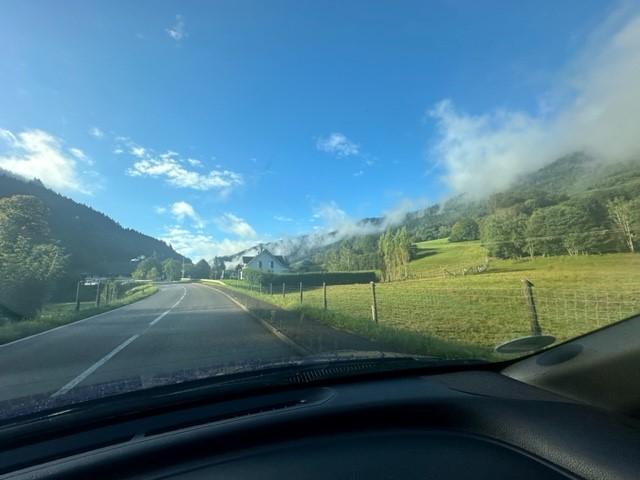
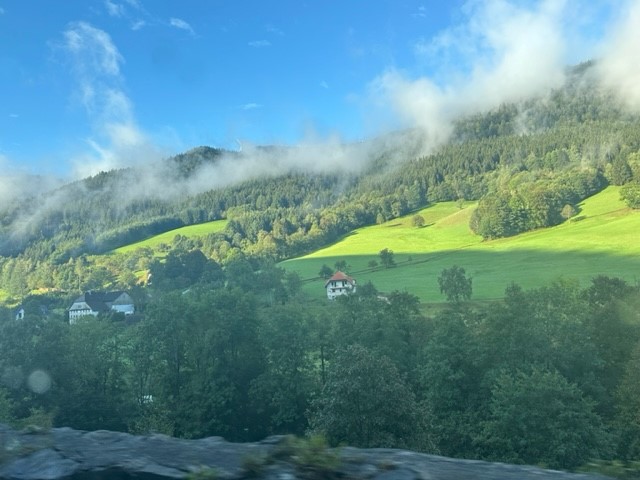
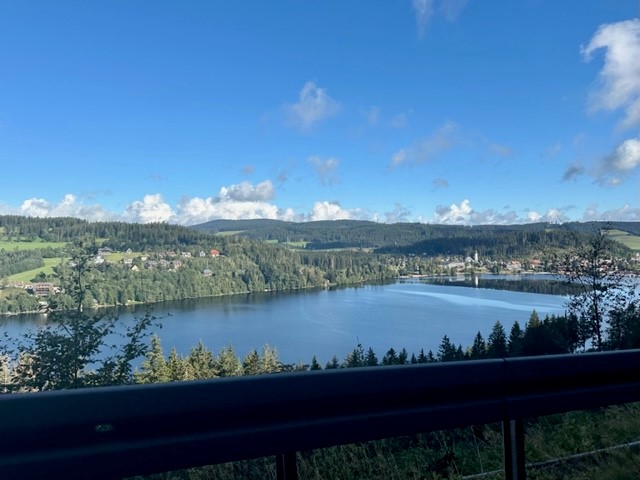
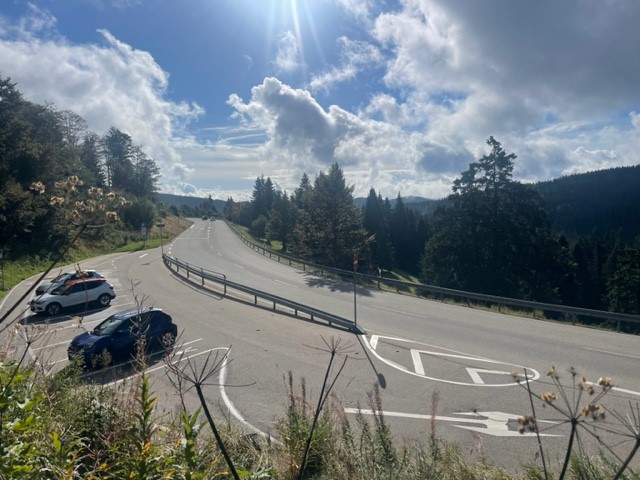

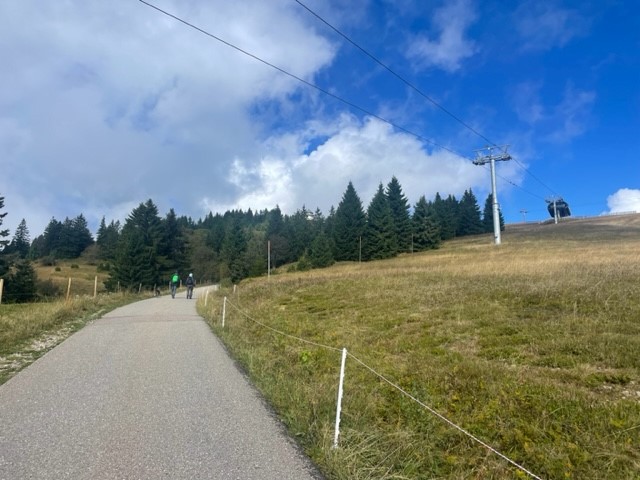
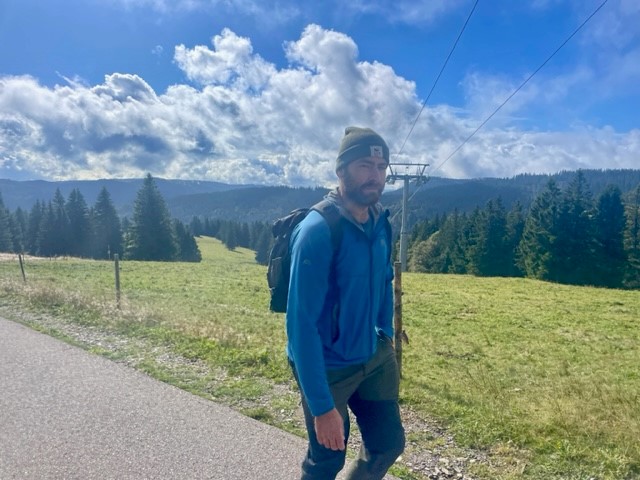

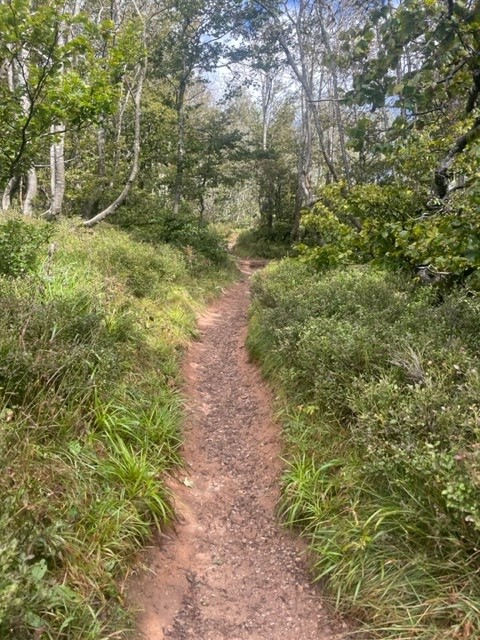


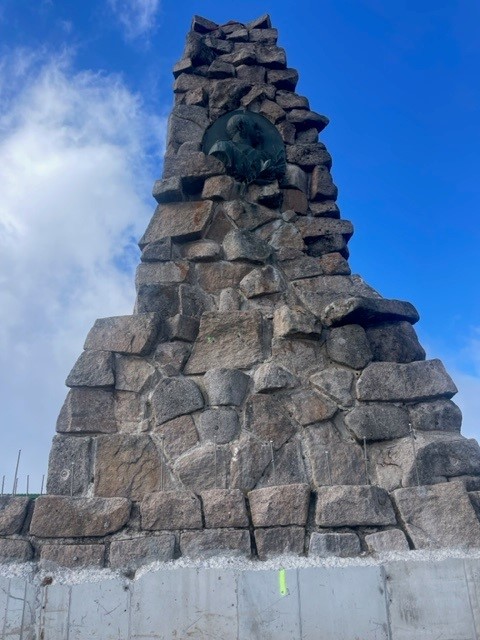

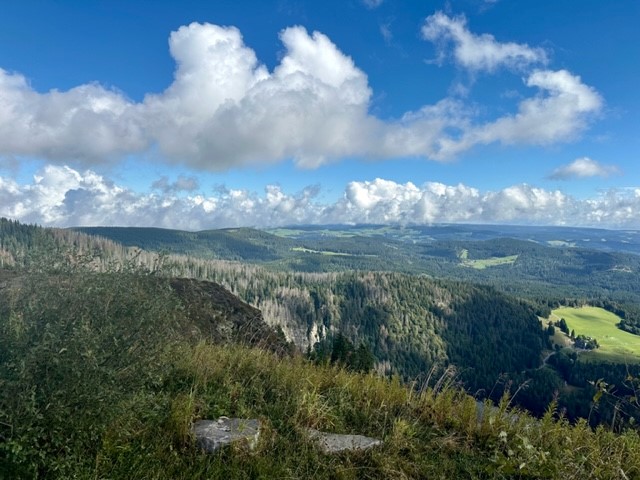


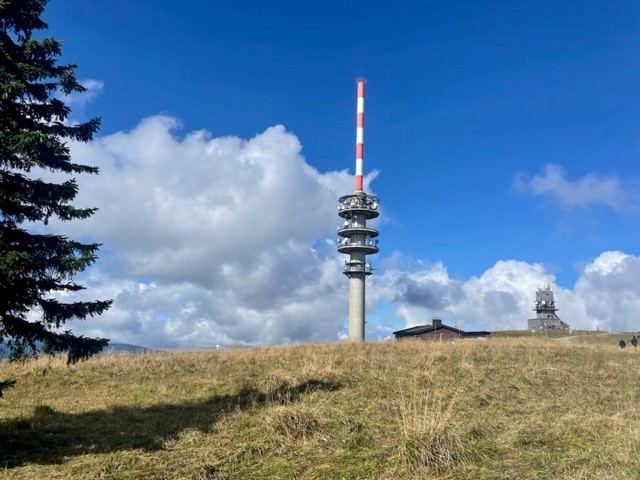


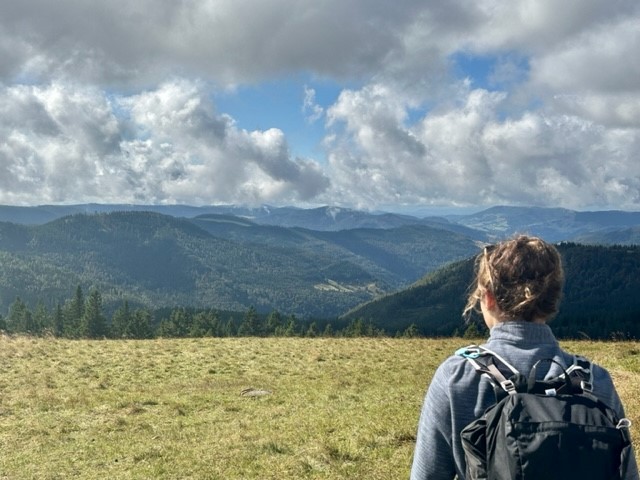
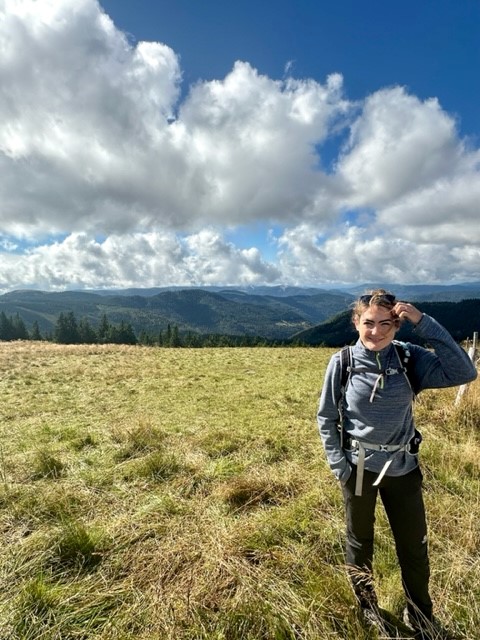
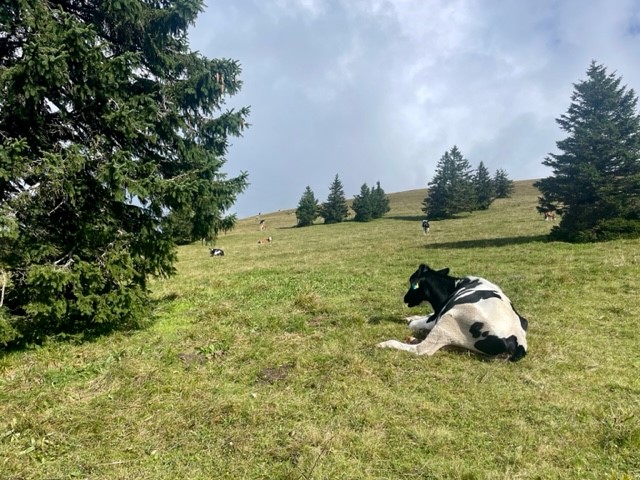


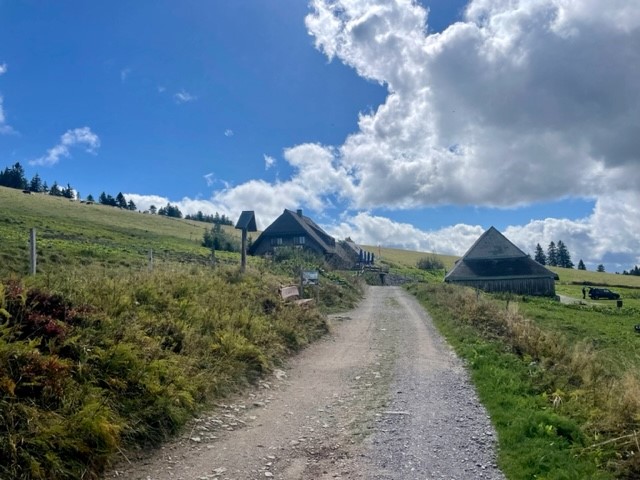
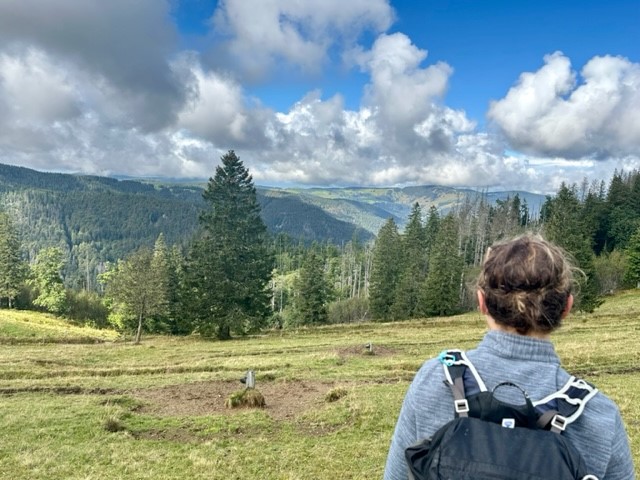

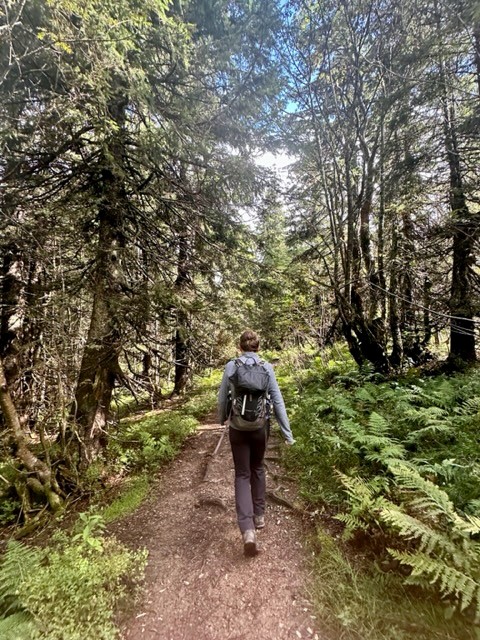
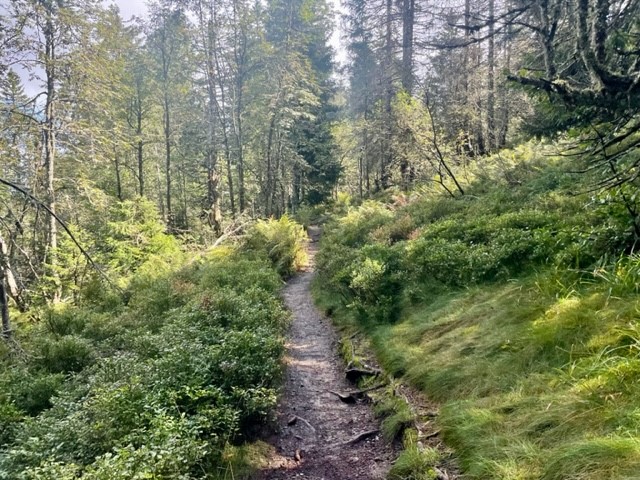


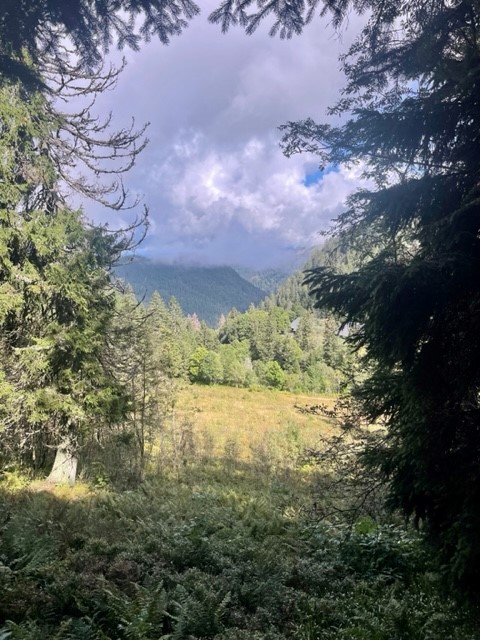
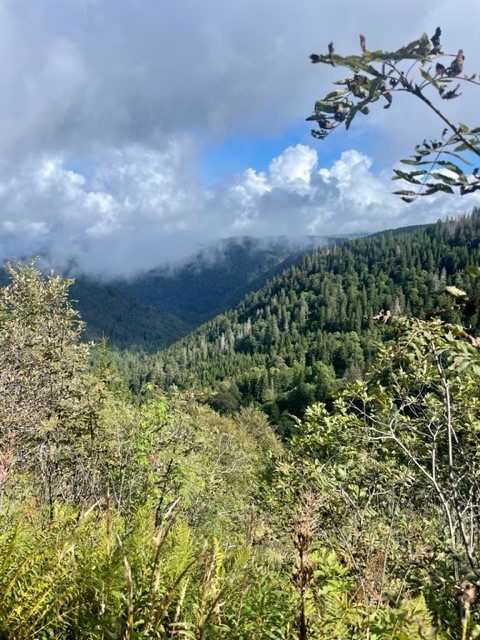

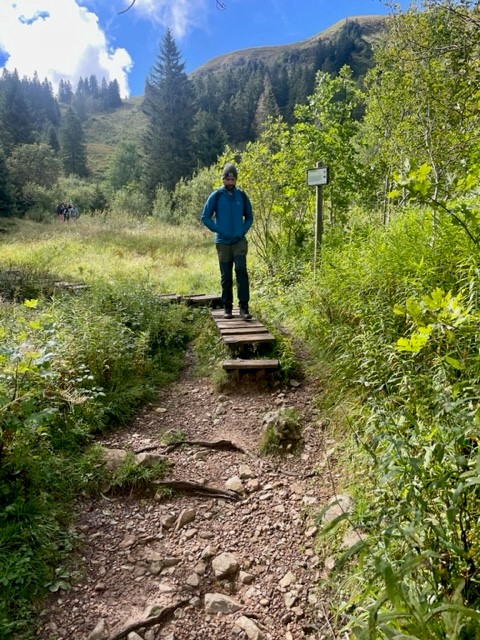
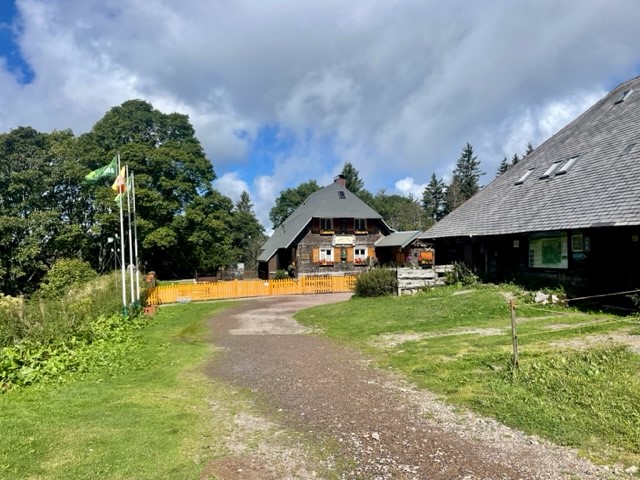

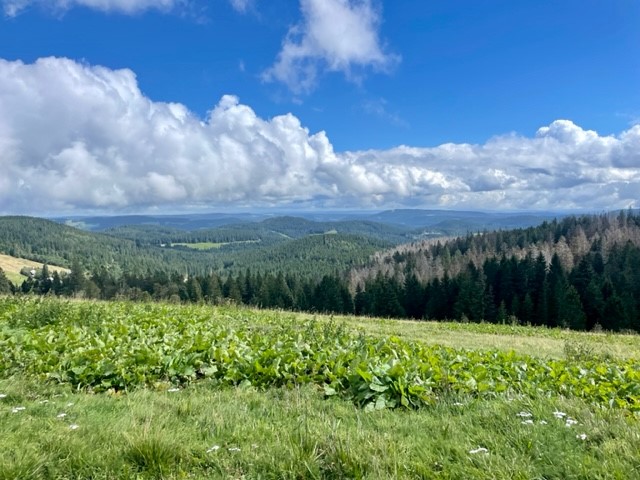
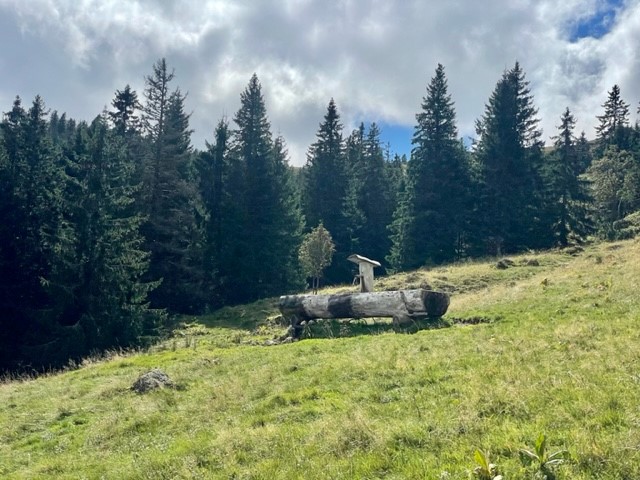
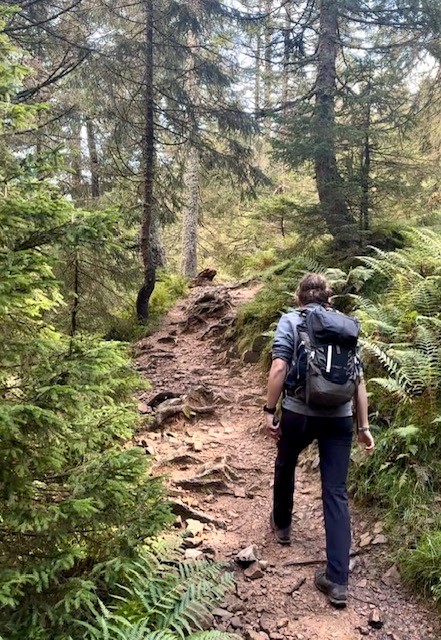
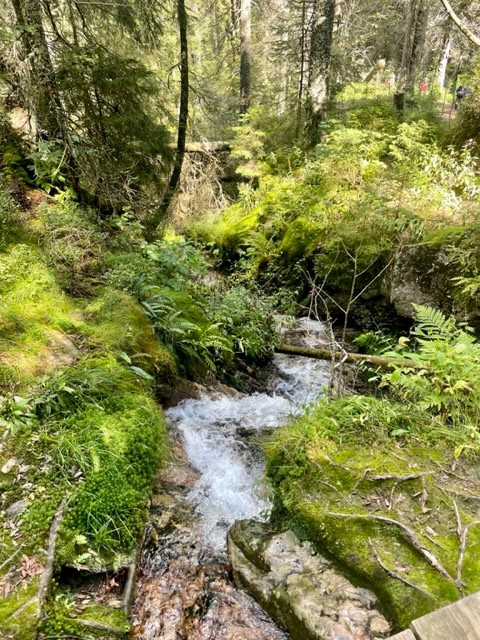

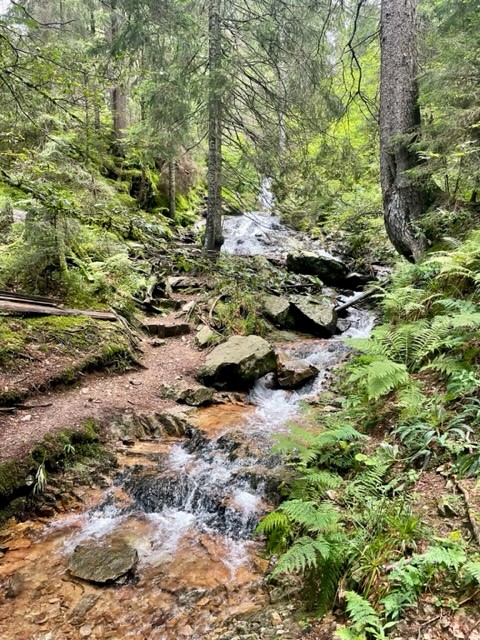
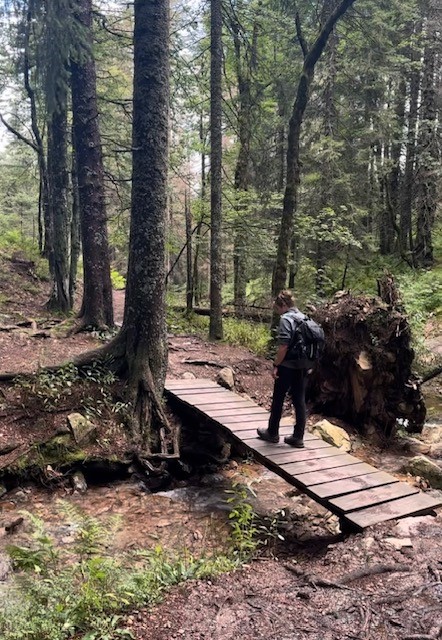


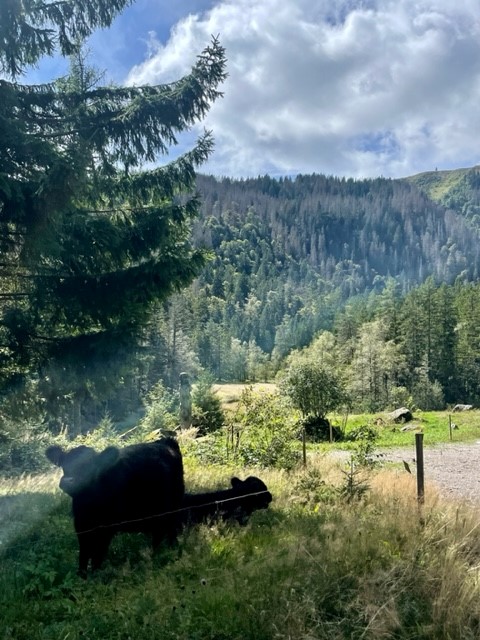

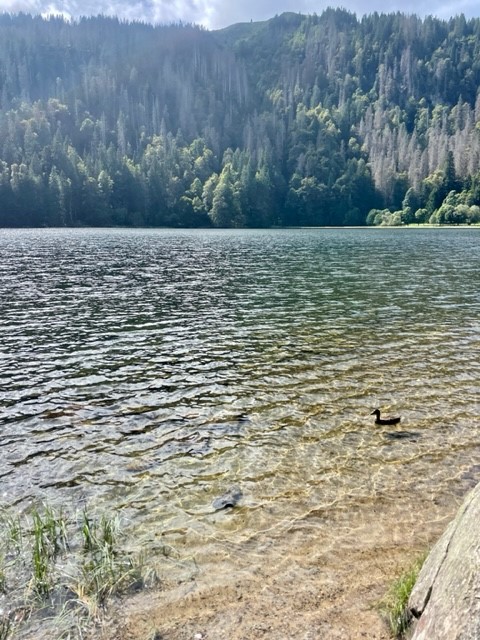

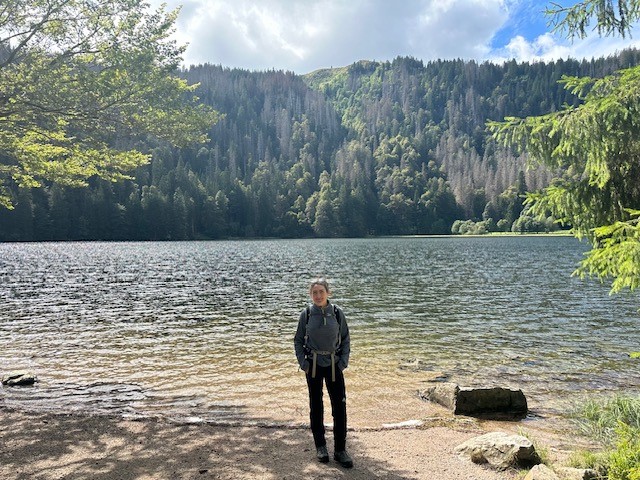
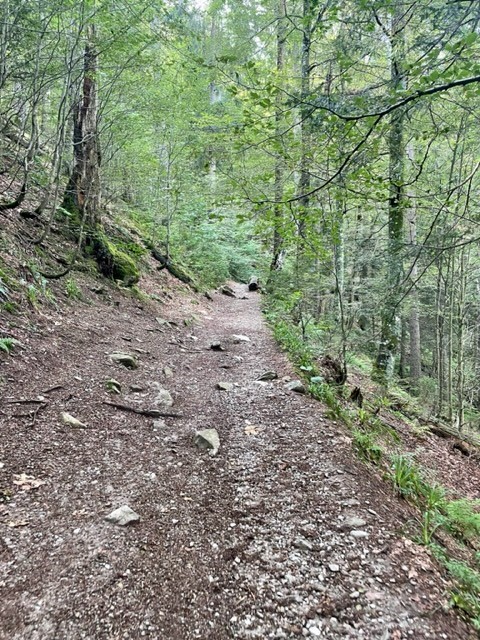


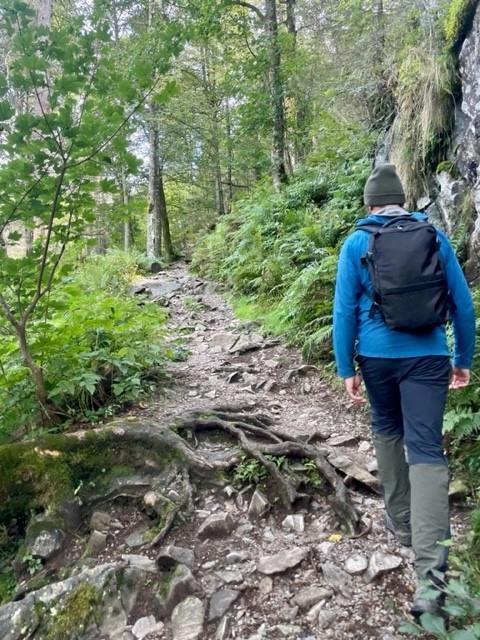

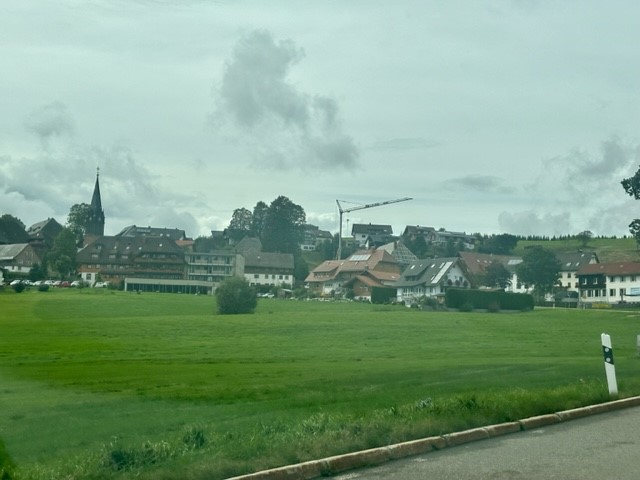

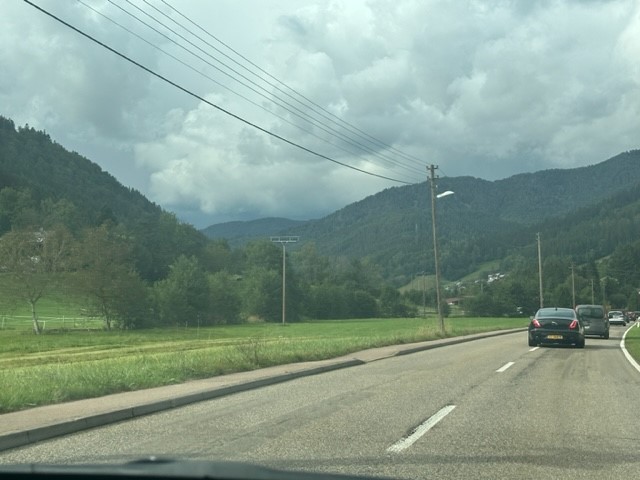


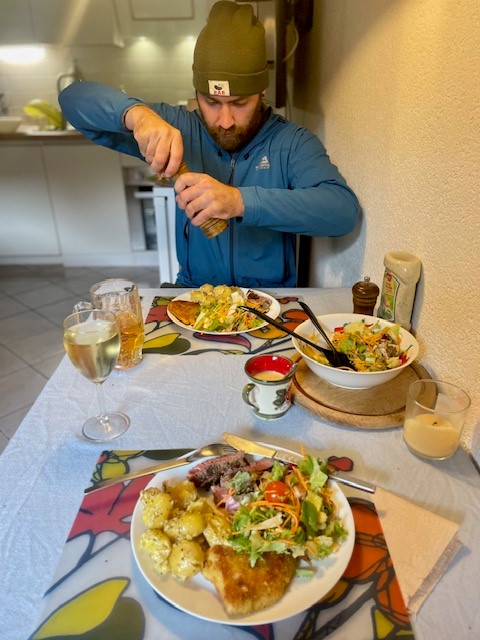
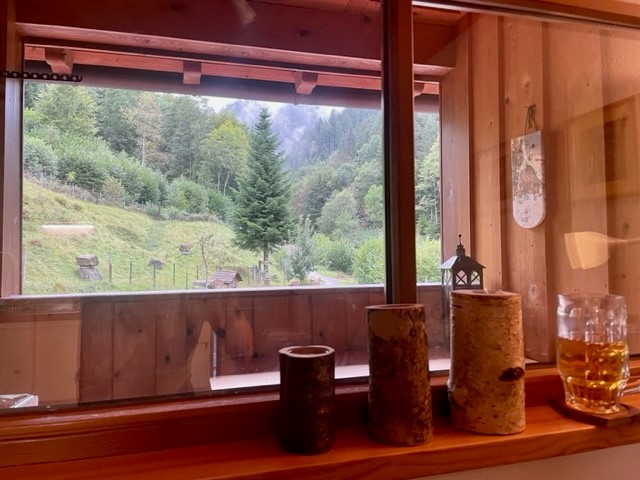
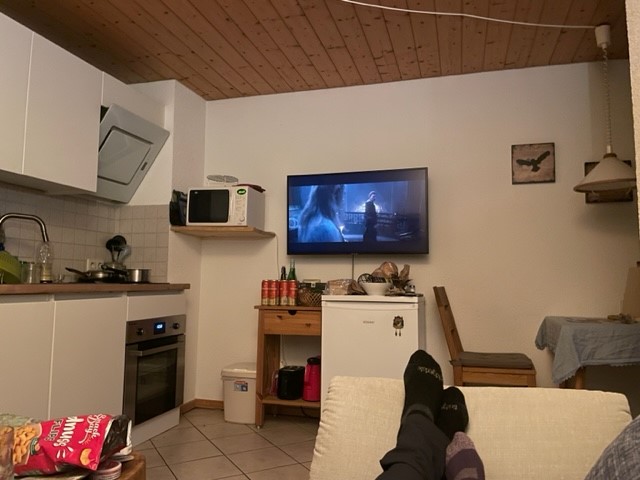


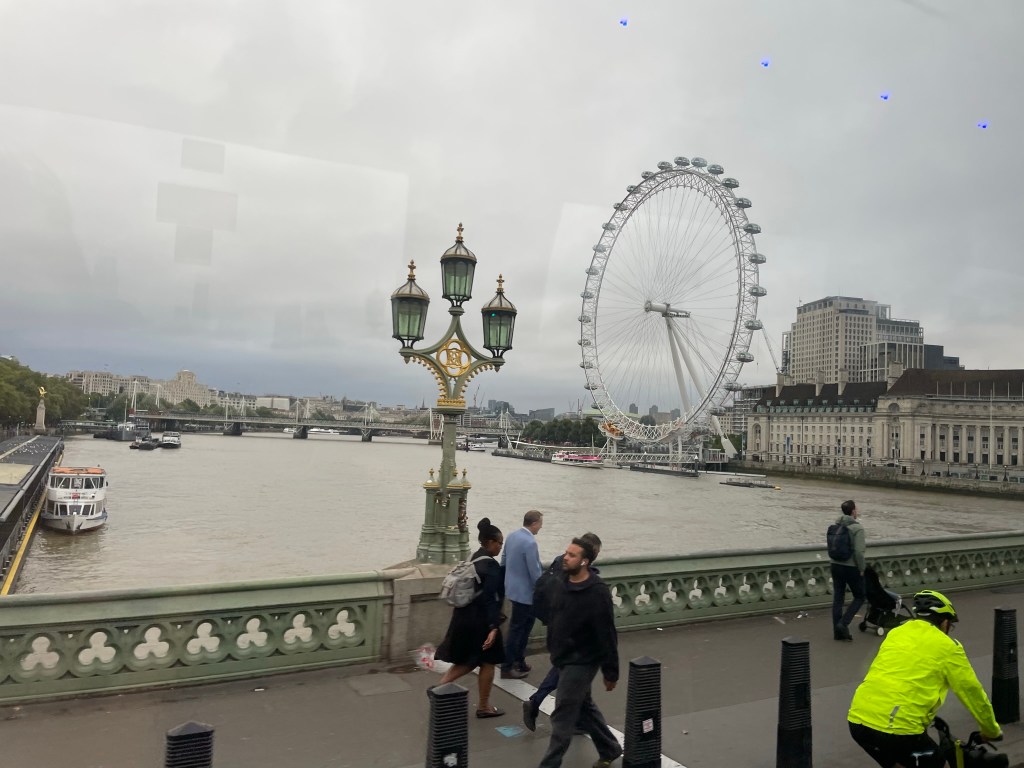
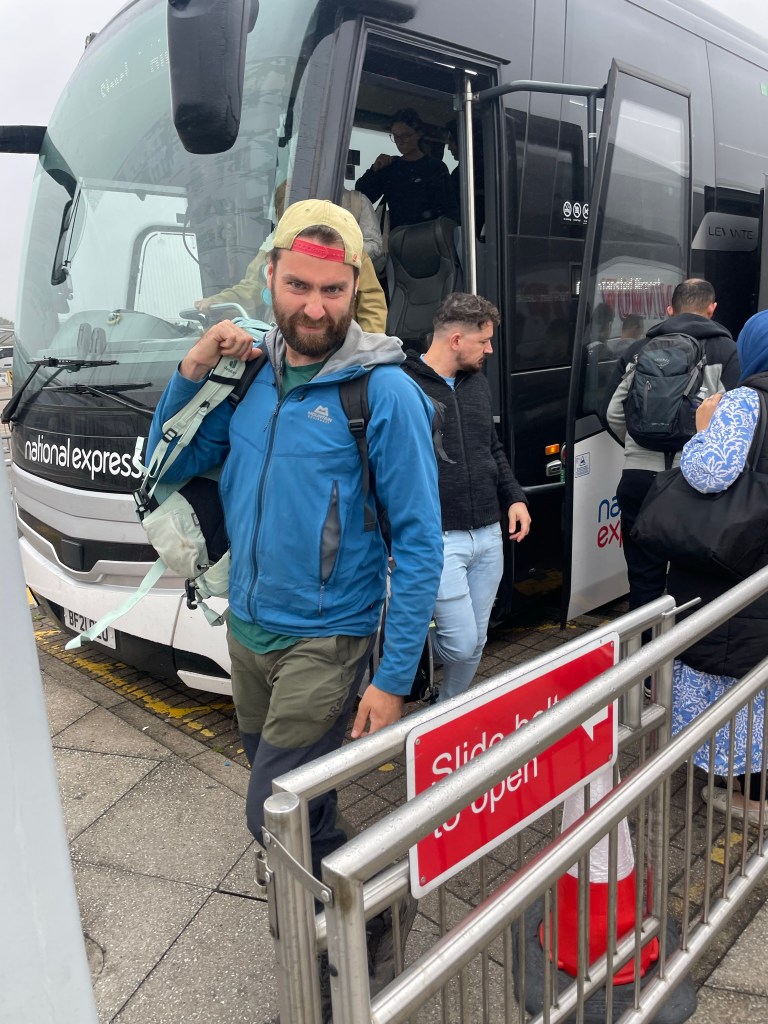

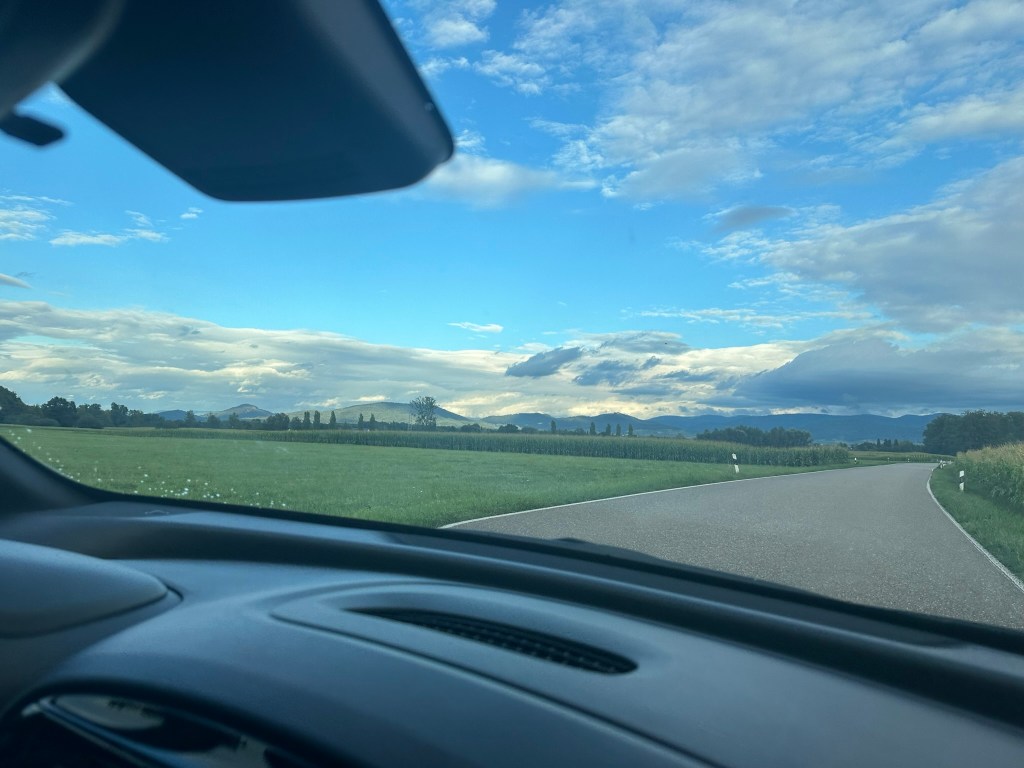
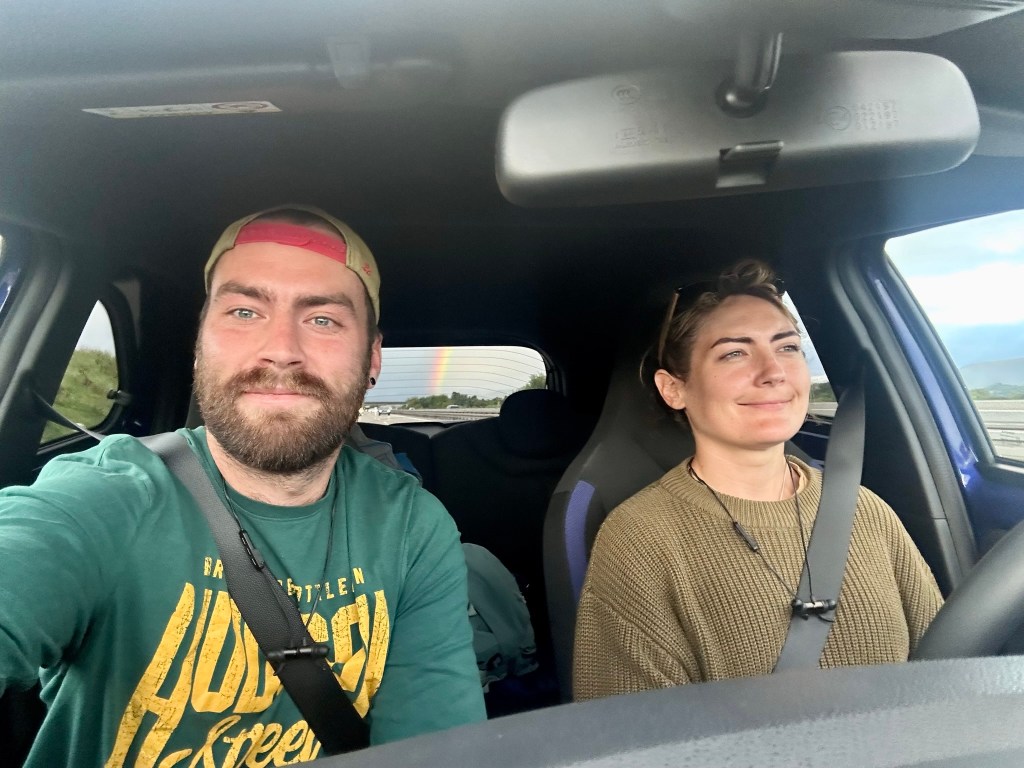
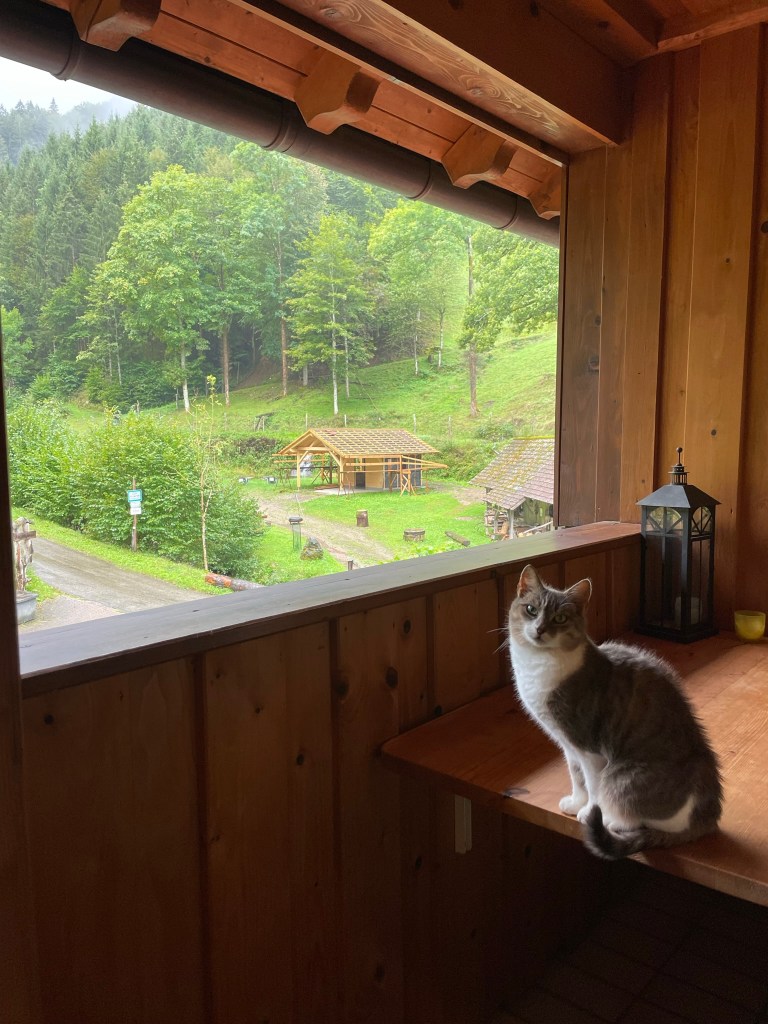
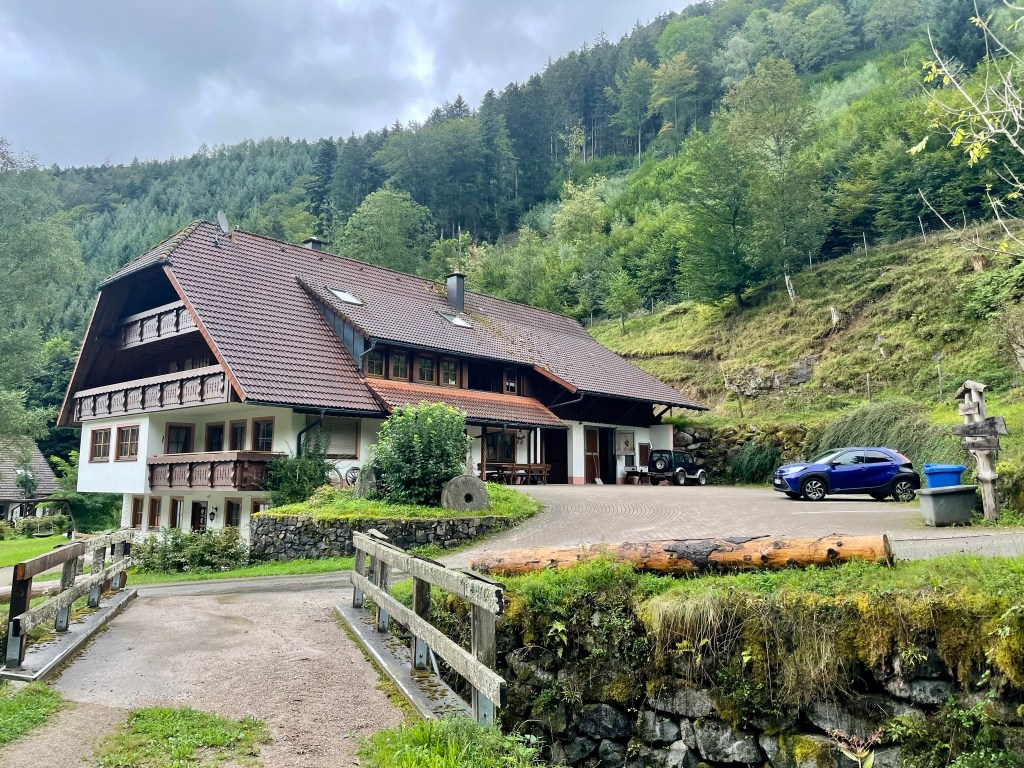

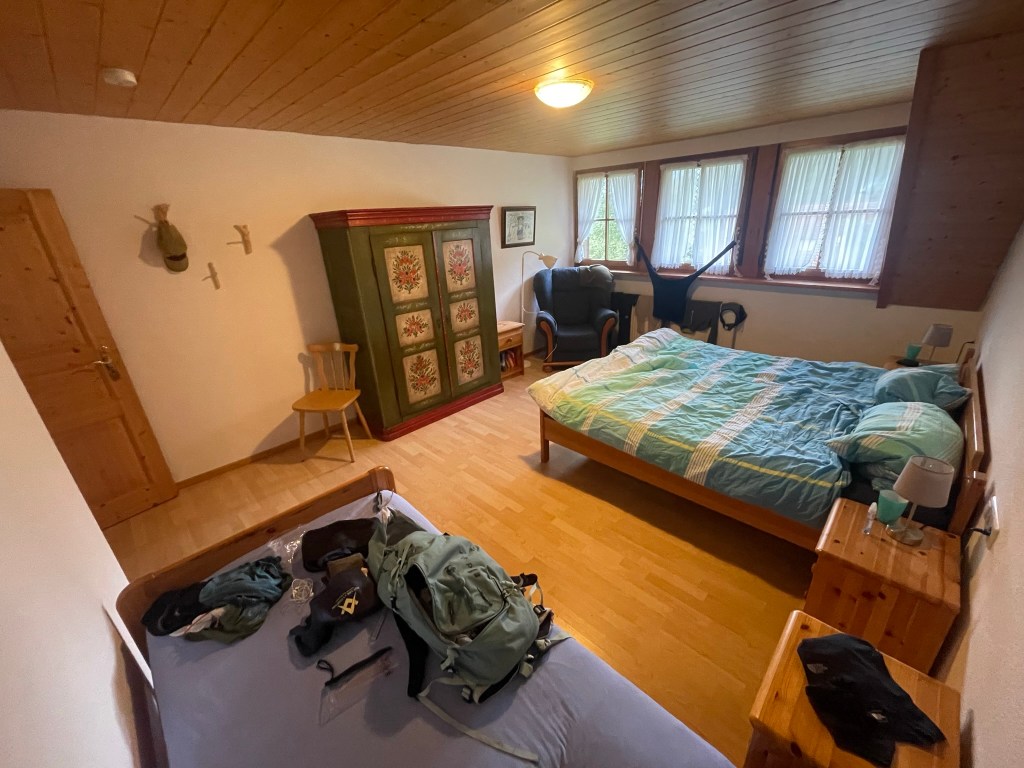


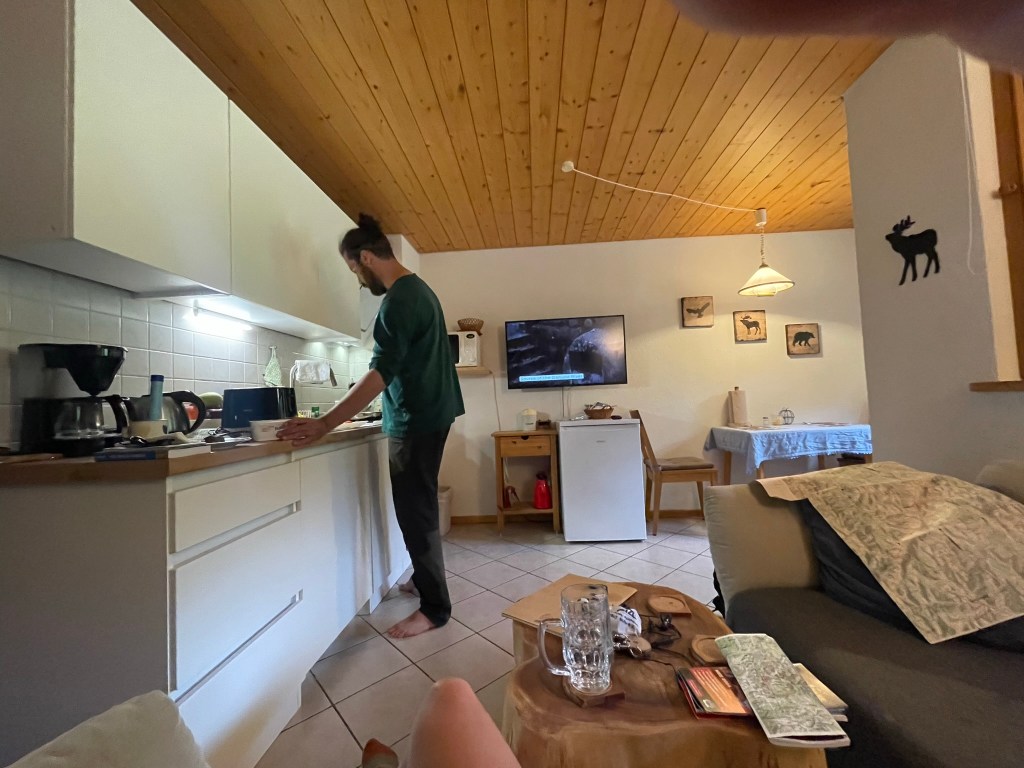
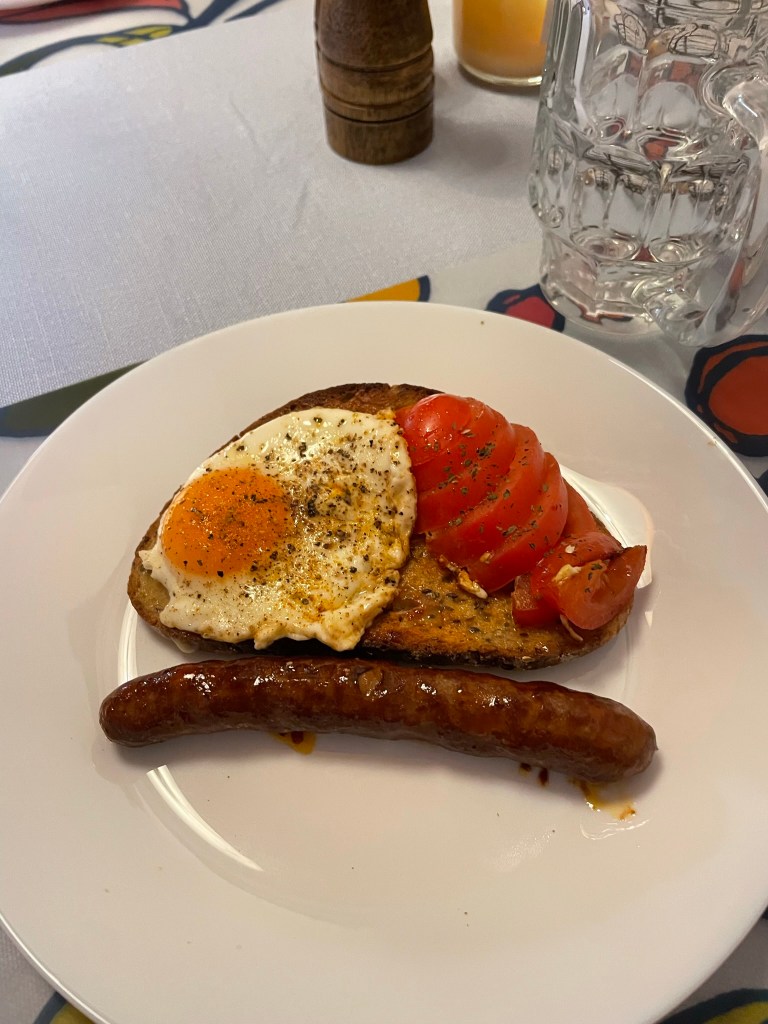
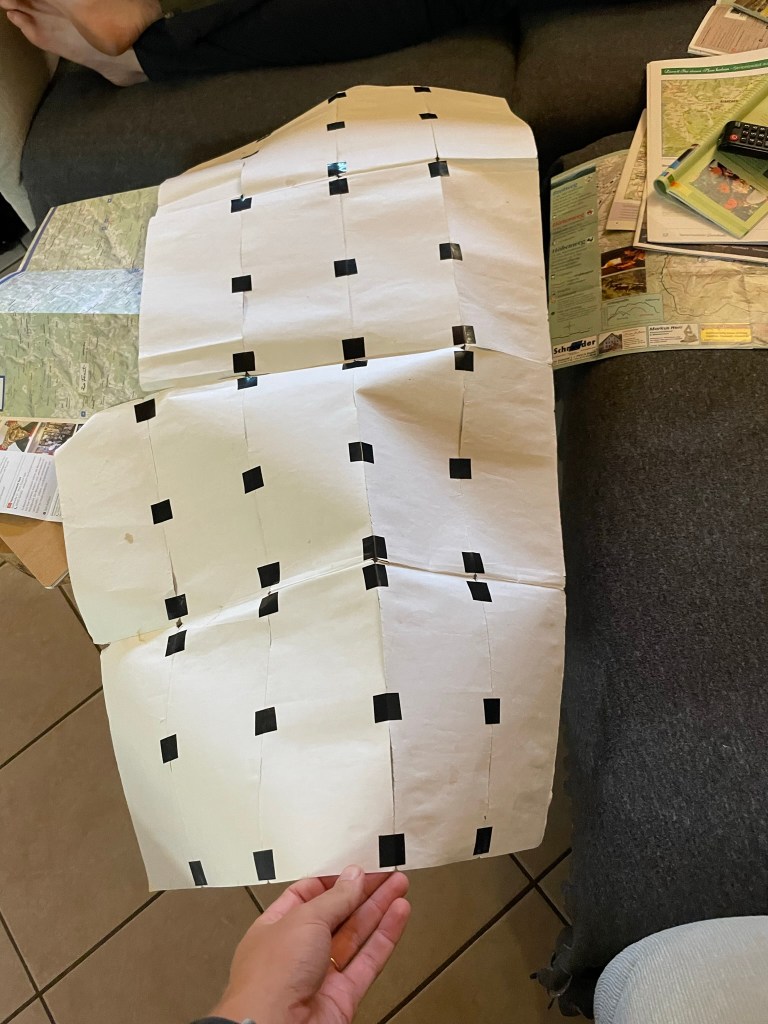
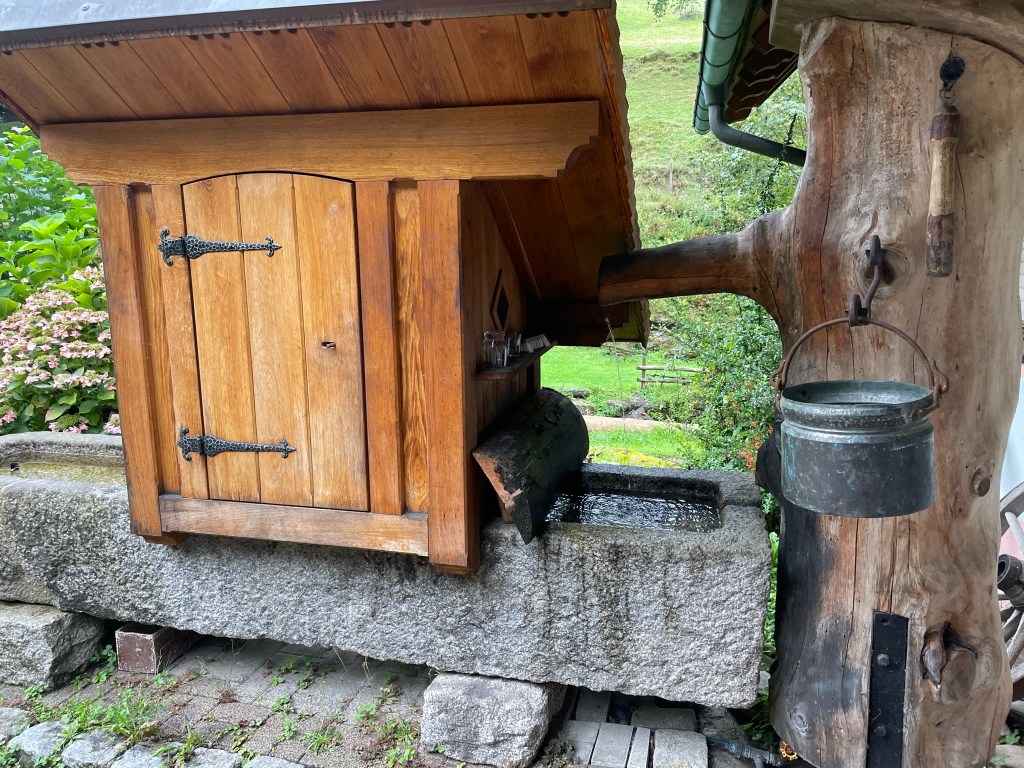
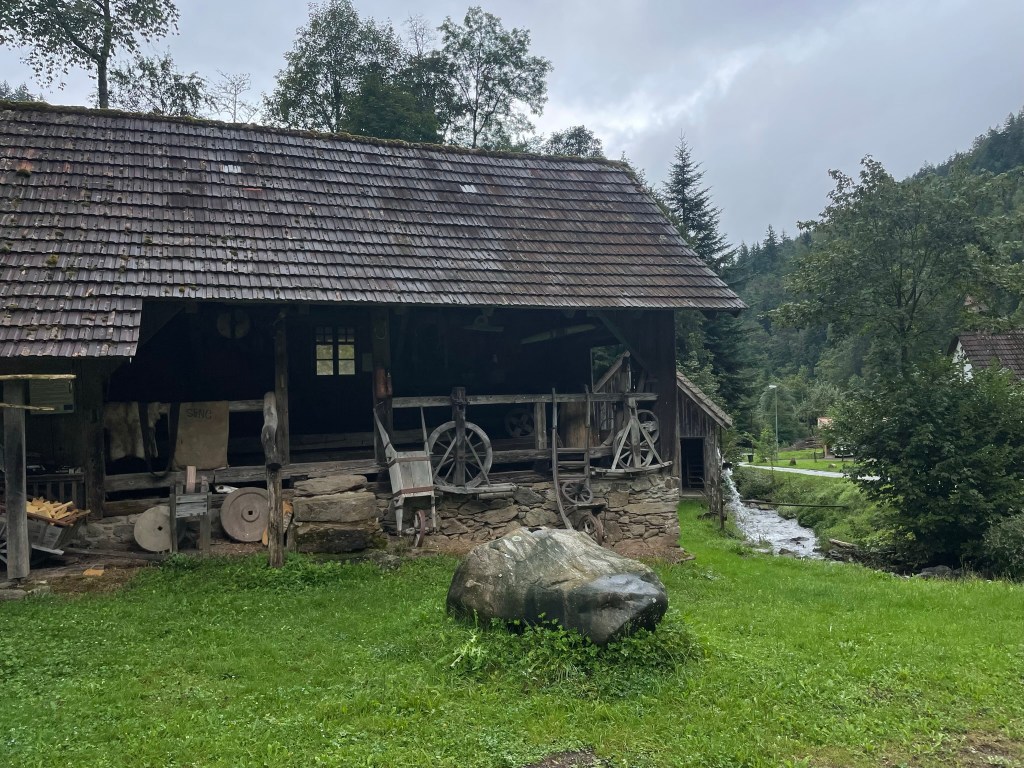
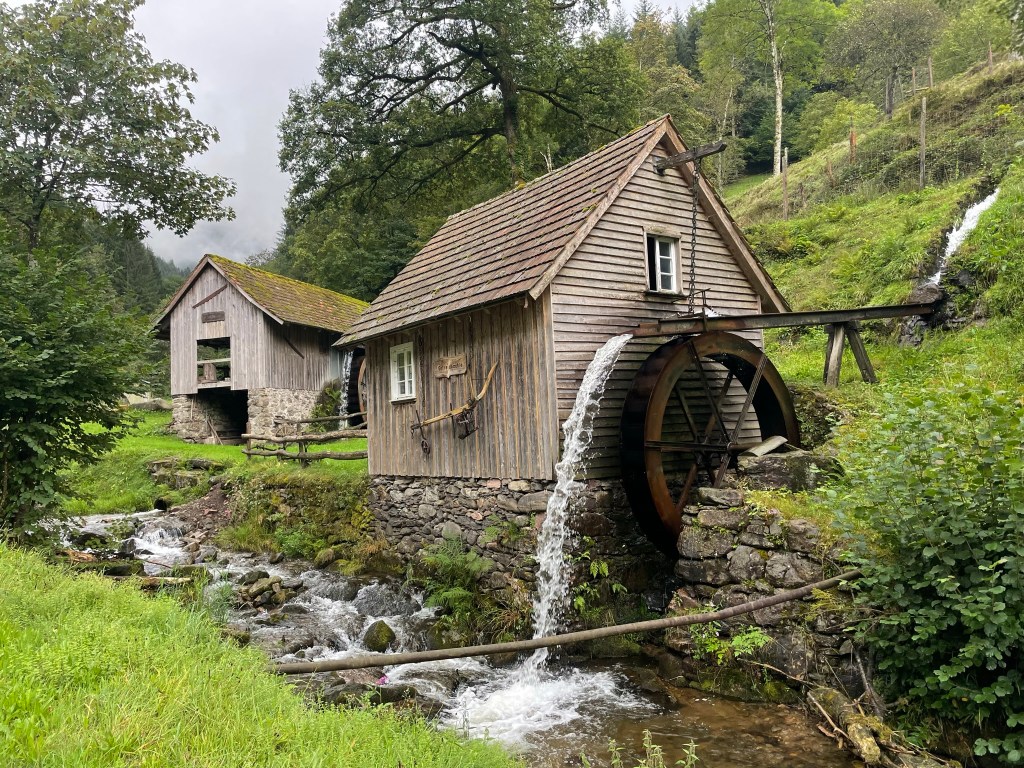
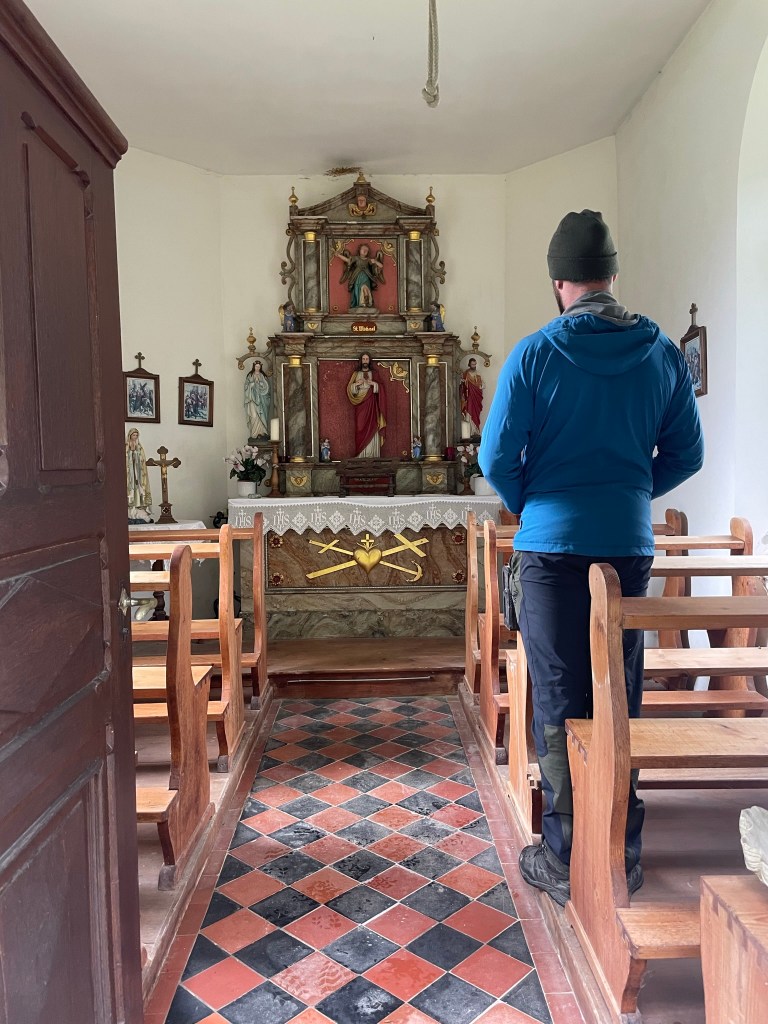
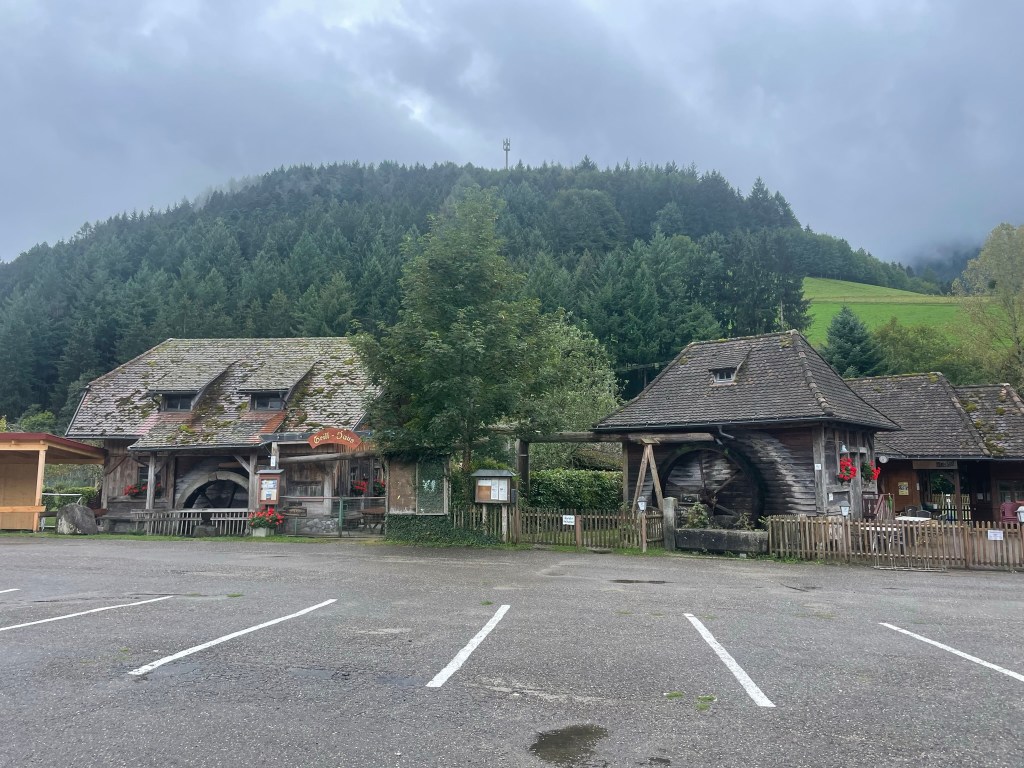
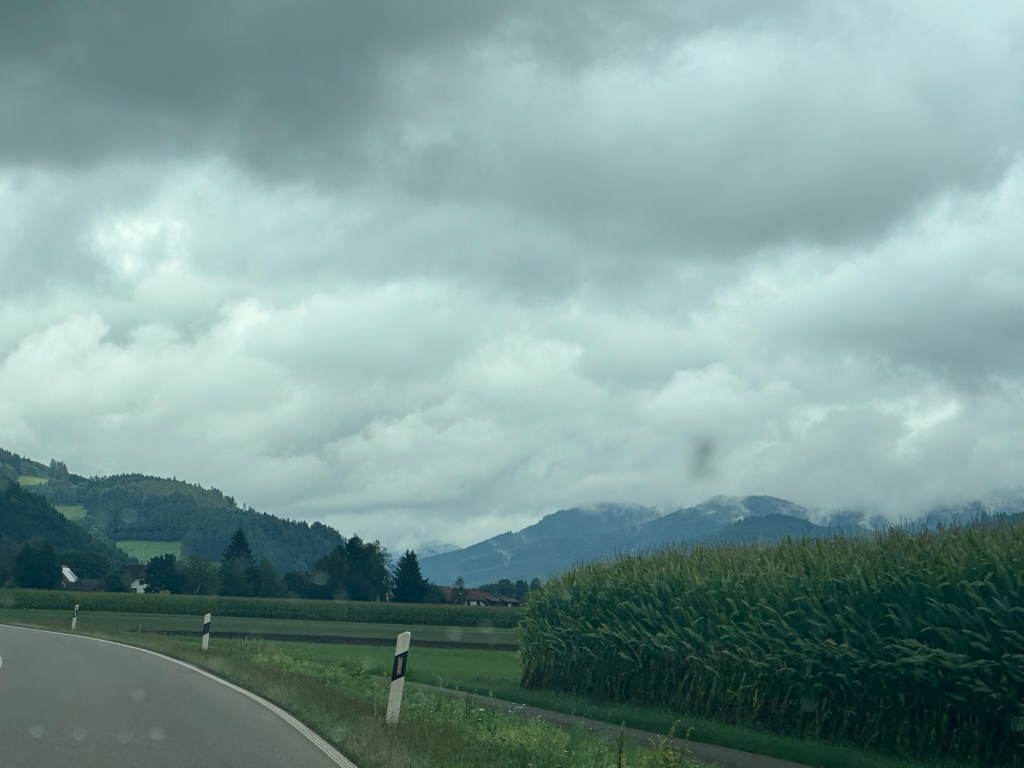
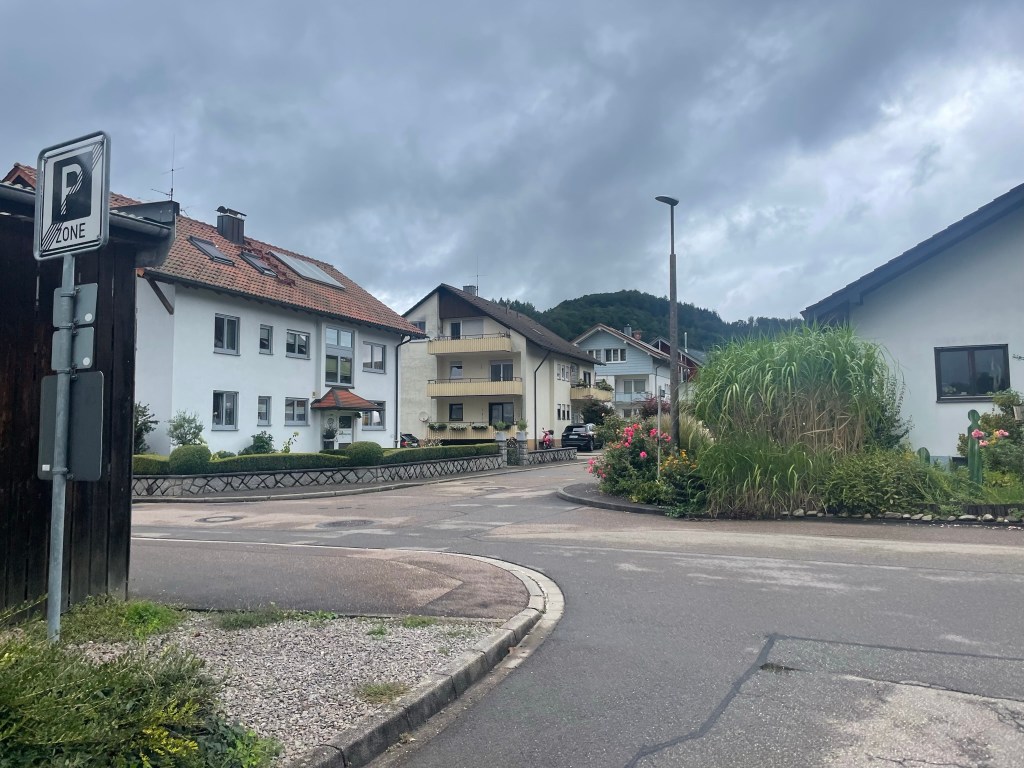
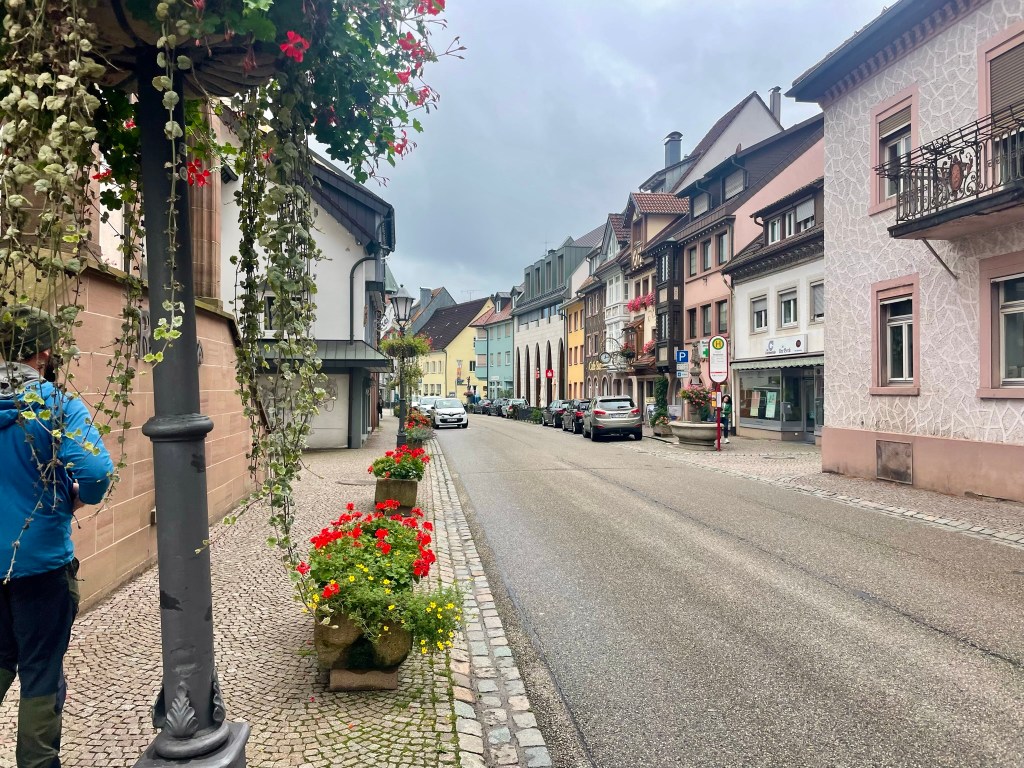
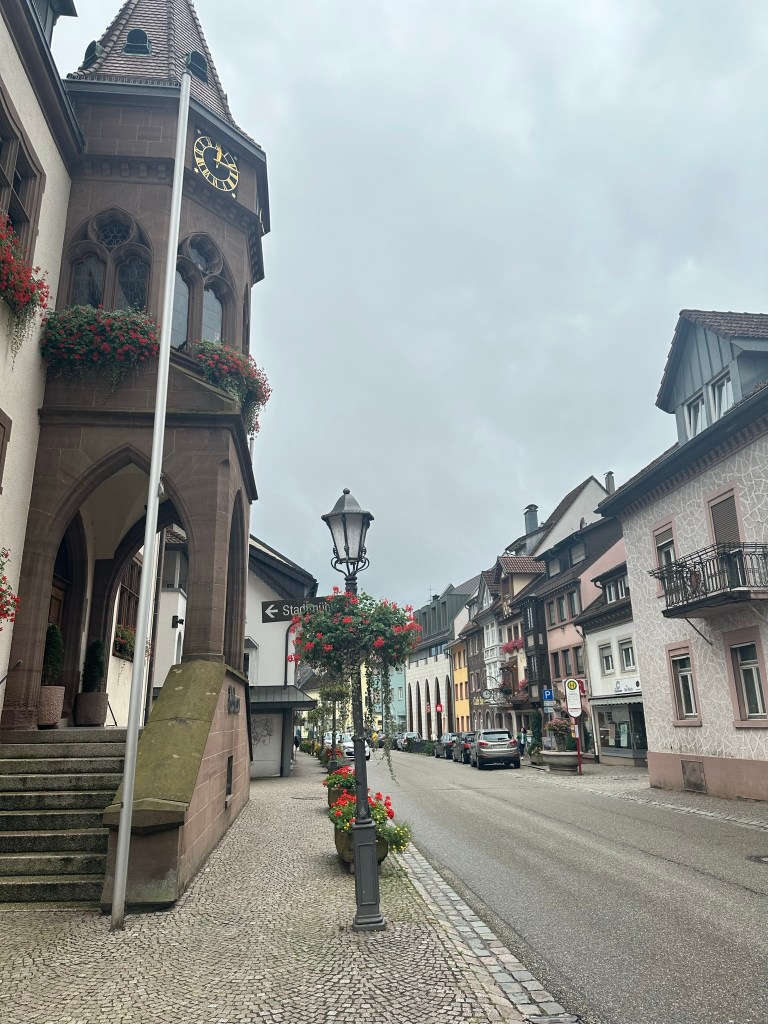


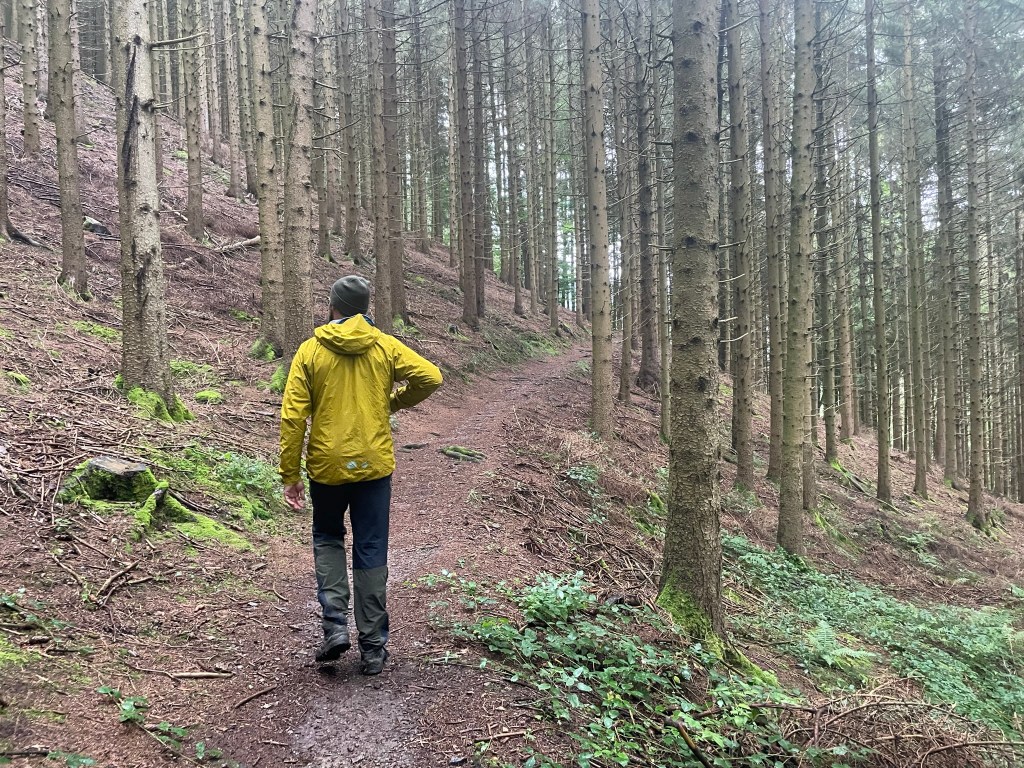
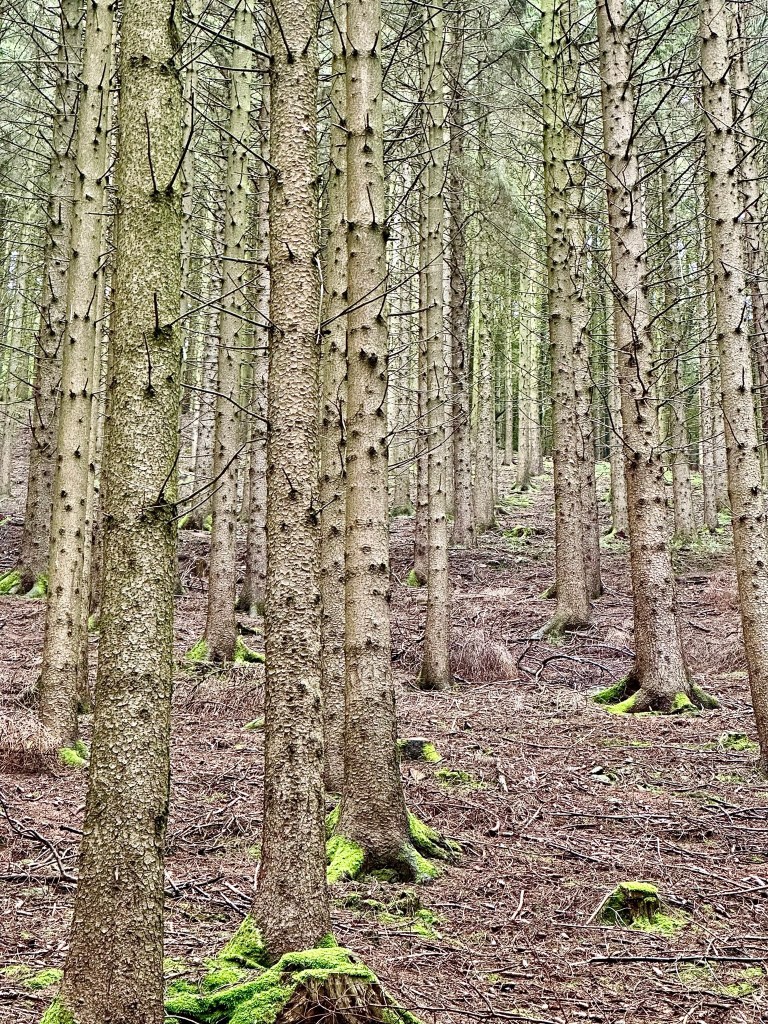
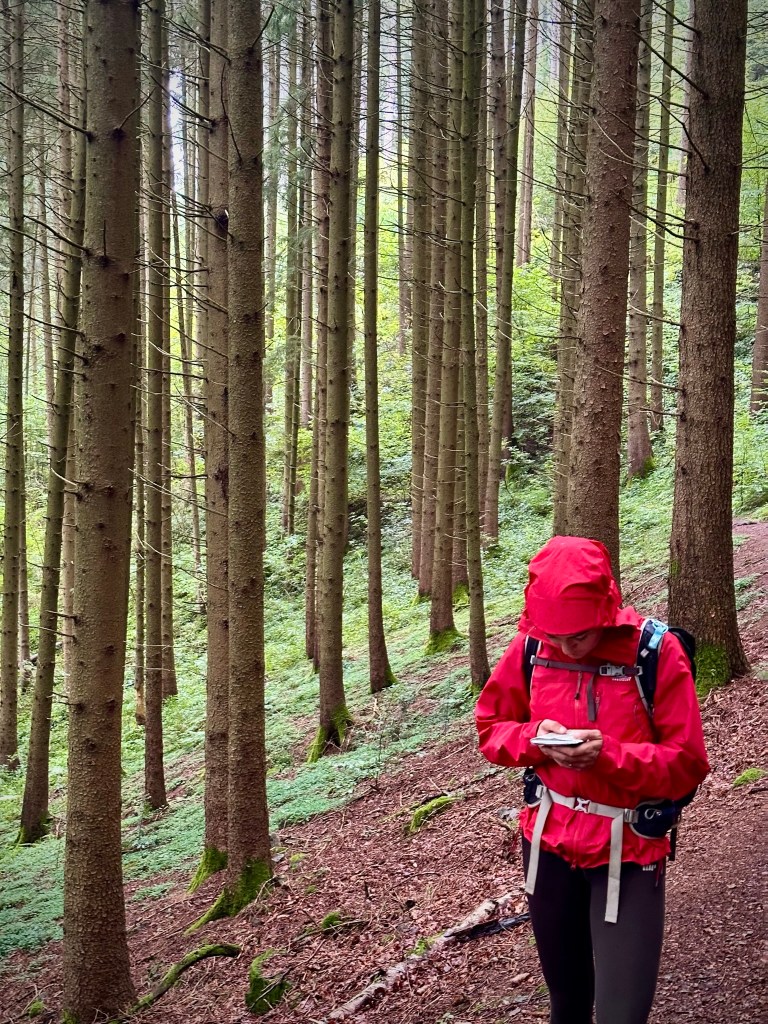
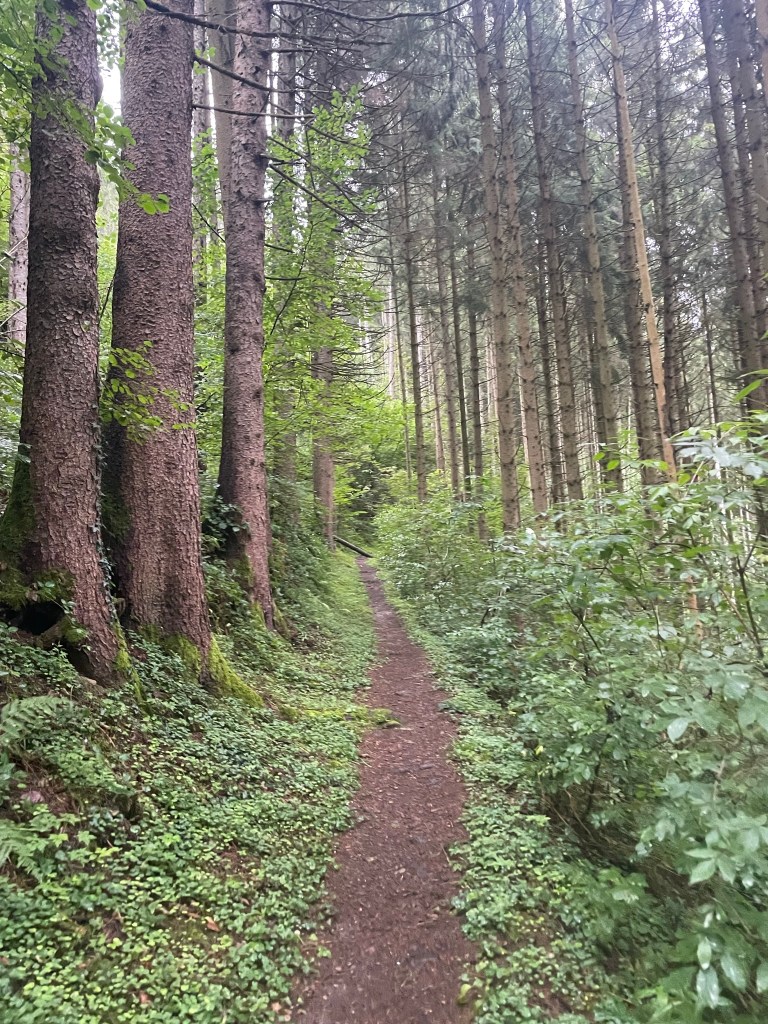


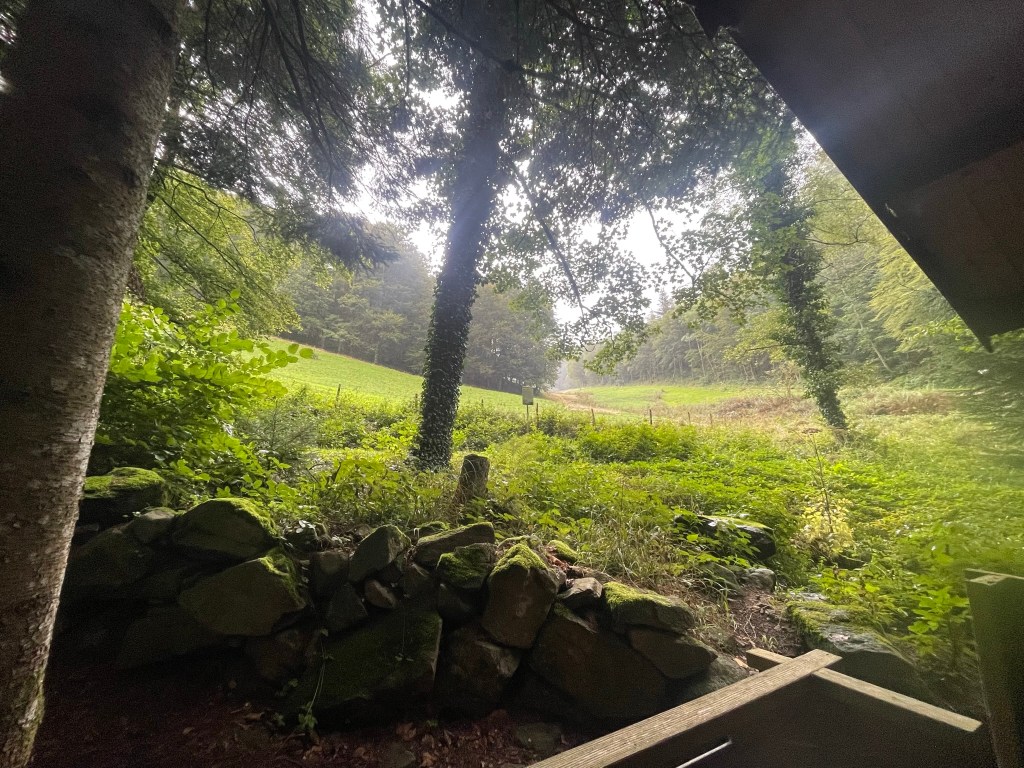

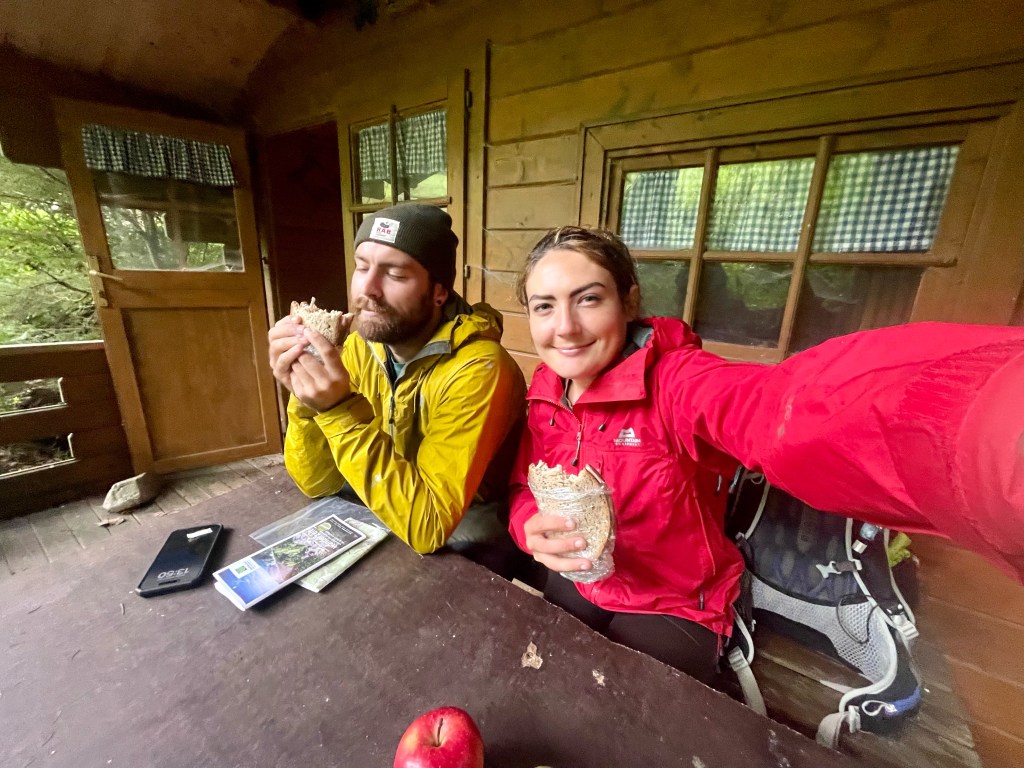

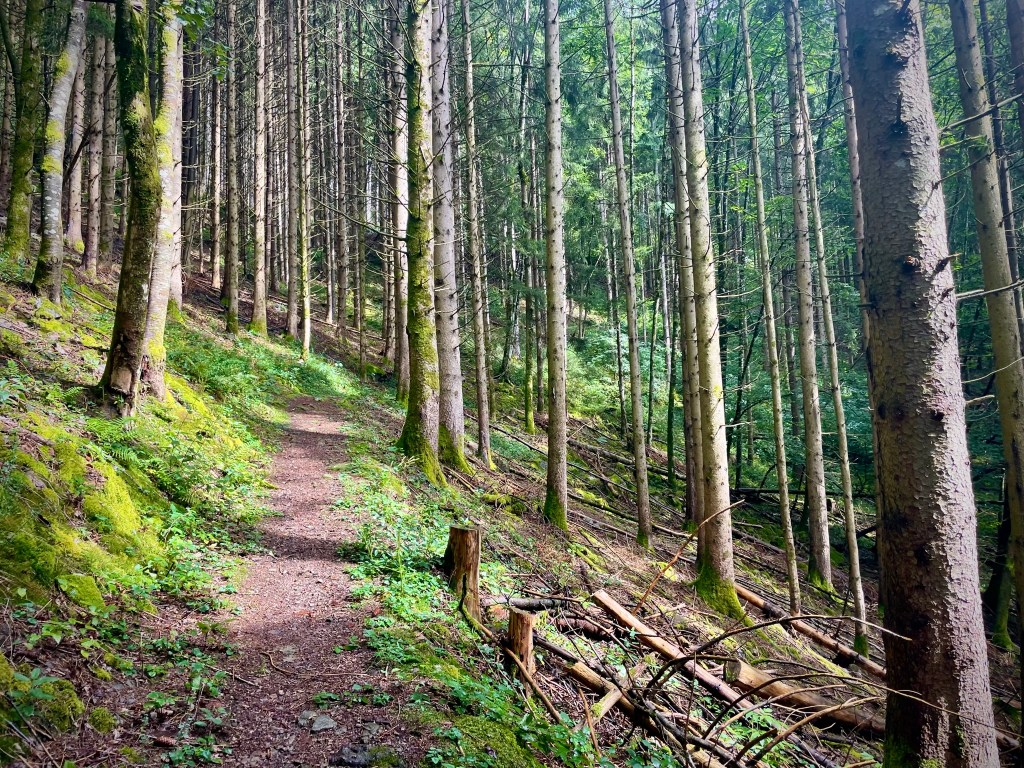


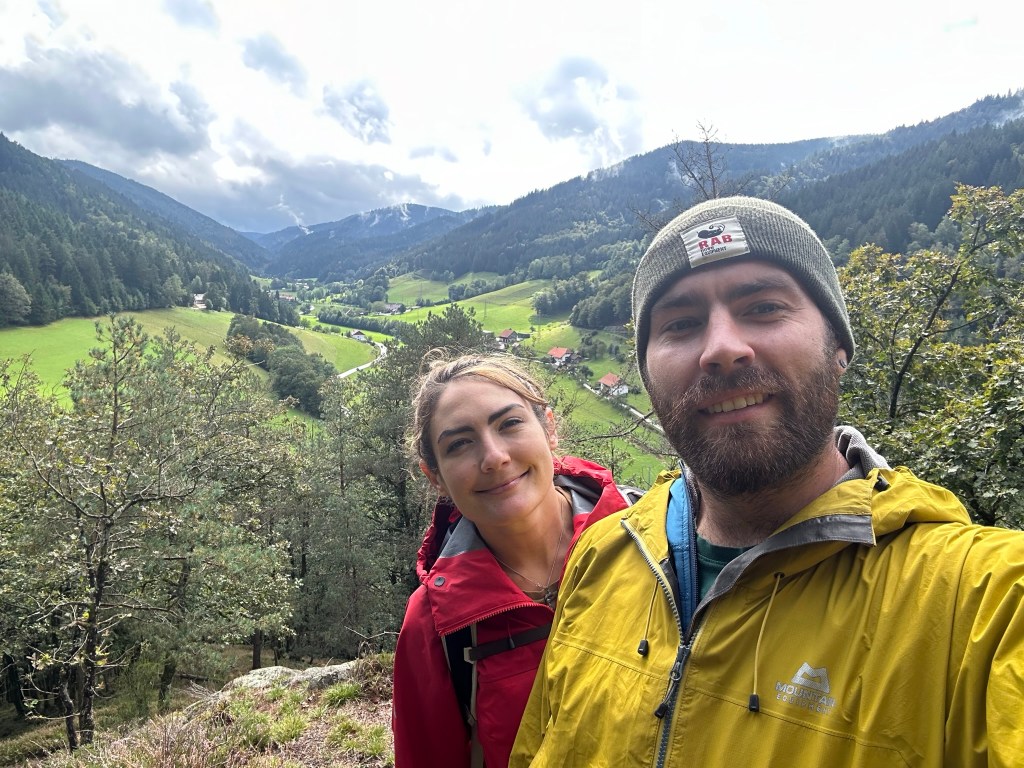
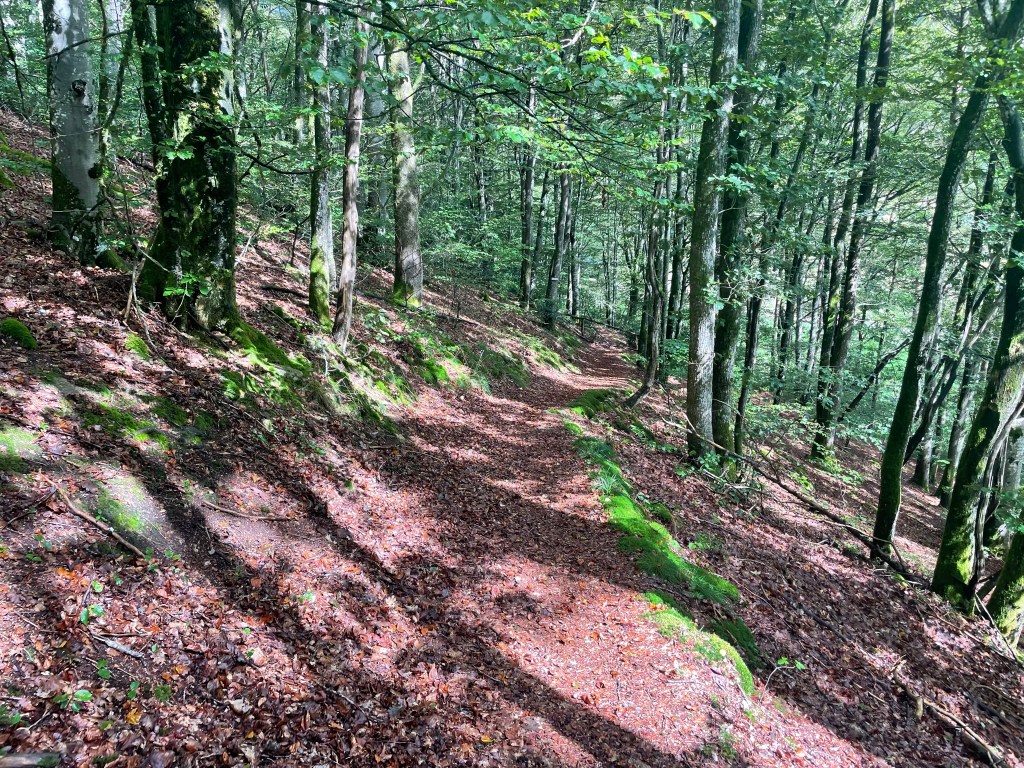



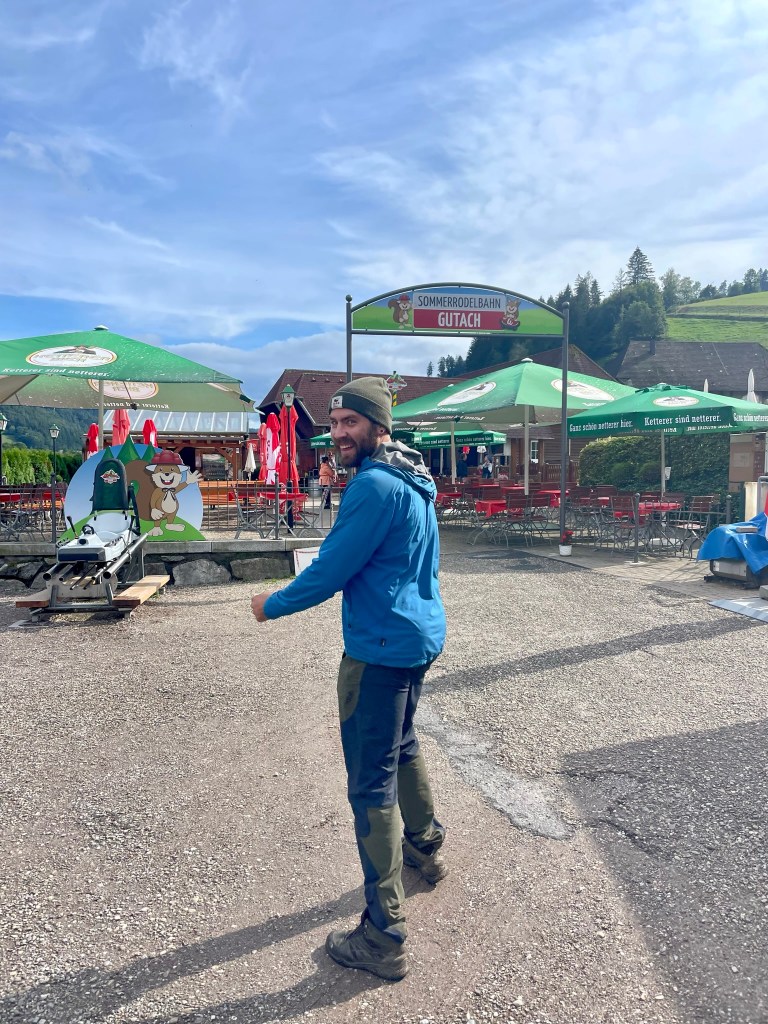
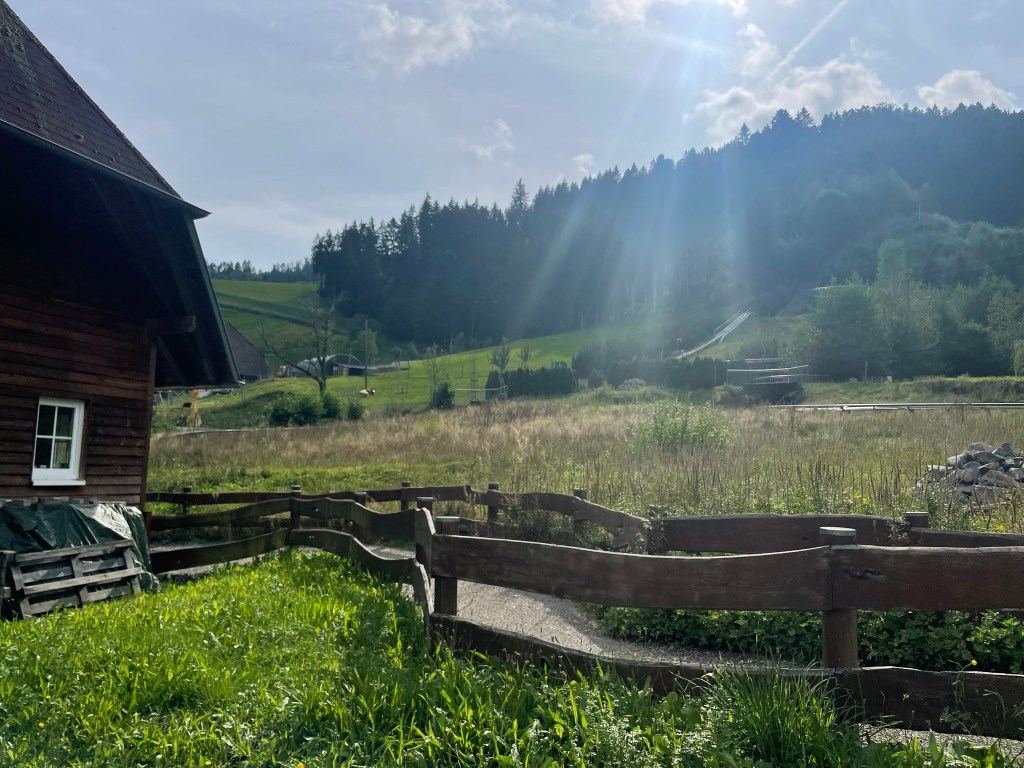
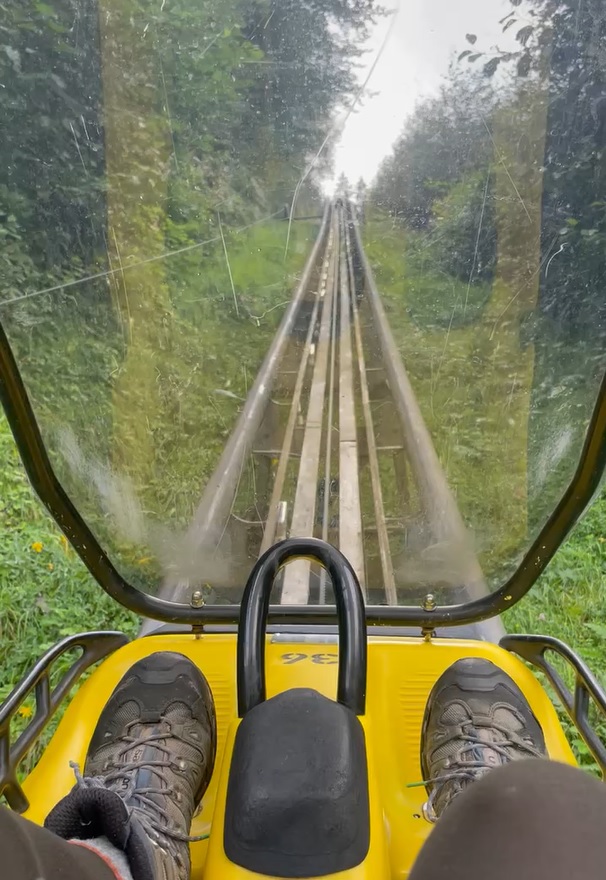
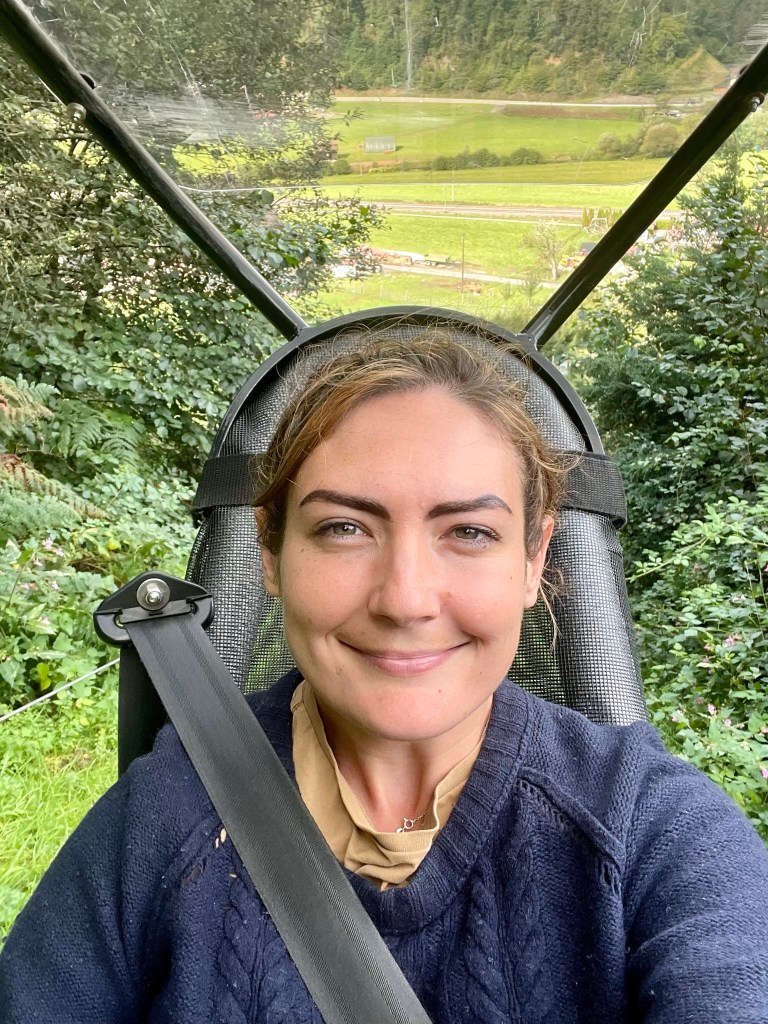
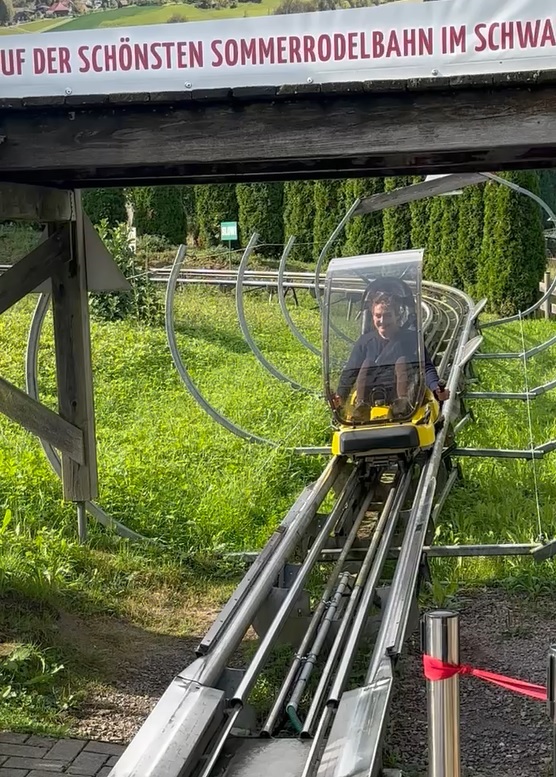


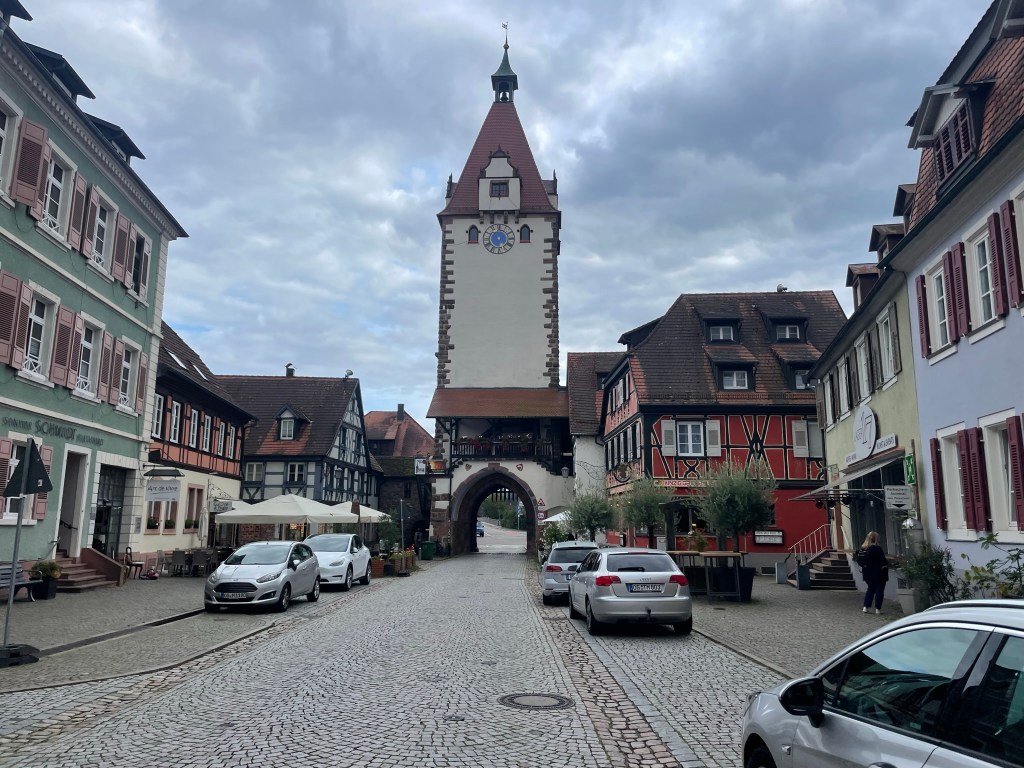
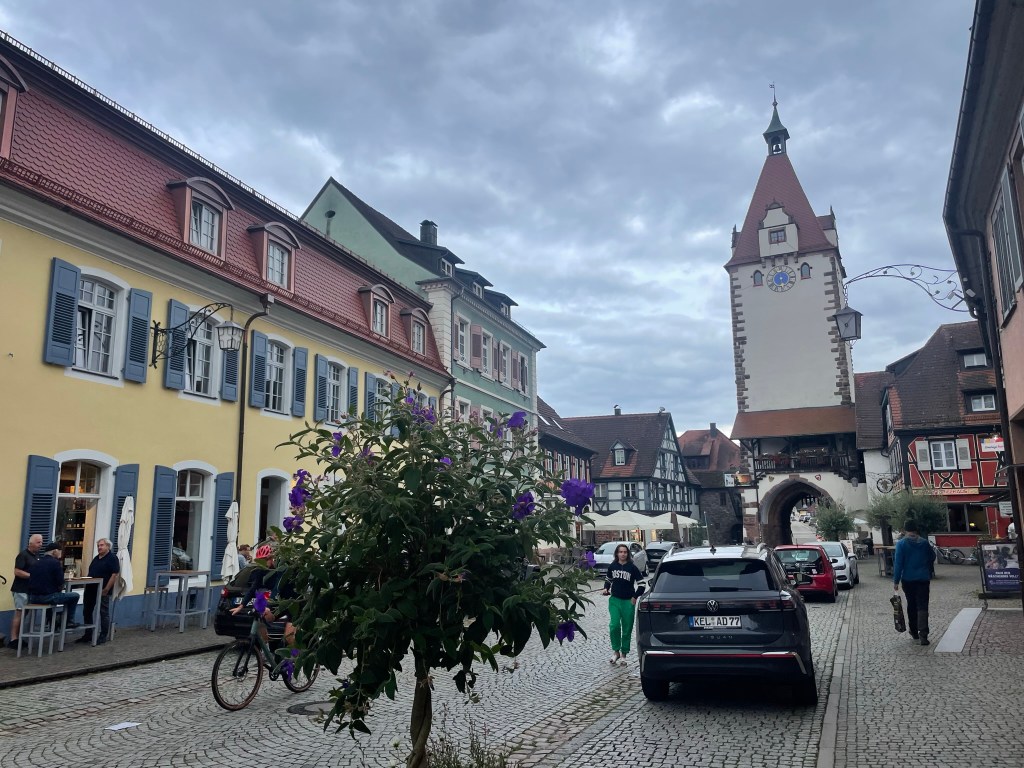
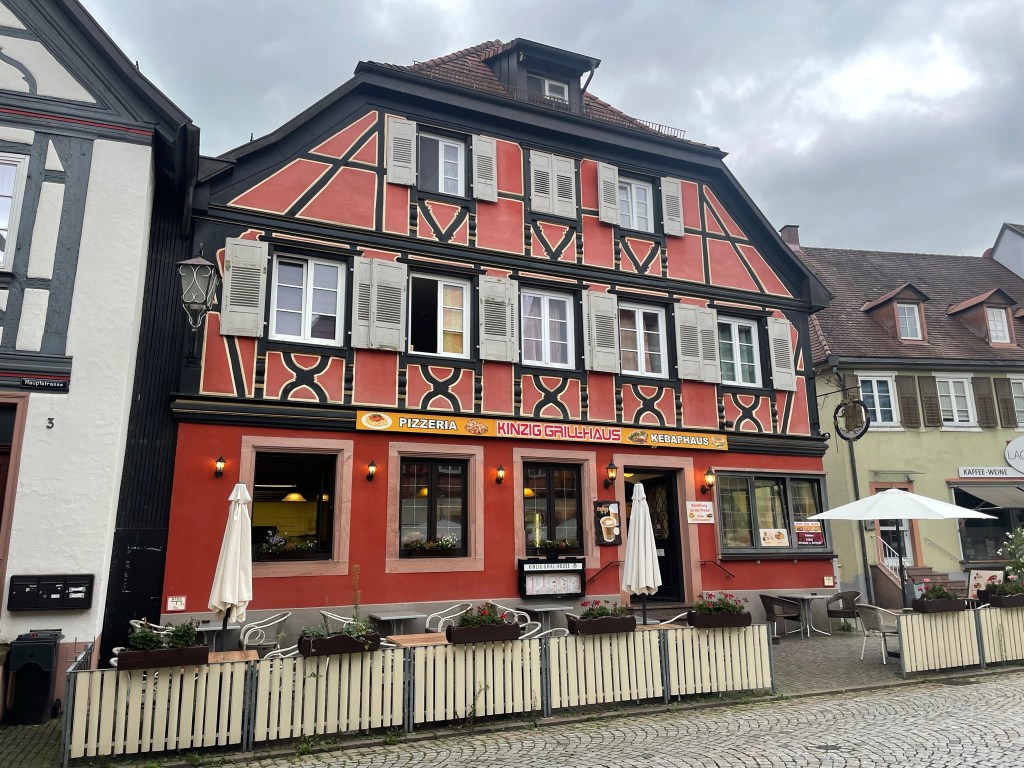
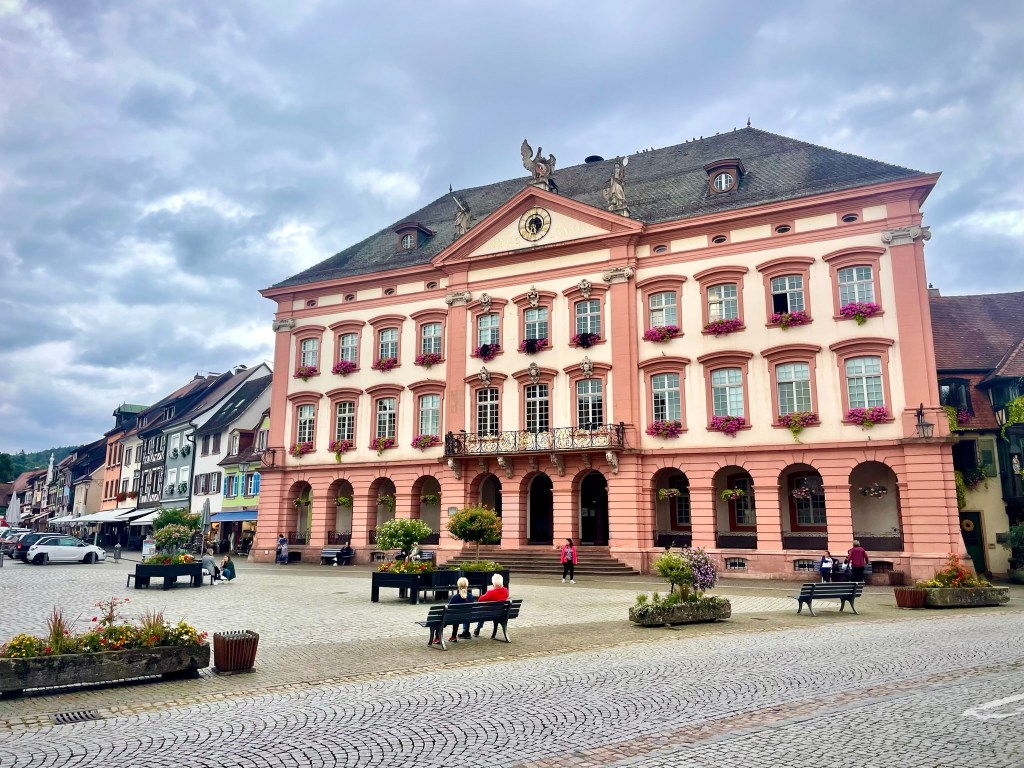

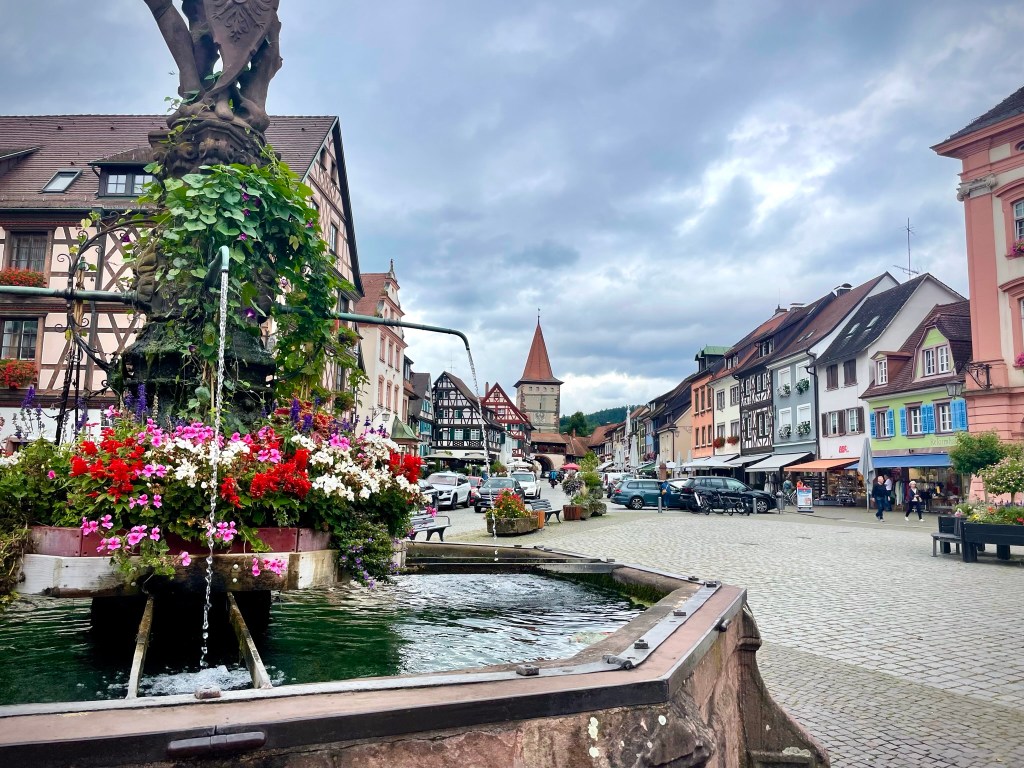
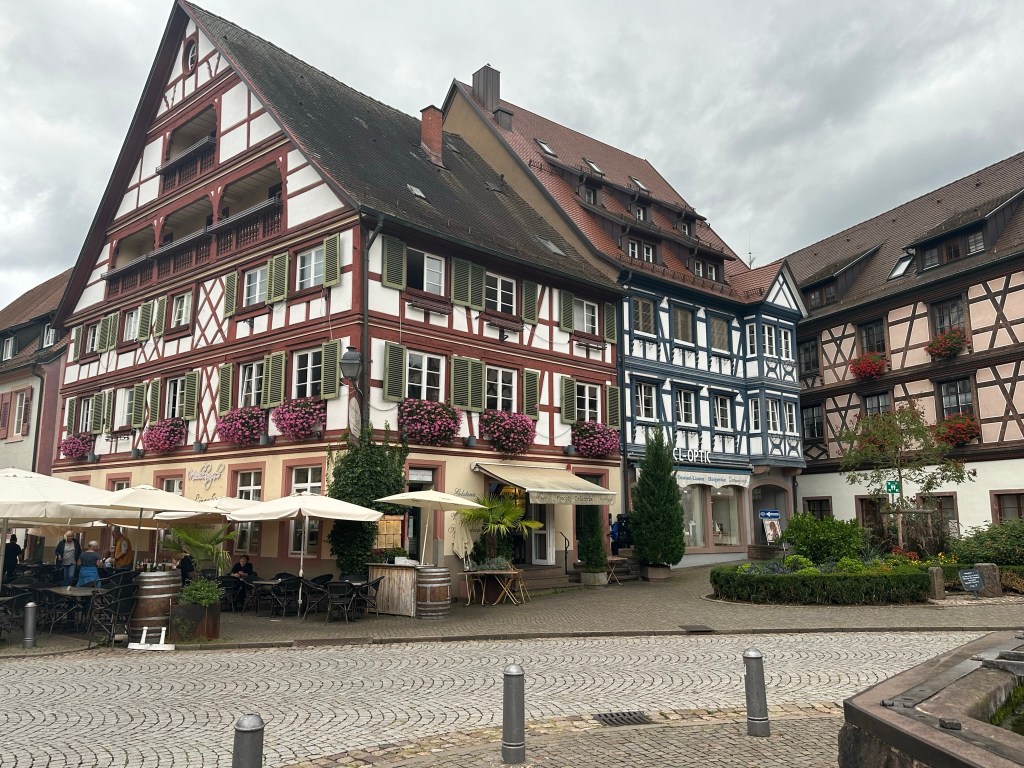
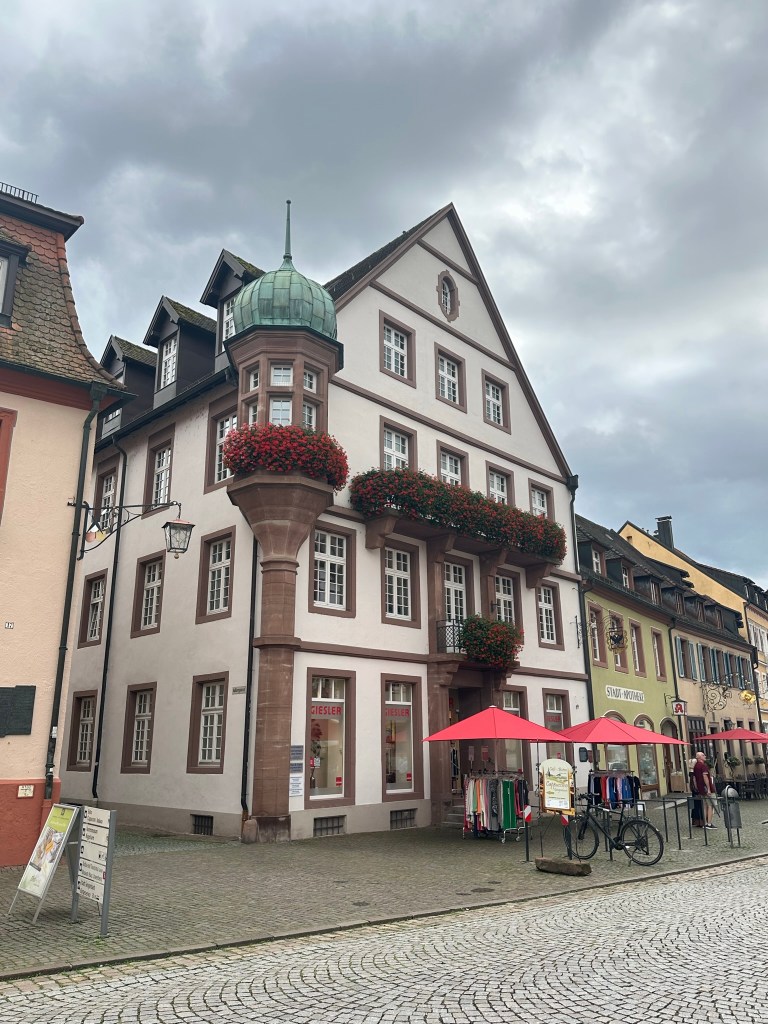


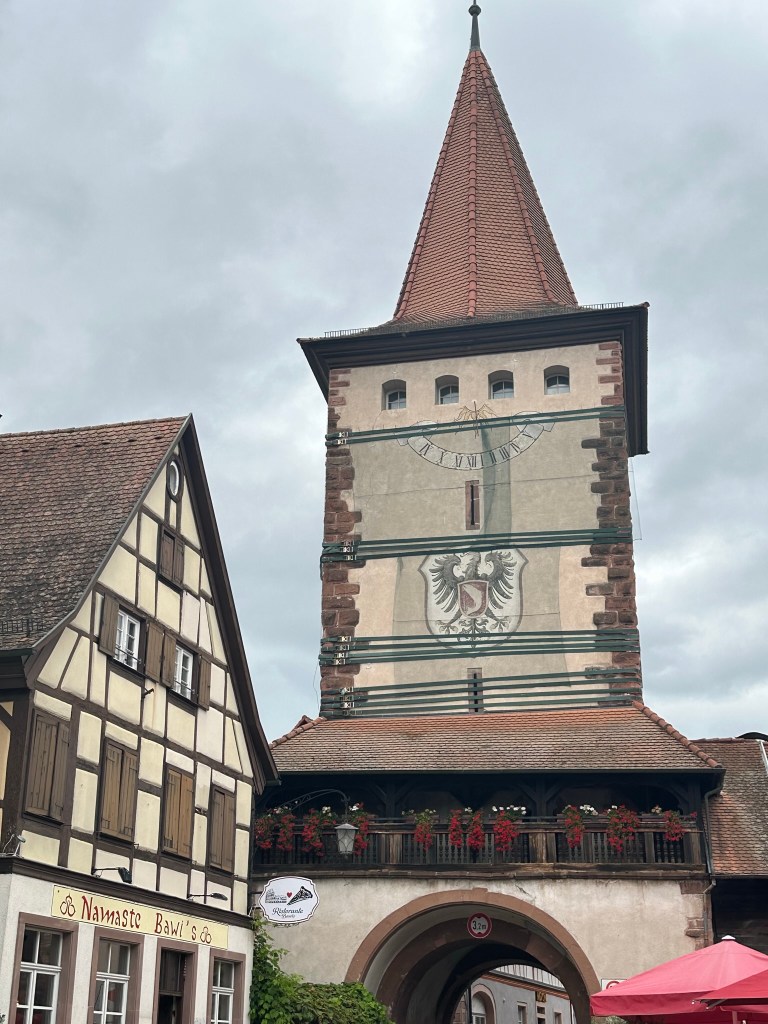
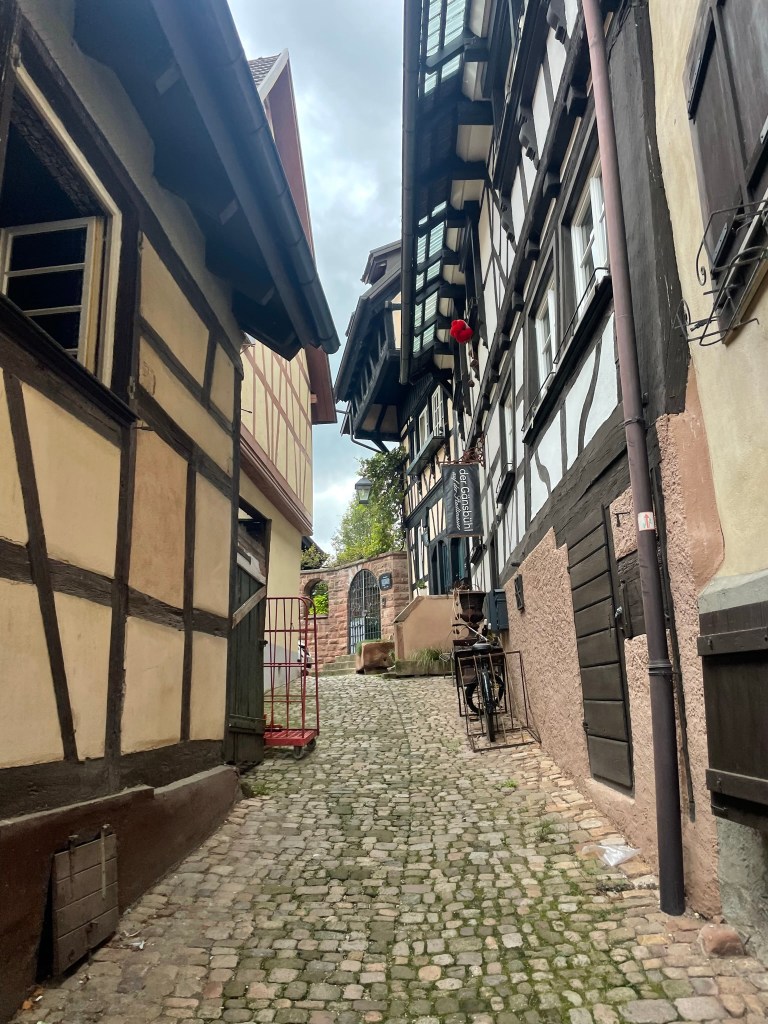
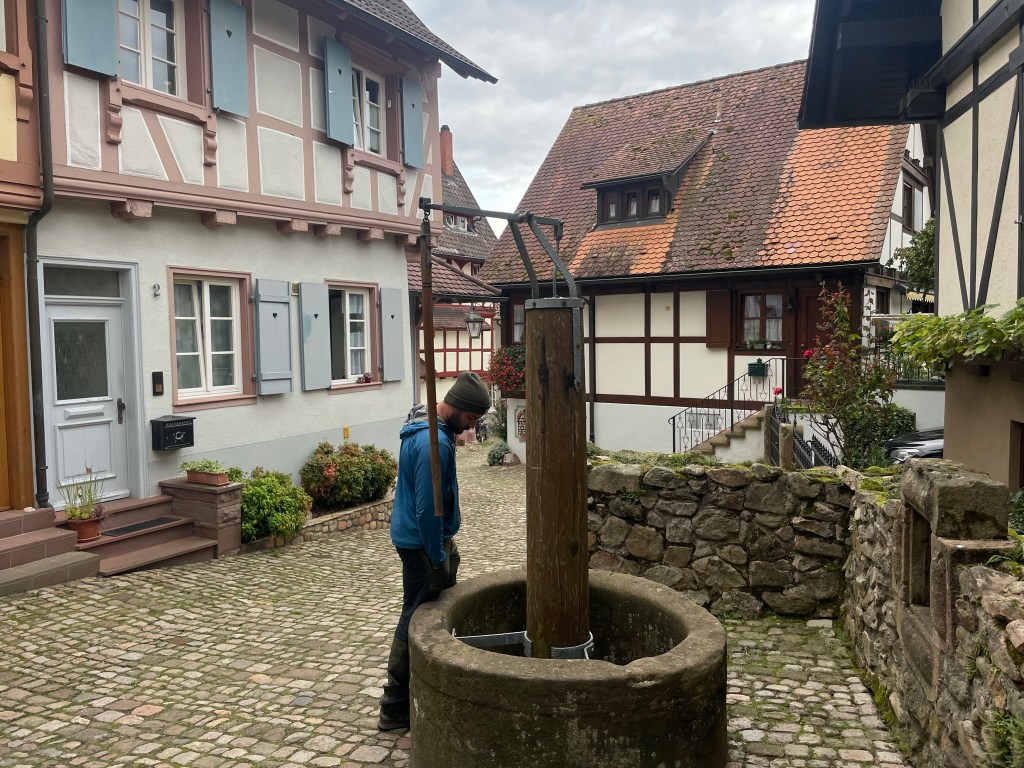

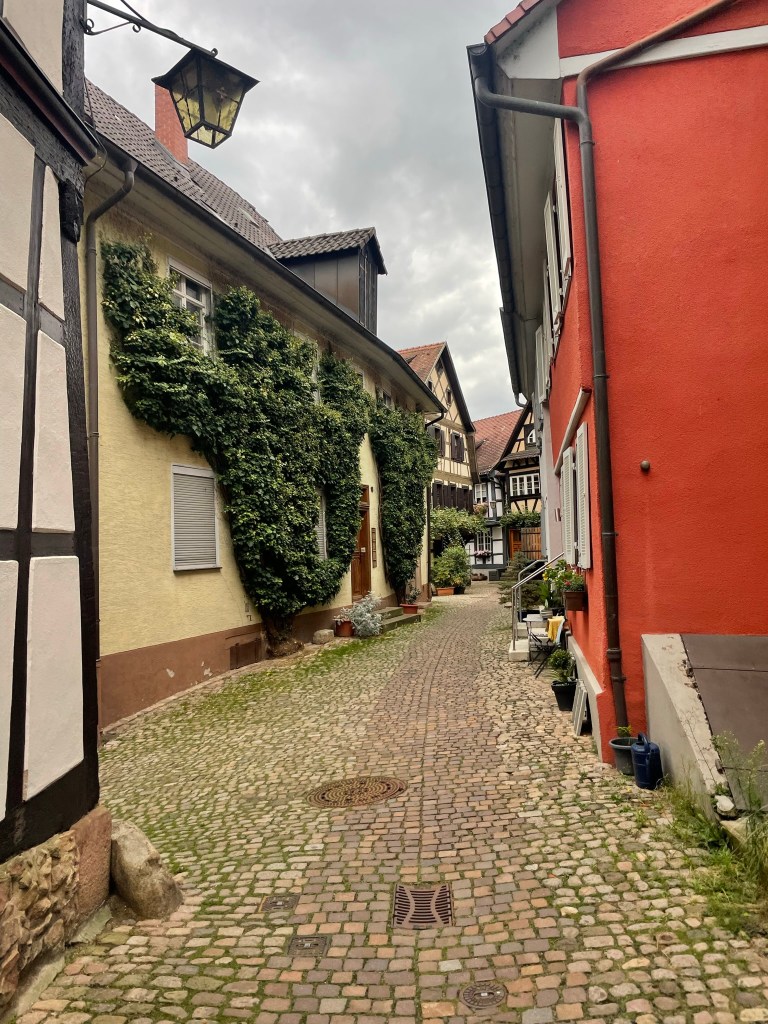


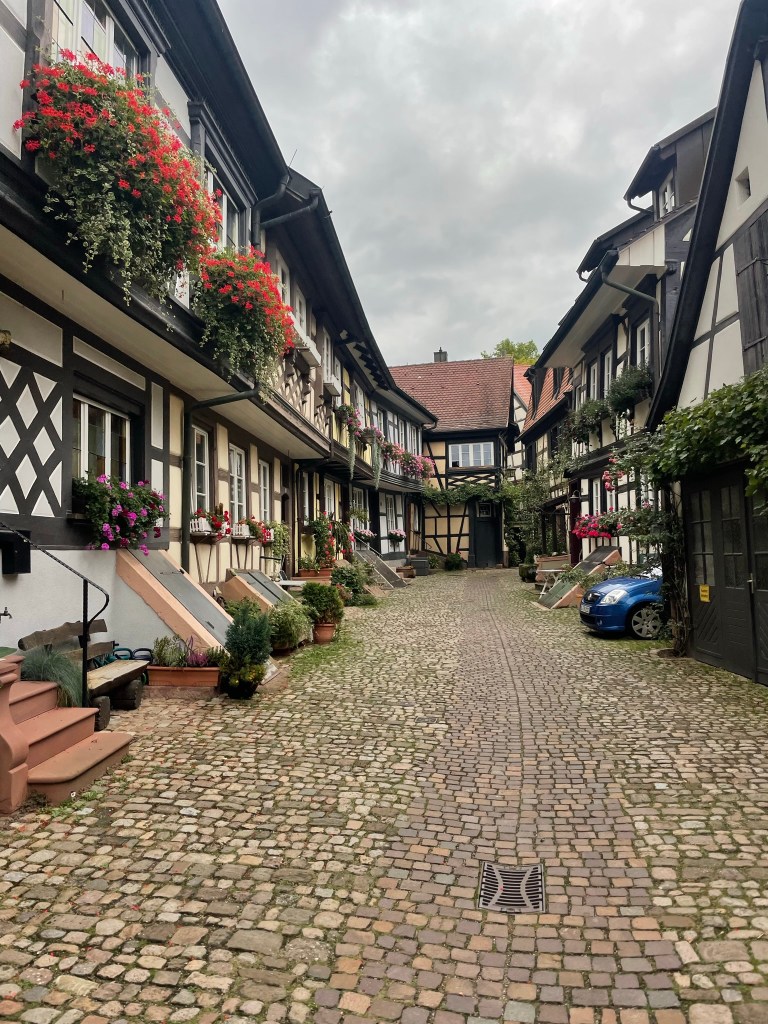
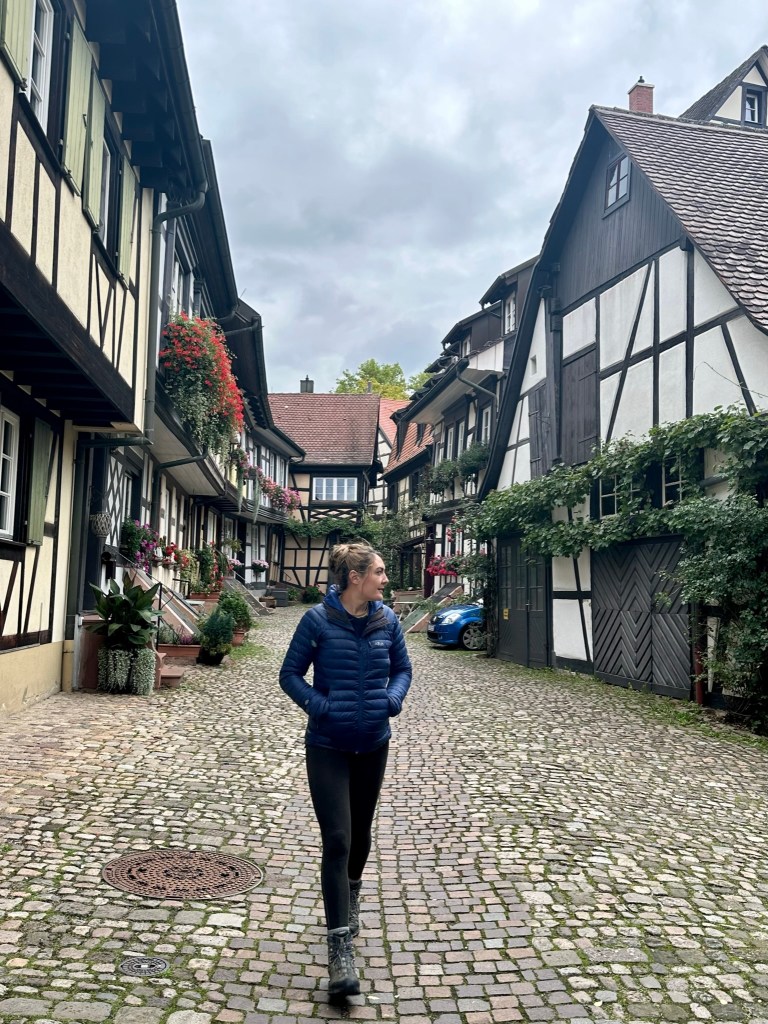
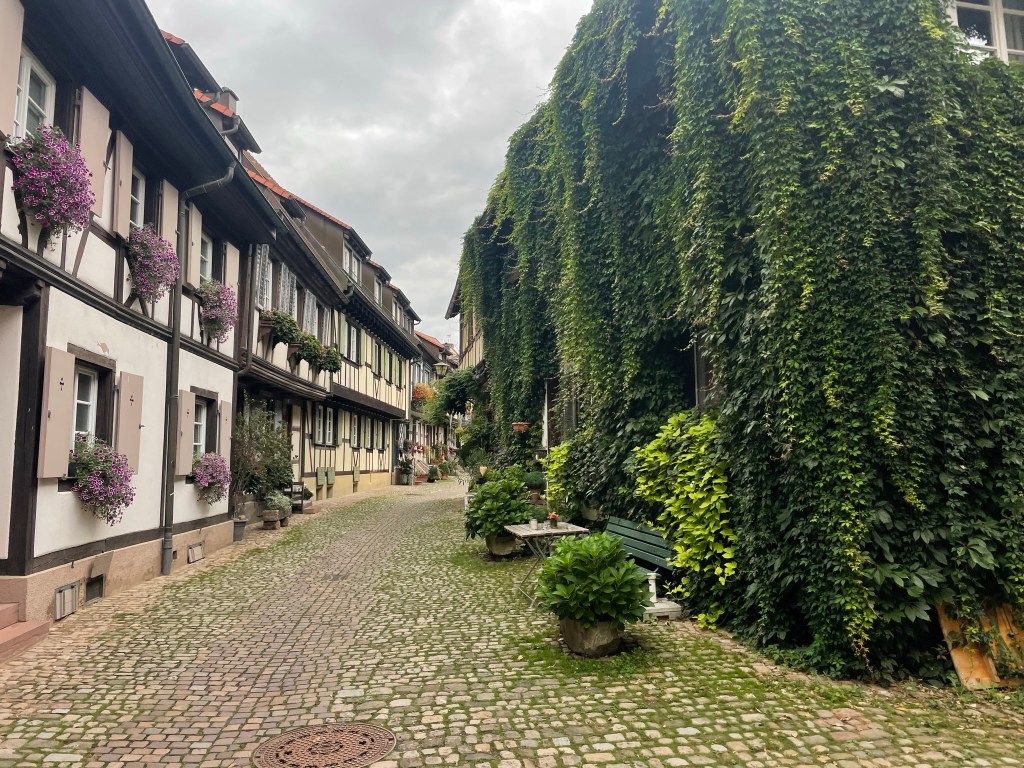
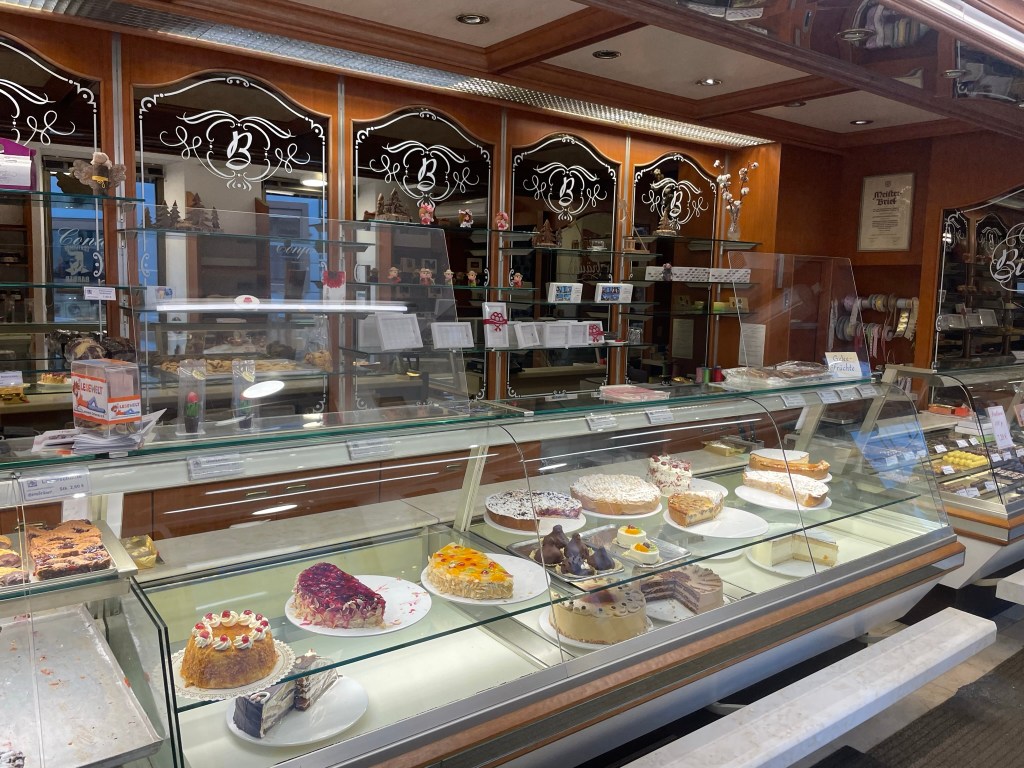
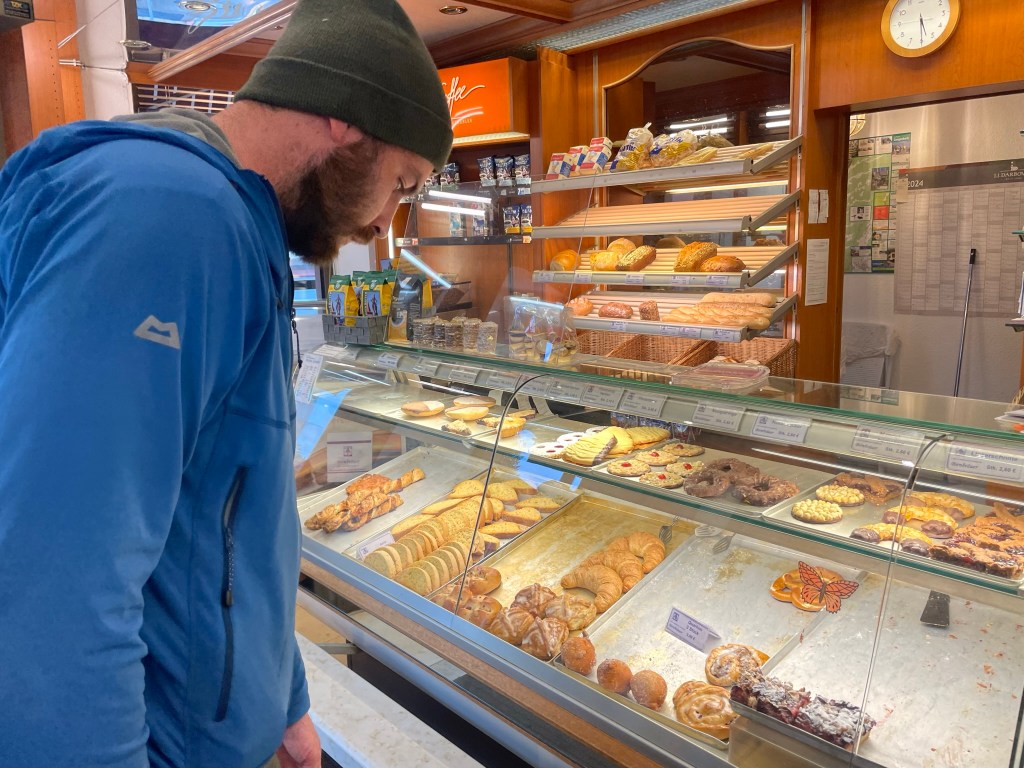
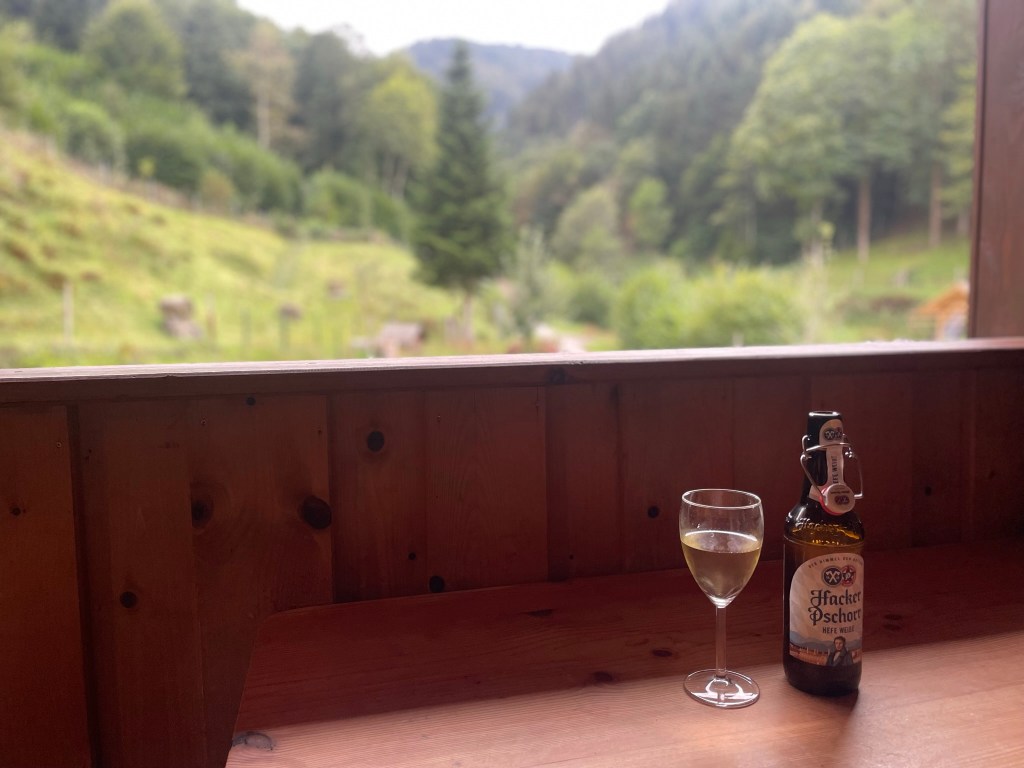
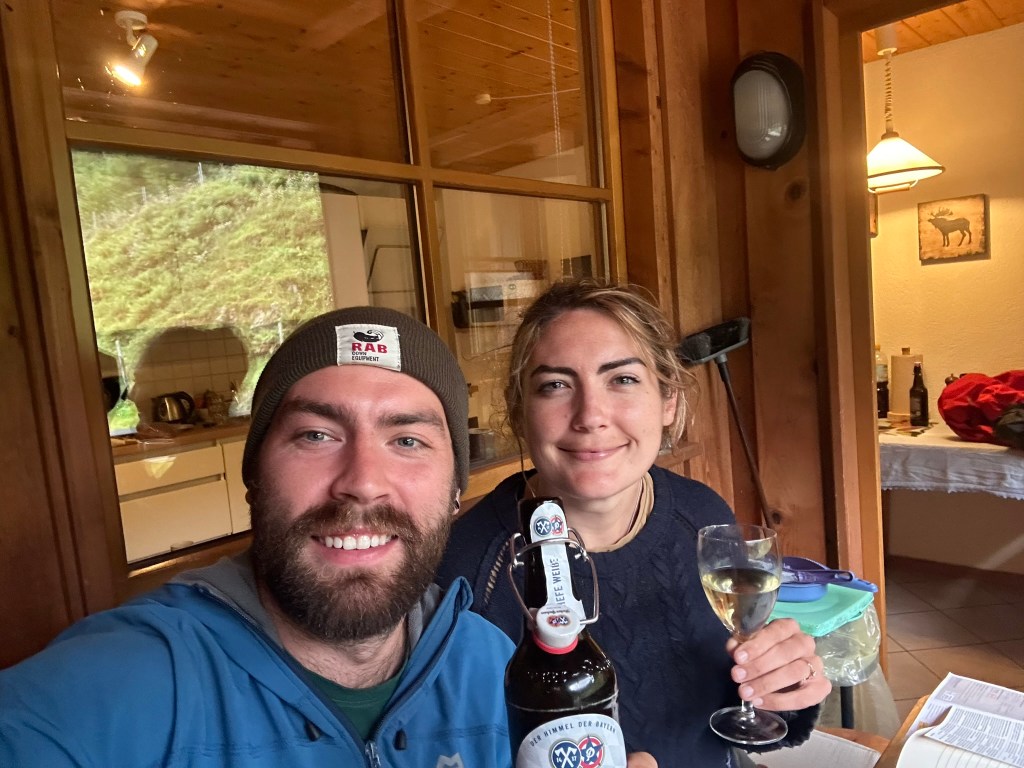
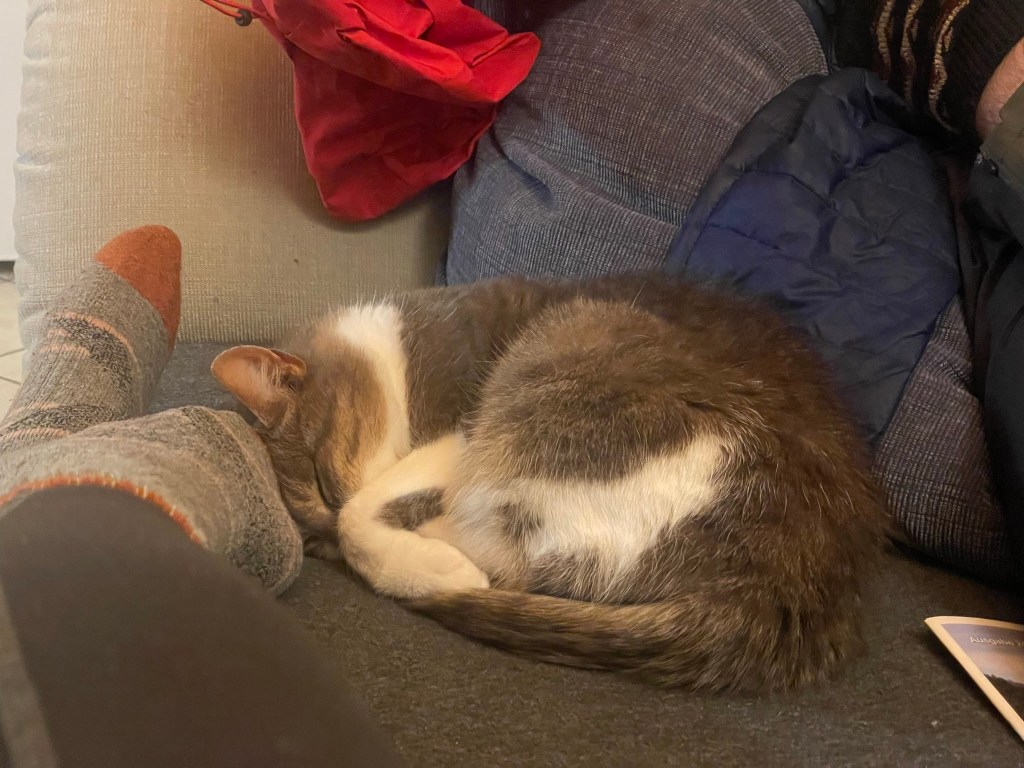


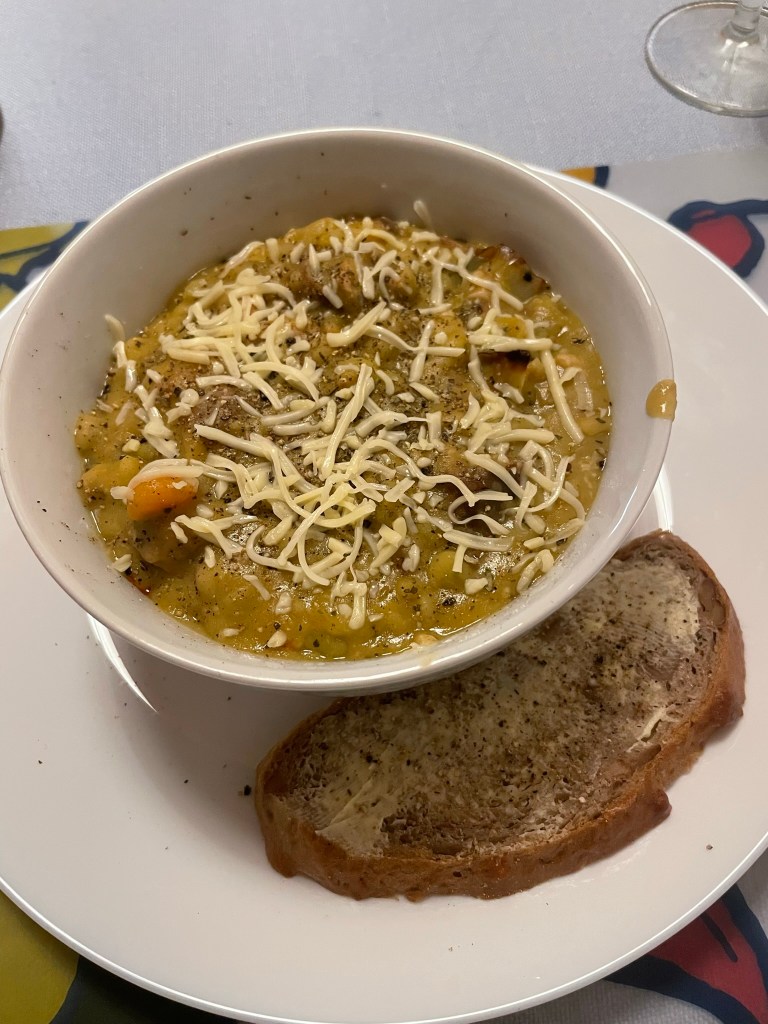
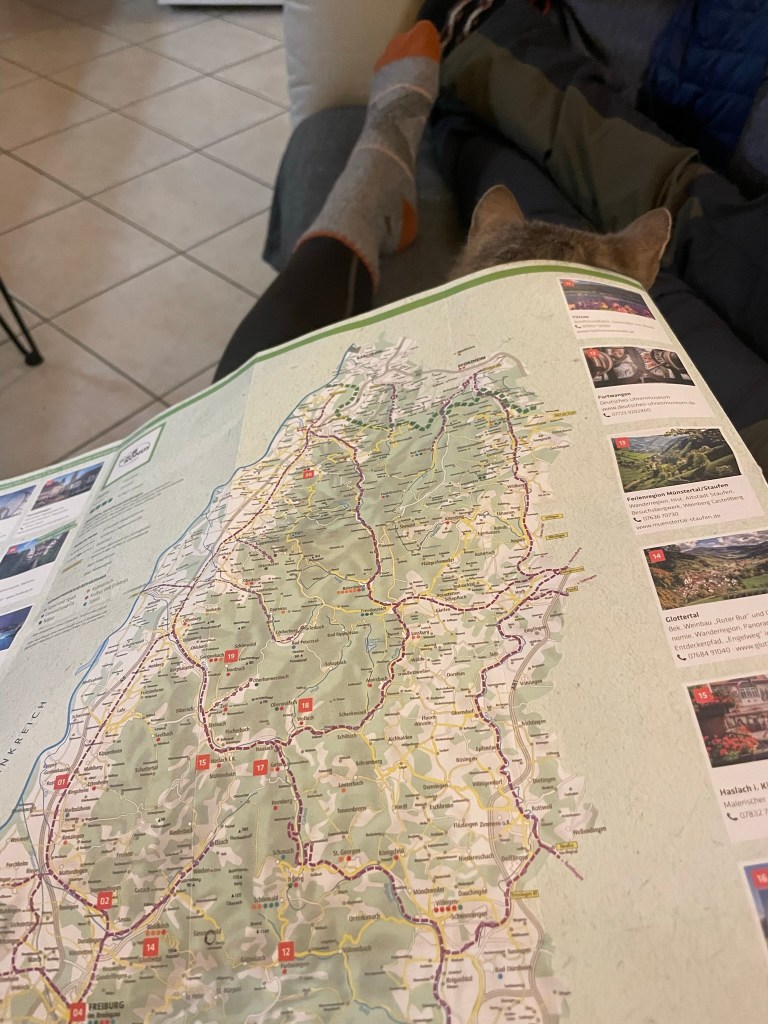
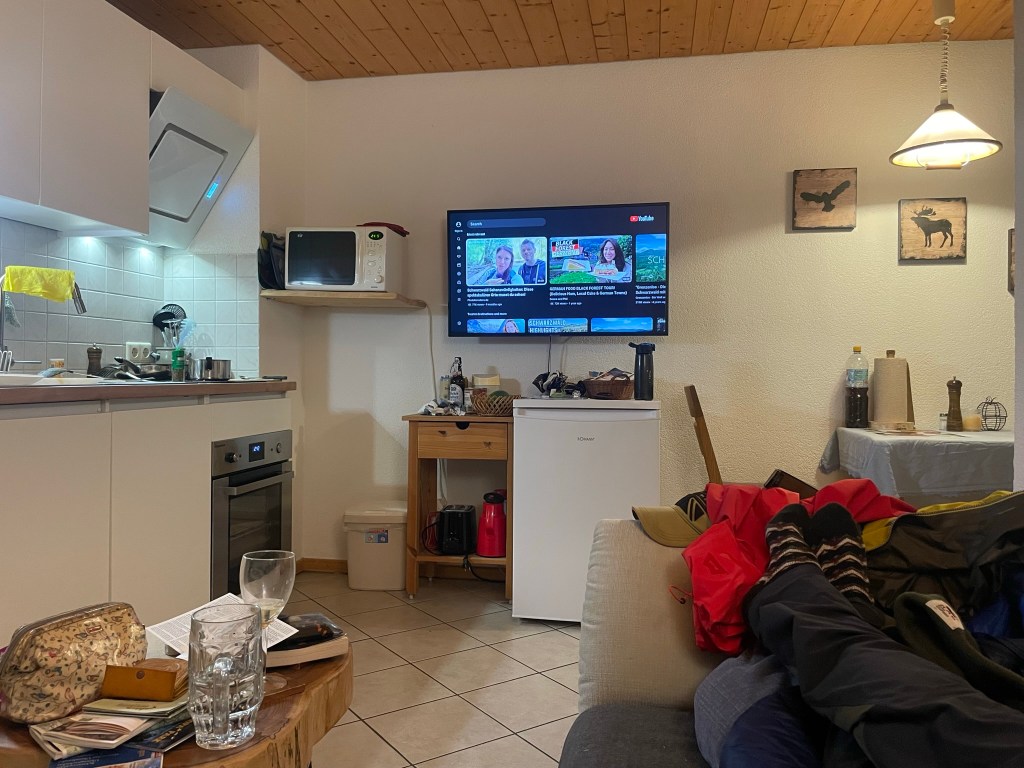


 curiousgnome