Hiking the Black Forest’s highest mountain: The Feldberg

Thursday 12th September 2024

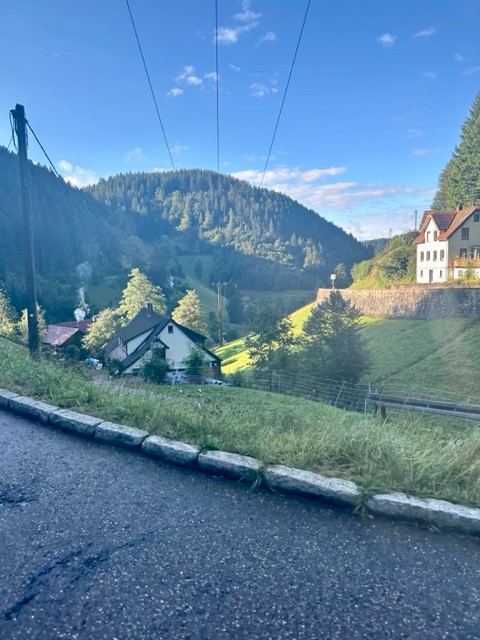
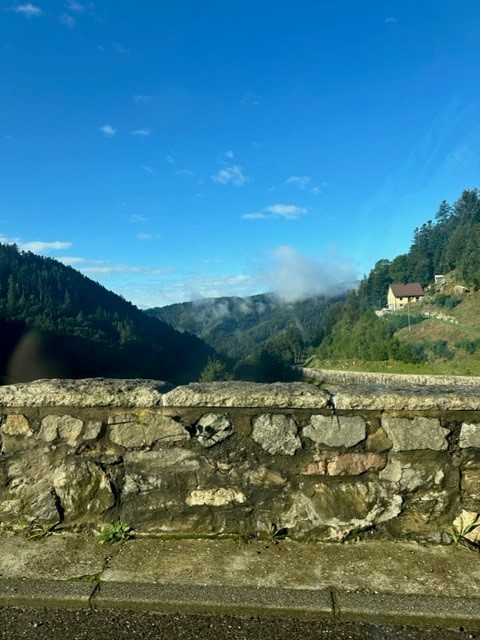
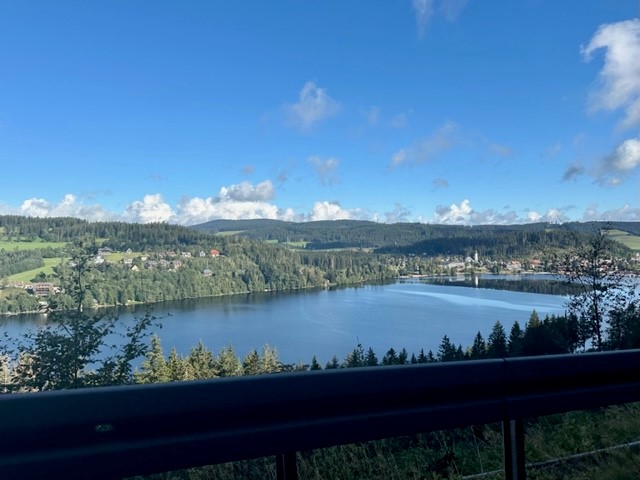
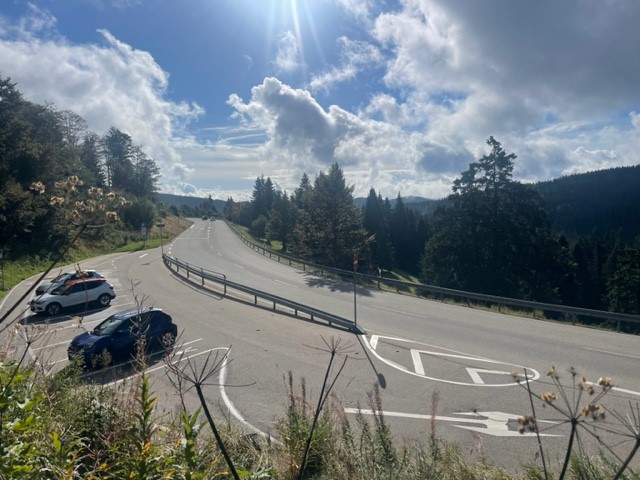
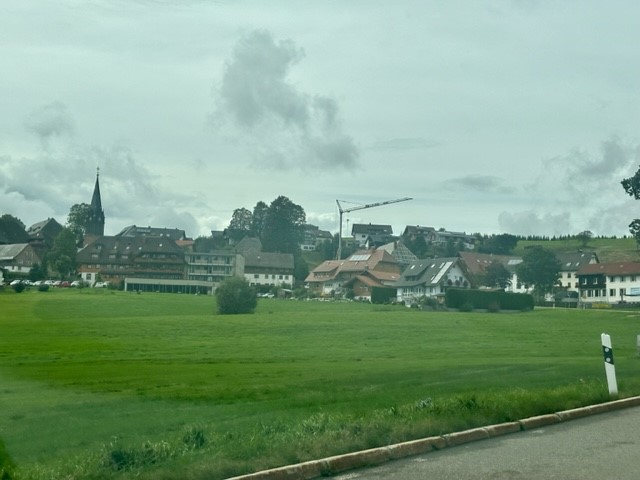
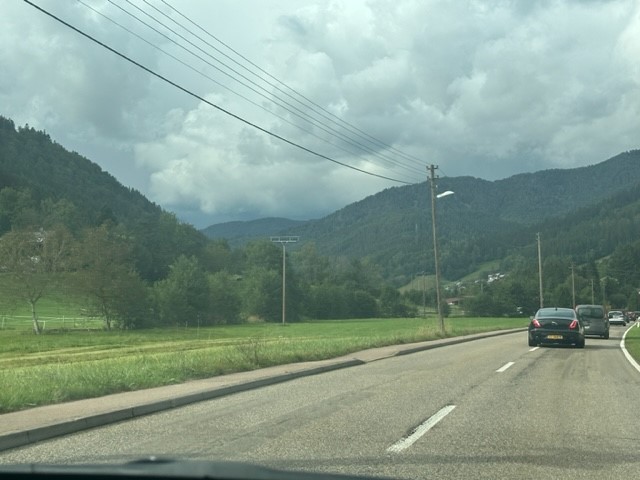
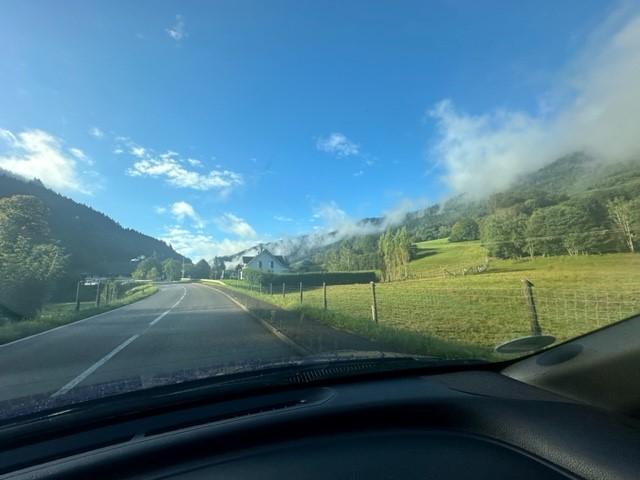
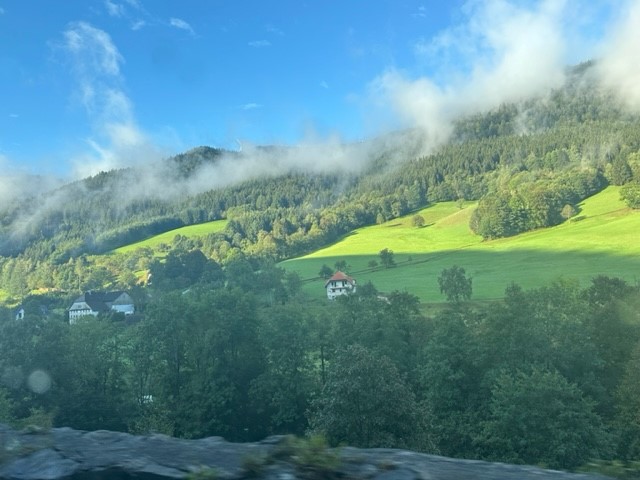
We’d kept a close eye on the forecast since arriving in Germany and today looked to be the first (and perhaps only) sunny day. Consequently we had reserved it for the main thing on our holiday to do list – a hike up Feldberg, the Black Forest’s highest mountain. We left the apartment at 8:30am and set off south in our little hire car, itching to explore the hills. Bright morning sunshine saturated the green fields that filled the valleys as we snaked through the vast landscape, lifting mist from dark, thickly forested hillsides in atmospheric veils. We navigated an unexpected road closure, passed high above the glassy surface of Lake Titisee and arrived in a small roadside car park at 10am.
The Feldbergsteig trail

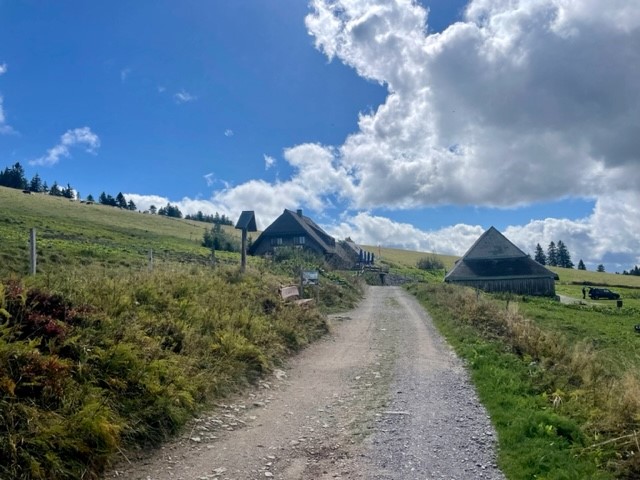
We set off uphill past a modern, sharp-angled church and found ourselves in an outdoorsey resort containing a large hotel, ski centre and cable car base. Eager to escape the tourist trap, we found an information board showing our intended route, the Feldbergsteig. We hadn’t appreciated that the trail starts at an elevation of 1,287m so it felt like cheating to say we were climbing a 1,493m peak, but nevertheless we were excited for a varied, circular hike in a new mountain range.

To the Bismarck memorial

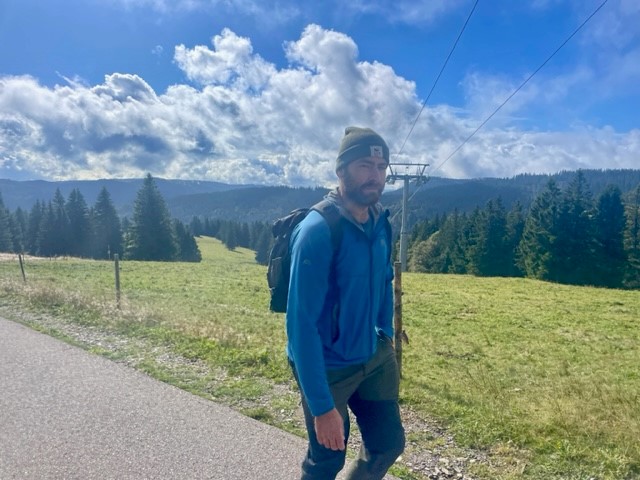
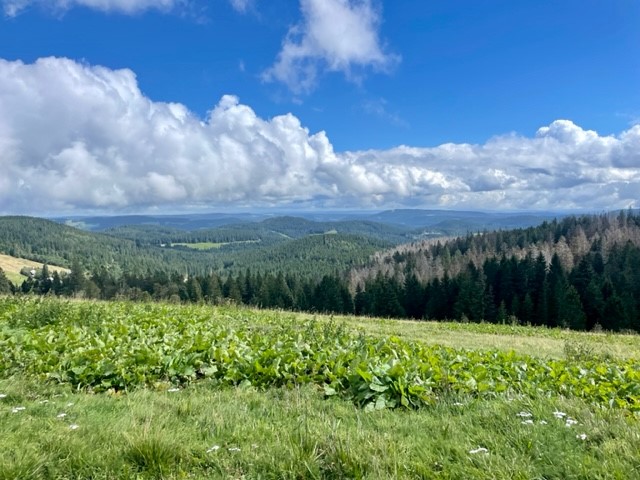
We headed northwest up a wide, gently inclining track that ran roughly parallel to the cable car line, passing several small groups who greeted us with a friendly “hallo”, and soon began soaking in the view. The surrounding yellow-green meadows melted into dark treelines formed by tall, deep green spruces, beyond which stretched endless forest spread thickly over distant, hazy blue ridges arranged in undulating layers. It was sunny, still and resoundingly quiet.

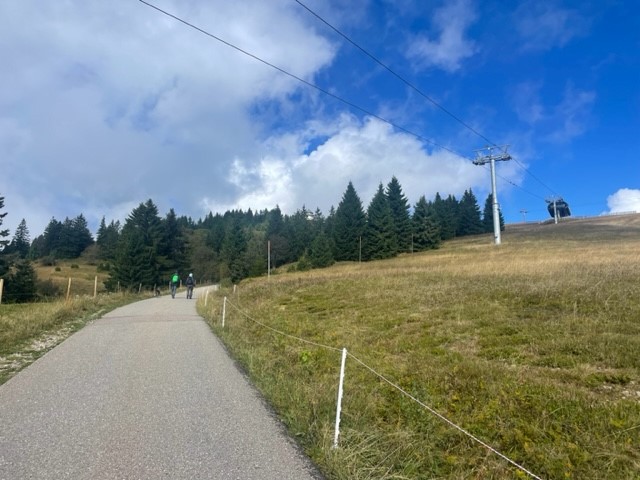
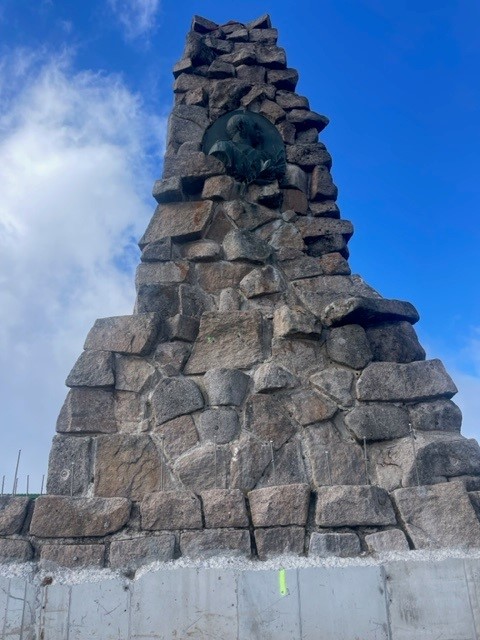
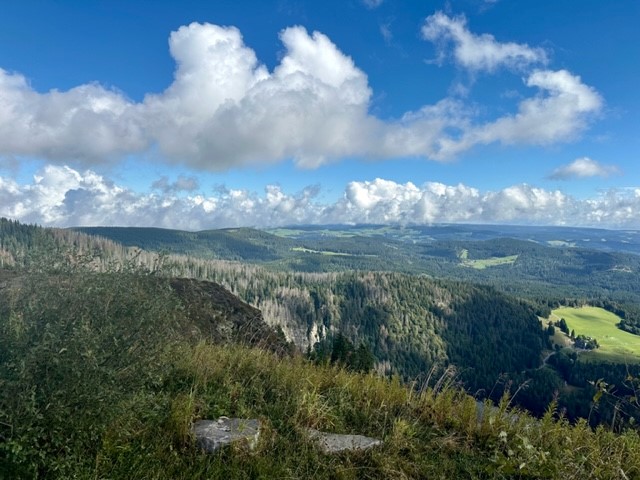
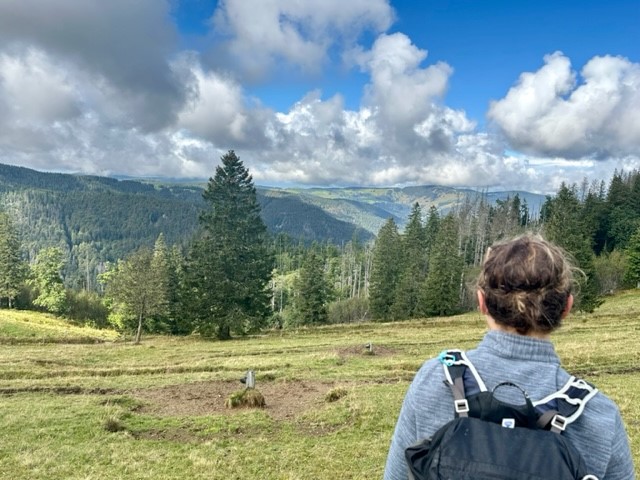
The track narrowed and took us into a verdant coppice, then continued through rugged meadows past a severe-looking concrete tower laden with satellite dishes. The first landmark we arrived at was the Bismarck memorial, a great stone pillar dedicated to the first Chancellor of the German empire. It was a wonderful viewpoint; a continuous swathe of forest covered the surrounding  hills and valleys like a dark green blanket stretching all the way to the distant horizon, broken only by occasional ragged-edged, grassy clearings.
Up Feldberg

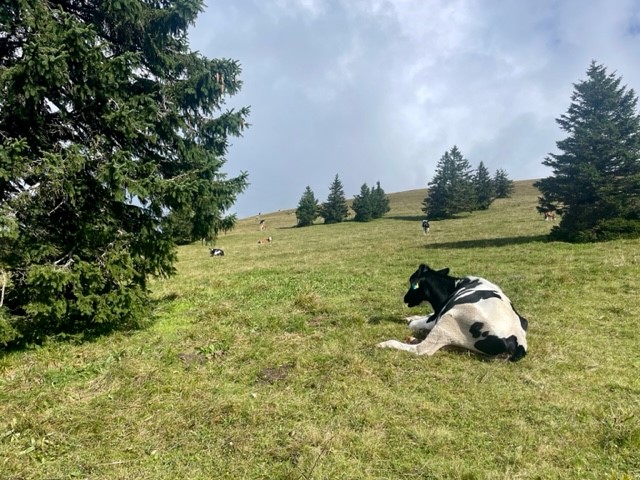
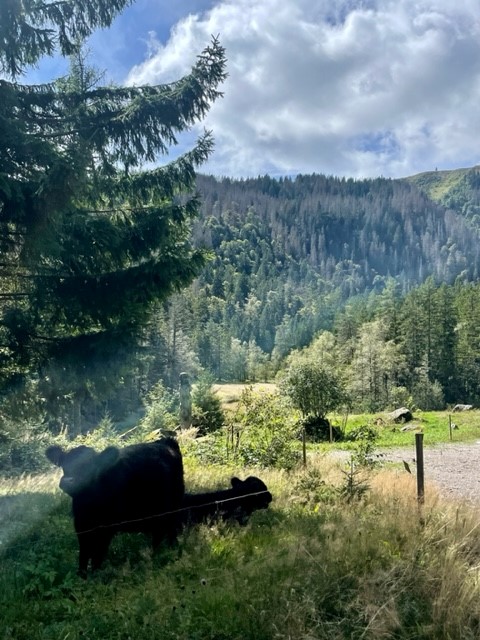
We left the memorial and headed down the side of the hill across open meadow. We went through a gate and followed a wide gravel path along the side of a ridge, which was covered in rough, yellowish grass and sloped gently downhill towards the endless forest. A strange, tinny sound tinkled across the valley and a thin curtain of fluffy cloud – which had drifted down the ridge and obscured the path ahead – cleared to reveal a small herd of Fresian cattle blocking the path. I’ve been averse to cows since getting charged by a bull a few years ago, so I gave them a wide berth and reached a gate with some relief.

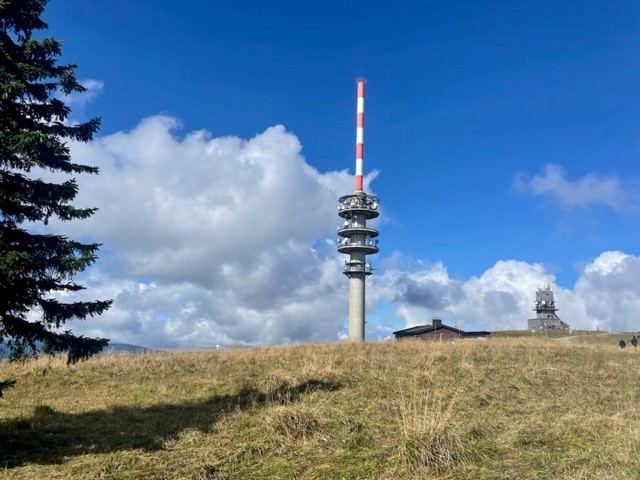
We gained the summit of Feldberg via a straight path up a gentle incline, the only drama being the loud and alarming receipt (on our phones) of Germany’s annual nationwide emergency alert test at 11am. It was a grassy and oddly subtle, unremarkable peak marked by a low, flattened mound topped with a trig point and a circle of benches, marred slightly by a tall communications tower and grim looking building a short distance away. We munched a sandwich with our backs to the tower and gazed across gently rolling, forest-carpeted hills, pondering on the ethics of saying we’d climbed a mountain.
Through field and forest

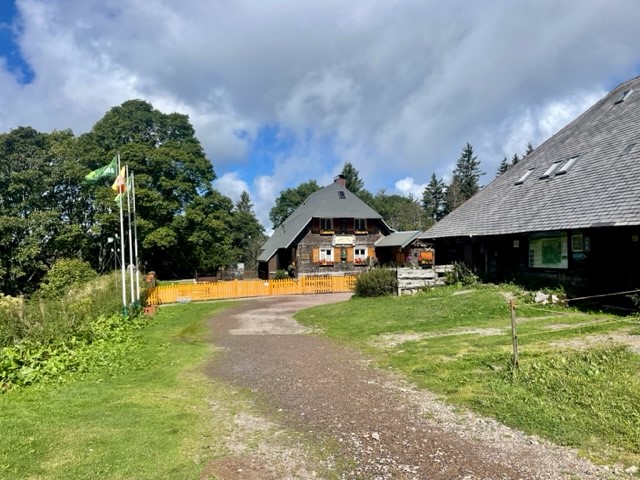
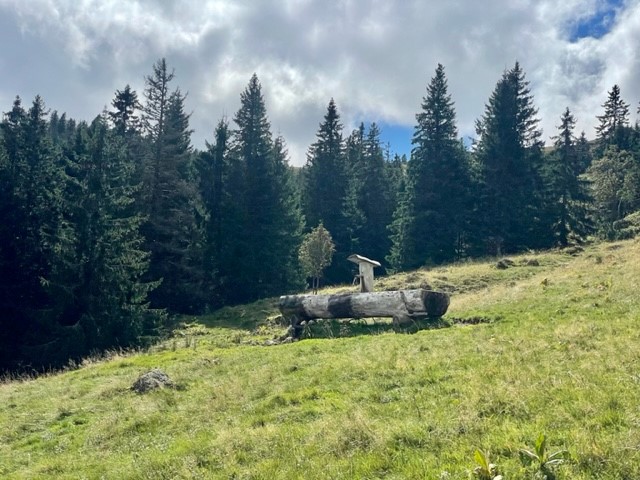
My doubts about the mountainous nature of the area were allayed once we left the summit and headed down a track that passed the ugly tower. The peaks ahead of us to the west were steeper, more undulating and completely forested compared to the gentler, grassier slopes to the east, and the horizon was formed by wide, hazy triangles of more mountain-shaped mountains. We headed downhill past a lush, green meadow dotted with fir trees and cattle, their cowbells tinkling whimsically in the breeze, and reached the first alpine hut along the route – a large, tiled, welcoming-looking building. Resisting the temptation to stop and grab a drink, we continued on the path, which flattened out and arced around Feldberg’s lower reaches in a smooth curve.
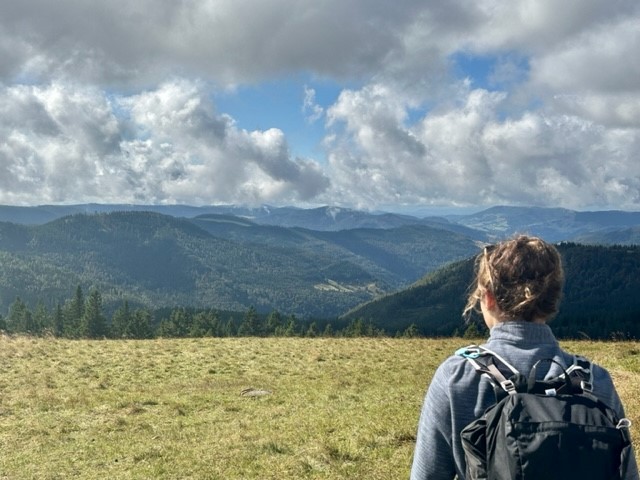
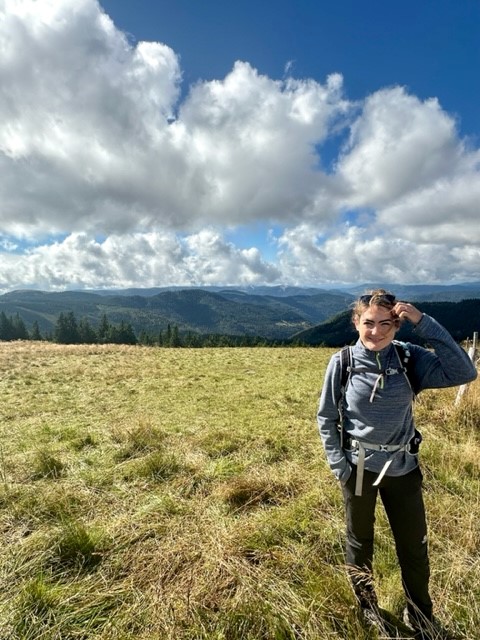
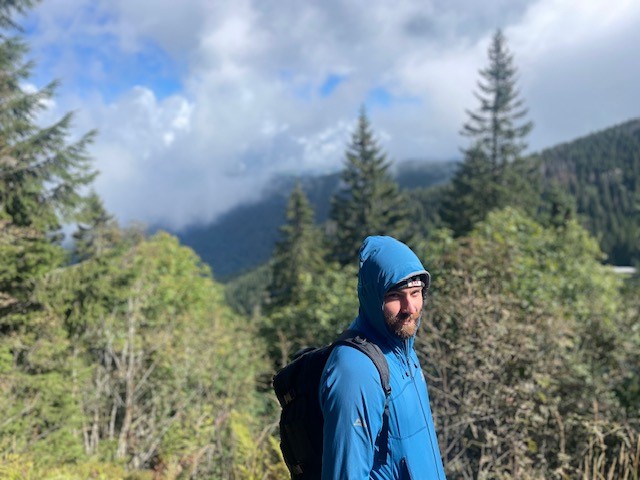
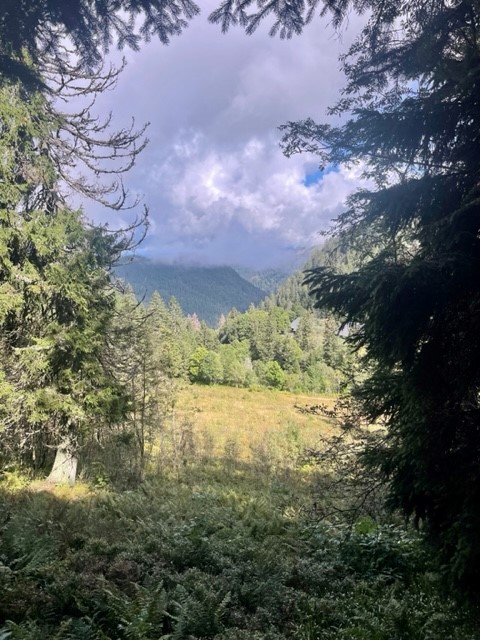
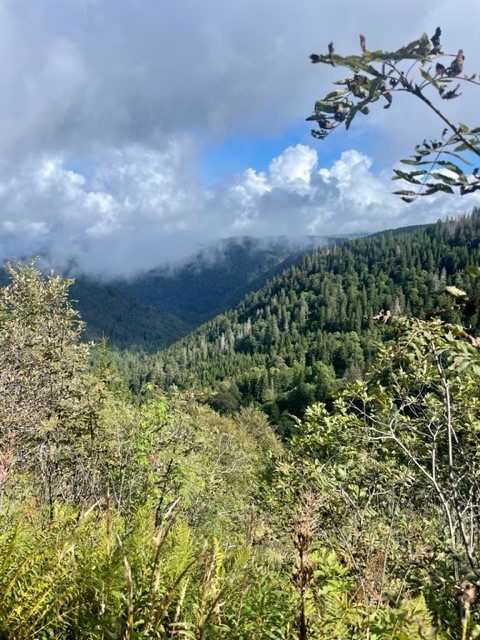
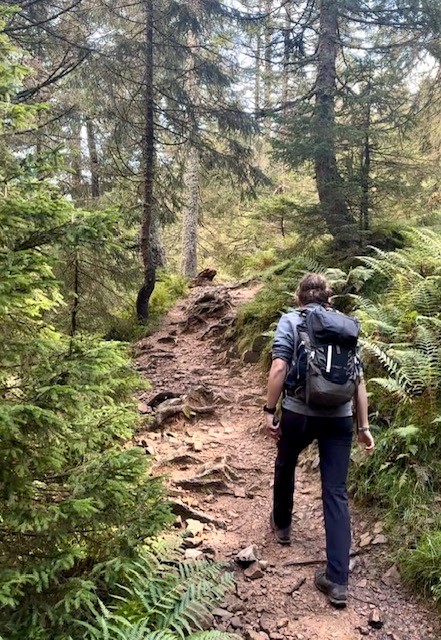
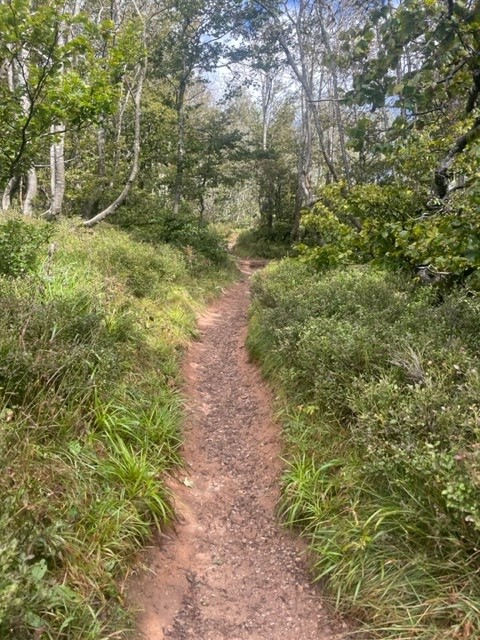
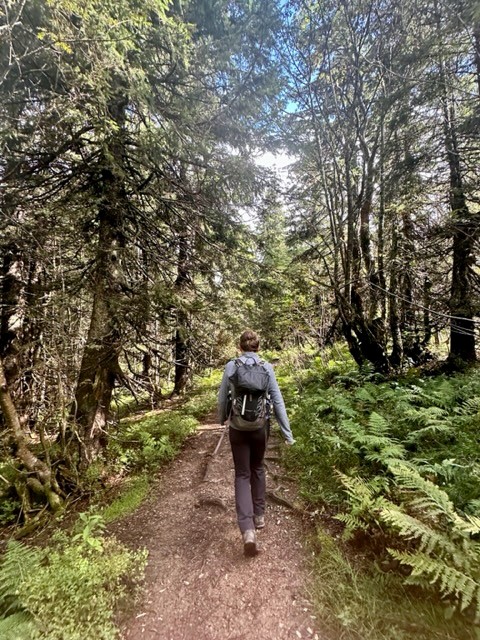
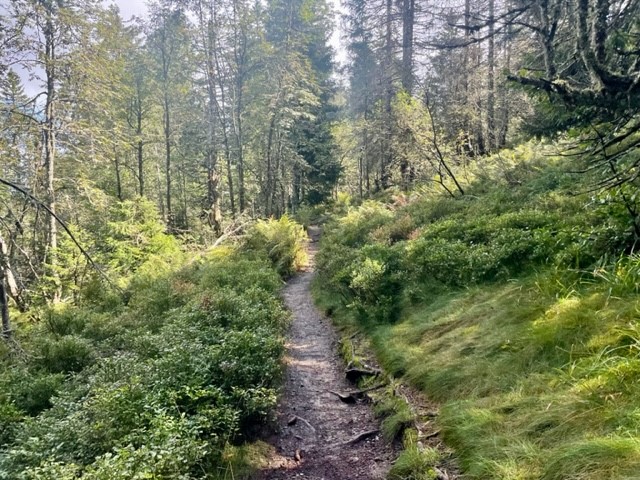
We tramped across charming, rugged meadows, then entered the thickly forested hillside to the north of Feldberg. A thousand shades of green emanated from ferns, shrubs, trees, grasses, mosses and lichens, which grew in Jurassic Park-like abundance on the steep slope. Shrubby clearings allowed us to gaze across a deep valley to opposite, equally living slopes, which were drenched in warm sunlight that slipped beneath thin clouds that drifted lackadaisically over the valley tops. It was incredibly tranquil, as if the rest of the world didn’t exist.
Past river and lake

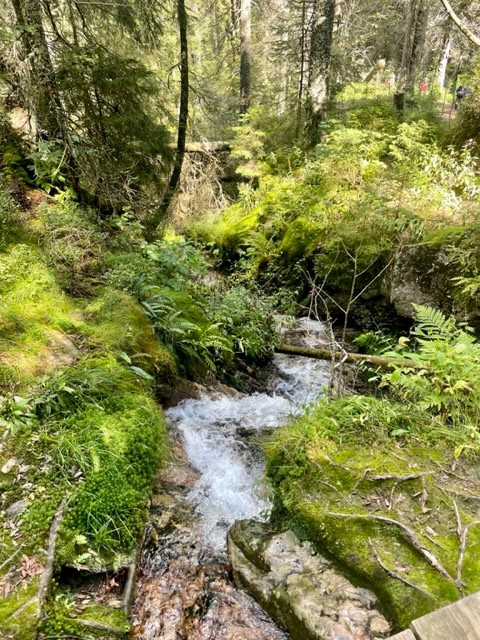
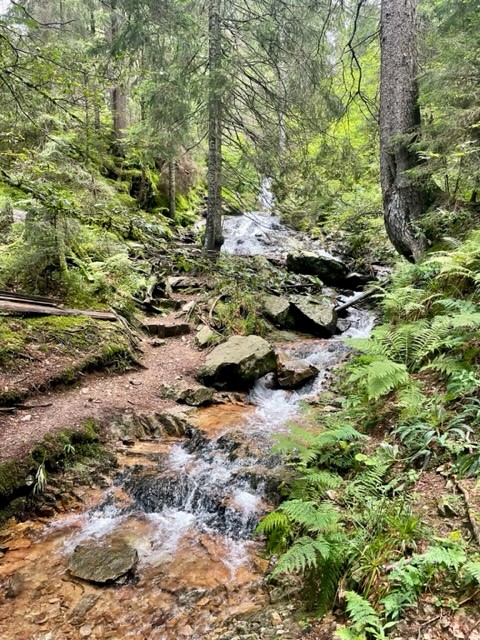
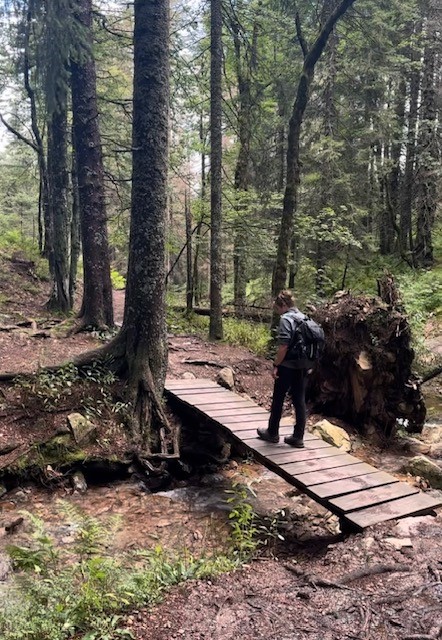
We followed the path diagonally down the hillside, crossed a marshy section via a boardwalk and found ourselves at another alpine hut. A steep climb through the forest took us up to another swathe of meadow on the east side of Feldberg’s neighbouring hill, which dropped gently down into more verdant forest. We crossed the narrow, crystal clear Sagenbach river and followed its wonderfully overgrown, mossy banks downstream, marvelling at several rocky waterfalls and – on seeing the many bridges made by fallen trunks – wondered what storm could possibly have touched this serene place.

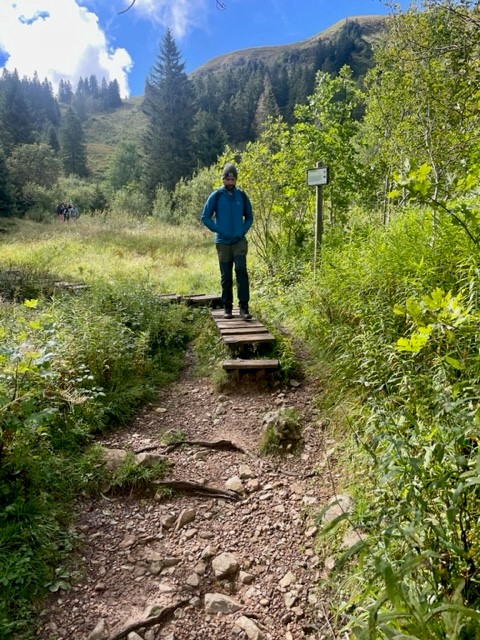
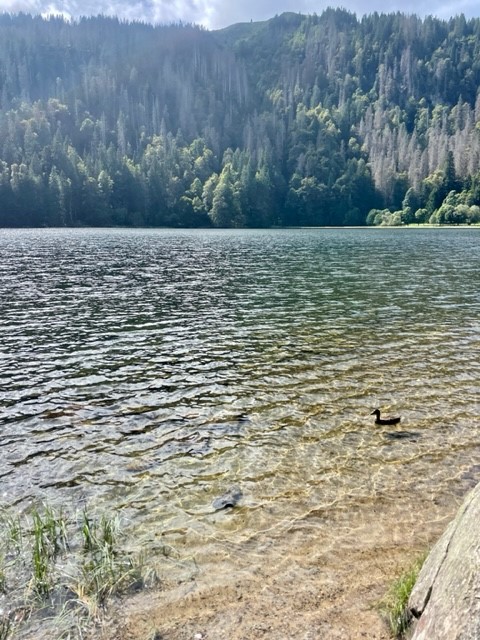
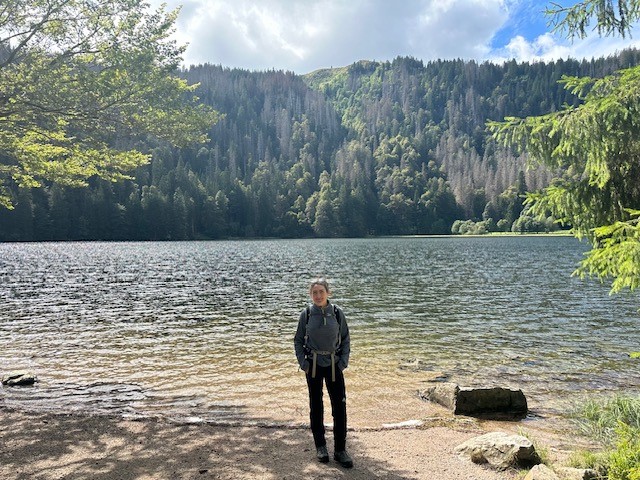
After winding down the river via bridges, steps and rocks, the route bore us east along a straight, flat track along the side of a hill between legions of tall pines. We stopped for another sandwich at a picnic table, then followed the arc of a spur to the edge of a valley clearing, where another large hut sat below us among cattle fields and meandering tributaries. We followed the treeline down into a peaceful wood, then came to the shores of the perfectly round, cwm-like Feldsee Lake. The clear, gently rippling water was surrounded on three sides by towering, green walls that looked too steep to accommodate the dense mass of huge trees that had somehow taken root. We stood on the “beach” for a moment, watching the ducks and listening to the silence, then set off on the final section of the route.

Last leg

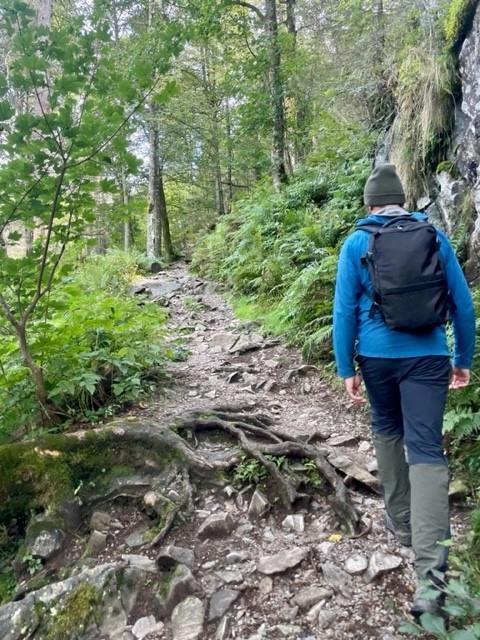
The path followed the east bank of the lake, then climbed steeply into the thicket of beech, sycamore, pine and spruce. We zigzagged up rocky sections until the ground levelled and we emerged from the trees quite suddenly at the cable car base. It felt slightly surreal to be back in the busy resort after the serenity of the hike, which had felt quite wild despite the clear, well-signposted trail. We headed straight back to the car and, after debating whether a trip to the city of Freiburg would be worth it at rush hour, left for home (via Lidl, of course).
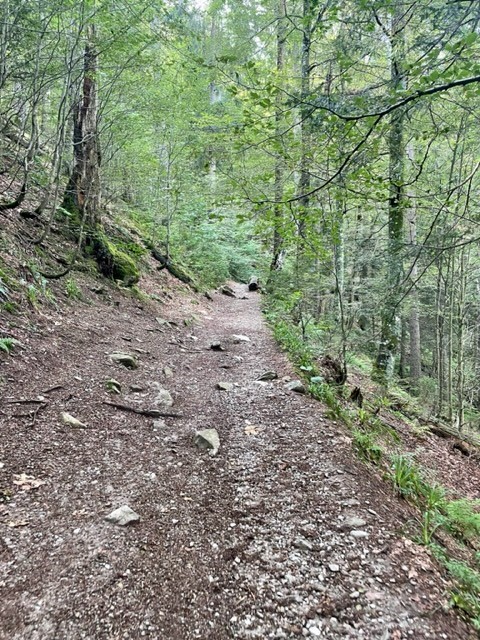
To summarise, it had been a lovely, varied hike with beautiful scenery that made us feel truly immersed in the Black Forest. The trail was very easy to follow (we barely used my guidebook map) and I just wish it had been longer than 8.5 miles. We came away feeling very refreshed, happy with a good day exploring a new mountain range.

Evening

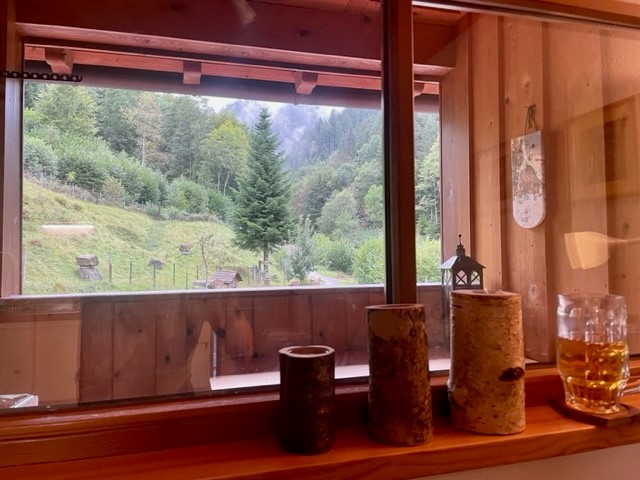
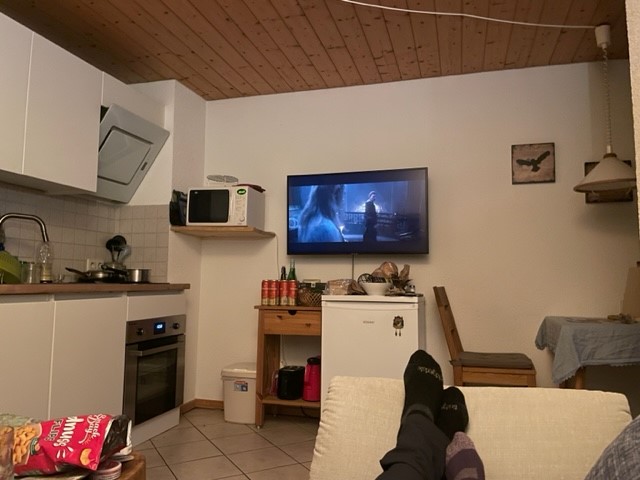
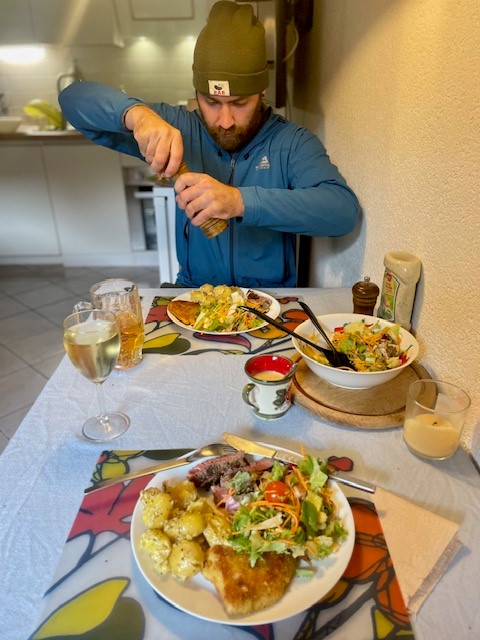
We got back at 4:30pm and spent the evening relaxing on the balcony, drinking wine/beer, watching Rings of Power on Netflix and playing with Kraut the cat. Ryan cooked a lovely dinner of homemade schnitzel with steak, salad and potatoes and I came up with a rough plan for another hike the next day, this time starting from our apartment. Three days in and we felt very at home in the Black Forest.

Girona, Spain: Forest Hike to Castell de Sant Miquel, Home

10 July 2022

It was the final day of our little holiday and we were determined not to waste it. With the flight home not being until 8pm, we asked our AirBnB host if we could store our small luggage bag in the hallway until the afternoon and she kindly agreed. We left about 10am for Castell De Sant Miquel, a tower on a hilltop in the middle of a vast, rolling forest. Getting there would involve a 1.5 hour hike that had been recommended to us by one of the people at the bike shop the day before, starting from the middle of Old Town.

Ascent up Les Gavarres

We walked through the quaint streets (I’m nearly done banging on about them), through the castle-like cathedral area, across a narrow dried-up river channel near the pretty John Lennon gardens and east out of the city. Within just a few minutes it felt as if we were in a rural village, walking along a quiet road lined with rustic houses which soon turned to dry, hedge-lined arable fields. After about a mile and a half we reached the edge of the Gavarres massif, a vast range of relatively low mountains covered in a dense forest of oaks, pines and other lush green vegetation, and we took a well-signposted gravel path into the trees, which provided some respite from the relentless sun.

The hike up to the tower was hot but enjoyable and it felt very exotic, given our unfamiliarity with non-British forests. Noisy cicadas filled the air with a constant, croaky hum and I was amazed by how the trees seemed to thrive despite the dry, dusty conditions. We passed a herd of goats rambling casually up a track after a goatherd, stopping to chew on leaves with their tinny goat bells tinkling. The winding, hilly route passed a couple of interesting features, including a tall double column sculpture and the ruins of medieval stone farmhouses with information boards in several languages, and at a clearing in the trees we stopped to look over the distant, sprawling red rooves of Girona backed by layers of hazy blue mountains in the Guilleries massif.

Castell de Sant Miquel

As we approached the top of the hill the gravel path turned to bare, slabby, rooty granite, then levelled out to a flattish plateau. We walked up to the castell, which sits on one of the many summits of the Gavarres. It appeared suddenly through the trees, seemingly out of nowhere, a perfectly square, three-storey stone tower with a set of exterior metal stairs leading up to the entrance on the first floor. Behind it stood the semi-intact remains of a long stone chapel, a section of old wall and a lonely information board that told us in vague terms that the tower was built in 1848 on the remains of a medieval hermitage (religious retreat). As I write this I’m surprised at how little of the history seems to have been recorded – Google offers no substantial results.

We wandered into the crumbled open end of the chapel and along to the intact-rooved end, where a large, rough-edged hole served as a window that perfectly framed the far-reaching views over rolling forest and way out to a smooth, distant sea. A small altar stood looking a little sad in the middle, and the place exuded lonely, slightly mysterious simplicity. We went back to the tower, climbed the steps and popped out on the flat, square roof.

We were prepared for the incredible views because the structures stand in a clearing that allowed us to catch glimpses of distant mountains above the treetops, but we weren’t quite prepared for the overall effect of the totally unimpeded 360 degree panorama that hit us at the top. We looked down on verdant, almost rainforest-like woodland that rolled over undulating hills all around, stretching way out to the south and east in deep green swathes. This gave way to a short length of smooth blue sea that sat in a wide valley between gently rising mountains, which – apart from that little bit of coast – stretched around us the entire length of the horizon in a long, hazy blue chain. Expanses of butter-coloured farmland and little towns formed a mosaic on flat plains and in valleys, and Girona looked strangely small tucked below the highest peaks. It was breathtaking, and so novel compared to the UK landscapes we’re used to.

Hike back to Girona

We walked around the top of the tower, taking it all in, then climbed down the metal stairs and headed back into the trees the way we came. After the rooty granite “steps” we took a right fork to make the route circular, then tramped down a wide, dusty dirt track lined with conifers and birches. After about a mile we crossed a main road and walked back to Girona along a quiet, rolling country lane, past rugged fields, large, spread-out rural houses and lots of trees occupying all the in-between bits of land that hadn’t been otherwise claimed.

As we neared the city the houses became more packed in but still large, spacious and quite plush-looking. This was clearly a well-off suburb, with clean streets, bright whitewashed walls, lovely views over the distant mountains and a startling number of private pools. We walked down the hill to the medieval area around the cathedral, glad to have squeezed such a lovely walk into our last day, and treated ourselves to a refreshing smoothie from a little shop near the basilica, which we drank overlooking the river.

Homeward bound

We reluctantly conceded that the holiday was over and walked the cobbles of Old Town one last time to collect our bag from the AirBnb. After saying goodbye to our host we squeezed into the tiny lift, went through the narrow passageway onto Placa del Raims, crossed the bridge and returned to the bus station through the long, straight, less quaint streets to the west of the river. We grabbed drinks and snacks from a tiny convenience store and waited in the air conditioned station for the bus, which was due about 3.30pm. Time dragged, partly due to the our unnecessary earliness and partly due to the Sunday afternoon quietness of the large station plaza, which was beautifully sunny yet eerily quiet and empty.

We were lucky to board when we did as the bus driver told us it was cash only, which would have left us stuck if the very kind American in front of us (who we’d already spoken to at the station) hadn’t insisted on paying our fares. As the bus took us out of the city we gazed wistfully over the long streets hectic with signs, overhead cables and shop shutters, then over dusty fields and rustic farms before reaching the airport. We hung around outside for a while, then hung around inside for a while, then finally went through security and reached the great, sprawling duty free / lounge / restaurant bit, which had huge glass windows looking out across hazy blue mountains. It was a nice, small airport, which was a huge relief given that our flight was delayed by an hour. We had a Burger King (Vegan Whopper – delicious) on a small terrace, lamented the end of our little holiday and had an uneventful flight back to Bournemouth.

Girona: 9/10 would recommend. Minus one point due to the citywide absence of triangular sandwiches, but that’s a personal thing.

Scotland, Feb ’22: Travelling up, Braemar

Friday 4 February

Travelling up

It took our 12-day Scotland trip a long time to come around but when it did, it was spectacular. We drove up on Thursday night and stayed in a quiet spot we’d used before about an hour over the Scottish border, near a village called Abingdon, 7.5 hours and 410 miles later – luckily we had a clear run.

We’d made a vague plan to head up the west coast to Skye via Loch Lomond, Glen Coe and Fort William, then east to the Cairngorms. When we checked the weather in the morning it looked dire in the west and marginally less dire in the east, so we made the last minute decision to go to the Cairngorms first. We drove for an hour and a half up to Perth, through bright sunshine and heavy snow, noticing the welcome abundance of wind turbines and large swathes of semi-wild agricultural land. We’d washed and waxed the van the weekend before but we needn’t have bothered, as it was already caked in road salt from gritters like Carrie Bradthaw, which we passed on the way.

Perth to the Cairngorms

Perth is an attractive, old, very small city, which has tall, elegant buildings of reddish-yellow sandstone, plenty of greenery and the wide river Tay running through. We parked in the central car park and walked the short distance to Wetherspoons for a cheap brunch, then wandered to Mountain Warehouse to pick up some trousers for Ryan, who’d managed to lose a pair at home somewhere.

From Perth we drove for another hour and a half to the charming village of Braemar, nestled in the heart of the Cairngorms. Farmland grew upwards into the rugged, steep rolling hills of the national park, and green fields became unboundaried patchworks of yellow grass, brown heather and dark green forest. As we drove along the smooth, wide road that snakes between the lofty slopes, we spotted a herd of about 30 young, antlered red deer. I was delighted, and we pulled over to get some photos before continuing on to Braemar.

Braemar & Creag Choinnich

We arrived in the small central car park just before 4pm and after a quick chat with a friendly local, who was selling a campervan and keen to show us some pictures from his recent trip to Skye, we decided to squeeze in a short walk recommended by our Wild Guide book. Creag Choinnich is a small (by Scottish standards – 538m), perfectly round hill overlooking the village from its north east side, accessed by a well-trodden footpath through what I consider a classic Caledonian forest. Dominated by tall, fragrant pines blanketed by clinging lichen and connected by a verdant carpet of moss and heather, interspersed with rocks and tree debris, it had that truly thriving, alive, ancient feeling that human toil and rigour has never been able to replicate through intensive forest management. Nibbled pine cones gave away the presence of evasive red squirrels, and I wished in vain for a sighting. It was as if we’d just walked into the quiet, secretive home of nature, but the weather-battered trunks and branches reminded us that for all her reclusive gentility, she’s equally powerful.

We walked along a steepening brown path of dry, softly yielding pine needles that took us past some large, mossy grey boulders before emerging above the treeline onto a heather-covered hill. We were simultaneously exposed to a cold, sleety wind and treated to a stunning view of the sun setting over the valley, which boasted the glistening, snaking river Dee and mountainous sides that ensconced cosy Braemar. Classic nature – harsh and beautiful. We climbed up to the rocky hilltop and took in our first taste of Scotland as we’d hoped to experience it.

Charmed by the beauty of the place and chilled by the breeze, we scrabbled down the hill the way we’d come up and walked back to the van, fantasising that we lived in one of the cosy cabins or cottages that sat between the forest and the village centre. Somehow mustering the willpower not to nip into the pub by the car park, we drove the mile or so up the road past the Highland games stadium to the quiet, out-the-way car park we’d found on a previous trip, overlooking the village from the other side. We spent the evening planning, eating soup and delighting at the fact we were, at last, in Scotland’s vast wilderness.

Alps 2020, Day 6: Aosta Valley, Italy

I’m writing this a year and four months late, which is quite poor even by my timekeeping standards. A lot has happened since then (global pandemics etc) and other diversions have meant that I’ve neglected my blog terribly, so consider this my effort to catch up.

We woke in our cosy Italian Air BnB, breakfasted on cereal, made coffee on the hob with a saucepan and ladle (no kettles in Italy) and drove off to find somewhere to hike. I can’t remember why we went where we did – maybe we Googled local hiking spots – but after a short drive we ended up parking in a pull-in halfway up the side of a mountainous valley. The weather was kind of grey and snowy, but visibility wasn’t too bad and we loved the remoteness of the location.

We waded through deep snow towards a forest, following what vaguely resembled a path. When we reached the trees it was as if we were transported into a winter fairytale. Dark green firs, pines and spruces towered above us, branches laden with thick snow, and as we got further in the tracks faded and the white ground ahead became pristine. It felt like we were the first people to ever set foot in the forest.

We played around, shaking snow from branches, throwing snowballs, falling over, climbing bits of rock, drinking from a stream and shuffling along the trunk of a fallen tree. It was surreal, like noone else existed. We ate feta and salad sandwiches under the shelter of a rock and, childish impulses satisfied, headed back to the car the same way we came.

I drove cautiously along the winding roads, down the side of the valley and into the town of Aosta. After a brief altercation with an uncooperative, non-English speaking parking meter, we managed to get a ticket and wander round the town. Neither of us had been to Italy before so we found it really interesting.

Aosta is an ancient place which has largely retained its Roman foundations, including thick city walls, an amphitheatre, some old gates and a regular, blocky street plan. On approaching the centre we walked through a couple of stone arches and were bemused by the juxtaposition of thousands-of-years-old architecture with modern, raised walkways and handrails. Despite this contrast the town didn’t feel fragmented or piecemeal in any way – it felt simultaneously old and new, “then” and “now” inextricably woven together and brought to life by a vibrant buzz of people, flags and shop fronts. We weaved along cobbled streets lined by four and five story buildings painted yellow, orange and beige, populated by all kinds of shops and pizza, pasta and gelato places.

We left the buzzing high streets and found the cathedral, a towering neo-classical building fronted by tall white columns topped by intricate carvings of crucifixes, wreaths, figures, books and ornaments. Set back under the large front arch is a wood panelled door surrounded by a colourful display of painted biblical scenes, framed by golden columns and another arch containing delicate statues with painted robes and faces cast upwards. I cant do it justice with few words, so here’s a picture:

We explored the side streets, intrigued by intricate architectural details and the simple, timeless elegance of the place. Snow-scattered, mountainous valley sides rose above rooves and chimneys, giving the town a self-contained, cosy feel, and statues (notably of Neptune, huge trident in hand), arches and an abundance of churches hinted at Aosta’s long, rich history.

We wandered back to the car feeling satisfied with our cultural immersion, only to find some paperwork under the windscreen wipers and a couple of police officers lingering on the street. Hearts sinking, we realised that the road was being closed for the “Fiera di Sant’Orso”, some kind of festival that had been advertised on banners around the town but which we’d paid no attention to, nor had we seen road signs warning of closures (not that we’d have understood them anyway). One of the police officers said something semi-irately in Italian, to which we replied quite uncomprehendingly in English, and she took back the paperwork and let us drive away after a bit of gesturing and what was probably a bit of a telling off.*

A 20-minute drive through the valley took us back to the Air BnB, where we had a camembert snack and researched places to go for dinner. We wanted to try proper Italian pizza and we found a pizzeria called Le Vieux Bourg in a small town called Etroubles, 15 minutes from the apartment. We got there about 7pm, found a tiny shop and picked up a couple of cartons of €2.30 wine (always classy) for later, then waded through snow to get to the restaurant.

I’ve never had pizza like it. It was perfect – a thin, light base, just the right amount of tomato sauce, melty, gooey cheese, perfectly cooked toppings and not greasy at all. I had the “Twin Peaks” (sausage and onion, I think) solely because I liked the name, and Ryan had something meaty. Prices were very reasonable – more than passable wine at €2 a glass – and the waiter was friendly, as well as English-speaking. We had gelato for dessert, which we didn’t need as the pizzas were so big, but we wanted to try it and it was also very good. I can’t emphasise enough how good the pizza was, we still think about it to this day. 10/10 would recommend. I’ll stop now as I’m getting hungry.

I drove us back to the apartment and we spent our last night in Italy drinking cheap wine and trying to get over how good the pizza was. We like Italy.

* We’ve since received a parking fine in the post (14 months later) which we’re contesting. Fun & games.