Ben Macdui, Cairn Gorm & Loch Morlich: Scotland day 6, Sep ’20

We had heard from Ryan’s dad how difficult Ben Macdui could be to navigate in poor conditions, so we set off around 8:30am from the Cairngorm Mountain upper car park. It was clear and dry but the clouds hung like a heavy, grey blanket just above the tips of the distant peaks behind us. To our left was a short valley headed by a ridge of bare rock towering over a small loch, Coire an Lochain, and in front was a vast expanse of brown heather and rock-strewn, yellow-gold grass, ascending gradually towards the high horizon that hid the great plateau of Ben Macdui.

The mountain lay directly south of the car park and the walk-in was long and gentle. Because the Cairngorm peaks perch on a plateau that already rises way above sea level, they don’t have the jagged drama of the western mountains and they’re generally more walkable. The gravel path was easy to follow for the first 3 or 4 miles (obviously a different story in snow), until the ground turned from grassy moorland to boulderfields. We hopped from rock to rock, reassured by the occasional cairn. The last mile was steeper and as we climbed the fog thickened, so we were glad for the many cairns that led up to the summit.

There were lots of little rock shelters at the top and after a quick trig point photo (10:30am), we huddled into one and made a brew. As is often the case with high, beautiful places, the fog ruined all our chances of appreciating the landscape and allowed us a view only of the barren, flat, rock-strewn top of the mountain. It felt like we had walked onto another planet.

We headed back down the way we came and when the steep bit levelled out, we took a right fork along a new path towards Cairn Gorm. The fog cleared as we walked past the high, glassy Lochan Buidhe, and we enjoyed a leisurely stroll for the next 2 miles along relatively flat ground. We looked back at Ben Macdui and saw that the cloud had lifted, revealing its dark, hulking peak peering over the vast expanse of yellow-brown, open land, backed by similar dark summits and veined with rivers reflecting the white cloud above.

Looking towards Cairn Gorm (over the hill on the left)

We walked along the rocky ridge that towers above Coire an Sneachda with the grassy plain on our right and a sheer drop down bare rock to our left. The last 500m up Cairn Gorm were very steep and rocky, and we summited about 1pm. At the top sits a big cairn and a weather station, which consists of a small scaffold tower with some metal contraptions sticking out of it and a big black cylinder on a raised platform. It was quite busy as a lot of people walked to the top and back from the car park, so we didn’t hang around, although the view was lovely – panoramic, the horizon formed on all sides by rolling blue mountains.

We descended the steep-ish path north past the Ptarmigan centre and the ski lift, keeping a hopeful eye out as Ryan wanted to see a ptarmigan. Sadly the rocky, heathery ground was birdless. We finished our circular route back at the van around 2pm, had a quick nose in the visitor centre (which was largely closed due to covid) and decided to head down to Loch Morlich in the Glenmore valley for a swim.

We had set aside the whole day for our hike as we’d expected navigation to be a lot more difficult than it was, so I was happy to fit a quick swim in. There were signs at Loch Morlich warning of blue-green algae, but having been exposed without any effects before I decided to swim anyway. I wasn’t in the water for long as I was hungry and still a little wary of the algae (and the duck poo – I found myself in the middle of a flock), but the cold was exhilarating. The worst bit was peeling off my wetsuit in the car park as I shivered myself dry.

Ryan wanted to camp in the same place as we had the previous night, but that was on a dead-end road and as we’d ticked Ben Macdui off I wanted to explore somewhere else. After a brief “negotiation” we decided to grab some supplies from Aviemore and take the A939 road that runs south down the east side of the Cairngorms so we could see the town of Braemar and perhaps climb Lochnagar. The drive was lovely, and after an hour or so we found a good overnight spot at a quarry just outside the village of Tomintoul.

On our customary poke around we found a sculpture on a hill above the quarry, which was like a 3D mirrored picture frame a couple of metres deep that framed the pretty hills behind it. We had tinned chicken in white wine sauce (surprisingly good), rice and veg for dinner, and my highlight of the evening was Ryan returning from a toilet trip with reports of swooping owls and screeching rabbits, and one soggy foot from the only boggy ground in the vicinity.

Torridon, Inverness and Aviemore: Scotland day 5, Sep ’20

Following the previous day’s physical and emotional rollercoaster of a bike ride, we decided to have a rest day. We had breakfast in a quiet layby overlooking the lovely Upper Loch Torridon, backed by dark pine forest and the vast, dark gold Torridon hills, and decided to travel across Scotland towards the Cairngorms, ready to climb Ben Macdui the following day.

Our first stop was Torridon village, a tiny, pretty place on the edge of the loch where we picked up a few snacks (including a bottle of Irn Bru and haggis crisps) from the local shop before heading east through the belly of the great Glen Torridon.

We needed something to do during our day-long abstinence from any arduous physical pursuit, so we decided to explore Inverness. The journey from Torridon took about an hour and a half, and I was very sad to leave the dramatic glens of the west Highlands. As we drove east wild hillsides turned into huge cattlefields, fences turned land into property and the scenery softened into more gentle, habitable shapes. As we came into the city, fields gave way to concrete and bricks and we felt a thousand miles away from the wild, western glens we’d spent the last few days exploring.

We found a cheap central car park and got out for a look around. I’m not really sure what to think of Inverness. I’d been there twice before but couldn’t remember it that well. The middle is nice, with some pretty old buildings and a bustling high street, but some bits feel a little sad and run down – I suppose like most cities. The River Ness splits Inverness in two, connecting Loch Ness to the Moray Firth and the North Sea. We walked up to the castle, which was unfortunately closed due to covid and/or building work, and looked over the city’s rooves to the hulking blue mountain plateau on the horizon.

Next stop was Aviemore, perhaps the mountaineering hub of the Cairngorms, about 40 minutes south east of Inverness. It was bustling with people, many dressed in the signature bright colours of Mountain Equipment, Rab, Arcteryx and the like, and the main high street was lined with outdoors shops and cafes. We wandered round a few of the outdoorsey shops, stocked up with supplies from Tesco and drove the short distance to Loch Insh for a drink at the cosy lochside bar, where Ryan’s family had spent New Year a couple of years ago.

Keen to climb Ben Macdui (1,309m and the highest summit in the Cairngorms) and Cairn Gorm the next day, we left the bar, drove towards the mountain and found a big flat, car park overlooking Glenmore, the Rothiemurchus Forest and they Spey Valley. It was a lovely spot to watch the sun go down, cook dinner and plan our hiking route.

Climbing in the Pass of Ballater

Every place looks better in the sun but especially Aberdeen. Dubbed “granite city”, dark grey buildings against a dark grey sky make it seem very dull. Against a blue sky, however, the granite blocks glitter, accentuating every other colour and making the tree-lined streets look surreally bright.

I appreciated the sunny sky as we wandered into town and enjoyed a chilled Saturday morning before heading out to the Cairngorms. It’s about an hour’s drive from Aberdeen, through vast, open countryside. The cattle and sheep fields sprawl out over the long, low hills as if the land goes on forever, buildings are few and far between, and there’s a general sense of spaciousness that makes the countryside of southern England seem very cramped.

The plateau of the Cairngorms rose up from the horizon, giving a dramatic, snow-capped backdrop to the wide, lush valley with its shallow salmon rivers and dark patches of forest. We drove into the national park and found the Pass of Ballater car park after a quick look at the UKC crag map. It’s a beautifully self-contained valley with steep sides made of scrambley forest sections and climbable rock faces, and we scrabbled our ungainly way up the steep northern bank to a vertical slab.

We lacked a guidebook so finding a [doable] climb was a stab in the dark. Luckily we soon came across chalk marks on what turned out to be (thanks to another group’s book) an HVS 5a called Original Route. I led it with some difficulty – getting off the ground was tough and protection at the awkward top section was sparse – and was relieved to find a nice tree belay at the top.

It was one of those days where “we” felt a bit fluffy, so we were happy to spend the rest of the afternoon messing around – chatting to other climbers, bouldering and staring transfixed over the magnificent forest on the opposite side of the pass, which was alive with an incredible mix of trees. I’ve never seen so many shades of green, and the branches seemed to whisper to each other as they brushed together in the breeze. The snow-capped peak of Lochnagar rose in the distance at one end of the pass, and the open valley swept across the landscape at the other end. Perfect, humanless tranquillity.

We tore ourselves away in time to nip into Ballater and grab a Balmoral loaf from Chalmers bakery as recommended by another climber. Set nestled among mountains and forests, Ballater has a timeless, fairytale-like feel, with its pretty buildings, grassy square and clean, colourful, tree-lined streets.

Carb-loaded and content, we headed back to Aberdeen in time to catch the rugby and spent the evening testing a few pubs. I can’t share the detail as I don’t know it, but the next morning we were fragile enough that we woke up late and had to cut three munros out of our planned hiking route…

Lochnagar, May ’19

Last time I went up Lochnagar I couldn’t see a thing for blinding snow, cloud and ice. No crampons, broken compass, zero visibility, precipitous ridge, 10/10 could have died. During a visit to the Cairngorms in May I went up again to see what it looks like.

We started at the Spittal of Glenmuick and went up the same route as last time, following a straightforward gravel track which goes through a greener-than-green wood and up a long, gentle incline. It cuts through a few sweeping miles of high, heather-covered moorland, then becomes a less gentle incline and turns into a slabby path. It gets steeper still and the slabs disappear, leaving hikers to carve their own routes up the scrambley, bouldery rocks. As we climbed snow appeared, thickened, and soon covered everything.

We hiked/scrambled our way along the long, icy, rocky ridge which curves in a C-shape around a bleak, high tarn. The ridge drops precipitously down to the still, black water, exposing an intimidatingly sheer, dark granite face, and as we followed it round I was struck by the distance around the top to the summit. I realised that it was quite a feat to have climbed this munro in the middle of winter with zero visibility and minimal gear.

Eventually we reached the trig point, which stands proudly on a high outcrop, and stopped to gaze dramatically into the distance. We watched the mountains’ reddish-brown heather carpets fade to hazy blues and lilacs as they stretched out to touch the 360degree horizons, interrupted only by snowy peaks, and we could see for tens of miles all round.

I can’t think of a comparable landscape – at least not one that I’ve seen. Mountains often seem to envelop everything, standing high and imposing, shouldering each other as if competing for space. This place is different; equally dramatic, but in an open, rolling, panoramic way. If Glencoe in the Highlands or the Southern Fells of the Lake District are great white sharks, the Cairngorns are blue whales. Majestically vast, gentle and quiet. On a clear day.

We indulged in a picnic of olives, houmous, pitta and other posh bits (I didn’t even have porridge) and a cup of tea at the summit, then headed down the path which rolls over the hump-like southeast side of the ridge and lies parallel to our route up. We headed in the right general direction, then followed the path down along a crystal clear river. The snow retreated as we descended past lush, green vegetation and rushing waterfalls, and we found ourselves in a wood carpeted and roofed with unbelievably bright green foliage on the edge of Loch Muick.

The walk back was long and pleasant, along the flat, birch-lined north bank of Loch Muick. The rich trills of birdsong and the crunch of our gravelly footsteps emphasised the absence of background noise, and if I didn’t have a flight to catch I’d have been lured in for a swim by the still, dark water. We saw a herd of red deer in the open moorland beyond the loch and failed to identify several birds before returning to the pine wood by the car park, de-kitting and driving off [very, very] reluctantly.

With equal reluctance I caught my flight back to Manchester, lungs longing for more mountain air but chest otherwise empty as, once again, I’d left my heart in Scotland.

Scotland, Day 4: The Cairngorms – Lochnagar

Lord Byron eulogised this mountain in 1807:

England! thy beauties are tame and domestic

To one who has roved o’er the  mountains afar:

Oh for the crags that are wild and majestic,

The steep frowning glories of the dark Loch na Garr.

In contrast, Queen Victoria wrote of Lochnagar in September 1848:

“But alas! Nothing whatever to be seen; and it was cold, and wet, and cheerless. At about twenty minutes after two we set off on our way downwards, the wind blowing a hurricane, and the mist being like rain, and everything quite dark with it”.

After experiencing Lochnagar on a bleak day in December, I agree with the poet’s “wild”, “steep” and “dark” but otherwise I’m with Queen Vic. We woke bright and early in the Spittal of Glenmuick and met our friend Mike at the Lochnagar car park before sunrise. We set off on the 10ish-mile hike in a mix of fog, drizzle and gloom, disappointed with the weather but glad for the company.

The first section took us across a flat, heather-covered plain, with Loch Muick away to the south and a dark line of trees to the north. We couldn’t see much through the fog, but I knew that Loch Muick was cradled on three sides by steep ridges; I expect it’s stunning on a clear day. Lochnagar is within a few miles of the Balmoral estate, and I could just imagine the Queen (maybe a few years ago) tearing round the track in a Landrover, or a shotgun-wielding Philip bumbling after some grouse.

It was an easygoing route  for about three miles, along a wide, stony track up a gradual incline. We branched off left about a mile east of Meikle Pap, where the track turned into a slabbed stone path. I got overexcited at catching a glimpse of a few startled red grouse, then we hit the snow and the hike got a bit more complicated.

Just as the path started getting scrambley, patches of snow appeared. Snow does a great job of concealing paths, especially when the landscape is strewn with rocks, covered in wild, tufty vegetation and bereft of other summit-seeking humans. We followed it as best we could but did a lot of guessing, aiming in the direction of “up” and “west-ish”.

The vegetation disappeared, and after scrambling up a formless sea of steep, slippery rocks, keeping close to avoid losing each other, we hit real trouble – just as I got excited at a flock of winter-white ptarmigans. Mulling over why on earth anything would choose to live up there, we struggled through an annoying mix of soft, calf-deep snow and hard, unyielding ice. As we reached a kind of plateau, the rocks grew sparse, the climb became less steep, and the already hurricane-like conditions worsened.

Lochnagar stands at a lofty 1,156m above sea level and curves around a beautiful northern corrie (I know it’s pretty thanks to Google images). The path follows the ridge along the top edge of the corrie, so the exposure is huge and complacency could result in a massive fall. This was problematic as by this time visibility was non-existent, we were ill-equipped (no crampons or axes – terrible foresight) and we didn’t know exactly where the summit was. Or where we were.

52669907_1980525335379703_1916488697524518912_n

White-out

As we pushed on, I truly understood the term “white-out” for the first time. The only way to distinguish “up” and “down” was by looking at the other two and seeing where their feet were in relation to their heads. Ice, snow, cloud and sky all merged into one disorienting, blinding, infinite nothingness, like in a dream in a film, until little dark specks appeared and I tried to blink them away. Communication was limited to shouting in each others’ ears, and any exposed inch of skin was beaten raw by the strong, bitterly icy winds.

Just when it couldn’t get any worse, it did. We reached a false summit and the ground became sheet ice. Literally like an ice rink, only harder and less flat. I’m sure we went round in circles for a bit, slipping over constantly, resorting to bum-shuffling and actually laughing at our own ridiculousness while remaining acutely aware of our proximity to the deadly edge of the ridge. Still determined to reach the summit, we paused for a painfully cold moment to check the map and decided simply to follow the compass north to where we thought it was.

This decisiveness saved the day, and as the towering pile of rocks loomed through the whiteness I almost collapsed with relief – I’ve never been so delighted to reach a trigpoint. I slipped onto my trusty old compass and snapped it, fortunately without stabbing myself, but it had done what it needed to do. We fumbled about for a quick photo, then practically flew back down the mountain, eyebrows, eyelashes and beards (even mine) heavy with ice.

I would have liked to make it a circular route and gone back along the north side of Loch Muick, but given the conditions we decided the way we came was the quickest and most certain way to the pub, and it’d look the same anyway. The fog had cleared slightly once we were back on the wide, stony track, revealing a rugged, heathery landscape. From there, the walk back was made a drag by our cold, wet-through clothes and desperation for a drink, but we reached the car park eventually. Lochnagar is definitely one to come back to on a better day, but I was glad for the adventure we had.

Semi-thawed, we drove to find a pub before heading to Perth for the night. We ended up collapsing on the sofas in the Deeside Inn at Ballater. It couldn’t have stood in starker contrast to the bleakness of a few hours earlier; the lounge was a huge room with deep red walls, thick curtains and dark wood beams, lit softly and warmed by a roaring fire. It had tartan sofas with pheasant-patterned cushions, a big Christmas tree, books, boardgames, a piano, complimentary crisps and (most importantly) cider. I think my life peaked at that moment – in there, the world was perfect.

52985861_2373960469515791_200852427610521600_n

Scotland, Day 3: The Highlands – Kinlochleven, Fort William

Admin

We woke later than usual, around 7.30am. I was surprised by how much later the sun rose and how much earlier it set compared to home – about 8-8.30am and 3.30-4pm. Morning admin was a repeat of yesterday; porridge, coffee, tidying and jam sandwich making.

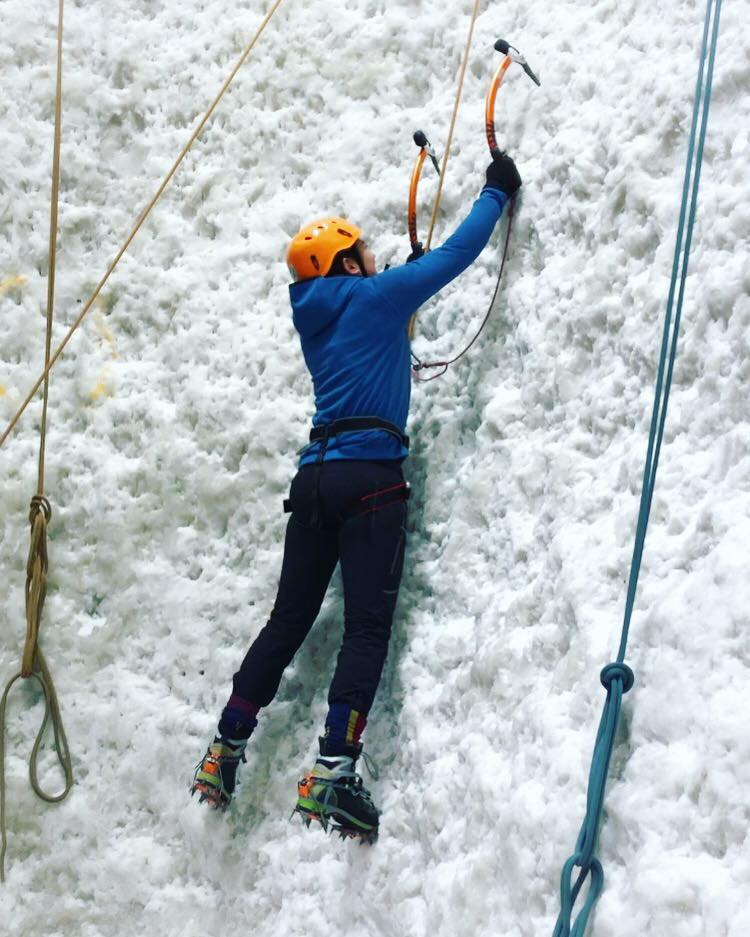
Ice climbing

50442196_1979578599017896_1329863299524722688_n

After a 10-minute drive from our overnight spot, we arrived at Ice Factor in Kinlochleven – the largest indoor ice climbing centre in the world. It’s an impressive building which houses an indoor rock climbing wall, shop, cosy café and ice climbing area, which is pretty much a giant freezer. We’d booked in for the earliest taster session of the day, keen to have as much exploring time left over as possible. I started to write about ice climbing in this post but I got carried away, so for the fine detail read my separate post – Ice Climbing for Idiots. Basically, it was really fun and I want more.

Hiking

We left the centre with big smiles, grabbed our hiking kit from the van and set off on a route we’d planned the previous evening. We had hoped to climb some munros (Scottish mountains over 3,000ft high) in the Mamores range, which lies between Kinlochleven and Ben Nevis. We actually ended up doing a different route which took us up and west, rather than north, due to a disappearing footpath and some dodgy-looking weather over the mountain tops, so unfortunately we didn’t reach any summits.

Nevertheless, we didn’t mind deviating from the plan because we’d set off late, got some breathtakingly-awesomely-stunningly beautiful views down the length of Loch Leven and had a lovely couple of hours anyway, despite some questionable “footpath” terrain and glute-burningly steep bits. The hike also took us past Grey Mare’s Tail waterfall, which is well worth the short walk from Kinlochleven.


Fort William50474548_550658935436708_6670099998987780096_n

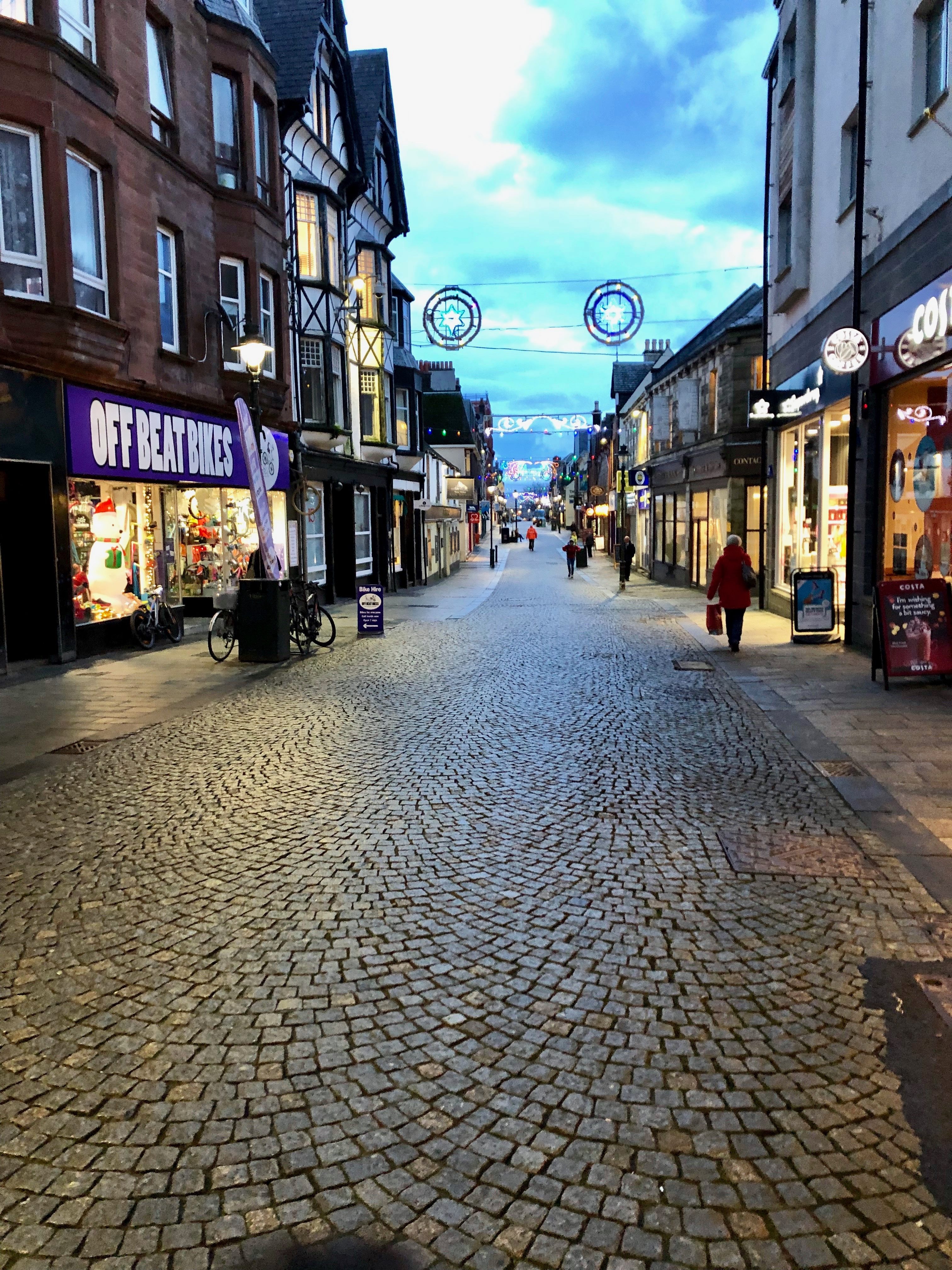
Our alternative route meant that we got back to Björn with enough time spare to get to Fort William for a wander round. It’s an attractive town with plenty of shops and pubs, and seems to be a kind of outdoorsey “hub” with a nice buzz. We managed to do a bit of Christmas shopping before treating ourselves to a meal in a café – I don’t think a jacket potato has ever tasted so good. Fed, warmed and out of daylight, we got in the van and headed east.

The Cairngorms

We’d arranged to meet a friend to climb a munro in the Cairngorms the following day. I chose Lochnagar after reading about it in a “Britain’s greatest mountains” feature of The Great Outdoors magazine (don’t tell my cool friends), so we drove the three hours there from Fort William. It was a shame to drive across so much of the National Park in the dark, but we’d seen it before and were keen to make the most of the daylight hours outside. We arrived at the Spittal of Glenmuick quite late and quite tired, so we parked along the dead-end road, admired the blackness of the sky and the utter, pindrop silence, packed bags ready for an early start and slept.