Scotland, Feb ’22: Steall Falls, indoor climbing at Kinlochleven

Saturday 12 February

The weather was not on our side, so we planned some rest day activities. We left our little Fort William hotel room at 10am and drove southeast for 20 minutes to the car park for Steall waterfall and wire bridge, which we’d found in the Wild Guide. The drive took us on a winding road through high-sided, picturesque Glen Nevis, with Ben Nevis towering over our left side and the thickly forested slopes of lower, but no less wild, peaks on our right. We arrived at the small, dead-end car park and set off along the well-walked, rocky path for the waterfall.

An Steall waterfall walk

The path ran above and parallel to the Water of Nevis, which flowed fast and relentless along its rocky course. Little waterfalls fed it from all around, some flowing under wooden bridges built into the path. Our 150-200m elevation gave wonderful views over the rushing white river and the deep, dramatic glen, whose high, undulating sides were a colourful patchwork of yellow grass, green pines, lilac-pink birches and orange heather under a thick grey sky, which absorbed the snowy upper reaches of the steep slopes and made the valley feel very self-contained. The path ran for a mile through leafless trees connected by lush green mosses, then curved with the river and dropped down to just above river level, where the valley floor widened slightly into a grassy plain set in a long, steep-sided basin.

We turned a corner and An Steall waterfall, the third highest in Scotland, burst from the huge, craggy valley side ahead of us, a 30 foot high, furious deluge of charging white horses. A few minor falls sat thinly either side of it like veins, but An Steall was the queen of the valley, the magnificent, roaring centrepiece. She fed the Water of Nevis with an endless torrent, giving it the energy to push its way over the rocks and around the twists of Glen Nevis.

Steall wire bridge

Steall wire bridge was on our right just before the waterfall, suspended 10 feet over the river. We waited for a couple of others to cross, then approached the pebble river bank. The bridge consists of three thick steel cables about 20 feet long, two for hands and one for feet, held across the water by a sturdy metal frame at each end. We took turns to walk out over the bridge and back, placing our feet very carefully on the wobbly metal tightrope. It was more nerve-wracking than I expected as the wires move quite a lot and there is nothing below other than a substantial fall, the rushing white river and a lot of cold, hard, wet, uncomfortable-looking rocks, but that meant it was also a lot more fun than I expected.

More people turned up so we left the bridge and retraced our steps back to the van, through that almost lower Himalayan valley. We left Glen Nevis and went back to Fort William for fuel and snacks. At the petrol station the clouds unleashed a sudden deluge of rain, possibly the most savage I’ve ever seen, and we had to wait a few moments for it to ease as it was heavy enough to obliterate all visibility. Once we could see again (only just), we decided to head towards Glencoe via Kinlochleven to climb at Ice Factor, the National Ice Climbing centre. The ice wall was fully booked but we were quite happy to squeeze some indoor rock climbing into the trip and avoid the weather.

Ice Factor, Kinlochleven

The journey south along the bank of Loch Linnhe, then east along Loch Leven, took about 40 minutes, and although the clag obscured the mountains it was nice to get a good view of the lochs. Ice Factor is oddly situated in the quirky, remote village of Kinlochleven, nestled cosily at the head of Loch Leven and closely surrounded by mountains, in a high-ceilinged, old stone aluminium works building. It’s a buzzing, modern, warm place with an indoor ice wall, climbing and bouldering wall, outdoorsey shop, cosy café and soft play area.

The climbing area wasn’t huge but it was plenty big enough, and we led (up to 6b, notably on which I slipped off above a bolt and took a pleasant little fall), toproped and autobelayed some interesting routes. The natural, rock type feature walls were particularly fun as they enabled us to practise crack climbing, which is difficult to replicate with bolt-on holds. We stayed a good couple of hours, had a coffee in the café, snuck into the small bouldering room and left before we lingered long enough in the shop to buy something unnecessary.

Glencoe

We drove west along the south bank of Loch Leven and into Glencoe, my favourite place. Sandwiched between the distinctive, imposing Three Sisters to the south and the hulking ridge of Aonach Eagach to the north, the Pass of Glencoe snakes through the dramatic valley next to the rocky River Coe. Yellowish grass grows up the lower swathes of the mountains either side but the higher reaches deny it access, their harsh, dark faces being too steep and inhospitable for anything but bare rock and snow. As usual in that vast, wild place, I felt incredibly small.

We continued east, took a turn onto the small road to Glen Etive and parked in a quiet pull-in by a wooded stream below the impossibly triangular east face of Buachaille Etive Mor, whose four colossal summits we planned to take on the following day. Ryan cooked vegan burgers for tea (delicious) and we did some planning then had an early night, buzzing for the hike.

Scotland, Feb ’22: Mountain biking at Nevis Range, Fort William

Friday 11 February

Following the previous day’s disappointment at ruling out climbing due to the avalanche forecast, and subsequent later night than planned, we didn’t rush to get up. Our plan was to leave the van in Ben Nevis’s North Face car park and ride through Leanachan forest to the Nevis Range centre to ride its renowned mountain bike trails. We hoicked the bikes off the back and set off east along a wide gravel trail through the forest.

Nevis Range ski and bike centre was more substantial than we imagined, with a large car park, café, several bike trails and a big Gondola lift up to Aonach Mor. We started in the little skills area with a few laps of the mini runs, then rode up the hill to the start of the trails. The way up started on a wide gravel track, then branched into a twisty dirt singletrack that took us on a sustained climb through the forest to reach the top of the blue (intermediate) Voodoo and Blue Adder trails and the red (difficult) Top Chief’s Wild Goat trails.

Morning – Voodoo, Blue Adder, Blue Uphill, Wild Goat

We did the Voodoo first, a really fun, flowy, open trail with sweeping berms and some quick sections. At the bottom we headed back up via the Blue Uphill Access trail, another slightly technical blue route just off the gravel track that made the way up a bit more fun. We passed the Voodoo and started down the Blue Adder, just a little way on. This was a fast, technical, twisty trail with boarded berms and tight little turns between tall pines. The bottom bit was flowy and particularly fun, and we shot out of the woods back at the Nevis Range centre.

We slogged up the hill once again (and, as Ryan insisted, for the last time) and headed down the red Wild Goat trail. This was really, really fun, with technical rocky and rooty sections, fast, sweeping berms and a BMX-type 4X jump track. Despite its relatively short length, this was my favourite trail of the day.

Wild Goat ended back at the café, so we nipped in for lunch. It was a modern, cosy, cabin-like, MTB/ski-themed place, with stunning mountain art, a wall full of mounted skis and an expensive-looking full sus bike hanging from the high ceiling. As we sat, thawed and snacked, we decided to book a cheap room for the night in Fort William so we could have a shower and a holiday treat – dinner out, albeit in Wetherspoons.

Afternoon – World Champs, Broomstick Blue

Warmed, fed and looking forward to an evening out, we left the café slightly reluctantly and headed up the hill the other way to the World Champs red trail, a long route that starts quite high up. We pedalled through the forest, only going the wrong way once, and emerged onto a track above the trees which afforded stunning views over the vast, rolling, snow-capped mountains around Ben Nevis. We reached the trail after a substantial climb, which was worth it for the views alone.

It was a long, fast, varied singletrack route created for the 2007 XC mountain bike world championships with avoidable drop offs, quick corners and technical rocky sections, which my poor old hardtail clunked and bucked over. I actually found the rocks and roots quite annoying as it would otherwise have been a nice flowy trail, but that’ll teach me (it won’t) for refusing to buy a full sus. The first half of the trail was above the forest and it felt more exciting than the second half through the trees, but it was all great fun and we popped out on the track that heads back to the North Face car park.

We branched off onto the Broomstick Blue trail, a singletrack blue that runs parallel to the gravel track back to the car park. It was fairly flat but flowy and quite fun, with a few long boardwalk sections, some little climbs and the occasional technical rocky/rooty bit. I was keen to keep riding and try some more trails but Ryan vetoed, citing the pull of Fort William and the pub, so back at the van we loaded the bikes and headed into town.

Fort William

We parked in the central car park and walked the short distance to Bank Street Lodge, the cheap and cheerful hotel we’d booked on a whim. It turned out I’d actually stayed there previously when I did the Three Peaks Challenge, but it’s since been converted from a hostel into a small, basic hotel. We showered, I washed my hair (a strenuous task) and we headed out along the surprisingly quiet for a Friday, cobbled high street for a cheap meal at the familiar Wetherspoons and a drink in the cosy Tavern bar. We disagreed about whether we should stay out (I was team “out out”, Ryan was not) but decided not to, so we went back to the hotel for a strange night’s sleep in an actual bed.

Ben Nevis climb via Tower Ridge: Scotland day 2, Sep ’20

We parked in the North Face car park just north east of Fort William and set off through the dense, wild Leanachan forest. We practically trotted through the trees, flailing limbs at the infamous West Highland midges and – although the forest was enchanting – were keen to put as much distance as possible between our as yet unbitten skin and the river by the car park.

We emerged onto a wide sweep of heather dotted with bright green shrubbery and small broadleaf trees, backed by the majestic hump of Ben Nevis’s north face, dark against the clear blue sky. Our next destination, the CIC hut, sat neatly at the head of the valley in a cosy, three-sided bowl formed by Carn Dearg, Ben Nevis and Carn Mor Dearg, looking down the length of the Allt a Mhuilinn river to a north-westerly horizon full of hazy blue mountains. Our path up to the hut was well-maintained and parallel to the river, so there was no real prospect of getting lost. The tricky bit would be determining our target – Tower Ridge.

We had no guidebook and the previous night’s googling yielded little light on the exact location of the ridge, so we were going off a couple of vague diagrams and a singular, hand-drawn map found on google images. At the hut, where a handful of raggedy climbers and seasoned-looking walkers congregated, we munched a sandwich and identified what we were fairly certain was Tower Ridge – a narrow, protruding finger of rock that joins the high, plateaued ridge between Ben Nevis and Car Mor Dearg at a 90 degree angle.

The giveaway was the Douglas boulder, a hulking mass of rock at the base of the ridge. From the hut, we walked, then scrabbled, up the loose, rocky debris that constituted the ground. It was hard work and the ridge definitely felt further away than it had appeared. Eventually we got to the other side of the Douglas boulder, turned towards its vast east face and started climbing, now in the dark shadow of the formidable Ben. This is considered a more sensible way to gain the ridge than from the west, even though the walk-in is longer.

Buzzing at the first real bit of exposure, we stopped once we were straddling the spine of the ridge to take in the view and decide whether to get the rope out. Although the way was steep and either side of the ridge was treacherously sheer, we decided against it for this first section; the holds looked big and solid, and we were confident that it was no more than a steep scramble. It wasn’t long, however, before we got to a more questionable face on the west side of the ridge.

We roped up and I led the first pitch, which turned out to be less technical than it had looked. I set up a quick anchor and brought Ryan up safely, then we scrambled on carrying a few feet of rope between us, coils stored over shoulders, not secured to the ridge but confident with the easy climbing. We moved at a steady pace, sometimes debating whether to use the rope and, more often than not, deciding against it. On our left loomed the intimidatingly dark, sheer face of Ben Nevis, and on our right we were spoilt by seemingly endless stretches of lush heathland, green forests and blue mountains.

There was one sketchy moment when we decided that the best route was to go left around the ridge, only to realise – once I was balancing somewhat precariously above the apparently bottomless east face – that the holds were few and far between and some of the rock was loose, and that we should have gone right. Ryan quickly took the most convincing right hand route and set up an anchor, so I could climb safely out of my uncomfortable, teetering position. I wasn’t happy with my Salomon Quest boots, as they’re thick-soled and chunky – perfect for hiking but not for use as climbing shoes, as I could barely feel the rock between my feet and I didn’t trust the grip. It would have been a little too easy to tread a little too aggressively and misjudge a foothold. Ryan’s LaSportiva XXX approach shoes, on the other hand, were perfect for the purpose – grippy and flexible enough that he could feel holds with accuracy, but without the foot-choking tightness of climbing shoes.

About three-quarters of the way along, we found ourselves squeezing up a narrow tunnel on the left hand side of the ridge. After giggling at the ungainly way we each emerged from the gap, we looked up and realised that our next move wasn’t obvious. Up until now, it had seemed that there was no “right” route along the ridge, apart from that which didn’t take us too close to either of its perilous sides. Here, we were pinned to one side and faced an unlikely-looking climb upwards, or a tight traverse along the left side of the ridge, which seemed to take us downwards. We chose left, but stopped at a strange whistling sound. A moment later, a cheery-looking climber popped out of the tunnel, wearing just a pair of bright yellow shorts, trainers and a small rucksack. We asked him the way and he grinned as he told us it was not left but “up”, then proceeded to float up the wall with irritating ease. He explained that this was the most difficult move of the route, probably around VDiff, but foraged around with his arm in a crack and reassured us that there’s a good hold somewhere.

Bemused by his timely appearance and nonchalent manner, we climbed upwards after him, roped up. He was long gone by the time we’d reached the top of that section, Great Tower. Ahead of us was the bit of the ridge that we’d watched videos of, and which we were looking forward to most. Ryan led the way across the most exposed part of the route, which is a skinny arete about 50 feet long and as wide as a pavement, which drops down hundreds of sheer feet either side. It was exhilarating to walk across, and I picked each uneven step carefully – although I was on belay, the length of the traverse meant that a fall would mean a nasty swing and crash against one of the ridge’s treacherous faces.

At the end of the pavement was the famous Tower Gap, a break in the ridge that required a slight downclimb and committal step across to the other side. The holds were good, and I joined Ryan quickly. From  there, the way to the top was quite straightforward – up and over another high, but solid, grey mass, unroped. We pulled over onto the Nevis plateau elated and to the shock of several hikers.

We walked left along the flat top to the summit, which was teeming with people.  It was as if we’d suddenly plunged back into reality, the timeless thrill of the climb behind us. On the ridge, we’d overtaken a group of three and been overtaken by whistling guy, but otherwise hadn’t seen anyone up close (we could see people on the plateau from the ridge) for hours. We took in the panoramic view of endless mountains, layered on top of each other in an enticing blue haze, had a sandwich and (to our horror) queued for a quick summit picture. People eyed us with interest, and a group asked us whether we’d climbed up. I refrained from telling them that “no, I wear a harness everywhere and the rope’s for show”, and we made our way down the loose, zig-zag pony track before we got too peopled out.

The view over Glen Nevis was stunning, but unfortunately we were busy focusing on each loose, uneven step down to appreciate it fully. We passed a waterfall and came to a fork near the dark water of Lochan Meall an t-suidhe, where most people went left down the pony track. We went right, which took us east around the north face of Carn Mor Dearg and back along a long path towards the CIC hut. Before we reached the hut, we cut left down the bank to cross the river and join the path we’d come up that morning, but not as soon as we could have – we were keen to avoid finding a bog, which we’ve become uncannily adept at.

I stopped to pick a handful of bilberries, which are lovely, sweet little wild blueberries that grow on low, scrubby bushes. The walk back to the van back down the Allt a Mhullain river was beautiful, and we soaked in the wilderness of open heath speckled with lilac cornflowers, pink heather and leafy green bushes, backed by dark forest and countless mountains. Breathtaking, but still we were keen to get back; we were starving, walking on sore feet and eager to find a pub.

Eventually we reached Leanachan forest. In its late afternoon quietness, it took on a sense of mystery that we hadn’t felt earlier; it was as if the trees were watching us pass, but it was peaceful, rather than creepy. Our heightened senses took in the grassy, mossy carpet, the lichen growing abundantly on the dark side of the trees, the fungi nestling in crevices and the intricate detail on the bark of the gnarly birches and towering pines. Every time I’ve been to Scotland, I’ve noted that there’s something magical about the forests.

We got back to the van, shut out the midges and de-booted. A twenty minute drive later and we were at the Ben Nevis Inn, tucked on one bank of the valley of Glen Nevis. We were pleased to see that we could stay overnight in the Achintree Road car park, right by the pub down a dead-end road. Unfortunately the pub was full indoors and booking-only, thanks to covid, but we enjoyed a pint of Thistly Cross cider (delicious) in the garden. I’d recommend the pub – amazing location and lovely looking inside, an old barn I think. That night we cooked and enjoyed a couple of ciders in the van before collapsing into bed, exhausted. We’d been incredibly lucky to have had clear, sunny weather all day – that night, it’d be an understatement to say the rain came.

Three Peaks Challenge – Write up

Last weekend I experienced a new type of euphoria. There’s no feeling like standing on top of the highest pinnacle of an entire country (or three) with a group of wonderful, strong, determined friends. It took months of organising, training and fundraising, hours of sleepless contortionism in a sardine tin of a minibus, blood, sweat, tears, countless injuries and a copious amount of tape, but the team summited all three mountains and returned home with stupid grins and lovely memories.

We didn’t quite make the 24-hour goal, but that’s not the point. I’ve never seen such incredible determination, selflessness, teamwork, positivity and inexhaustible humour in a group of people. Several of the team had never climbed a mountain before but didn’t think twice about taking on the brutal ascents (and arguably more brutal descents) of Ben Nevis, Scafell Pike and Snowdon.

Injuries included but were not limited to a slipped spinal disc, an immovable leg (Charley wins already), a post-stag do knee injury, an agitated previously broken foot, a sprained/stress fractured toe and Lee’s mangled feet.

Pre-Challenge

We quickly realised that the child-sized minibus seats were not conducive to sleeping or being even close to comfortable, but the bus banter was excellent. We left Winchester about 10.30am and arrived at our Fort William hostel around midnight, via a handful of service stations and a pub.

I was up and exploring by 7am on Saturday; I went down to Loch Linnhe and read all the history boards, then headed up the hill that stands over Fort William. I found a wild moor area overlooking the loch and its mountainy backdrop, which was full of birds and wildflowers, bright with yellow gorse and deep purple wild orchids. I explored this impossibly peaceful hillside, then headed back and met the others for breakfast in town before leaving for Glen Nevis.

Ben Nevis

We set off from the youth hostel at 3pm and the mountain hit us at approximately 3:02pm. It was a steep, uneven, rocky start, and as we puffed our way along the busy mountain track we soon realised the scale of the challenge. The group became strung out fairly quickly and I was amazed by the hordes of people on the path, most of whom also seemed to be doing the Three Peaks.

We strode, heaved and shuffled ourselves up the long mountain track, which took us along the monstrous side of a wide, green valley. I flitted between the group at the back and the front, passing messages about various injuries, and we realised fairly early on that we’d struggle to complete the challenge in 24 hours. The decision was made to focus on getting as many of the team up as many of the mountains as possible, taking decent group pictures at the summits and not getting hung up over the time taken.

The zigzag near the top was relentless, but not as bad as when I last climbed Nevis in thick, wet fog. The widening view of the surrounding mountains made up for the loose, rocky path and seemingly never-ending switchback turns, and the group’s pace picked up as injuries were numbed by painkillers, willpower and the pull of the summit.

The cairns began, the zigzag ended and we followed the path through a barren, grey rock-field towards the top, past sheets of snow and the deadly drop of five-finger gulley. This section was also long, and when the observatory came into view I felt the unmistakable spike of elation that always coincides with the sudden appearance of a summit.

All twelve of the group congregated by the trig point for a photo, glad that the time pressure had eased as it meant we could mull around for a few minutes. We enjoyed the panoramic views, taking in layer upon layer of hazy blue mountains, and I nosed around the little sticker-covered shelter (which would have been lovely if it didn’t smell of wee).

Delighted to have made the summit as a team and in clear, sunny weather, we headed back down and made it back to the bus just half an hour or so off schedule.

Scafell Pike

Pain, adrenaline and the miniscule, hard and immovably upright minibus seats meant that the drive to the Lake District was sleepless, and the windy roads leading to Wasdale left us queasy (and Bertie actually sick out the window). Riyad did a great job of driving, and despite the 60mph limiter, accidental turn down one of the narrowest roads on Earth and bus full of sweaty, whiney, grumpy people, got us to Wasdale Head in enough time to set off about 3am.

A few of the boys stayed behind due to actual and/or very likely injuries while the rest of us shuffled off towards the imposing black silhouette of a mountain, following the light of our headtorches and the rustle of sweet packets. Charley’s body was falling apart but she refused to stop and some of the group were keen to power on, so once again we strung out fairly quickly. I hung around at the back for a while, then realised that I might catch the sunrise if I picked the pace up. I left the group at the back, joined the three at the front, then puffed my way up to the summit alone.

Scafell Pike isn’t as high as the other two but a lot of people consider it the most difficult. I see why – the route feels very long and the climb is sustained, without any flat sections for relief. Eventually the uneven, rocky path forks off to the left (on a previous ascent I turned right and ended up scrambling up a loose, precipitous ridge, then had to blind-navigate the featureless top section), then turns right towards the summit; it’s one of those where you think you’re there, then another exasperating brow of grey shingle appears from nowhere.

Unfortunately the spectacular sunrise I’d hoped for was mostly obscured by blue-grey haze, but the view was breath-taking nonetheless. Again I was on a barren, rocky plateau surrounded by layers of mountains. I swapped my sweaty t-shirt for warm clothes and nestled down for a nap on the sheltered side of the summit memorial.

I’d just managed to drift off when I was woken by my 5.30 alarm, 40 minutes after reaching the top. Five of the others had joined me in 10-20 minute intervals so we took a photo and headed back down, passing Dave and Siobhan shortly afterwards. We strung out again and collected Charley on the way back, who had to turn around after pushing her injured leg so far that she couldn’t lift it over even the smallest rocks. (Somehow she later attempted Snowdon too…)

We traipsed back along the path along the side of the lush, green valley, now visible in the early morning light, enjoying the view over Wast Water. Eventually it curved round to the right and took us back down to the car park. Reunited and tired, we had some hot food in the car park, looking like we hadn’t slept for weeks. Matt had sourced some self-heating packet meals which looked a bit suspect but went down well – I had my jetboil so stuck to porridge and tinned fruit. Fed and watered, we flopped back into the bus and semi-slept our way to Snowdon.

Snowdon

We arrived at Pen y Pass after a couple of stop offs to wee (mainly Mia) and organise kit. We bundled out the bus and watched the cloud come in over the mountain as we plodded along the easy-going Miner’s track, past the still, black lakes. After the long, flat stretch we reached the steep, scrambley bit where the “path” ascends up the side of the ridge to meet the Pyg track.

Once again the group had spread out, and as the fog thickened I stayed at the back to supply sweets and make sure we didn’t lose anyone. It was cold, wet and miserable but spirits remained high. Eventually we pulled up over the last steep bit and joined the track along the ridge to the summit, which runs parallel to the train. This section is always deceptively long. At last we joined the rest of the group for a wet, windy summit photo, then Matt and Mia charmed their way onto the train down to Llanberis and I ran off to rejoin the others. The people in the café looked at me like I was a lunatic.

By that point we were practically hallucinating about pub food. We made it down the steep bit much quicker than I expected despite the slipperiness, then when Dave and I – the only non-limping ones left – were satisfied that the last three wouldn’t get lost or injured on a steep bit, we went ahead. Cold and wet through, we semi-jogged our way back along the level path, which was much longer than it seemed on the way out as new bends (and even a lake) materialised from nowhere.

The gates of the Pen y Pass car park came into view and as we ran to them I felt a pang of sadness that the challenge was nearly over. It could have been madness induced by hunger, exhaustion and/or sleep deprivation, but it crossed my mind that I could just turn around and happily disappear back into the mountains. But I didn’t, and lured by the pull of the pub, I joined the group in the youth hostel across the road.

Post-challenge

We had a beer, changed into dry clothes (in that order) and waited for the last three to join us. They limped in, Lee’s feet nearly worn down to stumps, and we collapsed into the bus. It had gotten quite late so Lottie grabbed us a table at Y Stabblau in Betws y Coed and we went straight there for food – I inhaled a curry, then set to work on leftover pasta and “three peaks” burgers. Nothing has ever tasted so good.

The most telling sign of utter exhaustion is when this particular group of friends doesn’t fancy more than one beer. This is something I’ve never experienced before and I wasn’t sure how to deal with it, but fortunately I was too excited at the thought of being horizontal that I didn’t care. We bundled back to the bus for the two-minute drive to the hostel and practically fell into our bunks.

The next morning I hoovered up half-eaten breakfasts, then we stumbled round the hostel, losing and finding various belongings, attempting to conquer stairs and watching bemused as someone else attempted to conquer stairs. A few of us wandered round Betwys y Coed, admiring the pretty buildings and eating ice cream, before dragging our reluctant selves back to the lovingly despised minibus to head home.

To conclude

Undertaking this challenge made us realise that it was never really about finishing in 24 hours. Our goal was to make £2,500 for Friends of PICU (read the story here) by climbing some mountains. In the process we actually raised over £3,000, got the entire group up the highest mountain and a majority up the other two, strengthened twelve friendships each and just generally had an amazing time. I feel extremely lucky to have experienced some of my favourite places with some of my favourite people and seen faces light up at the landscapes I love. Until next time…

Endnote – our group chat name has been changed to “K2 2022”, so watch this space 😉

A massive thank you to the mountain team, Charley, Dave, Matt, Lee, Mia, Tom, Chris, Dan, Siobhan, Mark and Bertie…

The hero designated driver, Riyad…

The we’ll-do-it-next-timers, Lottie and Theresa…

And everyone who supported us by donating to our worthy cause.

Three Peaks Challenge, June 2019

Three Peaks

Next weekend I’ll be taking on the Three Peaks Challenge with a group of thirteen friends. The challenge consists of climbing Ben Nevis, Scafell Pike and Snowdon, the highest mountains in Scotland, England and Wales, in 24 hours. We’re heading up on Friday 21st and returning Monday 24th June.

Five minutes of googling showed us that regardless of fitness and mountaineering experience, everyone seems to find this tough. Occasionally someone posts a link on our group chat to a story detailing how a group of ultramarathoners failed to complete all three summits, or how an experienced hiker recently perished on Ben Nevis.

There are several factors entirely out of our control which could jeopardise our success. The 24-hour time limit includes travelling time, so we’re subject to traffic conditions and the reliability of our minibus. We can’t choose the weather conditions. Even the most competent hikers get injured. These mountains can get busy – queues to the top of Snowdon are becoming very common. Little, unexpected things can happen – water containers leak, laces snap, someone comes down with food poisoning.

On top of this, we’re pretty fit (we’ve done several “training hikes” together, which I’m yet to post about but had great fun on) but the fact we’re such a big group could go against us. If just one of us gets injured on Ben Nevis or Scafell Pike, we all have to wait as we only have one minibus. Which may resemble a tin of damp, twitchy*, achy sardines as we attempt to sleep between summits, cuddling our gear and buzzing with adrenaline.

Adversity aside, I feel good about this. Maybe I’m naïve, optimistic and overenthusiastic about mountains, because I think it’ll be a lot of fun.

But that’s not the point. We’re taking on this silly, painfully difficult, potentially self-destructive challenge to raise money for an incredible cause – Friends of PICU, a charity which supports the Paediatric Intensive Care Unit at Southampton University Hospital.

*because of the adrenaline, not because Bertie has tourettes…

Nora’s Story and Our Cause

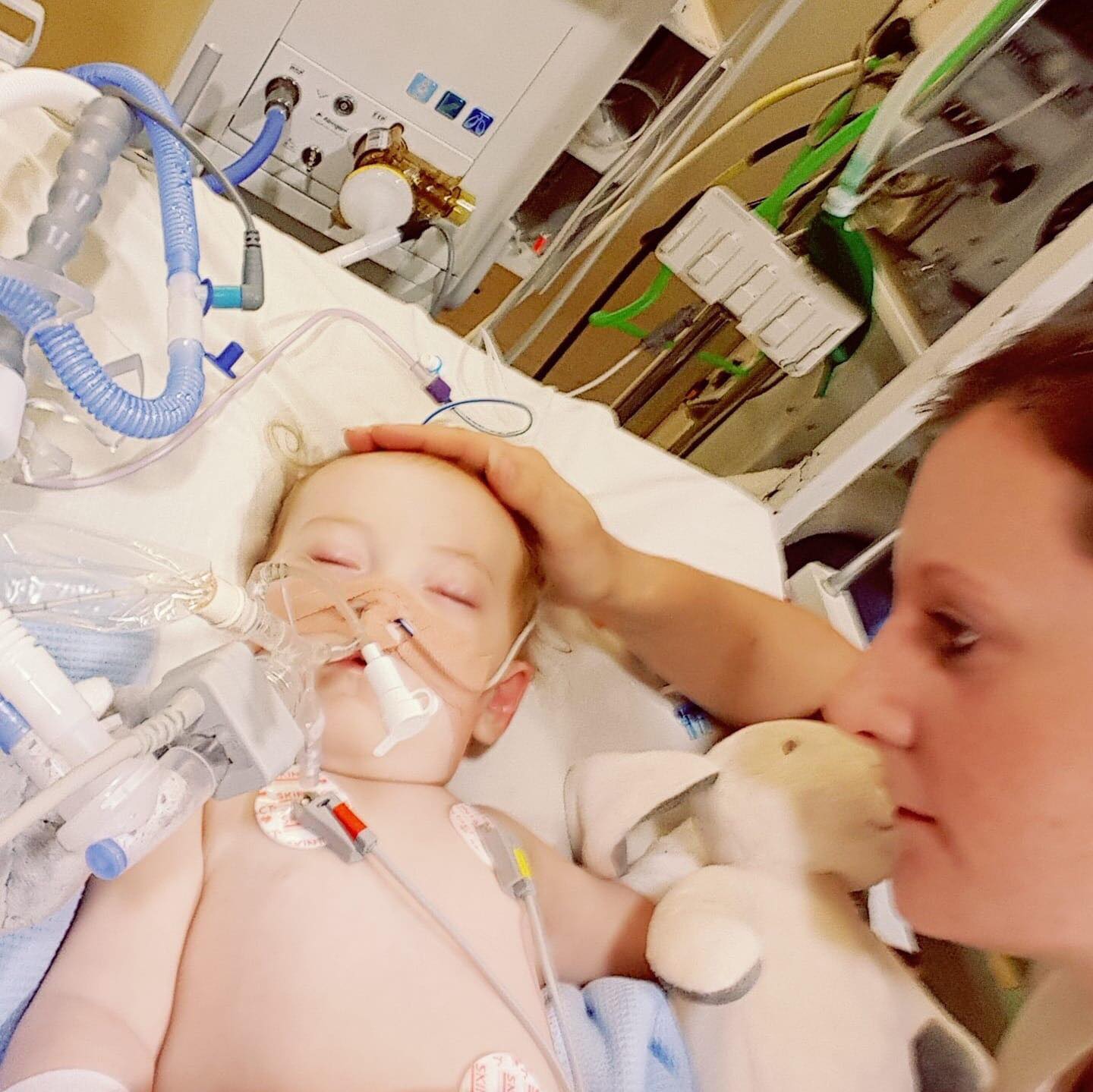
This whole crazy thing has been organised by my lovely friends Charley and David. In August last year, their baby daughter Eleanor was diagnosed suddenly with bronchiolitis. Her little lungs couldn’t cope and she was rushed to hospital. She was put on oxygen, but her condition deteriorated and she stopped breathing, turning blue and lifeless as Charley watched helplessly.

In Charley’s words, “the room filled with people and she was taken from me immediately receiving CPR and masked oxygen. They let me hold her tiny hand, then we’re on the move to theatre 2 floors up. I was allowed to stay with her whilst they worked on keeping her alive. They managed to keep her going long enough to put her onto a ventilator to breathe for her, this is how they would keep her until her lungs became strong enough to work on their own.”64222665_1207279716120758_2821219001466617856_n

“I remember every detail, every face and it seemed to last a lifetime. I then got the news that we would need to transfer her to the PICU in Southampton. I was terrified, I didn’t want to move her in case something happened. I didn’t want to leave her anywhere.”

The Paediatric Intensive Care Unit provides first class care and treatment to over 900 critically ill children from the South of England and Channel Islands every year.

Here’s Charley’s account of Eleanor’s experience at the unit:

 “PICU have their own ambulances and arrived so quickly. They introduced themselves, always talking to us and Eleanor and assured me I could be with her at all times. They transferred her onto a portable ventilator and we arrived in PICU that night. The staff were amazing and she had a nurse with her 24/7 who never left her side and allowed me to do the same. They provided a room across the corridor to stay in and encouraged us to go and rest but equally were happy for me to stay by her side, I couldn’t bear taking my eyes off her on the machines.”

“During our stay the nurses and doctors were exceptional, dedicated and kept us informed at all stages, they let me stay for everything including changing her tubes and letting me clean her. They took footprints and made birthday catds for family whose birthdays came and went. They made the hardest time in our lives that bit easier. Each baby and child admitted got their own handmade blanket and a Friends of PICU “Ellie” elephant to keep, which we still have to remember how lucky we are.”

“We were one of the lucky families that got to take our little girl home, many families whilst we were there did not get that chance but they were very respectful to those families and others by ensuring their privacy at all times. Eleanor had a gruelling few weeks ahead of her once awake, enduring feeding tubes and relearning how to drink again but finally her battle was over and we got to go home!”

“Without this service, of which we knew nothing about before this, we wouldn’t be telling the same story.”

Friends of PICU is the charity whose support keeps this unit running. It pays for vital equipment and services which are not otherwise funded, including specialist ambulances, beds, family accommodation, medical equipment, furniture and toys. Every child admitted will benefit from the work of this charity, and without its support many children would have missed out on lifesaving treatment.

So that’s why we’re doing the Three Peaks Challenge – to raise money for Friends of PICU. We are eternally grateful for every little donation, no matter how small, to this incredible cause.

If you’ve ever a) had children, b) known a child or c) been a child, please support Friends of PICU by clicking the link below and donating what you can. The benefits are twofold: it’ll help very sick children and their families, and alleviate our pain and suffering as we force our weary legs onwards and upwards (then back downwards).

Click here – Three Peaks Fundraising Page

More Three Peaks related posts to follow…

Thank you.

Naomi xxx

PS. Special thanks to Charley and Dave for organising, Riyad for offering to be our designated driver, and everyone else for the (anticipated) wonderful company!


62619456_2353476704978114_6565099142501105664_n

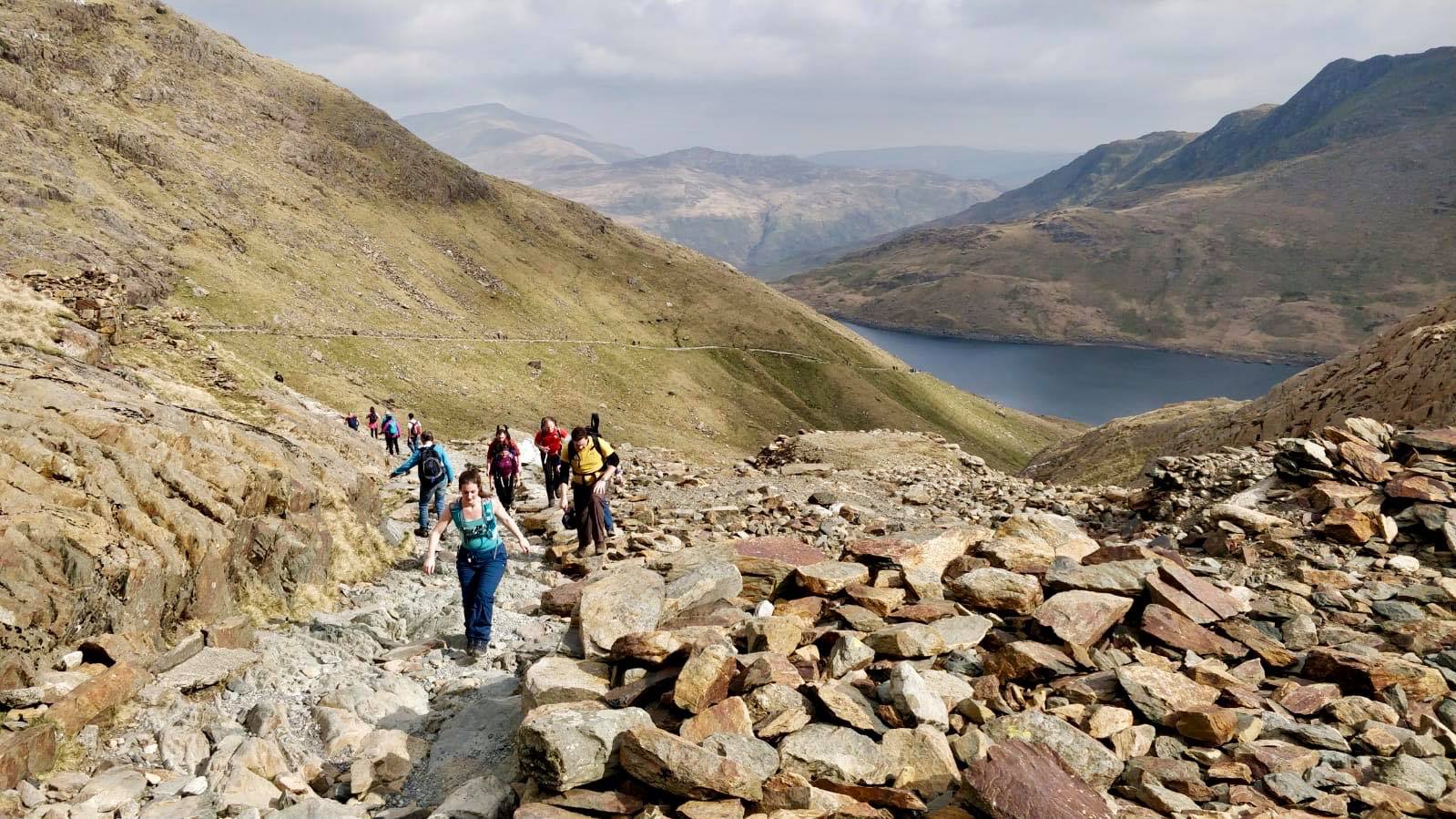
Charley leading the team up Snowdon on a training hike