Two Wet Climbers

Great days usually have three things in common: a remote location, a risk of death and a pub finish. Exhibit A – last Saturday…55576787_766649270376210_9170423551180668928_n

We got to West Lulworth earlyish and lugged our gear to Stair Hole, a small cove just round the corner from the more well-known Lulworth Cove. It’s a stunning place, with a secluded beach surrounded by zebra cliffs and could-be-caribbean turquoise water.

We dumped bags on the stony beach and waded across the knee-high water to the big lump of very climbable-looking rock. We scrambled up to the top like kids in a playground, searching unsuccessfully for a route before setting up an anchor and making one up.

Bored of messing around, we scrambled back to sea level. I went an awkward way and had to backtrack, but not before watching a handful of melon-sized rocks tumble past where I’d been standing just a few moments before. A sobering reality check.

We kitted up and committed to The Maypole, a circular trad traverse which should have been a doable HVS 5b. I enjoyed leading the second, third and fourth pitches; the gradient was mostly okay, there were some decent holds and it was super grippy, although it was weird rock – sharp and “horny”, with very few cracks for jamming or placing gear.

The route can be done as a deep water solo, which I would love on a warmer, sunnier day as it would mean less faffing and more climbing. I enjoyed traversing but I was aware of the need to place loads of gear so we wouldn’t swing too much if we fell. I’m glad we didn’t fall as I didn’t place much.

At belay point five (after a quick backtrack to retrieve a stuck nut) we looked at the next section and commented on how straightforward it looked. As if I’d never learnt that lesson before. I lowered down towards the water from the bolted belay, suddenly realising how much the rock leaned over me and how few foot placements there were.

There were two potential ways to get through the cave: up the only crack in the rock or practically touching the water along the coming-out-at-you slab. I tried both and learnt a formula: awkward belay angle + lack of placement + pumped forearms – elevation above water = wet climber. I could feel my partner laughing at me as I flapped about, searching for purchase on the rock and whinging about wet socks.

Then it was his turn, which was pretty much a carbon copy of mine. Being the safer climber and all-round better person, he decided it was his job to get us out. He employed the unconventional method of lassoing a horn of rock past the nasty coming-out-at-you slab, which – when I suggested tying a nut to the sling for a bit of weight (not just a pretty face) – actually worked.

By this time he was out of sight round the corner, so I just responded to his muffled grunts of “slack” and “take”. Eventually he decided that the only way back involved swimming, so I fed him the rope and hoped his drowning noises were for dramatic effect. Fortunately he made it to the beach, and I later found out that he was nearly pulled down by the weight of his jacket and harness.56177033_395067664380598_8633818574965702656_n

Knowing you’re going to get wet and cold when you really don’t want to is horrible. I climbed down as much as I could, struggling to remove the nuts, and resigned myself to the water after fumbling around trying to put my phone in my helmet so it could float safely back to shore. Which didn’t work, as I got tired holding onto the rock and dropped (luckily) my helmet.

Going in was terrible. I was desperate to not ruin my phone and lose all my pictures, so I’d stuffed it as high up in the front of my top as I could manage. I tried staying on my back and failed – I probably looked like I was drowning. The weight of my down jacket and a harness full of metal really dragged me down, and the “swim” back was unpleasant – although I managed to collect my floating helmet.

Back on the shore my partner was shaking and I was distraught at the fact we’d left a load of gear in the wall. Being poor and stingy, I insisted on swimming back to get it; again, mega unpleasant, but well worth it for the sake of a handful of nuts, slings and draws. Meanwhile, onlookers enjoyed the show – not one person seemed concerned!

Wet, cold, hungry and in dire need of hydration (by tea and cider), we shivered back to the van. But it could have been worse – we could have lost a lot of stuff, or died. Just like all other great days, this one finished happily ever after… in the pub.

I can’t wait to climb again.

Scotland, Day 4: The Cairngorms – Lochnagar

Lord Byron eulogised this mountain in 1807:

England! thy beauties are tame and domestic

To one who has roved o’er the  mountains afar:

Oh for the crags that are wild and majestic,

The steep frowning glories of the dark Loch na Garr.

In contrast, Queen Victoria wrote of Lochnagar in September 1848:

“But alas! Nothing whatever to be seen; and it was cold, and wet, and cheerless. At about twenty minutes after two we set off on our way downwards, the wind blowing a hurricane, and the mist being like rain, and everything quite dark with it”.

After experiencing Lochnagar on a bleak day in December, I agree with the poet’s “wild”, “steep” and “dark” but otherwise I’m with Queen Vic. We woke bright and early in the Spittal of Glenmuick and met our friend Mike at the Lochnagar car park before sunrise. We set off on the 10ish-mile hike in a mix of fog, drizzle and gloom, disappointed with the weather but glad for the company.

The first section took us across a flat, heather-covered plain, with Loch Muick away to the south and a dark line of trees to the north. We couldn’t see much through the fog, but I knew that Loch Muick was cradled on three sides by steep ridges; I expect it’s stunning on a clear day. Lochnagar is within a few miles of the Balmoral estate, and I could just imagine the Queen (maybe a few years ago) tearing round the track in a Landrover, or a shotgun-wielding Philip bumbling after some grouse.

It was an easygoing route  for about three miles, along a wide, stony track up a gradual incline. We branched off left about a mile east of Meikle Pap, where the track turned into a slabbed stone path. I got overexcited at catching a glimpse of a few startled red grouse, then we hit the snow and the hike got a bit more complicated.

Just as the path started getting scrambley, patches of snow appeared. Snow does a great job of concealing paths, especially when the landscape is strewn with rocks, covered in wild, tufty vegetation and bereft of other summit-seeking humans. We followed it as best we could but did a lot of guessing, aiming in the direction of “up” and “west-ish”.

The vegetation disappeared, and after scrambling up a formless sea of steep, slippery rocks, keeping close to avoid losing each other, we hit real trouble – just as I got excited at a flock of winter-white ptarmigans. Mulling over why on earth anything would choose to live up there, we struggled through an annoying mix of soft, calf-deep snow and hard, unyielding ice. As we reached a kind of plateau, the rocks grew sparse, the climb became less steep, and the already hurricane-like conditions worsened.

Lochnagar stands at a lofty 1,156m above sea level and curves around a beautiful northern corrie (I know it’s pretty thanks to Google images). The path follows the ridge along the top edge of the corrie, so the exposure is huge and complacency could result in a massive fall. This was problematic as by this time visibility was non-existent, we were ill-equipped (no crampons or axes – terrible foresight) and we didn’t know exactly where the summit was. Or where we were.

52669907_1980525335379703_1916488697524518912_n

White-out

As we pushed on, I truly understood the term “white-out” for the first time. The only way to distinguish “up” and “down” was by looking at the other two and seeing where their feet were in relation to their heads. Ice, snow, cloud and sky all merged into one disorienting, blinding, infinite nothingness, like in a dream in a film, until little dark specks appeared and I tried to blink them away. Communication was limited to shouting in each others’ ears, and any exposed inch of skin was beaten raw by the strong, bitterly icy winds.

Just when it couldn’t get any worse, it did. We reached a false summit and the ground became sheet ice. Literally like an ice rink, only harder and less flat. I’m sure we went round in circles for a bit, slipping over constantly, resorting to bum-shuffling and actually laughing at our own ridiculousness while remaining acutely aware of our proximity to the deadly edge of the ridge. Still determined to reach the summit, we paused for a painfully cold moment to check the map and decided simply to follow the compass north to where we thought it was.

This decisiveness saved the day, and as the towering pile of rocks loomed through the whiteness I almost collapsed with relief – I’ve never been so delighted to reach a trigpoint. I slipped onto my trusty old compass and snapped it, fortunately without stabbing myself, but it had done what it needed to do. We fumbled about for a quick photo, then practically flew back down the mountain, eyebrows, eyelashes and beards (even mine) heavy with ice.

I would have liked to make it a circular route and gone back along the north side of Loch Muick, but given the conditions we decided the way we came was the quickest and most certain way to the pub, and it’d look the same anyway. The fog had cleared slightly once we were back on the wide, stony track, revealing a rugged, heathery landscape. From there, the walk back was made a drag by our cold, wet-through clothes and desperation for a drink, but we reached the car park eventually. Lochnagar is definitely one to come back to on a better day, but I was glad for the adventure we had.

Semi-thawed, we drove to find a pub before heading to Perth for the night. We ended up collapsing on the sofas in the Deeside Inn at Ballater. It couldn’t have stood in starker contrast to the bleakness of a few hours earlier; the lounge was a huge room with deep red walls, thick curtains and dark wood beams, lit softly and warmed by a roaring fire. It had tartan sofas with pheasant-patterned cushions, a big Christmas tree, books, boardgames, a piano, complimentary crisps and (most importantly) cider. I think my life peaked at that moment – in there, the world was perfect.

52985861_2373960469515791_200852427610521600_n

Adventuring West: A Weekend of Climbing, Surfing and Pub-hopping

Last weekend I learnt about cold water, wet rock and hard drink.

Bude

52596452_2095616000730540_580513092601905152_n

Sunrise at Seatown

We left for Cornwall on Thursday evening and stopped overnight in Dorset, where we were spoiled by a stunning seaside sunrise at Seatown. We arrived in Bude late morning, by which time the mist had lifted to reveal clear blue skies and the air had a deliciously spring-like warmth. Keen to make the most of the weather, we decided to jump straight into the water.

I was so excited to be back in the sea that I quickly forgot two things: the cold and how to surf. Within minutes I had 1) snapped the leash, 2) realised that I’d seriously under-waxed the board (so amateur), and 3) got annoyed that I wasn’t instantly the most competent surfer in North Cornwall.

Also, the feeling of rough sand between semi-numb toes was unpleasant enough for me to regret leaving the surf boots in the van (idiot). The strong cross-current at Summerleaze beach meant that I took five painfully slow steps sideways for every metre gained paddling out, and I only stood up a [small] handful of times after several poorly judged attempts. Despite a terrible performance, I had a great time in the sea.

After a couple of hours of grinning at caught waves and swearing at missed ones, I lumbered (there’s nothing graceful about carrying a surfboard in a cross-wind) inland to my water bottle to dilute the gallons of saltwater I’d swallowed. Frustrated by the current and battered by the unrelenting sea, we heard the clock strike beer o’clock and thought it unholy to be late for mid-afternoon mass.

Refuelled and rehydrated, our little group went exploring the pretty, bustling streets of Bude. It reminded me of Perranporth – something to do with the layout and the mix of touristy shops and quirky little pubs and cafes.

The first place I fell in love with was the North Coast wine shop/bar. As I sipped craft cider, people-watched out the big windows and basked in the hazy late afternoon sun, I thought I’d died and snuck into heaven. The second place was the Barrel at Bude, a tiny, dark, timeless pub which implements fines for mobile phone use and serves “proper cider”. I’m not a great drinker but I do put a lot of effort in, and this cider set me on a downward trajectory that was intensified by a couple of cocktails back at the North Coast place. Needless to say that falling in love that night proved just short of fatal.

Hartland Heritage Coast

I woke up the next morning fully aware that I’d once again proved to be “that friend” that can’t be taken anywhere, disappointed with myself but hugely grateful to have been returned to my van. A pint of tea later and we drove to the Hartland Heritage Coast to blow out the cobwebs with a coastal climb.

That didn’t exactly go as planned; first we ended up in a farmyard down a dead-end road, then halfway down a steep, scree-covered cliff, then we realised that the climb we wanted to do (Wrecker’s Slab) was a few miles along the coast. Unfazed, we hiked along the South West Coast Path and stopped overlooking Vicarage Cliff. Although the rock looked lovely, it was totally inaccessible for a few hours around high tide and – consistent with our luck – high tide was about 1pm.

Despite being a little hungover and gutted about our failed climbing plans, the beauty of the rugged cliffs, moody sky and vast, boatless sea wasn’t wasted on us. We dumped our kit and went exploring, breathing in the salty, tangy air, dipping toes in the crystal clear stream and watching the sea crash relentlessly over jagged rocks and deserted, grey beach as we recovered on the soft, tufty grass. Heads cleared, we hiked back to Morwenstow via Hawker’s Hut, a lovely little driftwood folly, and went for one in The Bush. Lovely pub, great sandwiches, 10/10.

Sheepstor

Determined to climb, we drove to Dartmoor mid-afternoon and hiked up to Sheepstor. It was damp, foggy and exposed, but despite wet rock and dwindling light we managed a humble route (“Sheltered Crack”) up the tor. On a dry day the granite would have been lovely and grippy, with loads of gear placement, but being a) February and b) England it was slippery and algae-covered. One to return to…

It turns out that circumnavigating a foggy, rock-strewn tor in search of the biggest rock face is pretty disorienting. Fortunately the group had enough skill and (in my case) experience of being lost to get back to the car park before dark. Pleased to have a climb under our belts, we drove across the vast, open moorland to the Warren House Inn, where we spent a lovely evening enjoying a few gentle drinks and some great company.

Dewerstone

Sunday morning’s weather looked grey and mizzley, so we didn’t have high hopes for a decent climb. We optimistically headed south to climb the Dewerstone, one of the area’s best-known climbing spots. It’s a 50ish metre slab of rock in a fairytale-like wood, penetrated by a clear, rocky river and full of moss-covered trees. The rock was very damp at the base of the climb and the weekend’s alco-toll meant that we weren’t in peak physical condition, so we chose a very do-able route – “Mucky Gully”.

It was a really enjoyable climb because of the variety it offered – good holds, bridging and jamming – and its sheltered position. The rock was slippery at the bottom, but dry and really grippy from about halfway up. I had it easy as I seconded the climb so I can’t say how it was to lead, but we did it in three pitches to avoid running out of gear, particularly big stuff. By the time we reached the second pitch the sun had come out, and the view over the mossy woodland was lovely.

Having taken our time to enjoy the climb, we wandered back through the woods and headed homeward across the moor. I stopped briefly at Widecombe (pretty town, the Old Inn is okay but unremarkable), admired Haytor on the way past and exited Dartmoor reluctantly, drawn home only by the lure of a roast dinner and the unshakable burden of responsibilities. A near-perfect weekend.

Scotland, Day 3: The Highlands – Kinlochleven, Fort William

Admin

We woke later than usual, around 7.30am. I was surprised by how much later the sun rose and how much earlier it set compared to home – about 8-8.30am and 3.30-4pm. Morning admin was a repeat of yesterday; porridge, coffee, tidying and jam sandwich making.

Ice climbing

50442196_1979578599017896_1329863299524722688_n

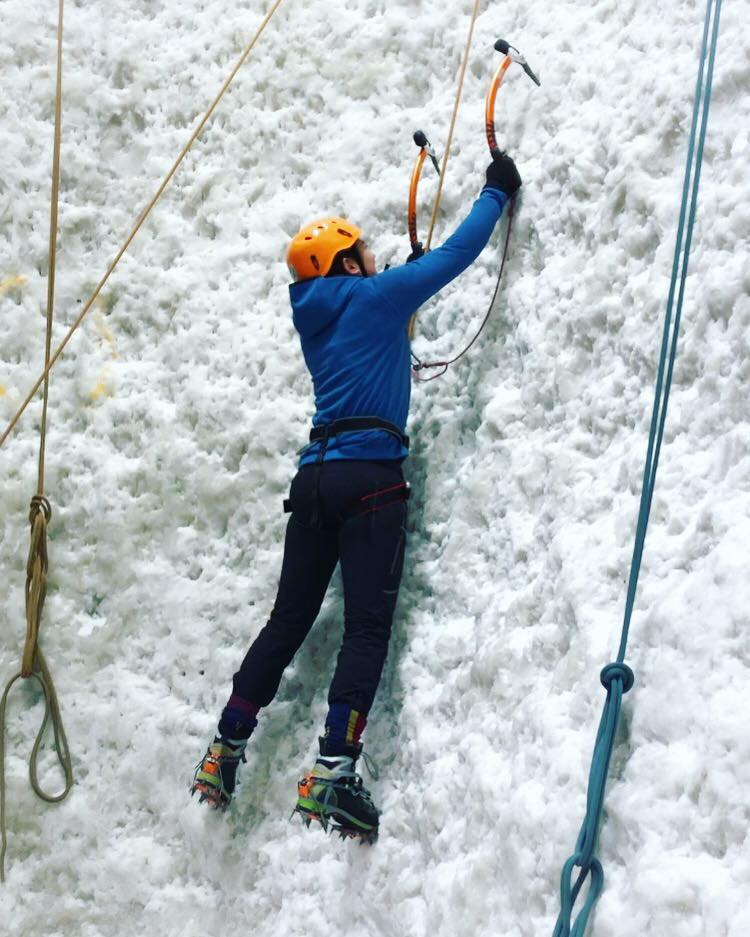
After a 10-minute drive from our overnight spot, we arrived at Ice Factor in Kinlochleven – the largest indoor ice climbing centre in the world. It’s an impressive building which houses an indoor rock climbing wall, shop, cosy café and ice climbing area, which is pretty much a giant freezer. We’d booked in for the earliest taster session of the day, keen to have as much exploring time left over as possible. I started to write about ice climbing in this post but I got carried away, so for the fine detail read my separate post – Ice Climbing for Idiots. Basically, it was really fun and I want more.

Hiking

We left the centre with big smiles, grabbed our hiking kit from the van and set off on a route we’d planned the previous evening. We had hoped to climb some munros (Scottish mountains over 3,000ft high) in the Mamores range, which lies between Kinlochleven and Ben Nevis. We actually ended up doing a different route which took us up and west, rather than north, due to a disappearing footpath and some dodgy-looking weather over the mountain tops, so unfortunately we didn’t reach any summits.

Nevertheless, we didn’t mind deviating from the plan because we’d set off late, got some breathtakingly-awesomely-stunningly beautiful views down the length of Loch Leven and had a lovely couple of hours anyway, despite some questionable “footpath” terrain and glute-burningly steep bits. The hike also took us past Grey Mare’s Tail waterfall, which is well worth the short walk from Kinlochleven.


Fort William50474548_550658935436708_6670099998987780096_n

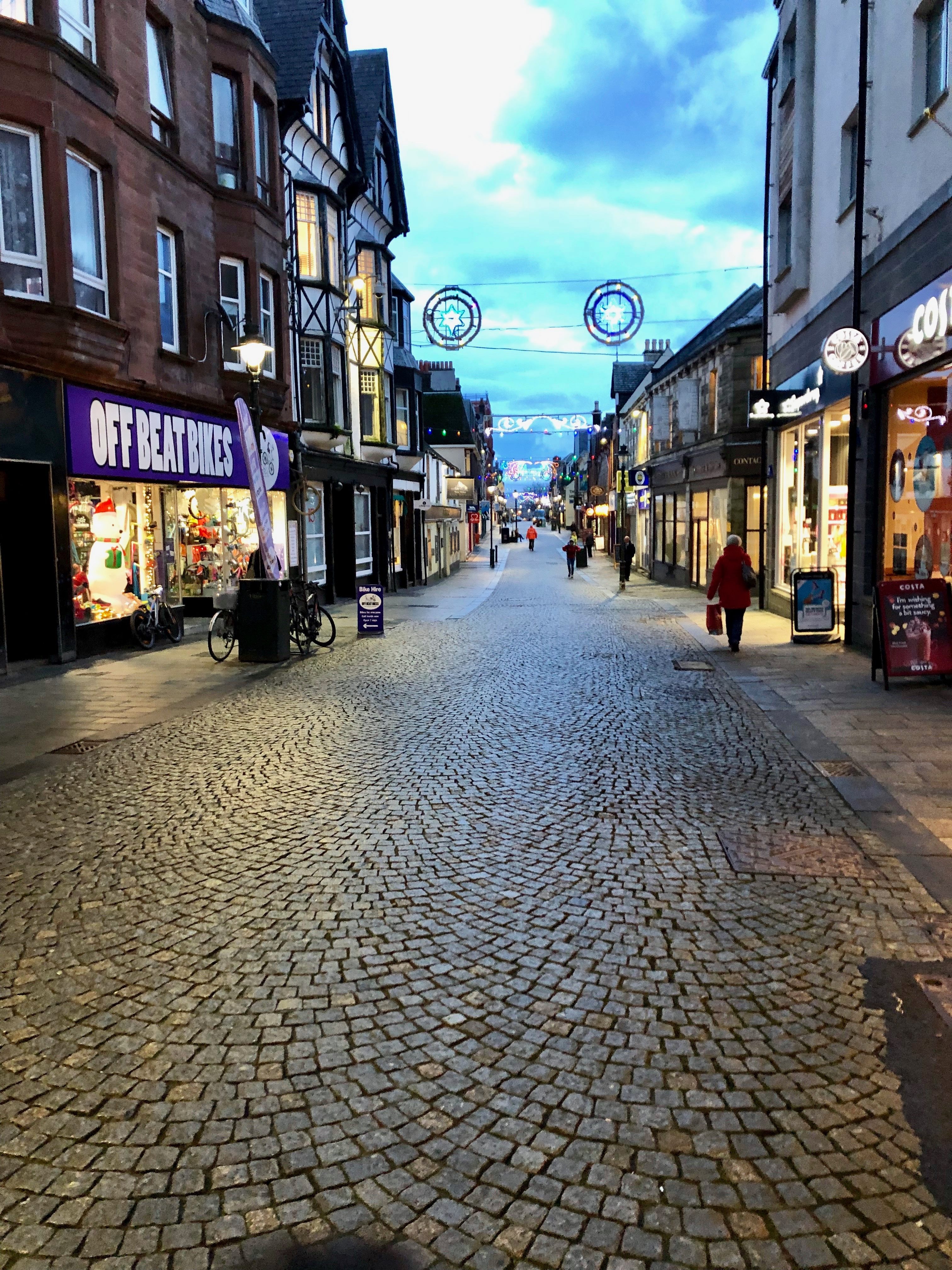
Our alternative route meant that we got back to Björn with enough time spare to get to Fort William for a wander round. It’s an attractive town with plenty of shops and pubs, and seems to be a kind of outdoorsey “hub” with a nice buzz. We managed to do a bit of Christmas shopping before treating ourselves to a meal in a café – I don’t think a jacket potato has ever tasted so good. Fed, warmed and out of daylight, we got in the van and headed east.

The Cairngorms

We’d arranged to meet a friend to climb a munro in the Cairngorms the following day. I chose Lochnagar after reading about it in a “Britain’s greatest mountains” feature of The Great Outdoors magazine (don’t tell my cool friends), so we drove the three hours there from Fort William. It was a shame to drive across so much of the National Park in the dark, but we’d seen it before and were keen to make the most of the daylight hours outside. We arrived at the Spittal of Glenmuick quite late and quite tired, so we parked along the dead-end road, admired the blackness of the sky and the utter, pindrop silence, packed bags ready for an early start and slept.

Scotland, Day 2: The Highlands – Glencoe

Monday 10th December

Admin

I woke up in heaven. We were nestled at the base of Buachaille Etive Mor, a towering, perfectly triangular snow-topped mountain, with just a small coppice between the van and a wild, open plain surrounded by rugged peaks. The horizon glowed orange, which turned from pink through lilac into the cool blue sky above, and the air was dry and crisp.

Once I’d stopped staring, morning admin commenced. This consists of changing the bedroom into the kitchen/living room (ie. turning the bed into the rear-facing seats and putting the table up), eating porridge, drinking coffee, tidying things away, making packed lunches (jam sandwiches on every trip, without exception – quick, cheap and highly transportable), brushing teeth, attempting to tame hair, packing daysacks and coming up with some kind of plan.

From the moment I decided to go to Scotland, I knew I wouldn’t leave without immersing myself in Glencoe – an area I’d fallen hopelessly in love with the previous year. Our Ben Nevis map doesn’t quite cover this area, so we went to the Glencoe visitor centre (usually well worth a visit, but this time the majority of it was being renovated) to pick up an OS map. We also did a bit of Christmas shopping in the small National Trust for Scotland shop, most notably buying a “wild haggis” toy (now called Hamish) for Nellie, my naughty black lab. Apparently tourists swear by haggis sightings.

Glencoe hike

From there we headed back to a roadside car park at the base of the three sisters of Glencoe, part of the Bidean nam Bian mountain range of complex peaks, ridges and crags. It’s clearly a popular spot; I was bemused by a coach-full of handbag-clutching, vans-wearing tourists that stopped to admire the view through their iPhone cameras before deciding it was too cold to hang about and scuttling off.

We followed a path between the left and middle “sister” ridges, Beinn Fhada and Gearr Aonach, which saw us scrambling over rocks, squeezing through gaps, peering down at waterfalls over sheer edges and generally being awestruck by the dramatic, serene beauty of the place. The sisters towered over us on both sides, cold, hard rocks stood in front waiting to be scrambled over, and behind was the valley of Glencoe in all its wild, rugged, sandy-yellow winter glory. Oh Scotland.

Eventually we reached the end of the path, which overlooked a long, bathtub-shaped plateau surrounded on three sides by curving, steep-sided ridges. We sat on a rock enjoying our jam sandwiches, then clambered down. It looked as though there was once a river (or glacier?) running through from the narrow end with the snow-topped ridge, which had carved out the valley and left thousands of loose rocks that were awkward to walk on, and there were huge, house-sized boulders scattered as if giants had thrown and left them there.

I couldn’t resist the lure of nature’s playground, so I had a quick climb on a too-tempting boulder plonked in the middle of the plateau. As the path didn’t seem to go anywhere we headed back along the same route, stumbling down the uneven paths and grinning as we bashed knees and scuffed elbows on sticky-out bits of rock. Fortunately there was barely anyone else on the path, so our ungainliness went unnoticed.

Back at the car park we found a tourist information board, which informed us that we’d walked along the Lost Valley (Coire Gabhail). The “plateau” was where the MacDonald clan hid stolen cattle in the 1600s – I have no idea how they mooved (not even sorry) cows up there – and fled to after some escaped the famous Glen Coe massacre of 1692 (fascinating and heartbreaking bit of history, google it).

Red deer at Glen Etive

We left the car park and drove back to the 12-mile dead-end Glen Etive road where we’d stayed the previous night. Glen Etive is where the Skyfall (James Bond) house was set/CGI’d onto, and I’d read that it’s worth a visit because of its remote beauty. It’s a stunning valley, less well-known than Glencoe, flanked by imposing ridges darkened in places by deep green pine forests.

I was desperate to see red deer on this trip and I’d been looking out carefully since we’d got to the Highlands. So a few miles along the road, I could barely contain myself when we came across a couple of people hand-feeding carrots to a young stag. We stopped, and when they left I slipped out the van to try and get some photos.

The rest of the herd were down a bank by a wide, shallow river, guarded watchfully by a majestic stag. I snuck down the bank and moved diagonally through the trees to get a better shot without approaching the deer directly; the stag kept an eye on me as his herd grazed and drank from the river. It was so surreal – I’d have been thrilled to see one red deer at a distance, let alone a whole herd at close range. The light was fading so I had to hold the camera super still; I would have got better photos in better light, but I don’t care – I’m delighted. The deer are even more wildly, gracefully beautiful in person.

Admin

Eventually I tore myself away and we drove back to Glencoe between towering, silhouetted ridges against a navy blue sky. I loved that drive; I found the mountains bearing over us in the dark simultaneously humbling, ominous and comforting, as if we were both at their mercy and under their protection. We stopped for supplies (notably wine) at the Co-op in Ballachulish, near Glen Coe village, then went to Kinlochleven to book an ice climbing session at the indoor centre for the next day.

That done, we stopped for the night in a layby on the south side of Loch Leven. The blackness of the water merged with the dark silhouette of the huge ridge that lay on its north side, which was interspersed at loch level with the twinkling lights of occasional buildings. We appreciated the twinkly lights while eating sausage casserole and planning for tomorrow.

Another good day.

Scotland, Day 1: Loch Lomond & the Trossachs

Saturday 8th December

49739093_2297932640531669_5421220313578864640_n

Practical > Pretty

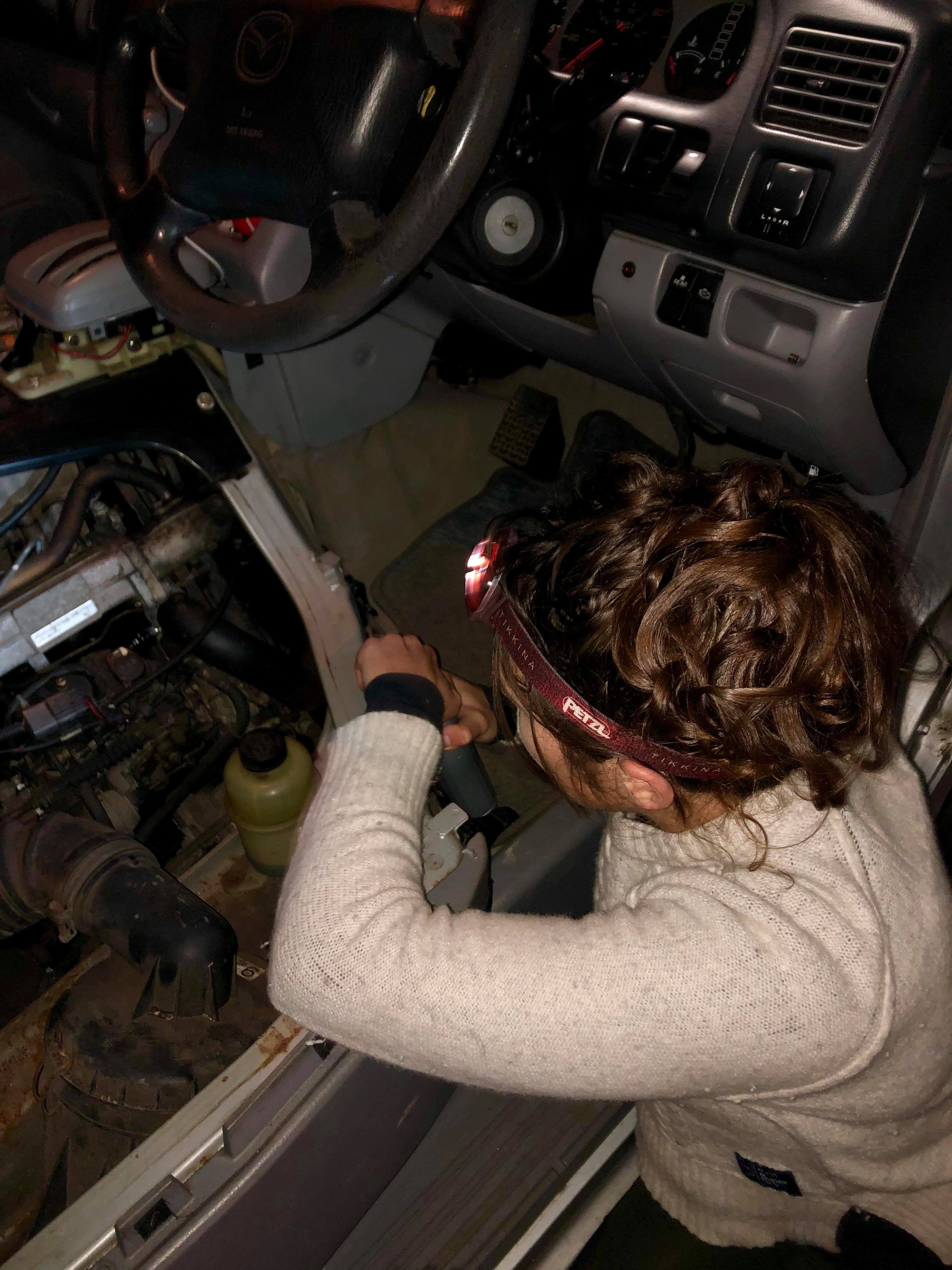
We left Winchester at about 6pm, aiming to get to Lancaster that night. The drive went smoothly until Björn started making a funny whirring noise near Birmingham; a quick google search and phone call to dad suggested that either a) the power steering fluid needed topping up, or b) there was an issue with a belt and we’d have to cancel the trip. Fortunately we’d stopped for fuel anyway, so we picked up some more oil, faffed about putting it in (as the engine is under the seat) and carried on, immensely relieved that the noise had stopped. We arrived near Lancaster around 1.30am.

Sunday 9th December

We left at about 5.30am and headed into Scotland, stopping for a quick nap near Lockerbie. The drive was lovely; the road (A34(M)) was flanked by undulating, bracken-covered hills, and we were surrounded  by majestic wind turbines. Once we reached Glasgow, a brief trip into Asda (as a porridge lover I was delighted by the extent of the oats section) confirmed that we had no desire to spend much time under a roof or around humans, so we drove on to Loch Lomond and the Trossachs National Park.

Having kayaked on Loch Lomond last year, we parked at Arrochar on the northwest bank of Loch Long and headed up a zigzag path through a pine forest towards Ben Ime and the Cobbler, part of the “Arrochar Alps”. The Cobbler is purportedly one of Scotland’s most celebrated mountains, probably because of its distinctive shape – it’s said to resemble a cobbler bending over his work, but I’m not sure I see it. It is impressive though, and I’ve noted for future that it looks great for climbing.

As we broke out of the forest and walked above the treeline, the views were stunning. Despite the winter, there was colour everywhere: the sandy yellow of the rippling grass contrasted with the rich, dark green of the forest, which contrasted with the reddish brown of the mountains, which contrasted with the calm blue-gold sky. The surrounding mountains cast enormous shadows over each other as the setting sun bathed the summits in warm, orange light and glistened on the still surface of Loch Long, and the Cobbler towered dark and dramatic over us. I see why the poets liked Scotland.

49633951_382593715634701_5387660066193145856_n

Happiness

Unfortunately we turned round before reaching the Cobbler and Ben Ime’s summit because the light was fading and the car park ticket was running out, but the short (2ish hours) walk was well worthwhile. Back at loch level, we drove north towards Glencoe along the [famously “bonnie, bonnie”] banks of Loch Lomond and through the plains of long valleys shouldered by vast, protective mountains.

We parked for the night in a lay-by at the bottom of Buachaille Etive Mor (although we didn’t realise that until the next morning), apparently the most photographed and one of the most loved mountains in Scotland because of its typical pyramid shape, on the Glen Etive road [photos to follow in my next post].

49126859_1189168281256621_8098131424671956992_n

Dinner 4 days (literally)

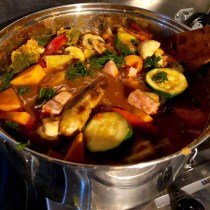
Then I cooked properly in Björn for the first time ever: a big sausage and veg casserole, enough for 3-4 days’ worth of dinners. It was lovely, and we slept like logs under the most beautiful night sky I’ve ever seen – clearer than clear and black as pitch, scattered with what looked like a hundred million-billion-trillion stars. Despite all the driving, a good first day.

MTB Whinlatter, Lake District

I discovered Whinlatter Forest Park almost by accident. Bertie and I planned to hire bikes and spend the day exploring the Langdale Valley, but we didn’t pre-book (“we won’t need to”, he said…) and the hire place was closed when we got there. Cue arguing, sulking and a conciliatory drink at the lovely, remote Woolpack Inn.

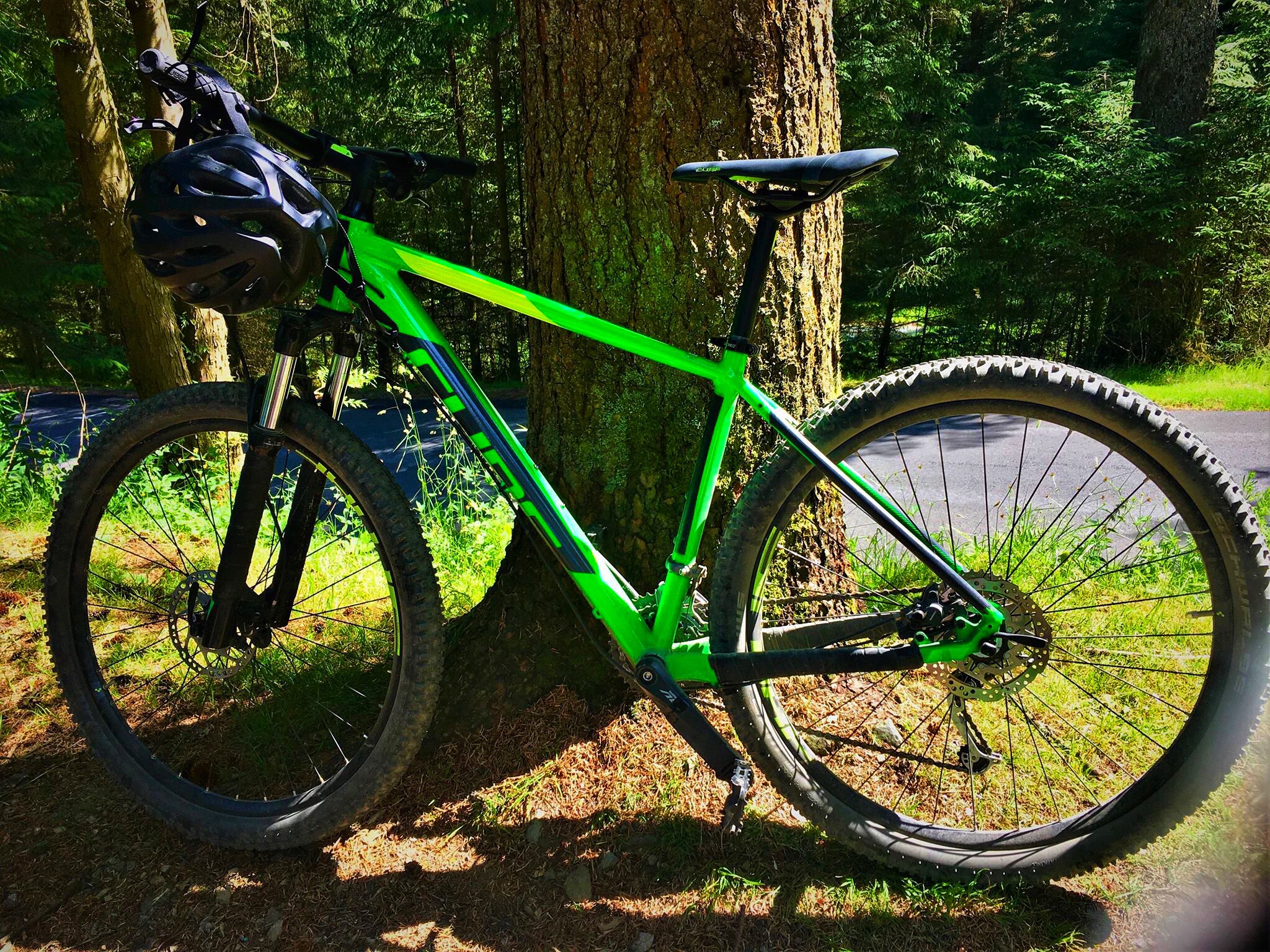
I googled other hire places and the nearest ones were at Keswick or Whinlatter, which I’d never heard of. I was sold when I saw “mountain bike trails” at Whinlatter, so after an hour’s (silent) drive we were fed, helmetted and fixed up with a couple of neat Cube hardtail bikes. The centre is well thought out, with a good café, shop, loos, information centre and big car park, and there are three MTB trails – the blue Quercus trail (“moderate”), red Altura North loop and red Altura South loop (both “difficult”).

Altura North

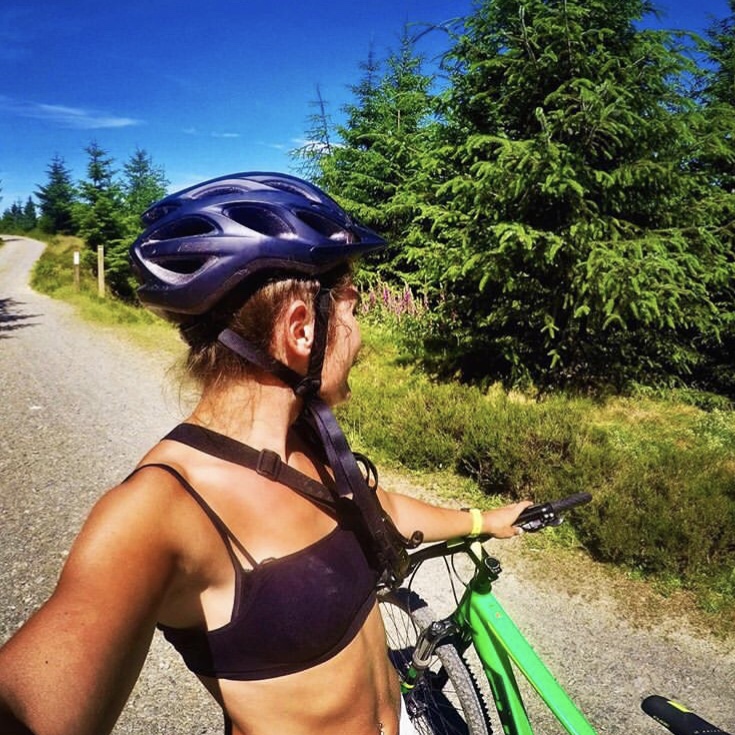
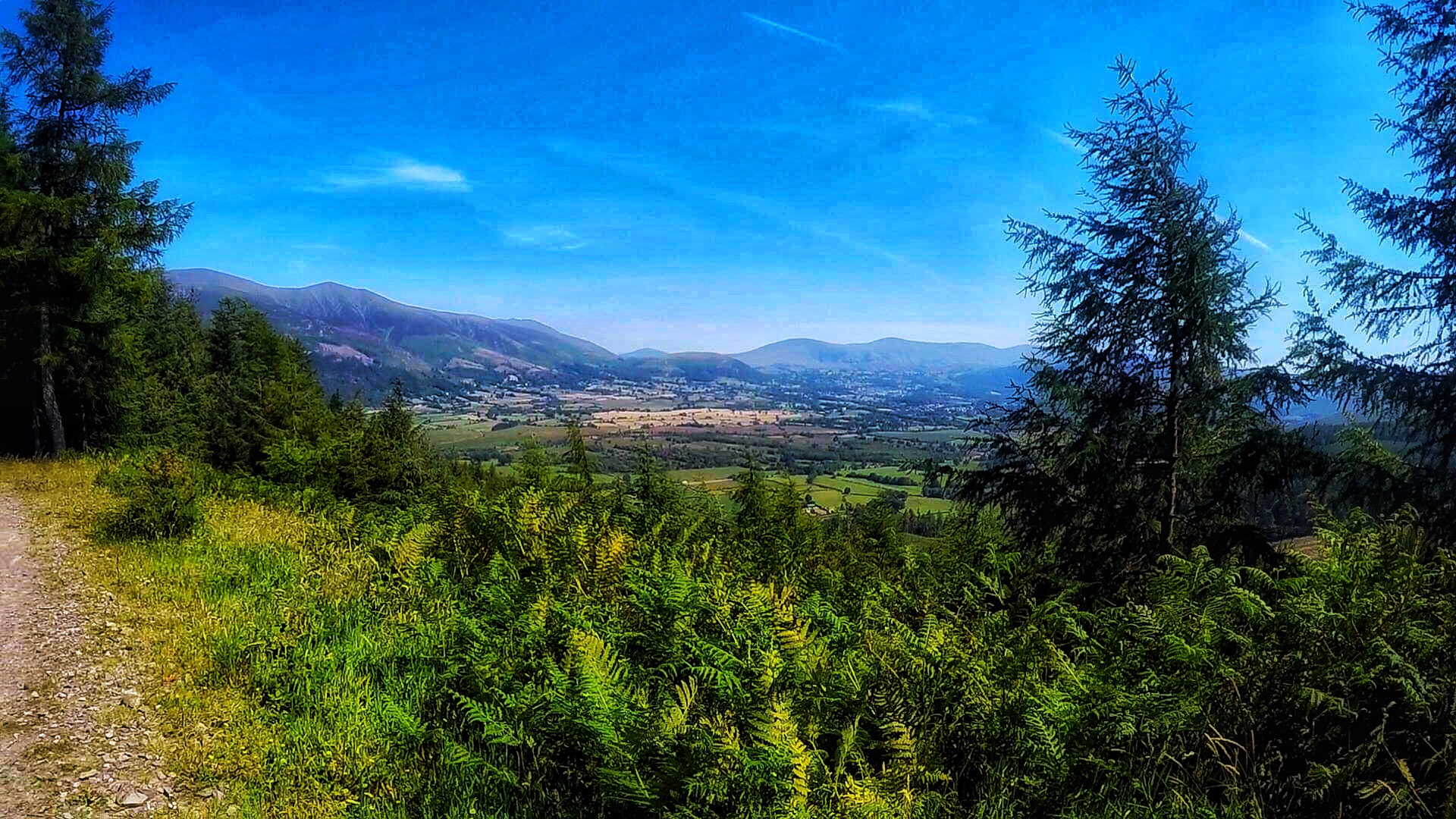
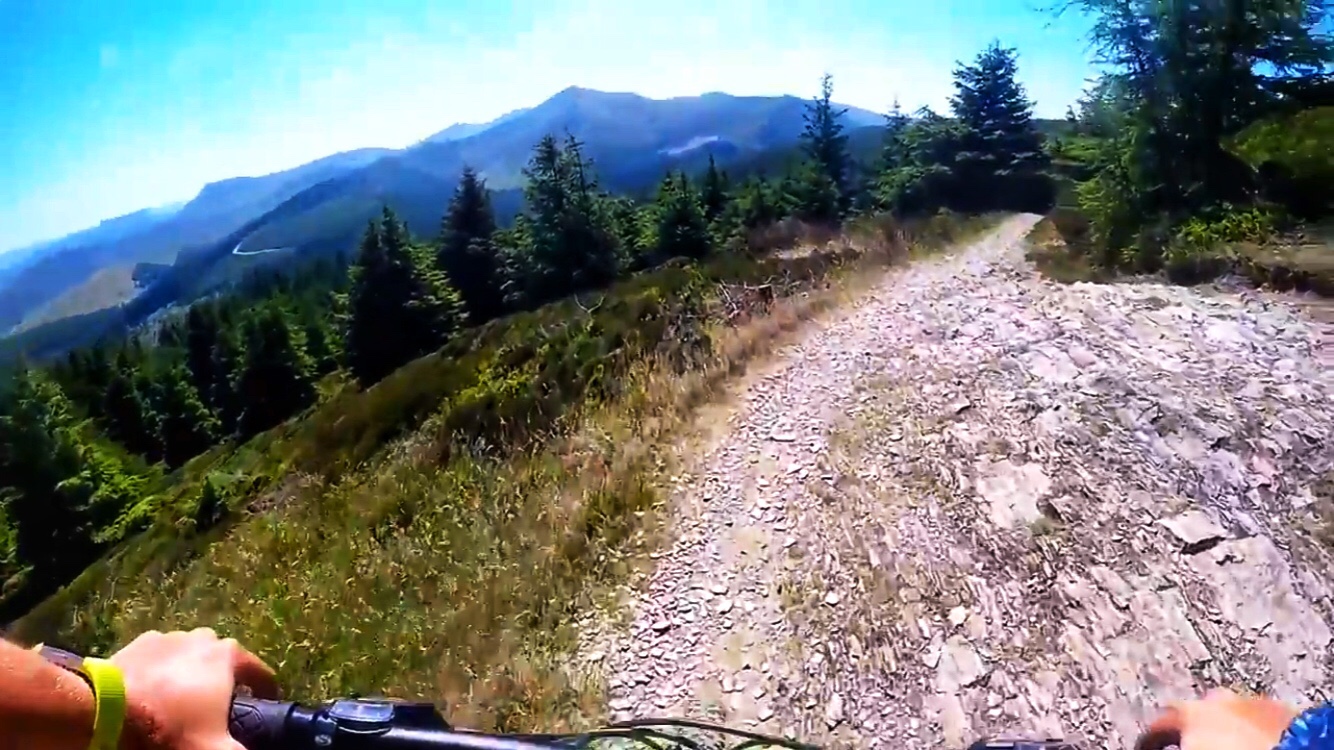
We started with the Altura North trail, 10km of bliss (for me) / terror (Bertie). It’s a well-signposted, well-maintained singletrack route with 200m ascent, exhilarating downhill sections and breathtaking views over layer upon layer of green, brown and hazy blue mountains. There are some tough climbs, particularly “The Slog”, which require a decent level of fitness and determination. Equally, the downhill sections are challenging in places but SO worth the effort, with sweeping berms, technical rocky and rooty bits, small drop-offs, jumps, flowing switchbacks and optional features graded “black”; the “Grand National” section is particularly thrilling, as the forest opens out onto a steep, gravelly, long switchback. Somehow I avoided causing serious damage to myself, the bike and the densely wooded forest, and I grinned stupidly for the whole 10km.

Quercus

Running out of time, we skipped the Altura South loop to my absolute dismay. However, the 7.5km Quercus trail didn’t disappoint. While it was more family friendly than the Altura, it still had technical sections, a few boardwalks, some flowing downhill and stunning views. The terrain was smoother (less rocky/rooty) than the Altura trail and it felt slightly more artificial, possibly just because it was less rugged. Although less thrilling, it was definitely sufficiently fun – a great warm down XC trail with some really satisfying, flowing sections.

Despite being a glorious day, mid-heatwave (late June), the forest wasn’t too busy. There were a handful of other riders out; a mix of seasoned-looking bikers with bank-breaking kit, happy-go-lucky visitors (sadly our category…) and a couple of family groups on the Quercus trail. The forest is also popular with walkers, but fortunately the real singletrack didn’t cross any pedestrian paths so our human contact was limited to pointing a lost rambler in the right direction on one of the gravel tracks between the “fun bits”.

So by late afternoon, the grumpy Naomi of that morning had transformed into a gleeful, buzzing idiot with sparkly eyes and an uncontrollable grin. Whinlatter exceeded my expectations and I’ve sworn to return to take on the Altura South loop. I’d also like to do the trails at Grizedale (west of Lake Windermere, also exhilarating) again, which – back in 2014 – I crashed on, horribly twisting an ankle and ending up at Keswick minor injuries unit (but not before I bandaged it up and completed the trail). Looks like another Lake District trip may be in the pipeline…

https://youtu.be/mI0SFrkyv_w – GoPro clips of the trails, unfortunately I adjusted the chest strap badly so it’s angled down!

A Jaunt in Jersey

On Saturday, like all the greatest rugby players, Southampton’s ladies hopped on a flight to fulfil their fixture. I was as excited as a dog in a cattery; I hadn’t played rugby for two months, hadn’t flown for five years and I’d never been to Jersey before.

We flew from Southampton, arriving mid-morning and walking the short distance to Jersey Reds rugby club. The weather was lovely – mid-teens and sunny, clear blue skies – and the club facilities were much posher than we’re used to. We kicked off at midday and played a tough, close game of rugby; we were 14-12 down at half time and it could have gone either way, but a really solid team performance saw us triumph 22-14 as the final whistle went.

44593689_341334546618836_22474683391672320_n

Having made the mistake of wearing silky, billowey, vibrant red trousers with a Turkish carpet-type pattern on the plane while everyone else wore trackies, I downed a pint for “fanny of the field” and my condition deteriorated steadily from there. The next twelve hours saw us taxied to our hotel in the island’s capital, St Helier, dressed up (American theme, I was a double-denim clad cowgirl), fed, very well watered (all alcoholic) and messy; we held a tour court, made lots of friends and otherwise “bonded”. At various points I found myself submerged in a swimming pool, a jacuzzi, a water fountain and a (group) bath – I’ll spare the details.

On Sunday I woke around 6.30am and climbed out of the bed I’d crawled into about three hours before, keen to explore. I stumbled out of my teammate’s hotel room and into my own (long and innocent story), pulled on any old clothes and headed out, free map from reception in hand.

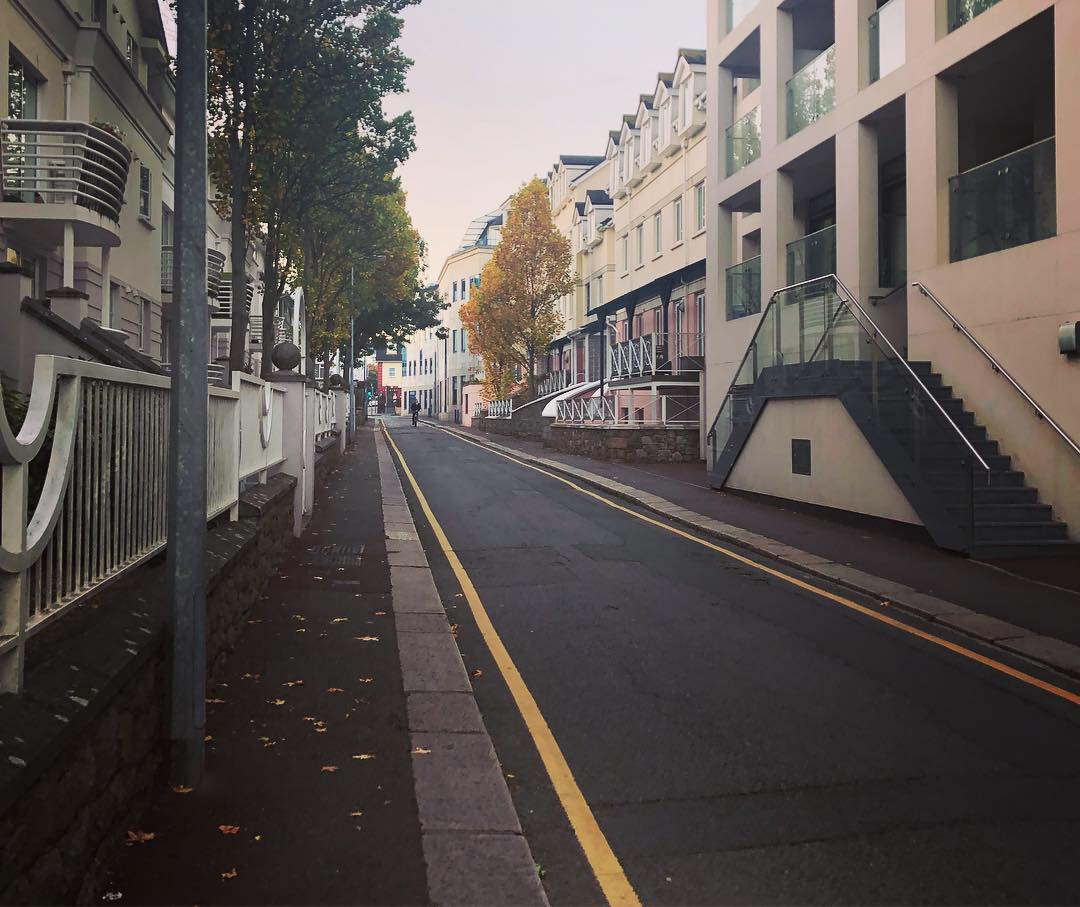
St Helier wasn’t what I expected. To me, the style and layout of the streets felt much more French than English; the buildings were mostly quite new, smart and at least three stories high, and the roads were straight and very clean. There were a handful of independent newsagent-type shops open, rather than small chain supermarkets like in England, but otherwise most places were closed. I remember the area  around the harbour having a clean, modern, upbeat feel on Saturday night, but come Sunday morning the streets were eerily quiet.

44658286_1213732558766070_451043511077175296_n

It took about 15 minutes to walk from the Mayfair hotel to the beach, and when I got there the view was lovely. The early morning sun was rising over St Helier’s C-shaped bay, glistening on the calm water and warming the sand. Four strikingly symmetrical tower blocks framed the south east of the city, silhouetted by the low sun, and jagged rocks jutted out of the sea as if challenging boats to get into the bay. I walked out to the end of the pier, impressed by the big bathing pool structure, and admired the view.

A couple of hours later I had explored a bit more, breakfasted, packed and met my sluggish friends. With some time to kill before getting the coach to the airport, a few of us headed back to the bathing pool and I braved a swim in the flat, fresh, salty water, wearing my now infamous silky trousers. It was cool (cold) but really refreshing. I swam around for a while and only stopped because my ribs were hurting (rugby) and my un-elasticated trousers started to rip, then shivered my way back to the hotel.

The coach picked us up and took us along the south coast towards the airport, on the west of the island. What I saw of the rest of St Helier looked clean and new, and the long, golden, sandy beaches were amazingly quiet given the clear blue waters, cloudless skies and warm sun. There’s an interesting looking castle and fort that can be walked out to at low tide, and I learnt from Saturday’s taxi driver that Jersey has one of the largest tidal ranges in the world. Looking out to sea, the clear, pale blue water looked shallow for a long way out, and the shores were guarded by jagged, dark rocks. This, combined with the pale pavements and  numerous palm trees, gave the place a really Mediterranean feel.

We went through the pretty, older-looking coastal town of St Aubin and, as we had plenty of time before our flight, our driver gave us a little tour south to Noirmont point. He parked the coach and let us out for ten minutes, after which time I think everyone was sold on Jersey. We could have been in Greece; the headland overlooked a clear, azure blue bay, skirted by reddish-brown granite cliffs topped by lush, green shrubbery, yellow gorse and purple heather. I scrambled down the grippy rock to get some photos, a little bit gutted that I wasn’t there to climb.

That was about as much of Jersey as I saw; the bus journey back to the airport was unremarkable – the buildings were new and clean and there were lots of palm trees. I learnt a lot about the island from talking to various people. They have £1 notes, and the watermark on their notes is a Jersey cow. You have to have lived there for something like 10 years before you can buy property, you need special work permits and the cost of living is similar to London. The  island is only 9 miles long and 5 miles wide, with a population of just 100,000. It has its own financial and legal systems, funny tax rules, and it’s about 15 miles from France and 85 miles from England. It has its own language, which is barely used, and lots of wartime history. Apparently it’s great for surfing (along the west) and climbing.

Overall, Jersey was totally different to what I expected. I thought it’d feel like the Isle of Wight – really just an extension of England – but it felt like a totally different country. We weren’t there for long and I didn’t get the chance to run around the island like I’d hoped (my ribs were too sore) so I only saw a small part of it, but I’d recommend a visit. I’d like to come back to climb, surf and explore the coast more…

New Forest Bike Ride, September 2018

When my outdoorsey friend from North Wales visited my humble little corner of England last month, I promised to show him the New Forest (National Park – absolutely not an innuendo). I figured the best way to do this was on bikes, so I fixed Rocky’s puncture and chain-lubed him up.

We met at Stoney Cross Car Park and headed West. I hadn’t planned a route, I just thought we’d go with the flow; naturally, after riding along roads, through trees and across grassy openings, we managed to end up in what is probably the least suitable part of the Forest for mountain biking and/or showing friends around: the Netley Marsh/Totton urban sprawl.

I have nothing against the area, but I’d wanted to show Mike  the New Forest in all its glory: heather-covered moors grazed by rugged ponies and edged by dark treelines. Purple-brown heaths, rippling golden grasses, trees every shade of green and open skies bathed in the translucent lilac-blue-gold of late summer sun. Netley Marsh/Totton was strikingly grey. And it rained.

Apologetically, I attempted to lead us back into the Forest and was unsuccessful for a while. However, we stumbled across a pump track at Totton which (in my opinion) made the detour worthwhile. I’d never been to one before but it was lots of fun – a couple of loops around and my heart rate was up, my arms were burning and I was grinning stupidly. It was sketchy at times, when I misjudged when to pedal and scraped the tarmac “humps”, but fortunately Rocky and I left in two complete pieces.  It turns out the track cost £43k and only opened a couple of months before. [See the GoPro footage from the pump track]

Playtime complete, we rode out of the urban sprawl back towards the Forest via Ashurst, travelling south through woods and across open heathland. This was more what I’d hoped for; I couldn’t call it mountain biking (especially not to Mike, hailing from Snowdonia) as the terrain was quite easy-going and there was nothing particularly steep. The most difficult part was the narrow section where the high, tufty “kerbs” on either side of the track meant I could only pedal in half-rotations, but at least I’d shown my friend some of the “actual” New Forest.

We went through Denny Lodge and stopped for a drink at the Mailmans Arms in Lyndhurst, then rode back towards the car park via Emery Down. The roads seemed long, and it was hard work having cycled a fair way on mountain bikes and empty stomachs. We cycled 40km in total; back at the van, I apologised for being such a terrible tour guide and promised I’d do a better job of showcasing the New Forest next time.

In the future I think I’ll show my “guests” the north west of the Forest, rather than the central east. I went for a lovely ride out Linwood/Mockbeggar/Fritham way  back in April, so maybe that’ll be my destination of choice… I’ve heard tell of a mountain bike centre in the south west, around Avon, so that’s on the cards for a future day out. In the mean time, I’ll work on my tour guide skills, and maybe I’ll prepare an actual route next time…

Endnote: Mike didn’t seem too disappointed  – we explored Corfe Castle afterwards and went climbing at Dancing Ledge in Dorset the next morning, so I think I made up for it!

Surf Perranporth: Like Newquay but Better

For many people (“townies”, as my mum would say), Newquay is the only place that exists west of Plymouth and THE place to go surfing. While the surf on the North Cornwall coast is arguably the best in England, Newquay beaches included, due to the town’s reputation it can be logistical nightmare.

Go down on a sunny day, peak season, and parking is impossible and/or bank-breaking. The roads are full of kids, wannabe surfers and other things you shouldn’t run over. Drinks are too expensive, there’s litter everywhere, the sea is full of idiots and the evenings are full of late-teens throwing up alcopops.

That said, it depends what you’re after – I sound like an ancient woman but I’m guilty of throwing up alcopops on occasion, and Newquay is Cornwall’s [slightly trashy] tourist party central. With regards to surfing, arrive early enough and you should be okay to park and grab a small slice of beach space, although be aware that the masses will descend.

When I took a few friends on a spontaneous trip in August we went for the primary purpose of surfing  (drinking just kind of happened). Having surfed in Newquay before, I wanted to avoid the carnage and try somewhere new so we went to Perranporth, about 8 miles southwest of Newquay.

Perranporth beach is long, wide, sandy and edged by highly explorable rockpools, caves, dunes and grassy areas.  The surf is good and there are surf-only, lifeguarded areas, as well as swim/bodyboard areas. When we went the surf was decent, with 4-5ft waves spaced fairly nicely and breaking a fair way out.

The colourful little town has a lively (if touristy) buzz to it and there are plenty of shops, surf hire places, cafes and pubs/bars, although understandably not as many as Newquay (and they aren’t as trashy). We hired decent foam surf boards from Piran Surf for just £6/day, which is way cheaper than anywhere I’d been in Newquay, and food and drinks were priced fairly – use Tripadvisor to find the sort of thing you’re after. There are public loos at the Watering Hole bar/restaurant at the back of the beach and in the town. We arrived early and parked for just £5.50/day (free overnight) in Droskyn car park, which overlooks the beach and is a pleasant 10min walk from the town centre.

Overall, Perranporth is a buzzing little town with equal surf, more reasonable prices and fewer people than Newquay. It does get busy on a sunny day so get there early to ensure you get a parking spot and a bit of space on the beach (although people tend to stick to the town end – there’ll be loads of space if you’re willing to walk a little way). The flagged surfing areas are popular, although much less so than Newquay, and not so much so that you can’t surf. You can get away from surfing outside of the flags if you go to the left of the big  “Chapel Rock Pool” Island-type rock at the South end of the beach.

So my overall advice – if surfing is your priority, pick Perranporth over Newquay. If you’re out to get messy-drunk, regret getting laid or be a general public nuisance, go partay in Newquay. And please be nice to the locals, they dislike us enough as it is.

Read about my trip here – Spontaneous Surf Trip, Perranporth, August ’18

Endnote: I write this following on from my recent trip – don’t rule out other beaches!