Tuesday 10th September 2024
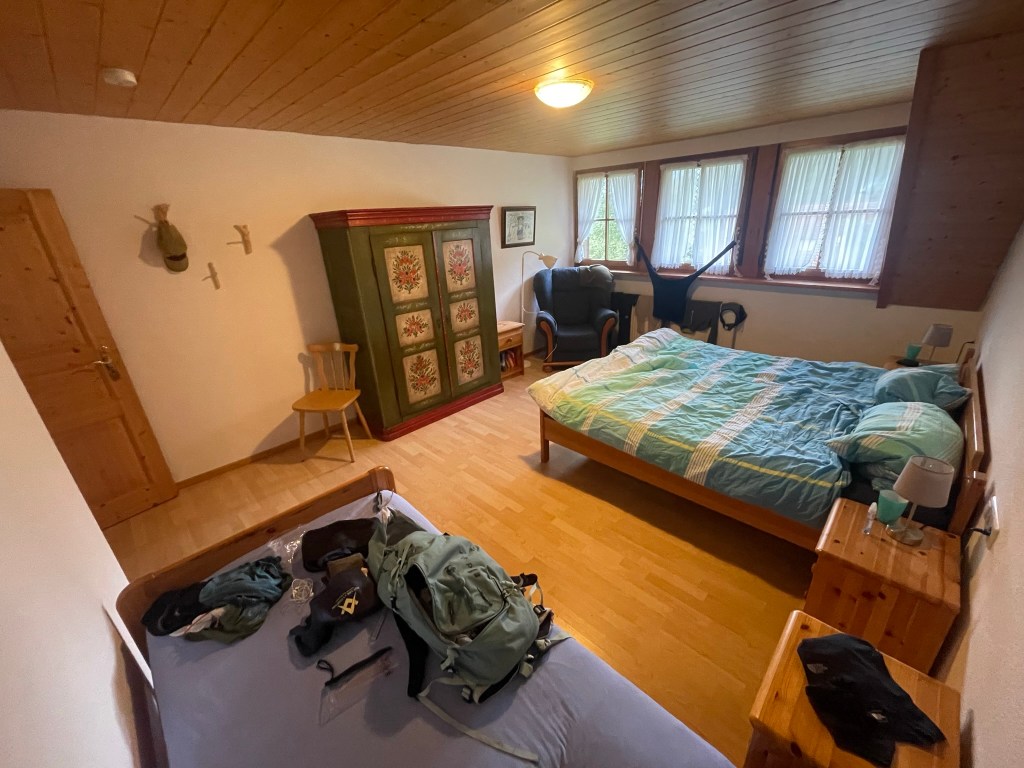
I felt as if I’d woken up in a dream. I lay under a pine-clad ceiling in a large room furnished plainly with a double and single bed, a floral-painted wardrobe and a comfy-looking armchair in a corner by three net-curtained windows, which revealed a steep, forested bank rising high above the back of the house in the misty morning light. After a hectic time planning this very-last-minute trip, it finally sank in that we’d made it past the travel hurdles I’d needlessly fussed about and were now deep in Germany’s Black Forest.
Journey
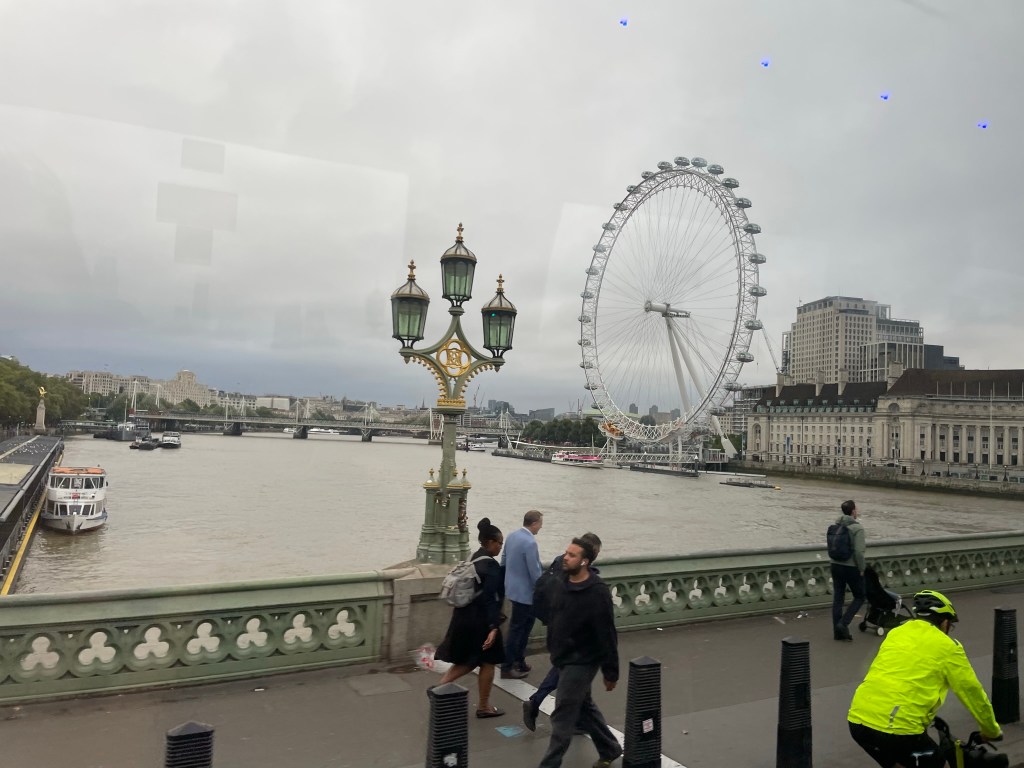
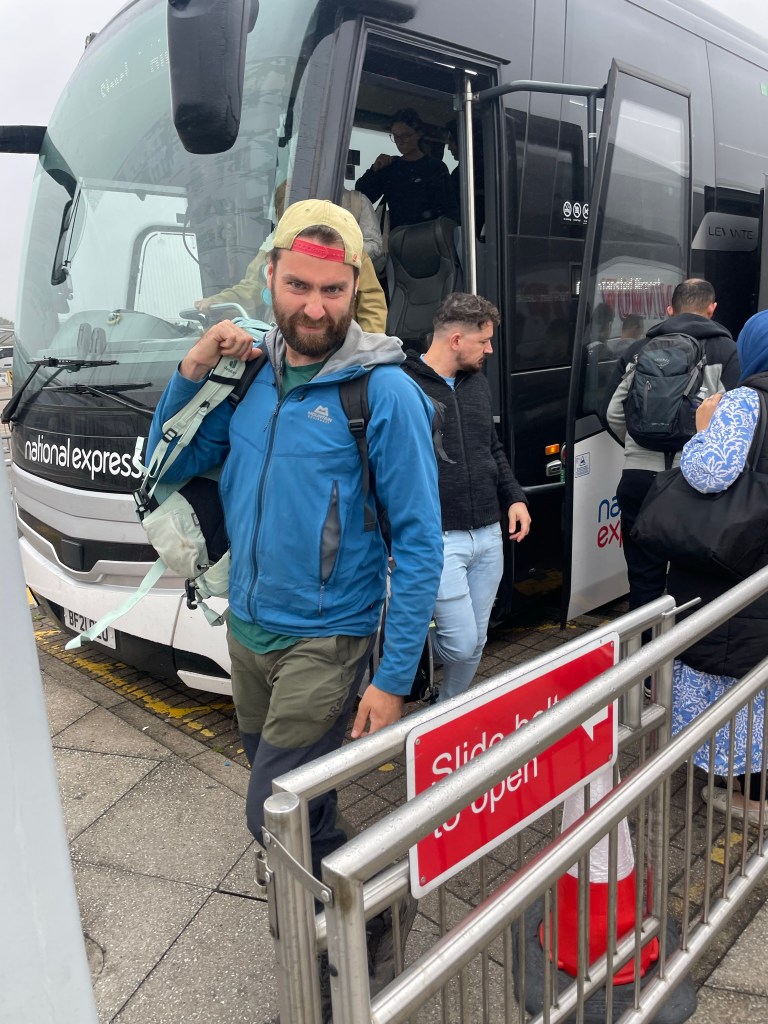
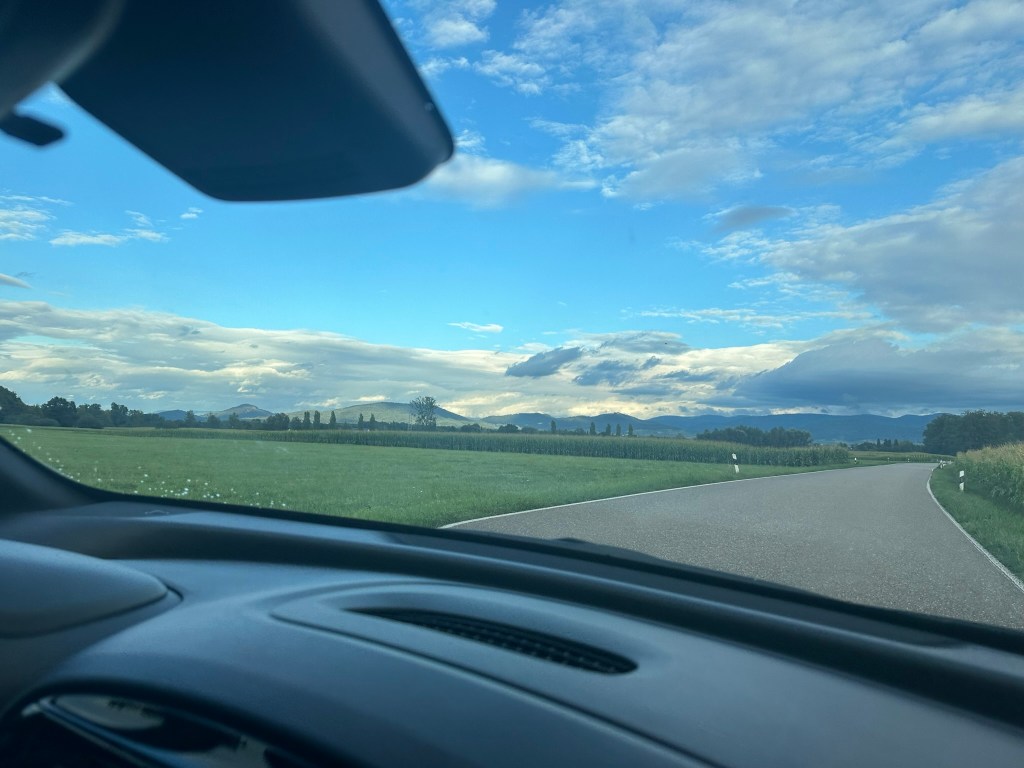
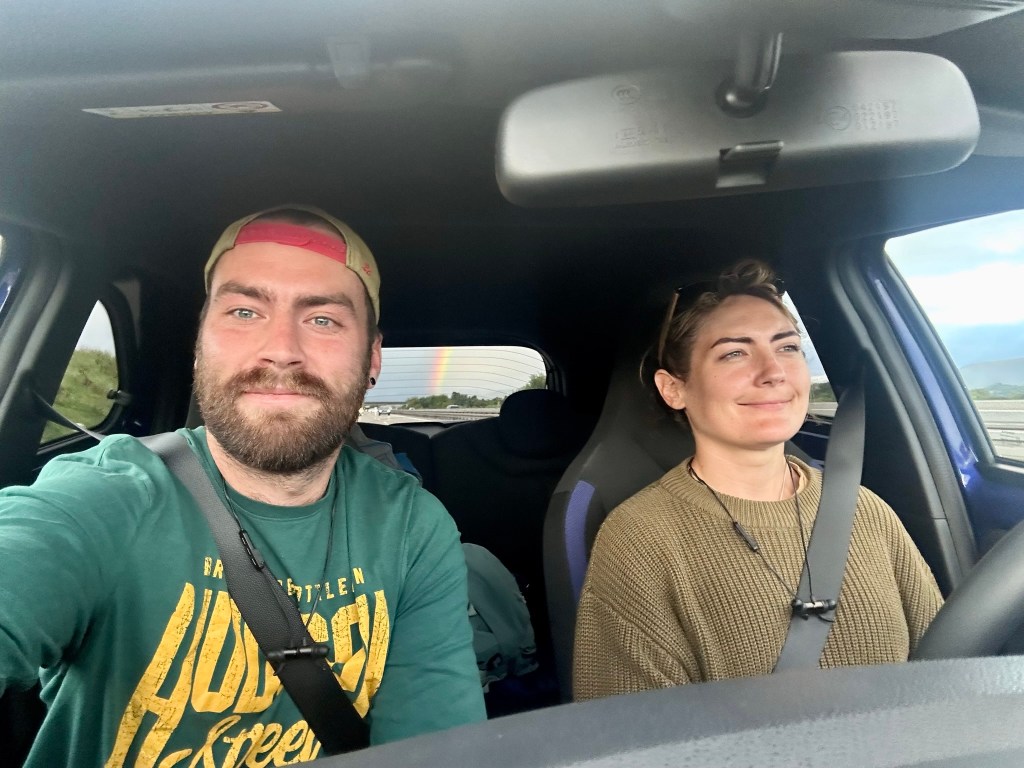
The first hurdle was getting to Stansted airport after a 4am start – not the easiest trip from the New Forest, but thankfully both National Express coaches were on time. The second was the flight, which was delayed by almost two hours and necessitated an anxious call to Europcar to check they’d wait for us. The third was collecting the car, which was more straightforward that I’d expected thanks to the lovely lady who received us, showed us round our shiny blue Toyota Aygo and – to my surprise – didn’t try to push us into purchasing deposit protection insurance. The fourth, and most intimidating, was driving an unfamiliar vehicle on the wrong side of the road (notably the autobahn in rush hour), without deposit protection insurance, for the first time in nearly five years, in the knowledge that the tiniest of knocks or scratches would cost us £800. The fifth and sixth were squeezing in a Lidl shop so we could eat and negotiating our late arrival with our host, as our accommodation was an hour and a half from Baden-Baden airport near a small town called Simonswald.


Accommodation
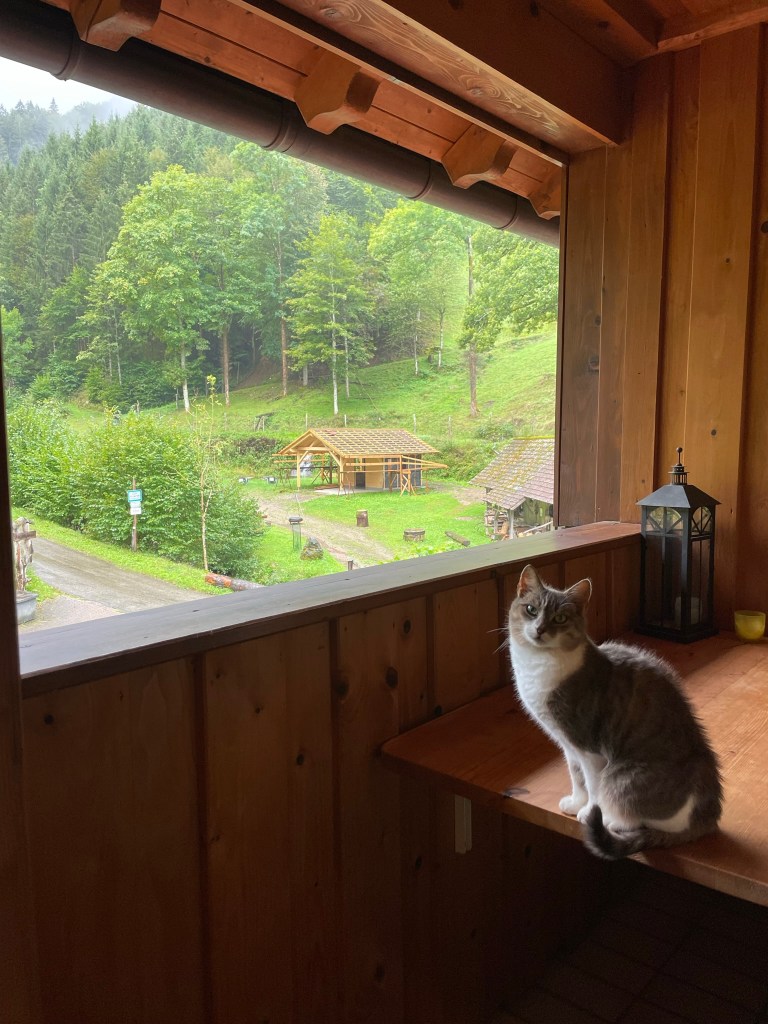
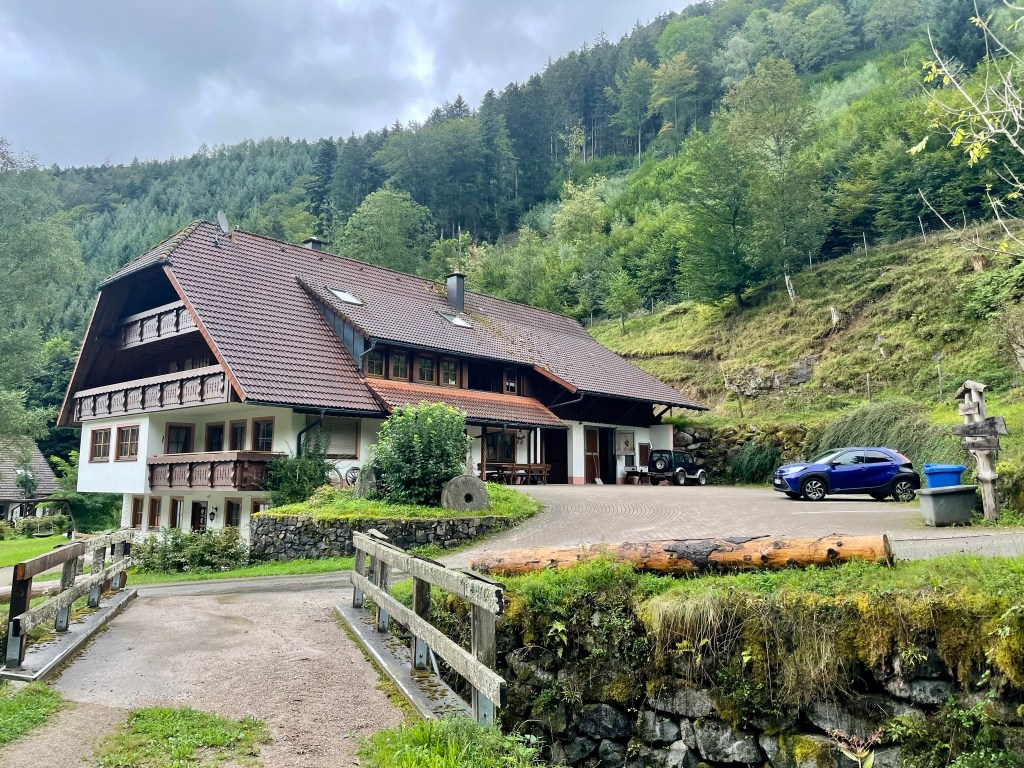
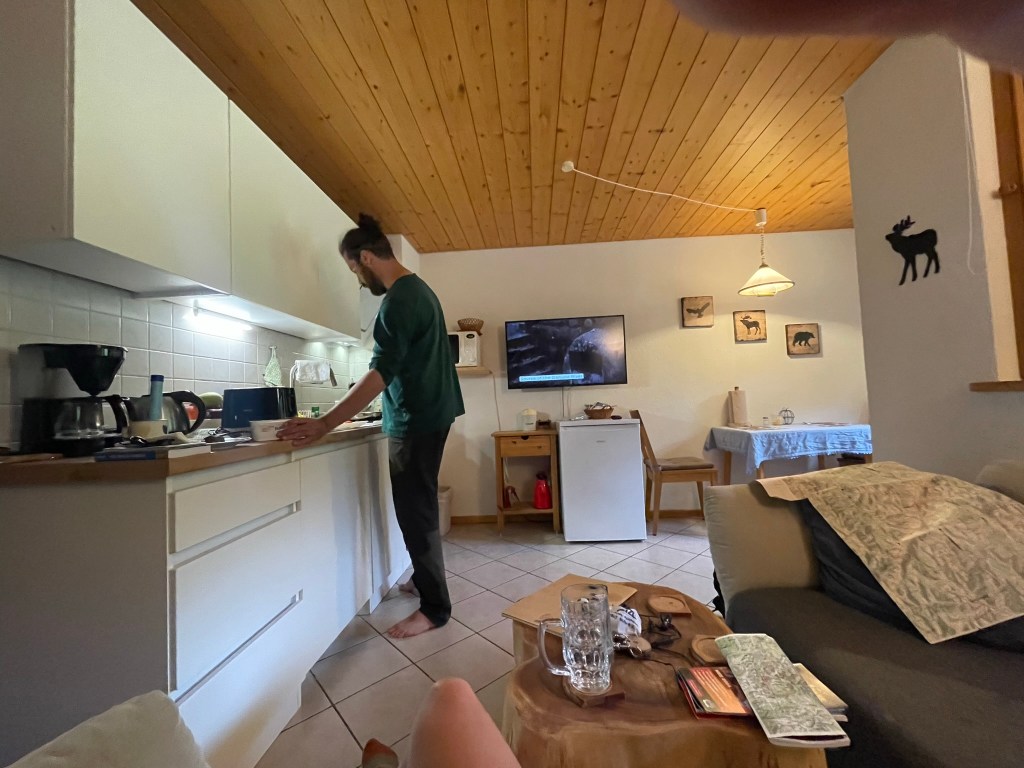
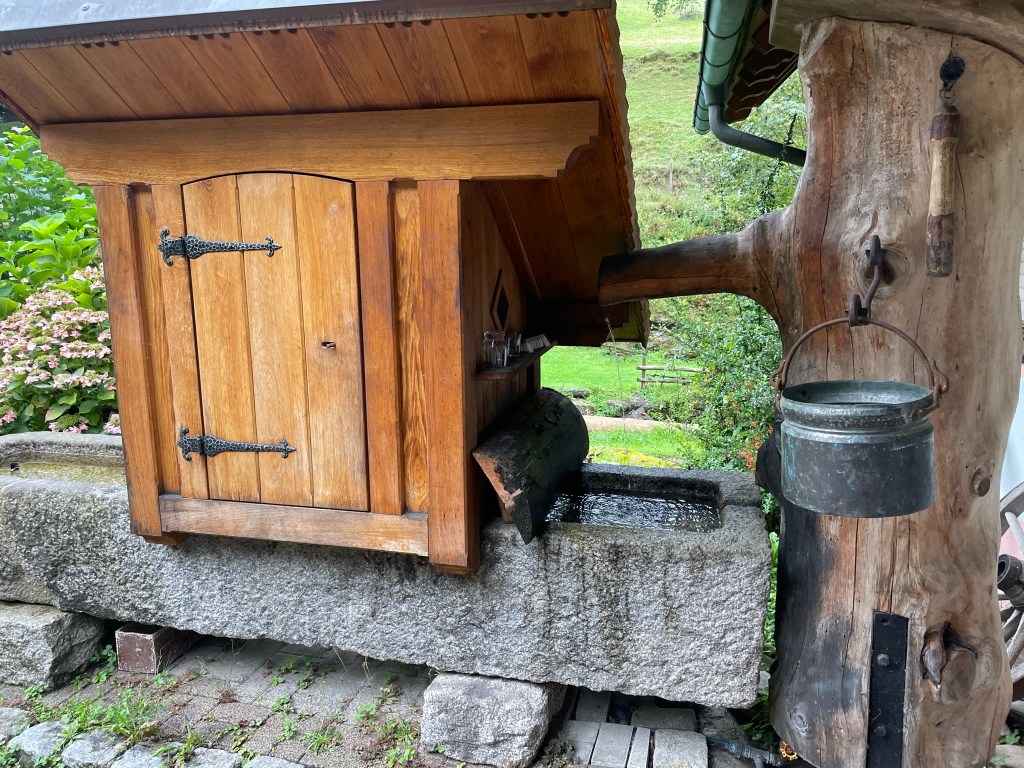
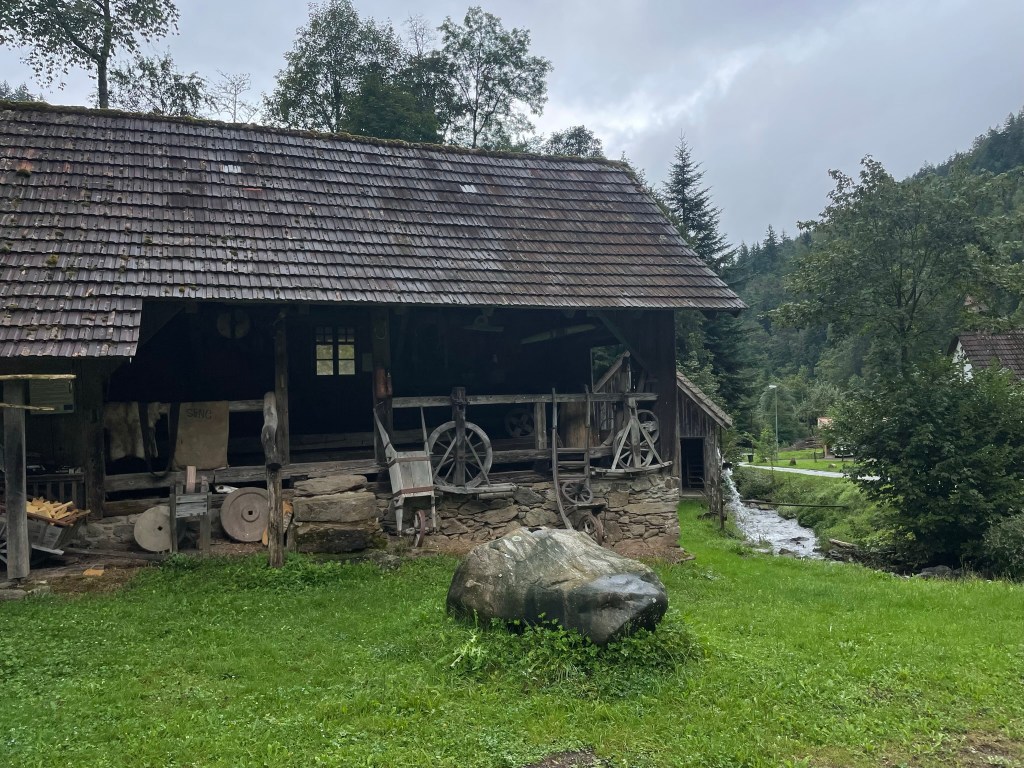
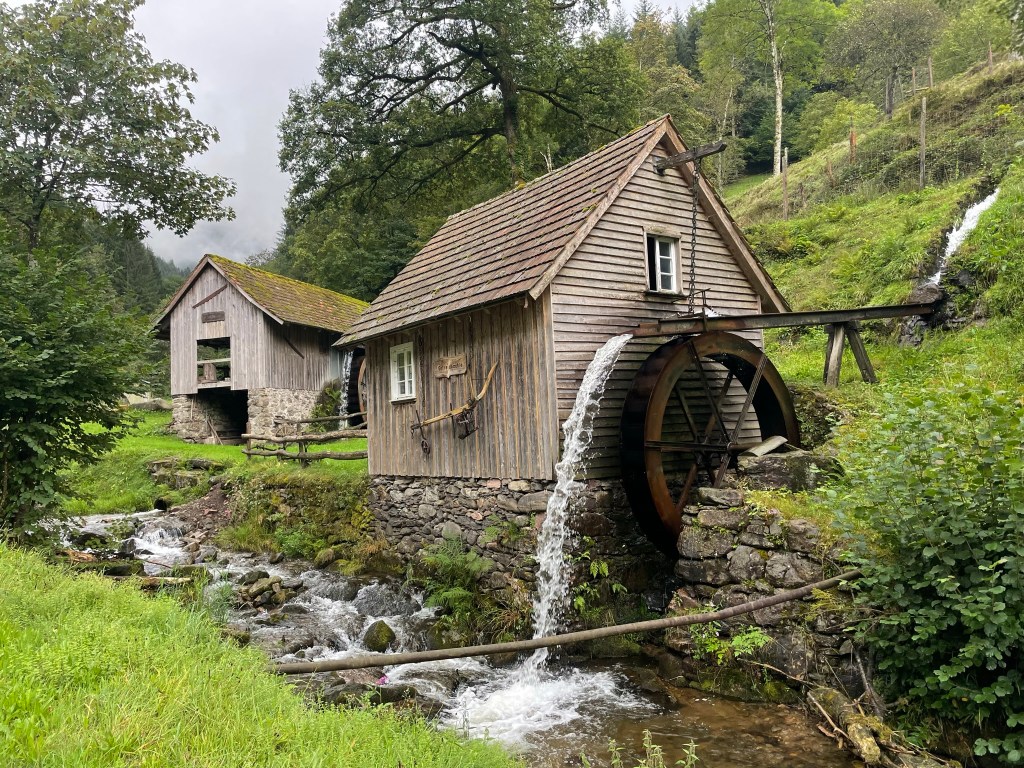
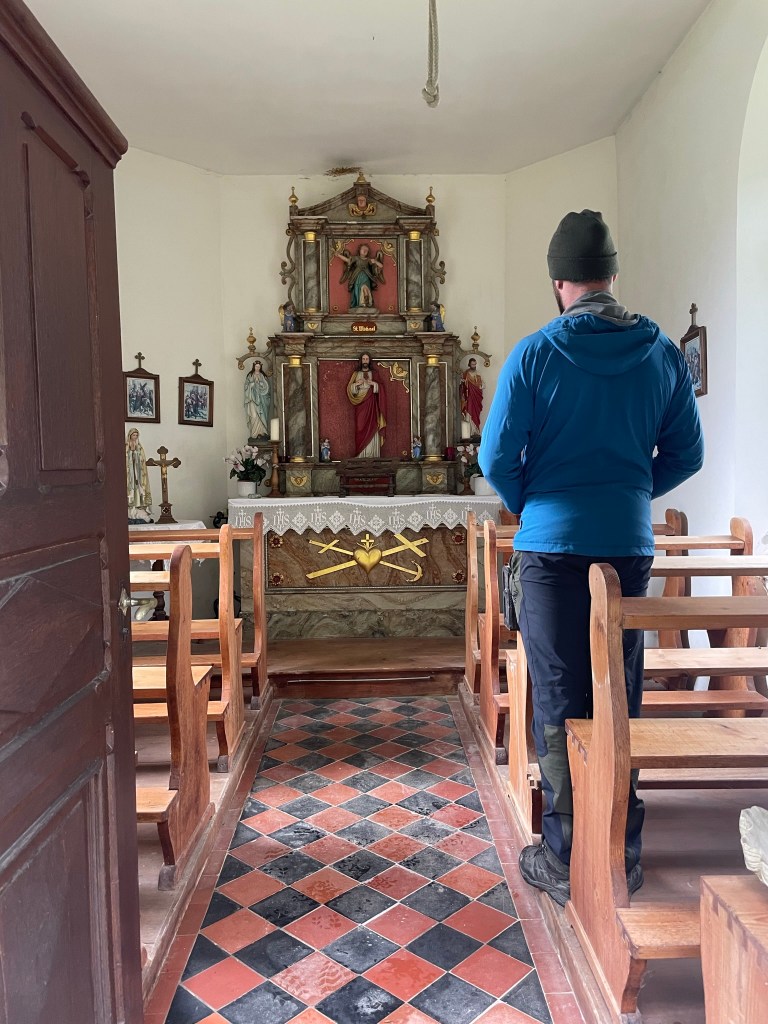
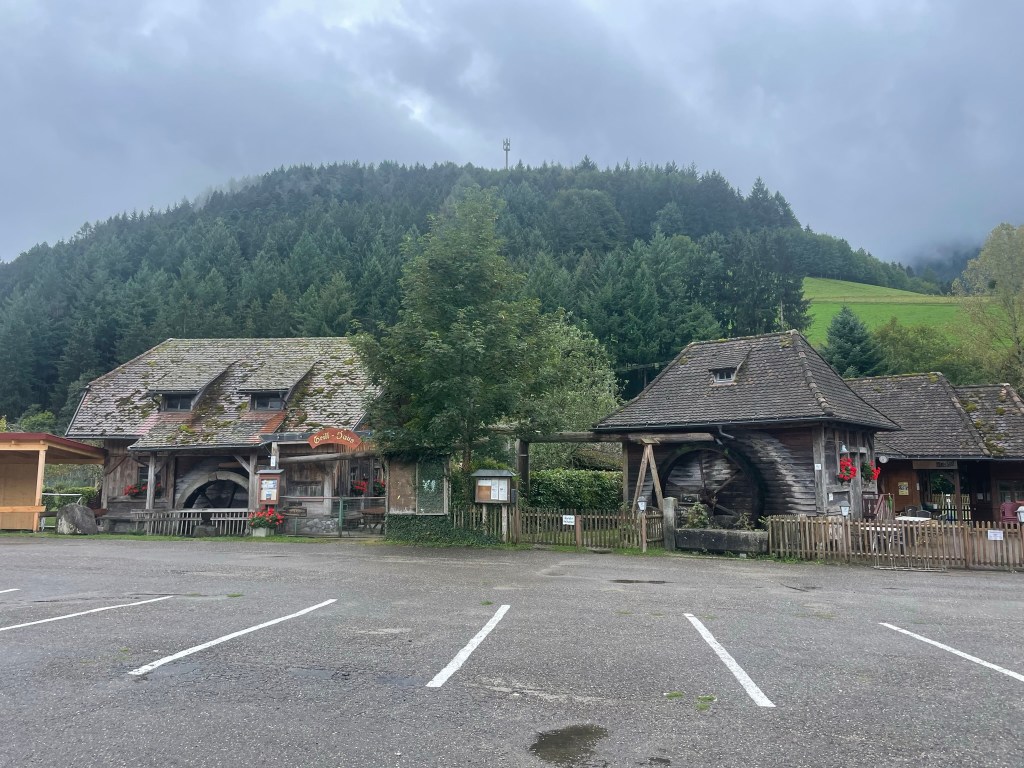
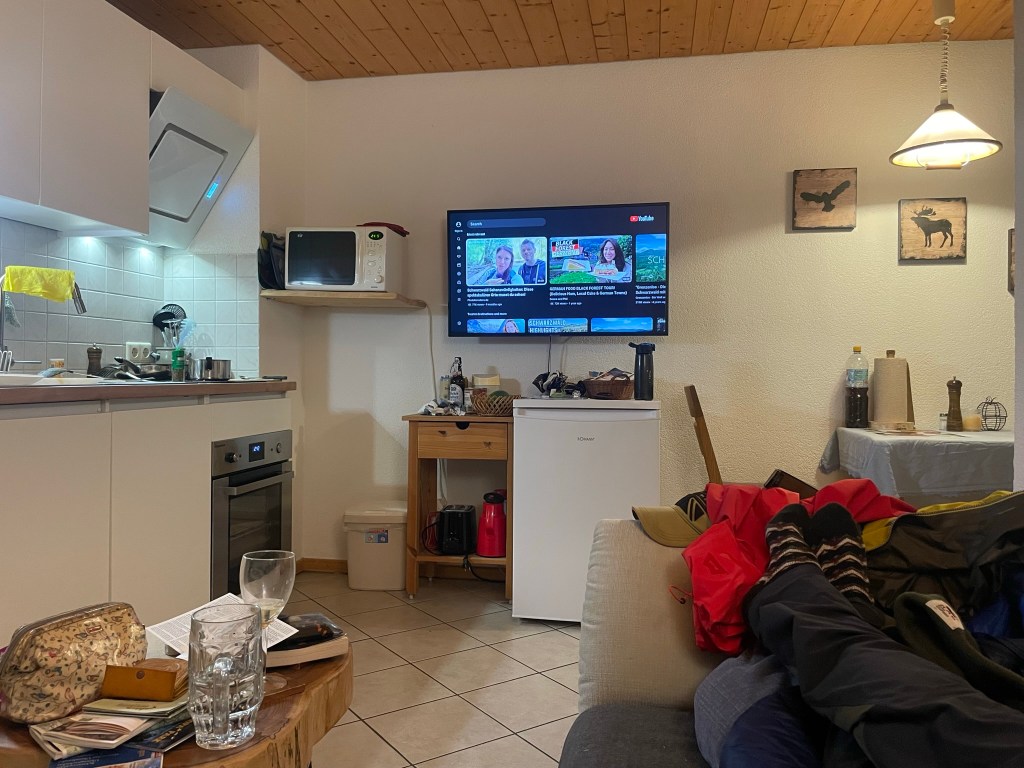
I got up and delighted on fully realising our location, which had not been revealed on our 9pm arrival in the dark. Our spacious apartment was on the first floor of a large, traditional Black Forest house on a small farm at the end of a dead-end road that climbed into a high-sided, dark-forested valley. The farm was timeless and fairytale-like, with its own watermill, wooden workshop and tiny chapel, and – as well as cosy wooden charm and a large living room-diner-kitchen, bedroom and bathroom – the apartment came with two bonuses that I hadn’t appreciated from my hasty peruse on AirBnB: an enclosed balcony looking up the valley, on which sat a large white and grey cat.



Kraut
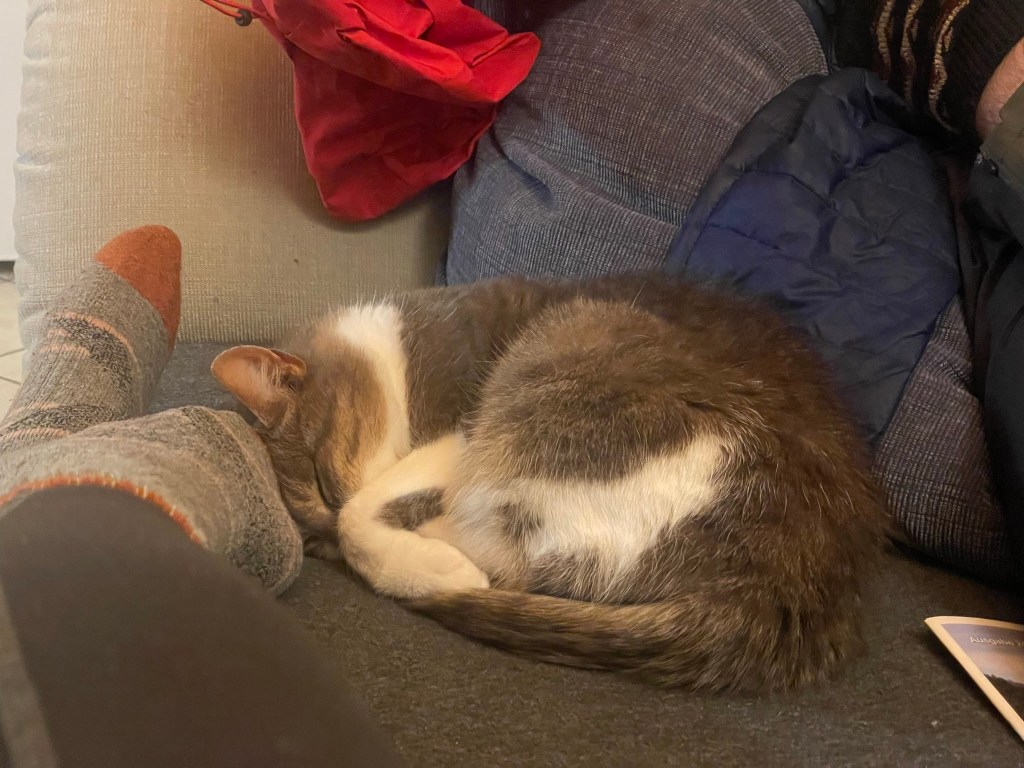
I opened the balcony door and the cat promptly entered – the host hadn’t mentioned it and I assumed, by the way it padded around and settled immediately on the L-shaped sofa, that we were the ones imposing on its private space. I made coffee and, on opening the fridge door, had to extract both milk and the cat. There was a jar of sauerkraut leftover from last night’s dinner (chicken schnitzel with potato salad and sausage kale, cooked by Ryan while I recovered from the drive) which inspired the cat’s temporary name – Kraut.
Belated trip planning
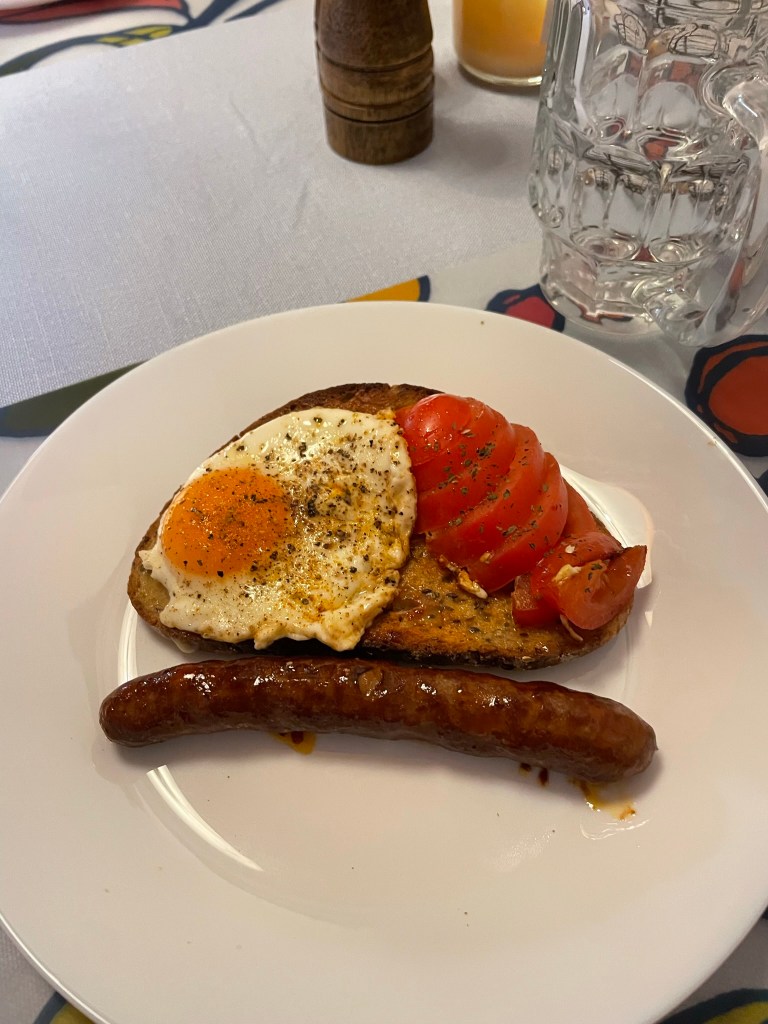
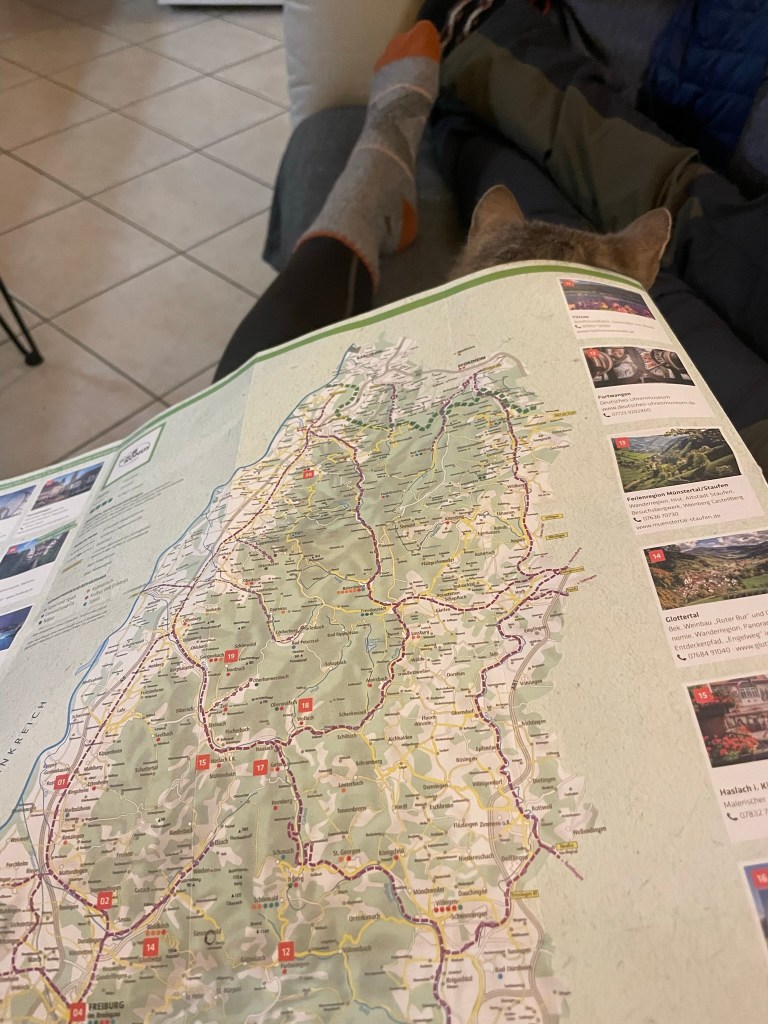
Ryan soon emerged and cooked a delicious breakfast of egg, tomato, rich German sausage (which may have been beef) and thin, seeded bread from a pre-cut loaf, which made lovely, crispy toast. Having done precisely zero holiday planning beyond a resolution to climb Feldberg, the region’s highest mountain, we scoured the numerous leaflets (all in German) and settled on a day exploring mainly by car, given the grey sky and forecast rain.
We had a quick poke around the farm workshop, mill and chapel, then drove into the pretty, rural town of Simonswald to visit the little information centre. We didn’t learn much as everything was in German, but I took photos of some maps and we decided to head on to Elzach, a slightly bigger town in the next valley.
Elzach
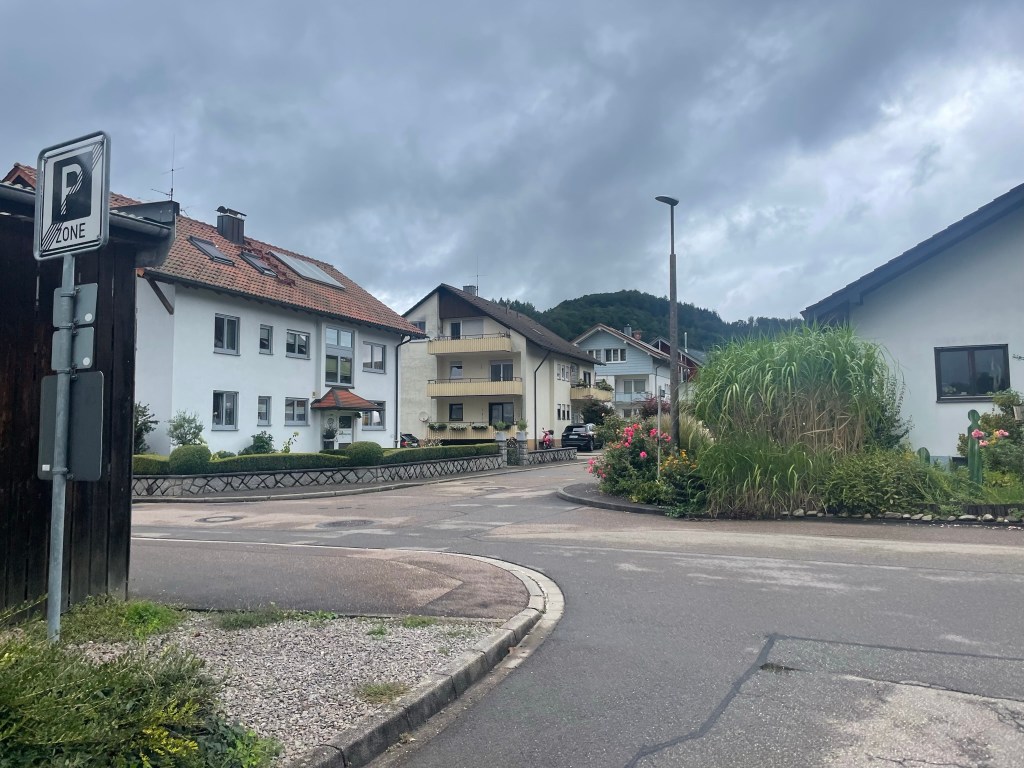
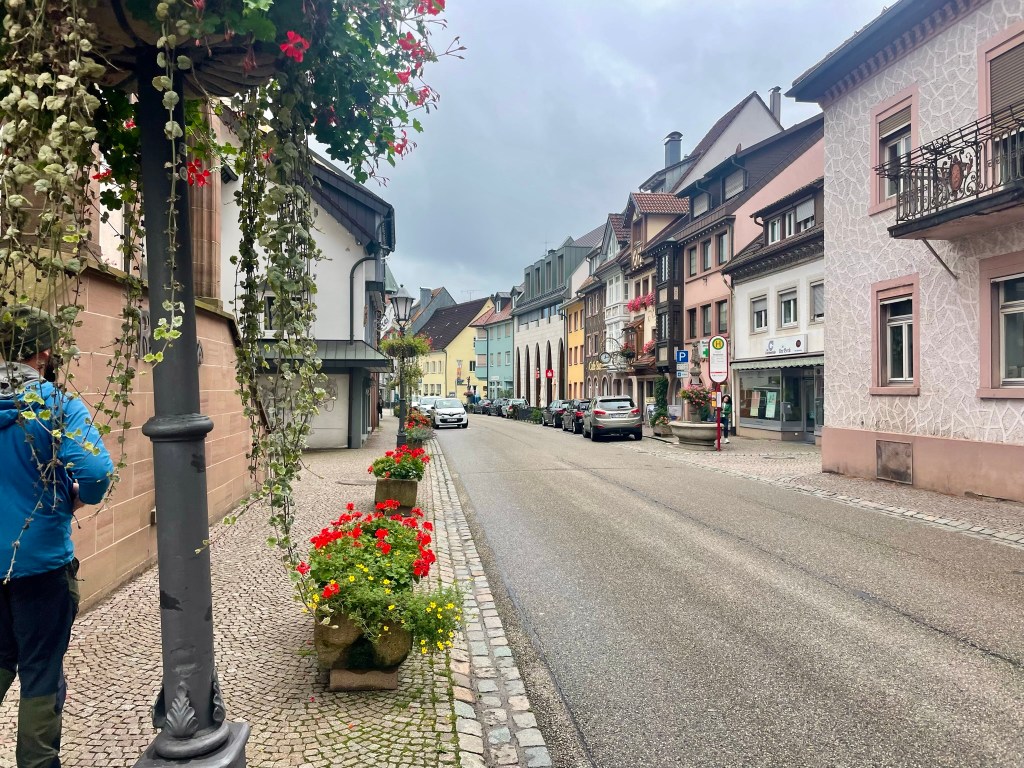
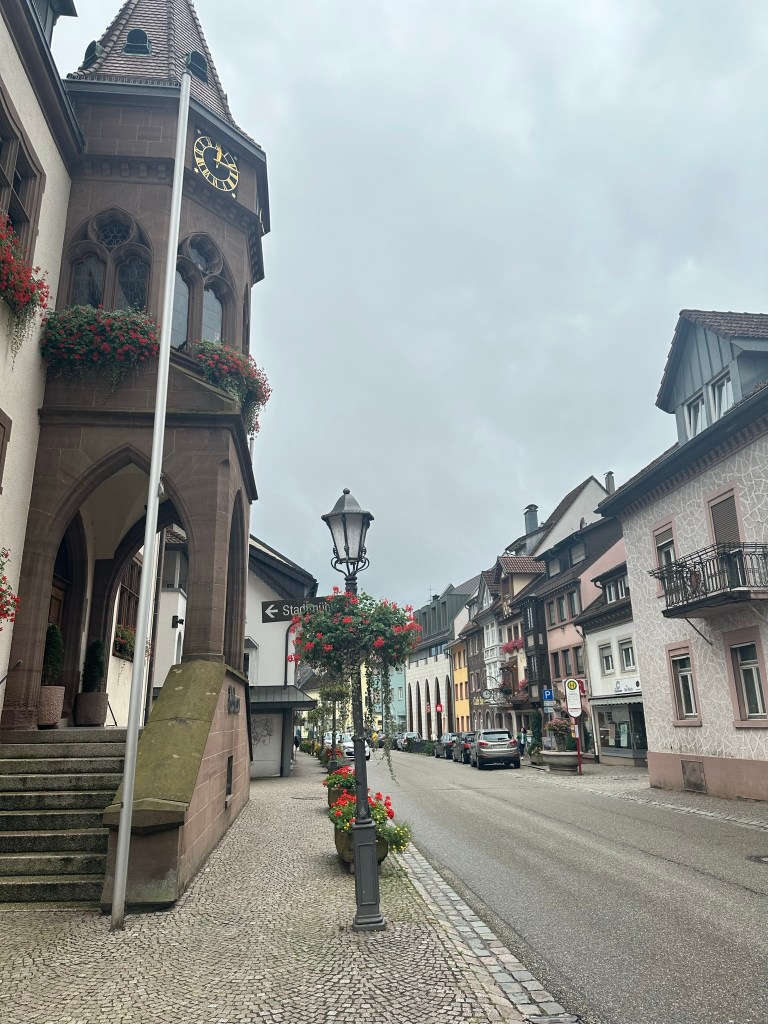
We parked near a residential area and noted how well-kept and big the houses were, how pothole-free the roads, and how there wasn’t a single bit of litter anywhere. The town centre was very pretty: old-fashioned street lamps and planters full of red geraniums lined cobbled pavements, and colourful buildings were punctuated by balconies, dormer windows and shutters. We found the information centre near a big pink-washed church and a primary school, where children played football despite the rain and didn’t wear uniforms. The man working there was very friendly and explained to us, in very good English, that there were dozens of signposted hiking trails in the area and that we should take two free leaflets – one a regional hiking map and the other containing descriptions of the corresponding routes – to navigate. We left wondering why England can’t implement such effective systems for tourists.


Local history hiking trail
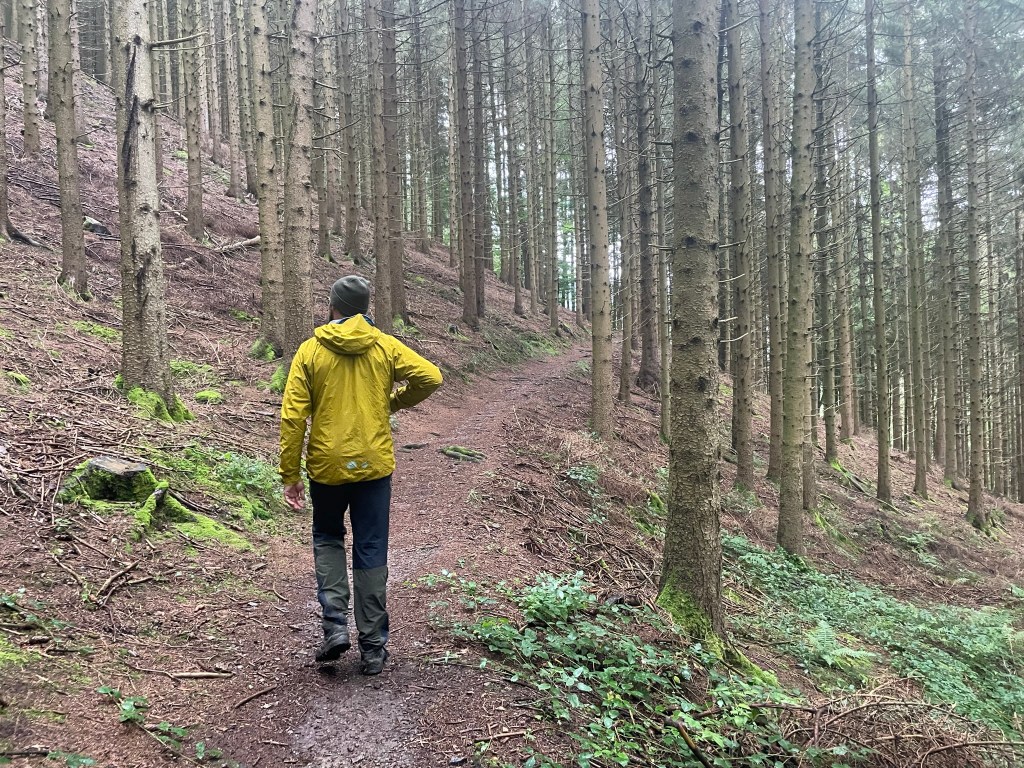
We picked a short 5km loop – “heimatkundlicher wanderweg” – that started in a village 10 minutes up the valley, Oberprechtal, and encompassed 18 information boards (all of which I translated with an app) detailing the nature, culture and geography of the area. We climbed above the village and followed a clear path into the forest, which at first consisted of leafy ashes, hazels and brambles, then tall, dense pines with linear trunks that stretched straight upwards, emphasising the steepness – about 30 degrees – of the valley sides. We passed a sloping bank of moss-covered rocks and came to a small, wendy-house-like cabin looking upwards to a grassy, forest-lined meadow. It was very Hansel and Gretel and we couldn’t resist.


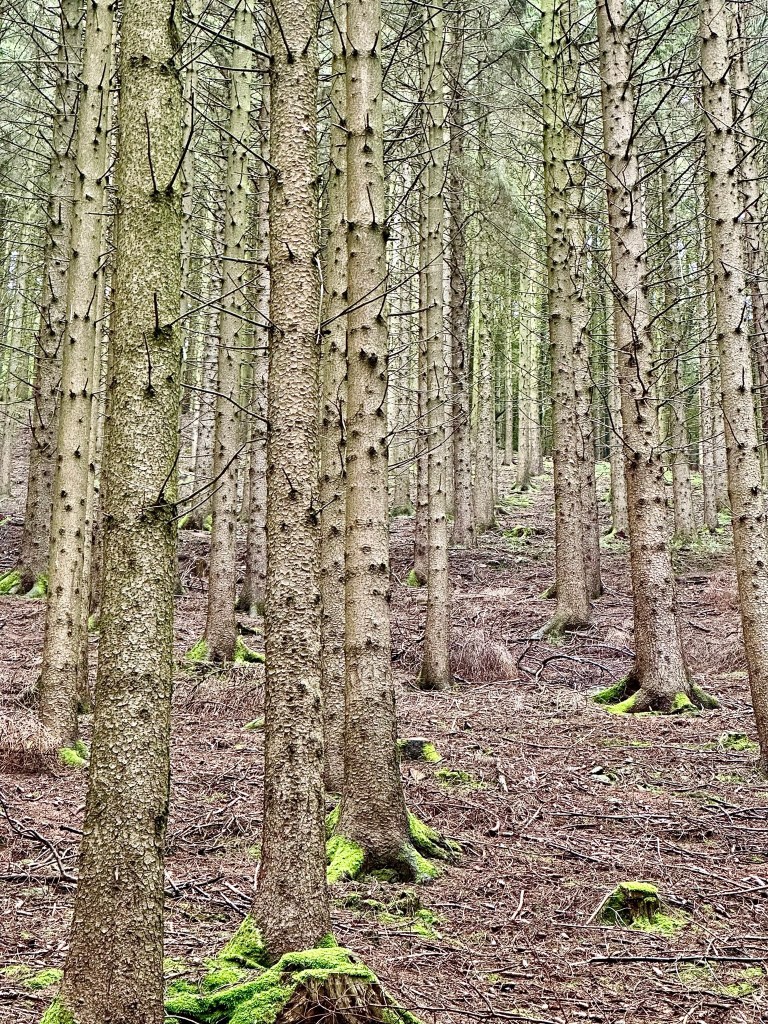
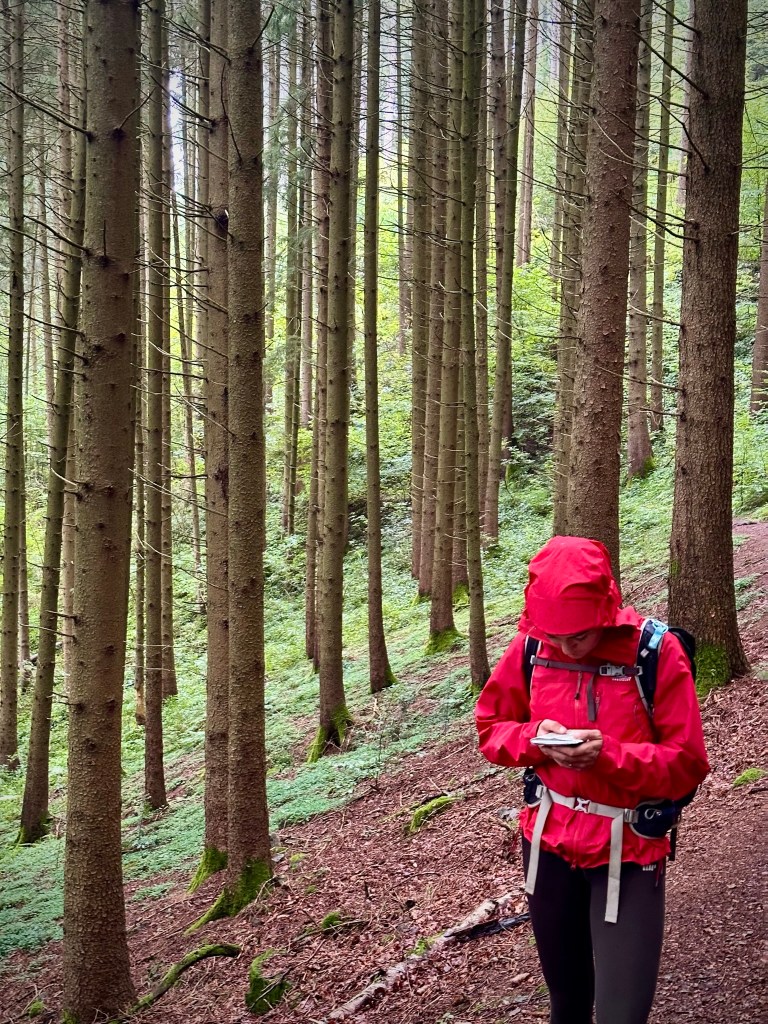
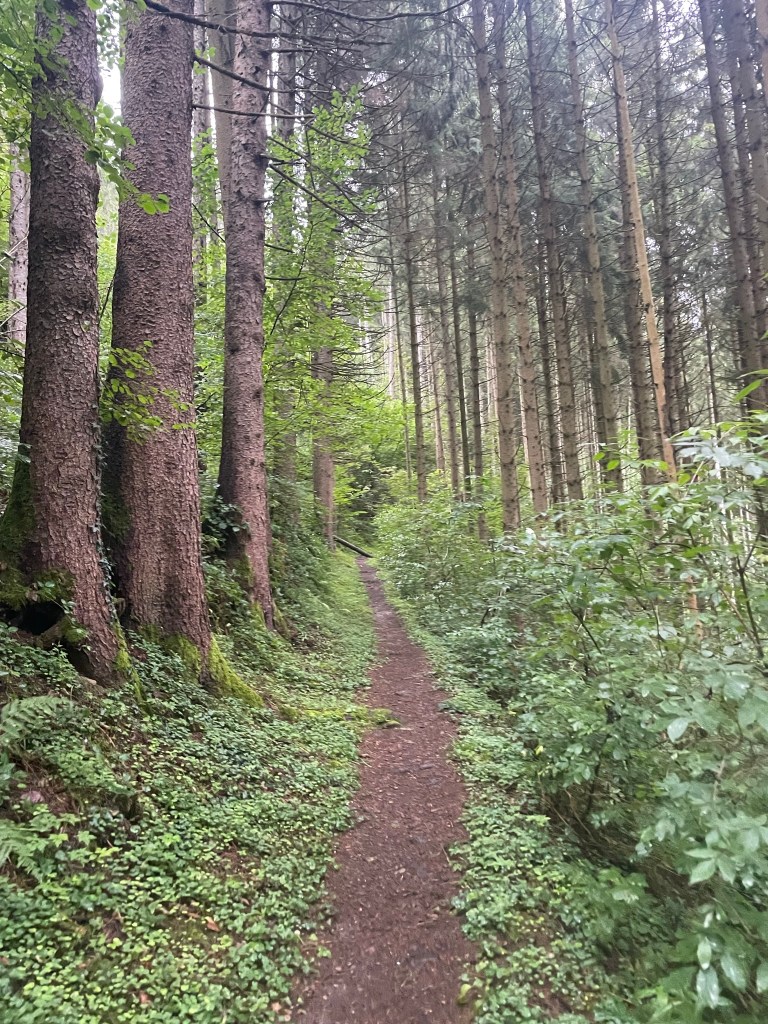


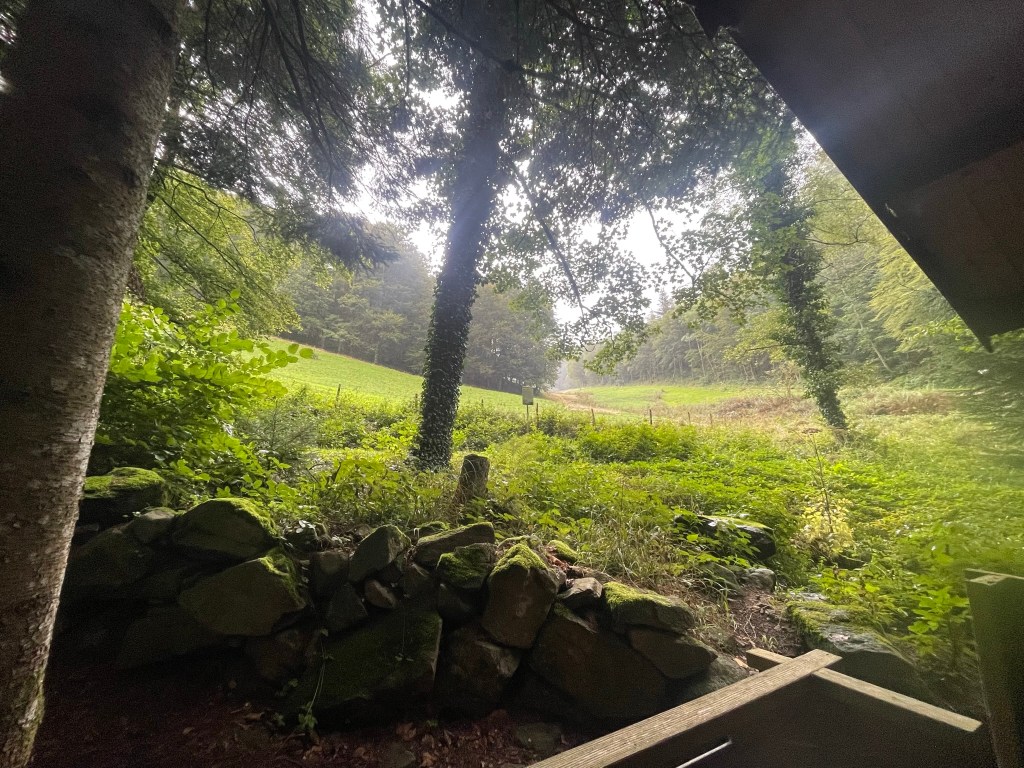

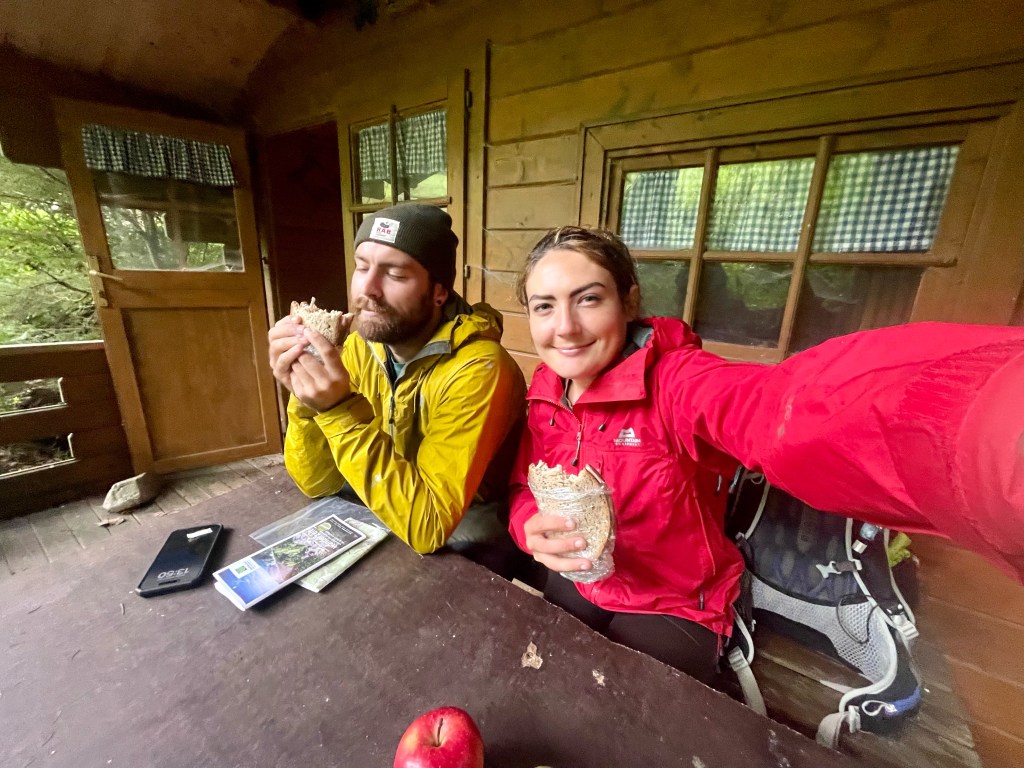
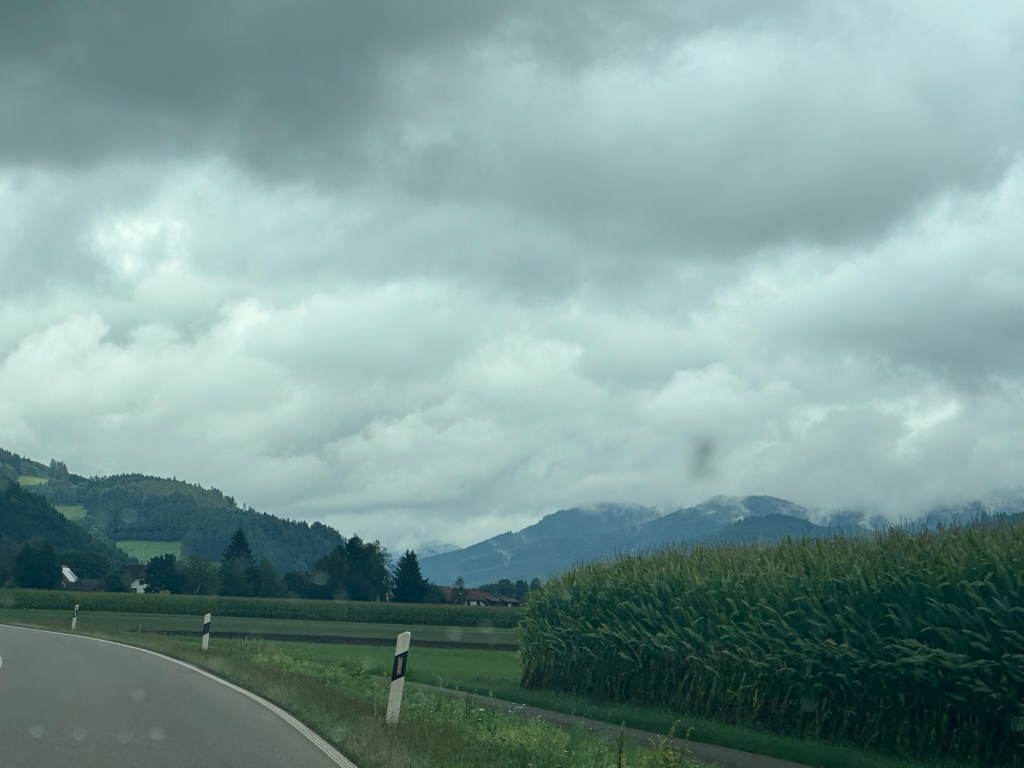
We sat in the porch and enjoyed ham and cheese sandwiches, sheltered from the torrential downpour that came in suddenly and swept over the meadow. When it seemed like the worst of the rain had passed, we continued through moss-covered, bracken-strewn pine forest for another kilometre, which was now dappled with soft sunlight that illuminated mosses, leaves and fronds in countless shades of green. We snaked down a steep switchback and emerged at the crest of a small ridge that looked up the Elz valley. Its lower reaches were carpeted by astonishingly green fields which rose into thick, dark forest on both sides, and a tiny road lined by spaced-out, red-rooved buildings wound up the belly of the valley towards hazy blue hills at its head. It was fairytale-like:

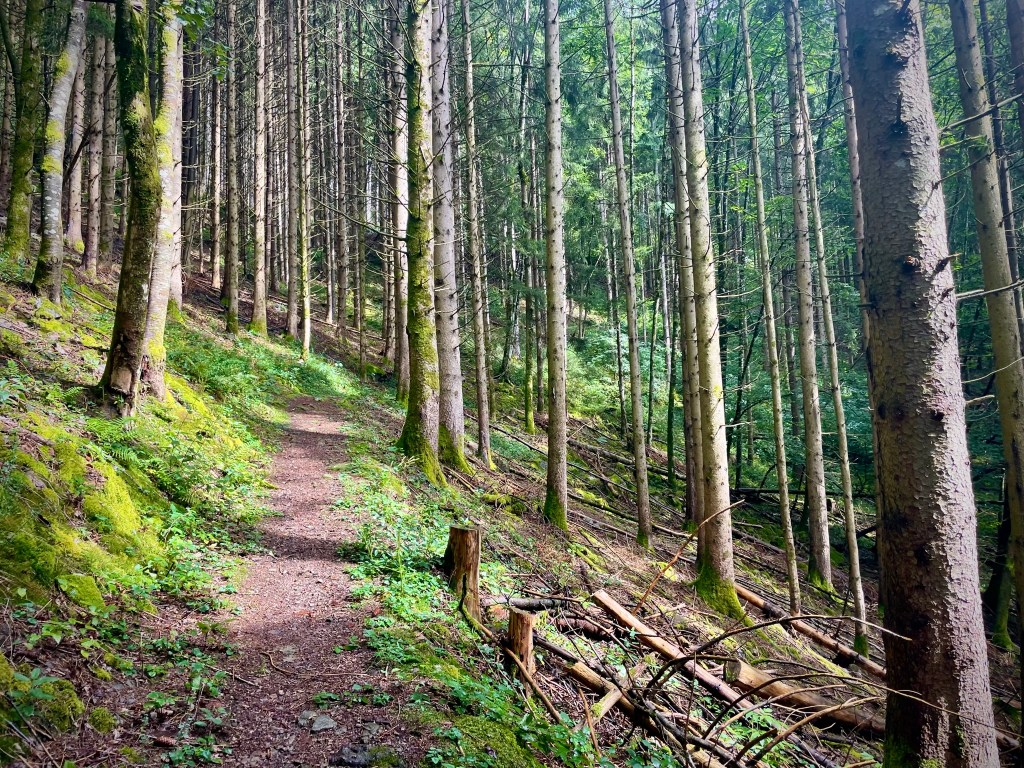


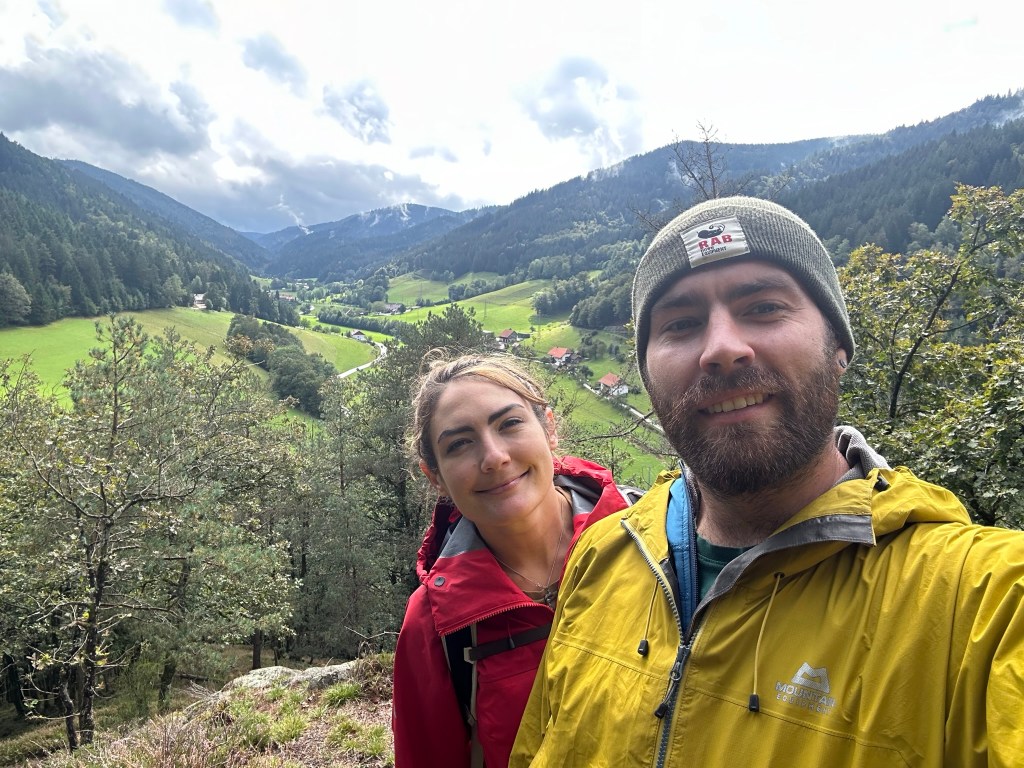
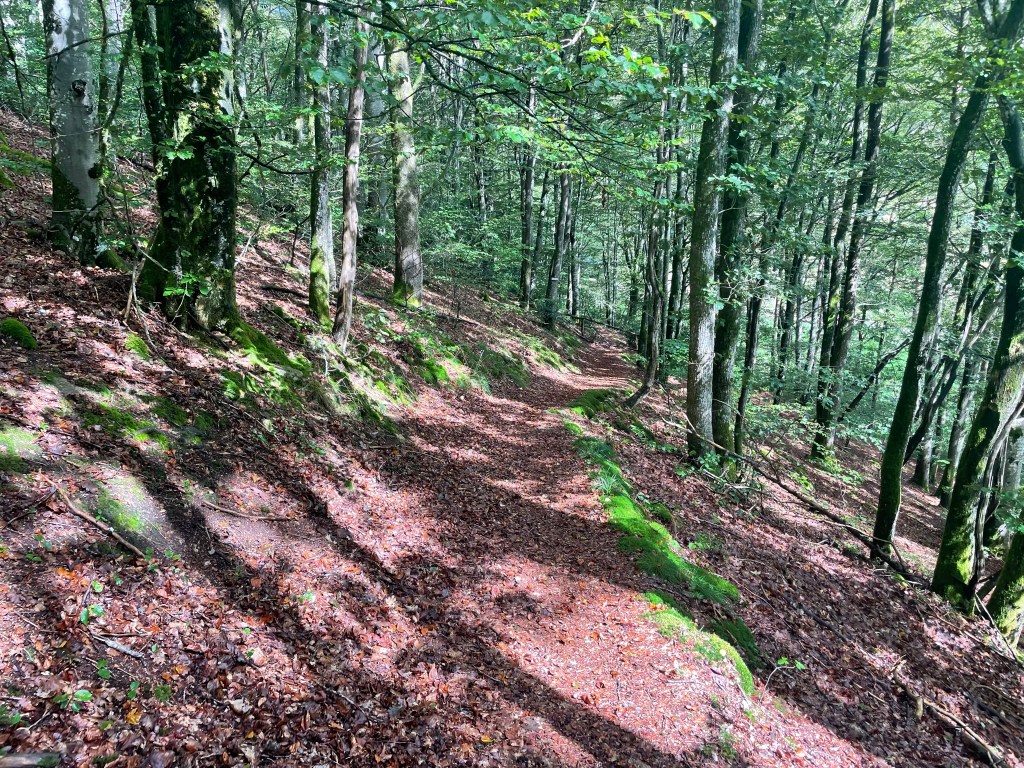
Once we’d absorbed the view, we headed down the side of the ridge through a tranquil young beech wood and came out on the road at the tiny, pretty village of Vor dem Wittenbach. Some construction workers had fenced off the bridge we were supposed to cross, so we found a diversion and returned to Oberprechtal on a footpath that followed a shallow stream past cattle fields and a pen of enormous turkeys. It was a lovely little loop and a good “taster” hike that left us thoroughly charmed with the quaintness and serene, timeless beauty of the Black Forest.


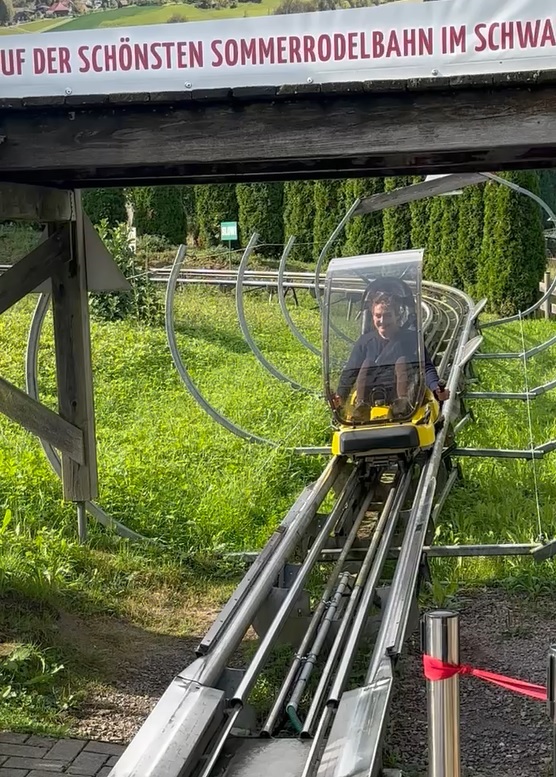
Toboggan run
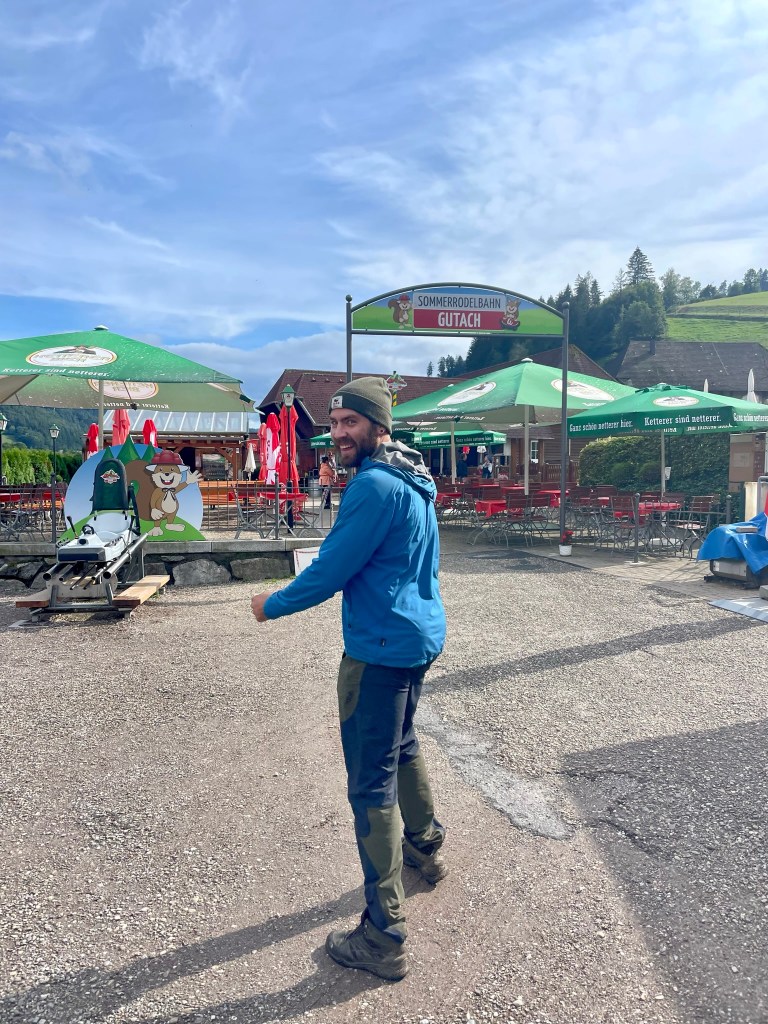
We got back to the car at 3pm and decided that there was plenty of time for more activities, so Ryan – being the large child that he is – suggested a “summer toboggan run”, a one-person rollercoaster where the rider controls the brake, in the nearby town of Gutach. The 20-minute drive took double that due to a missed turn and a winding road that climbed high into thick forest and snaked down into the next valley. I’m sure it was very scenic, but I was too busy navigating the hairpin bends to appreciate the glimpses of distant pine-covered ridges through the trees.
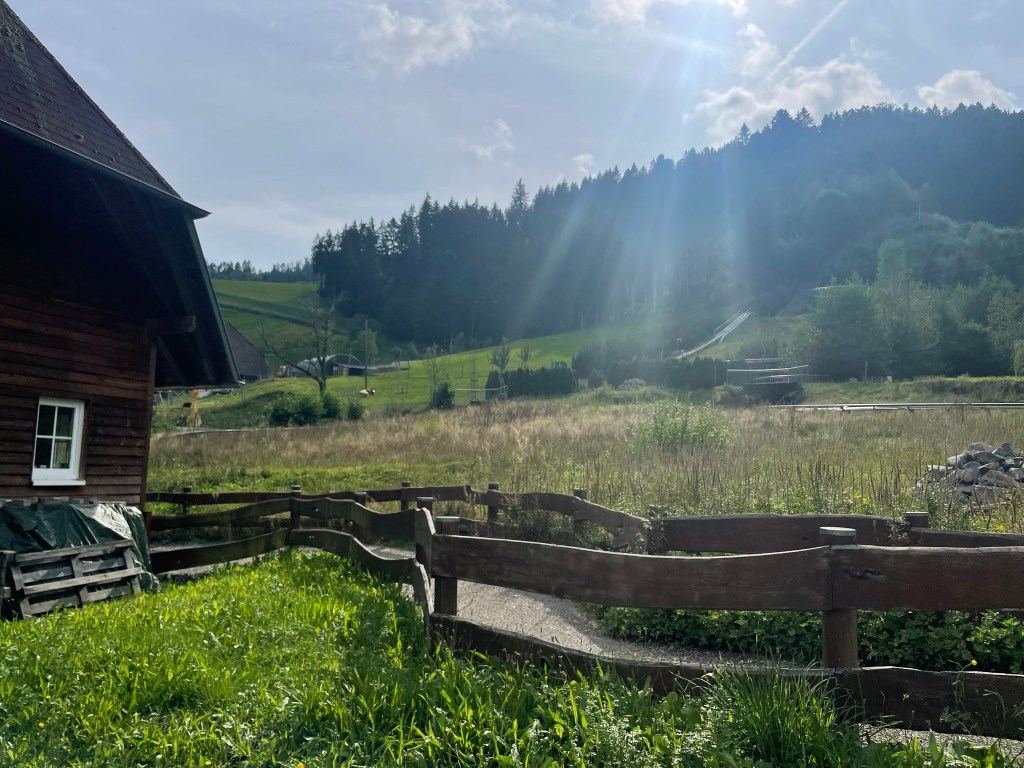
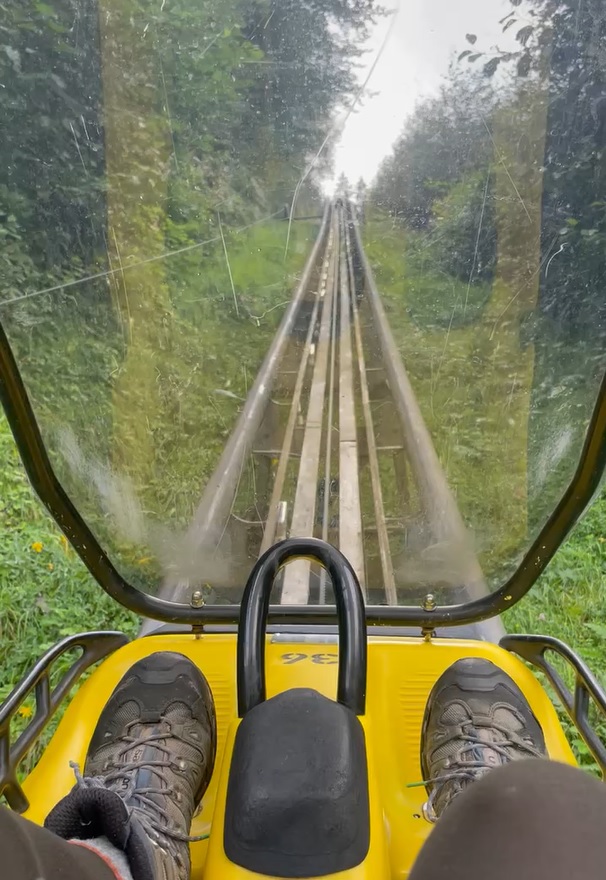
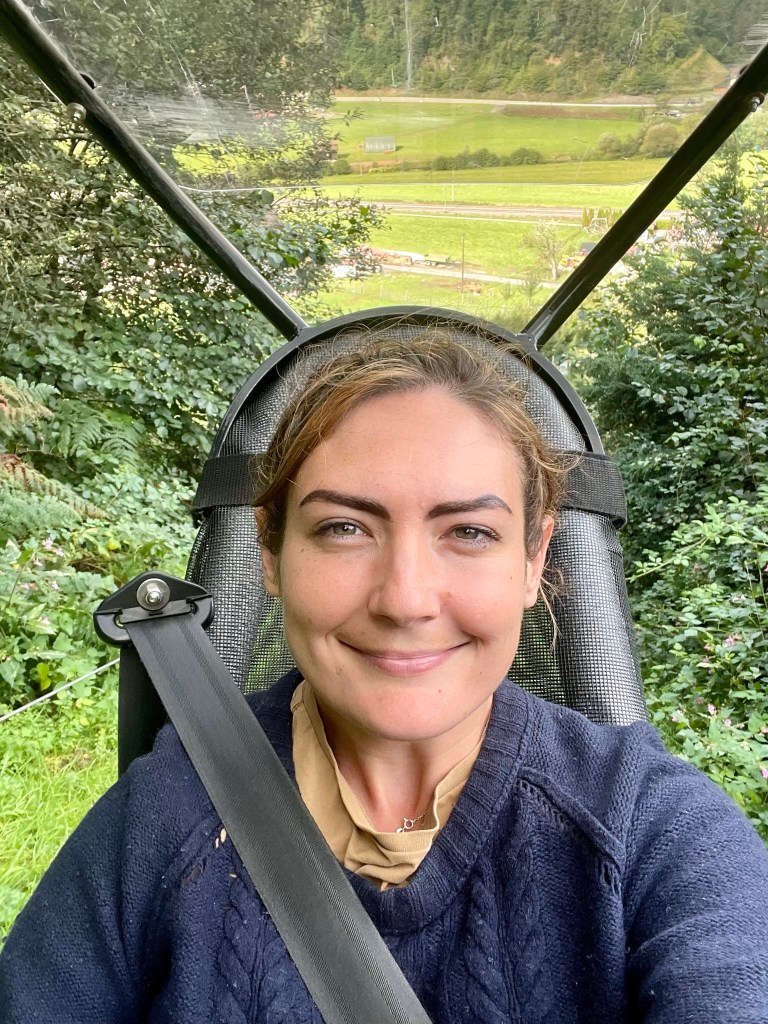
We paid 4€ each at a little wooden kiosk, timed our turn so that we wouldn’t get stuck behind any children, and followed the instructions of the operator as well as we could – fünfundzwanzig meter, which I took to mean stay 25m behind Ryan. The carts were low and exposed, like glorified dinner trays with a windscreen, open sides and a handbrake on a raised metal track. I chugged joltily up the steep side of the valley at a snail’s pace with a bolt jabbing into my back at every track joint. It levelled out at the top and I had a brief moment to gaze over the valley. The red rooves of Gutach huddled between fields that climbed into dark-forested ridges, now drenched in soft afternoon sun. Then the fun bit began.
The cart swooped into a series of twists and turns and I hurtled down with a huge grin on my face. The track joints were loud and very noticeable and the sides of each berm were protected by a low wire net, which I’m sure would have done little in the event of disembarkment, but the dubious safety features certainly added to the excitement and even inspired me to feather the brake on some of the tighter corners. The descent lasted a couple of minutes and by the time I clambered out of the cart, my grin felt permanent. We agreed that it was well worth 4€.

Gengenbach
As we were already some way north of Simonswald, we thought we may as well make our way further north to see the town of Gengenbach, which I’d come across during my brief time spent researching the Black Forest. The 40-minute drive followed a wide valley through several sprawling, pretty towns and we arrived at a car park just outside the town centre at 5pm.
We entered the town through a gateway with a raised portcullis beneath a high, square tower – the Kinzigtor – which was painted white and decorated with a splay-winged German eagle and three coats of arms. It felt as if we’d stepped into a fairytale. Colourful buildings with painted shutters and hanging lanterns lined the wide, cobbled street, which converged with two other streets at the central market square. I’d never seen a place like it – there were so many focal points, and nothing was uniform but everything was perfect.


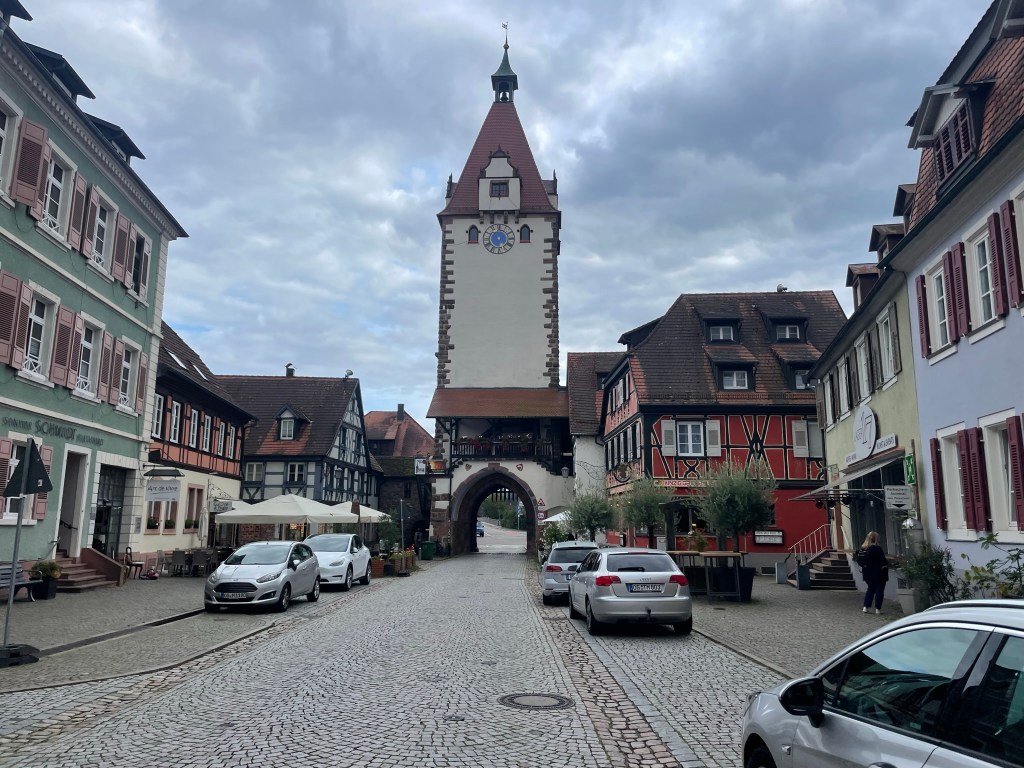
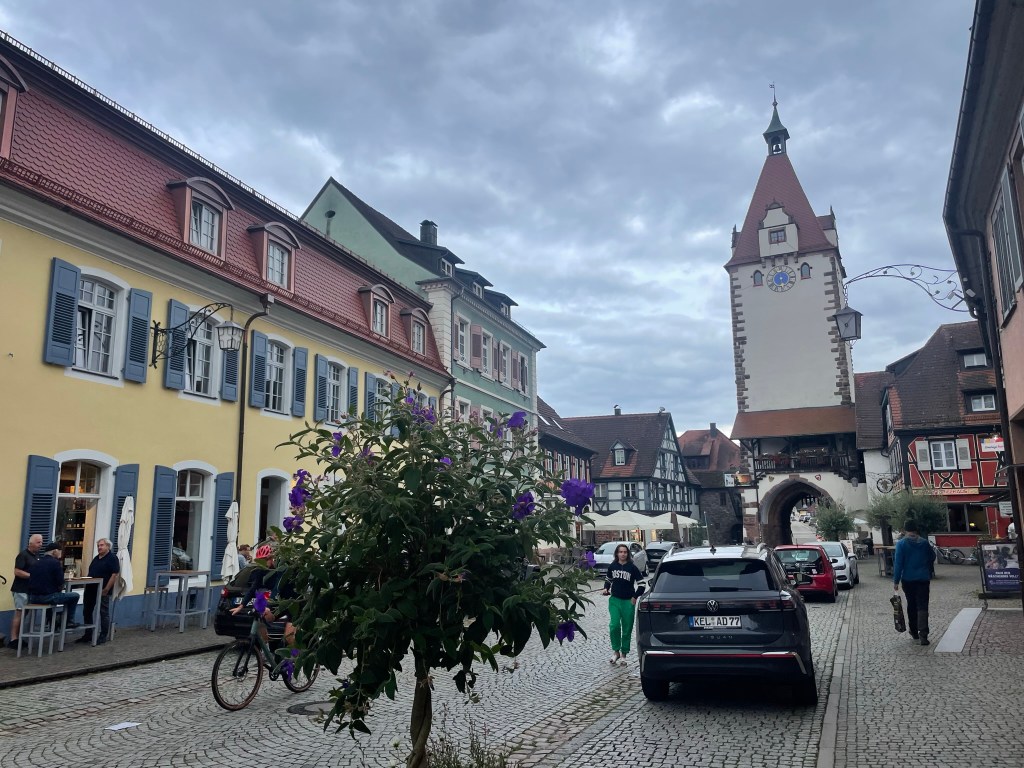
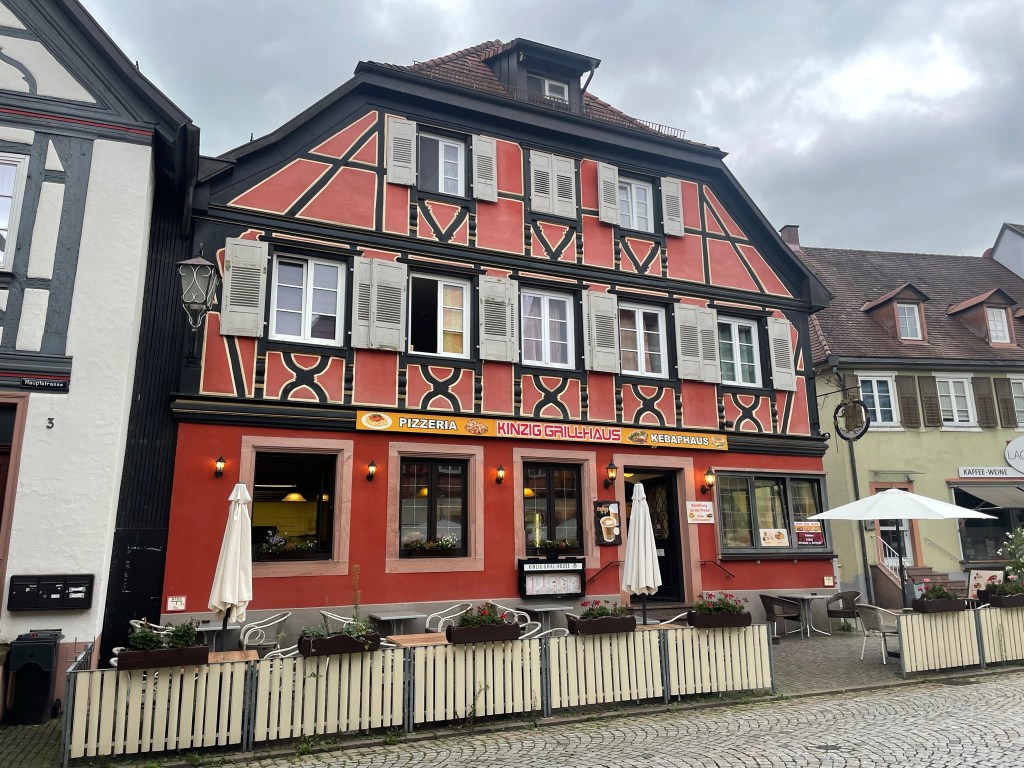
A huge, pink, grand-looking town hall rose impressively on one side, its 22 symmetrical windows and 11 ground-floor arches each adorned with pink flowers. Three large buildings stood opposite the hall, painted white and cream with exposed timbers in hatched patterns. They had high-apexed, sloping tile rooves and flower boxes at each window. Along each cobbled street – the whole town was cobbled, and not a stone was missing – stretched more of these buildings, some painted pastel colours and some timber-framed, all with charmingly irregular rooves. The red spires of cream towers dominated the skyline at the end of each perfect row, and a stone fountain topped with red, pink and white geraniums and a statue of a knight trickled in the middle of the marketplace. Apart from the few cars, it was convincingly medieval. It didn’t seem real – I half-expected the walls to topple over and reveal it all to be a two-dimensional film set. It is, without doubt, the most attractive town I’ve ever seen.
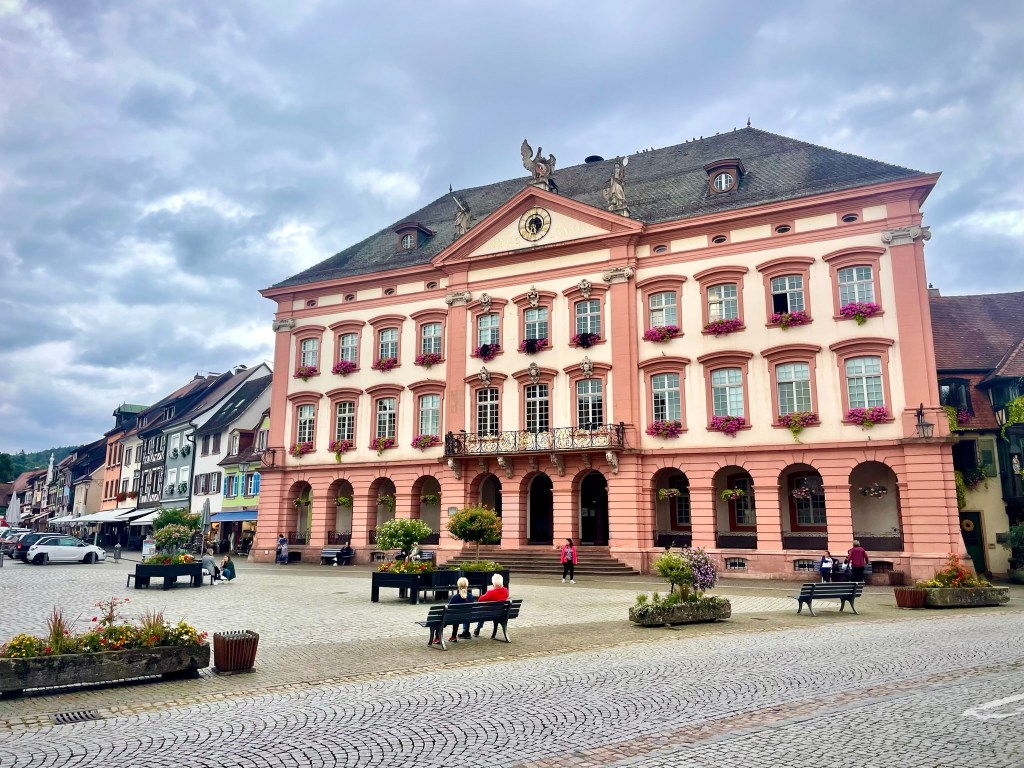

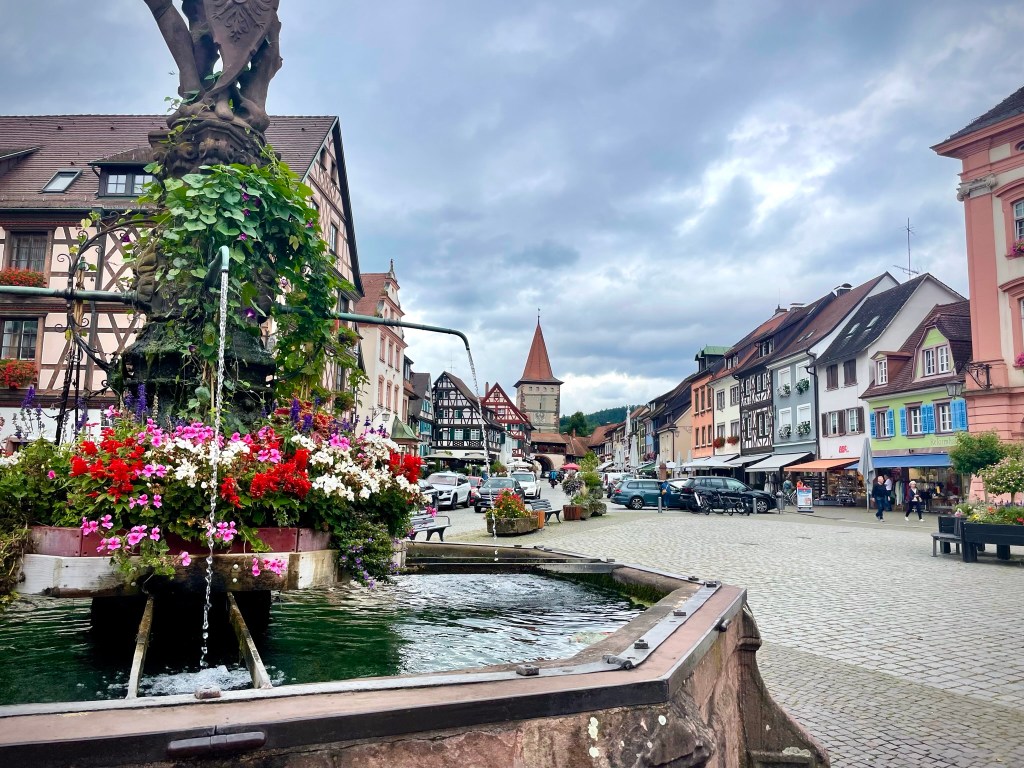
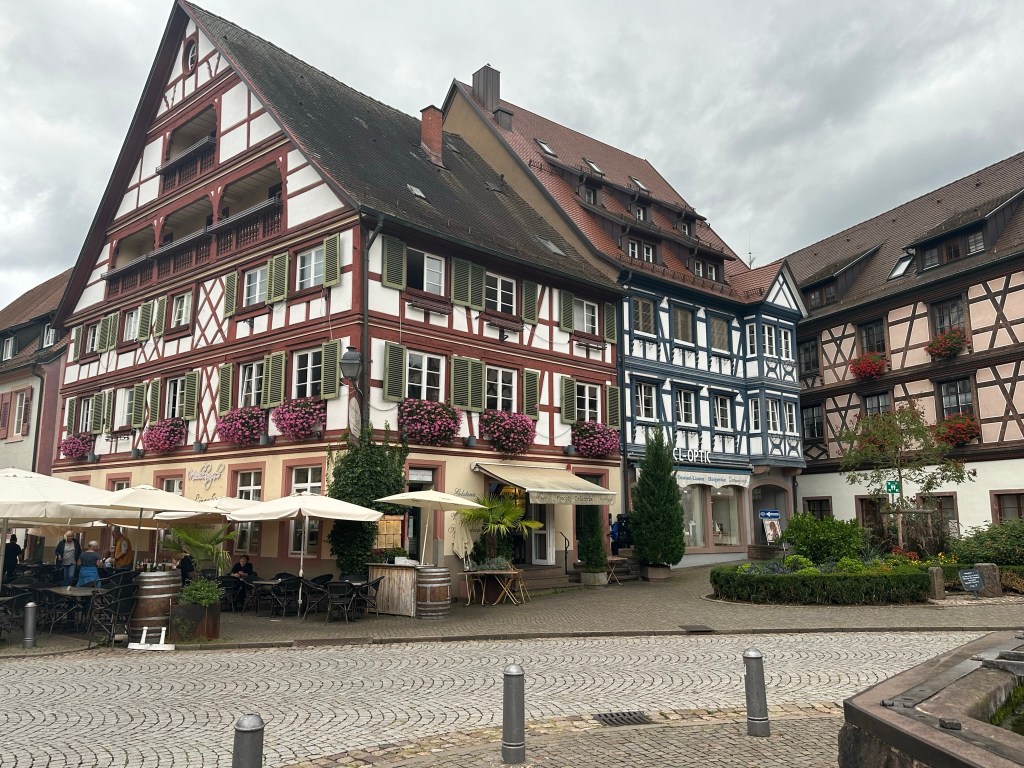
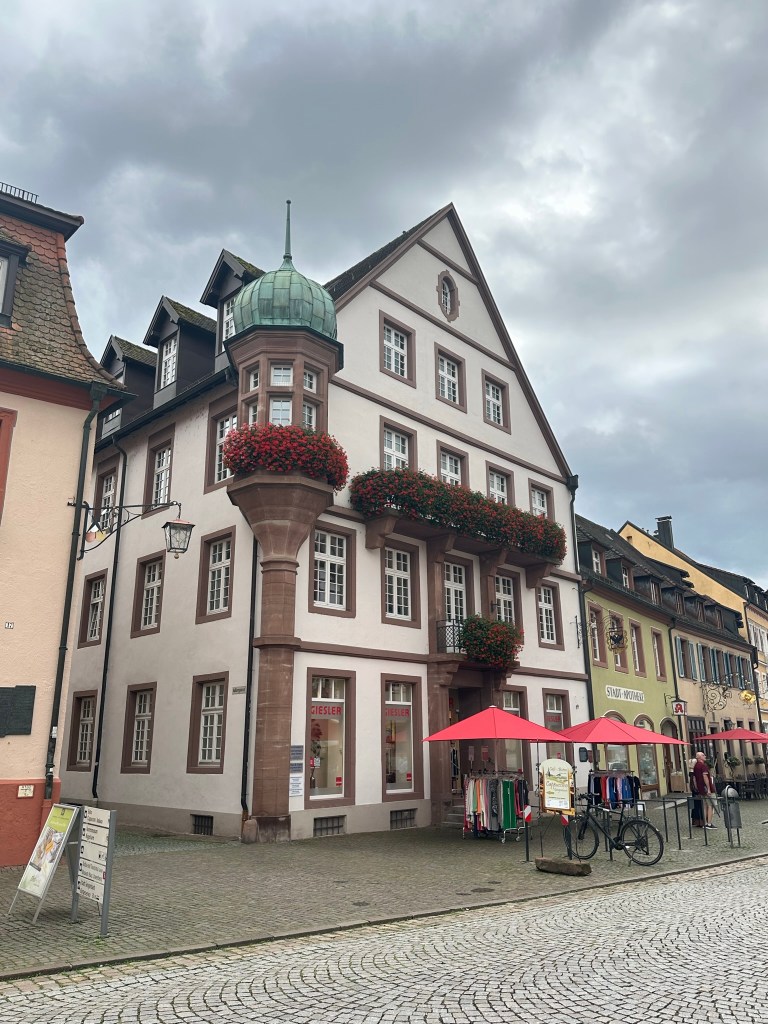


We walked past the fountain along Victor-Kretz-Strasse and took the first right turn, not wanting to miss any of the real-life fairytale. We passed a couple of blue-shuttered buildings and a little car park fringed by tall, leafy trees, then came to a grand, cream building with dozens of uniform, pink-framed windows and a perfect front lawn dotted with round topiary bushes – the Black Forest Business School – that stood in front of an intricate sandstone tower, which belonged to the adjacent St Marien church. This was on the edge of the small town, which was backed by vineyard-covered hillsides, so we returned to the high street and headed towards Obertorturm, the north tower.

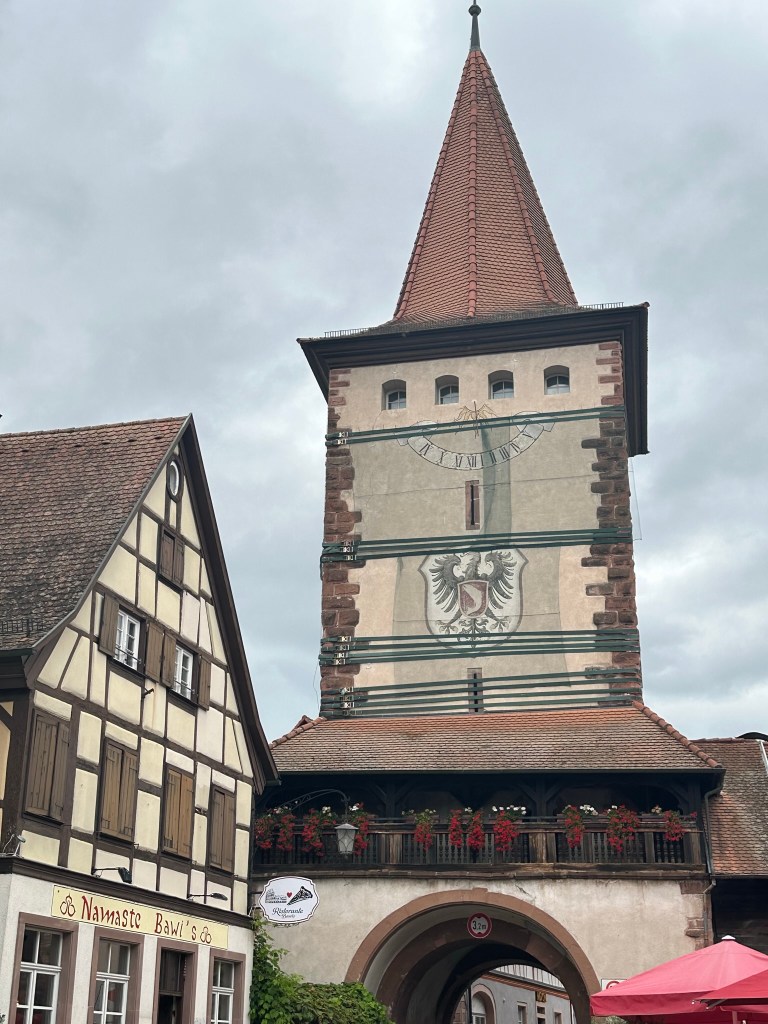
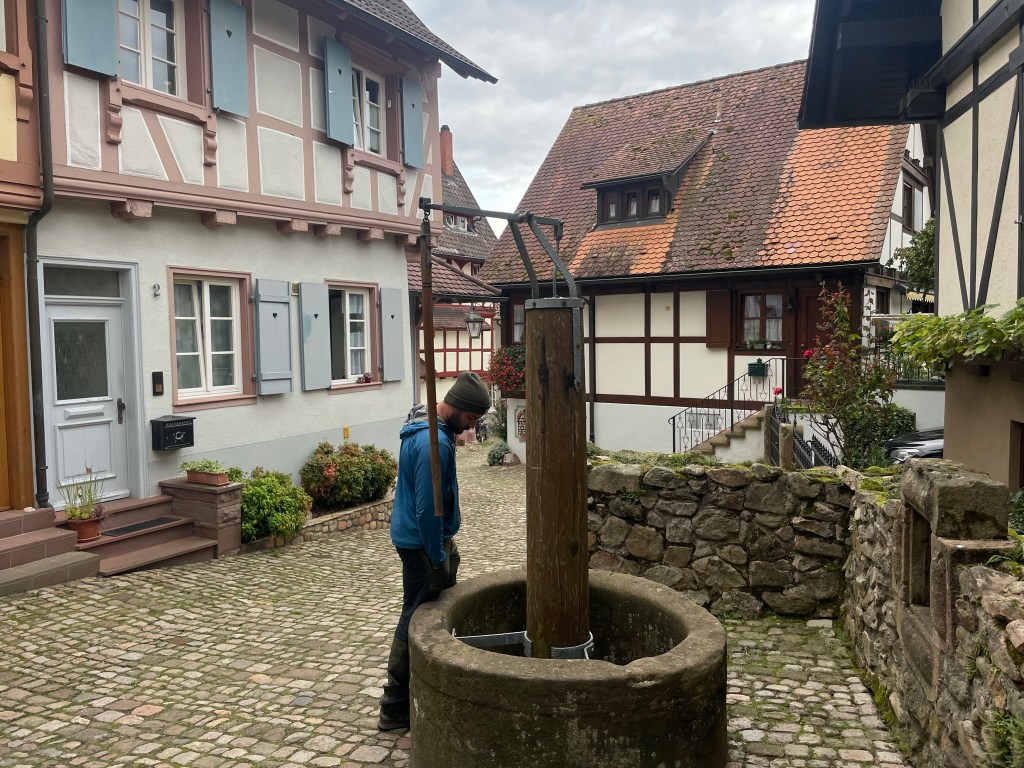
We passed shops selling clothes, shoes, books and souvenirs, all with little canopies stretching over the pavement, and bustling cafes that spilled out onto the street. There were plants everywhere, filling stone troughs lining the paths, in pots outside restaurants and cafes, and flowerboxes decorated the windows of most buildings. We turned left along a narrow alley just before the tower, poked around an old stone well with a wooden pump that looked like it worked, and wove through narrow, cobbled alleys lined by timber-framed houses back to the main street.
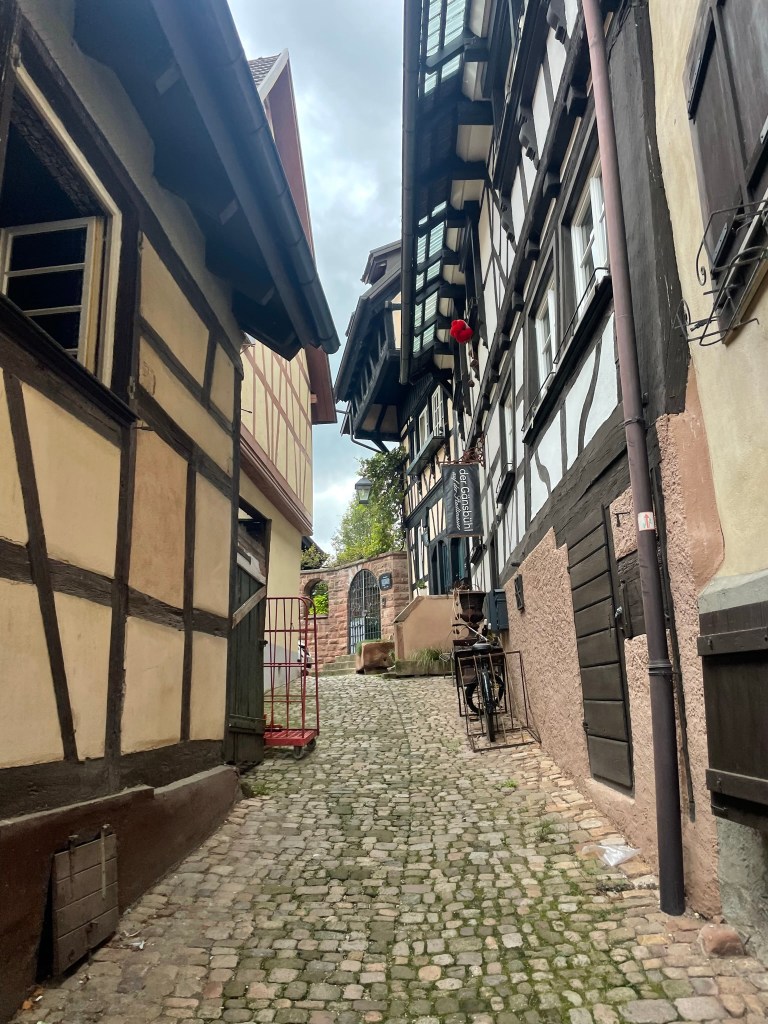

Charmed by the quaintness of every nook and cranny, we took the next turn and found ourselves down another surreal alley. Large lanterns protruded from the beams of houses and climbing greenery covered many of the walls, seeming to emanate from the cobbles. Grapevines crept above wooden front doors and the residents seemed to compete over who could encroach on the street with the greatest abundance of potted shrubs and geranium-lined windows. I wondered why any architect or town planner would ever deviate from such aesthetic perfection – if only every town looked like this.
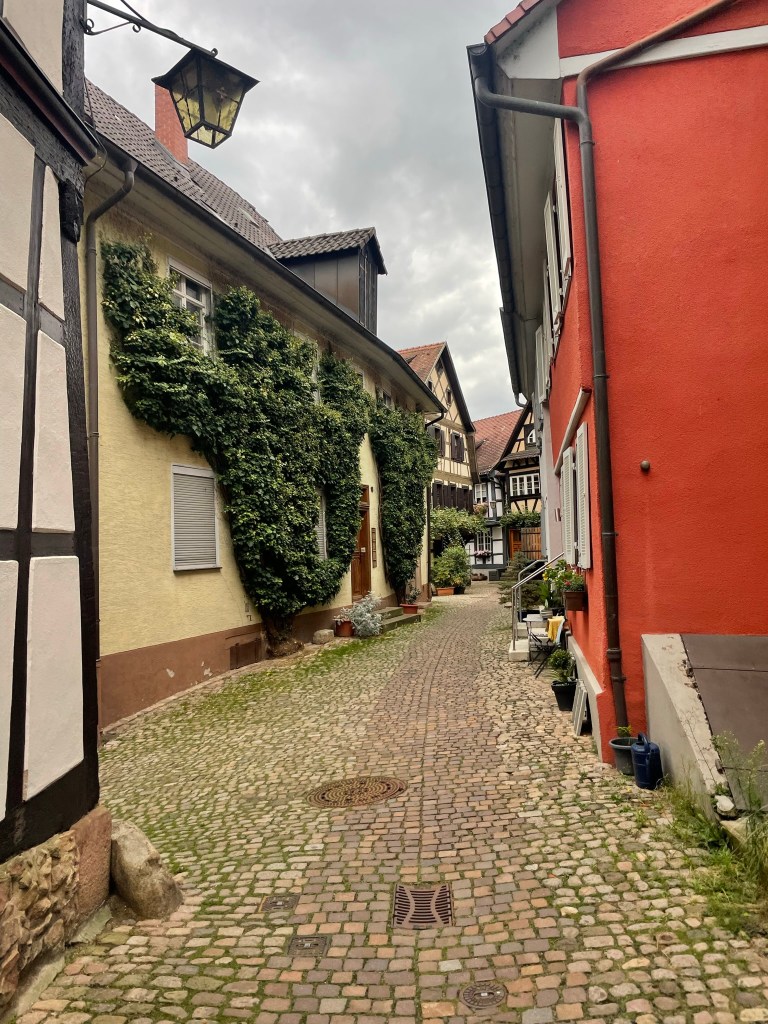


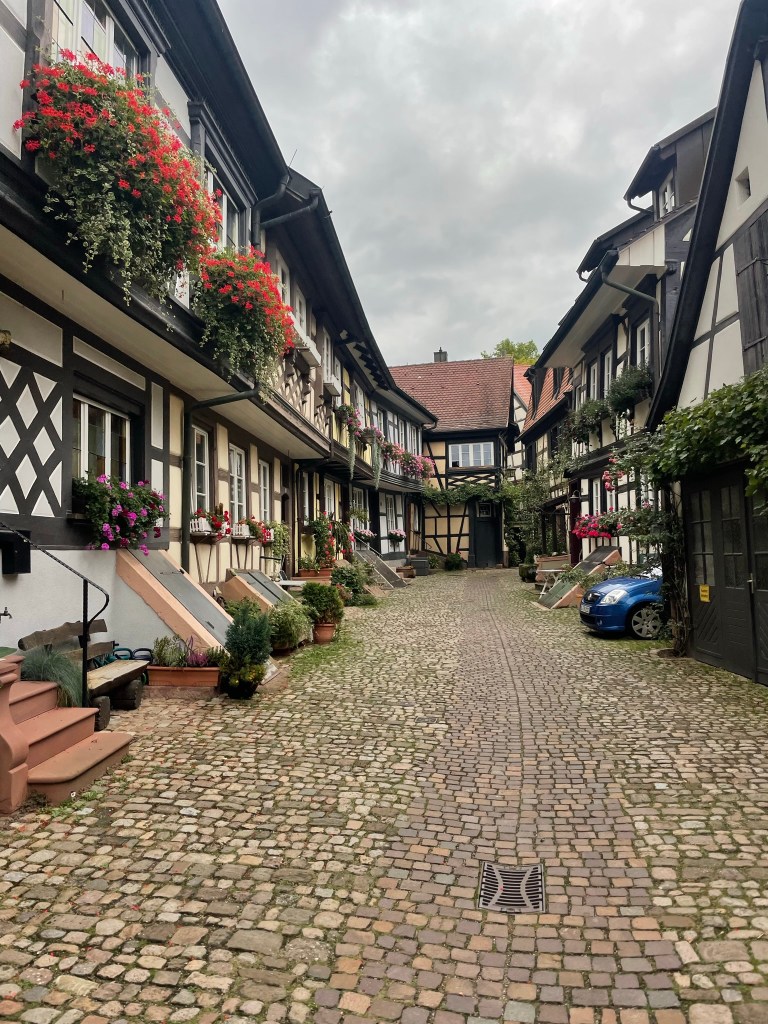
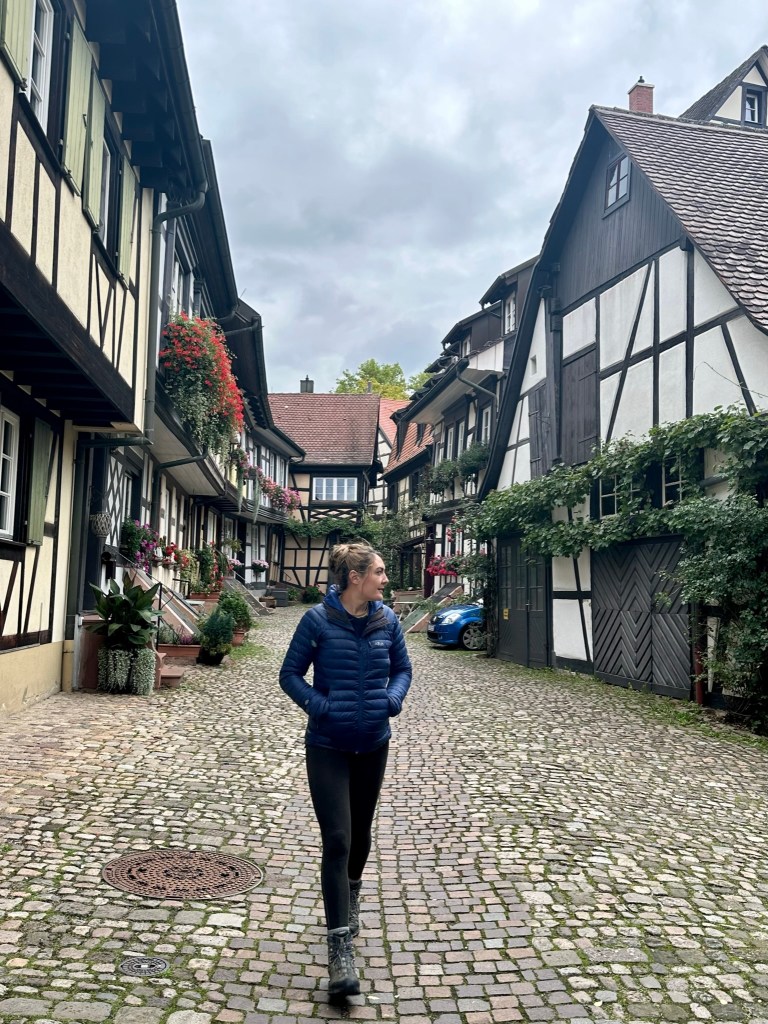
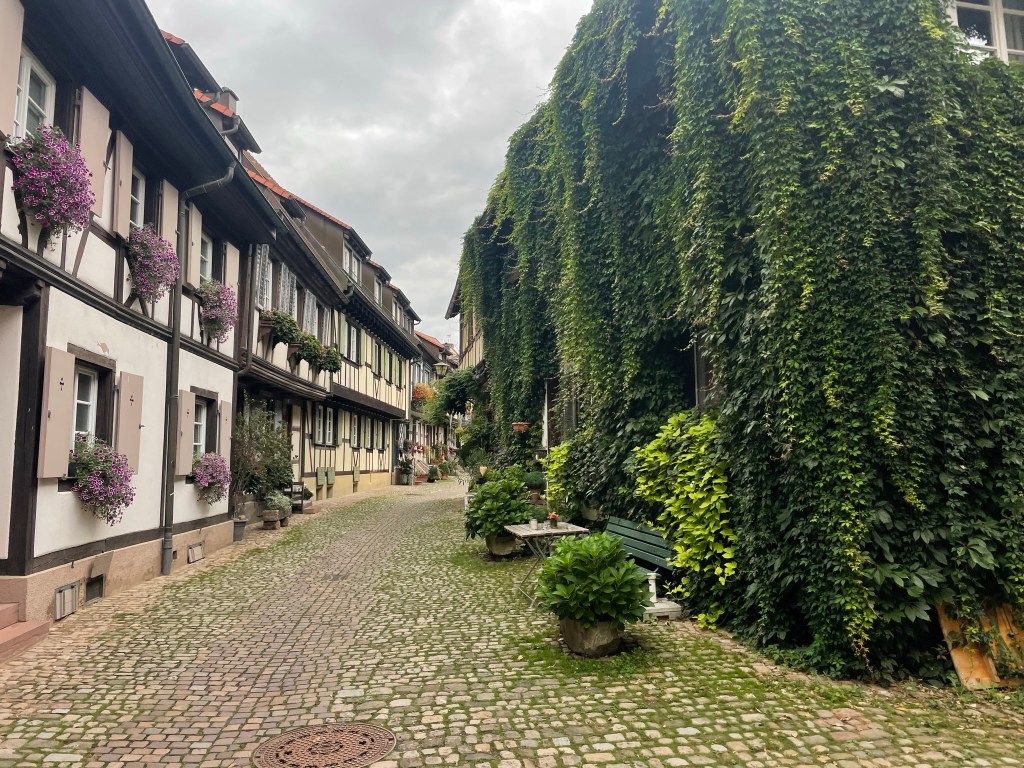
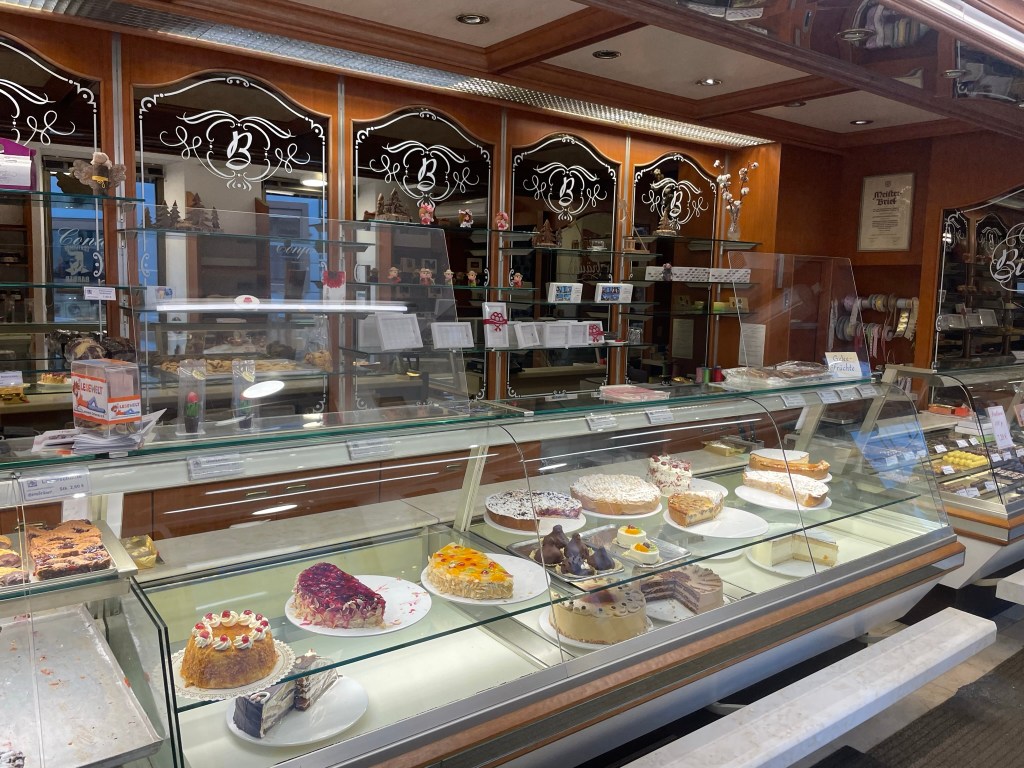
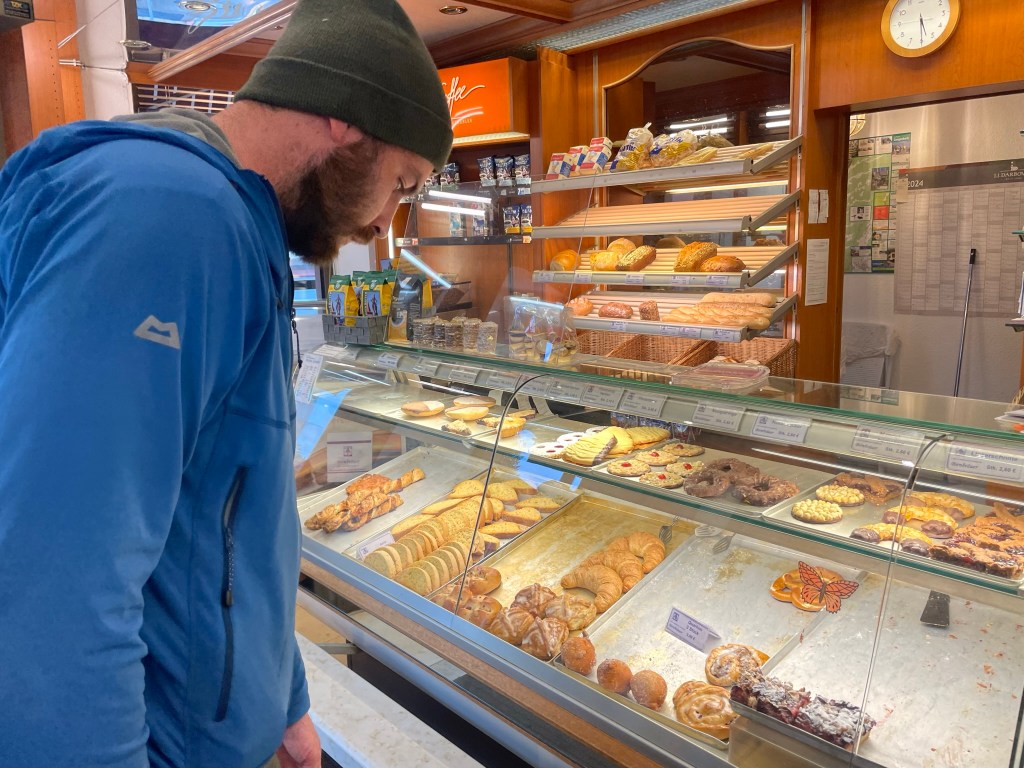
We emerged on Haupstrasse, the other main street off the central marketplace, popped into a little supermarket for a drink, then were lured into a lovely, old-fashioned bakery. The tiny old lady smiled patiently through my attempts to communicate which bread I wanted and asked (via gestures) whether we wanted it sliced. Resisting the delicious-looking cakes and pastries, we left with a loaf of sliced walnut bread, which we later found to be divine. We returned to the car via the marketplace and the Kinzigtor, utterly enchanted by Gengenbach.

Evening
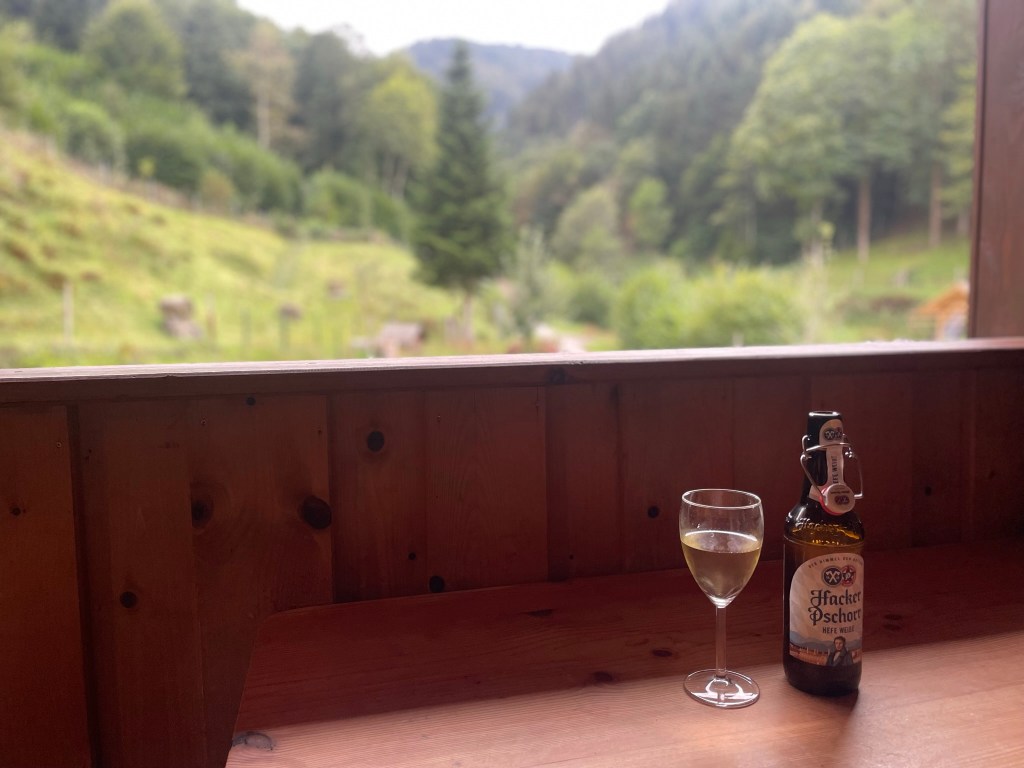
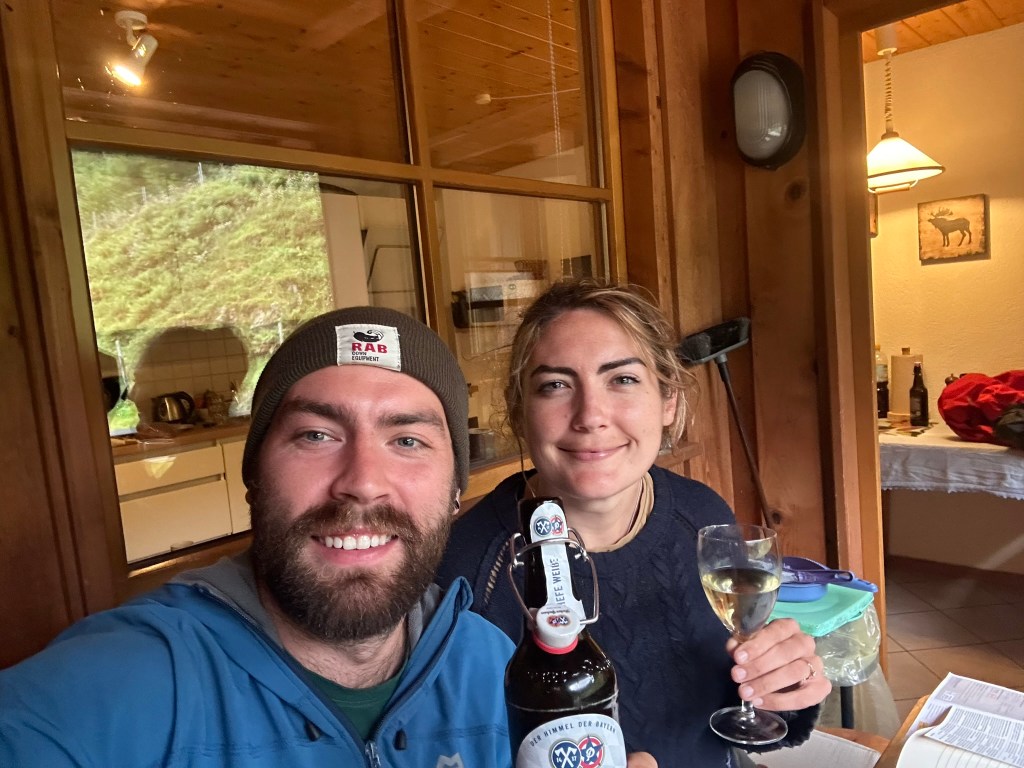
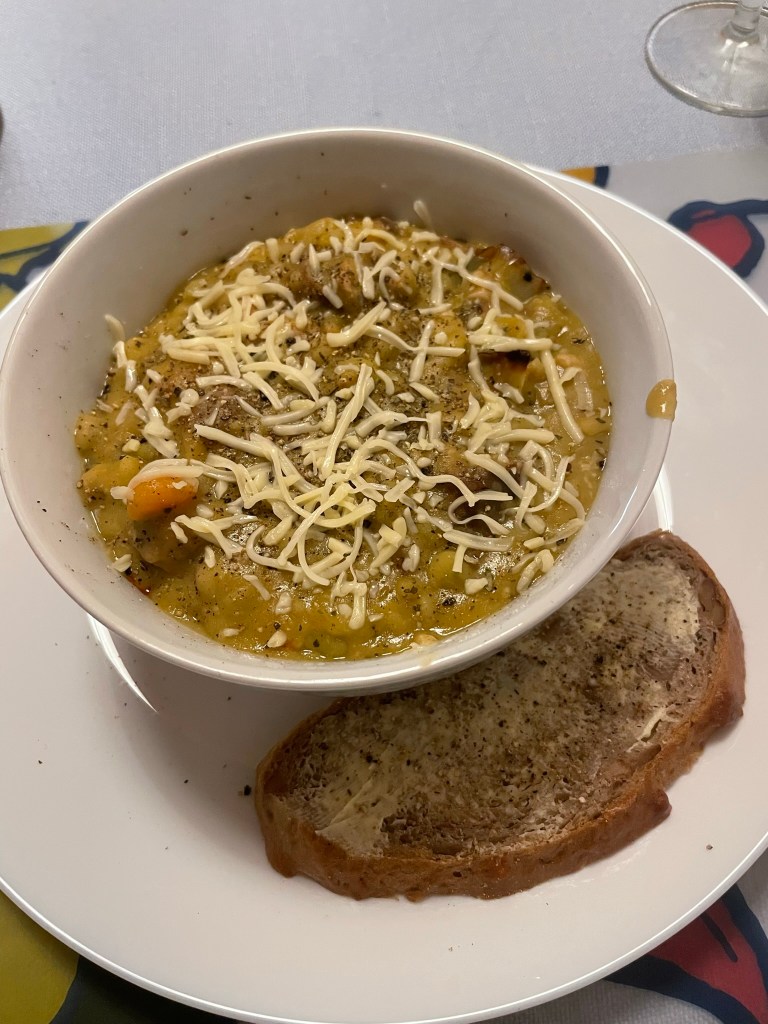
The hour-long drive back to Simonswald was thankfully uneventful, and took us through more pretty towns and fields nestled in wide valleys between great, sloping banks of rich forest. We arrived just before 7pm and settled in with a glass of wine (a German beer for Ryan) on the balcony, gazing up the green, wooded valley and listening to the sound of nothing but the birds and the stream. Kraut arrived, bit and scratched me when I was slow to give her some ham, and made herself comfortable on the sofa. Ryan cooked what turned out to be a thick pea and ham stew from a large Lidl can, which we had with cheese and walnut bread. We researched the area with the help of various leaflets (in German) and YouTube, which we could access on the TV, and decided – in light of the wet forecast – to go to the weekly market at Waldkirch the following morning. It was a lovely end to a successful first day. We went to bed besotted with the Black Forest.


 curiousgnome